Options
It seems the small coins tone more than large coins
 BIGAL2749
Posts: 742 ✭✭✭✭
BIGAL2749
Posts: 742 ✭✭✭✭
This is one of more colorful coins and is it me or do the smaller coins pick up the best color?
[/URL]
[URL=http://s306.photobucket.com/user/bigal2749/media/d027971c-4381-41d8-8aaf-2e7e1f18a934_zps6axdusmf.jpg.html]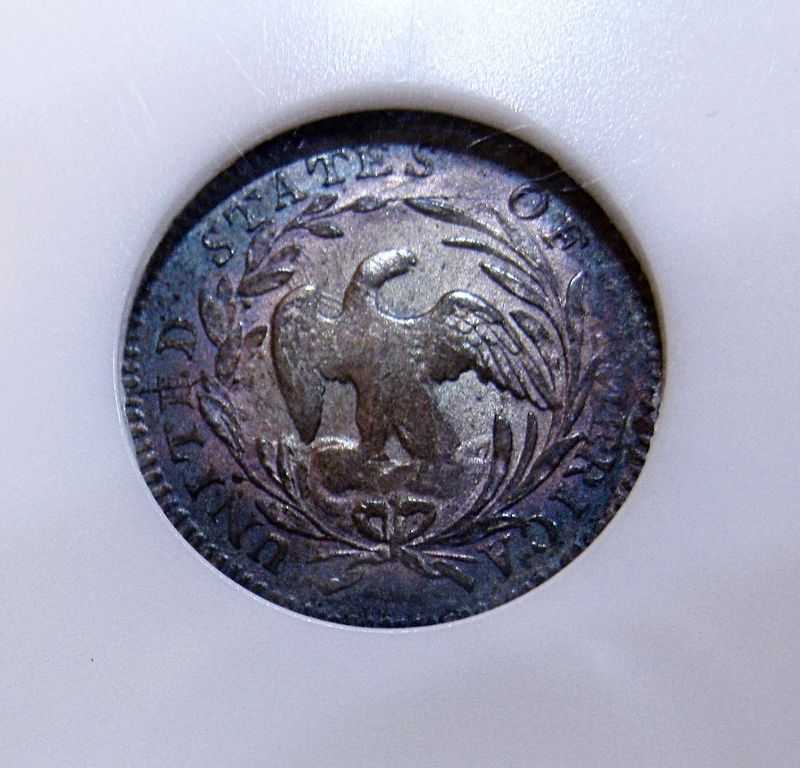 [/URL]
[/URL]
[URL=http://s306.photobucket.com/user/bigal2749/media/d027971c-4381-41d8-8aaf-2e7e1f18a934_zps6axdusmf.jpg.html]
![http://s306.photobucket.com/user/bigal2749/media/d027971c-4381-41d8-8aaf-2e7e1f18a934_zps6axdusmf.jpg.html]](https://forums.collectors.com/home/leaving?allowTrusted=1&target=http%3A%2F%2Fs306.photobucket.com%2Fuser%2Fbigal2749%2Fmedia%2Fd027971c-4381-41d8-8aaf-2e7e1f18a934_zps6axdusmf.jpg.html%5D) [/URL]
[/URL]0
Comments
[URL=http://s306.photobucket.com/user/bigal2749/media/012dc108-941f-46d2-a579-af788c587332_zpsspqsiy1u.jpg.html]
is it me or do the smaller coins pick up the best color?
Generally, I think Morgans pick up the best color, but that's just me. There are other good candidates but those tend to have fewer coins with spectacular color.
is it me or do the smaller coins pick up the best color?
Generally, I think Morgans pick up the best color, but that's just me. There are other good candidates but those tend to have fewer coins with spectacular color.
Morgans and capped bust halves.
Both vault reserve types held in bags and not circulated for decades.
Small coins most likely stuck in drawers unnoticed for decades also.
Leaving the "trade" coins exposed to the common oaf buying things.
If we assume that different denominations were stored in similar albums or holders that restrict airflow to a certain extent then we can use the size measurements of coins to determine the volume of the column of ambient air that sits on top of either side of a coin within its holder or album slot. This volume might be divided by the exposed surface area of the coin (ignoring raised design elements, which should be similar for similar designs) to give a ratio of the volume air to surface area coin where the toning reaction might take place. Doing this yields a greater volume of air for half-dimes, a lesser amount for dimes, still less for quarters and even less for half dollars.
Additionally, coins might have contaminants leach out of the sides of the holder and migrate toward the center of the coin, which would feed the toning process. A smaller coin might have this happen more readily than a larger coin, likely using the same reasoning as above.
This isn't perfect by any means, but it can give an idea as to why smaller coins tend to tone more deeply than larger coins.
In honor of the memory of Cpl. Michael E. Thompson
Latin American Collection
My mind was in another place when I read this portion.
BST transactions: dbldie55, jayPem, 78saen, UltraHighRelief, nibanny, liefgold, FallGuy, lkeigwin, mbogoman, Sandman70gt, keets, joeykoins, ianrussell (@GC), EagleEye, ThePennyLady, GRANDAM, Ilikecolor, Gluggo, okiedude, Voyageur, LJenkins11, fastfreddie, ms70, pursuitofliberty, ZoidMeister,Coin Finder, GotTheBug, edwardjulio, Coinnmore, Nickpatton, Namvet69,...
is it me or do the smaller coins pick up the best color?
Generally, I think Morgans pick up the best color, but that's just me. There are other good candidates but those tend to have fewer coins with spectacular color.
A lot of Morgan Dollars have gotten help with their toning over the years. The "help" has quite often not come directly from Mother Nature. There is a financial incentive for this activity.
I'm sure 220 years also had a lot to do with it. I would guess a silver dollar would get colour in that amount of time too. And only 15 seconds to dip it all off.
As well as dipping without the proper rinse, and the fact that dipping exposes "virgin metal" which is more likely to tone than metal that is protected by patina.
The amount of toning and how attractive it is comes down to
1. A clean and pure surface, either day one from the mint or just dipped.
2. Placing the coin(s) in a pro-toning environment.
Not all coins come from the US mint as reactive as the next. The acid rinse on the Peace Dollars made them far less susceptible to toning attractively than say Walkers, Mercs, and SLQ's of the same era. Sometimes the holders help the bigger coins. Consider the early NGC slabs with the highly reactive label insert. The smaller coins in those holders would be further away from the sulfur-laden toning source than a large coin. Based on the large numbers of monster toned proof Barber halves, Morgan dollars, and Franklin halves coming out of US proof/mint sets....there doesn't appear to be an obvious advantage to being smaller. It's easier to accidentally fingerprint or thumb the entire surface of a half dime vs. seated dollar. So in that respect toning might be easier to come by on "handled" specimens of smaller coins.
PCGS Registries
Box of 20
SeaEagleCoins: 11/14/54-4/5/12. Miss you Larry!
OINK
Amat Colligendo Focum
Top 10 • FOR SALE
Cheers, RickO