TalerUniverse.com is a curated numismatic project dedicated to the silver talers, crowns, and medals of the Habsburg Empire and the Holy Roman Empire, spanning the 16th–18th centuries. The collection emphasizes historically significant issues, rare mint varieties, and high-grade NGC/PCGS examples, presented with detailed historical context, scholarly references, and high-resolution photography. TalerUniverse aims to serve both as a private collection showcase and a growing reference resource for collectors, researchers, and students of early-modern European coinage.
TalerUniverse.com is a curated numismatic project dedicated to the silver talers, crowns, and medals of the Habsburg Empire and the Holy Roman Empire, spanning the 16th–18th centuries. The collection emphasizes historically significant issues, rare mint varieties, and high-grade NGC/PCGS examples, presented with detailed historical context, scholarly references, and high-resolution photography. TalerUniverse aims to serve both as a private collection showcase and a growing reference resource for collectors, researchers, and students of early-modern European coinage.
Bought this one at ANA show back in late August. Struck by Swedish king Gustav II during occupation of Erfurt during Thirty Year War. Reverse text commemorates the victory of the Protestant Swedish king over the imperial army in the Battle of Breitenfeld near Leipzig on 7 Sept 1631. Often called a "Purim Taler" in association with the Purim festival on the 1 year anniversary, the taler captures a notable Protestant victory against the Holy Roman Empire. Interesting to note that success was not long lived.......Gustavus Adolf fell in the Battle of Lützen two months after the coin was issued.
1632 Erfurt "Purim" taler - Swedish Occupation
DAV-4546
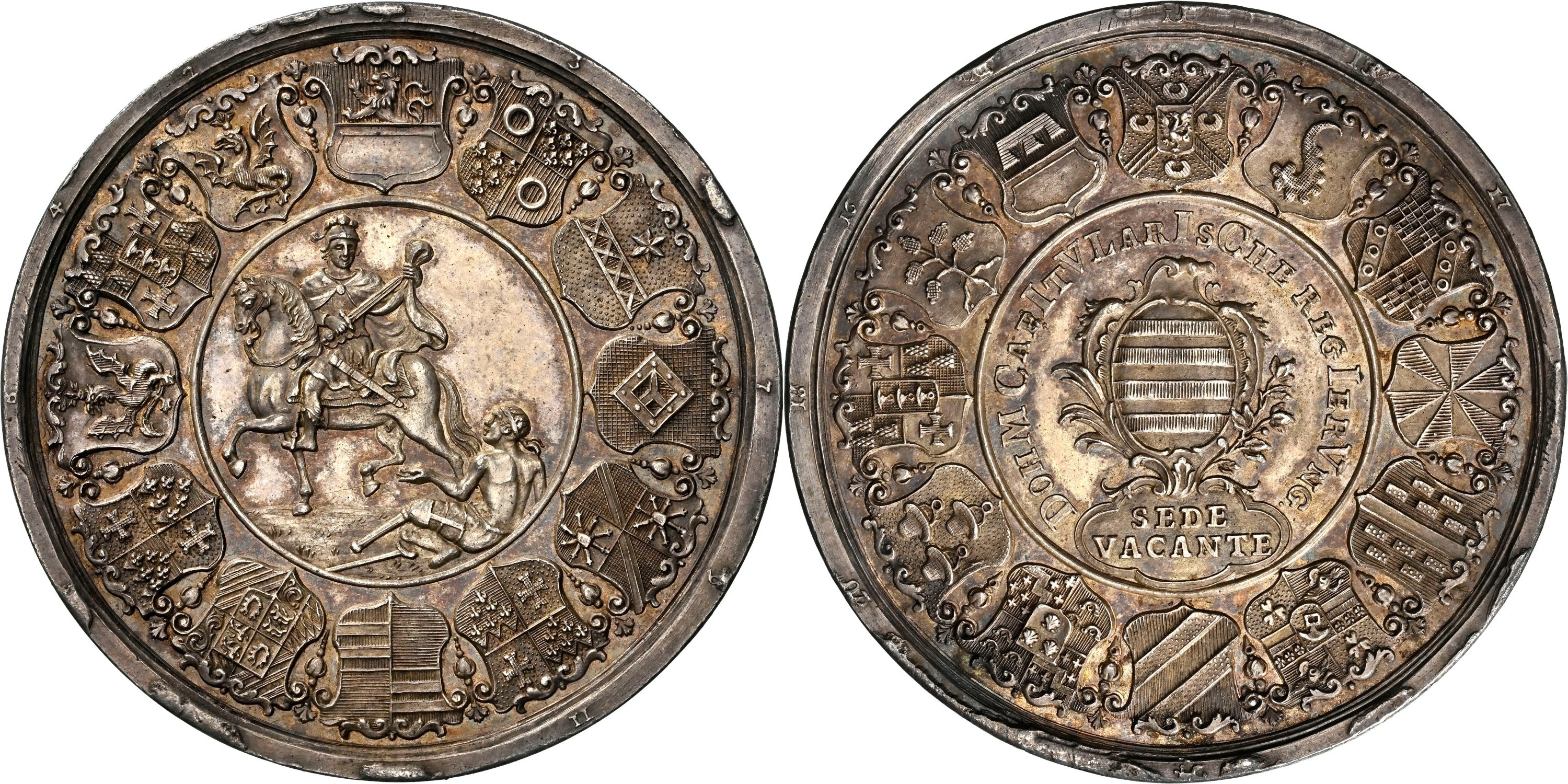
Final addition for 2025 was a scarce 1763 sede vacante schautaler from Mainz. Issued to commemorate empty seat after death of Johann Friedrich Karl von Ostein, Archbishop of Mainz. Obverse features chronogram of date around coat of arms. Recently graded NGC MS-63. Housed in oversized holder due to broad planchet. The detail on this piece is simply amazing.
Resurrecting this thread. Here’s my most recent purchase (a first new Taler in a long time).
Corvey Abbey.
Per the auction description about St. Vitus:
The saint depicted on this thaler, St. Vitus (or St. Veit), lived around 300AD and was only seven years old. The legend is that his father demanded that he, who was a Christian, renounce his faith. Then Veit fled from home. An eagle provided him with food on the run. Later, the Roman emperor Diocletian made the same demand. Since Veit rejected the denial of his faith, he was of condemned to being eaten by a lion. But the lion did nothing to Veit, but lay down at his feet. Because of this legend, St. Vitus on this thaler as an attribute the eagle, on other thalers can also be seen the lion lying at the feet of the saint.
TalerUniverse.com is a curated numismatic project dedicated to the silver talers, crowns, and medals of the Habsburg Empire and the Holy Roman Empire, spanning the 16th–18th centuries. The collection emphasizes historically significant issues, rare mint varieties, and high-grade NGC/PCGS examples, presented with detailed historical context, scholarly references, and high-resolution photography. TalerUniverse aims to serve both as a private collection showcase and a growing reference resource for collectors, researchers, and students of early-modern European coinage.
I love this thread. @Bob13 - that Corvey is outstanding! The previous lot 2626 in the same auction was also in a class of its own. I won this one earlier in the same auction. Its was categorized as Erfurt but the auction had some interesting comments (see below) regarding the Mainz mint master and striking.
MAINZ CITY Under Swedish rule. Gustav II Adolf, 1631–1632. Reichstaler n.d. (1632), commemorating the Swedish and Protestant victory at Breitenfeld (now a district of Leipzig) on September 7 (September 17, Gregorian calendar) 1631. 29.31 g. Roller-struck. Ahlström 21c (listed under Erfurt); Dav. 4544 (listed under Erfurt); Walther Collection –; Gräßler/Walde 577 var.; Pick Collection II (Künker Auction 404) 2553; Pick Collection I (Dr. Busso Peus Nachf. Auction 405) 895 (slight variant). Fine patina, Very Fine+.
This Reichstaler was previously attributed to Erfurt. However, recent research has conclusively proven that it was minted in Mainz, just like the corresponding silver Reichstaler pieces. The reverse features Daniel Ayrer's mintmaster mark within a cartouche: a caduceus (Mercury's staff), representing the alchemical symbol for mercury (Mercurium). The Erfurt mintmaster Johann Schneider ("Weissmantel") also used the symbol for mercury as his signature, but always in conjunction with the alchemical symbol for sulfur. Daniel Ayrer served as mintmaster in Mainz from 1627 until his death on April 20, 1632. King Gustav II Adolf entered the city in mid-December 1631, implying that the coins Ayrer struck for the Swedes must have been produced after that date. The date on the reverse of the Reichstaler has often been interpreted as the year of minting, but the inscription refers to the Swedish victory at the Battle of Breitenfeld: "Honored and praised be the Most High God, who granted Gustav Adolf, King of the Swedes, Goths, and Wends, the victory at Leipzig on September 7, 1631, over the troops of the Emperor and the League." It is likely that this coin was not minted until early 1632.
@Bob13 said:
Resurrecting this thread. Here’s my most recent purchase (a first new Taler in a long time).
Corvey Abbey.
Per the auction description about St. Vitus:
The saint depicted on this thaler, St. Vitus (or St. Veit), lived around 300AD and was only seven years old. The legend is that his father demanded that he, who was a Christian, renounce his faith. Then Veit fled from home. An eagle provided him with food on the run. Later, the Roman emperor Diocletian made the same demand. Since Veit rejected the denial of his faith, he was of condemned to being eaten by a lion. But the lion did nothing to Veit, but lay down at his feet. Because of this legend, St. Vitus on this thaler as an attribute the eagle, on other thalers can also be seen the lion lying at the feet of the saint.
TalerUniverse.com is a curated numismatic project dedicated to the silver talers, crowns, and medals of the Habsburg Empire and the Holy Roman Empire, spanning the 16th–18th centuries. The collection emphasizes historically significant issues, rare mint varieties, and high-grade NGC/PCGS examples, presented with detailed historical context, scholarly references, and high-resolution photography. TalerUniverse aims to serve both as a private collection showcase and a growing reference resource for collectors, researchers, and students of early-modern European coinage.
@worldcoinguy said:
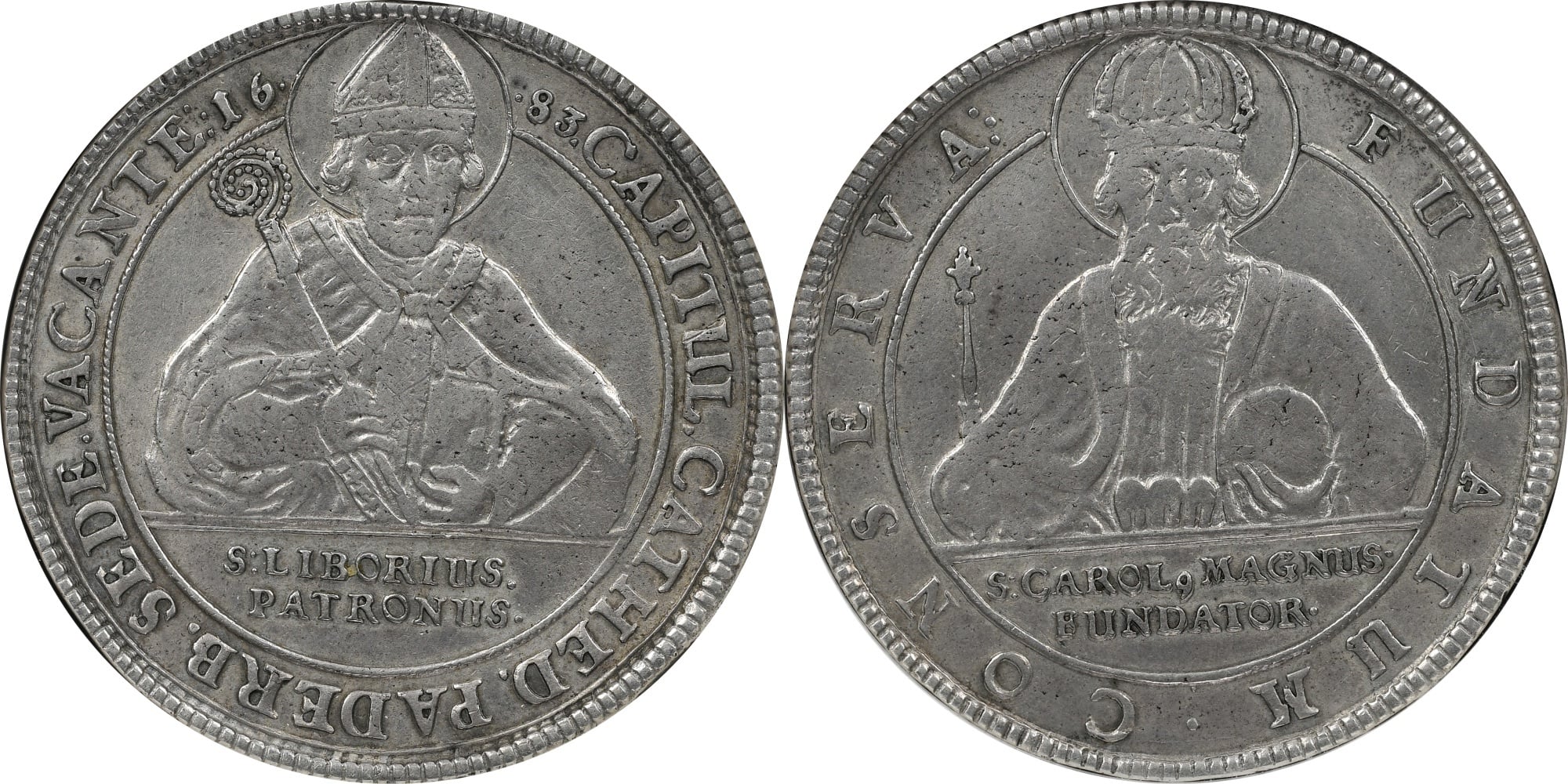
Here are another couple of additional talers I added in early 2026 which didn't make it into the thread. Both are sede vacante issues.
1683 GS Munster taler DAV-5607
PCGS AU-58
1683 Paderborn taler DAV-5706
NGC EF Details (cleaning)
TalerUniverse.com is a curated numismatic project dedicated to the silver talers, crowns, and medals of the Habsburg Empire and the Holy Roman Empire, spanning the 16th–18th centuries. The collection emphasizes historically significant issues, rare mint varieties, and high-grade NGC/PCGS examples, presented with detailed historical context, scholarly references, and high-resolution photography. TalerUniverse aims to serve both as a private collection showcase and a growing reference resource for collectors, researchers, and students of early-modern European coinage.
@worldcoinguy said:
I love this thread. @Bob13 - that Corvey is outstanding! The previous lot 2626 in the same auction was also in a class of its own. I won this one earlier in the same auction. Its was categorized as Erfurt but the auction had some interesting comments (see below) regarding the Mainz mint master and striking.
I liked that other Corvey piece... a lot. It just had a little too little definition for me of some of the elements. But thought about it!
TalerUniverse.com is a curated numismatic project dedicated to the silver talers, crowns, and medals of the Habsburg Empire and the Holy Roman Empire, spanning the 16th–18th centuries. The collection emphasizes historically significant issues, rare mint varieties, and high-grade NGC/PCGS examples, presented with detailed historical context, scholarly references, and high-resolution photography. TalerUniverse aims to serve both as a private collection showcase and a growing reference resource for collectors, researchers, and students of early-modern European coinage.
Recently I saved this 1594 Reichstaler from Mansfeld vorderortische Linie from the melting pot (it was ~ 48 Dollars).
Even though it's a mounted coin and seems to have been worn a lot, I consider it to be one of my better finds this year.
The reason is, that the mount on this coin seems to be contemprary. During the 30-year-war (1618 - 1648) the Mansfeld Reichstaler coins (full and fractional denominations) were in high demand because many soldiers and mercenaries hoped for aid from their patron saint, St. George, who is depicted on the coin.
The demand grew so large, that original Reichstaler coins from Mansfeld fetched up to 7 Reichstaler per piece, wich was a considerable amount of money back then.
It would be a shame if this piece of history would have gotten lost to the refiner's crucible, so I'm glad I got the opportunity to save it.
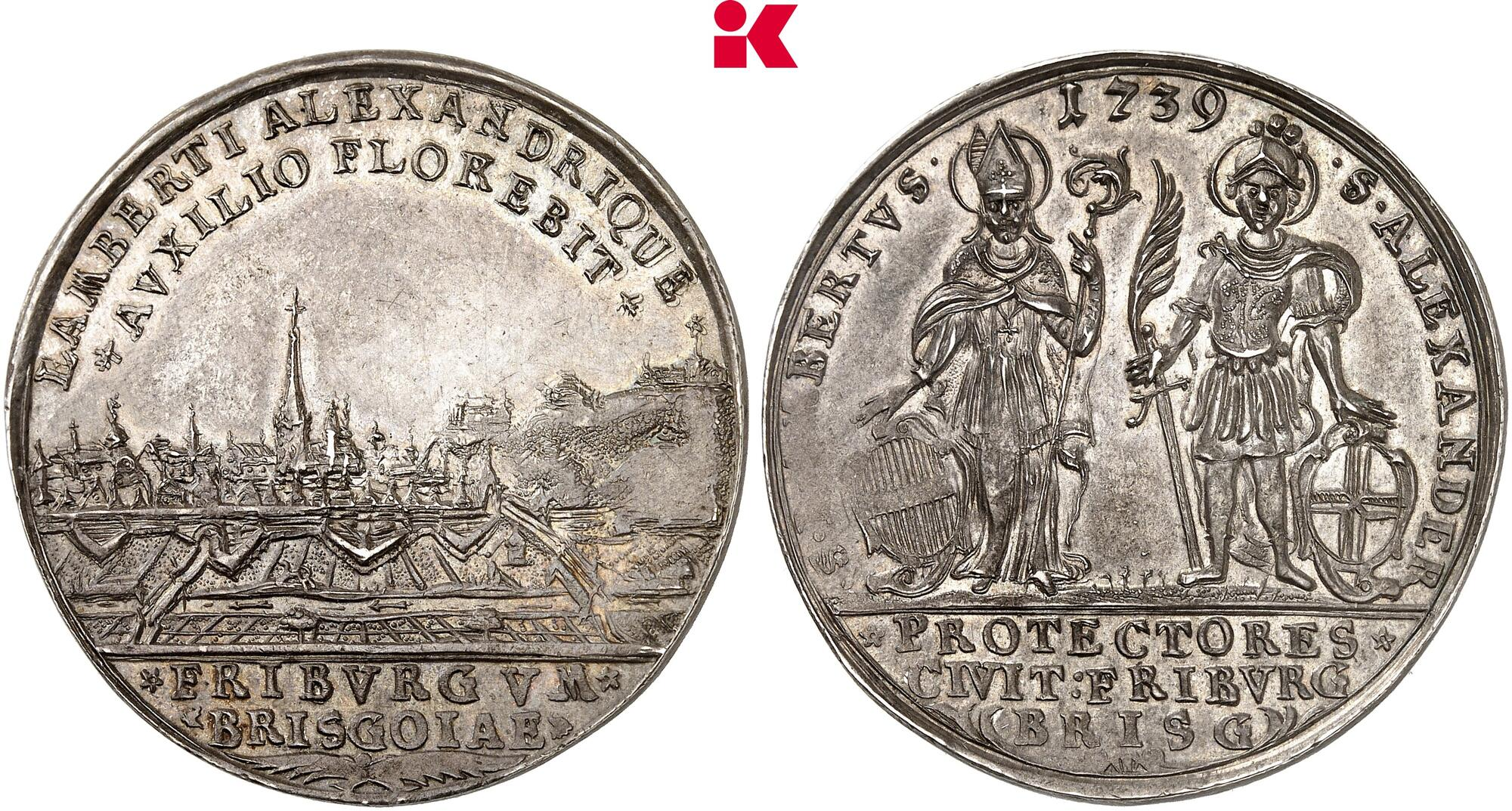
And this showed up today... Freiburg im Breisgau is my wife's hometown and absolutely beautiful. My favorite is the little arrow that tells you the direction of the river!
TalerUniverse.com is a curated numismatic project dedicated to the silver talers, crowns, and medals of the Habsburg Empire and the Holy Roman Empire, spanning the 16th–18th centuries. The collection emphasizes historically significant issues, rare mint varieties, and high-grade NGC/PCGS examples, presented with detailed historical context, scholarly references, and high-resolution photography. TalerUniverse aims to serve both as a private collection showcase and a growing reference resource for collectors, researchers, and students of early-modern European coinage.
Comments
Very nice additions, @Bob13
TalerUniverse.com is a curated numismatic project dedicated to the silver talers, crowns, and medals of the Habsburg Empire and the Holy Roman Empire, spanning the 16th–18th centuries. The collection emphasizes historically significant issues, rare mint varieties, and high-grade NGC/PCGS examples, presented with detailed historical context, scholarly references, and high-resolution photography. TalerUniverse aims to serve both as a private collection showcase and a growing reference resource for collectors, researchers, and students of early-modern European coinage.
Outstanding additions @Bob13 ! I really like the darker patina on the 1627 and that is one of the better Madonna and child designs I have seen.
I bid on a few lots but was only able to bring home one fractional taler: 1743 Mainz 1/4 taler. A scarce sede vacante issue.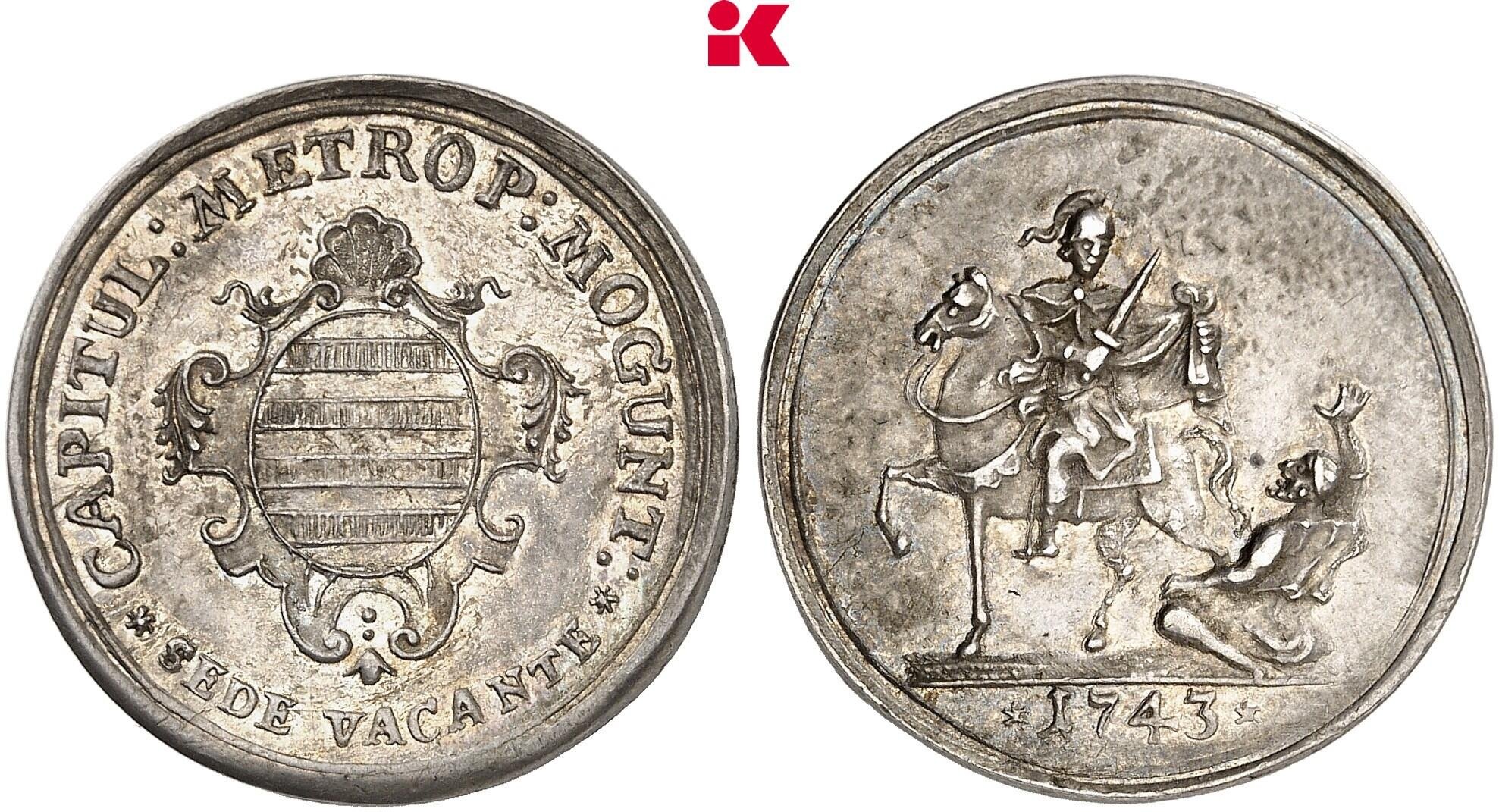
Great pickup as always @worldcoinguy
TalerUniverse.com is a curated numismatic project dedicated to the silver talers, crowns, and medals of the Habsburg Empire and the Holy Roman Empire, spanning the 16th–18th centuries. The collection emphasizes historically significant issues, rare mint varieties, and high-grade NGC/PCGS examples, presented with detailed historical context, scholarly references, and high-resolution photography. TalerUniverse aims to serve both as a private collection showcase and a growing reference resource for collectors, researchers, and students of early-modern European coinage.
Bought this one at ANA show back in late August. Struck by Swedish king Gustav II during occupation of Erfurt during Thirty Year War. Reverse text commemorates the victory of the Protestant Swedish king over the imperial army in the Battle of Breitenfeld near Leipzig on 7 Sept 1631. Often called a "Purim Taler" in association with the Purim festival on the 1 year anniversary, the taler captures a notable Protestant victory against the Holy Roman Empire. Interesting to note that success was not long lived.......Gustavus Adolf fell in the Battle of Lützen two months after the coin was issued.
1632 Erfurt "Purim" taler - Swedish Occupation
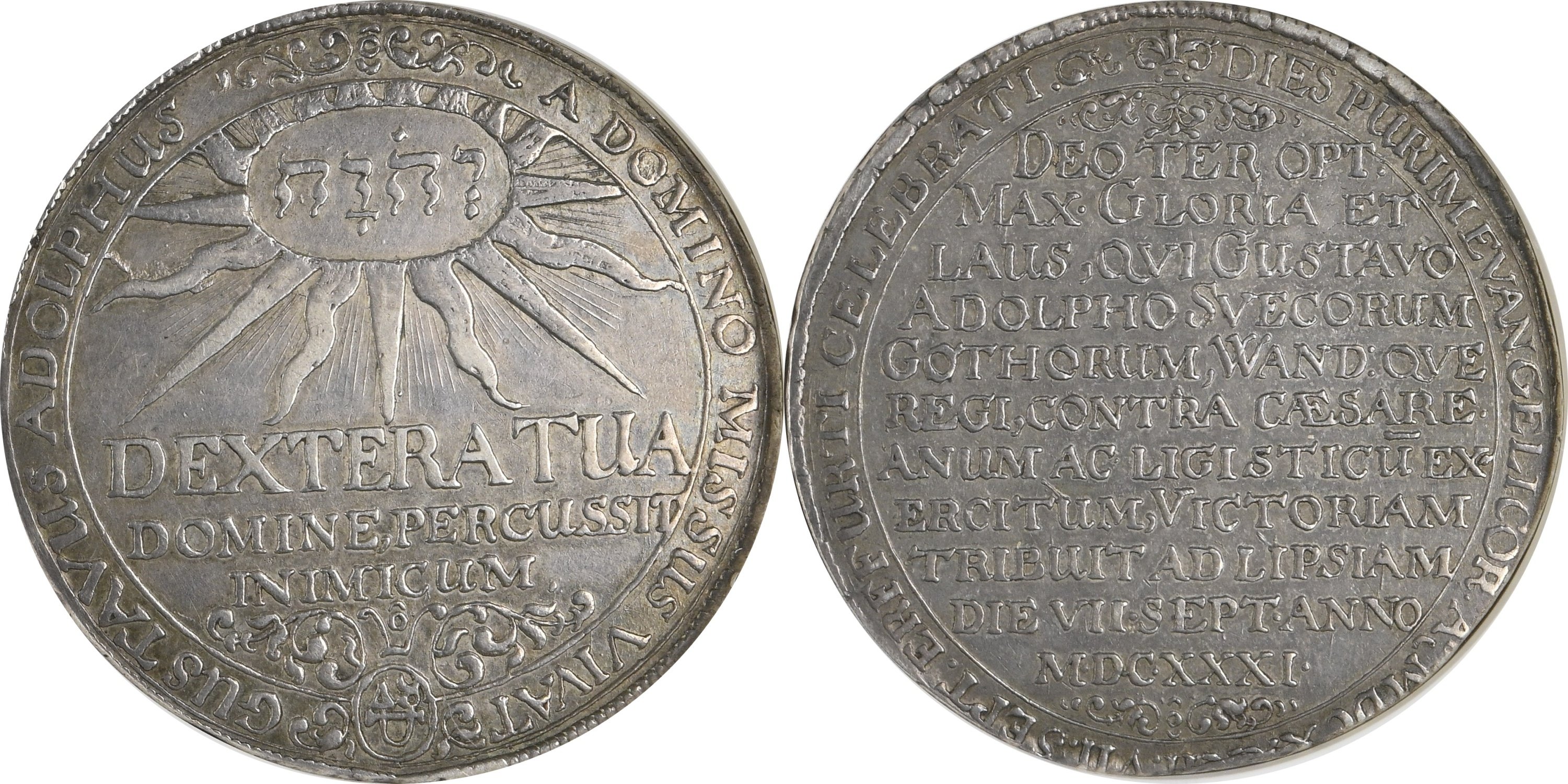
DAV-4546
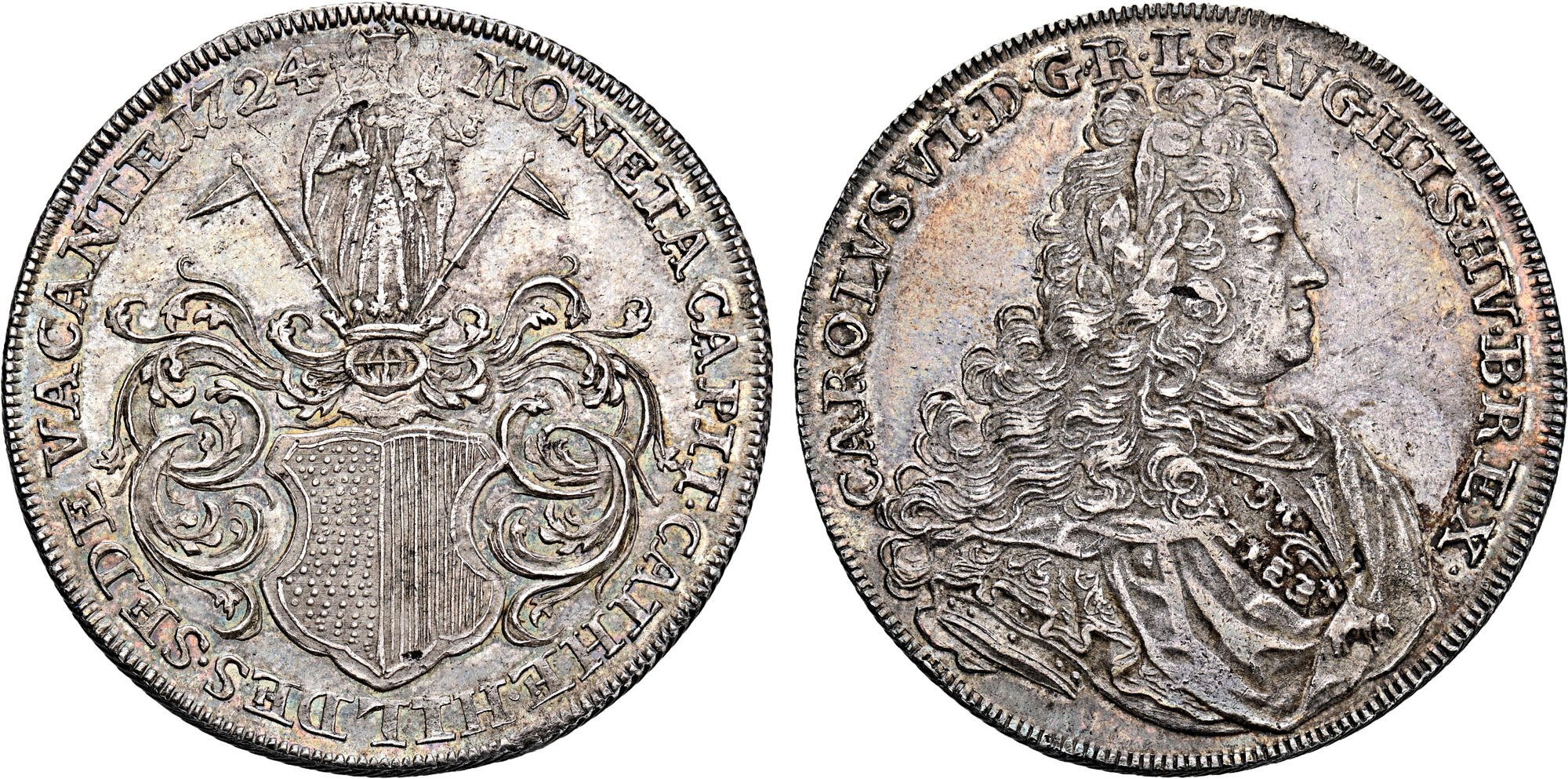
1724 Hildesheim taler – sede vacante issue. DAV-2343; Zepernick 144. Scarce issue with this being only straight grade issued by NGC or PCGS to date.
Final addition for 2025 was a scarce 1763 sede vacante schautaler from Mainz. Issued to commemorate empty seat after death of Johann Friedrich Karl von Ostein, Archbishop of Mainz. Obverse features chronogram of date around coat of arms. Recently graded NGC MS-63. Housed in oversized holder due to broad planchet. The detail on this piece is simply amazing.
I like all 3 of those, but the sede vacante is my favorite. I've been eyeing some but haven't pulled the trigger. This is my latest taler:
My current "Box of 20"
Lovely thread, adding to this with what I posted recently! My top 9 European acquisitions thus far for ... 2025!
Resurrecting this thread. Here’s my most recent purchase (a first new Taler in a long time).
Corvey Abbey.
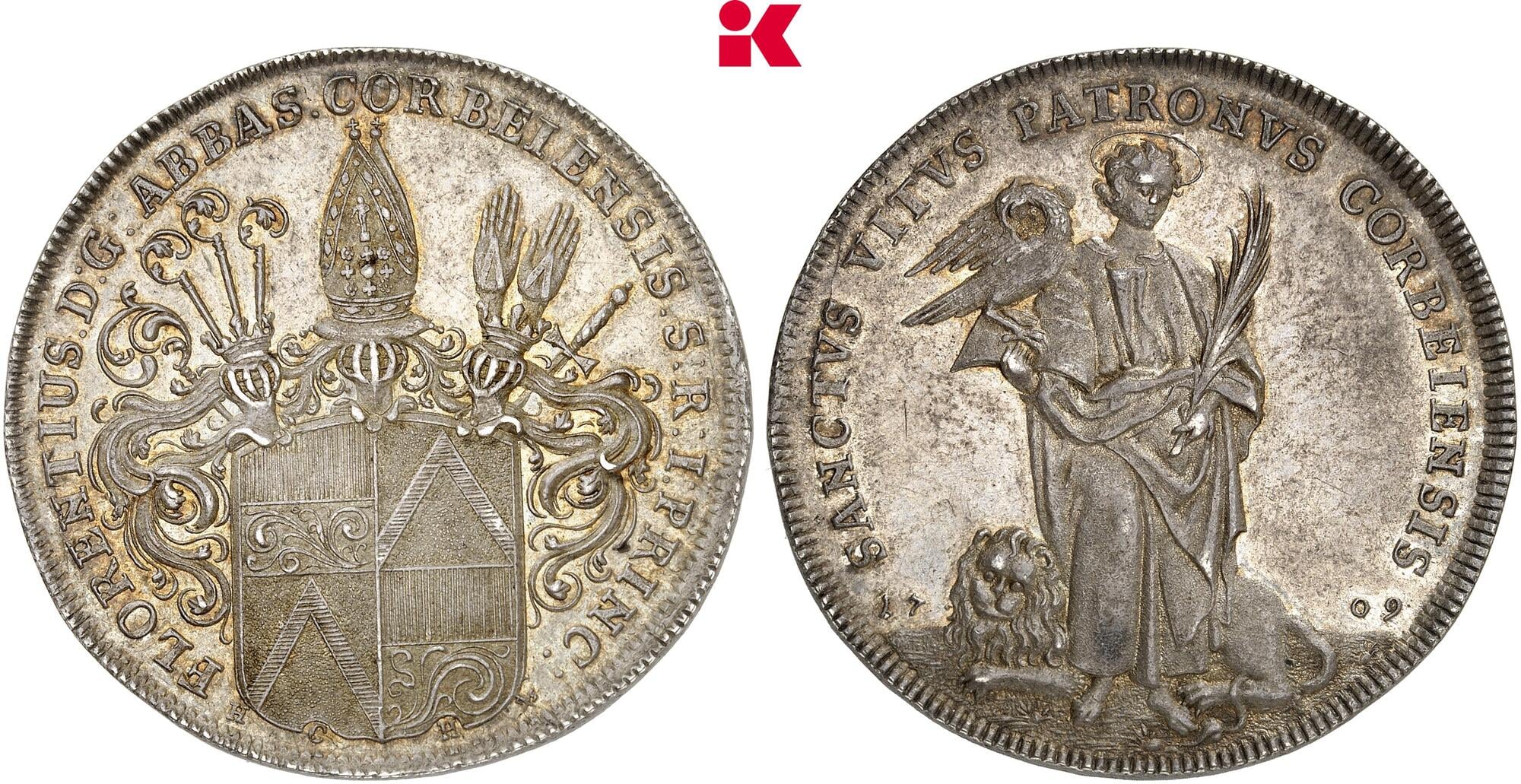
Per the auction description about St. Vitus:
The saint depicted on this thaler, St. Vitus (or St. Veit), lived around 300AD and was only seven years old. The legend is that his father demanded that he, who was a Christian, renounce his faith. Then Veit fled from home. An eagle provided him with food on the run. Later, the Roman emperor Diocletian made the same demand. Since Veit rejected the denial of his faith, he was of condemned to being eaten by a lion. But the lion did nothing to Veit, but lay down at his feet. Because of this legend, St. Vitus on this thaler as an attribute the eagle, on other thalers can also be seen the lion lying at the feet of the saint.
Any new talers out there?!
My current "Box of 20"
Is that really 1709, with a truly crisp strike?
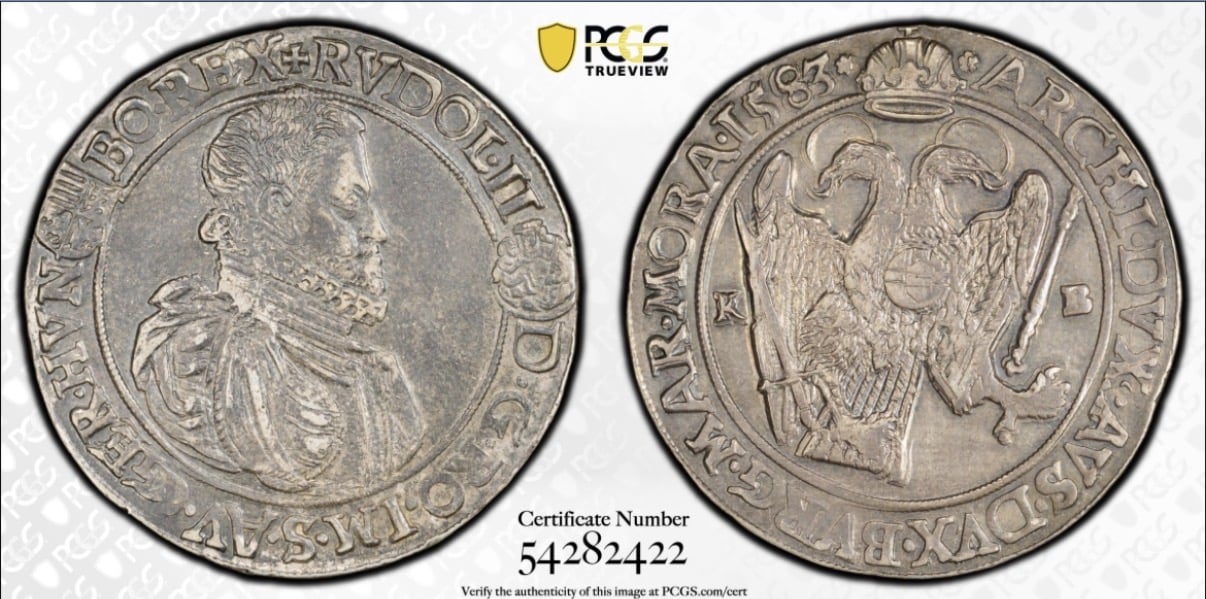
Hungary 1583 Thaler - Rudolph II
TalerUniverse.com is a curated numismatic project dedicated to the silver talers, crowns, and medals of the Habsburg Empire and the Holy Roman Empire, spanning the 16th–18th centuries. The collection emphasizes historically significant issues, rare mint varieties, and high-grade NGC/PCGS examples, presented with detailed historical context, scholarly references, and high-resolution photography. TalerUniverse aims to serve both as a private collection showcase and a growing reference resource for collectors, researchers, and students of early-modern European coinage.
It is surprisingly well made (and preserved)!
@Zohar nice mining taler!
My current "Box of 20"
I love this thread. @Bob13 - that Corvey is outstanding! The previous lot 2626 in the same auction was also in a class of its own. I won this one earlier in the same auction. Its was categorized as Erfurt but the auction had some interesting comments (see below) regarding the Mainz mint master and striking.
MAINZ CITY Under Swedish rule. Gustav II Adolf, 1631–1632. Reichstaler n.d. (1632), commemorating the Swedish and Protestant victory at Breitenfeld (now a district of Leipzig) on September 7 (September 17, Gregorian calendar) 1631. 29.31 g. Roller-struck. Ahlström 21c (listed under Erfurt); Dav. 4544 (listed under Erfurt); Walther Collection –; Gräßler/Walde 577 var.; Pick Collection II (Künker Auction 404) 2553; Pick Collection I (Dr. Busso Peus Nachf. Auction 405) 895 (slight variant). Fine patina, Very Fine+.
This Reichstaler was previously attributed to Erfurt. However, recent research has conclusively proven that it was minted in Mainz, just like the corresponding silver Reichstaler pieces. The reverse features Daniel Ayrer's mintmaster mark within a cartouche: a caduceus (Mercury's staff), representing the alchemical symbol for mercury (Mercurium). The Erfurt mintmaster Johann Schneider ("Weissmantel") also used the symbol for mercury as his signature, but always in conjunction with the alchemical symbol for sulfur. Daniel Ayrer served as mintmaster in Mainz from 1627 until his death on April 20, 1632. King Gustav II Adolf entered the city in mid-December 1631, implying that the coins Ayrer struck for the Swedes must have been produced after that date. The date on the reverse of the Reichstaler has often been interpreted as the year of minting, but the inscription refers to the Swedish victory at the Battle of Breitenfeld: "Honored and praised be the Most High God, who granted Gustav Adolf, King of the Swedes, Goths, and Wends, the victory at Leipzig on September 7, 1631, over the troops of the Emperor and the League." It is likely that this coin was not minted until early 1632.
Here are another couple of additional talers I added in early 2026 which didn't make it into the thread. Both are sede vacante issues.
1683 GS Munster taler DAV-5607
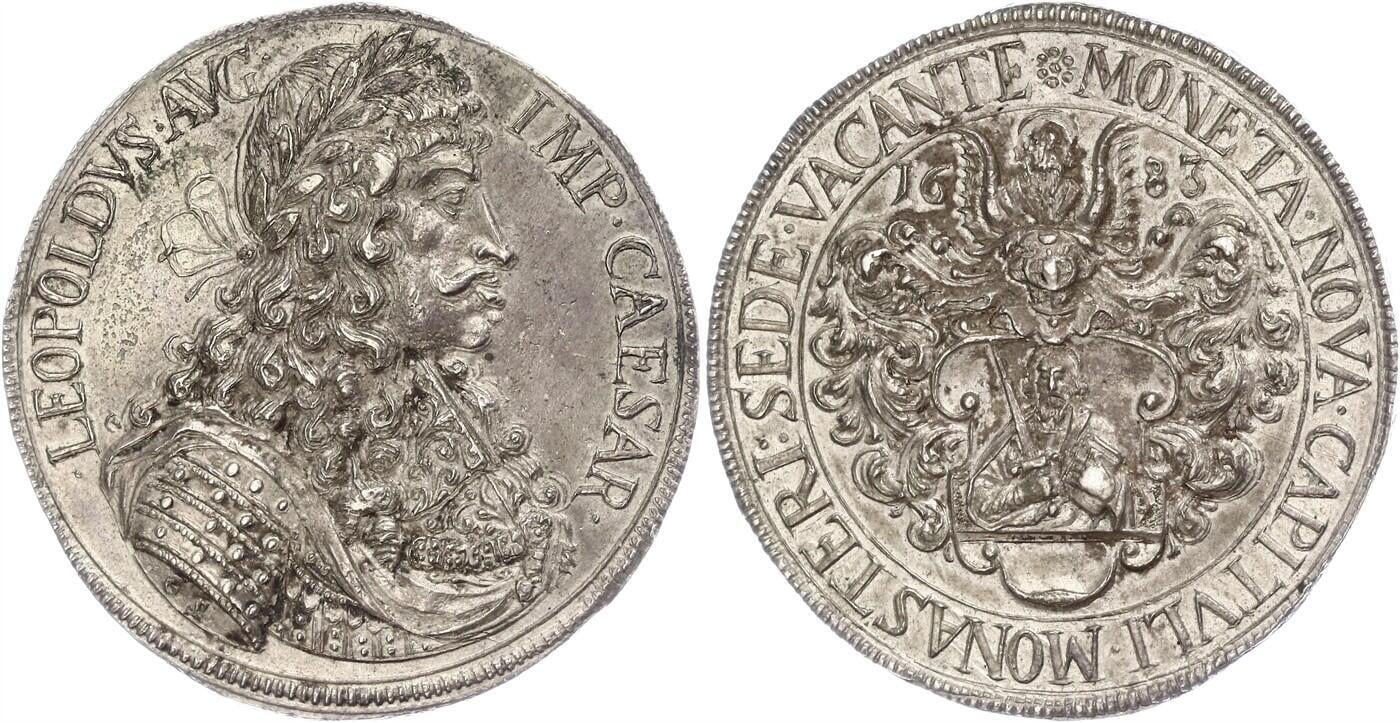
PCGS AU-58
1683 Paderborn taler DAV-5706
NGC EF Details (cleaning)
Superb specimen!
TalerUniverse.com is a curated numismatic project dedicated to the silver talers, crowns, and medals of the Habsburg Empire and the Holy Roman Empire, spanning the 16th–18th centuries. The collection emphasizes historically significant issues, rare mint varieties, and high-grade NGC/PCGS examples, presented with detailed historical context, scholarly references, and high-resolution photography. TalerUniverse aims to serve both as a private collection showcase and a growing reference resource for collectors, researchers, and students of early-modern European coinage.
Excellent additions!
TalerUniverse.com is a curated numismatic project dedicated to the silver talers, crowns, and medals of the Habsburg Empire and the Holy Roman Empire, spanning the 16th–18th centuries. The collection emphasizes historically significant issues, rare mint varieties, and high-grade NGC/PCGS examples, presented with detailed historical context, scholarly references, and high-resolution photography. TalerUniverse aims to serve both as a private collection showcase and a growing reference resource for collectors, researchers, and students of early-modern European coinage.
I liked that other Corvey piece... a lot. It just had a little too little definition for me of some of the elements. But thought about it!
My current "Box of 20"
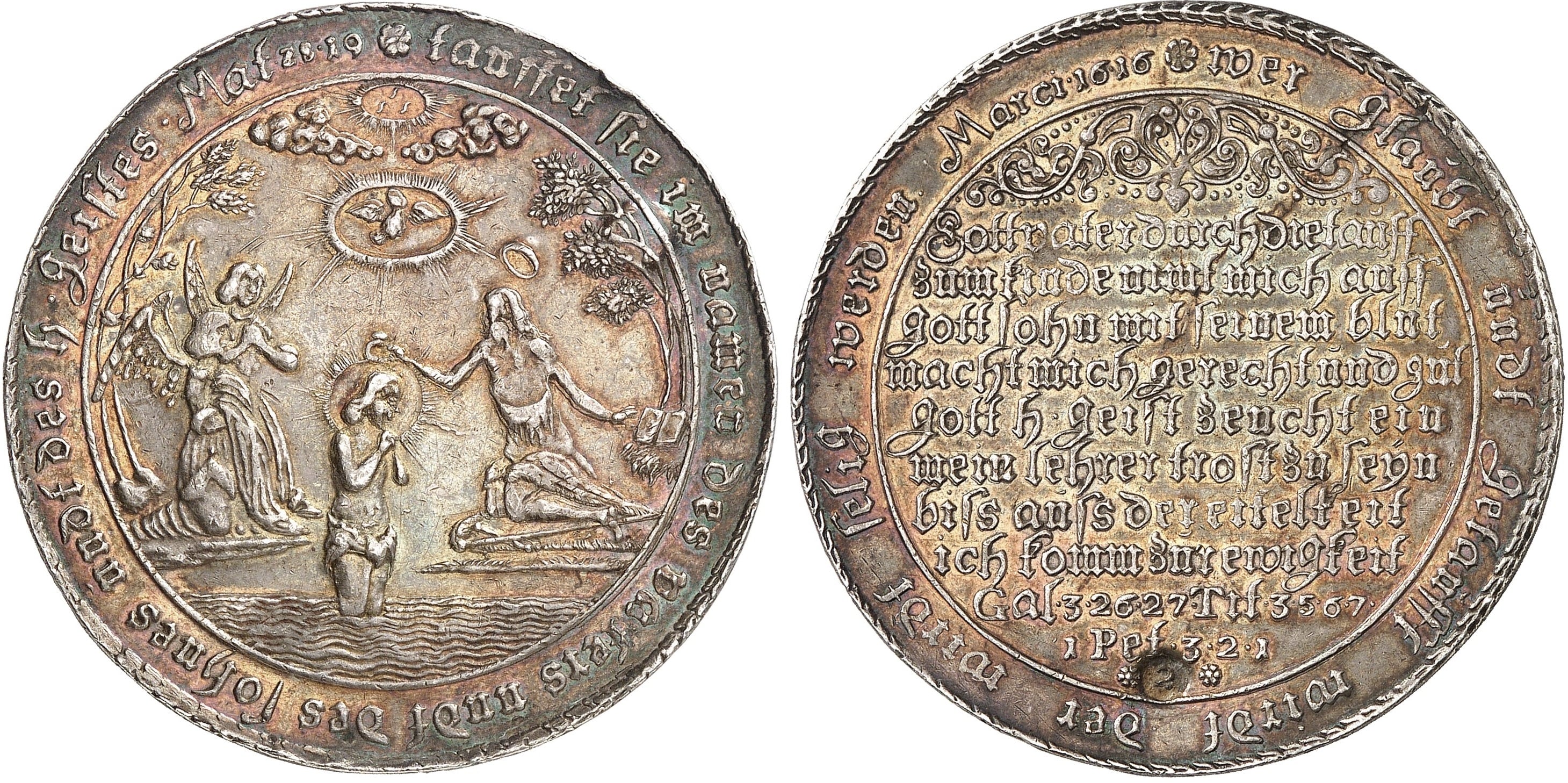
German States - Harz-Zellerfeld - c.1680 Babtismal 2 Taler (Doppeltaler) 52.1 grams, 63mm.
Very nice example!
Excellent Baptismal 2T.
I have a single from a while back:
TalerUniverse.com is a curated numismatic project dedicated to the silver talers, crowns, and medals of the Habsburg Empire and the Holy Roman Empire, spanning the 16th–18th centuries. The collection emphasizes historically significant issues, rare mint varieties, and high-grade NGC/PCGS examples, presented with detailed historical context, scholarly references, and high-resolution photography. TalerUniverse aims to serve both as a private collection showcase and a growing reference resource for collectors, researchers, and students of early-modern European coinage.
I love seeing more Thalers shared here! Great to see your new additions, everyone.
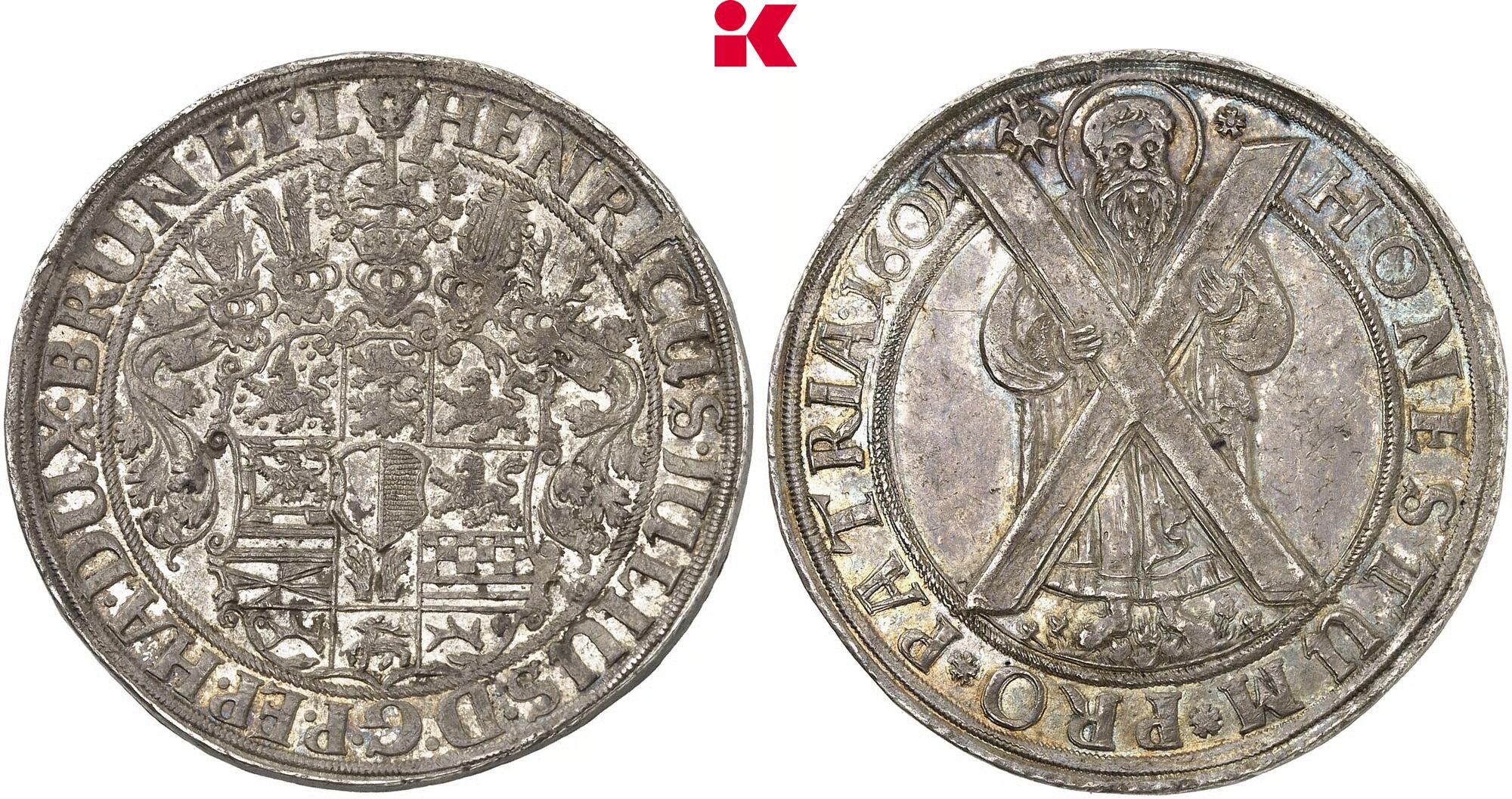
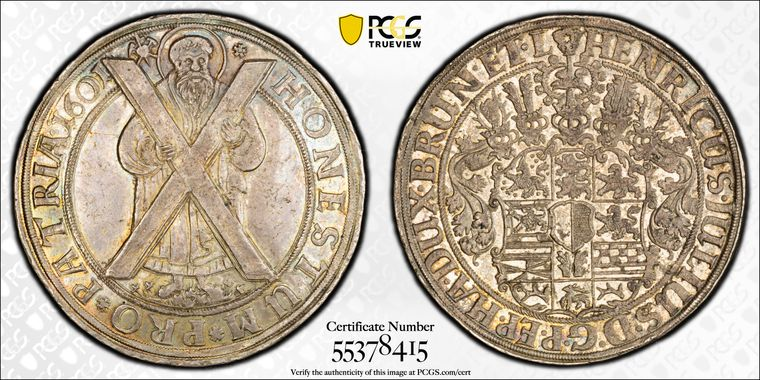
May have posted before, but these two came back from grading today.
1601 Brunswick Taler
Teutontic Order 1/4 Taler
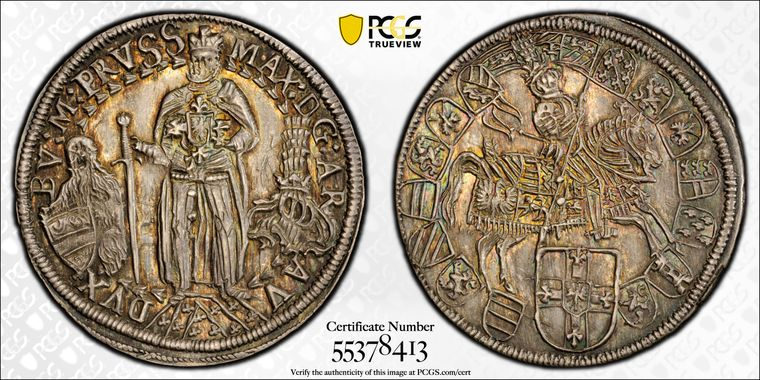
I have had 3 or 4 of these, this one is the highest grade I have achieved at 63...
My current "Box of 20"
Great eye appeal on both. Congrats !
Recently I saved this 1594 Reichstaler from Mansfeld vorderortische Linie from the melting pot (it was ~ 48 Dollars).
Even though it's a mounted coin and seems to have been worn a lot, I consider it to be one of my better finds this year.
The reason is, that the mount on this coin seems to be contemprary. During the 30-year-war (1618 - 1648) the Mansfeld Reichstaler coins (full and fractional denominations) were in high demand because many soldiers and mercenaries hoped for aid from their patron saint, St. George, who is depicted on the coin.
The demand grew so large, that original Reichstaler coins from Mansfeld fetched up to 7 Reichstaler per piece, wich was a considerable amount of money back then.
It would be a shame if this piece of history would have gotten lost to the refiner's crucible, so I'm glad I got the opportunity to save it.
And this showed up today... Freiburg im Breisgau is my wife's hometown and absolutely beautiful. My favorite is the little arrow that tells you the direction of the river!
My current "Box of 20"
@Bob13 awesome pickups always nice to see these posts!
TalerUniverse.com is a curated numismatic project dedicated to the silver talers, crowns, and medals of the Habsburg Empire and the Holy Roman Empire, spanning the 16th–18th centuries. The collection emphasizes historically significant issues, rare mint varieties, and high-grade NGC/PCGS examples, presented with detailed historical context, scholarly references, and high-resolution photography. TalerUniverse aims to serve both as a private collection showcase and a growing reference resource for collectors, researchers, and students of early-modern European coinage.