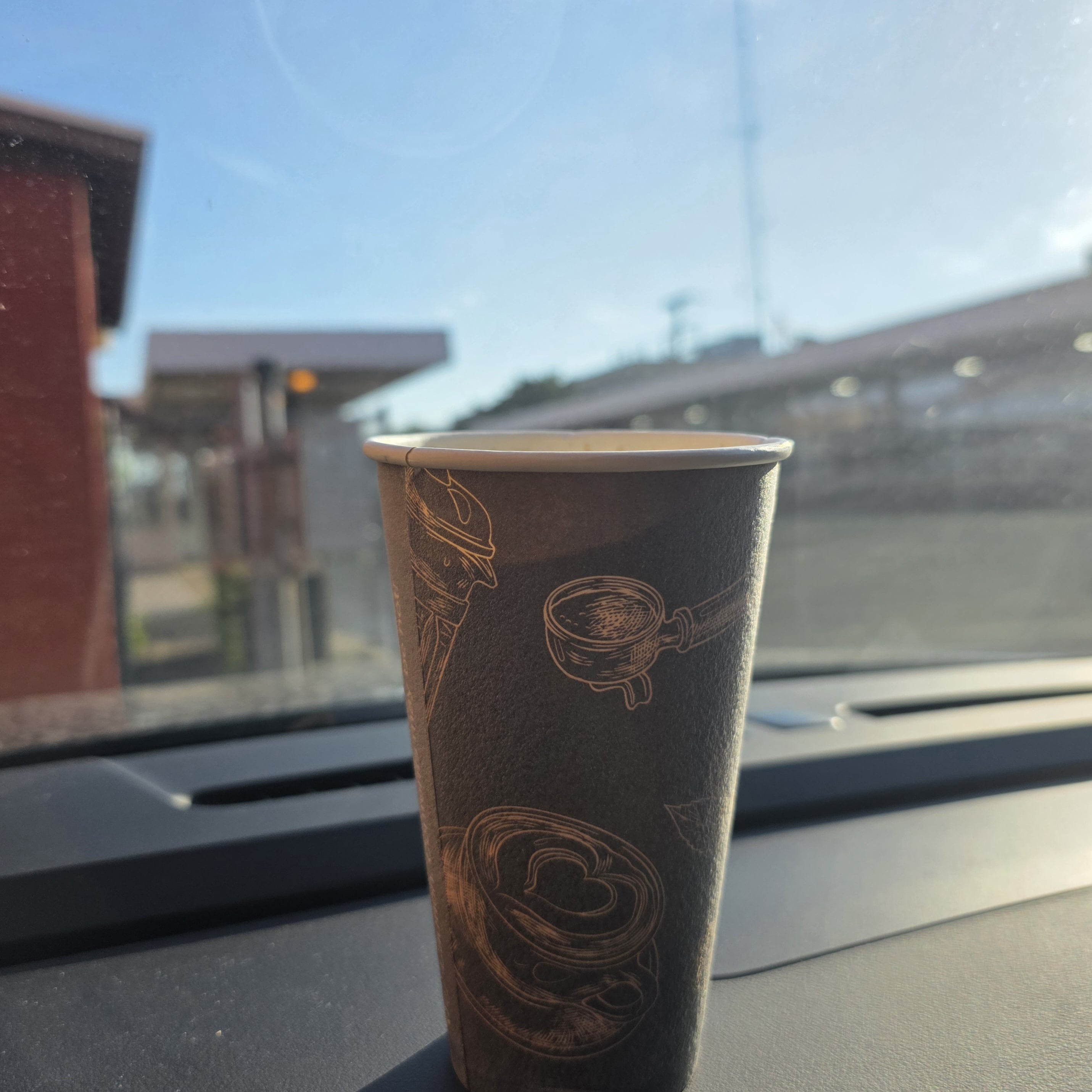
No coffee yet and my photography suck.
Either way, you don't see these beautiful ladies together. They look hot together and nicely toned after we went to the beach together. Love the summer time.....
Happy 4th of July, all. The Big One, "250!"
Here is a new purchase, representing our greatest president. (1916) Thomas L. Elder. Cunningham 10-480S, King-847, DeLorey-55. Silver. NGC MS63
Apparently, "showing the white feather" was a popular phrase for cowardice back in the day. Its use culminated in the early days of WWI, when young British ladies would hand out white feathers to fighting age men who refused to enlist.
Stay caffeinated, America! 🇺🇸
Dead Cat Waltz Exonumia
"Coin collecting for outcasts..."
Happy 4th of July and 250th anniversary everyone! Quite an honor to be alive and have the opportunity to celebrate this momentous occasion of our wonderful country!
Spending time the morning with a beautifully toned 1803 AU 50 CAC Draped Bust Dollar. Fun imagining who may have handled this coin at its origin and through the years.
I never take for granted the privilege we have to all be citizens of this great country!
A very different Red Eye Saturday - Happy 250th to all:
On this special holiday, I thought I would post something “unusual” (for me anyway):
About two years ago, the “Desert Find” discovery was made in Nevada. Among this vast collection were 35 1889-CC Morgan silver dollars in various uncirculated conditions. They were catalogued & auctioned by Heritage.
I recall only a day or two before that sale, I noticed this coin in another Heritage auction. I won it with a fair but not excessive bid. Not only did I like the look/eye appeal, I thought it might be overlooked due to the attention collectors were paying to the “Desert Find” hoard. That assumption proved correct when I witnessed the winning bids for the “DF” auction.
Years ago, I was a Morgan collector. It was great to be able to acquire a coin like this so many years later, as back then I never owned this key date of the series.
So, a different type post today than one of my “usuals”. I hope everyone has a most happy & celebratory 4th of July!
@Inspired70 man that is an inspiring coin!
On this special Saturday I have an old favorite out of the SDB, from the year of death of the truly indispensable man, a man who reminds us to this day that this is a nation of laws, not of men, by walking away from power when his time was over. Happy Fourth everyone!
Other passions include golf, Moto Guzzi motorcycles, and Euro motorcycles in general.
Chris
For various reasons (which some here may understand more than others), James Madison is one of my favorite Founding Fathers.
.
In May of 1787, delegates from each state came together at the Constitutional Convention in Philadelphia, and Madison was able to present his ideas for an effective government system that he called the “Virginia Plan”. This plan detailed a government with three branches: legislative, executive and judicial. Madison took detailed notes during the debates at the convention, which helped to further shape the drafting of the U.S. Constitution and was then signed by the delegates of the Constitutional Convention in September 1787.
Once the new Constitution was written and signed, it still needed to be ratified by 9 of the 13 states. This was not an easy process, as many states felt the Constitution gave the federal government too much power.
Madison, along with Alexander Hamilton, and John Jay, collectively and under the under the pseudonym "Publius", authored The Federalist (commonly referred to as the "Federalist Papers"), a collection of 85 essays written to persuade New York to ratify the U.S. Constitution. Published in New York newspapers (and reprinted in other papers throughout the States) between October of 1787 and May of 1788, these essays explain and defend the Constitution's principles, exploring concepts like federalism, separation of powers, and checks and balances ... and are considered a cornerstone of American political theory.
During this time, supporters of the Constitution were known as Federalists, while critics were called Anti-Federalists.
Later, after the U.S Constitution was ratified, and being elected to the House of Representatives in 1789, Madison worked to draft the Bill of Rights, the group of 10 amendments to the Constitution that spelled out fundamental rights (such as freedom of speech and religion) held by U.S. citizens. The Bill of Rights was ratified by the states in 1791.
In a new, more powerful Congress, Madison and Thomas Jefferson found themselves as great allies, but also disagreeing with the Federalists on key issues dealing with federal debt and power. The two men favored states’ rights and opposed Federalist leader Alexander Hamilton’s proposal for a national bank, the Bank of the United States.
In 1792, Jefferson and Madison founded the Democratic-Republican Party, which has been labeled America’s first opposition political party. Jefferson, Madison and James Monroe were the only Democratic-Republicans ever to become U.S. presidents, as the party divided into competing factions in the 1820s.
When Jefferson became the third president of the United States in 1801, he appointed Madison as the Secretary of State. In this position, which Madison held throughout Jefferson's presidency (1801 to 1809), he also helped acquire the Louisiana Territory from the French in 1803.
Madison would also go on to become the 4th President in our nations History, serving from 1809 to 1817. Despite the challenges he encountered during his presidency, and the criticisms he faced for the War of 1812, Madison was respected as a great thinker, communicator and statesman, and is generally considered the "Father of the Constitution".
Always humble, Madison had stated the Constitution was not “the off-spring of a single brain,” but instead, “the work of many heads and many hands.” He died at Montpelier on June 28, 1836, at the age of 85.
.
Here's a stately 1836 Capped Bust Half Dollar, well struck, and aptly centered, in his honor
.
“We are only their care-takers,” he posed, “if we take good care of them, then centuries from now they may still be here … ”
@pursuitofliberty said:
For various reasons (which some here may understand more than others), James Madison is one of my favorite Founding Fathers.
.
In May of 1787, delegates from each state came together at the Constitutional Convention in Philadelphia, and Madison was able to present his ideas for an effective government system that he called the “Virginia Plan”. This plan detailed a government with three branches: legislative, executive and judicial. Madison took detailed notes during the debates at the convention, which helped to further shape the drafting of the U.S. Constitution and was then signed by the delegates of the Constitutional Convention in September 1787.
Once the new Constitution was written and signed, it still needed to be ratified by 9 of the 13 states. This was not an easy process, as many states felt the Constitution gave the federal government too much power.
Madison, along with Alexander Hamilton, and John Jay, collectively and under the under the pseudonym "Publius", authored The Federalist (commonly referred to as the "Federalist Papers"), a collection of 85 essays written to persuade New York to ratify the U.S. Constitution. Published in New York newspapers (and reprinted in other papers throughout the States) between October of 1787 and May of 1788, these essays explain and defend the Constitution's principles, exploring concepts like federalism, separation of powers, and checks and balances ... and are considered a cornerstone of American political theory.
During this time, supporters of the Constitution were known as Federalists, while critics were called Anti-Federalists.
Later, after the U.S Constitution was ratified, and being elected to the House of Representatives in 1789, Madison worked to draft the Bill of Rights, the group of 10 amendments to the Constitution that spelled out fundamental rights (such as freedom of speech and religion) held by U.S. citizens. The Bill of Rights was ratified by the states in 1791.
In a new, more powerful Congress, Madison and Thomas Jefferson found themselves as great allies, but also disagreeing with the Federalists on key issues dealing with federal debt and power. The two men favored states’ rights and opposed Federalist leader Alexander Hamilton’s proposal for a national bank, the Bank of the United States.
In 1792, Jefferson and Madison founded the Democratic-Republican Party, which has been labeled America’s first opposition political party. Jefferson, Madison and James Monroe were the only Democratic-Republicans ever to become U.S. presidents, as the party divided into competing factions in the 1820s.
When Jefferson became the third president of the United States in 1801, he appointed Madison as the Secretary of State. In this position, which Madison held throughout Jefferson's presidency (1801 to 1809), he also helped acquire the Louisiana Territory from the French in 1803.
Madison would also go on to become the 4th President in our nations History, serving from 1809 to 1817. Despite the challenges he encountered during his presidency, and the criticisms he faced for the War of 1812, Madison was respected as a great thinker, communicator and statesman, and is generally considered the "Father of the Constitution".
Always humble, Madison had stated the Constitution was not “the off-spring of a single brain,” but instead, “the work of many heads and many hands.” He died at Montpelier on June 28, 1836, at the age of 85.
.
Here's a stately 1836 Capped Bust Half Dollar, well struck, and aptly centered, in his honor
.
Excellent post and history lesson! It is always fascinating to see how similar our country is to when it was founded, and also how different. With different times came different evolutions, some good and some bad. At the end of the day, the Constitution still stands as it was when it was written (amendments to the bill of rights aside).
Obv. Capitol building, clouds behind; at base on small ribbon 1936; smaller edifice to l.; at base, on small ribbon 1836; above all, around Wisconsin Territorial Centennial; below all is prone animal (badger?) on dotted line.
Rev. Eagle in upper center panel; to l. 19 / June / 27, to r. 36 / July / 5; above at border Madison; below panel Official / Wisconsin / Centennial / Celebration; stars all around at border.
@Copperindian said:
A very different Red Eye Saturday - Happy 250th to all:
On this special holiday, I thought I would post something “unusual” (for me anyway):
About two years ago, the “Desert Find” discovery was made in Nevada. Among this vast collection were 35 1889-CC Morgan silver dollars in various uncirculated conditions. They were catalogued & auctioned by Heritage.
I recall only a day or two before that sale, I noticed this coin in another Heritage auction. I won it with a fair but not excessive bid. Not only did I like the look/eye appeal, I thought it might be overlooked due to the attention collectors were paying to the “Desert Find” hoard. That assumption proved correct when I witnessed the winning bids for the “DF” auction.
Years ago, I was a Morgan collector. It was great to be able to acquire a coin like this so many years later, as back then I never owned this key date of the series.
So, a different type post today than one of my “usuals”. I hope everyone has a most happy & celebratory 4th of July!
That is truly remarkable! I would be seriously proud to own that!
Comments
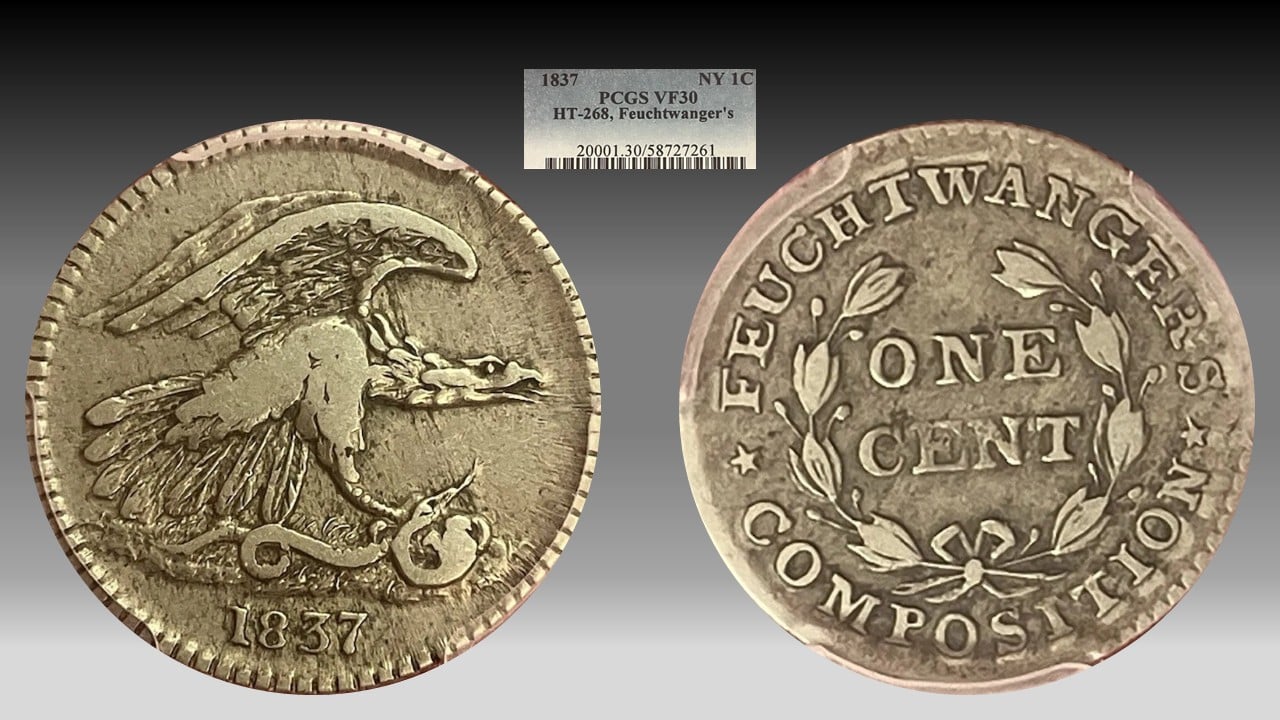
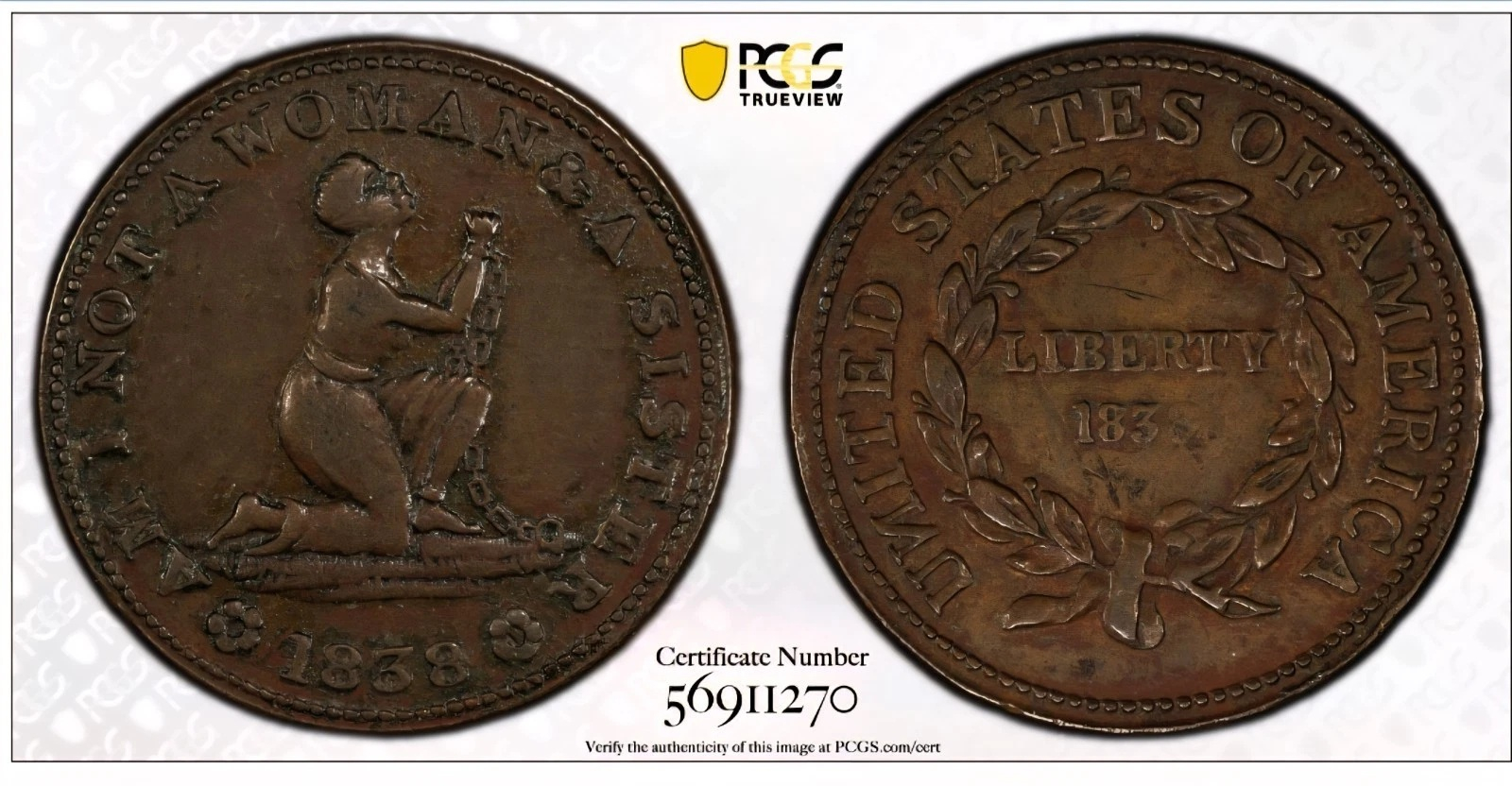
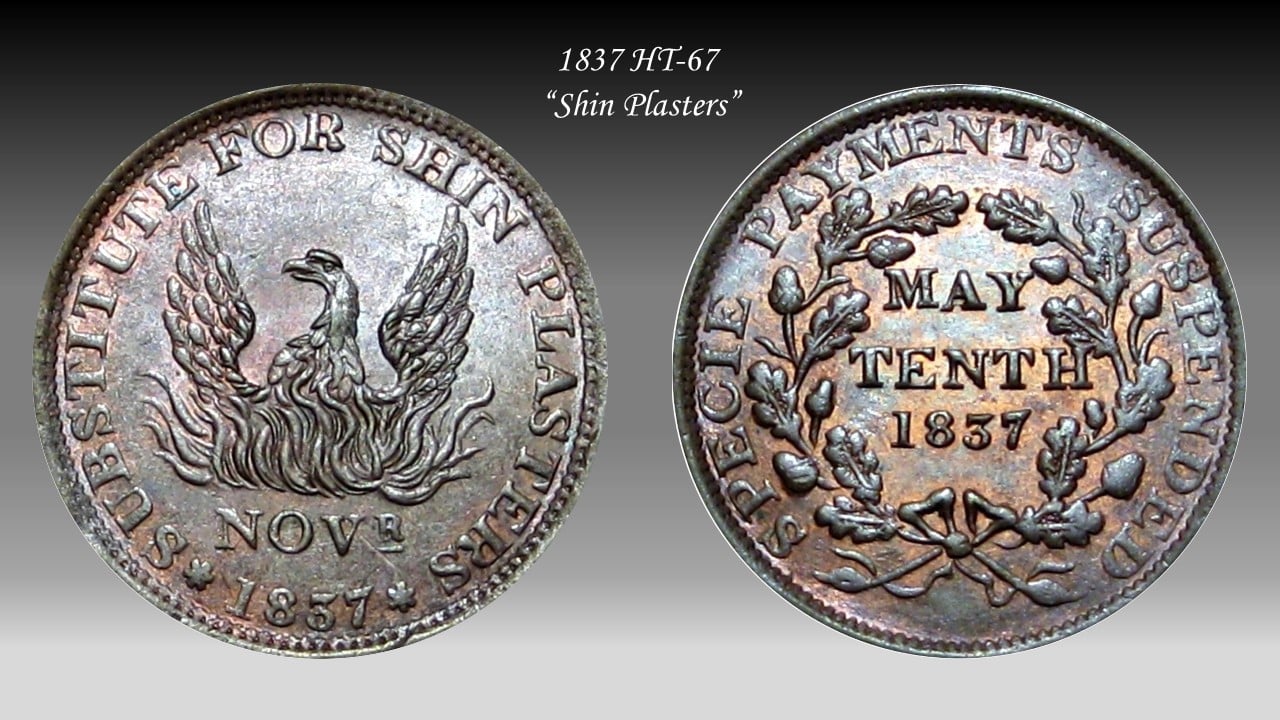
Love the Hard Times Tokens!
Successful BST transactions with: SilverEagles92; Ahrensdad; Smitty; GregHansen; Lablade; Mercury10c; copperflopper; whatsup; KISHU1; scrapman1077, crispy, canadanz, smallchange, robkool, Mission16, ranshdow, ibzman350, Fallguy, Collectorcoins, SurfinxHI, jwitten, Walkerguy21D, dsessom.
No coffee yet and my photography suck.
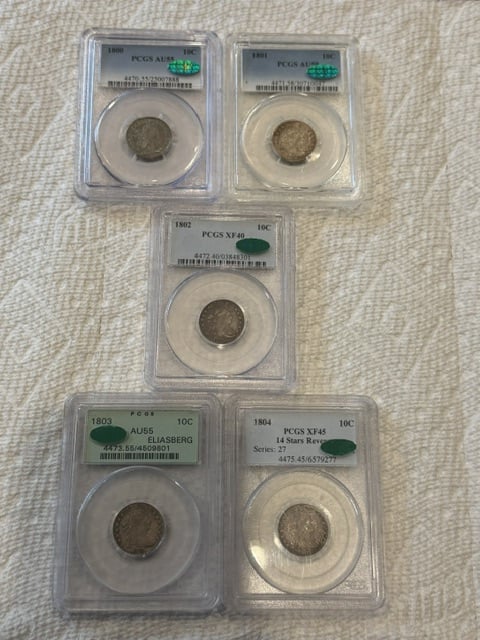
Either way, you don't see these beautiful ladies together. They look hot together and nicely toned after we went to the beach together. Love the summer time.....
This half arrived at about noon today. Very frosty.
Happy 4th of July, all. The Big One, "250!"
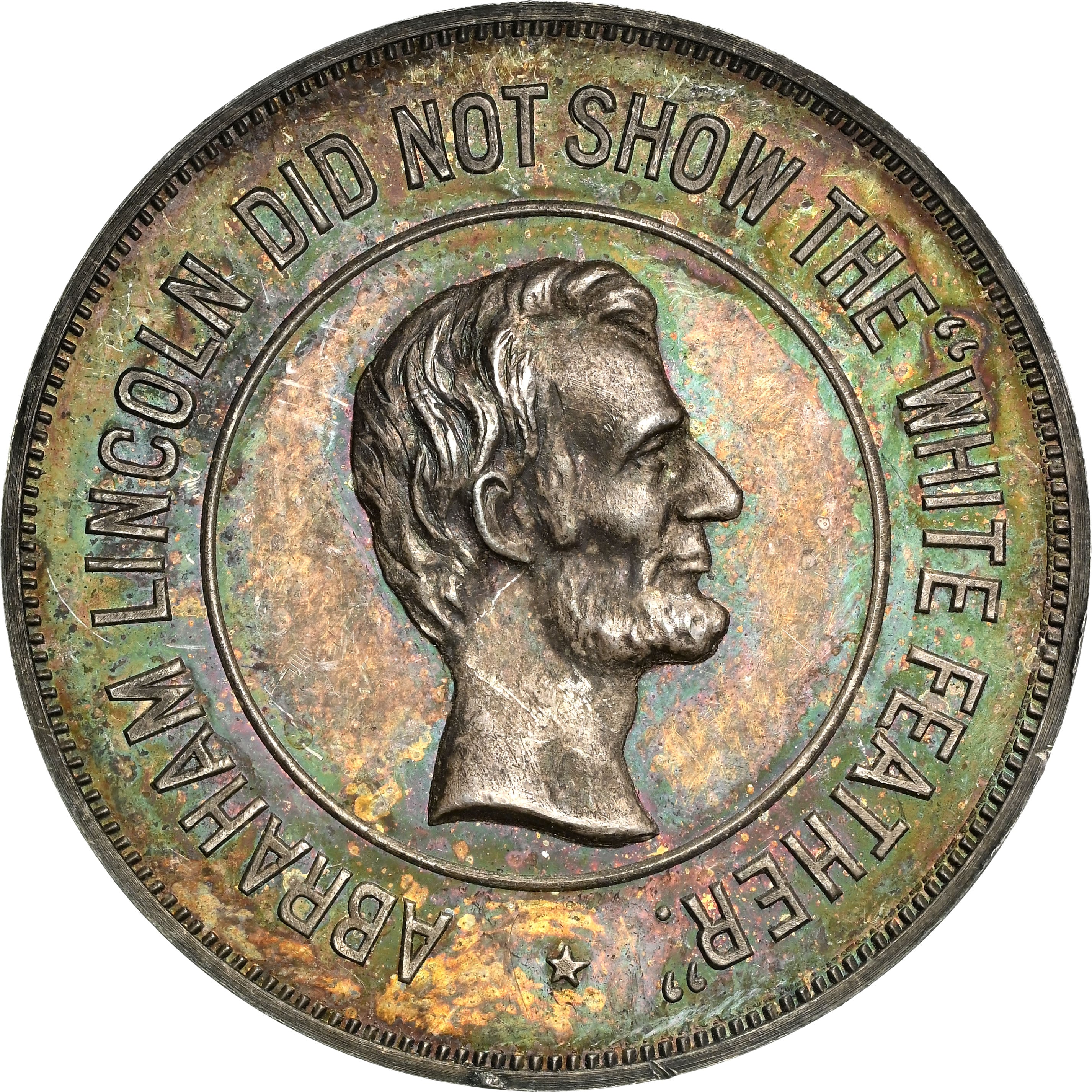
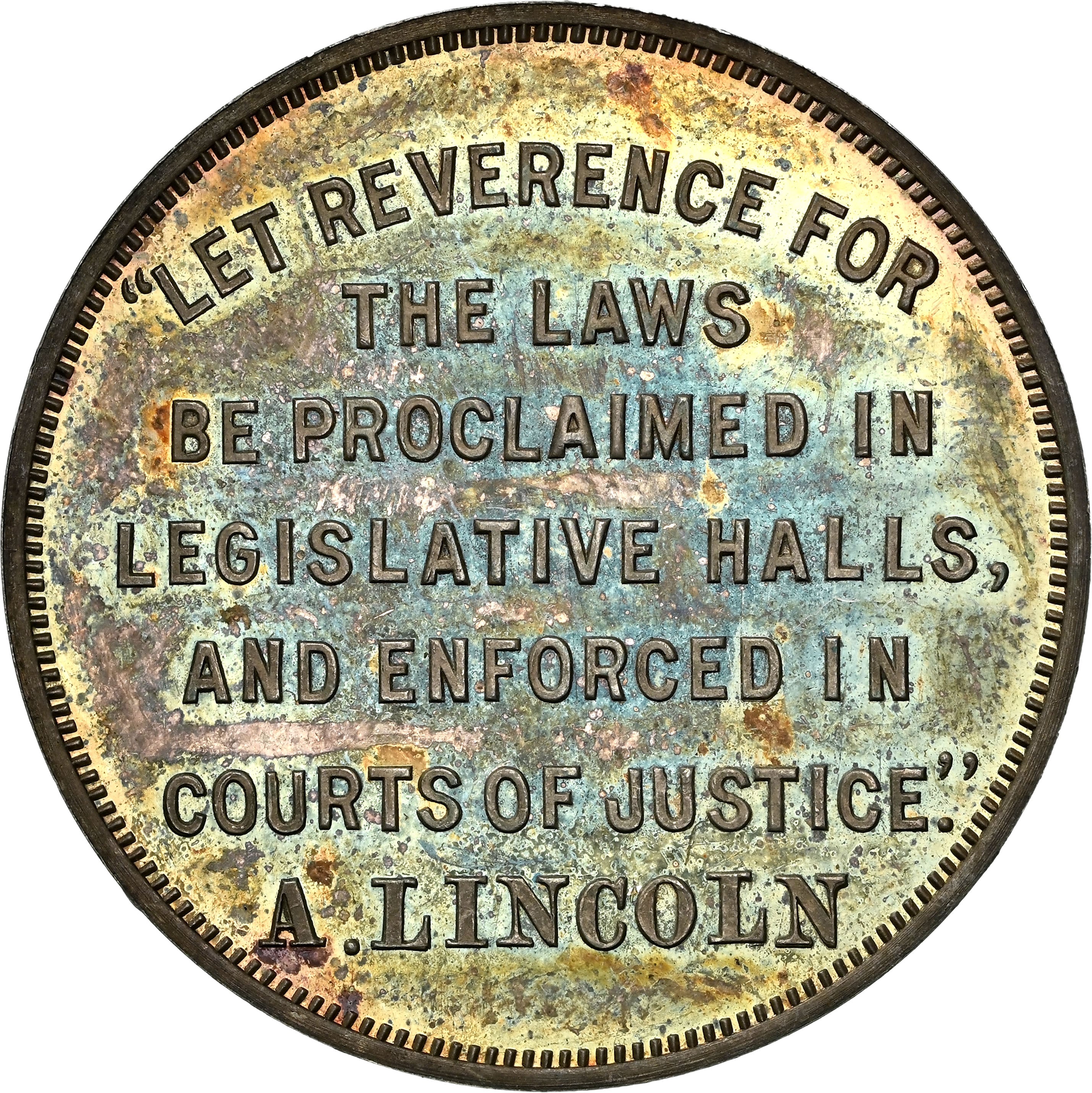
Here is a new purchase, representing our greatest president.
(1916) Thomas L. Elder. Cunningham 10-480S, King-847, DeLorey-55. Silver. NGC MS63
Apparently, "showing the white feather" was a popular phrase for cowardice back in the day. Its use culminated in the early days of WWI, when young British ladies would hand out white feathers to fighting age men who refused to enlist.
Stay caffeinated, America! 🇺🇸
Dead Cat Waltz Exonumia
"Coin collecting for outcasts..."
USN & USAF retired 1971-1993
Successful Transactions with more than 100 Members
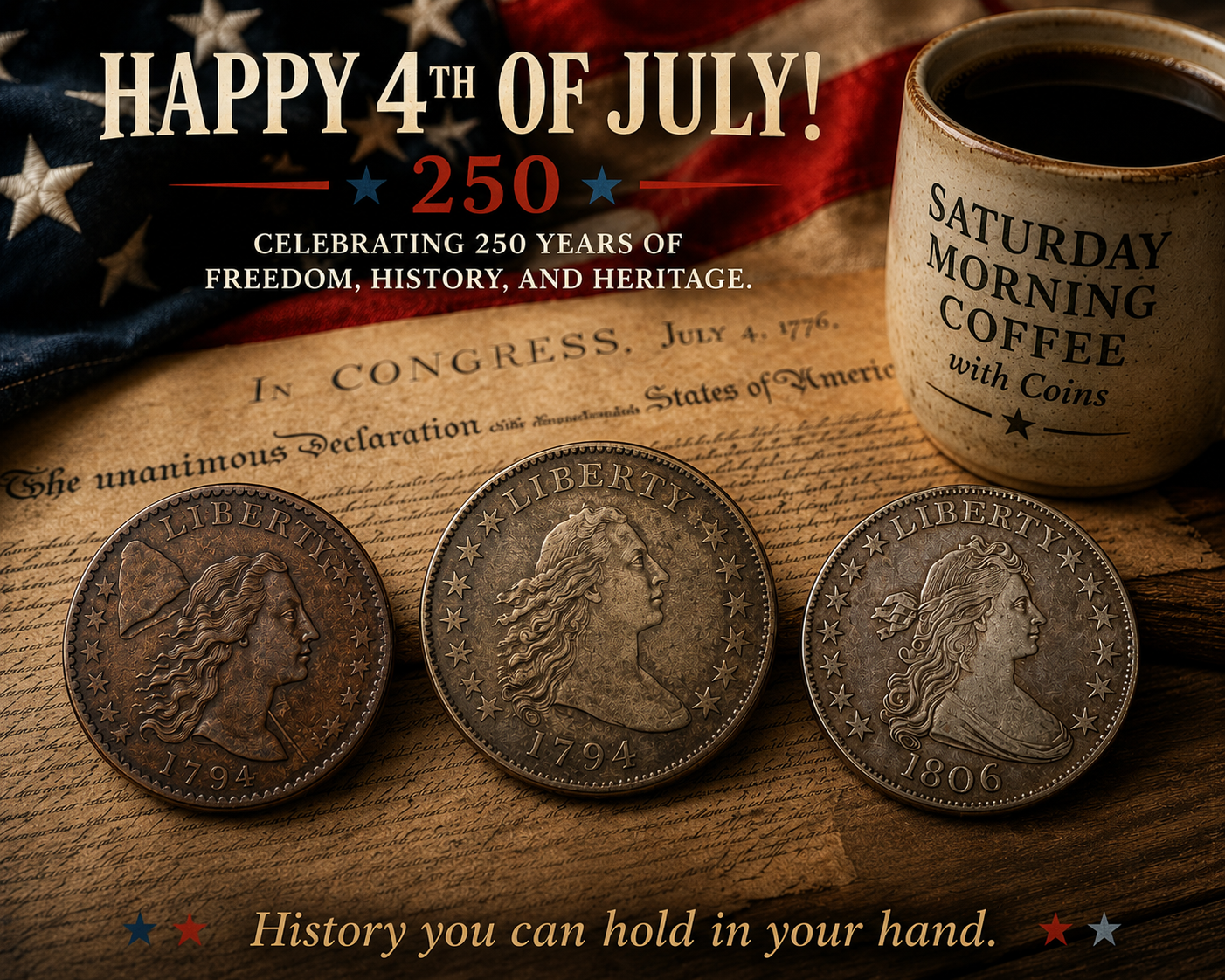
Good Morning and Happy 250th!!
Successful BST transactions with: SilverEagles92; Ahrensdad; Smitty; GregHansen; Lablade; Mercury10c; copperflopper; whatsup; KISHU1; scrapman1077, crispy, canadanz, smallchange, robkool, Mission16, ranshdow, ibzman350, Fallguy, Collectorcoins, SurfinxHI, jwitten, Walkerguy21D, dsessom.
Happy 4th of July and 250th anniversary everyone! Quite an honor to be alive and have the opportunity to celebrate this momentous occasion of our wonderful country!
Spending time the morning with a beautifully toned 1803 AU 50 CAC Draped Bust Dollar. Fun imagining who may have handled this coin at its origin and through the years.
I never take for granted the privilege we have to all be citizens of this great country!
A very different Red Eye Saturday - Happy 250th to all:
On this special holiday, I thought I would post something “unusual” (for me anyway):
About two years ago, the “Desert Find” discovery was made in Nevada. Among this vast collection were 35 1889-CC Morgan silver dollars in various uncirculated conditions. They were catalogued & auctioned by Heritage.
I recall only a day or two before that sale, I noticed this coin in another Heritage auction. I won it with a fair but not excessive bid. Not only did I like the look/eye appeal, I thought it might be overlooked due to the attention collectors were paying to the “Desert Find” hoard. That assumption proved correct when I witnessed the winning bids for the “DF” auction.
Years ago, I was a Morgan collector. It was great to be able to acquire a coin like this so many years later, as back then I never owned this key date of the series.
So, a different type post today than one of my “usuals”. I hope everyone has a most happy & celebratory 4th of July!
“The thrill of the hunt never gets old”
PCGS Registry: Screaming Eagles
Copperindian
Copperindian II
Indy Eagles
Gold Rush
Retired sets: Soaring Eagles
Copperindian
Nickelodeon
Early Walkers
Successful transactions: redraider, winesteven, renomedphys, splitaces, oreville, ajaan, Cent1225, onlyroosies, justindan, blitzdude, DesertMoon, johnnyb, Heubschgold, SunshineRareCoins, ParadimeCoins, ndeagles, Southern_Knights, pcgsregistrycollector
@Inspired70 man that is an inspiring coin!
On this special Saturday I have an old favorite out of the SDB, from the year of death of the truly indispensable man, a man who reminds us to this day that this is a nation of laws, not of men, by walking away from power when his time was over. Happy Fourth everyone!
Other passions include golf, Moto Guzzi motorcycles, and Euro motorcycles in general.
Chris
Happy BIG 250th to America! Our beautiful US coinage is a fitting tribute. Great thread guys.
Coin Photography
For various reasons (which some here may understand more than others), James Madison is one of my favorite Founding Fathers.
.
In May of 1787, delegates from each state came together at the Constitutional Convention in Philadelphia, and Madison was able to present his ideas for an effective government system that he called the “Virginia Plan”. This plan detailed a government with three branches: legislative, executive and judicial. Madison took detailed notes during the debates at the convention, which helped to further shape the drafting of the U.S. Constitution and was then signed by the delegates of the Constitutional Convention in September 1787.
Once the new Constitution was written and signed, it still needed to be ratified by 9 of the 13 states. This was not an easy process, as many states felt the Constitution gave the federal government too much power.
Madison, along with Alexander Hamilton, and John Jay, collectively and under the under the pseudonym "Publius", authored The Federalist (commonly referred to as the "Federalist Papers"), a collection of 85 essays written to persuade New York to ratify the U.S. Constitution. Published in New York newspapers (and reprinted in other papers throughout the States) between October of 1787 and May of 1788, these essays explain and defend the Constitution's principles, exploring concepts like federalism, separation of powers, and checks and balances ... and are considered a cornerstone of American political theory.
During this time, supporters of the Constitution were known as Federalists, while critics were called Anti-Federalists.
Later, after the U.S Constitution was ratified, and being elected to the House of Representatives in 1789, Madison worked to draft the Bill of Rights, the group of 10 amendments to the Constitution that spelled out fundamental rights (such as freedom of speech and religion) held by U.S. citizens. The Bill of Rights was ratified by the states in 1791.
In a new, more powerful Congress, Madison and Thomas Jefferson found themselves as great allies, but also disagreeing with the Federalists on key issues dealing with federal debt and power. The two men favored states’ rights and opposed Federalist leader Alexander Hamilton’s proposal for a national bank, the Bank of the United States.
In 1792, Jefferson and Madison founded the Democratic-Republican Party, which has been labeled America’s first opposition political party. Jefferson, Madison and James Monroe were the only Democratic-Republicans ever to become U.S. presidents, as the party divided into competing factions in the 1820s.
When Jefferson became the third president of the United States in 1801, he appointed Madison as the Secretary of State. In this position, which Madison held throughout Jefferson's presidency (1801 to 1809), he also helped acquire the Louisiana Territory from the French in 1803.
Madison would also go on to become the 4th President in our nations History, serving from 1809 to 1817. Despite the challenges he encountered during his presidency, and the criticisms he faced for the War of 1812, Madison was respected as a great thinker, communicator and statesman, and is generally considered the "Father of the Constitution".
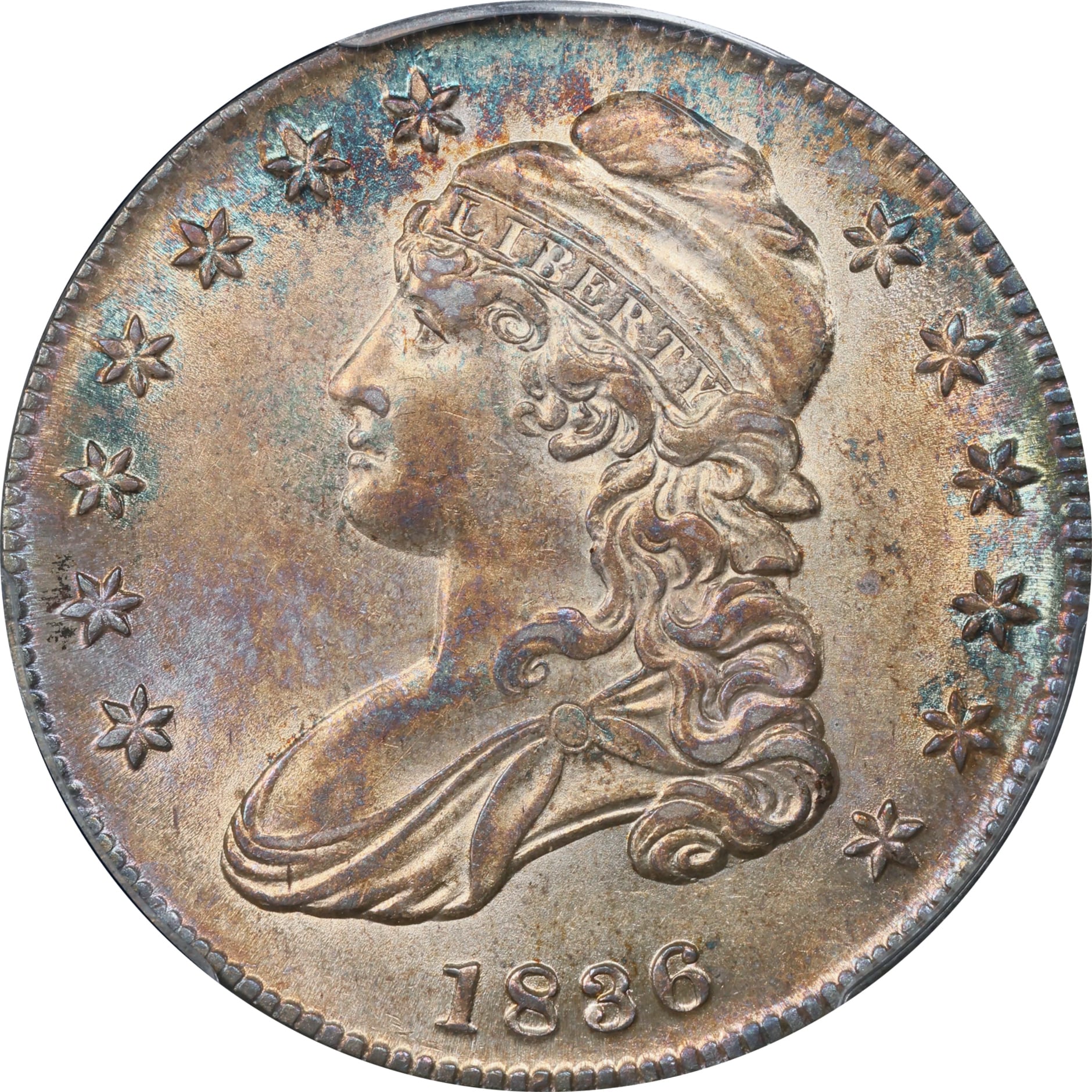
Always humble, Madison had stated the Constitution was not “the off-spring of a single brain,” but instead, “the work of many heads and many hands.” He died at Montpelier on June 28, 1836, at the age of 85.
.
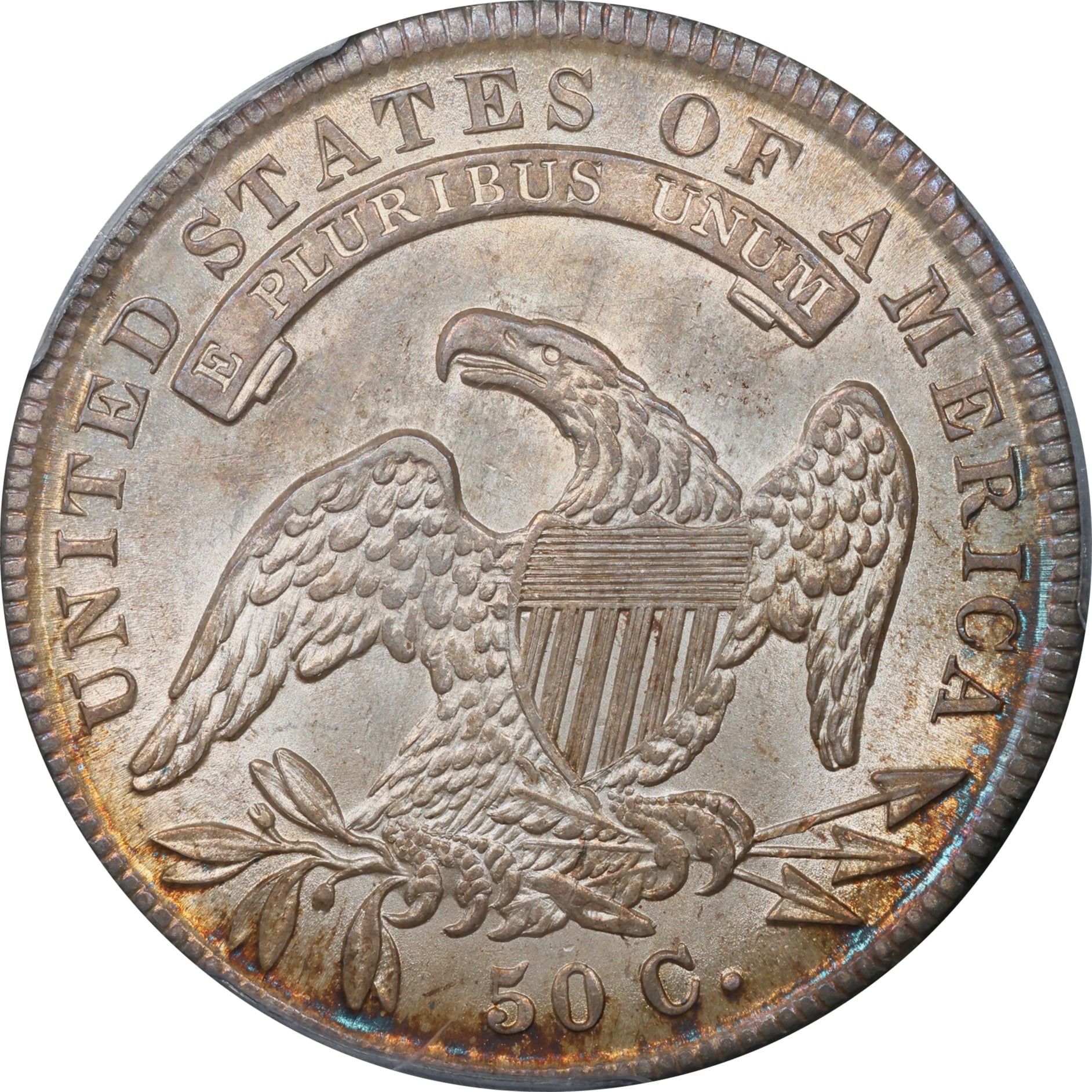
Here's a stately 1836 Capped Bust Half Dollar, well struck, and aptly centered, in his honor
.
“We are only their care-takers,” he posed, “if we take good care of them, then centuries from now they may still be here … ”
Todd - BHNC #242
Excellent post and history lesson! It is always fascinating to see how similar our country is to when it was founded, and also how different. With different times came different evolutions, some good and some bad. At the end of the day, the Constitution still stands as it was when it was written (amendments to the bill of rights aside).
Coin Photography
Soon to be graded.
Ms 65
HK-696 Bronze. 37mm.
Obv. Capitol building, clouds behind; at base on small ribbon 1936; smaller edifice to l.; at base, on small ribbon 1836; above all, around Wisconsin Territorial Centennial; below all is prone animal (badger?) on dotted line.
Rev. Eagle in upper center panel; to l. 19 / June / 27, to r. 36 / July / 5; above at border Madison; below panel Official / Wisconsin / Centennial / Celebration; stars all around at border.
PCGS MS-64:
This picture should have been posted this morning so as to chase the morning cobwebs away. Oh well, it's good prep for the evening fireworks!
"She comes out of the sun in a silk dress,
running like a water color in the rain...."
That is truly remarkable! I would be seriously proud to own that!
My YouTube Channel