Options
A look at Capped Bust, Reeded Edge half dollars
 BillJones
Posts: 35,786 ✭✭✭✭✭
BillJones
Posts: 35,786 ✭✭✭✭✭
During the period from 1836 to 1839 the Philadelphia and New Orleans mints produced a group of half dollars that reflected a new technology for American coin production despite the fact that the designs were very similar to those that had been used since 1807. In 1836 Philadelphia mint used steam presses to strike the first American coins for general circulation.
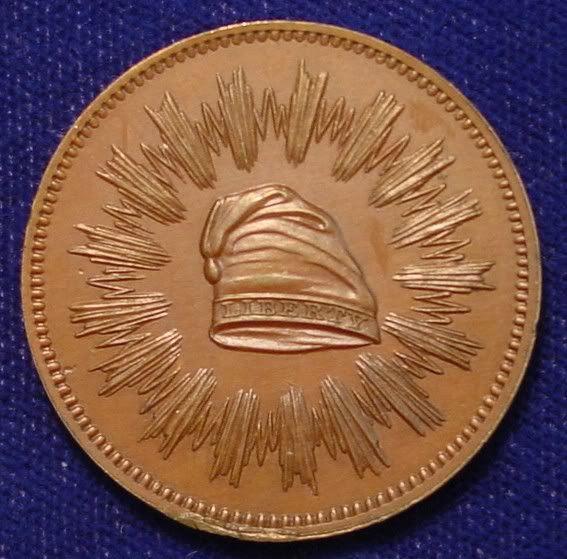
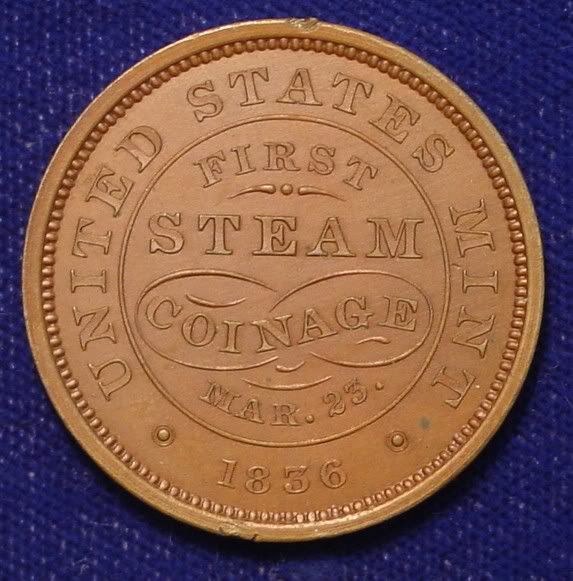
To mark that event the mint produced a commemorative medal. The début date was scheduled to be Washington’s Birthday, February 22, 1836, but technical problems delayed that event to March 23. The Philadelphia mint a small number of medals with the February date, but then changed it to March by re-engraving the obverse die. Below is and example of the far more common March 23 piece. This event was view with enough importance that the mint continued to make copies of this medal for many years, well into the 20th century.
By the fall of 1836 Christian Gobrecht had produced a set of dies from the first Capped Bust, Reeded Edge half dollars. The reported mintage was 1,200. For many years these coins were said to patterns, but researcher Robert Julian has found that the coins were probably made for circulation. He bases this assertion on the fact that the coins were produced under an old weight standard that was changed early in 1837. Still the adjustment in the weight was small enough to be within the weight tolerances for a legal coin. Nevertheless 1,200 coins is a very high mintage for a pattern, and most collector now consider the 1836 Reed Edge half dollar to be a low mintage regular issue.
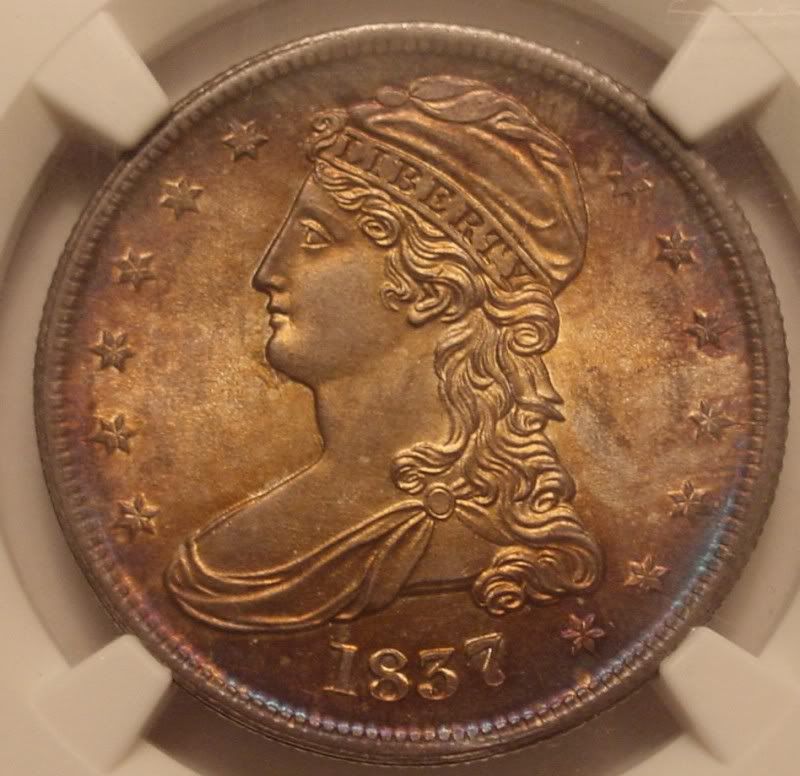
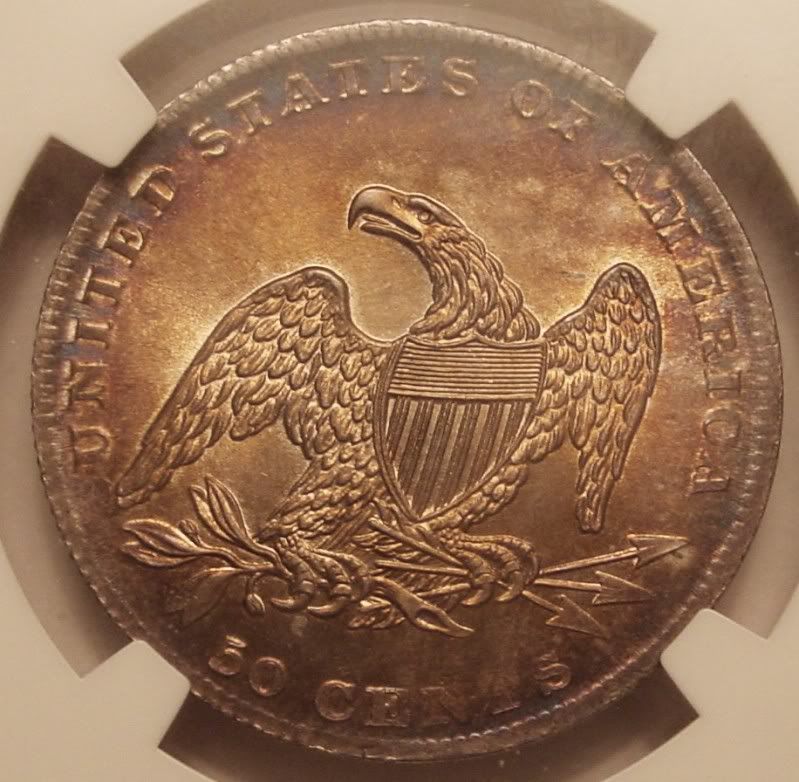
With a mintage of over 3.6 million pieces, the 1837 half dollar is a much more “price friendly” option for type collectors who are looking for example of the first half dollars struck on steam presses. The coins show up with some frequency in EF and AU although nice original Mint State pieces are not that easy to find. These pieces had their face value spelled out as “50 CENTS” at the bottom of the reverse which immediately distinguishes them from the type that follows.
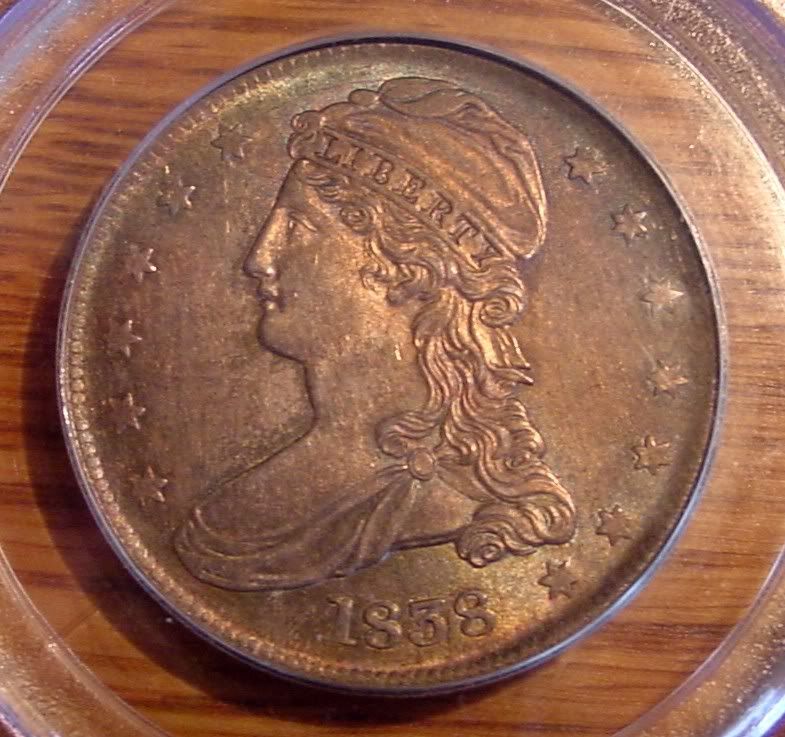
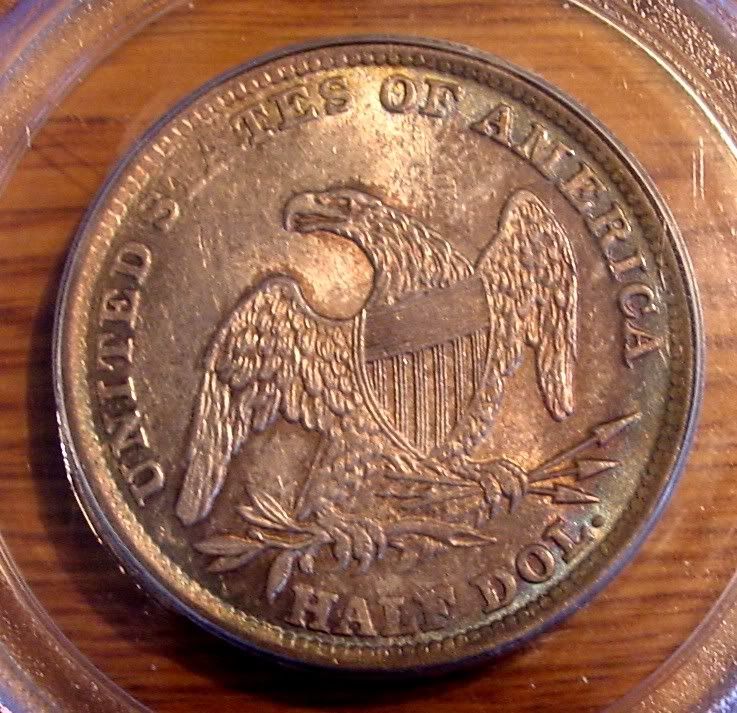
In 1838 Gobrecht modified the reverse. The most noticeable difference was that the denomination was now defined as “HALF DOL.” although there are other differences discernable upon a detailed comparison of the two reverses. The reverse lettering is thicker and bolder, and the protective rim around the coin is higher. This last change made the coin more durable while it was in circulation and probably prolonged its useful life. The eagle is also a bit larger and stockier.
The net result, from my perspective, is that the 1838-9 coins probably faired better in circulation. Given the inadequate protective rims and more delicate lettering, it would seem that the 1836-7 coins would have worn down quicker in circulation. Oddly these coins are not often seen in heavily worn condition which suggests that the mint may have removed a fair number of them from the channels of commerce after they had acquired a certain amount of wear. Many type collectors acquire only one example of the Capped Bust, Reeded Edge half dollar and ignore the minor change in the wording for the value of the coin. This is a perfectly legitimate option that budget minded collectors should consider.
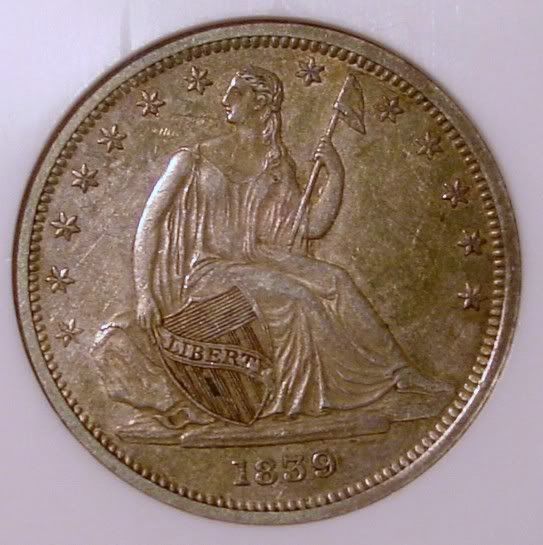
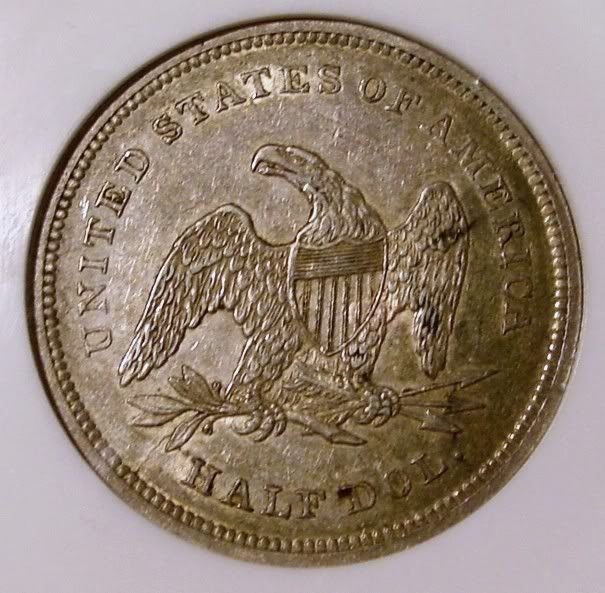
Later in 1839 Gobrecht introduced his Liberty Seated design to the half dollar. The 1939 Liberty Seated half dollars are known with and without the drapery from Ms. Liberty’s elbow. The Without Drapery type is rather scarce. The Liberty Seated design would continue for over 50 years until it was finally replaced by the Barber half dollar in 1892.
To mark that event the mint produced a commemorative medal. The début date was scheduled to be Washington’s Birthday, February 22, 1836, but technical problems delayed that event to March 23. The Philadelphia mint a small number of medals with the February date, but then changed it to March by re-engraving the obverse die. Below is and example of the far more common March 23 piece. This event was view with enough importance that the mint continued to make copies of this medal for many years, well into the 20th century.
By the fall of 1836 Christian Gobrecht had produced a set of dies from the first Capped Bust, Reeded Edge half dollars. The reported mintage was 1,200. For many years these coins were said to patterns, but researcher Robert Julian has found that the coins were probably made for circulation. He bases this assertion on the fact that the coins were produced under an old weight standard that was changed early in 1837. Still the adjustment in the weight was small enough to be within the weight tolerances for a legal coin. Nevertheless 1,200 coins is a very high mintage for a pattern, and most collector now consider the 1836 Reed Edge half dollar to be a low mintage regular issue.
With a mintage of over 3.6 million pieces, the 1837 half dollar is a much more “price friendly” option for type collectors who are looking for example of the first half dollars struck on steam presses. The coins show up with some frequency in EF and AU although nice original Mint State pieces are not that easy to find. These pieces had their face value spelled out as “50 CENTS” at the bottom of the reverse which immediately distinguishes them from the type that follows.
In 1838 Gobrecht modified the reverse. The most noticeable difference was that the denomination was now defined as “HALF DOL.” although there are other differences discernable upon a detailed comparison of the two reverses. The reverse lettering is thicker and bolder, and the protective rim around the coin is higher. This last change made the coin more durable while it was in circulation and probably prolonged its useful life. The eagle is also a bit larger and stockier.
The net result, from my perspective, is that the 1838-9 coins probably faired better in circulation. Given the inadequate protective rims and more delicate lettering, it would seem that the 1836-7 coins would have worn down quicker in circulation. Oddly these coins are not often seen in heavily worn condition which suggests that the mint may have removed a fair number of them from the channels of commerce after they had acquired a certain amount of wear. Many type collectors acquire only one example of the Capped Bust, Reeded Edge half dollar and ignore the minor change in the wording for the value of the coin. This is a perfectly legitimate option that budget minded collectors should consider.
Later in 1839 Gobrecht introduced his Liberty Seated design to the half dollar. The 1939 Liberty Seated half dollars are known with and without the drapery from Ms. Liberty’s elbow. The Without Drapery type is rather scarce. The Liberty Seated design would continue for over 50 years until it was finally replaced by the Barber half dollar in 1892.
Retired dealer and avid collector of U.S. type coins, 19th century presidential campaign medalets and selected medals. In recent years I have been working on a set of British coins - at least one coin from each king or queen who issued pieces that are collectible. I am also collecting at least one coin for each Roman emperor from Julius Caesar to ... ?
0
Comments
Your posts are awesome! That commemorative medal is one of the few medals that would interest me. It is very cool and an amazing piece of history. Who designed it, do you know? Was it Christian Gobrecht?
Greg
Not really looking for much these days but if I were, it might be a toner.
Many members on this forum that now it cannot fit in my signature. Please ask for entire list.
<< <i>Thank you Bill... always enjoy your very informative posts. Cheers, RickO >>
This is exactly what I was going to type. Plus the coins that come along in his posts are awesome.
Too many positive BST transactions with too many members to list.
Lance.
<< <i>Yes, Gobrecht designed that medal. He had this design, which was "borrowed" from Mexican coins, as we see from this pattern gold dollar.
that's one of my favorite patterns, I'd love to have one someday
Here's my reeded edge half
Liberty: Parent of Science & Industry
I knew it would happen.
<< <i>I like both of those Gobrecht obverses. Nice post, Bill. How long did the Mint stay with the steam presses, if you happen to know? Is there any technical data on them, i.e. striking pressures, capacity, etc? >>
Unfortunately I don't know the answer to that question at the moment, but I'll see what I can do to get an answer.