Options
One of the reasons I collect coins...the history.
 Billet7
Posts: 4,923 ✭✭✭
Billet7
Posts: 4,923 ✭✭✭
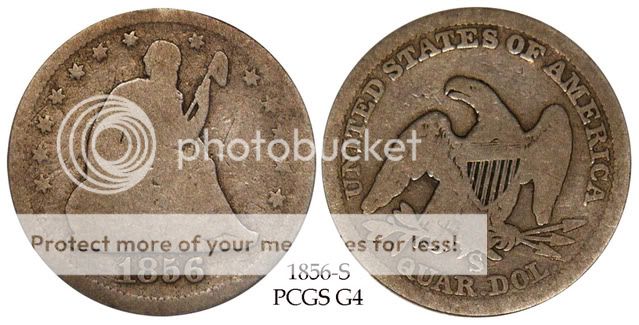
One of the reasons I collect coins is that they bring history alive for me. Many times I am able to remember specific events in history because of the correlation I can make to certain coins in my collection. This is the case with my 1856 seated quarters. I live in Utah, and there is a prevelant story about the Willie and Martin Handcart Companies. This story is about the overland trek of two early handcart pioneer companies, and the disaster that followed. Below are the coins that I relate to the story, below that is a piece of artwork that I did to commemorate the event (Currently hanging in the Springville Museum of Art,) and below that is an excerpt from www.wikipedia.org about the disaster.
I hope you enjoy my little adventure into history!

Crossing the North Platte, before the blizzard. 24x48, Oil on Linen, Image Copyrighted

"Disaster and rescue of the Willie and Martin Handcart Companies:
In early October the two companies reached Fort Laramie, Wyoming, where they expected to be restocked with provisions, but no provisions were there for them. The companies had to cut back food rations, hoping that their supplies would last until help could be sent from Utah. To lighten their loads, the Martin Company cut the luggage allowance to 10 pounds (4.5 kg) per person, discarding clothing and blankets that soon would be desperately needed.[24]
Dramatization of man pulling handcart through snowOn October 4 the Richards party reached Salt Lake City and conferred with president Brigham Young and other Church leaders. The next morning the Church was meeting in a general conference, where Young and the other speakers called on the Church members to provide wagons, mules, supplies, and teamsters for a rescue mission. On the morning of October 7 the first rescue party left Salt Lake City with 16 wagonloads of food and supplies, pulled by four-mule teams with 27 young men serving as teamsters and rescuers. The party elected George D. Grant as their captain. Throughout October more wagon trains were assembled, and by the end of the month 250 relief wagons were on the road.[25]
Meanwhile, the Willie and Martin companies were running out of food and encountering bitterly cold temperatures. On October 19 a blizzard struck the region, halting the two companies and the relief party. The Willie Company was along the Sweet water River approaching the Continental Divide. A scouting party sent ahead by the main rescue party found and greeted the emigrants, gave them a small amount of flour, encouraged them that rescue was near, and then rushed onward to try to locate the Martin Company.[26] The members of the Willie Company had just reached the end of their flour supplies. They began slaughtering the handful of broken-down cattle that still remained while their death toll mounted. On October 20 Captain Willie and Joseph Elder went ahead by mule through the snow to locate the supply train and inform them of the company's desperate situation. They arrived at the rescue party's campsite near South Pass that evening, and by the next evening the rescue party reached the Willie Company and provided them with food and assistance. Half of the rescue party remained to assist the Willie Company while the other half pressed forward to assist the Martin Company. The difficulties of the Willie Company were not yet over. On October 23, the second day after the main rescue party had arrived, the Willie Company faced the most difficult section of the trail—the ascent up Rocky Ridge. The climb took place during a howling snowstorm through knee-deep snow. That night 13 emigrants died.[27]
On October 19, the Martin Company was about 110 miles (177 km) further east, making its last crossing of the North Platte River near present-day Casper, Wyoming.[28] Shortly after completing the crossing, the blizzard struck. Many members of the company suffered from hypothermia or frostbite after wading through the frigid river. They set up camp at Red Bluffs, unable to continue forward through the snow. Meanwhile the original scouting party continued eastward until it reached a small vacant fort at Devil's Gate, where they had been instructed to wait for the rest of the rescue party if they had not found the Martin Company. When the main rescue party rejoined them, another scouting party consisting of Joseph Young, Abel Garr, and Daniel Webster Jones was sent forward. The Martin company remained in their camp at Red Bluffs for nine days until the three scouts finally arrived on October 28. By the time the scouts arrived, 56 members of the company had died. The scouts urged the emigrants to begin moving again. Three days later the main rescue party met the Martin Company and the Hodgett and Hunt wagon companies and helped them on to Devil's Gate.[29]
George D. Grant, who headed the rescue party, reported to President Young:[30]
“ It is not of much use for me to attempt to give a description of the situation of these people, for this you will learn from [others]; but you can imagine between five and six hundred men, women and children, worn down by drawing hand carts through snow and mud; fainting by the wayside; falling, chilled by the cold; children crying, their limbs stiffened by cold, their feet bleeding and some of them bare to snow and frost. The sight is almost too much for the stoutest of us; but we go on doing all we can, not doubting nor despairing. ”
Martin's Cove, WyomingAt Devil's Gate the rescue party unloaded the baggage carried in the wagons of the Hodgett and Hunt wagon companies that had been following the Martin Company so the wagons could be used to transport the weakest emigrants. A small group remained at Devil's Gate over the winter to protect the property. On November 4 the company had to cross the Sweet water River, which was about 2 feet (0.6 m) deep and 90 to 120 feet (27 to 37 m) wide. The stream was clogged with floating ice. The young men of the rescue party (accounts mention George W. Grant, C. Allen Huntington, David P. Kimball, and Stephen W. Taylor) spent much of the day pulling the carts and carrying many of the emigrants across the river. Andrew Jensen later stated that some of the young rescuers died from the effects of the exposure.[31] The severe weather forced the Martin Company to halt for another five days at Martin's Cove, a few miles west of Devil's Gate.[32]
The rescue parties escorted the emigrants from both companies to Utah through more snow and severe weather while their members continued to suffer death from disease and exposure. The Willie Company arrived in Salt Lake City on November 9; 68 members of the company had lost their lives.[33]
Meanwhile, a backup relief party of 77 teams and wagons was making its way east to provide additional assistance to the Martin Company. After passing Fort Bridger the leaders of the backup party concluded that the Martin Company must have wintered east of the Rockies, so they turned back. When word of the returning backup relief party was communicated to Young, he ordered the courier to return and tell them to turn back east and continue until they found the handcart company, but several days had been lost. On November 18 the backup party met the Martin Company with the greatly needed supplies. At last all the members of the handcart party were now able to ride in wagons. The 104 wagons carrying the Martin Company arrived in Salt Lake City on November 30; at least 145 members of the company had lost their lives. Many of the survivors had to have fingers, toes, or limbs amputated due to severe frostbite.[34]
After the companies arrived in Utah, the residents generously opened their homes to the arriving emigrants, feeding and caring for them over the winter. The emigrants would eventually go on to Latter-day Saint settlements throughout Utah and the West."
I hope you enjoy my little adventure into history!
Crossing the North Platte, before the blizzard. 24x48, Oil on Linen, Image Copyrighted
"Disaster and rescue of the Willie and Martin Handcart Companies:
In early October the two companies reached Fort Laramie, Wyoming, where they expected to be restocked with provisions, but no provisions were there for them. The companies had to cut back food rations, hoping that their supplies would last until help could be sent from Utah. To lighten their loads, the Martin Company cut the luggage allowance to 10 pounds (4.5 kg) per person, discarding clothing and blankets that soon would be desperately needed.[24]
Dramatization of man pulling handcart through snowOn October 4 the Richards party reached Salt Lake City and conferred with president Brigham Young and other Church leaders. The next morning the Church was meeting in a general conference, where Young and the other speakers called on the Church members to provide wagons, mules, supplies, and teamsters for a rescue mission. On the morning of October 7 the first rescue party left Salt Lake City with 16 wagonloads of food and supplies, pulled by four-mule teams with 27 young men serving as teamsters and rescuers. The party elected George D. Grant as their captain. Throughout October more wagon trains were assembled, and by the end of the month 250 relief wagons were on the road.[25]
Meanwhile, the Willie and Martin companies were running out of food and encountering bitterly cold temperatures. On October 19 a blizzard struck the region, halting the two companies and the relief party. The Willie Company was along the Sweet water River approaching the Continental Divide. A scouting party sent ahead by the main rescue party found and greeted the emigrants, gave them a small amount of flour, encouraged them that rescue was near, and then rushed onward to try to locate the Martin Company.[26] The members of the Willie Company had just reached the end of their flour supplies. They began slaughtering the handful of broken-down cattle that still remained while their death toll mounted. On October 20 Captain Willie and Joseph Elder went ahead by mule through the snow to locate the supply train and inform them of the company's desperate situation. They arrived at the rescue party's campsite near South Pass that evening, and by the next evening the rescue party reached the Willie Company and provided them with food and assistance. Half of the rescue party remained to assist the Willie Company while the other half pressed forward to assist the Martin Company. The difficulties of the Willie Company were not yet over. On October 23, the second day after the main rescue party had arrived, the Willie Company faced the most difficult section of the trail—the ascent up Rocky Ridge. The climb took place during a howling snowstorm through knee-deep snow. That night 13 emigrants died.[27]
On October 19, the Martin Company was about 110 miles (177 km) further east, making its last crossing of the North Platte River near present-day Casper, Wyoming.[28] Shortly after completing the crossing, the blizzard struck. Many members of the company suffered from hypothermia or frostbite after wading through the frigid river. They set up camp at Red Bluffs, unable to continue forward through the snow. Meanwhile the original scouting party continued eastward until it reached a small vacant fort at Devil's Gate, where they had been instructed to wait for the rest of the rescue party if they had not found the Martin Company. When the main rescue party rejoined them, another scouting party consisting of Joseph Young, Abel Garr, and Daniel Webster Jones was sent forward. The Martin company remained in their camp at Red Bluffs for nine days until the three scouts finally arrived on October 28. By the time the scouts arrived, 56 members of the company had died. The scouts urged the emigrants to begin moving again. Three days later the main rescue party met the Martin Company and the Hodgett and Hunt wagon companies and helped them on to Devil's Gate.[29]
George D. Grant, who headed the rescue party, reported to President Young:[30]
“ It is not of much use for me to attempt to give a description of the situation of these people, for this you will learn from [others]; but you can imagine between five and six hundred men, women and children, worn down by drawing hand carts through snow and mud; fainting by the wayside; falling, chilled by the cold; children crying, their limbs stiffened by cold, their feet bleeding and some of them bare to snow and frost. The sight is almost too much for the stoutest of us; but we go on doing all we can, not doubting nor despairing. ”
Martin's Cove, WyomingAt Devil's Gate the rescue party unloaded the baggage carried in the wagons of the Hodgett and Hunt wagon companies that had been following the Martin Company so the wagons could be used to transport the weakest emigrants. A small group remained at Devil's Gate over the winter to protect the property. On November 4 the company had to cross the Sweet water River, which was about 2 feet (0.6 m) deep and 90 to 120 feet (27 to 37 m) wide. The stream was clogged with floating ice. The young men of the rescue party (accounts mention George W. Grant, C. Allen Huntington, David P. Kimball, and Stephen W. Taylor) spent much of the day pulling the carts and carrying many of the emigrants across the river. Andrew Jensen later stated that some of the young rescuers died from the effects of the exposure.[31] The severe weather forced the Martin Company to halt for another five days at Martin's Cove, a few miles west of Devil's Gate.[32]
The rescue parties escorted the emigrants from both companies to Utah through more snow and severe weather while their members continued to suffer death from disease and exposure. The Willie Company arrived in Salt Lake City on November 9; 68 members of the company had lost their lives.[33]
Meanwhile, a backup relief party of 77 teams and wagons was making its way east to provide additional assistance to the Martin Company. After passing Fort Bridger the leaders of the backup party concluded that the Martin Company must have wintered east of the Rockies, so they turned back. When word of the returning backup relief party was communicated to Young, he ordered the courier to return and tell them to turn back east and continue until they found the handcart company, but several days had been lost. On November 18 the backup party met the Martin Company with the greatly needed supplies. At last all the members of the handcart party were now able to ride in wagons. The 104 wagons carrying the Martin Company arrived in Salt Lake City on November 30; at least 145 members of the company had lost their lives. Many of the survivors had to have fingers, toes, or limbs amputated due to severe frostbite.[34]
After the companies arrived in Utah, the residents generously opened their homes to the arriving emigrants, feeding and caring for them over the winter. The emigrants would eventually go on to Latter-day Saint settlements throughout Utah and the West."
0
Comments
perhaps you could post a larger picture?
I accidently learn history that I'm really not interested in but the more I learn, the smarter I am. An example: I hated school & did poorly, especially when my 10th grade World History Teacher assigned us to wrote a 5 page essay on the rise & fall of the Roman Empire. I could barely write 5 sentences about this "who gives a crap & why do I need to know this crap" subject. Course I got an F. Even though I don't collect Ancients, over the years I've learned a bit about them; the Ceasers pictured on them & their political situations, the metal content due to a certian Ceaser's economic & social conditions, than I ever did in 12 years of school. All on accident. I could probably write a 10 page essay on the rise & fall of the Roman Empire now based on what I've learned through numismatics. Same thing with the Morgan Dollars, which was my speciality because I've learned so much about 19th & early 20th century politics & economic conditions because of it.
<< <i>Outstanding I love history. >>
Great thread
I own a ranch in southwestern WY where the Oregon Trail crosses the northern corner of my valley. One of my goals in time is to re-unite a full set of Oregon Trail Commems with the trail itself, just for fun. I'm most of the way there. The handcart depicted in Billet7s painting would have crossed my land . . . a fun thought.
Drunner
<< <i>Billet7 and I share a few common interests and also live in close proximity. One of those interests is the history of our coins.
I own a ranch in southwestern WY where the Oregon Trail crosses the northern corner of my valley. One of my goals in time is to re-unite a full set of Oregon Trail Commems with the trail itself, just for fun. I'm most of the way there. The handcart depicted in Billet7s painting would have crossed my land . . . a fun thought.
Drunner >>
I have noticed some parallels in our collecting persuits Jeff, and I usually agree with your statements as well...are you my evil twin?
Ever consider metal detecting the area? From what I understand you should be able to find evidence from the air as to where the trail went through your land. Just a thought.
I give away money. I collect money.
I don’t love money . I do love the Lord God.