The Spanish Colonial Popayan Census: A Review of the Extant Population
 Boosibri
Posts: 12,742 ✭✭✭✭✭
Boosibri
Posts: 12,742 ✭✭✭✭✭
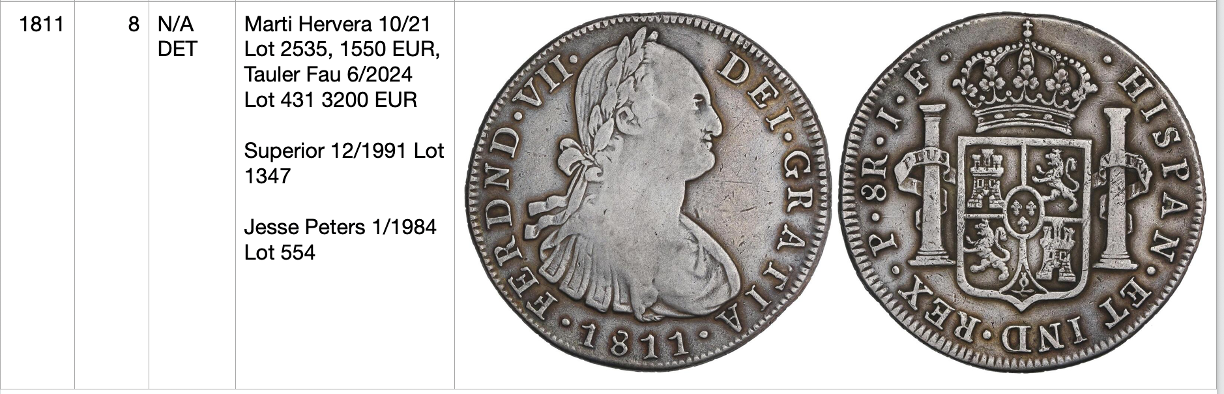
A few months back, @MrEureka shared with me an 1811-P Colombia 8 Reales (the very nice VF35 in the 1811 table at the bottom which I eventually acquired) that he had characterized as especially nice for the issue. I wasn't very familiar with the Popayán colonial 8 Reales and became curious about just how poor the issue's survival rate was, and just how special this piece was in that context. The analysis below is the result of that curiosity, with a few interesting findings to share.
I sought to answer four questions:
1. How rare is the type in an absolute sense and how rare is each date?
2. What is the distribution of quality across the issue?
3. Which examples are noteworthy or of exceptional quality?
4. Are the undiscovered facts to bring to light from viewing the data as a large set?
Questions 1 & 2: How rare is the type and how rare is each date? What is the distribution of quality across the issue?
I identified 119 individual coins across the 7 dates.
For comparison, my Santiago Pillar census identified about 60 coins, depending on accuracy of attribution from images and accounting for noted examples without pictures.
Overall, I was surprised by the number of coins extant for the series, as I had expected something closer to that 60-coin figure.
The following table shows the observed examples, broken out into those which are clearly "details" coins versus what I perceived as reasonably problem-free, followed by a table of the combined NGC and PCGS graded population.
From this table on the left, a few observations stand out:
1. ~64% of the observed coins were clearly problem coins, with issues ranging from counterstamps, holes, and major planchet issues to graffiti and cleaning.
2. The 1814/3 is by far the most available date, with 45 observed examples, representing 38% of the population.
3. The 1816 has a surprisingly high population but also the poorest surviving examples, with 78% problem coins.
4. The 1811, 1812, and 1816 all have roughly the same number of surviving coins that are reasonably problem-free. The 1813 is the most difficult date to find without issues due to the overall lower population.
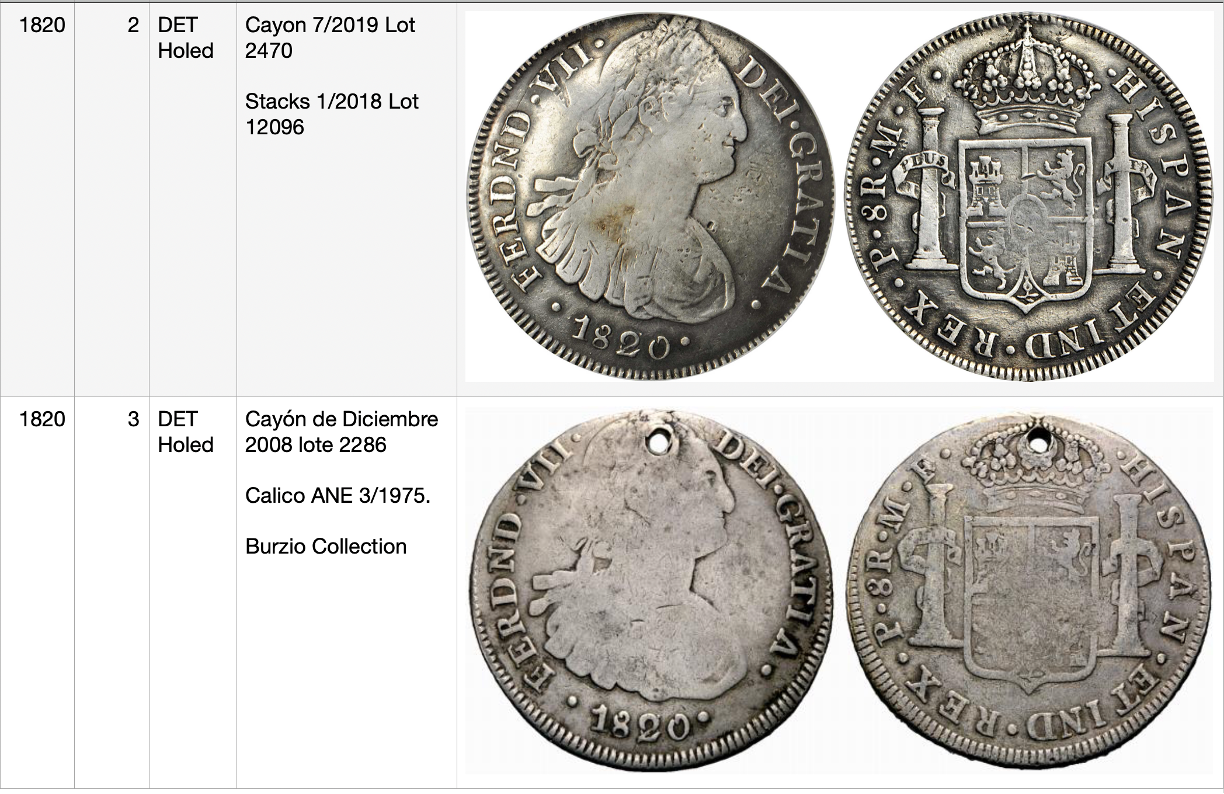
5. There are three 1820 8 reales likely extant. Various sources quote two, perhaps three. All are impaired with the Norweb coins being by far the most acceptable (currently the NGC details coin).
Looking at the NGC and PCGS populations, the distributions largely hold to my observations, with one notable exception: the 1813 has a lower number of graded or details coins than my own observations would suggest. As one would expect, the grade distributions skew toward the lower end of the spectrum, and I'd note that the graded examples are generally very poor for their assigned grade.
Question 3: Which examples are noteworthy or of exceptional quality?
The Lissner 1814/3 NGC62 is by far the finest coin for the type extant and the only MS coin. It sold in 2014 and was sourced from a 1998 Superior sale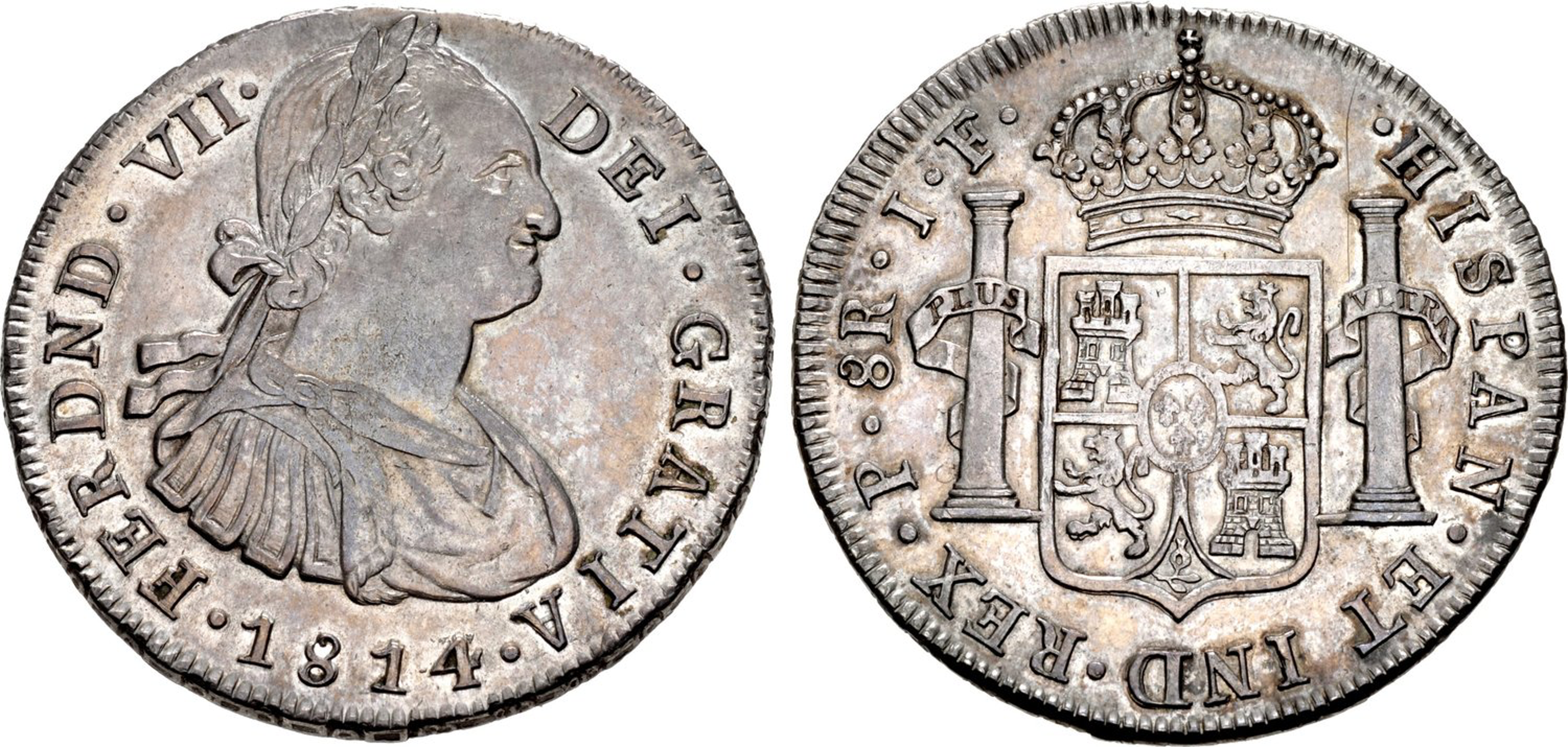
There are five AU coins graded. The first being an 1814/3 from Stacks 2018 Eldorado sale. It is graded AU58 and was sourced from Clyde Hubbard.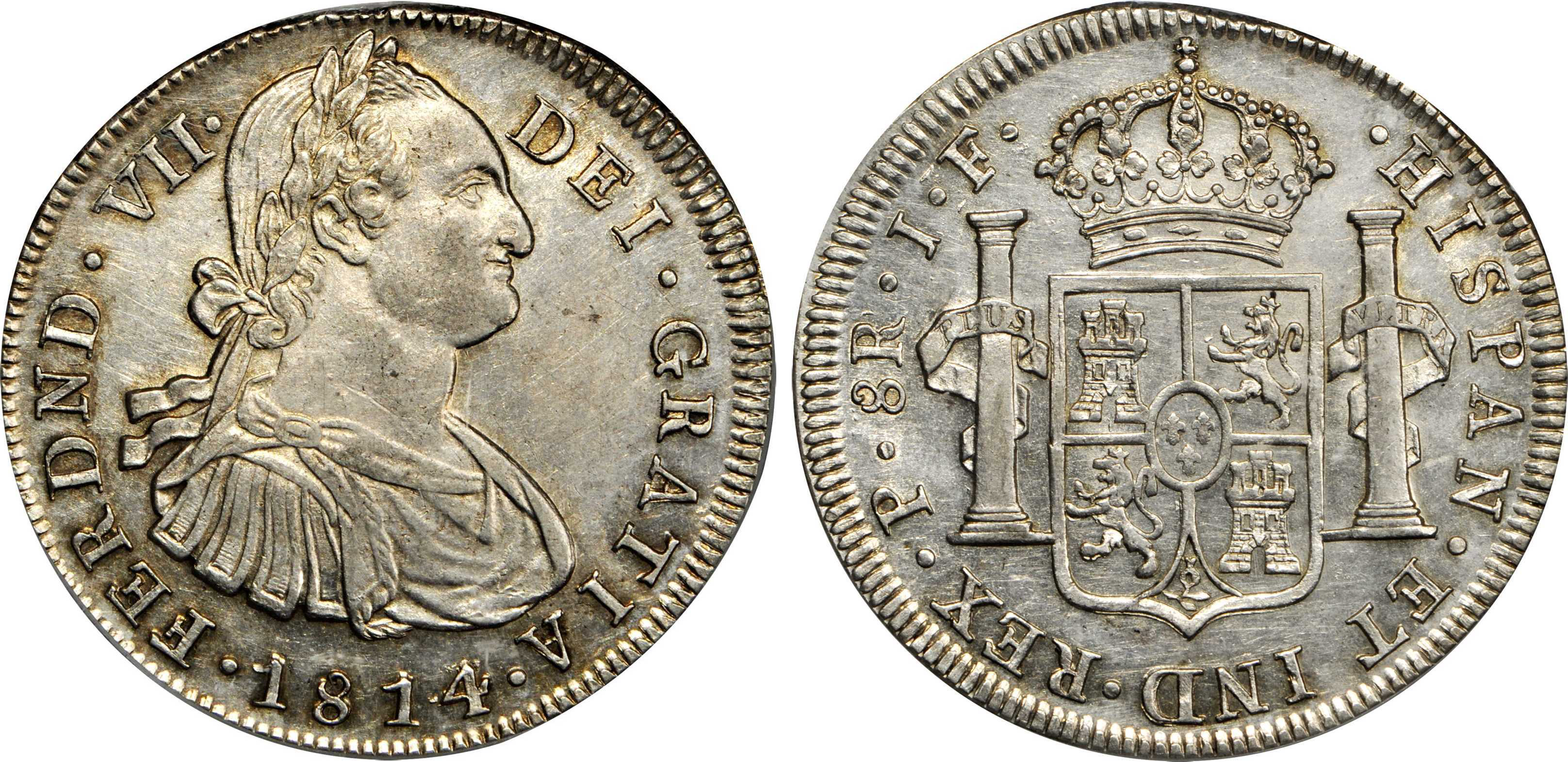
The third coin, also graded AU58, is an 1814 also from Eldorado which originated from the Carlos Elizondo Jr. collection. It appears less original than the previous example but still found its way into a straight graded holder.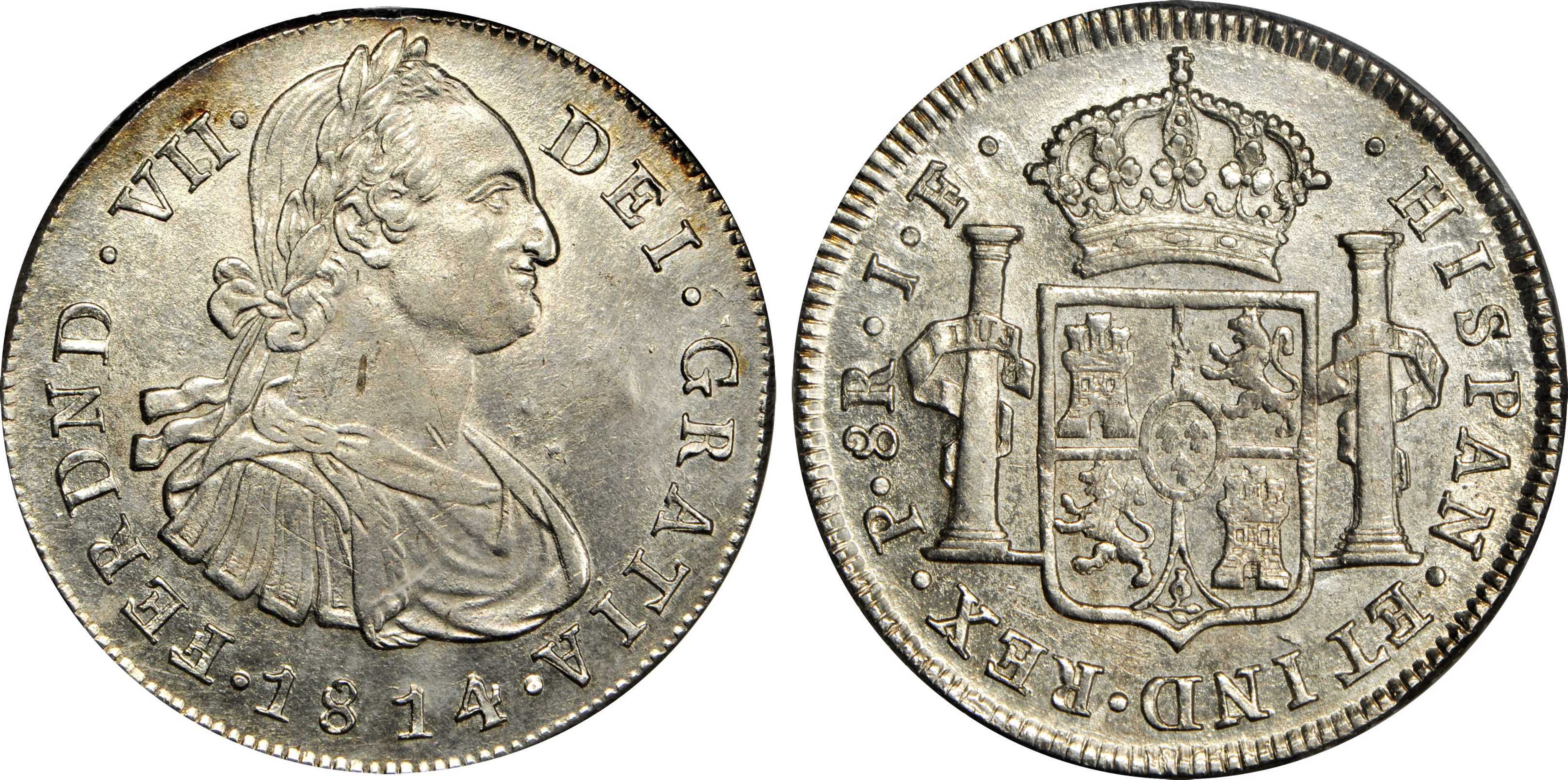
The fourth coin is one that has appear on the market several times in the last decade. It is graded AU53 and I tend to like it more than the previous AU58's. It surfaced in the 2002 Numismatica Ars Classica sale 22 which was a part of the collection of Don Canaparo. The coin was later in the Millennia collection (2008) which probably suggests that it didn't;t sell in 2002, Canaparo held it and sold it to the Goldbergs as he did with many other of the Millennia coins. It showed up in a string of 2018 & 2019 auctions before disappearing from the market.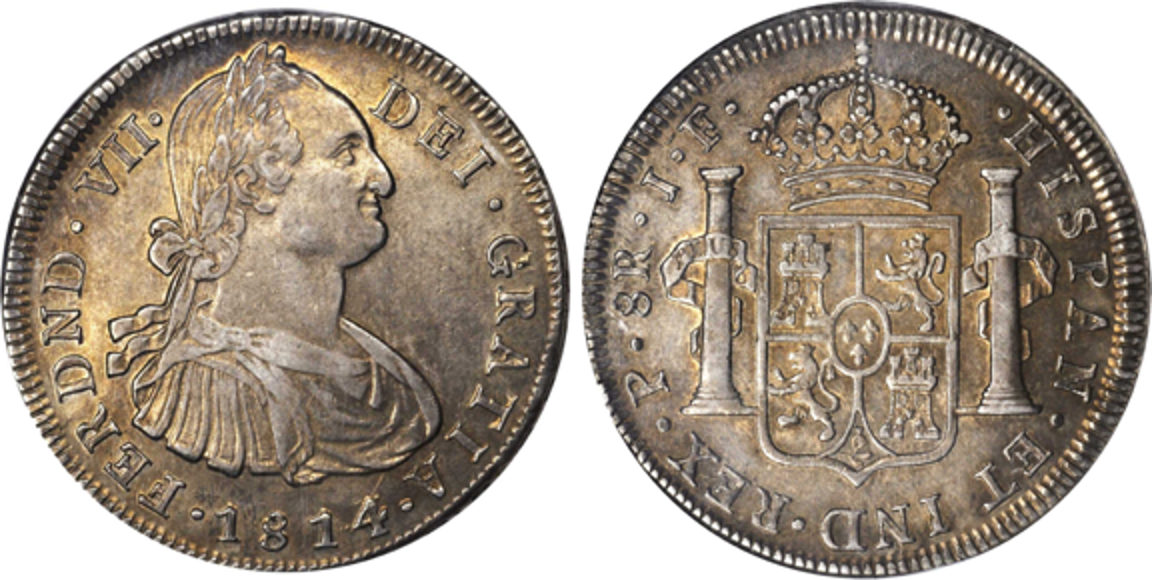
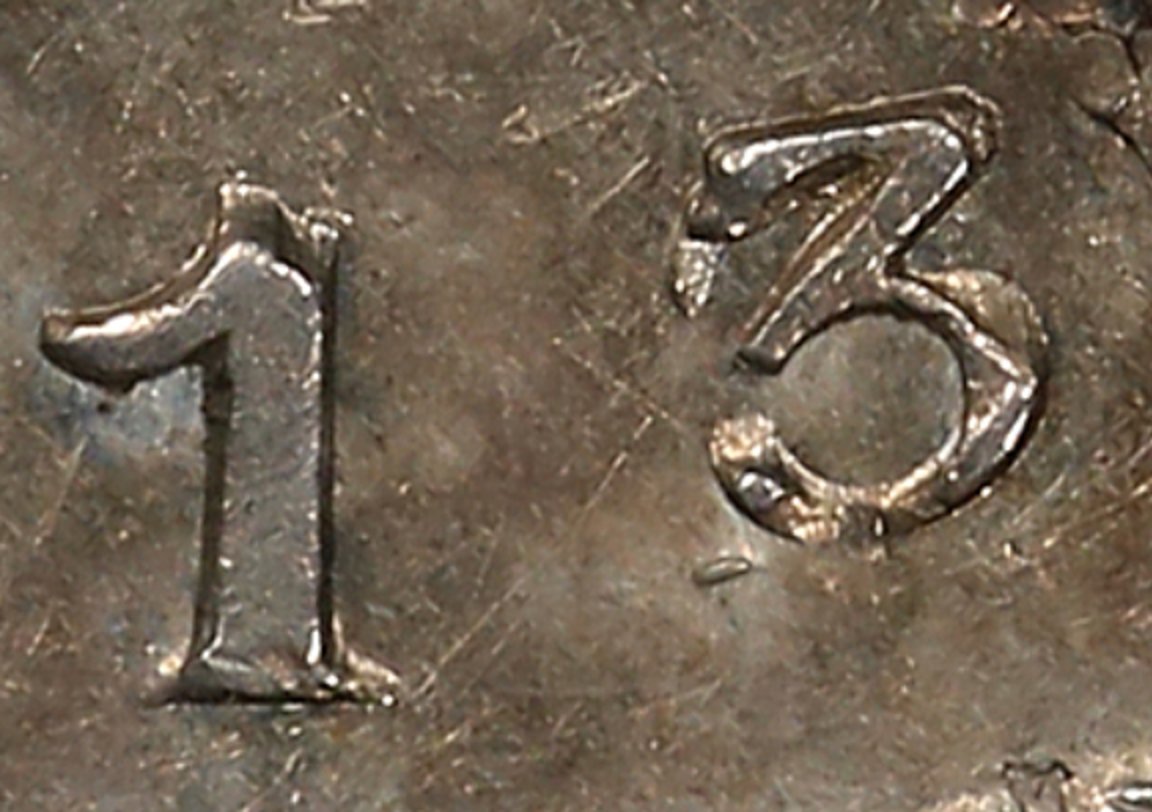
The fifth coin is a 1813/2 which has been attributed as an 1813. The 1813/2 is now beginning to be attributed but historically has not been noted. The under type is less clear on most examples than the clear 1814/3 and the with lower surviving population of the 1813 overall, it has gone unnoticed. The reality is that every modern image I can find of an 1813 is of the 1813/2 type. It's likely all are 1813/2 and the low grade of the coin makes it difficult to see. This coin is graded AU50 and also from Eldorado. It is the Restrepo plate coin and first appeared in the 12/1990 Superior sale, later in a 2014 Sedwick sale.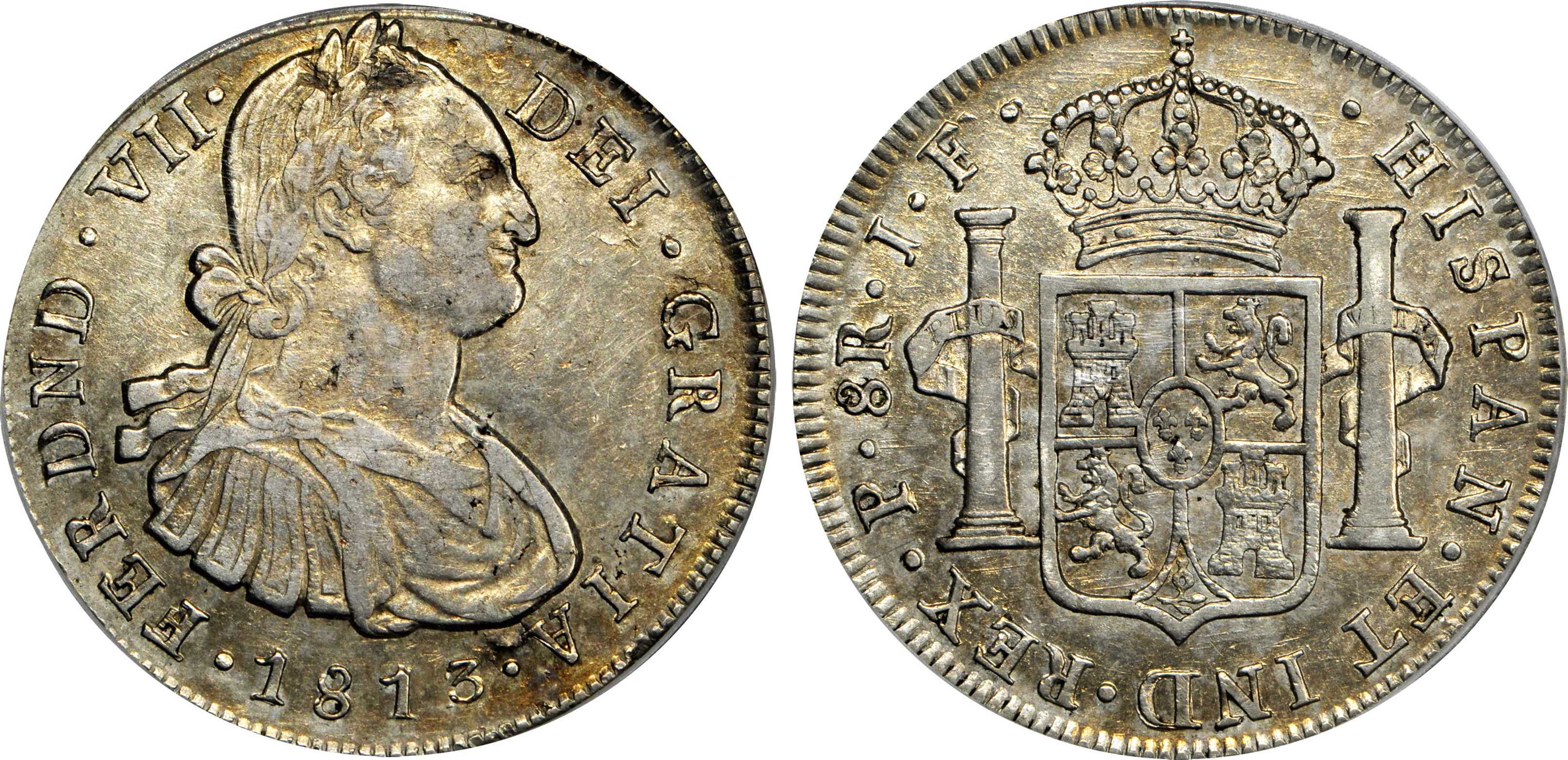
The final AU coin for the issue not surprisingly also came from the 1812 Eldorado sale. Graded AU50, it has a good planchet and reasonably attractive appearance making it exceptional for the type. 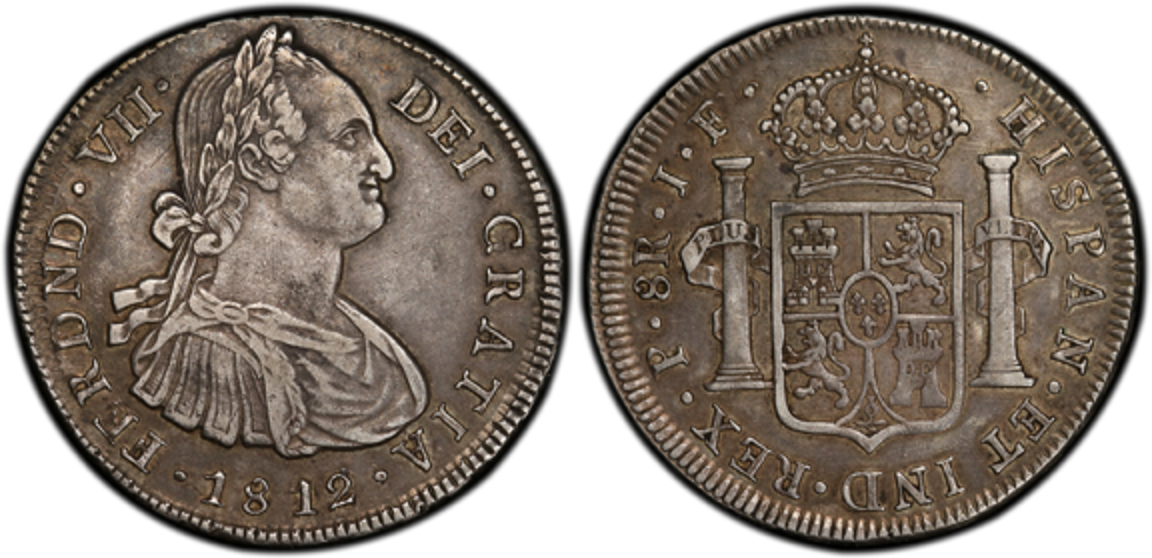
Other examples that I find especially appealing:
1811 in VF-35, the MrEureka coin. Sold originally in an Aureo sale, then Heritage. Very pleasing VF with great eye appeal.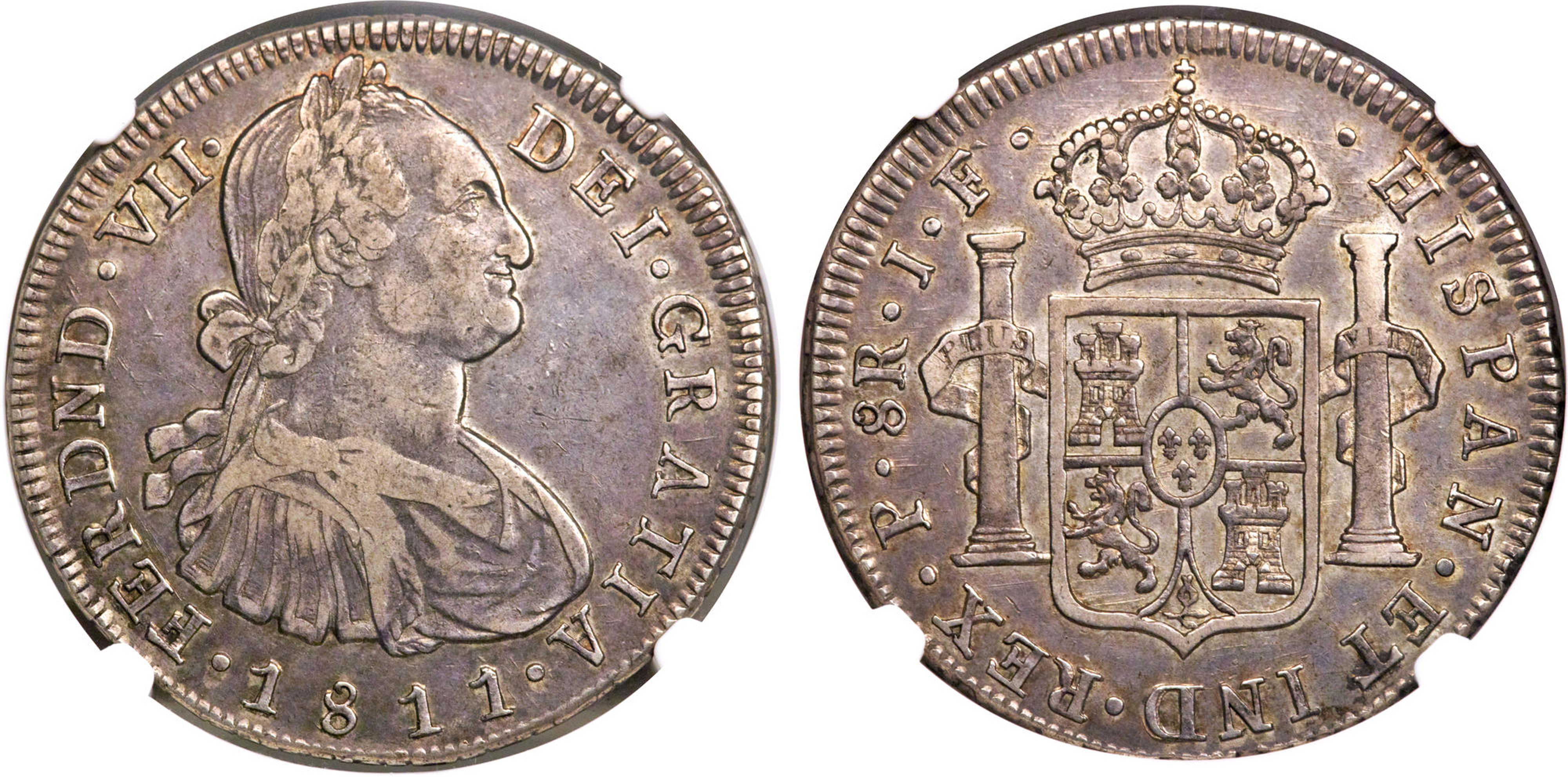
The 1812 in EF-45 in the upcoming Heritage sale of the Grundy collection appears to have a nice planchet and decent surfaces.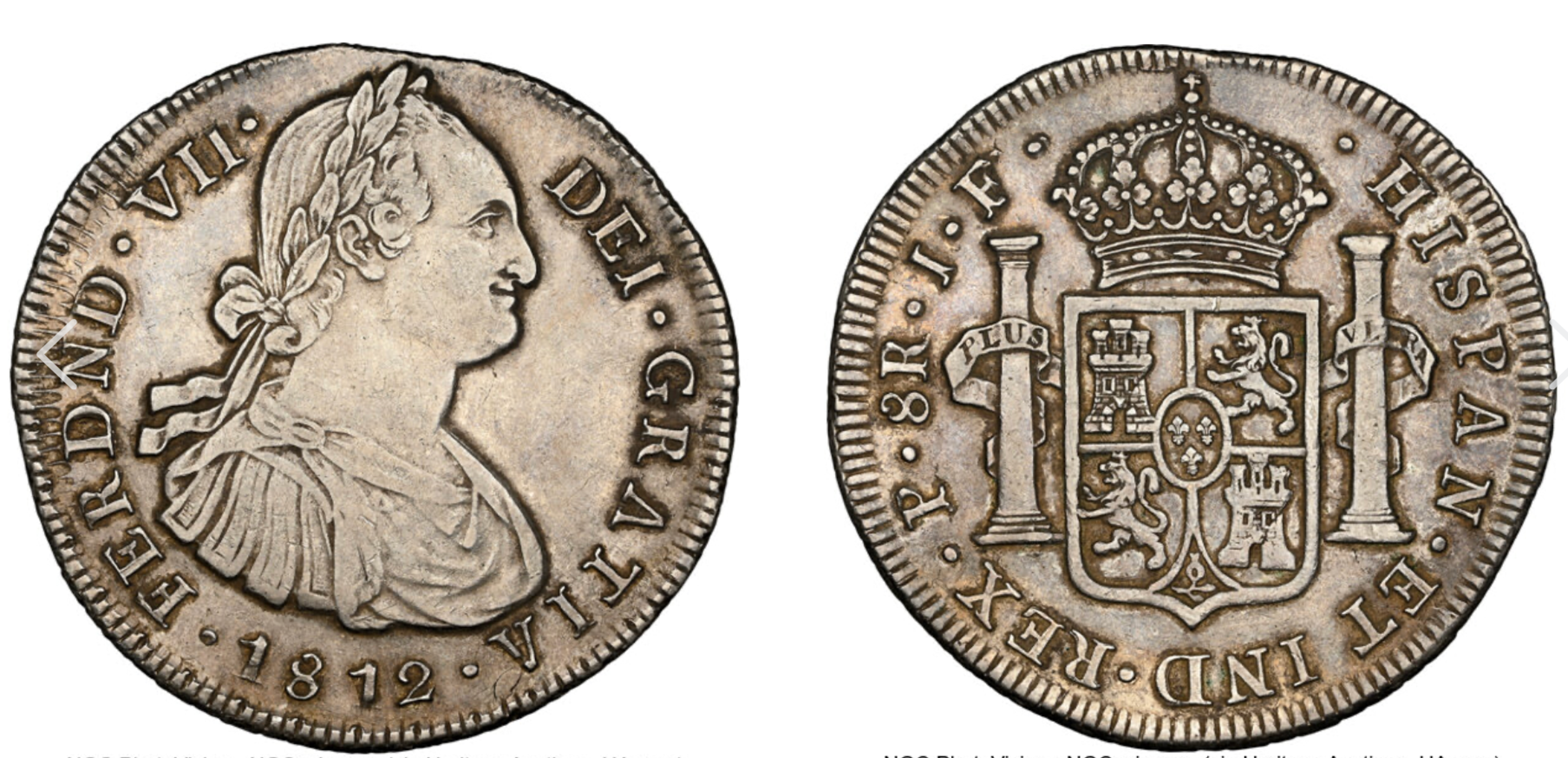
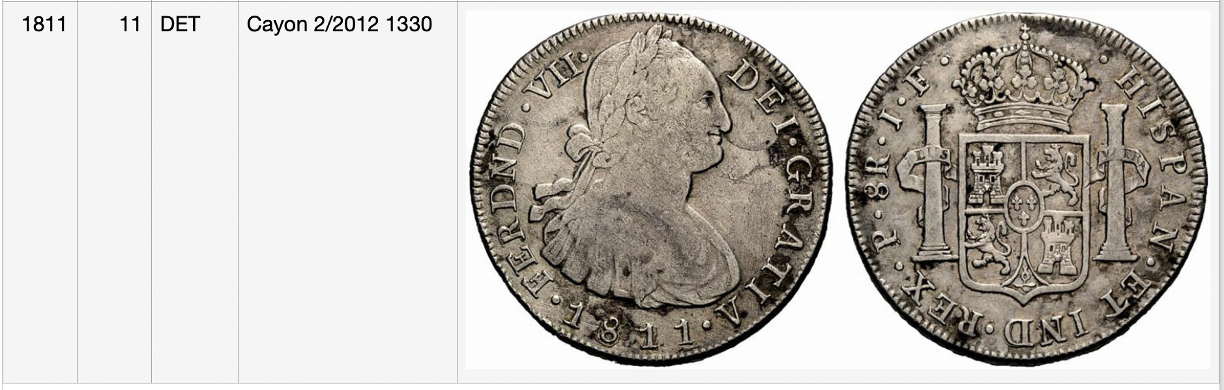
This 1813 in VF-35 which appeared in a few sales starting with Cayon in 2012 is reasonably wholesome for the type.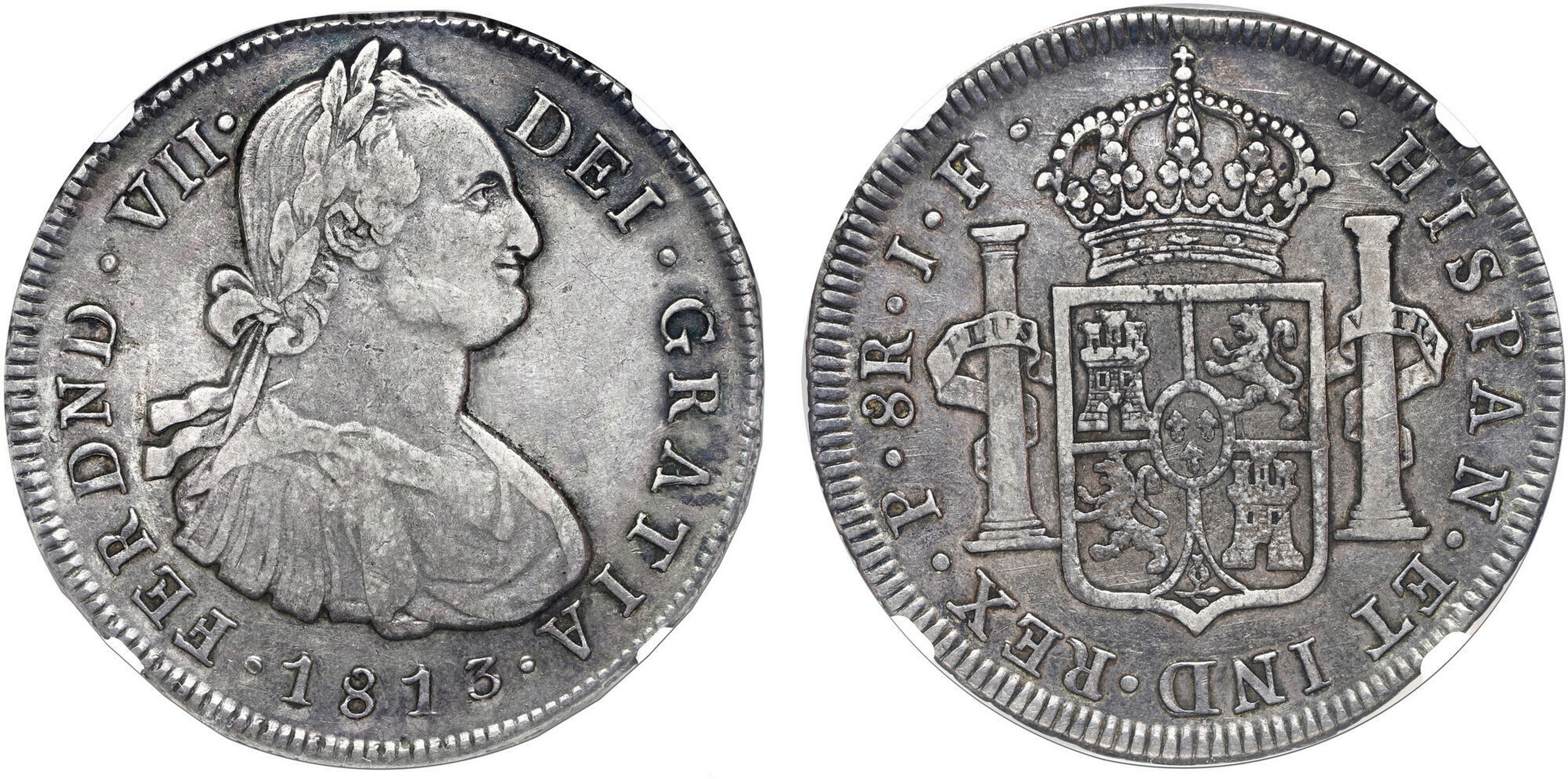
This 1814 graded EF-45 and has appeared in two 2011 sales before disappearing for a decade and recently reappearing in a 2022 Heritage sale.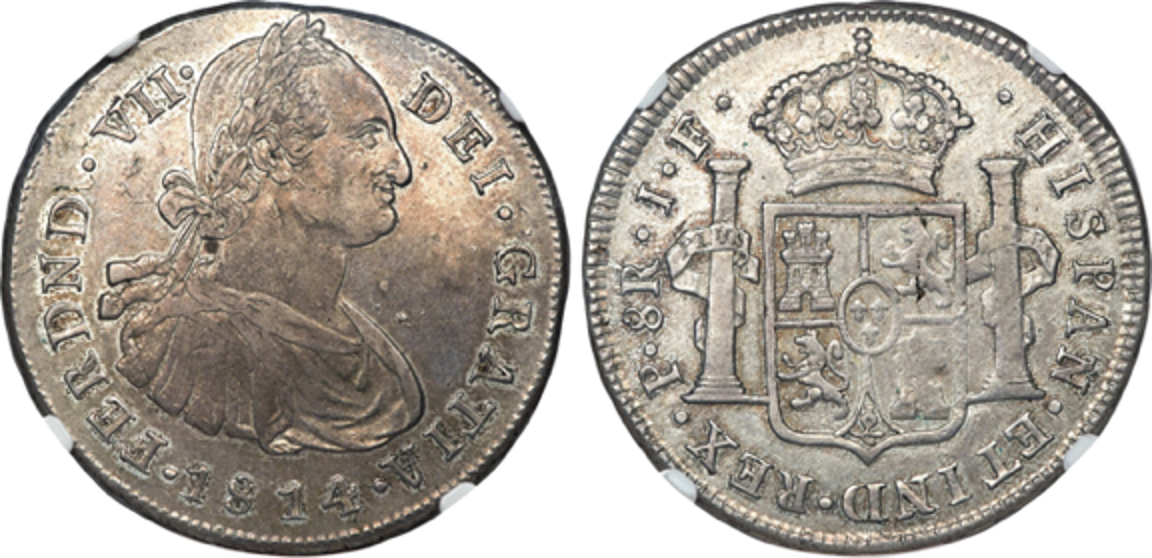
The 1814/3 which sold in Tauler y Fau in 2023 and a few prior Cayon sales I found to be especially attractive.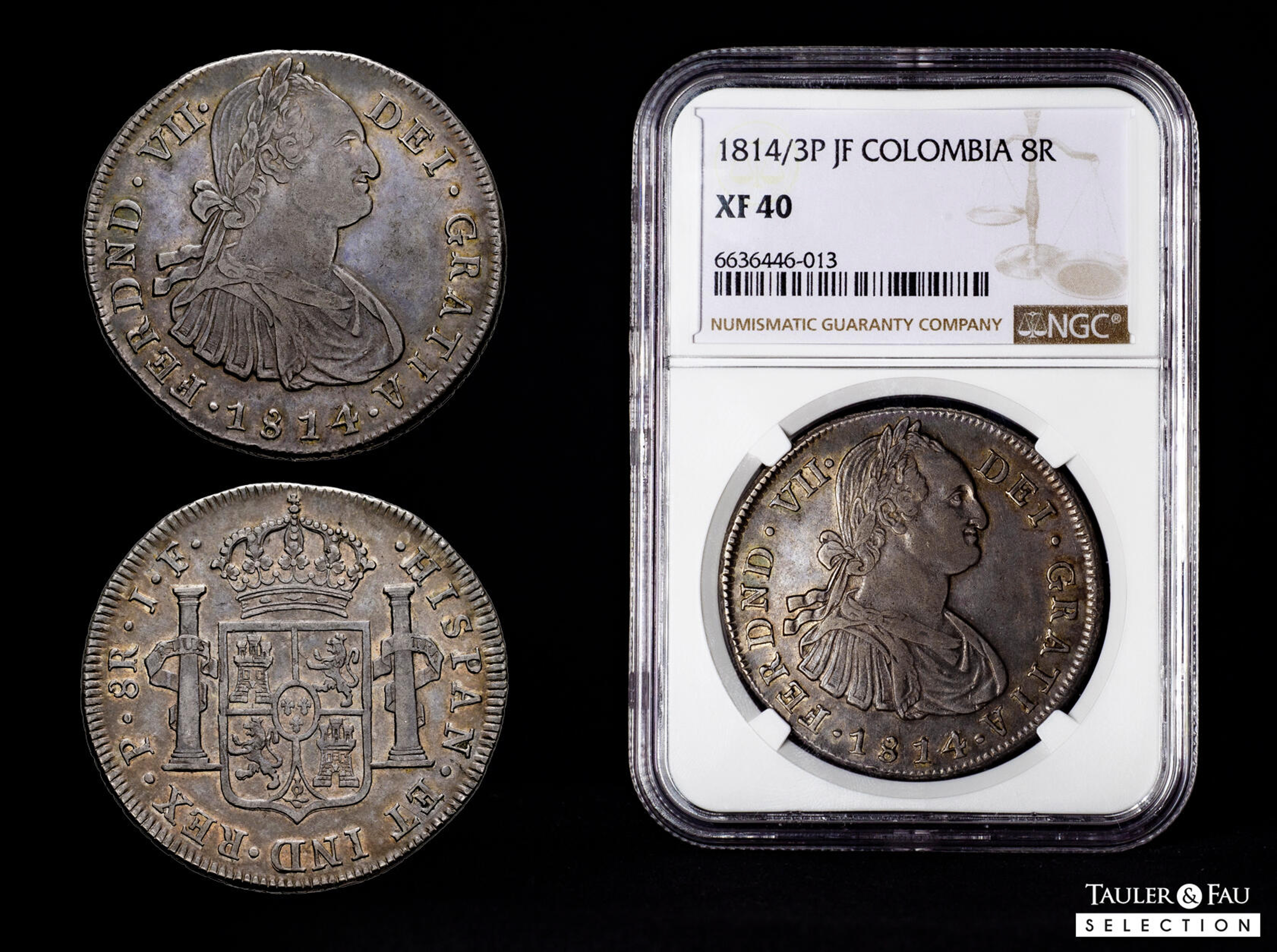
Lastly, this 1816 in EF-45 is likely the finest for the date appearing in a 2011 Heritage sale.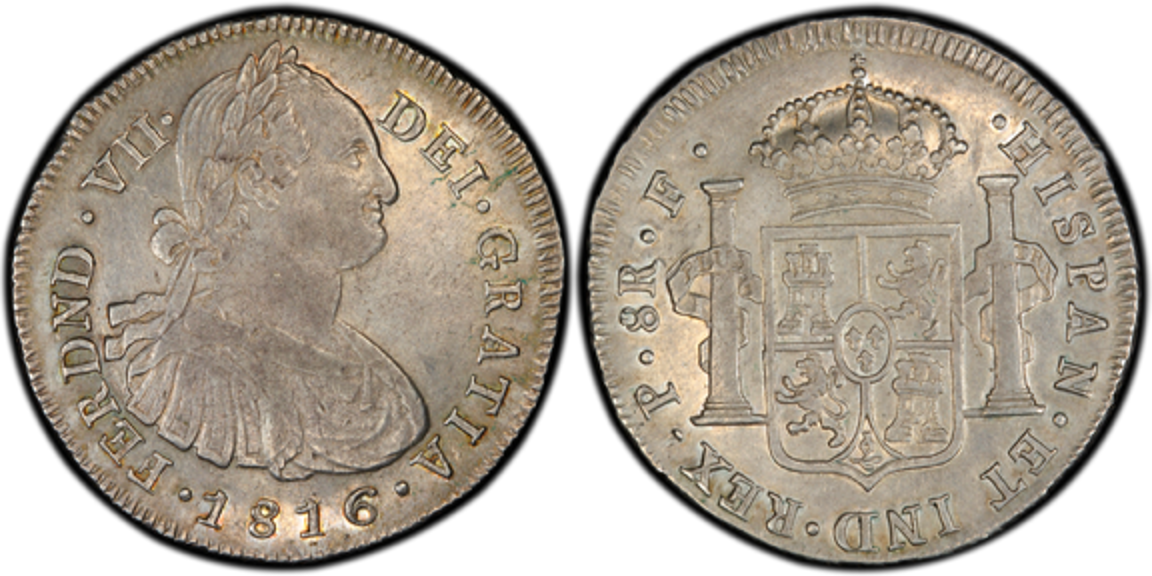
Question 4: Are the undiscovered facts to bring to light from viewing the data as a large set?
1. As noted, the 1813/2 is now being recognized as a distinct issue. Every modern image I have shows the under type 2. The historical images are impossible to see the under type.
2. If all 1813's are actually 1813/2's. That makes all 1814/3's actually 1814/3/2's.
3. A 1816/4 exists (maybe even an 1816/4/3/2?. NGC has graded 2 examples. I have found two examples in the observations out of the 23 observed.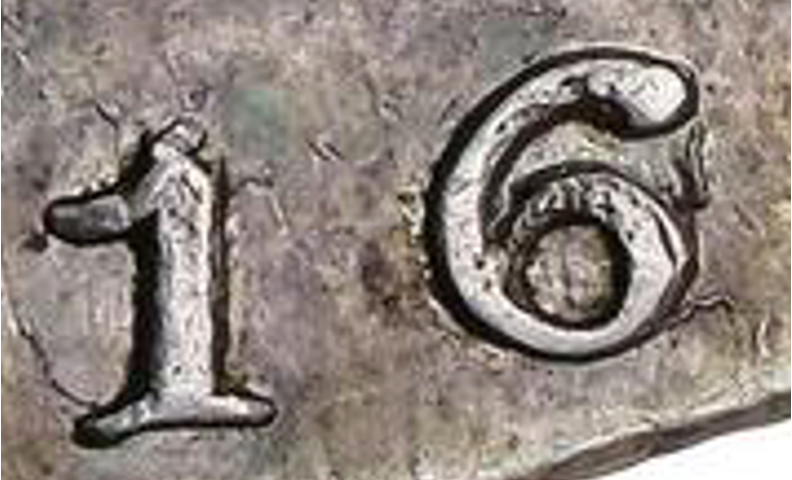
4. Three 1820's are documented but with notable variations which cause one to be in question. The Norweb coin is assayer M.F. with an overall style which follows the previous dates in the series. The other two coins are assayer F.M. with odd spacing between the date and "GRATIA" in the right obverse legend. These are legitimate issues as evidenced by a documented Brazil 960R with the identical undertype. The Norweb coin is suspect.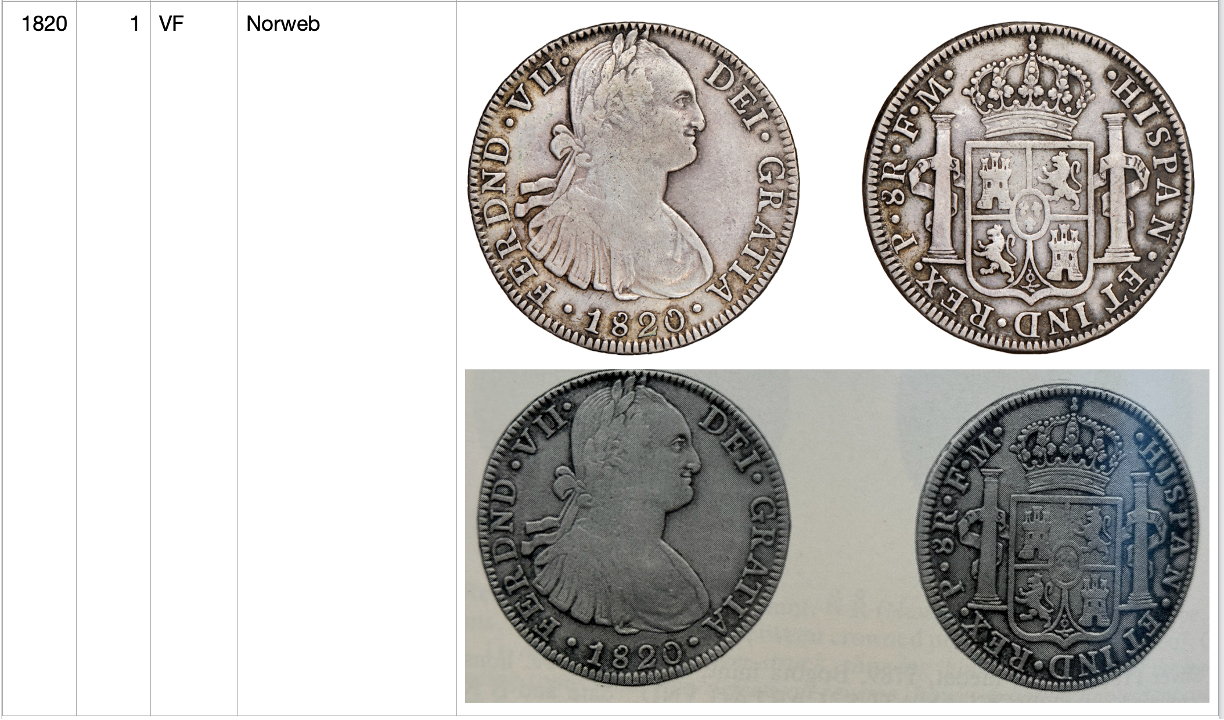
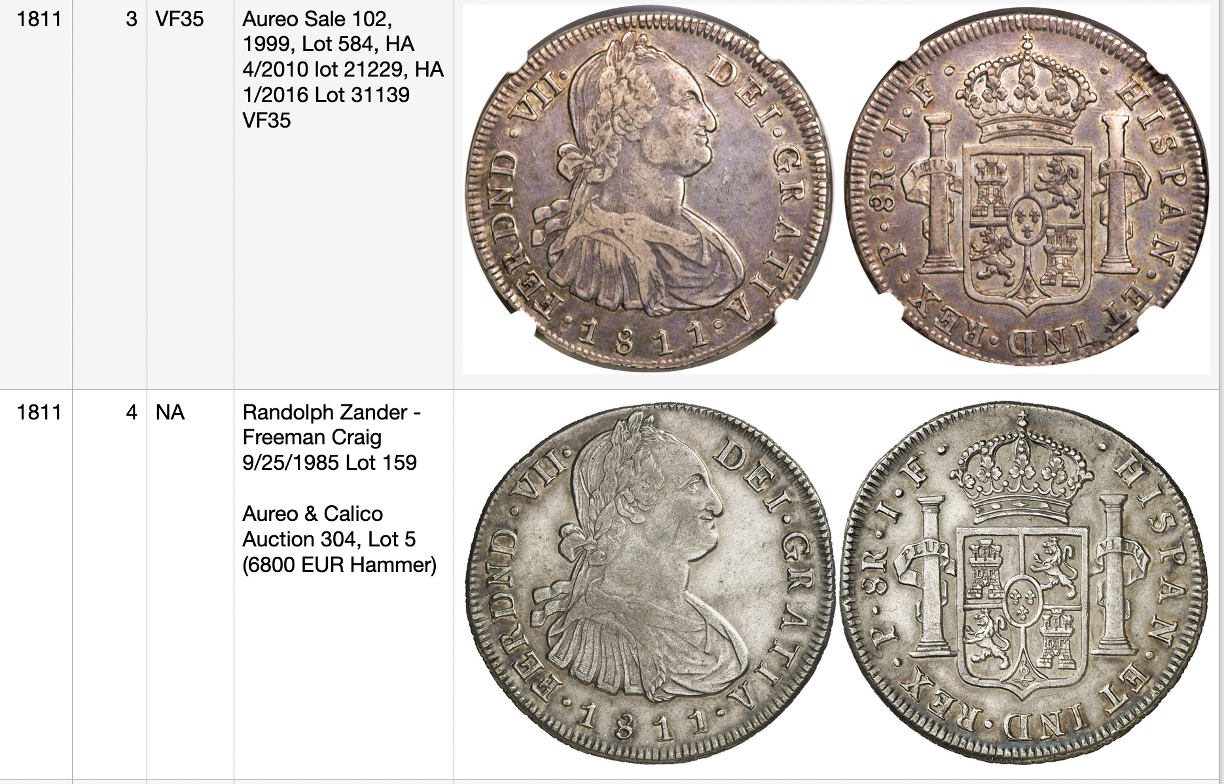
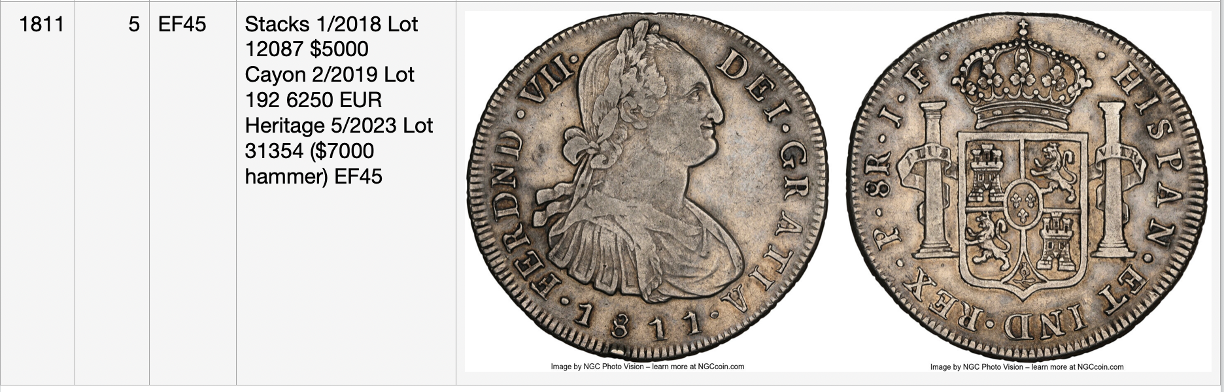
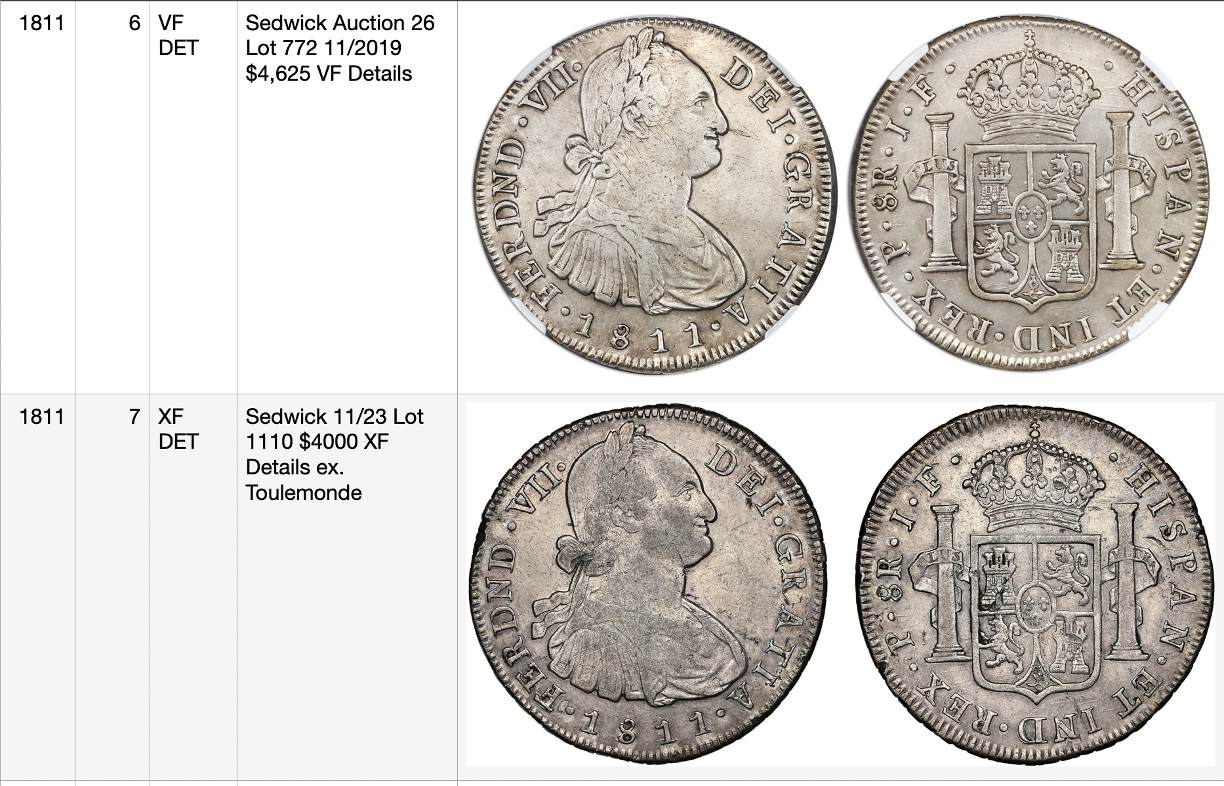
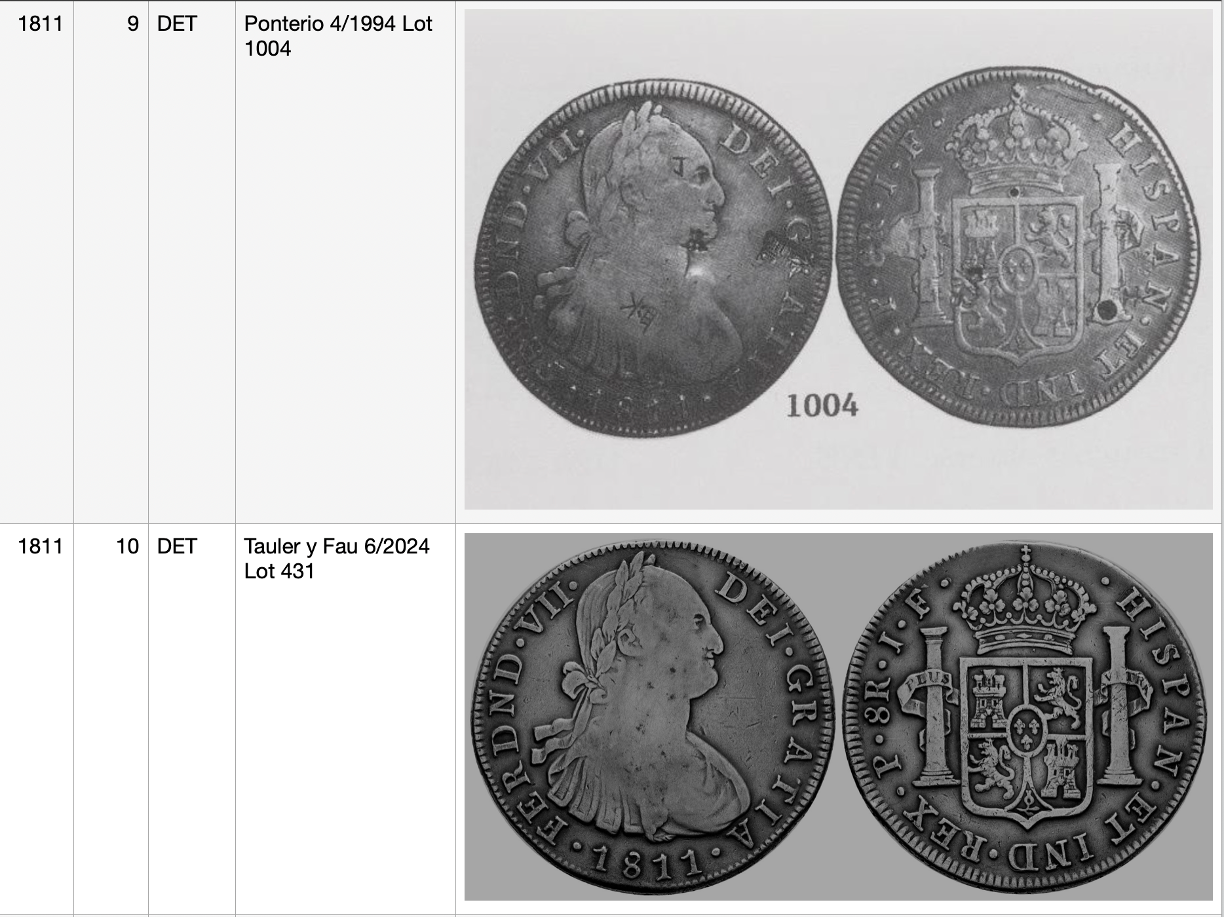
**Upon reflection, it is difficult to appreciate just how poorly this issue comes **from simply viewing the six coins shown above and not viewing the 119 coins observed as a whole. The vast majority of coins are significantly impaired and even the graded coins leave much to be desired. To try and demonstrate this, here is a view of the extant population of the 1811. ## 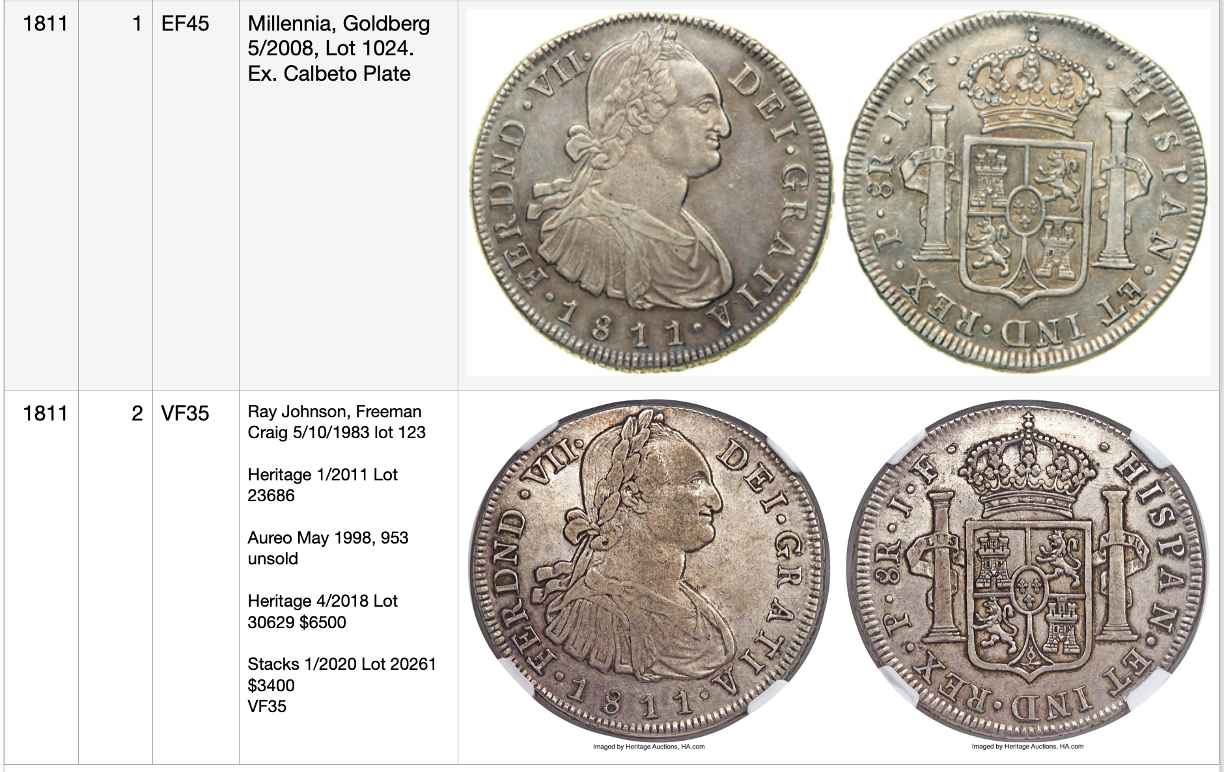
Comments
Great review Boosibri. Nice to see numbers put to the populations. I hope to get one of the type eventually... Lots of forgeries of these out there, mostly 1814/3, 1813, and one creative 1815 that popped up on Reddit a few years back, looked like a Mexico City issue with some really skilled tooling.
Now we need @TwoKopeiki to focus a scanning electron microscope on an 1816/4 to see if the 1816/4/3/2 is a thing...
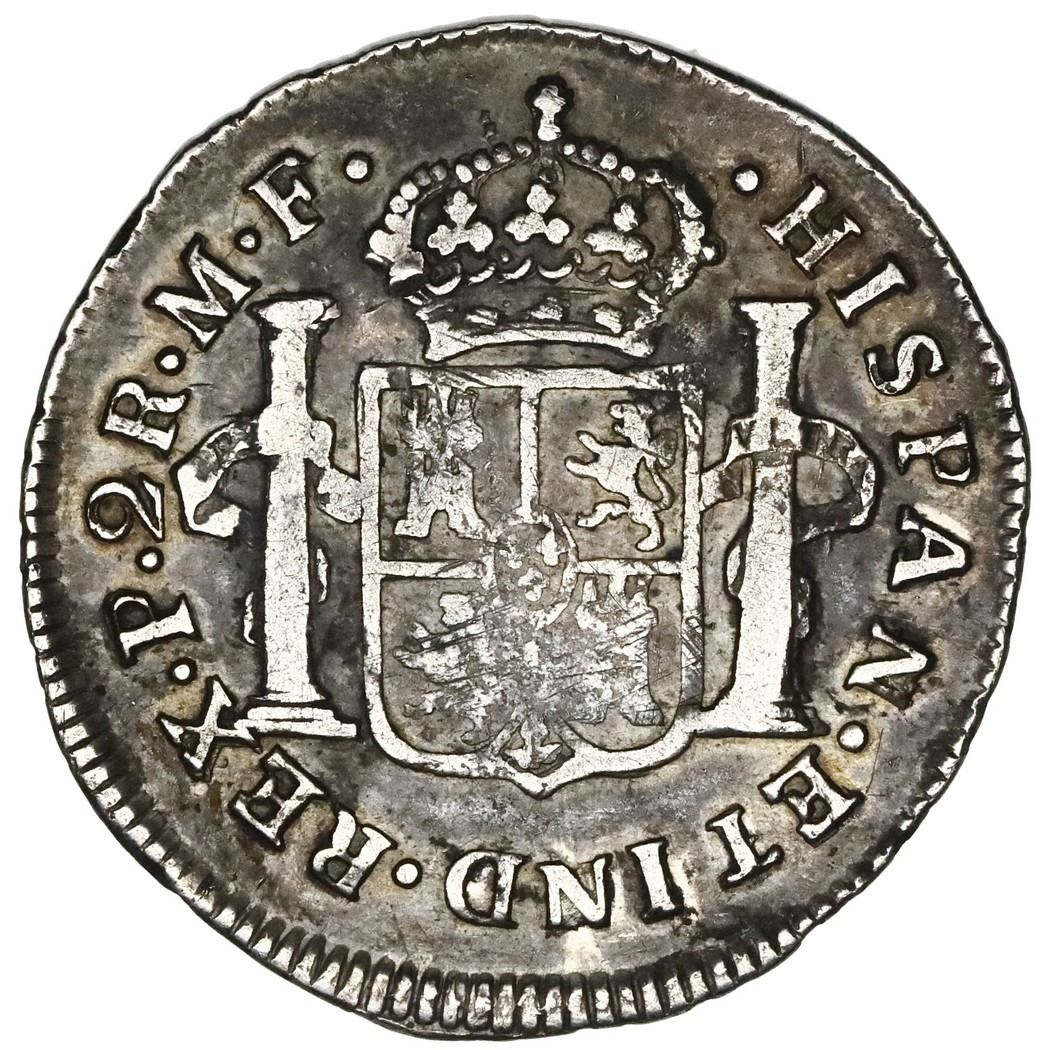
One additional observation.... looking at the three 1820's, the Norweb coin is assayer M.F. The other two are F.M. with matching dies. The characteristics of the Norweb coin match the other dates in the series. Note the odd spacing of the two F.M. coins in the space between the date and "GRATIA" in the right obverse legend. Something is odd!
Latin American Collection
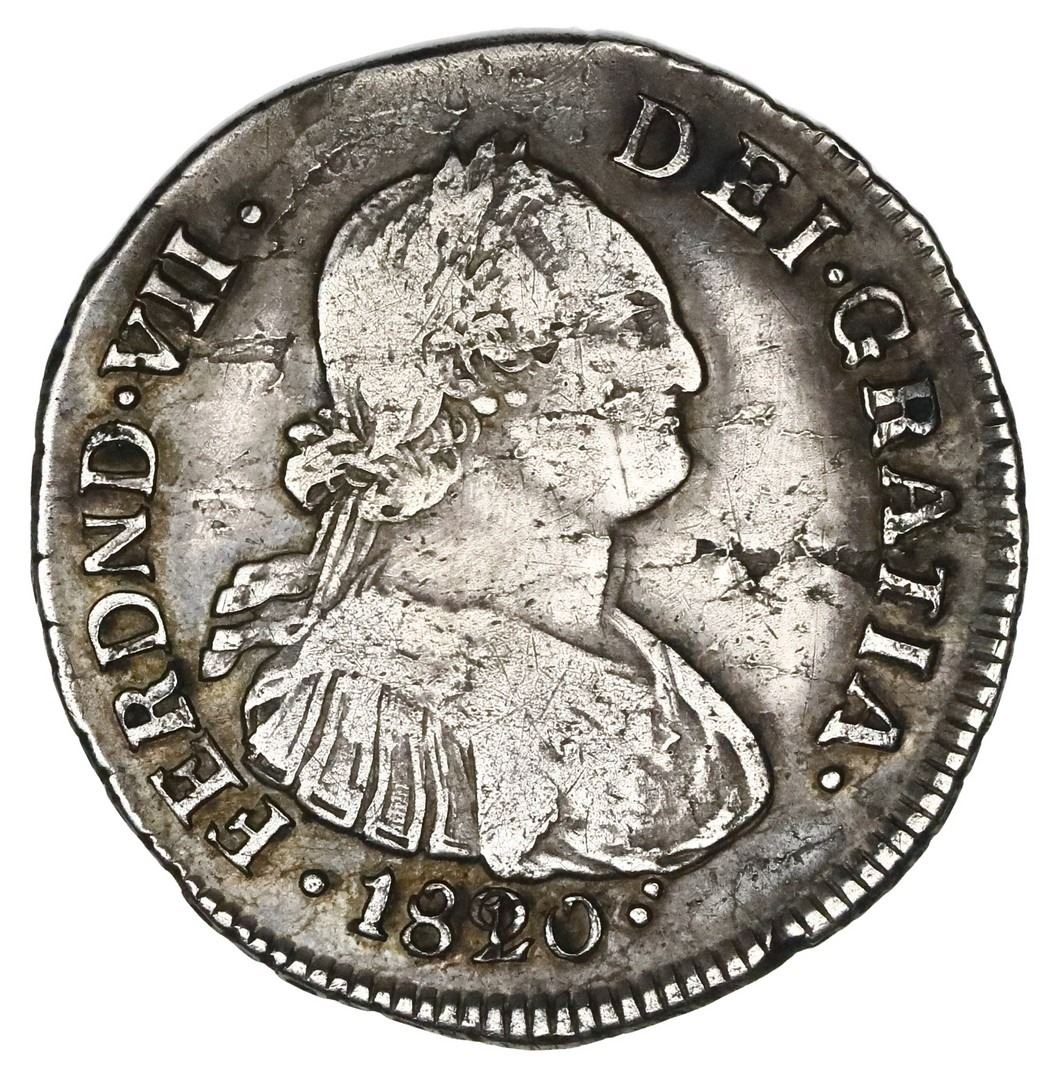
Here is the ultra-rare 1820-P 2 Reales as reference. M.F. assayer but with the same obverse as the F.M assayer
Latin American Collection
Well done… hope to see more of these shared here as the collection progresses. Just curious… the 1820 with the M. F. and F.M. varieties. Is there any references to suggest which was minted first and which is the scarcer of the two?
I don’t anything about this series but my first thought was that the total number would be less than 119. So that might call into question whether coins may have been cracked and resubmitted in an effort to get them straight graded.
Experience the World through Numismatics...it's more than you can imagine.
Only three coins exist. One or the other MF or FM may be fake.
The 119 figure reflects the coins I have observed in images. There are a total of 60 coins graded across all dates with 45 in problem free holders and 15 in details holders.
Latin American Collection
One other noteworthy observation….
The highest graded coin is not always the most attractive. I see the fourth 1814/3 coin pictured as being far more attractive than the second and third. I would need to see the first one in hand before opining further.
Experience the World through Numismatics...it's more than you can imagine.
The 1814/3 ex. Lissner in hand is very nice. The CNG / St. James pictures are awful. I will see if I can find a current picture.
Latin American Collection
@Boosibri
I was contemplating that possibility but refrained from reducing that to writing given my very limited knowledge and point of reference in connection with the series
Experience the World through Numismatics...it's more than you can imagine.
Fantastic write-up! Is that 1820 2R an overdate?
Probably an 1819 under date
Latin American Collection
That's what I'm seeing, as well.
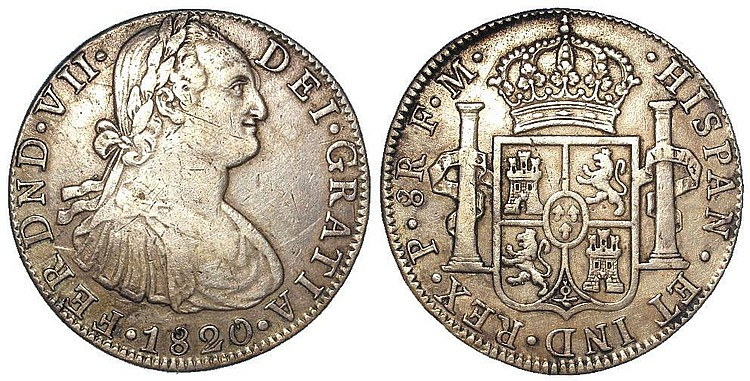
@Aegis3 sent me this link which shows a different 1820 in a similar style to the Norweb coin, but struck from different obverse and reverse dies.
The other two examples are likely to be legitimate as there is a 960R with an identical undertype. The Norweb coin and this coin are suspect.
The most simple alteration would be an altered date from another in the Popayan series. Other than Popayan, only Guatemala produced transitional Charles IV portraits with the Ferdinand VII legends.
To alter a Guatemalan coin would require the date (1808 being the last date), and the reverse legend would require significant work to replace NG with P and expand the single M assayer to M.F. With spacing of in between those elements to be reconstructed.
Altering a Popayan coin would only require the date and the change of J.F assayer to M.F. While the legend spacing remains intact. If so, why flip the assayers from a simple J to M transition to F.M. with another letter to have altered?
Latin American Collection
So are you contemplating a contemporary counterfeit?
Experience the World through Numismatics...it's more than you can imagine.
I think by process of elimination, an altered Popayan issue is probably not the case due to the assayer of FM vs. MF
The Guatemala issue is plausible but the level of manipulation required would be extreme.
The two different dies for two different F.M. 1820's is a major red flag and would suggest to me a counterfeit vs. alteration.
Latin American Collection
My 2 cents as someone very interested in counterfeits/forgeries, this is an altered Mexico City issue. You can see where an I was removed to transform Charles IIII into Ferdinand VII, you wouldn't need to do that starting from a Guatemala. The reverse looks Mexico City, each mint has very slightly different fonts and typical spacings, etc.
I'll try to dig up my screenshots of the "1815" l mentioned above, clearly someone very skilled at alteration worked to make these.
Here is that 1815. I believe the Norweb is another tooled Mexico City issue, doesn't match any Popayan I have seen in style.
@Boosibri Thank you for starting this discussion! You are correct that the Popayan pieces are scarce and rarely "come nice."
These two were recently graded across the street, one in a details holder:
https://coins.ha.com/itm/colombia/ferdinand-vii-8-reales-1816-p-f-xf-details-cleaned-ngc-/p/3135-13195.s?ic4=GalleryView-Thumbnail-071515
https://coins.ha.com/itm/colombia/ferdinand-vii-8-reales-1812-p-jf-xf45-ngc-/p/3135-13014.s?ic4=GalleryView-Thumbnail-071515