Trivia: World Coins in Early America
 Boosibri
Posts: 12,678 ✭✭✭✭✭
Boosibri
Posts: 12,678 ✭✭✭✭✭
Question 1: What was the largest gold coin that circulated as legal tender?
Question 2: What was the smallest gold coin that circulated as legal tender?
Question 3: What was the largest silver coin that circulated as legal tender?
4
Comments
Question 1: What was the largest gold coin that circulated as legal tender?
The 4000 reis or moidore, a Portuguese gold coin, with a value in federal money of $6.
Question 2: What was the smallest gold coin that circulated as legal tender?
The Spanish 1/2 Escudo, often called a "gold dollar" or "half-pistole".
Question 3: What was the largest silver coin that circulated as legal tender?
The Spanish eight reales coin, commonly known as the "Spanish dollar" or "piece of eight".
I got these answers from Google AI, but I think they are correct.
0/3
Latin American Collection
Largest gold coin.
British 5 guinea
The 20,000 reis of Brazil May have been the largest gold. Almost 2 Oz. Just picked one up.
We have a correct answer to question 1, the Brazilian 20,000 Reis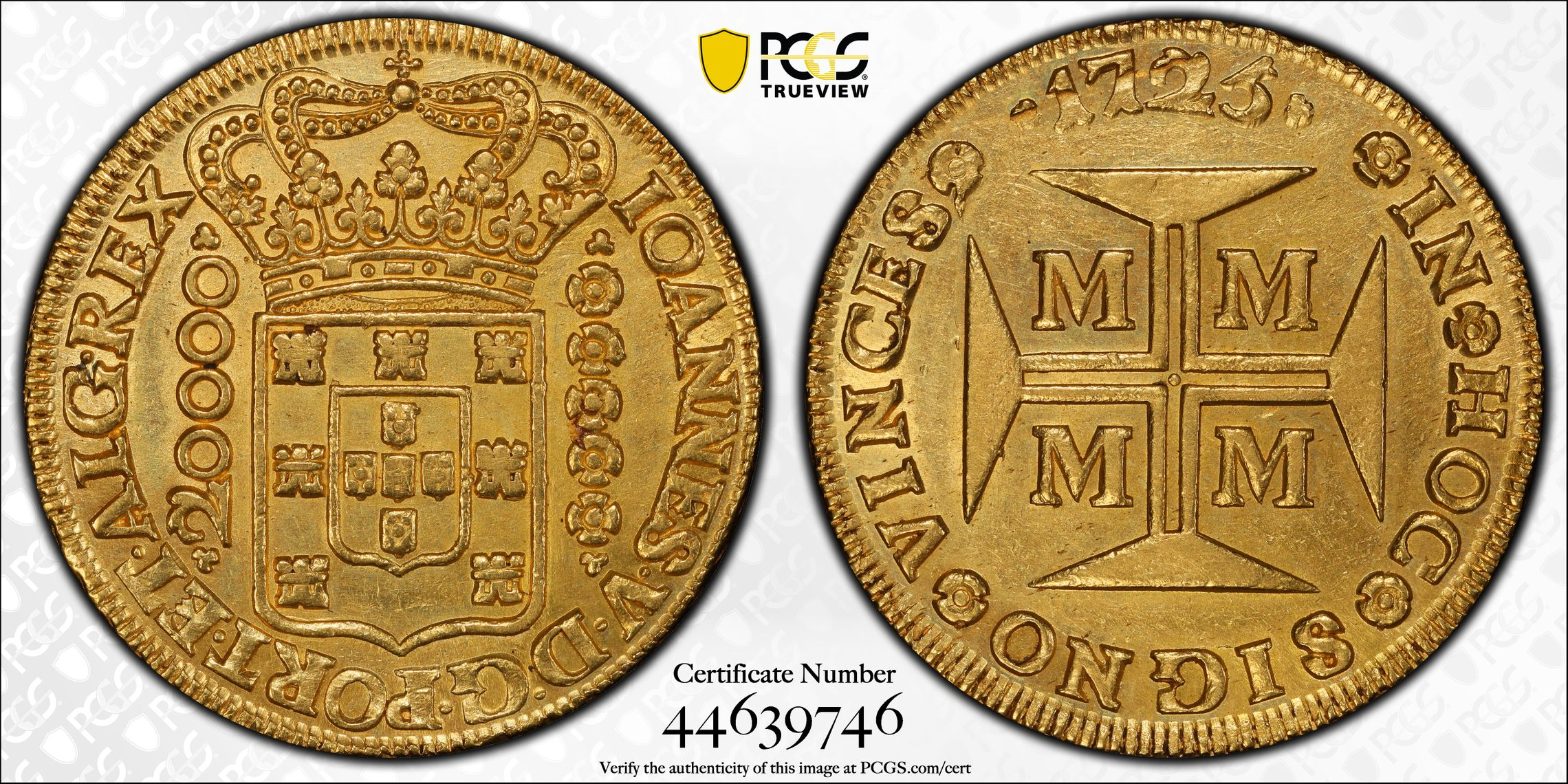
53.78g
1.59oz
Latin American Collection
ChatGPT gave me the same answers as @MidLifeCrisis. When I asked about the correct coins it validated the trio. Can't trust the machines...yet.
Latin American Collection
I'll guess the largest silver coin was probably a German Taler or multiple.
The Maria Teresa Taler was a first class coin, and while large, is still smaller by diameter and weight than the largest.
Also note, talers weren’t specifically authorized like other issues were. Of course they still traded but by bullion weightvs a set exchange like other countries. Maria Teresa talers were the exception given their premier status.
Latin American Collection
Many foreign coins circulated here, but only certain ones were legal tender as specified by various coinage acts, beginning with the 1793 act and ending with the 1857 act. A fun and educational collecting area with almost endless possibilities. No German coins were officially legal tender, but many were accepted in commerce.
I would like to use a life line…
Experience the World through Numismatics...it's more than you can imagine.
Perhaps of interest, the seller of the 1725 20,000 reis I just bought was threatening, perhaps facetiously, to
melt it when gold was about $5,500/oz. I paid about $5,600/oz. for a beautiful AU details with a tiny test cut. Would have been a damn shame if……
I am not sure if any British Crowns made it to North America…. Could be the French Ecu
Experience the World through Numismatics...it's more than you can imagine.
Portugal 400 Reis for smallest?
The French Ecu!! Other variations of the French crown sized coin also count (6 Liveries as an example)
41mm vs the 38-40mm Spanish 8 reales.
29.5g in weight beats the 27g Spanish 8 reales
Latin American Collection
Great guess, but no!
Latin American Collection
As you might guess many English coins circulated here, including crowns. The earliest English coin I have is a half groat of Henry VII. One was found in Newfoundland, close enough.
I picked this up at FUN last month.
Pretty typical example, I guess. Has adjustment marks, as so many do, but since they were softened by the striking of the portrait, I do not find them objectionable. Kinda liked the grey tone.
Collector since 1976. On the CU forums here since 2001.
Indian Fanam for the smallest gold?
Nope. Might have circulated but was not authorized as legal tender
Latin American Collection
Hint- @JohnnyCache was very close
Latin American Collection
Spanish 1/2 Escudo…..?
Nope
Latin American Collection
This page from "The New-York Pocket Almanack for the Year 1771" shows exchange rates for some foreign coins which circulated in the American colonies:
A Table of the Value and Weight of COINS
A Portuguese Moidore:
Portugal 4000 reis "Moidore" 1704
Gold, 29 mm, 10.71 gm, Lisbon Mint
Obverse:
Crowned shield of Portugal
PETRVS II D G PORT ET ALG REX / 4000
Reverse:
Order of Christ Cross
IN HOC SIGNO VINCES / 1704 ("In This Sign, Conquer")
The Mysterious Egyptian Magic Coin
Coins in Movies
Coins on Television
The Republic of Mexico minted a 1/4 escudo coin in gold, but I believe it was larger than the other guesses. My sources don’t show a gold Portuguese or Brazilian gold coin smaller than 400 reis.
I, for one, am prepared to learn something.
PS I’m disappointed that the moderator moved this thread. Anyone collecting US coins should be interested in all coins that were legal tender, not to mention that our coins were derived from the foreign coins that circulated here. The 8 reales is even in the Redbook for Pete’s sake. God forbid US collectors should learn the history behind their coins.
I would also note that a number of foreign coins are included as “Colonials”, which I believe are classed with US coins.
I’ll give this to you...
The Portuguese 400R is 1.072g while the Brazilian 400R is 0.8938g. So the answer is the Brazilian 400R.
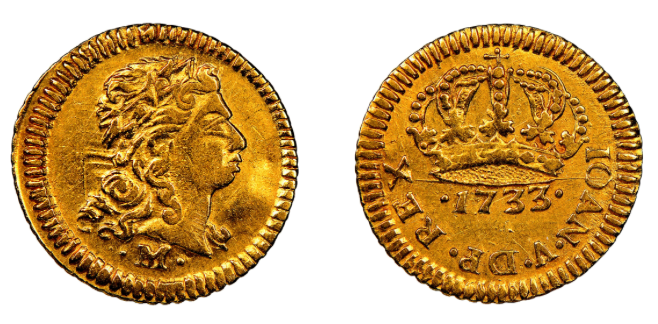
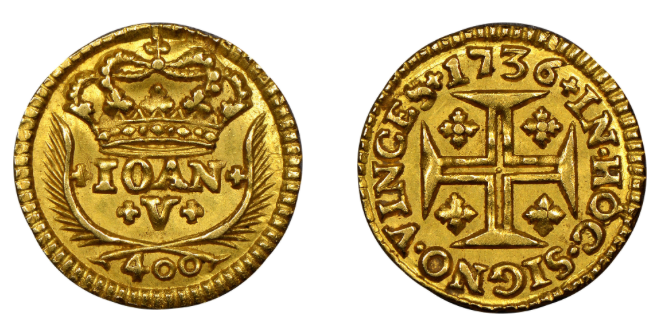
Latin American Collection
Seriously! @PCGS_Moderator, can you please move the thread back? The intent is for this to be education for US collectors on the coins of Early America. Lord knows there are enough threads on Vault Box and all the other nonsense to dull the wits.
Latin American Collection
I was focused on the dimension. I think both are about 15mm (?). I hope the moderator listens to us. I was annoyed with the movement of the PM thread recently as well. PM prices can have a profound effect on US coin prices and availability, not to mention general “market” activity and show attendance. I could see moving routine PM posts, but the current state is hardly routine.
The real issue is what was accepted as legal tender- And just to illustrate that point, 8 Reales were accepted as legal tender up to around 1856.
In view of the French presence in North America, it really should not be much of a surprise that the Ecu was utilized.
As for the GB Crown, one has to consider that Crowns from the reign of George I and George II were not produced in large quantities. Even in the 1740-1760 time frame. the George II Crowns were not often encountered. And then you have the period after 1751 whereby a crown sized coin was not minted in GB until the BOE Dollar in 1804. There was the counter marked coinage on various crown size coins in the 1797-99-time frame. The mostlikely crowns that perhaps made their way to the colonies would have been from the recoinage of 1696 featuring William III. Coins from England were used in the colonies, but I suspect most of the coinage consisted of lower denominations.
Coinage really needs to be recognized for the purpose it served which extends beyond geographic boundaries. We should embrace history and how commerce developed in the Americas. And such a discussion is not out of place on the US Coin forum.
Experience the World through Numismatics...it's more than you can imagine.
Were Brazilian 400R actually circulating in the colonies? Same with the Portugese smaller gold fractionals.
Well the 4000R and 6400R were one of the most common gold coins, so I’d guess the smaller denominations were also prevalent.
Latin American Collection
Unless a coin is recovered here or from a shipwreck, mentioned in a newspaper, assayed by the mint or turned into the mint, or otherwise documented, we’re probably stuck with extrapolating from those examples that are documented. A very odd assortment of coins have been recovered in Jamestown * for example, which suggests that almost anything might have been used by colonists or merchants arriving in the US. Money was scarce and they used what they could get their hands on. Even after 1857, foreign coins were accepted for some time, particularly in rural areas, although they were no longer legal tender. I’ve relied on the research of others, inventories from archeological sights, famous hoards, the odd reported dug coin, old newspapers, mint assays, etc., filling in the blanks between denominations and time periods pretty liberally. As one might imagine, gold was not plentiful, but the examples we know about give us a great excuse to collect a wide variety of similar issues.
No response or movement from the Mods on getting this back to the US Forum.
Latin American Collection
As I heard this type was used too in the Colonies. And it named "dogt". And as I read British government forbade passing British coins to the Colonies... But how did they pay to soldiers and servants?
Sic semper tyrannis.
This is a link to an earlier discussion about a regulated (Brasher) gold 1600 reis. https://forums.collectors.com/discussion/1015790/brasher-2-gold
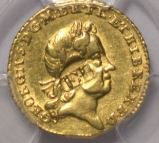
Does anyone know what the smallest regulated gold coin was? A ¼ guinea is known (Garrett), a bit more than a dollar.
A regulated 400 reis would be very cool - a gold half dollar?
Pacific Northwest Numismatic Association
2: How about California fractional Au? Mintage began in 1853 (pre-1857)) and in denominations as small as 1/4 dollar?
Maybe if they remove the Humor, music, random picture threads then they'll have room.
DPOTD-3
'Emancipate yourselves from mental slavery'
CU #3245 B.N.A. #428
Don
This forum has gone way downhill in the last decade. Stupid crap like this from the mod just makes me want to leave like so many others have.
Latin American Collection
I find it incredible that this thread was moved to the World Forum, while other requests for service go unanswered.
My current "Box of 20"
I'm also stunned that this was moved. I mean, who would think anyone would want to know what was authorized to be used in this country?
In honor of the memory of Cpl. Michael E. Thompson
An interesting historical example of this can be found in a table in the book The Gold Coins of Newfoundland 1865-1888 where an 1894 payment for insurance consisted of gold coins from Spain, Germany, the US and Newfoundland and the silver coins were from Spain, Greece, France, England and Germany. Granted, Newfoundland is not the US, and it wasn't part of Canada at the time, either, but money could be scarce and people used what they had on-hand.
In honor of the memory of Cpl. Michael E. Thompson
Thanks for the response @PCGS_Moderator
Latin American Collection
The various pcgs_xxxx tags come and go. Best to flag a post. I'm going to flag mine and maybe we'll get somewhere.
chopmarkedtradedollars.com
I suppose the trivia has been asked and answered so I should just let it go. The whole issue just aggregates my broader issue if the downward trajectory of the forum itself.
Latin American Collection
Daalder
The moderator closed an interesting thread discussing the use of lead bullets as money in the early US colonies. Colonial money as it were. Poor judgement, limited numismatic background.
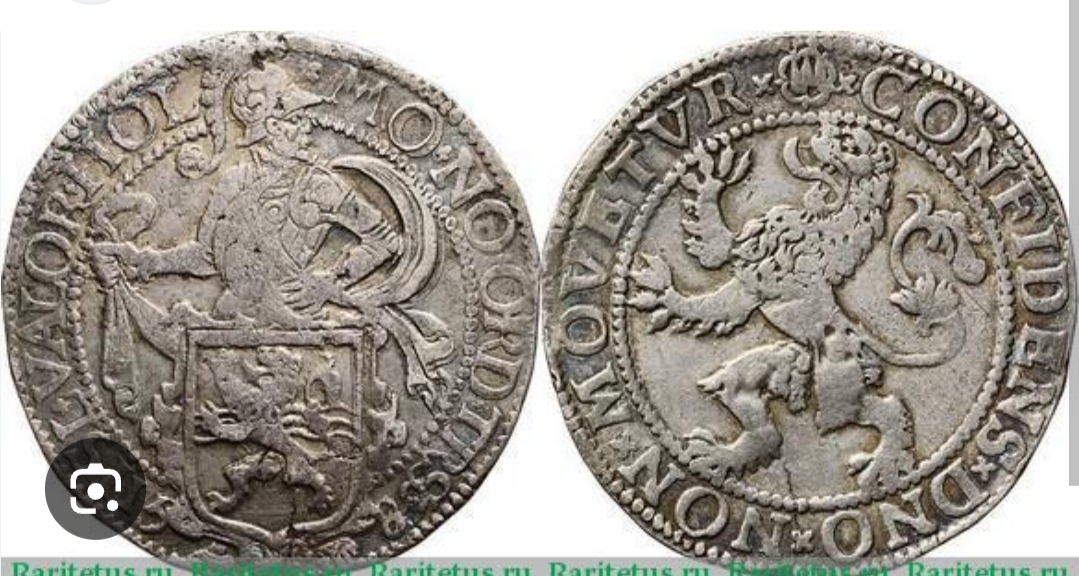
Were the Dutch ducatons ("Silver Riders") at 32.5 g not accepted as legal tender?
Keeper of the VAM Catalog • Professional Coin Imaging • Prime Number Set • World Coins in Early America • British Trade Dollars • Variety Attribution
I don’t believe any of the coins of the Netherlands were legal tender, but were nonetheless used in commerce during colonial times according to
my sources. I’ve included numerous coins from the Netherlands in my “US” collection. Copper, silver and gold. I included a Silver Rider and a Gold Rider.
Act of February 9, 1793
An act regulating foreign coins, making them legal tender, and establishing their value, etc.
SECTION 1. Be it enacted by the Senate and House of Representatives of the United States of America in Congress assembled, That from and after the first day of July next, foreign gold and silver coins shall pass current as money within the United Sates, and be a legal tender for the payment of all debts and demands, at the several and respective rates following, and not otherwise, viz: The gold coins of Great Britain and Portugal, of their present standard, at the rate of one hundred cents for every twenty-seven grains of the actual weight thereof; the gold coins of France, Spain and the dominions of Spain, of their present standard, at the rate of one hundred cents for every twenty-seven grains and two-fifths of a grain, of the actual weight thereof. Spanish milled dollars, at the rate of one hundred cents for each dollar, the actual weight whereof shall not be less than seventeen pennyweights and seven grains; and in proportion for the parts of a dollar. Crowns of France, at the rate of one hundred and ten cents for each crown, the actual weight whereof shall not be less than eighteen pennyweight and seventeen grains, and in proportion for the parts of a crown. But no foreign coin that may have been, or shall be issued subsequent to the first day of January, one thousand seven hundred and ninety-two, shall be a tender, as aforesaid, until samples thereof shall have been found, by assay, at the Mint of the United States, to be conformable to the respective standards required, and proclamation thereof shall have been made by the President of the United States.
SEC. 2. Provided always, and be it further enacted, That at the expiration of three years next ensuing the time when the coinage of gold and silver, agreeably to the act, entitled “An act establishing a Mint, and regulating the coins of the United States,” shall commence at the mint of the United States, (which time shall be announced by the proclamation of the President of the United States,) all foreign gold coins and all foreign silver coins, except Spanish milled dollars and parts of such dollars, shall cease to be a legal tender, as aforesaid.
SEC. 3. And be it further enacted, That all foreign gold and silver coins, (except Spanish milled dollars, and parts of such dollars,) which shall be received in payment for monies due to the United States, after the said time, when the coining of gold and silver coins shall begin at the Mint of the United States, shall, previously to their being issued in circulation, be coined anew, in conformity to the act, entitled “An act establishing a Mint and regulating the coins of the United States.”
SEC. 4. And be if further enacted, That from and after the first day of July next, the fifty-fifth section of the act, entitled “An act to provide more effectually for the collection of the duties imposed by law on goods, wares, and merchandise imported into the United States,” which ascertains the rates at which foreign gold and silver coins shall be received for the duties and fees to be collected in virtue of the said act, be, and the same is hereby repealed.
SEC. 5. Fixes the annual time for making assays
https://www.usmint.gov/learn/history/historical-documents/legislation-to-allow-foreign-coins-as-legal-tender?srsltid=AfmBOord5As6Y7TO0VWA9NBlF_RcLQ-jmhq63OdYQ43IQ4IH5FvUYRsA
Latin American Collection
There were several updating Acts subsequent to 1793 as well, Certain coins of some former Spanish colonies and Brazil were included as legal tender after they achieved independence; and the French 5 franc coins were added, for example. Again, many foreign coins were accepted in commerce that were not included in the Acts as legal tender up to 1857 and beyond. Endless research fun.