Options
Bad to the Bone "Pedigreed PCGS" 1893-S Counterfeit
 burfle23
Posts: 2,674 ✭✭✭✭✭
burfle23
Posts: 2,674 ✭✭✭✭✭
They are pulling out all of the stops. This one from a FB Group stating "I just bought this at a garage sale. Can anyone tell me if it’s real?". Really???
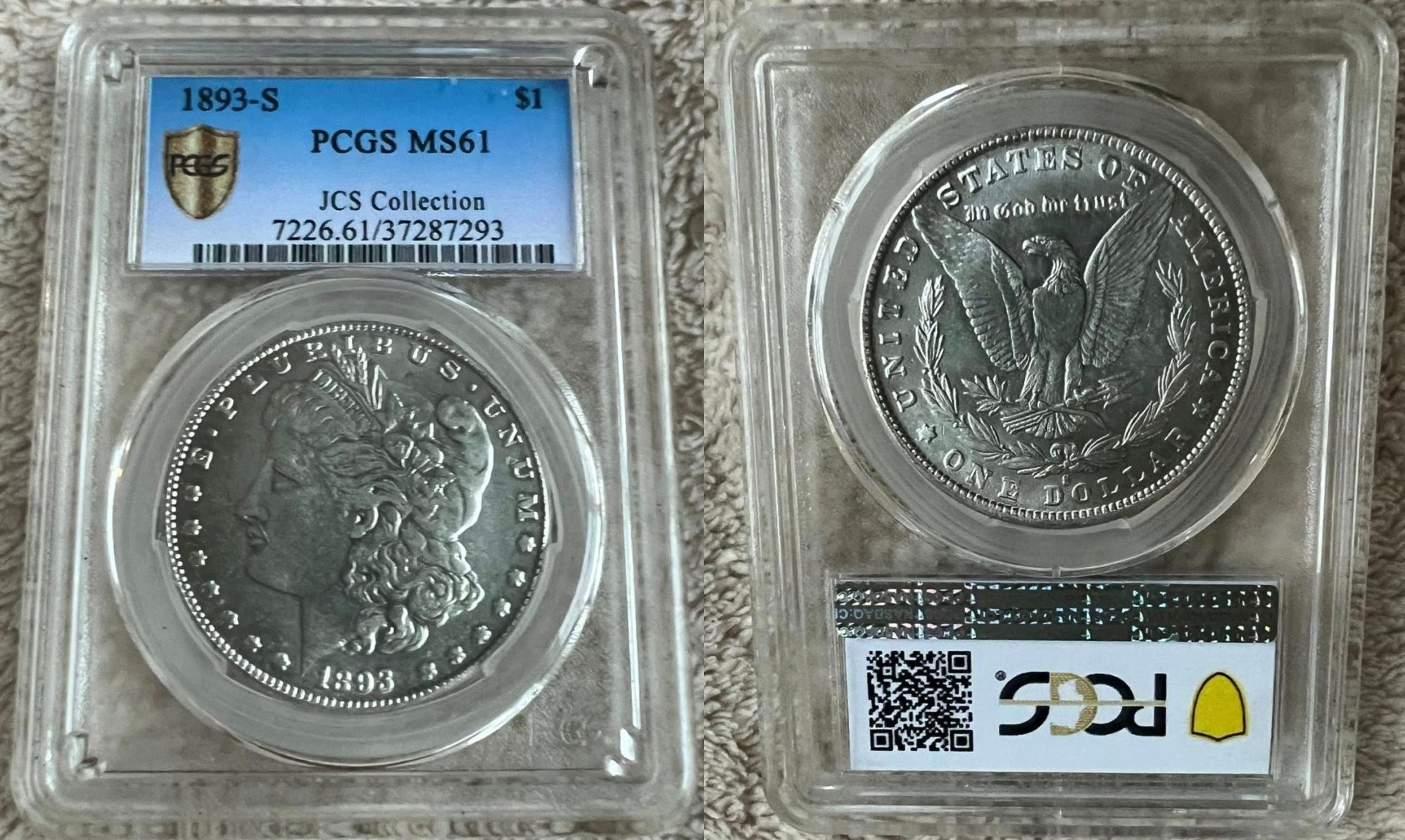
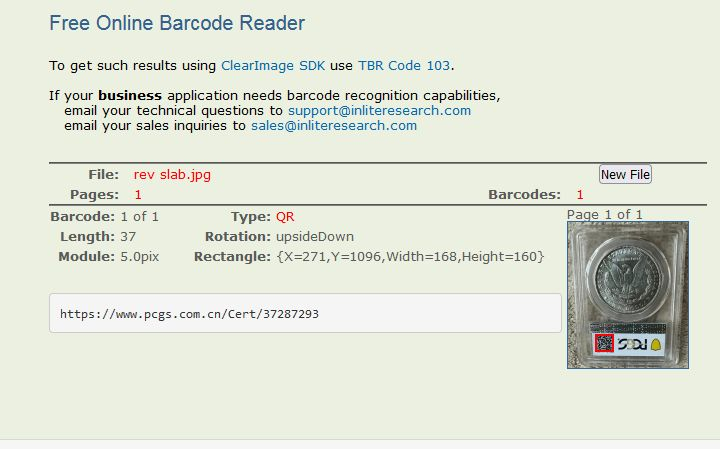
Obv barcode does not scan, and of course the rev QR scans to the cert on the PCGS CN site...
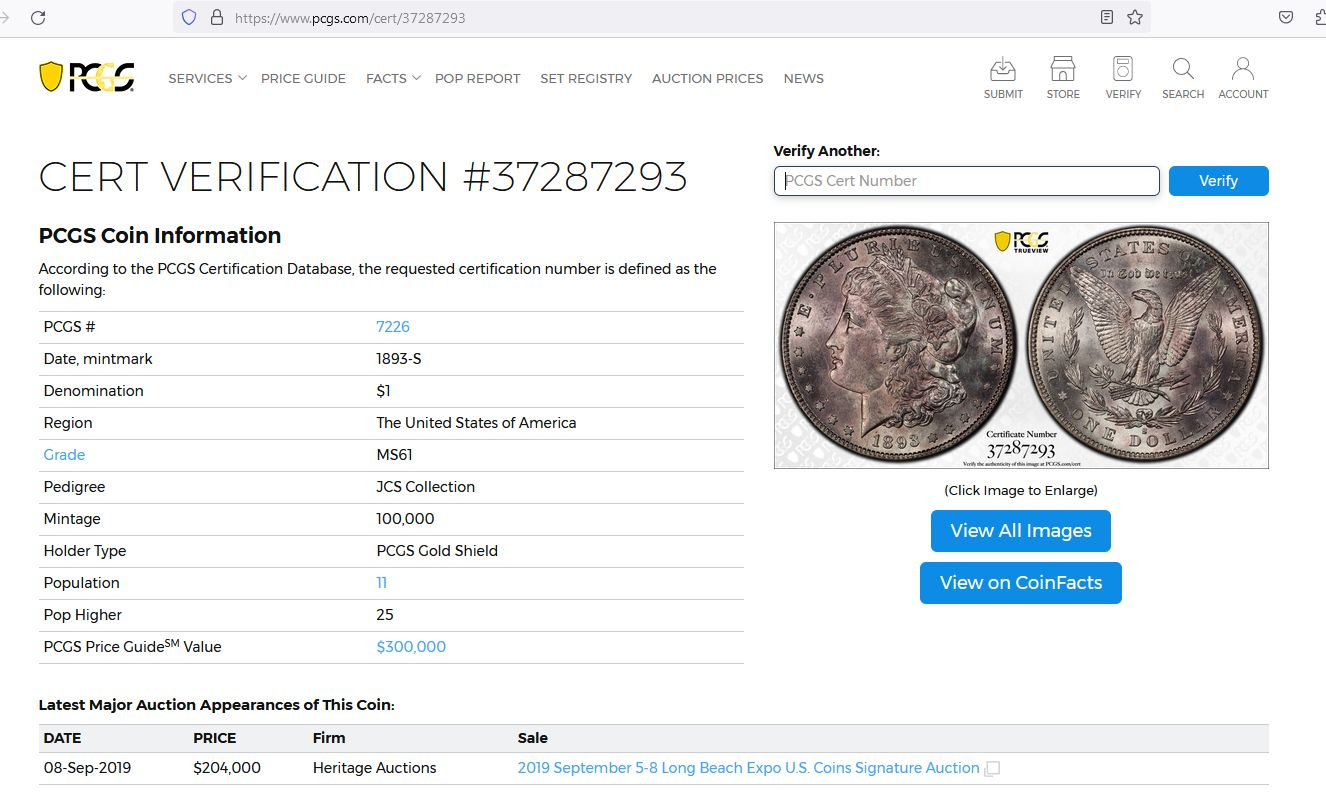
PCGS cert has images and a past auction reference:
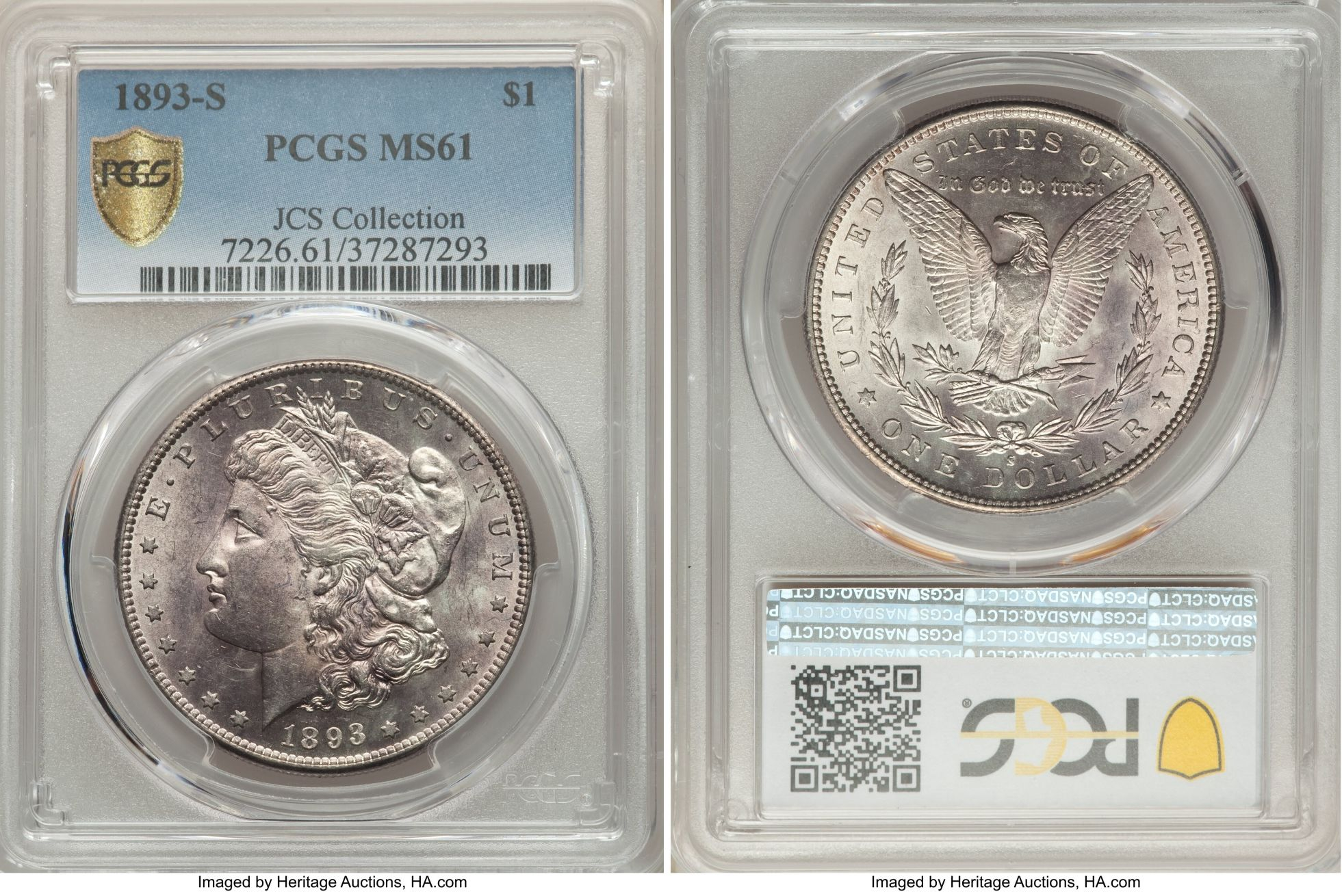
Best, Jack.
15
Comments
It really makes me wonder how many people have been screwed by these counterfeit holders. Scary stuff.
Student of numismatics and collector of Morgan dollars
Successful BST transactions with: Namvet Justindan Mattniss RWW olah_in_MA
Dantheman984 Toyz4geo SurfinxHI greencopper RWW bigjpst bretsan MWallace logger7 JWP BruceS bigjpst
JWP PROMETHIUS88
how much did they pay?
That’s wild.
Good grief.
At some point this is going to wreck the hobby.
Years ago I suggested holders be made with random “hairs” manufactured within the plastic of the holders, causing each holder to have a unique “fingerprint”, similar to a retinal scan. Pictures of each holder would be available on the website and an easy way to compare either the actual holder or a photo would be available.
The holders are just too easy to counterfeit.
Whoa now that would be a lucrative yard sale.
PCGS estimate $300k Hmmm, and the buyer asks if genuine?
Was this yard sale in Florida by chance?
At some point the buyer will get educated.
Much like a pyramid scam more people brought into the fold to lengthen the educational process.
And at some point the counterfeiting will get much more sophisticated. Time now to get in front of this
Your best defense against buying a coin like this is to learn how to grade and authenticate the coins in the series you collect. If you can't do that, at least buy coins from a reputable coin dealer. Before third party grading and authentication came along, counterfeit coins were far more common in the numismatic marketplace especially US gold coins and key-date coins such as 1916-D Mercury dimes and 1909-S VDB cents.
Worry is the interest you pay on a debt you may not owe.
"Paper money eventually returns to its intrinsic value---zero."----Voltaire
"Everything you say should be true, but not everything true should be said."----Voltaire
Agree counterfeits have been around for longer than any of us, however counterfeit coins housed in counterfeit slabs is a newer issue and adds more complexity to navigating authenticity than in the past.
Get it that education is key, but there are new entrants to this hobby every day, just as in the past, but to think they will all be educated enough to navigate a much more complex counterfeit market than in the past is not reasonable. Just saying that the hobby needs a better solution than caveat emptor, or there will be consequences to the hobby overall
At some point, the counterfeiters are to use AI to figure out where they are making mistakes on their fake labels/inserts. Problem is likely going to get worse from here.
Blockchain to the rescue? From ChatGPT:
Blockchain and tokenization could help reduce the problem of counterfeits in the collectibles hobby — though they are not a silver bullet. Here's how these technologies could help, along with their limitations:
✅ How Blockchain & Tokenization Could Help
1. Provenance Tracking
• Blockchain can serve as a tamper-proof ledger that tracks the origin and ownership history of a collectible (digital or physical).
• Each collectible could be linked to a non-fungible token (NFT) that proves authenticity and chain of custody.
2. Authentication Certificates
• Items could come with a blockchain-verified certificate of authenticity issued by a reputable authority or the original manufacturer.
• Transfers of ownership would be recorded publicly, preventing forgeries from having legitimate-looking paperwork.
3. Reduced Fraud in Peer-to-Peer Sales
• Buyers can verify on-chain that a seller actually owns the collectible and that it has a legitimate history, helping to eliminate scams.
4. Digital-Physical Pairing
• For physical items (e.g., rare cards, coins, sneakers), you can pair them with an NFT using tamper-evident NFC chips or QR codes embedded in the item.
• Scanning the chip links to the blockchain record — if the chip is damaged or the NFT doesn't match, it raises red flags.
⚠️ Challenges and Limitations
1. Initial Verification Still Requires Trust
• A blockchain can only track what it's told — the first verification (e.g., minting the NFT or issuing the certificate) depends on a trusted third party.
• If that source is compromised or mistaken, the whole chain becomes unreliable.
2. Tagging Physical Goods Is Tricky
• Attaching a secure and tamper-proof ID (chip, hologram, etc.) to physical collectibles requires logistical infrastructure and costs.
• There's also risk of tag swapping or duplication.
3. Adoption Barrier
• Collectors may resist using blockchain tools due to complexity, costs, or technological unfamiliarity.
• A robust system needs wide adoption by collectors, marketplaces, and grading/authentication services.
4. Not Foolproof
• Counterfeiters could attempt to clone tags, fake linked metadata, or social engineer users into trusting fake on-chain assets.
🔚 Bottom Line
Yes, blockchain and tokenization can be powerful tools to deter counterfeiting and improve trust and transparency in collectible markets — especially when paired with physical tagging and reputable verification.
But the solution's effectiveness depends on:
• Widespread adoption
• Secure item-to-token linking
• Trusted initial authentication
We keep seeing these bits of advice that you buy the key dates first. Here is an example of why you should not listen to this. One needs to look at many Morgan Dollars to get to know how genuine coins look. As a collector building a set, I buy that coins that are properly graded at fair prices. Pressing the market to buy the keys first is a mistake in my opinion.
This advice is especially true for beginning collectors. Learn something before you dive in buying coins that cost thousands of dollars.
The above Morgan is clearly not an Unc., so it's easy to spot as a fake.
"Seu cabra da peste,
"Sou Mangueira......."
This is not surprising. Counterfeiters are hoodwinking people on paintings, watches, LV bags etc. You have to buy expensive items from a reputable source. If they paid $30 then what's the big deal? If not they bought an expensive item at a garage sale.....not a genius.
even reputable sources get it wrong. know your stuff!
Beijing, actually 😂
As for the hobby, it’s always been every man for himself in terms of knowing what you’re buying. My first fake holder was an MS68 steel cent off Teletrade. Ian was kind enough to take it back.
Empty Nest Collection