Error or PMD?
 JeffMTampa
Posts: 3,323 ✭✭✭✭✭
I recently purchased an 1899 Barber Dime in a NGC AU 58 holder:
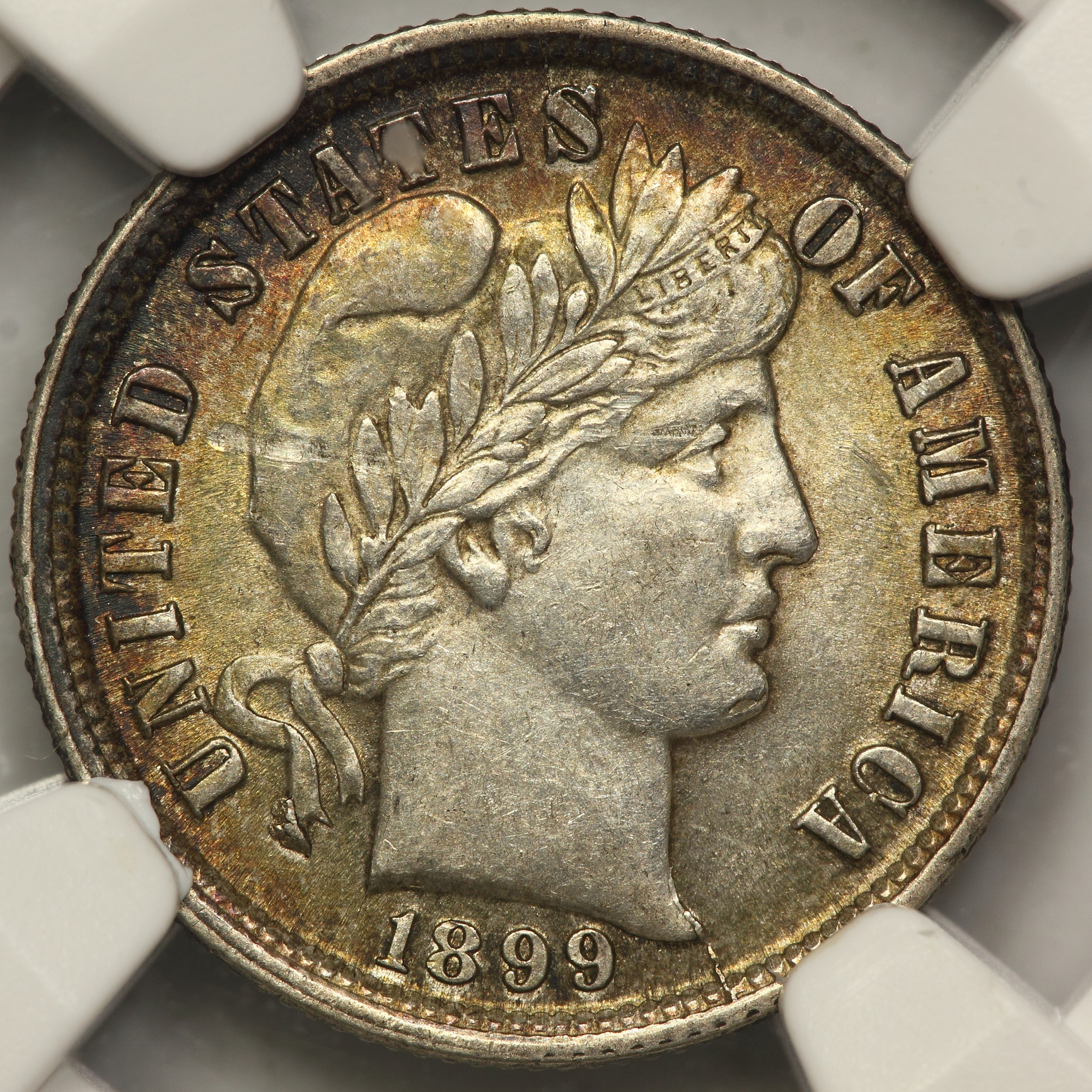
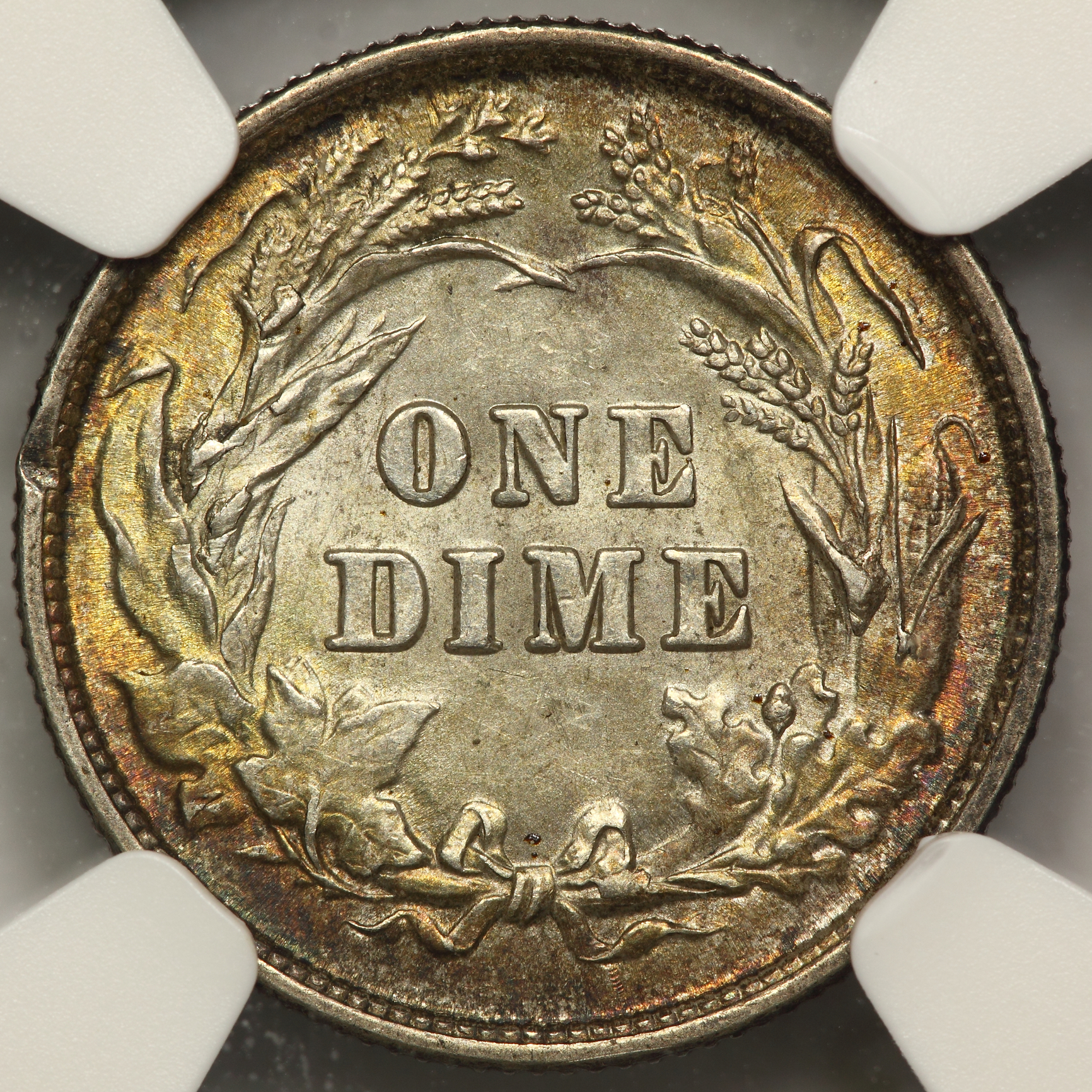
On initial inspection it looks like nicely toned coin. But looking around there's some odd stuff going on. The obverse has 3 imperfections that look to me like errors:
There's an area across the face that looks like it's struck though grease: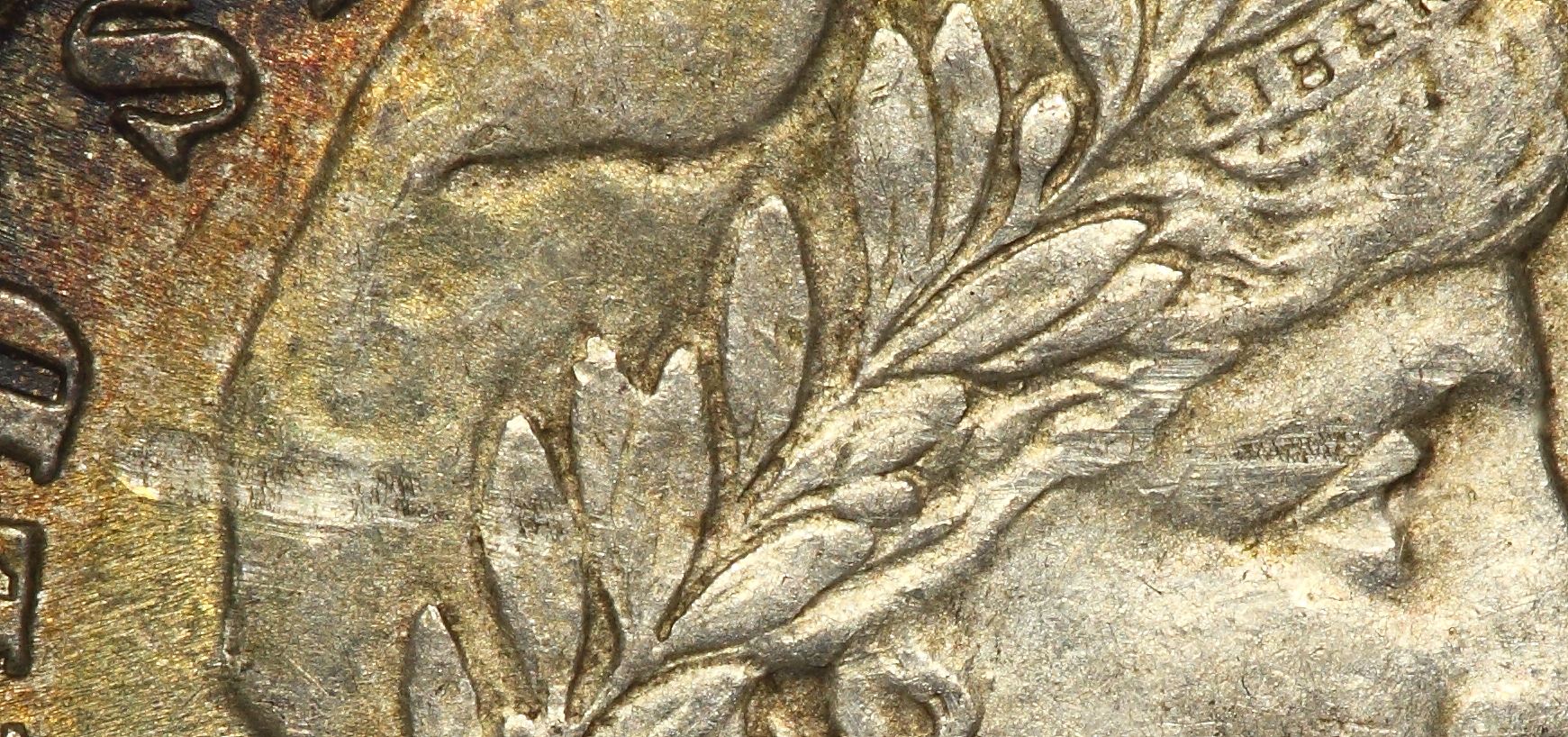
An area on the chin that looks like a lamination: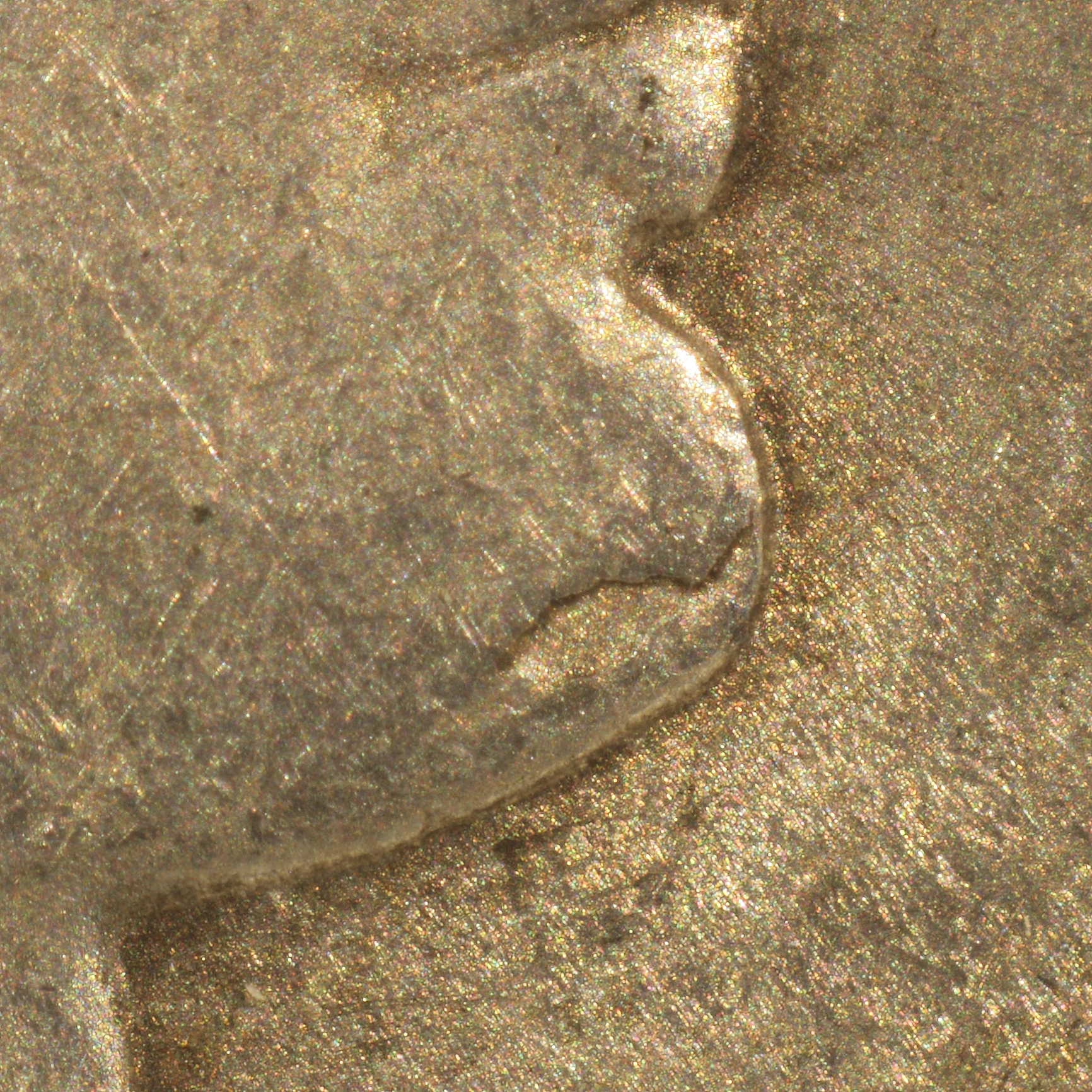
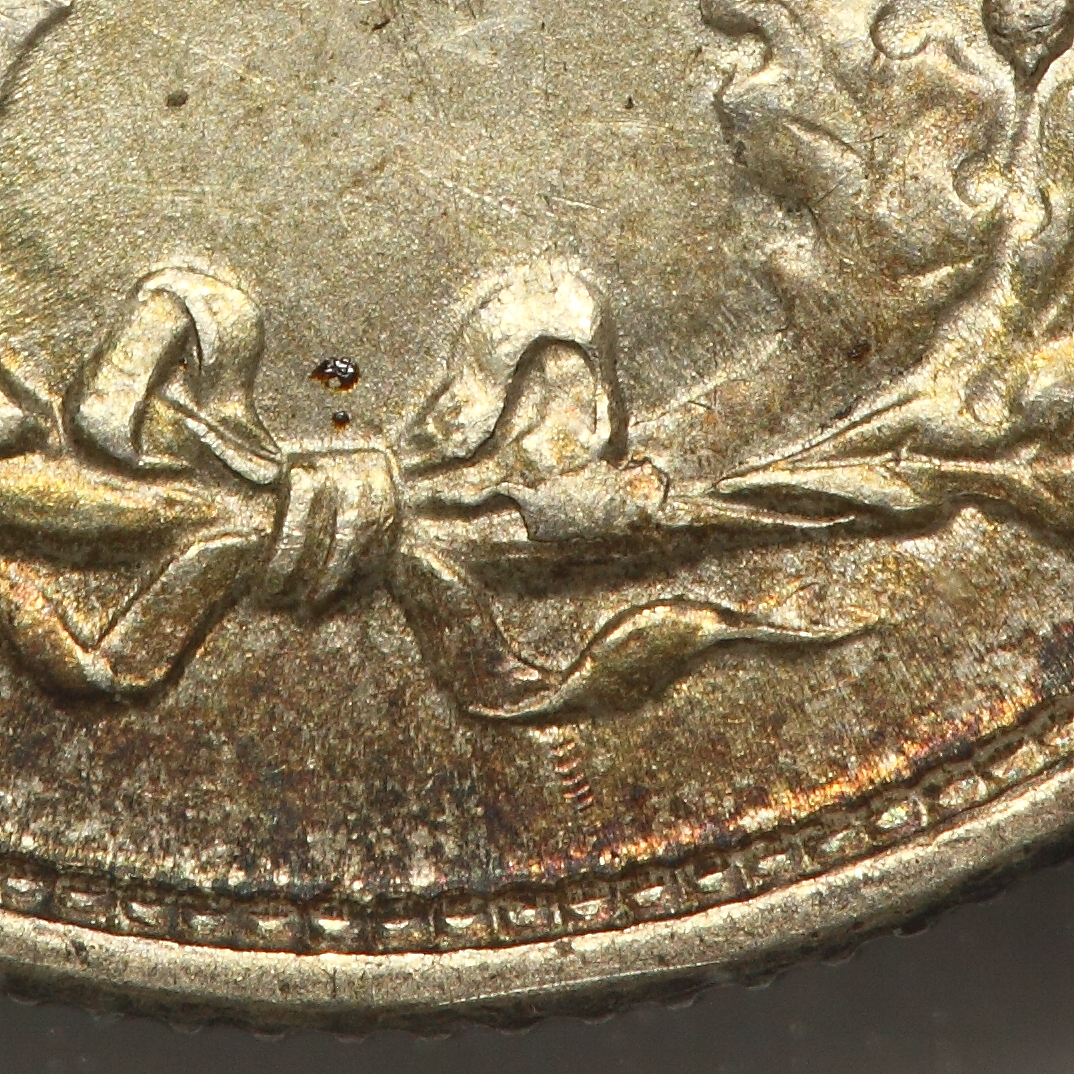
A Die Chip at the base of the ribbon: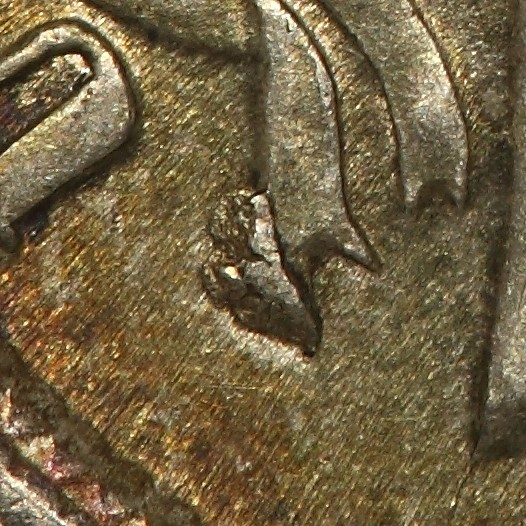
And a Die crack from the rim to the bust with what appears to be a retained CUD: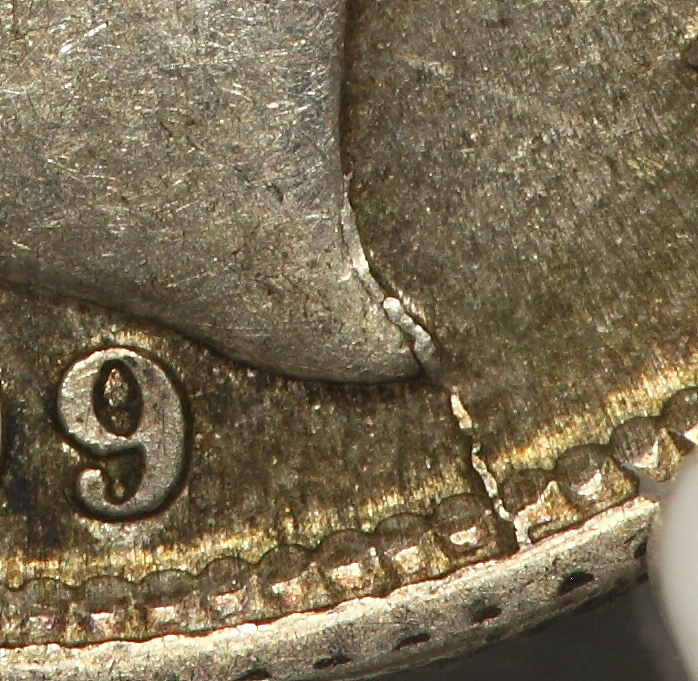
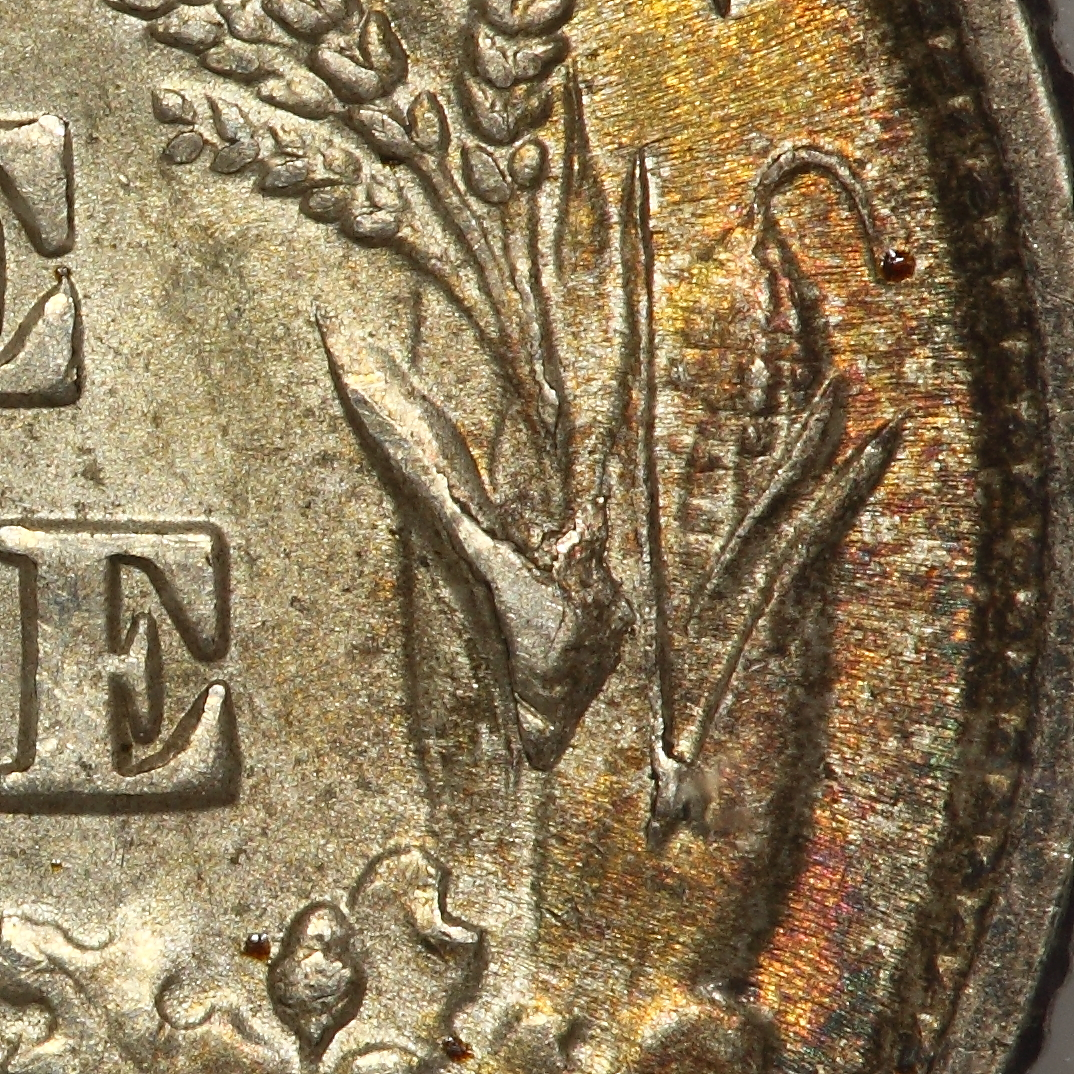
So far interesting, but the reverse gets odder. There are several areas of raised metal only on the raised areas of the coin; none in the field: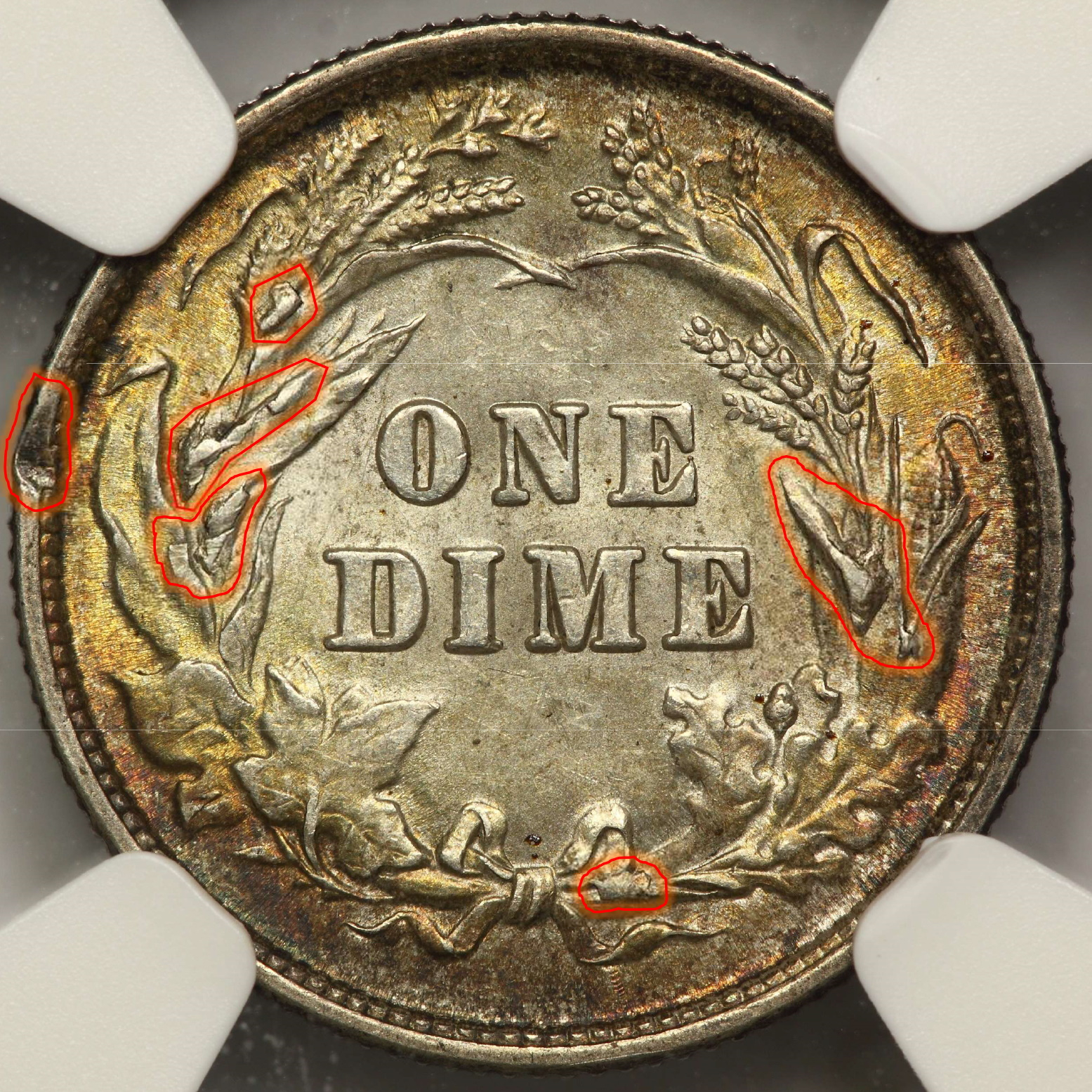
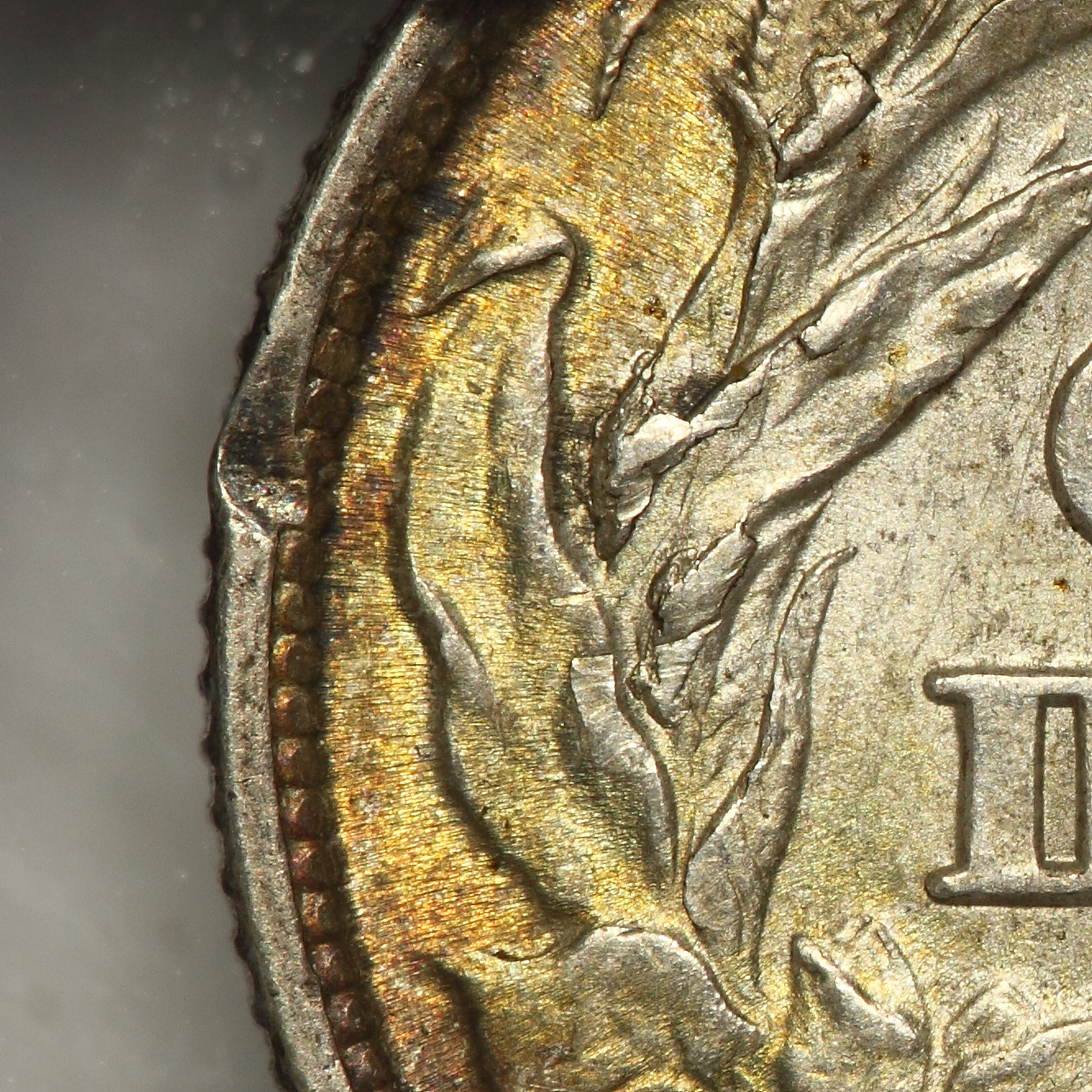
There's also a rim ding on the reverse.
What is this on the reverse? Is it retained cuds from the minting process, or was metal added to the coin after striking? If metal was added I'm surprised it's in a straight grade holder.
Thoughts on this coin?
Comments
a LOT going on with this coin.
that said imo, it isn't a terrible coin but well below average.
Nice photos. Wow, that coin has "issues."
Not really looking for much these days but if I were, it might be a toner.
I think the OP picked up most of the issues, except I think "cud" is being used improperly. I see a die crack and since due chips but no cuds.
I am no expert but I a little surprised that rim ding was not an issue. Same goes for the obverse scuffs if they are not struck thru grease.
To quote a popular meme in answer to your question - why not both? Here is my accounting of what you noted in the pictures:
Minor errors: Die crack on the base of the bust, minor lamination on the face, internal die chips on the reverse
PMD: deep gouge on the cap, reverse rim
I am honestly a little surprised it straight graded, to me either of the areas of PMD would call for a net grade.
Sean Reynolds
"Keep in mind that most of what passes as numismatic information is no more than tested opinion at best, and marketing blather at worst. However, I try to choose my words carefully, since I know that you guys are always watching." - Joe O'Connor
Nice die crack and toning, but the areas of post mint damage are distracting.
As above.
Yes, I improperly referred to the Die Chips as CUDS. I was so dumbfounded when I found all these problems that my mind blew a gasket.
Interesting coin with the die chips and crack....The PMD and rim ding hurt the coin....I hope your 'gasket' is repairable

Cheers, RickO
That coin should not have straight graded.
To me the real question is the "die chips" on the obverse and reverse Are these really die chips? Possibly silver solder added? If they are die chips how did so many form with only 1 die crack on the obverse? On the reverse why are the die chips only in the raised area of the coin?
I agree that it shouldn't have straight graded (for the rim ding), but I'll have to say that all the stuff going on, it has given me hours of entertainment! Is there an award for the most errors occurring on a coin?
I'm tempted to send it to our hosts for crossover to see what happens.....
I'm not sure that would end well.
a good point. if you look at enough seated liberty type coins, you will see a lot of chips/breaks on the high point of the coins: ie wreath. i think lincolns to an extent as well.
based on the radial break and big die chip obv, i'd say it is nearly 100% the ones on the reverse, in this case, are legit.
@FredWeinberg will you please honor me with an opinion? This is a very odd coin.....
I agree with Sean Q for both the die chips and damage- however I’m not certain that the chin has a lamination - could possibly be a hit or a scuff Mark
The did chips are reminiscent of the ones you see on the Lincoln Cent reverse on the wheat ears. Mainly on the 50's dates. I agree with all comments, but for the chin lamination. On the fence there.
Thanks for all the thoughts and replies- what a team!
Now to figure out what to do with this.