Options
What’s your “go-to” solvent when acetone doesn’t work?
 DNADave
Posts: 7,350 ✭✭✭✭✭
DNADave
Posts: 7,350 ✭✭✭✭✭
I bought a collection of WLHs in a Whitman folder. I looked at the better dates 1938-D 1921-S and the early coins in book 1. I didn’t look at the back of every coin. (Insert lesson learned).
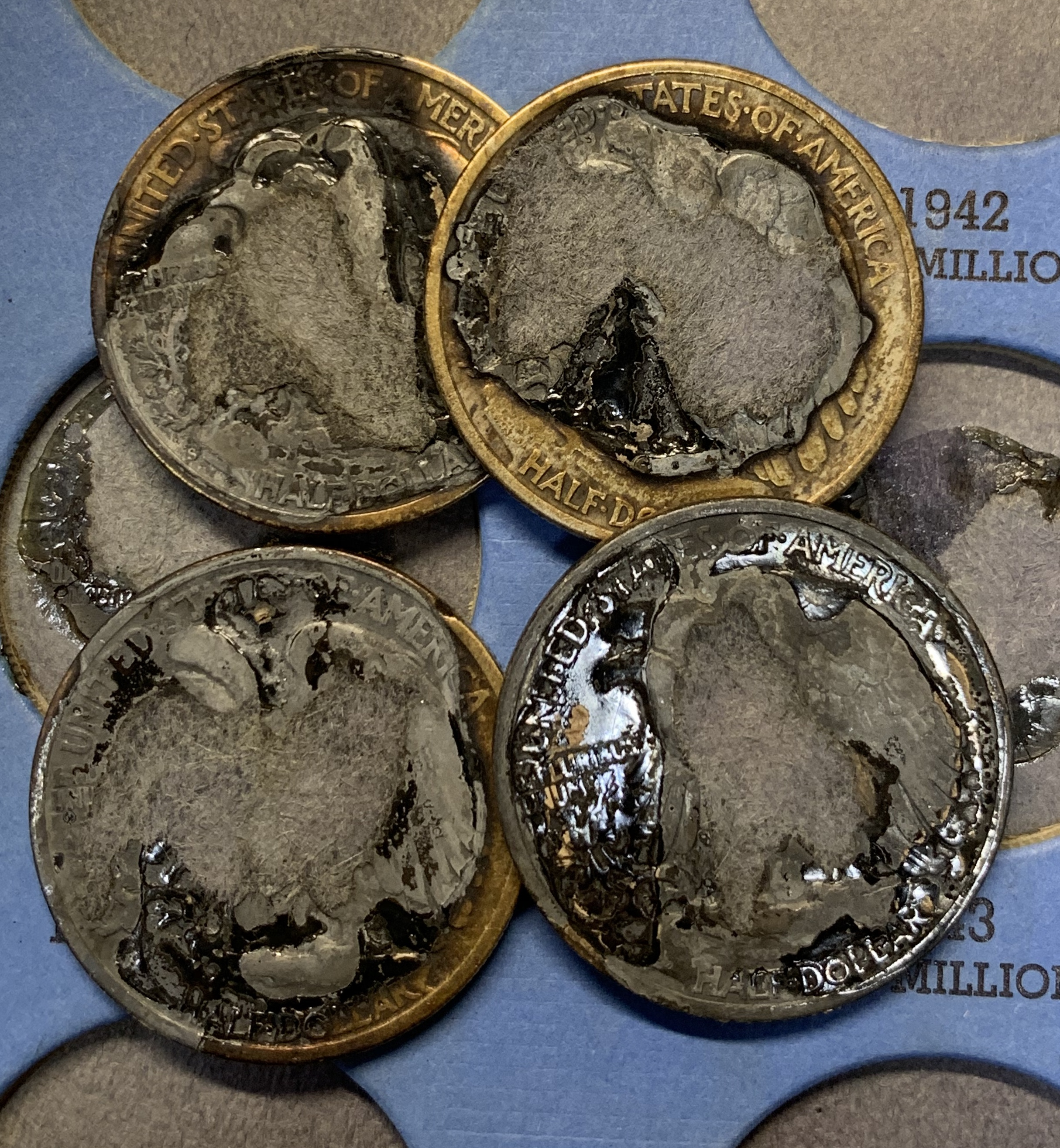
Four coins ended up being glued very well into their holes. Acetone had zero affect after several days.
I think it may be an epoxy resin.
What would you try next? Before the wire brush.
I’m sure they’re ruined, but I’d like them to be a little cleaner for the junk pile.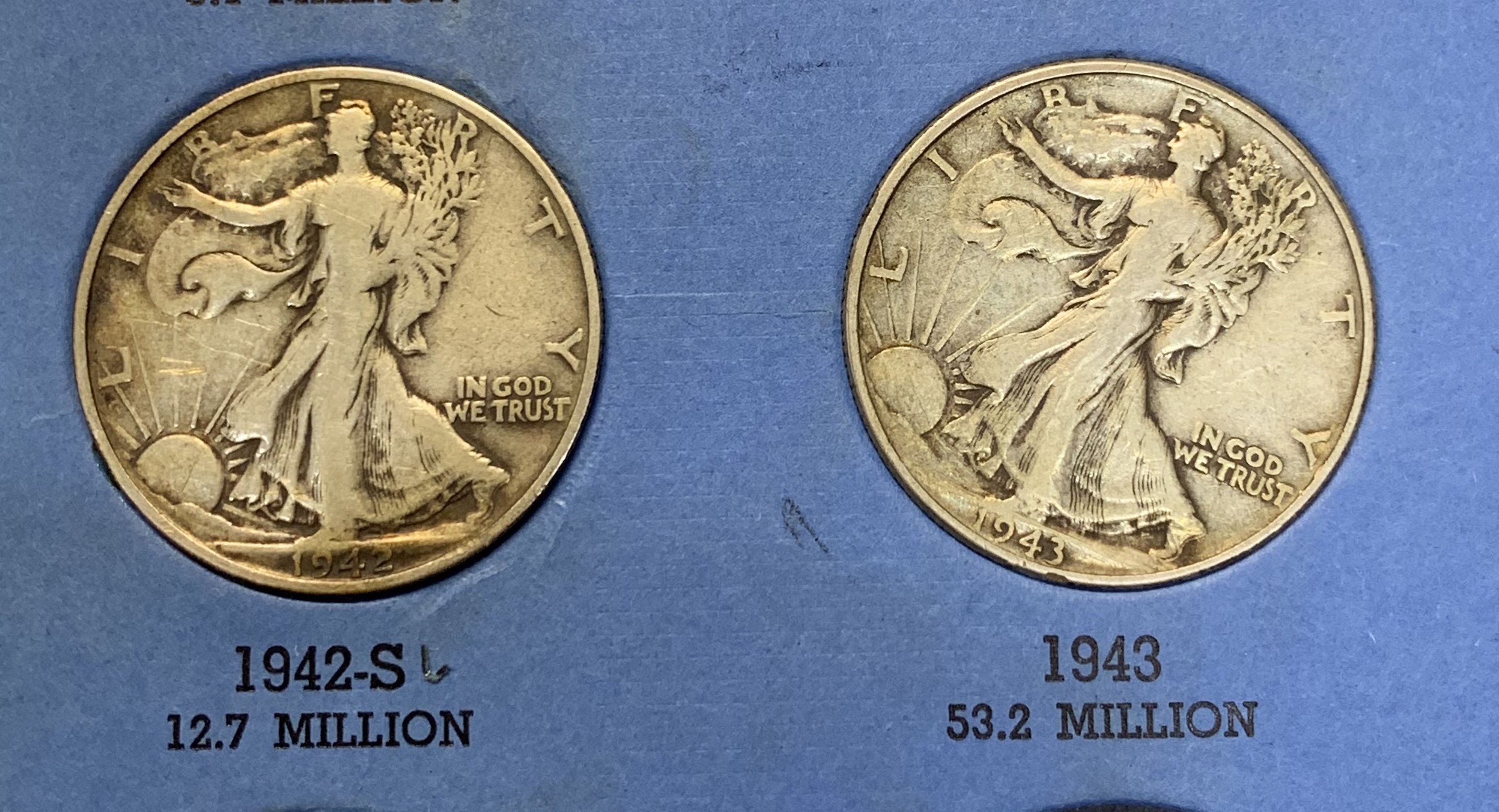


3
Comments
Oh my goodness. That’s horrible!
He who knows he has enough is rich.
Yuk. Maybe throw them in a bucket of gasoline?
If that doesnt work...light a match!
Dead Cat Waltz Exonumia
"Coin collecting for outcasts..."
Paint remover, turpentine, mineral spirits...Great practice coins. Wish I had them. Keep playing and NO SCRUBBING. Let us know what worked. I'm 100% sure some of us here could take that stuff off.
Xylene may work. But if it does, your probably going to have ugly, mottled toning.
EZest will work but you probably won't like the looks of the coin when your done.
If you send the '42 to me, I will try some of my methods....(I like that date, and would work to ensure the coin is not damaged)....Cheers, RickO
A propane torch might work, and you might get a colorful, artificially toned half as a bonus.
My US Mint Commemorative Medal Set
toulene
2-Butoxyethanol
Try immersing them in liquid nitrogen - the stresses caused by differential contraction between the glue and the metal may cause the glue to delaminate....
goo gone
Wow, that is worse than the tape I used to use to keep coins from falling out. I like the freeze and heat idea. Liquid Nitrogen might be a little extreme though.
Wow! Why Were they glued to the book?
Collector
Over 100 Positive BST transactions buying and selling with 57 members and counting!
instagram.com/klnumismatics
They were probably loose in the album and were falling out.
Worry is the interest you pay on a debt you may not owe.
"Paper money eventually returns to its intrinsic value---zero."----Voltaire
"Everything you say should be true, but not everything true should be said."----Voltaire
Some on internet say to boil them to try to get the glue softer and then see if most of it will come off with a fingernail rubber/plastic scraper. Then the remaining residue try fingernail polish remover, or other solvents mentioned above.
Aircraft paint stripper (methylene chloride) might work. Supposedly it does not hurt most metal including sterling , but I used this on a 90 year old car frame and it is powerful stuff and will burn if you do not wear gloves. There is a water based version that washes off better.
My US Mint Commemorative Medal Set
This is a good idea. If you don’t have liquid nitrogen handy...
Put them in the freezer for awhile then drop them in very hot water.
Something will happen...
Caution: Beware of splash back.
Don't think it will affect the coating.
Electrolysis.
Liberty: Parent of Science & Industry
Dry ice may help to super cool enough for the glue to crack. ( Use caution & gloves! )
A soak in lacquer thinner might work also. ( Use caution! Very flammable & strong fumes )
I don't use Acetone. I use Methylene chloride. Period.
If I have to go a bit harder, I will typically use xylenes. Beyond that, MEK and others can be amazing, but the health risks increase, and do you really want to shave off some life expectancy for common silver? Also, some mechanical work, such as attempting to freeze off the material, might be a good first pass. Any sort of large glob of glue will take a while for a solvent to work through and simply breaking it off can be faster.
PS: since most people don't have a fume hood, make sure to use organic solvents only in places with plenty of air circulation, preferably outside. Read the SDS or other safety instructions before using any unfamiliar solvents.
Aercus Numismatics - Certified coins for sale
Trichlorotrifluoroethane but its hard to find anymore
That one is known to deplete ozone from the atmosphere. Please don't use it.
Aercus Numismatics - Certified coins for sale
That's an interesting concept. I wonder if using this idea he could take a can of computer keyboard duster and turn it upside down so it releases the freezing liquid contents directly onto the glue? Aren't the contents nitrogen or something similar?
Use gloves and eye protection!
Previously owned by a Rocket Scientist who adhered them for space travel?
You will all laugh but. WD-40.
"It's like God, Family, Country, except Sticker, Plastic, Coin."
I am not suggesting that you use it, but I would use Carbon Tetrachloride.
(Atmosphere: Nitrogen-78%, Oxygen-21%, Argon-0.93%, Neon-0.00182%, Methane-0.00015%, Krypton-0.00014%, Hydrogen-0.00005%,...)
And then pull off with duck tape?
1,1-difluoroethane refrigerant (R152a).
Keeper of the VAM Catalog • Professional Coin Imaging • Prime Number Set • World Coins in Early America • British Trade Dollars • Variety Attribution
50% ammonia
Well, just Love coins, period.
Warm them gently with a propane torch 150-200*F and gently higher if needed. At those temps the coins will not tarnish and the adhesive should peel off.
Agree. But I gave trying to get it, hard to find.
toulene
2-Butoxyethanol - these are worth a shot
xylene, in lieu of toluene
if acetone didn't work, MEK probably won't either
Trichlorotrifluoroethane - worth a shot
turpentine
I knew it would happen.
Wow, after all these recommendations, sounds like you’ll need to get a hazmat truck over over to your house when you’re done!
He who knows he has enough is rich.
Lots of compounds suggested here. I know the basics of chemistry but I’m getting a bit lost. When we want to go a step beyond acetone, what are we looking for in a chemical?:
— less polarity? Even to the point of being insoluble or immiscible in water?
— higher molecular weight?
— specialized “stripping” or “degreasing” properties? Surfactants?
Here’s a straightforward source that kinda ranks several of the chemicals mentioned here, and the stripping/degreasing actions:
https://www.ehow.com/list_6868703_relative-cleaning-strengths-solvents.html