Options
What do you find is the easiest "line" to determine between two adjacent, yet different grades?
 Insider2
Posts: 14,452 ✭✭✭✭✭
Insider2
Posts: 14,452 ✭✭✭✭✭
I have recently learned that some very knowledgeable folks have trouble determining when a coin is not a perfect "70" and drops to a "69." This is very hard for me to believe as I think the difference between a "69" and "70" is the easiest to learn. It can be explained in about one minute in a grading class or written in less space than I've taken here.
Do you agree? If not, in your opinion what is the easiest "line?" AU or MS? P-1 to F-2?
0
Comments
AU/MS
And why is that? I have found that there is more debate NONSENSE and CONFUSION about this line (AU/MS) than all the others combined!
I think the circ lines/marks are easy to determine. PCGS may not always agree with me. but I know AU from UNC.
OK, how much cabinet friction will you tolerate on a dime before it drops to AU in your opinion or are you "old school" (NO TRACE OF WEAR)?
Clear, consistent, openly defined, and stable standards. All three major TPGs and the ANA should have and use these same standards. This will also end most "grade inflation."
I guess I am "old school" no friction. And 4 grades of UNC not 22!!
I'd like everyone to think including the TPGSs that a well defined, detailed strike is the fine line for anything grading above MS64.......but they don't.
The more qualities observed in a coin, the more desirable that coin becomes!
My Jefferson Nickel Collection
Please take up a few lines of extra space to educate me and others on how to determine this so easily.
My US Mint Commemorative Medal Set
I thought 70 is no defects visible under 10x magnification, 69 allows for one or two?
Collector, occasional seller
The easiest grade for me to define is the one between a coin a want to own and one that I don’t. Beyond that, you’ll get no consensus.
I believe 5X is the standard, but the issue is what is a defect?
"As struck" is the defining word, but if a planchets has pits, discoloration, milk spots, and then the die is old, worn, broken, or psi on the press is out of adjustment for the right planchets, you get weak strikes, or if rings are worn rims are crooked, and then there is Mint handling, packaging, and they fall on each other at the bottom of the press and get dinged, etc. Then the packaging when it is sent and you get coins out of the holders. But even if everything looks right to me, I have sent in 100's coins that I look at carefully at 5X and received plenty of 69's
My US Mint Commemorative Medal Set
62/63 is my vote
Tom
Well, they did in the past. Unfortunately, some strike weakness started to be allowed on "65's" as grading "evolved" (TPGS's loosened their original standards).
Tell you what. If you have an ANA grading guide, turn to the Morgan dollar section and look at the chart. I'm going to let others post here a little longer. I'm sure with the caliber of members here, someone will answer your question before then.
Here is a previous discussion on this forum about the MS-70 grade: "Can Someone explain an MS-70 coin with blemishes and milk spots?"
40-50 really talking about luster
11.5$ Southern Dollars, The little “Big Easy” set
I'm going to say G to VG
EAC 6024
I don't think "lines" really exist, except perhaps for the one mentioned above, and even that one gets shifted a lot by the winds of gradeflation.
'Lines' are very blurry in coin grading.... that is why every grade is an opinion. As I have stated here many times (almost ad nauseum), there are no standards.... without standards there can be no lines...just imaginary 'areas' of possible agreement among a narrow majority of viewers. I come from a very long career where standards are mandatory and clearly defined..... and have a hobby in which there are none. Must have been my mental 'escape mechanism' when work got to be too demanding. So, discuss your lines, argue about grades, put forth theories - it is all for naught until true standards are defined and implemented. Cheers, RickO
@Crypto said: "I don't think "lines" really exist, except perhaps for the one mentioned above, and even that one gets shifted a lot by the winds of gradeflation."
IMO, if you wish to "get anywhere" when discussing questions about grading such as this thread, you'll need to approach it as if it were a question not associated with reality. Hope this made sense. We know there is no grading standard that is followed by everyone. We know there is a wide gulf between AU coins graded as MS and true MS coins. Gradeflation should not come into the discussion either.
I have an opinion. I believe the easiest grade to identify is PR/MS-70 because if the coin has ONLY ONE defect (mint made or not) it is not a "70" and drops to a "69." What could be easier?
Now, I'm interested in the "line" between grades that is easiest for you. Is it the same as mine?
Do you find it very easy to grade a coin an XF-40 rather than an XF-45 or AU? Is the easiest "line" between the G or Very Good grade?
@Goldminers Did your question get answered in the grading guide?
Insider2,
Thanks for the link. There are also plenty of grading guidelines, Photograde help, etc on the PCGS site also so no need to explain. I just have found that very often I do not see the "only one defect". I even use a 6X and have tried to distinguish 69-70 on hundreds of coins and find I am just not able to tell. I try real hard not to waste grading money on modern coins, so I do look pretty close, but I would say I am right only about 60% of the time in determining 70's. So my vote would not be 69/70.
My US Mint Commemorative Medal Set
That is quite a well thought out answer. We can all learn from a post with the reasons for an opinion are given!
Try this, It's easy...
Here is what you need to decide. Many of the TPGS will allow tiny Mint-made strike thru marks on a coin they grade "70." These are actually "defects." While I agree with this practice, you don't need to. A perfect MS/PR-70 should be perfect. No spots, hairlines, "hits," or mint made marks.
Probably VG/Fine for the kind of coins i usuallly collect (early quarters and halves by die variety and on a budget)
Liberty: Parent of Science & Industry
Insider2, Thanks very much. I will print your methodology and try it on my next submissions. You may have saved me some money!
Did you mean a black light or fluorescent just to be sure.
My US Mint Commemorative Medal Set
fluorescent
It takes the glare off the surface and makes it easy to see luster loss or stains.
XF45 to AU50 for me
There's a greater dividing line between PO-01 and FR-02, with all the clamoring going on for the 1.
``https://ebay.us/m/KxolR5
Easiest is between AU 58 and MS 60. I submit MS 60 coins and they come back AU 58.
``https://ebay.us/m/KxolR5
if it is this difficult to pinpoint, grading must be subjective
If in doubt, it always goes to the lower grade.
when you are buying.
when selling...
Only 22? Did you forget about green and gold beans? That adds up to 132 UNC grades if my math is correct.
I guess I'm "old old school", UNC, CHOICE UNC and GEM UNC.
it's crackers to slip a rozzer the dropsy in snide
Why not " old old old school "?
Only 2 grades: New and Worn.
Liberty: Parent of Science & Industry
60 and 61
A 60 usually looks like it been in a knife fight.
The majority of today's 61 are just upgraded 58's from years ago, and a lot don't have many marks.
Disagree. MS-61 coins have many marks. So do MS-62's. I find that the brightness of the luster separates these two grades most of the time. Besides, these days "60" and "61" are seldom seen. In my experience, very many coins go from AU, to AU (MS-62).
Ms60 and 61 are my fav grade

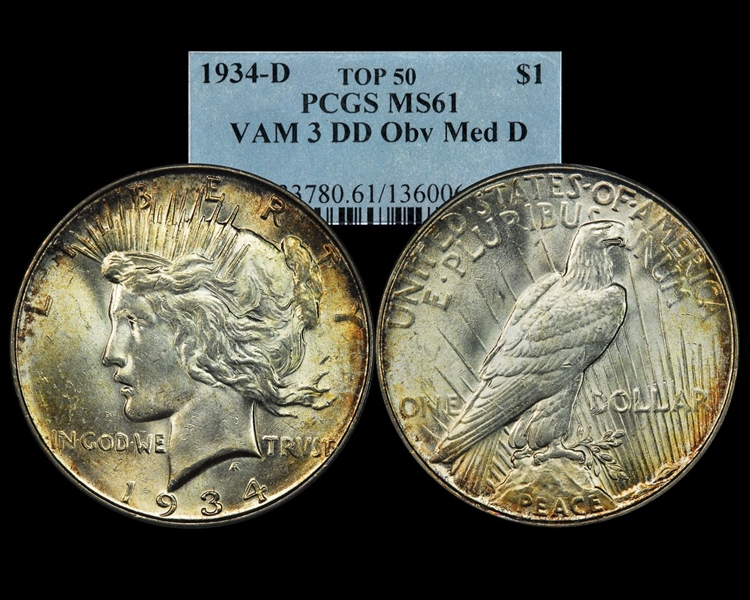
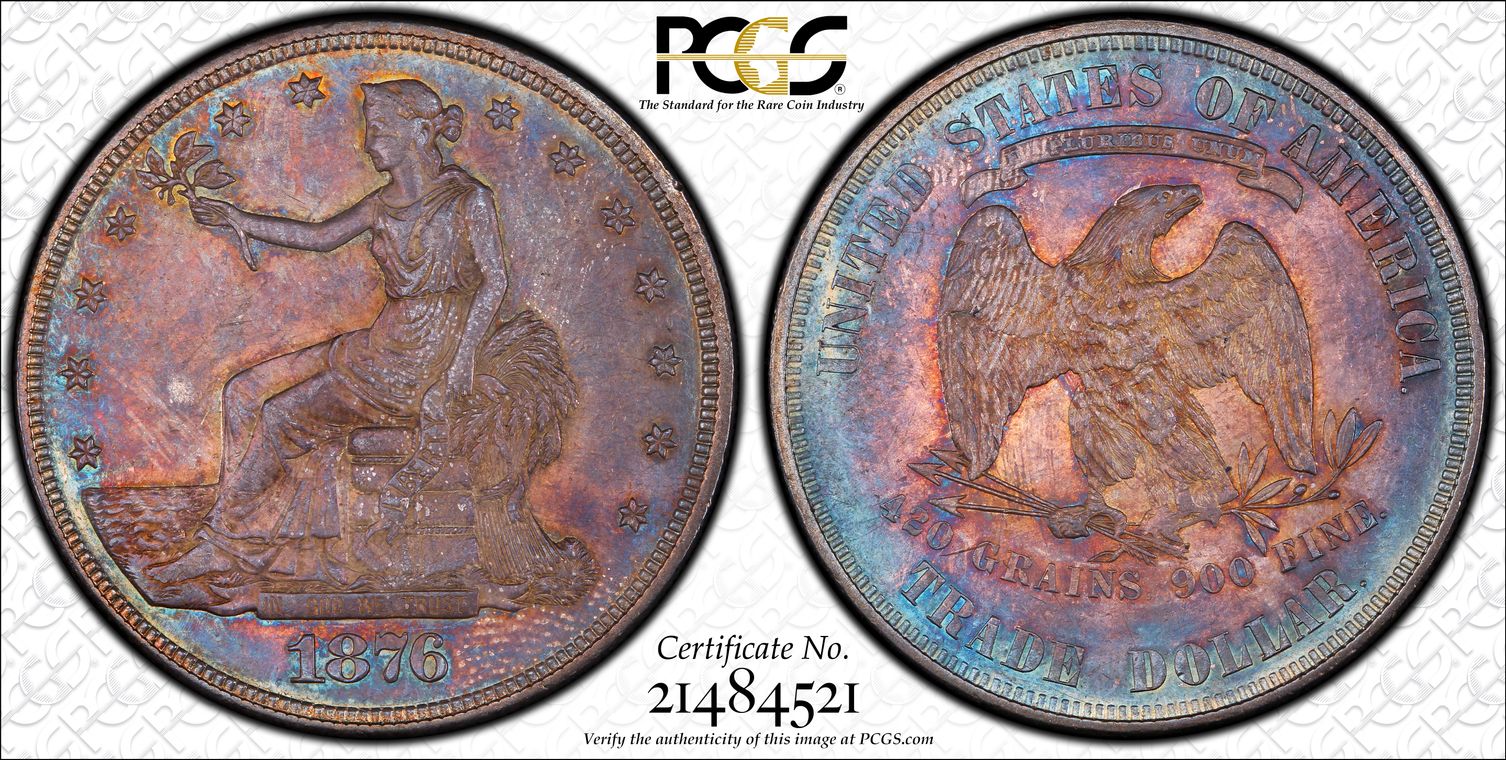
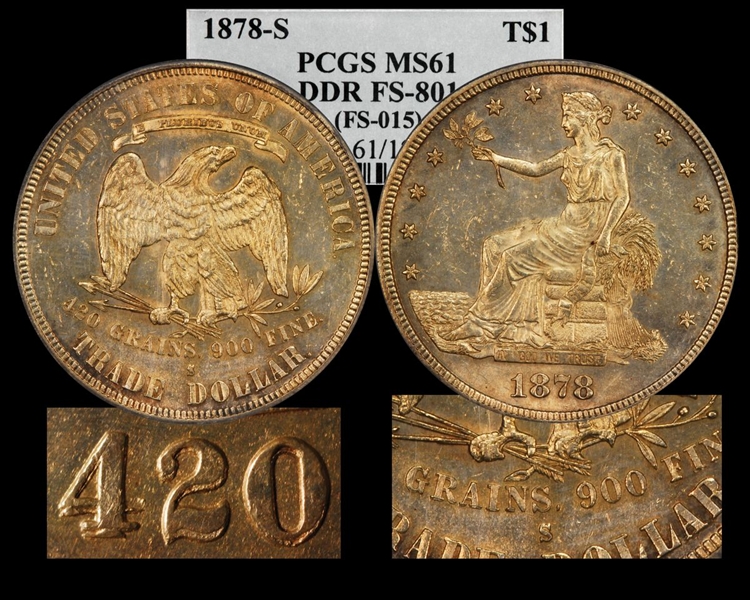
11.5$ Southern Dollars, The little “Big Easy” set
I guess I should have qualified my answer, since I only collect Morgans and $20 liberty gold.
In those two series, I stand by my answer
All this demonstrates to me is you was robbed!
From here, those would all Gold bean but also would clutter the label. Leave them be as someone has already agreed to their higher quality.
Leo
The more qualities observed in a coin, the more desirable that coin becomes!
My Jefferson Nickel Collection
Also, just like people beg for higher grades, they can also beg for lower grades.........and there's nothing wrong with that but, by chance, did you make these?
Leo
The more qualities observed in a coin, the more desirable that coin becomes!
My Jefferson Nickel Collection