The Colors of Autumn; A Toning Enthusiasts Friend
 TomB
Posts: 23,387 ✭✭✭✭✭
I posted this thread as an article on my website a few days ago, but I realize that not everyone reads my site and that even those who visit it might not take the time to read the posts. The subject (toning) is always relevant in numismatics, but it "feels" like there are more threads on the topic lately and I thought this might be educational for some and may even spark a discussion.
It seems to be an appropriate time of year to write about the colors of fall. The leaves here in New England have turned from a thick blanket of summer green through a burst of vibrant orange, yellow, red and the occasional purple and have settled into that orange to brown spectrum that goes hand-in-hand with the smell of decay in the crisp air. Every year at this time I am reminded about the similarities in color between so many naturally toned coins and nature itself. This idea is so ingrained in my thinking that I routinely started to refer to naturally toned coins as “the colors of autumn” approximately a quarter-century ago and haven’t stopped since. One key to this color palette, in my opinion, is the dominant presence of brown, brown and brown. Many attractively (and not so attractively) toned coins just can’t get enough of brown speckles, patches or underlying hues.
Obviously, naturally toned (NT) coins can occur with myriad colors and patterns. Additionally, artificially toned (AT) coins occupy an enormous visual continuum and can have extremely similar (or even identical, in some cases) colors. A third category of toning, natural secondary toning (ST), complicates matters even more and will be discussed later.
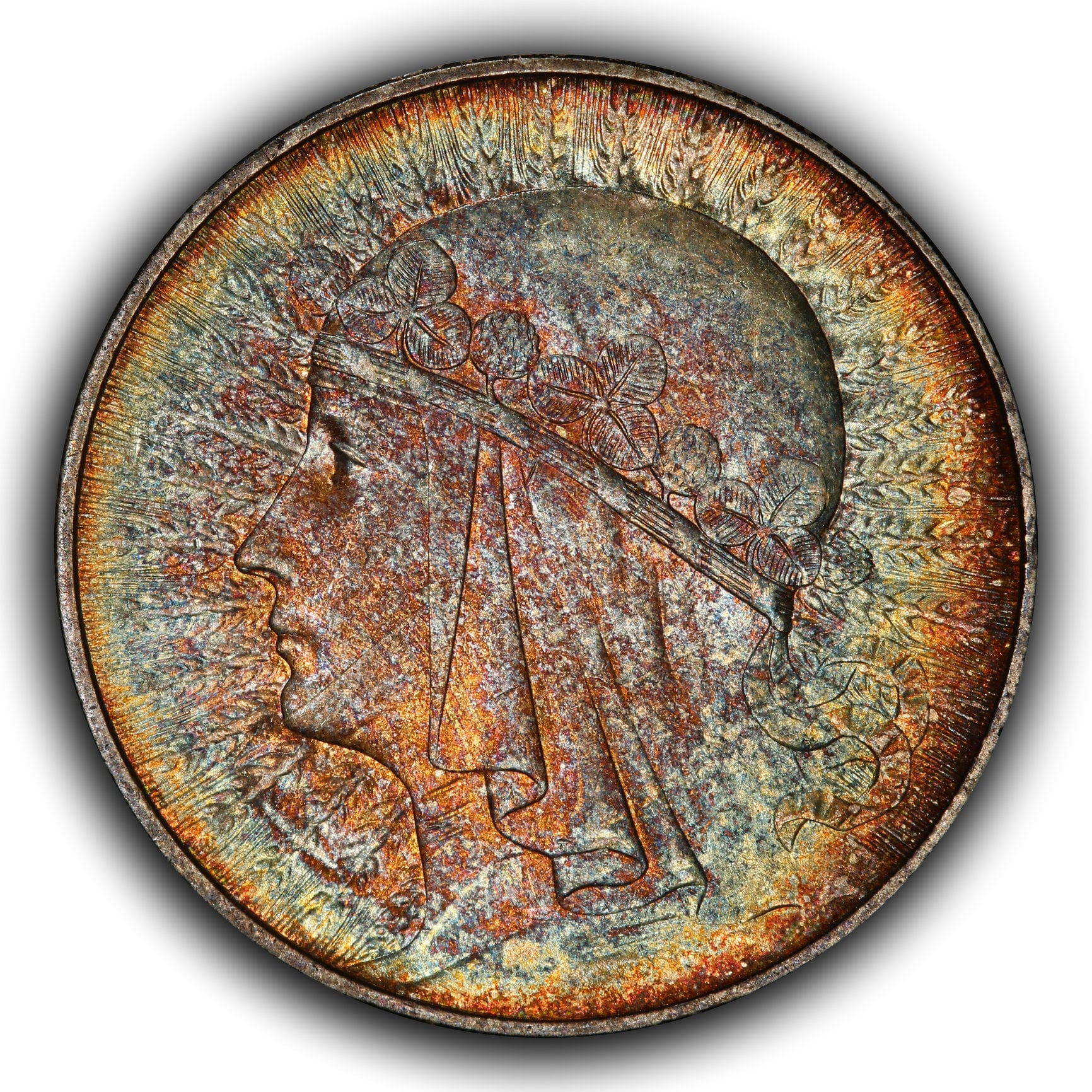
Above, Queen Jadwiga on the obverse of the 1932 Poland 10 Zl (London Mint) with a peripheral ring of burnt brown and significant brown and golden hues over hints of green toning.
This brings up a thorny issue; what is the definition of NT and what is the definition of AT? In the broader sense I consider a distinct and critical difference between AT and NT to be intent. The intent of the owner during storage or ambient environmental exposure goes a long way toward establishing not only the present appearance of each coin, but also the definition of AT vs. NT. Additionally, the colors, patterns and thickness of skin (aka patina) will be determined largely by storage and ambient environmental conditions during the history of the coin in question. One could gather any number of educated, experienced numismatists to discuss the difference between AT and NT and wether or not the two are inextricably entwined and one would likely end up with a debate or argument similar to how many fairies can sit on the top of a pin. In short, the process by which each person approaches toning will be informed greatly by their personal experience, preference, bias and inclination or ability to think analytically. Therefore, although I am confident I have a working knowledge of the AT vs. NT problem, I do not necessarily have the desire to convince others I am right and, as such, I am happy to allow folks to go about their analyses in their own way. This leads to my AT vs. NT line in the sand being somewhat different on some coins or some pools of coins than the lines that PCGS or CAC, which have their own motivations, might employ.
Another vexing issue is the up-and-down nature of the third party grading companies (TPGs) themselves with respect to toning. While the numismatists employed by the TPGs are generally quite excellent, they are dealing with an enormous number of coins in a high-throughput environment while simultaneously having to identify and pick out the work of innumerable coin doctors ranging from the amateur hack through to the most experienced and subtle laboratory technician or studio artisan. It reminds me of a game of cat-and-mouse where the TPGs learn to identify and recognize one style of AT only for another style to pop up sometime later. The downside to this process is that the first of the AT pieces typically stand a better chance of becoming certified by a TPG and, in the eyes of many, the look then becomes legitimate because some examples are in a TPG holder. Over the years there have been several runs of blatant AT coins that have been graded and encapsulated by the TPGs and while I personally avoid these coins, I have witnessed others pay mind numbing prices. In a somewhat ironic twist, it appears that each of these runs of AT coins was unwound by the possible greed of those submitting the pieces as what might begin as a small leak became a full fledged flood of bad coins that were then recognized.
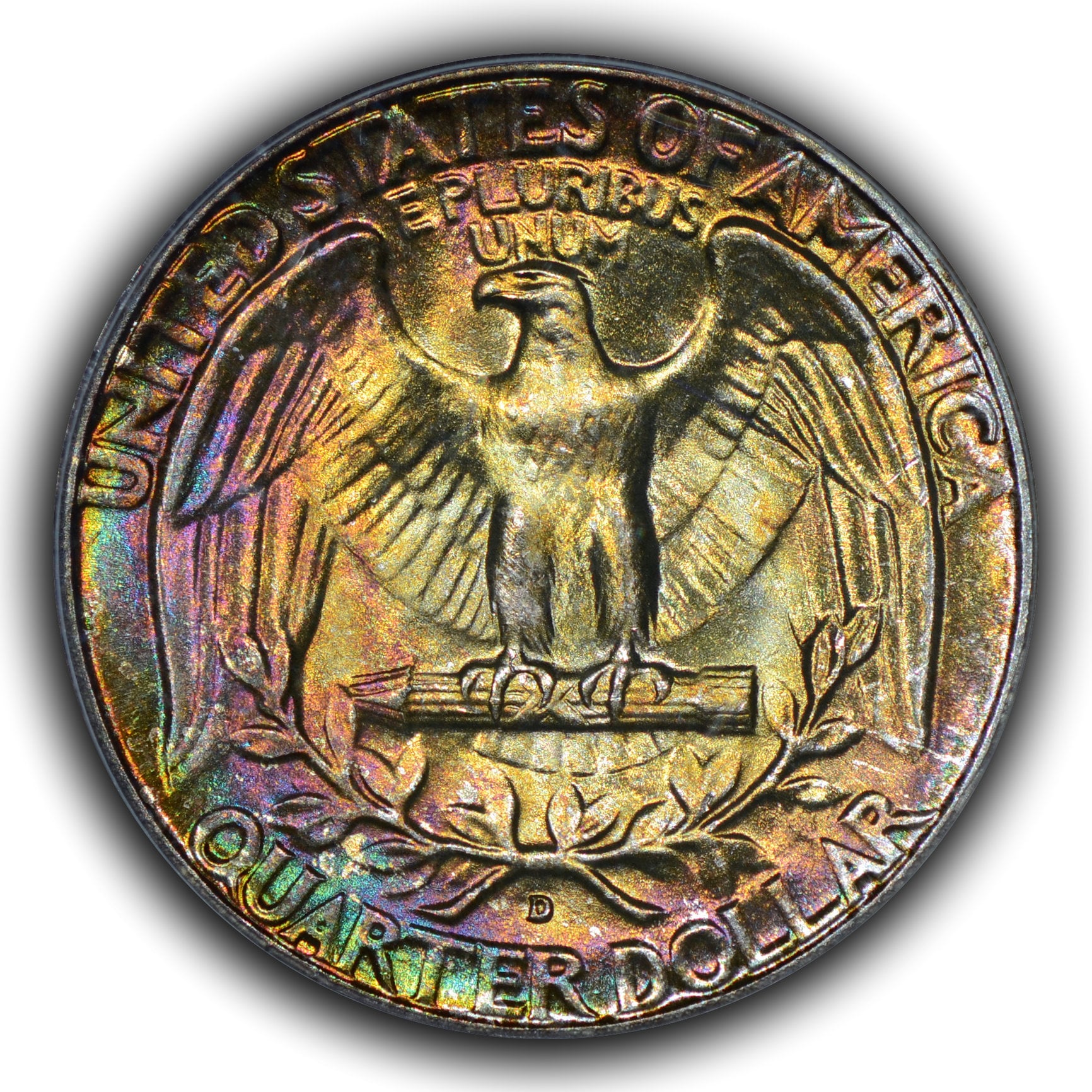
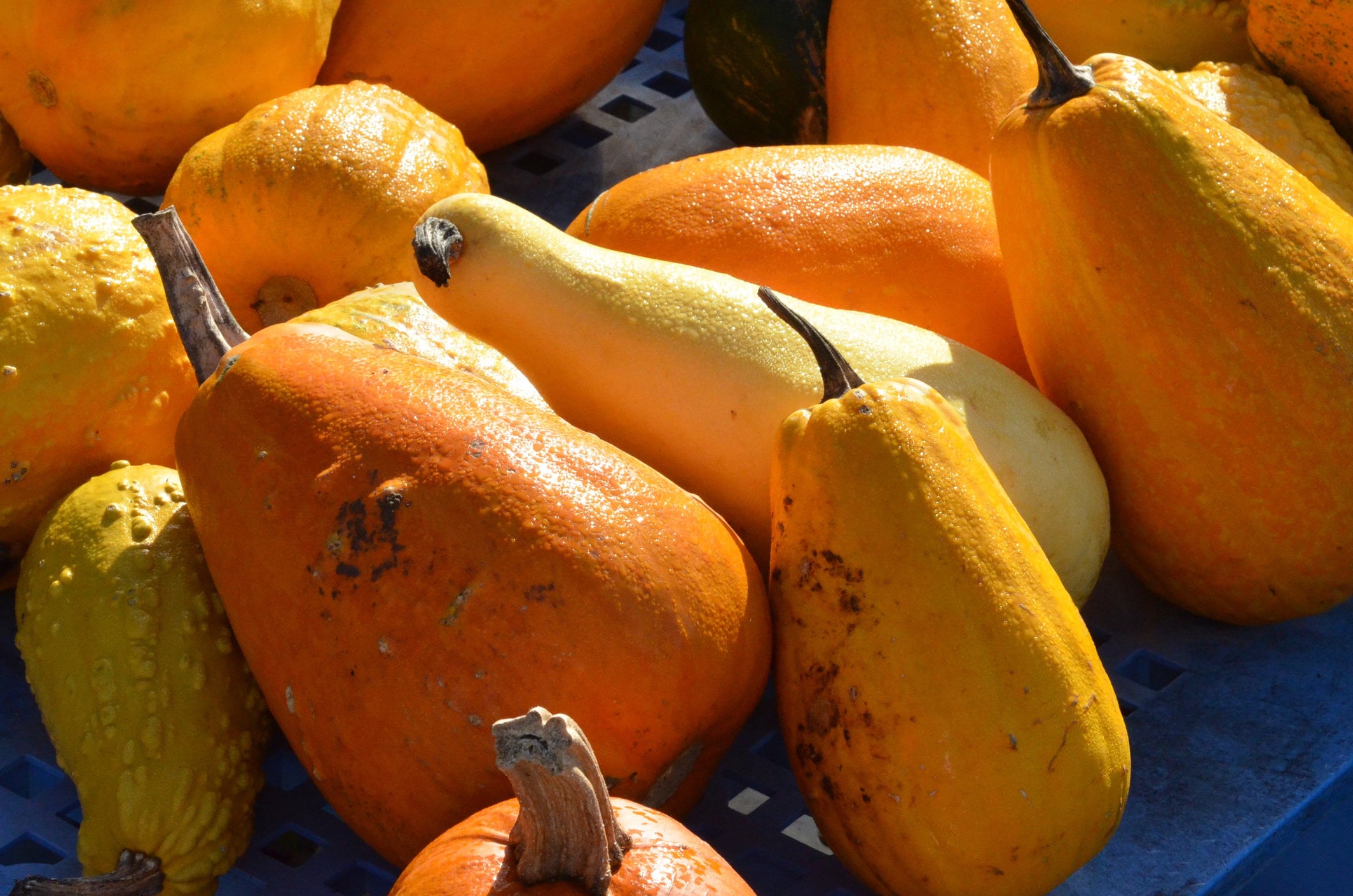
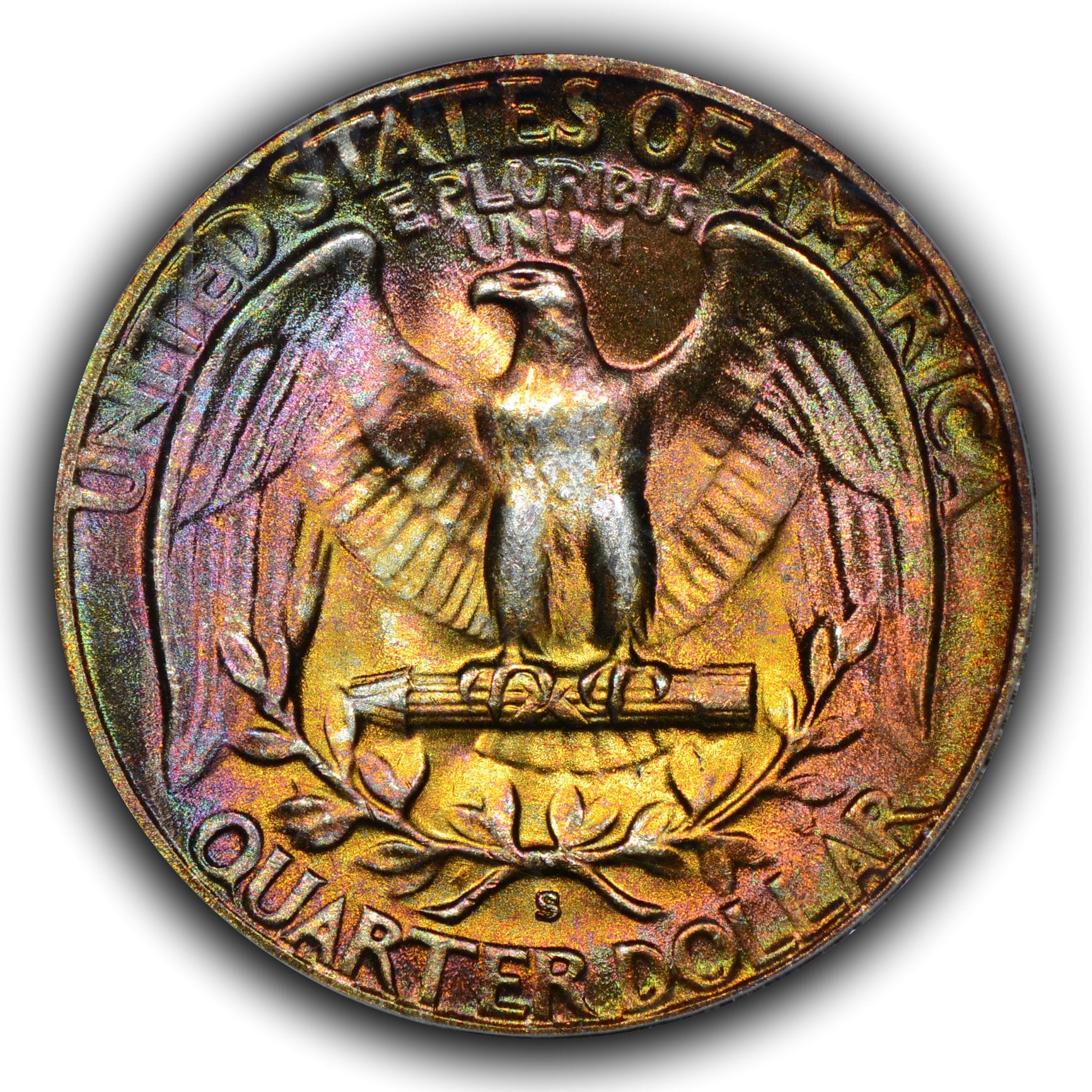
Above top-to-bottom, a pair of Washington quarter reverses pulled directly from double US Mint Sets flank and mimic orange and yellow pumpkins.
The third leg of this three-legged appearance stool is ST. In general, I view ST coins as those that have had their surfaces intentionally manipulated in the past (essentially, have undergone some level of AT or “anti-AT”) and then have been allowed to change, morph or react on their own for a length of time. The TPGs appear to have accepted the inevitability of ST coins in the market and are quite willing to certify great numbers of them with certain aesthetics. Similarly, many collectors and dealers pay handsomely for coins that in no way have original surfaces, but that the broader collector base finds attractive. In my opinion, the prototypical example of market accepted ST is the prevalence of EF-AU Capped Bust half dollar era silver coinage that has largely untoned, silvery centers ringed with vibrant bands of various shades blue and gold. These coins were almost certainly dipped long ago and sold as “uncirculated” and later acquired a secondary layer of toning while in storage. The broader market often loves these coins and rewards them with great liquidity and, many times, a hefty premium in value. These are coins that I attempt to avoid while also realizing that I am in the minority.
This is where many years of experience becomes quite valuable. I have been around and examined coins long enough so that I recall the days when the majority of coins were not in TPG holders, the days prior to CAC and the days where expensive or important coins could be bid upon in major auctions raw and not certified. I have peeled back the paper to thousands of US double mint sets; gone through hundreds of Classic Whitman, Library of Coins or Dansco albums filled with MS examples of copper, silver or clad; and cracked open who knows how many velvet, cardboard, satin or plastic-lined presentation and display boxes. This has taught me what to look for in many niche areas and has allowed me to be suspicious when certain patterns or colors appear.
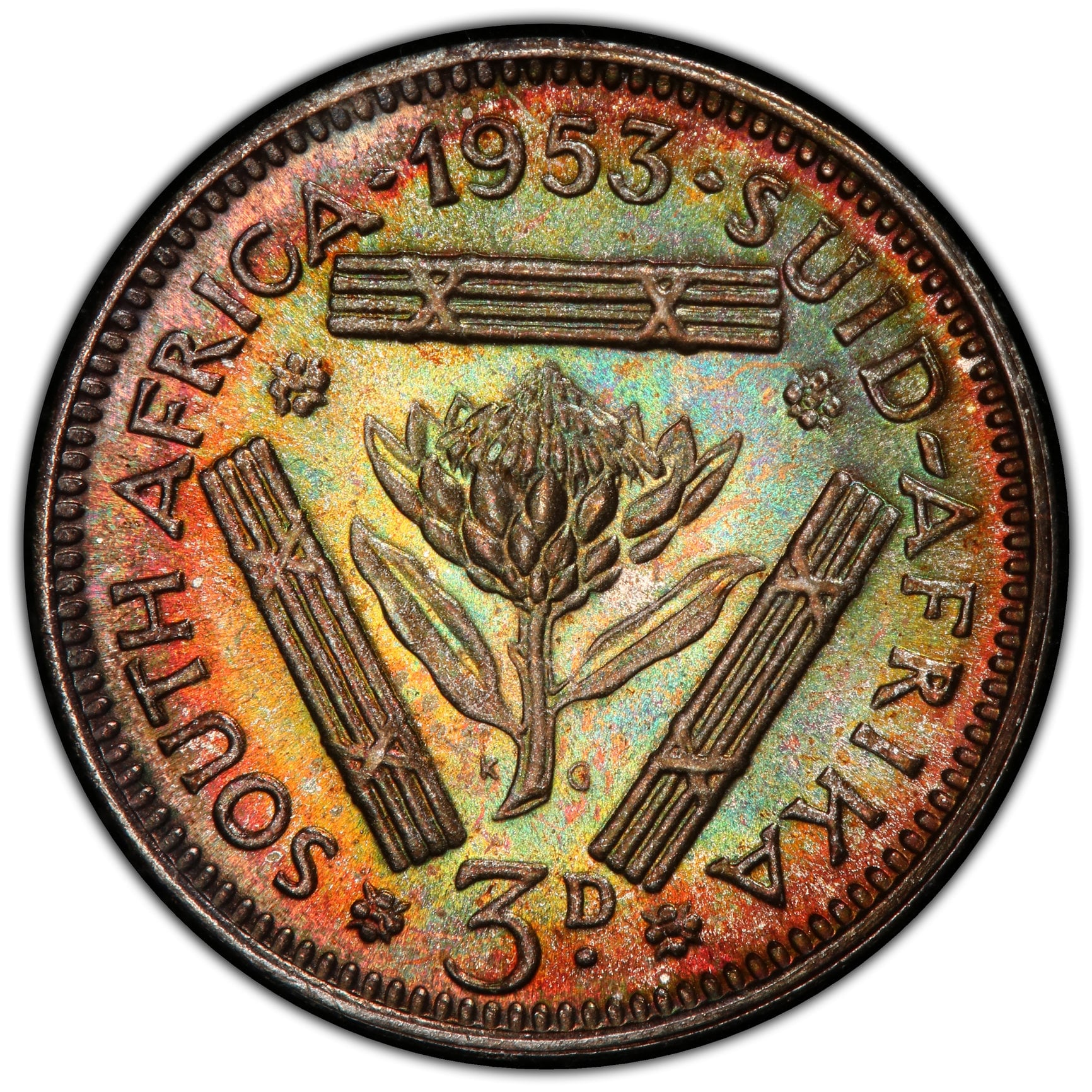
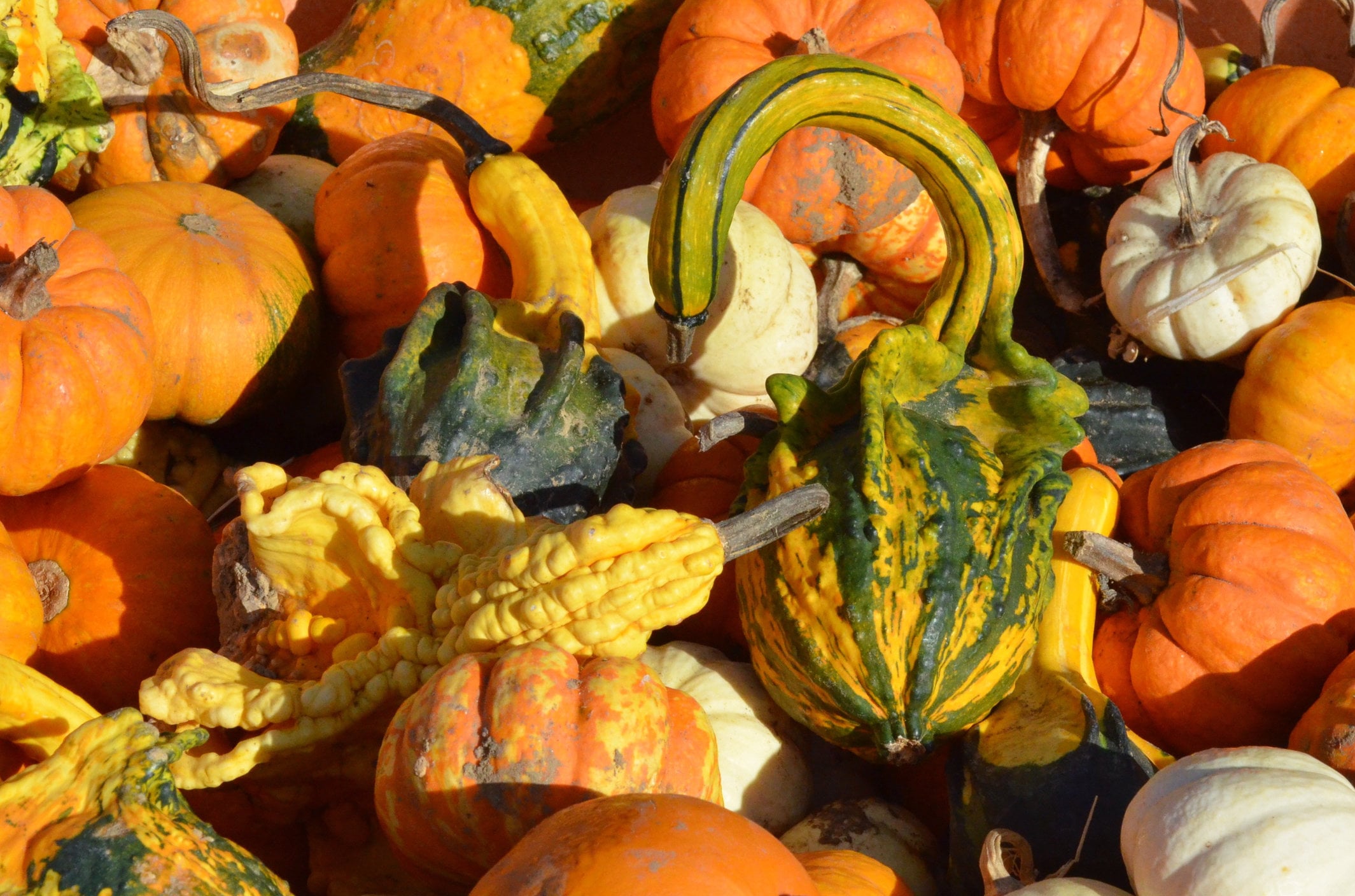
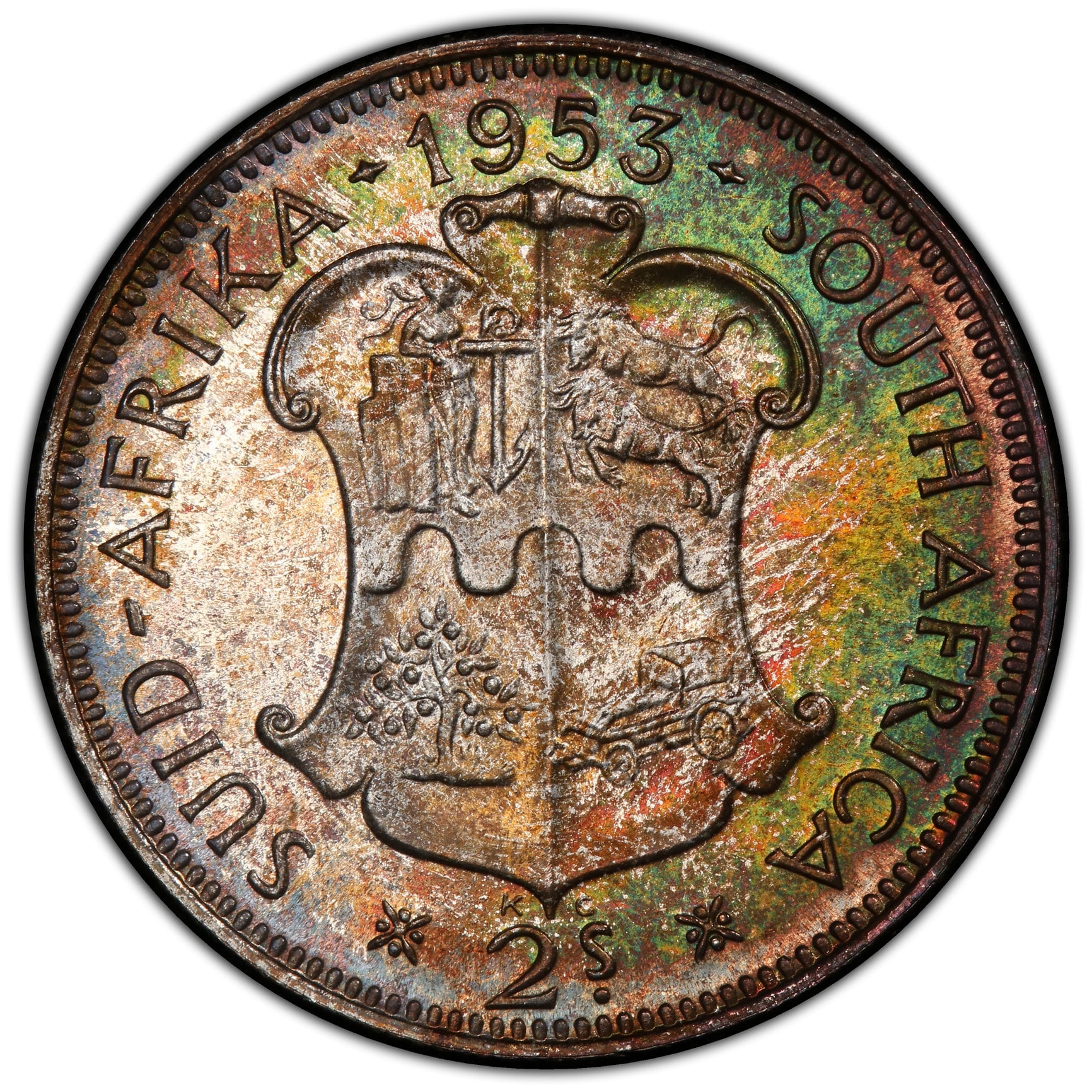
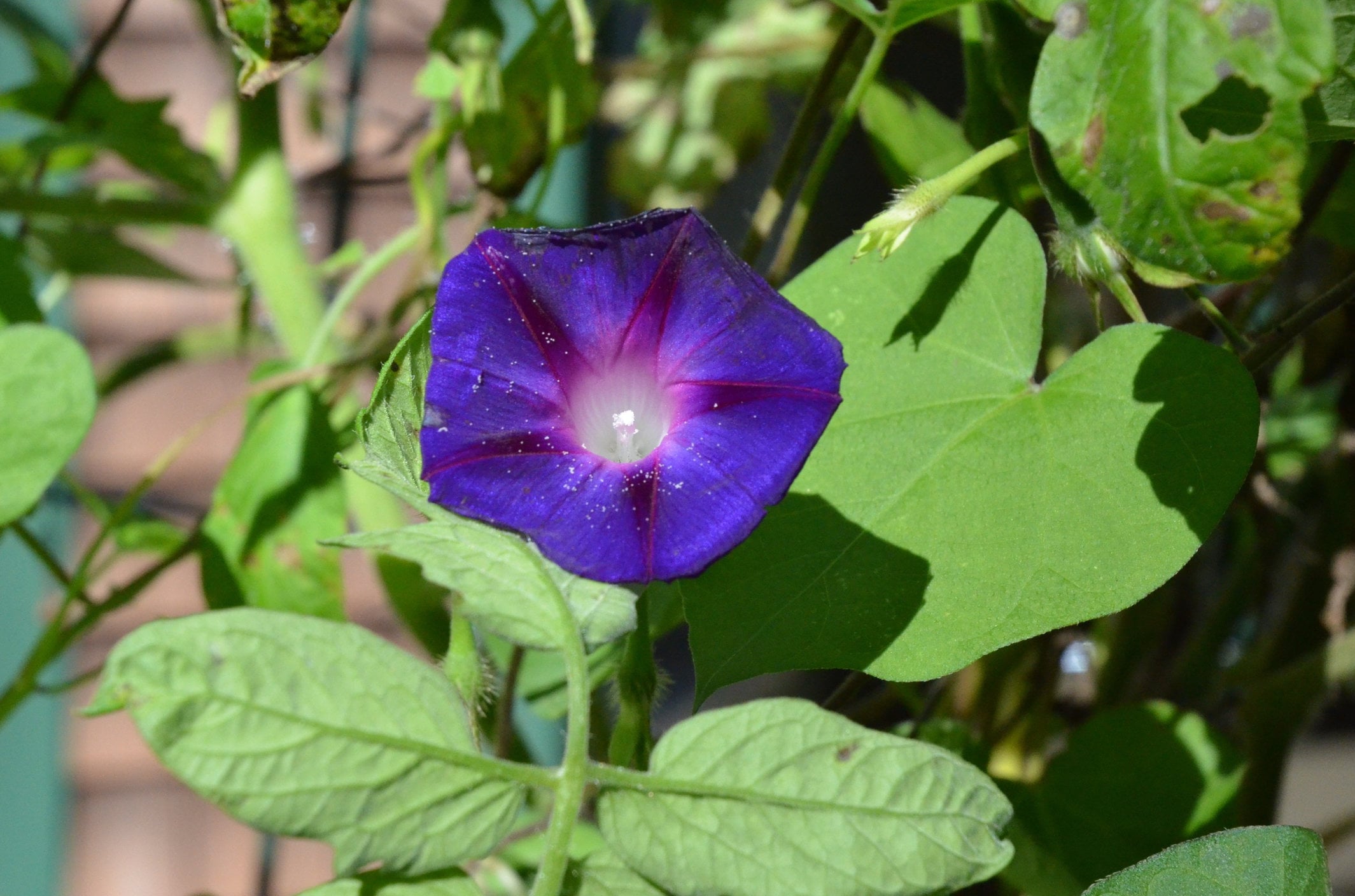
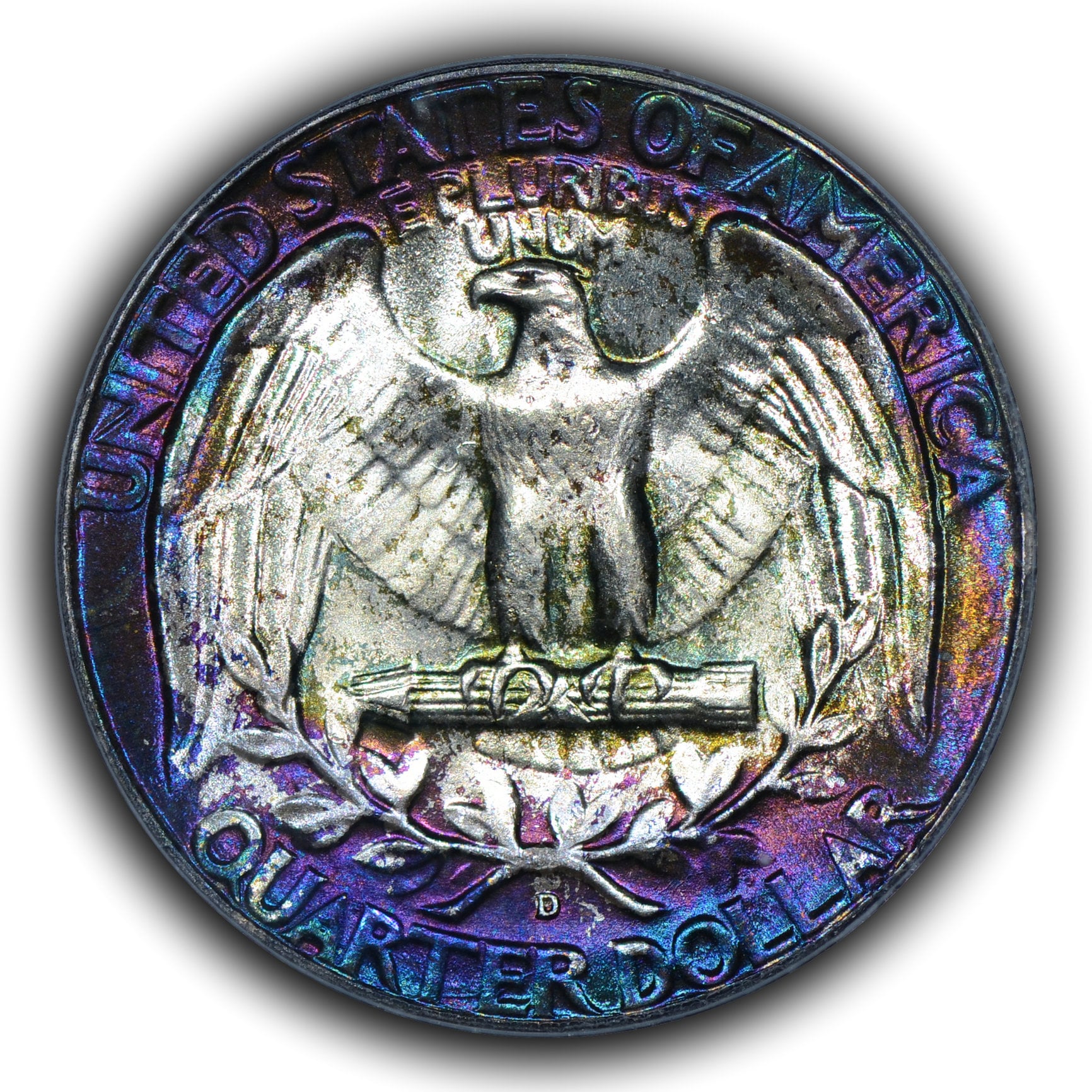
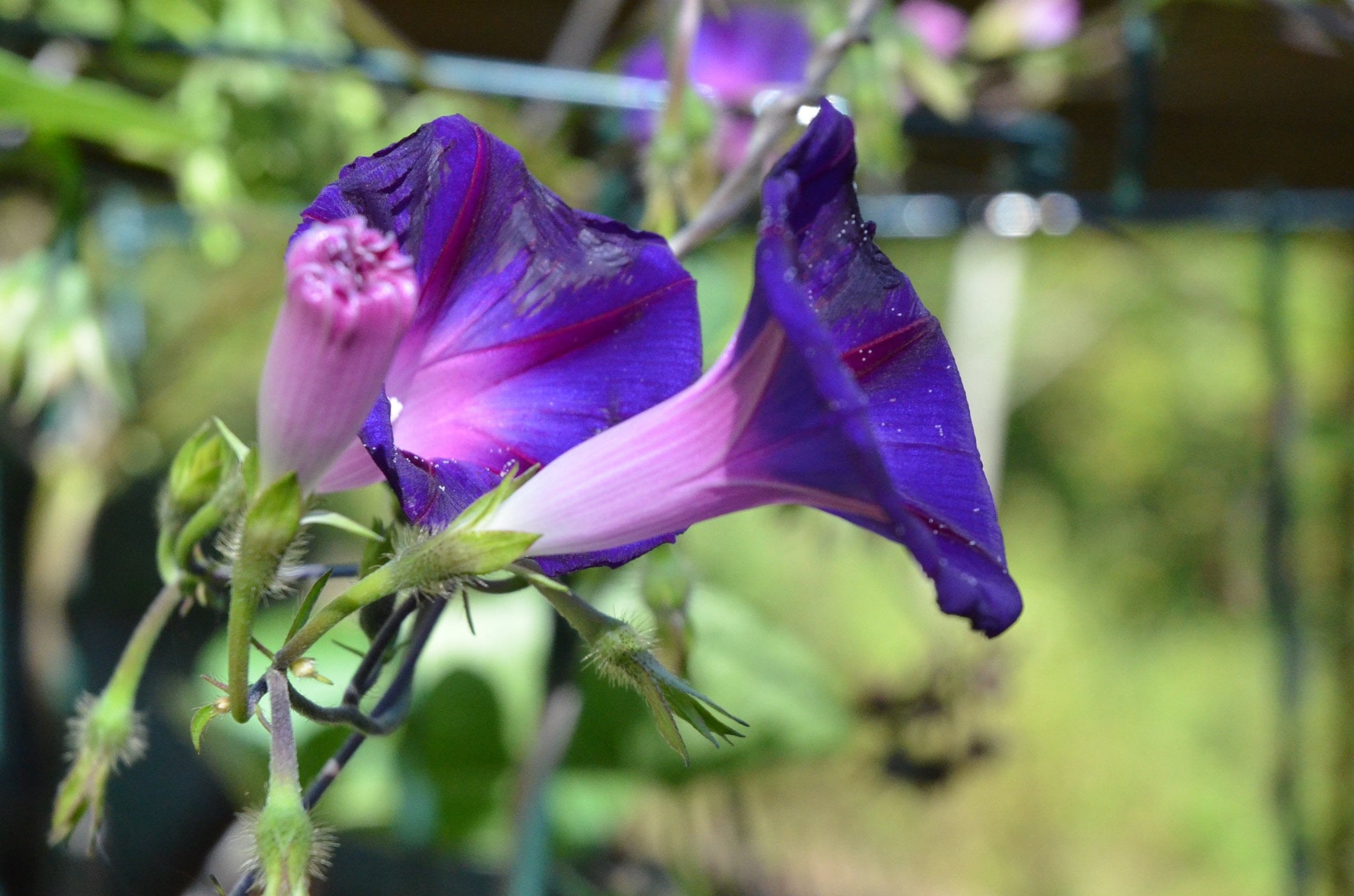
Top set, a selection of gourds flanked by South African three pence and two shilling coins. Bottom set, autumn blooming morning glory on either side of a Washington quarter reverse from a coin pulled directly from a double US Mint Set.
My personal paradigm when examining the toning on a coin is twofold. First, I attempt to interrogate the surfaces of the coin to determine if the present appearance is consistent with what I would expect for the specific storage history of any particular piece. In other words, I let the coin’s surfaces tell me about its history. Secondly, I just remember the colors of autumn. The best part of this approach is to remember that one is not compelled to buy a coin simply because a TPG or CAC has successfully processed it through their respective systems and if the appearance of a coin does not make sense then perhaps it should not be purchased.
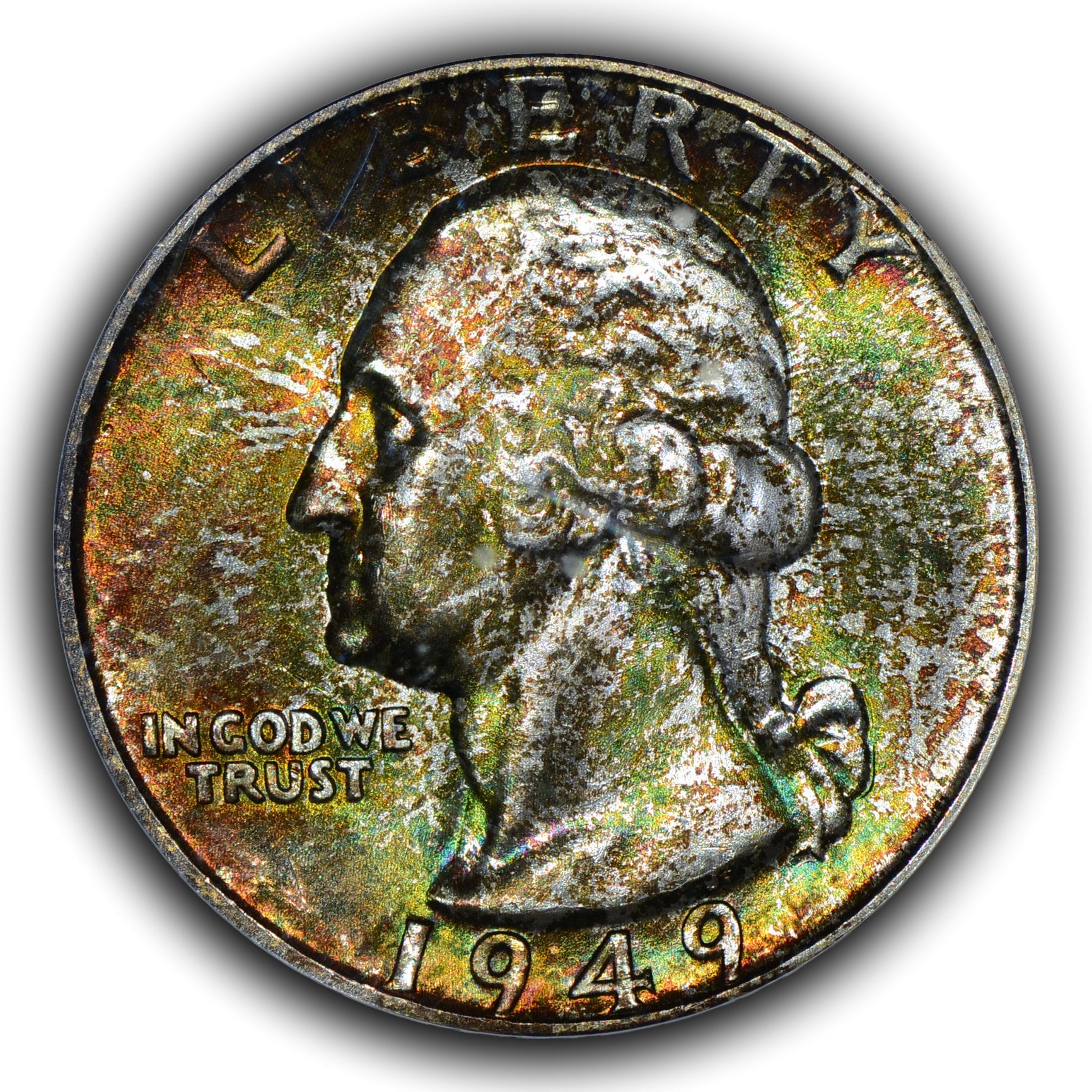
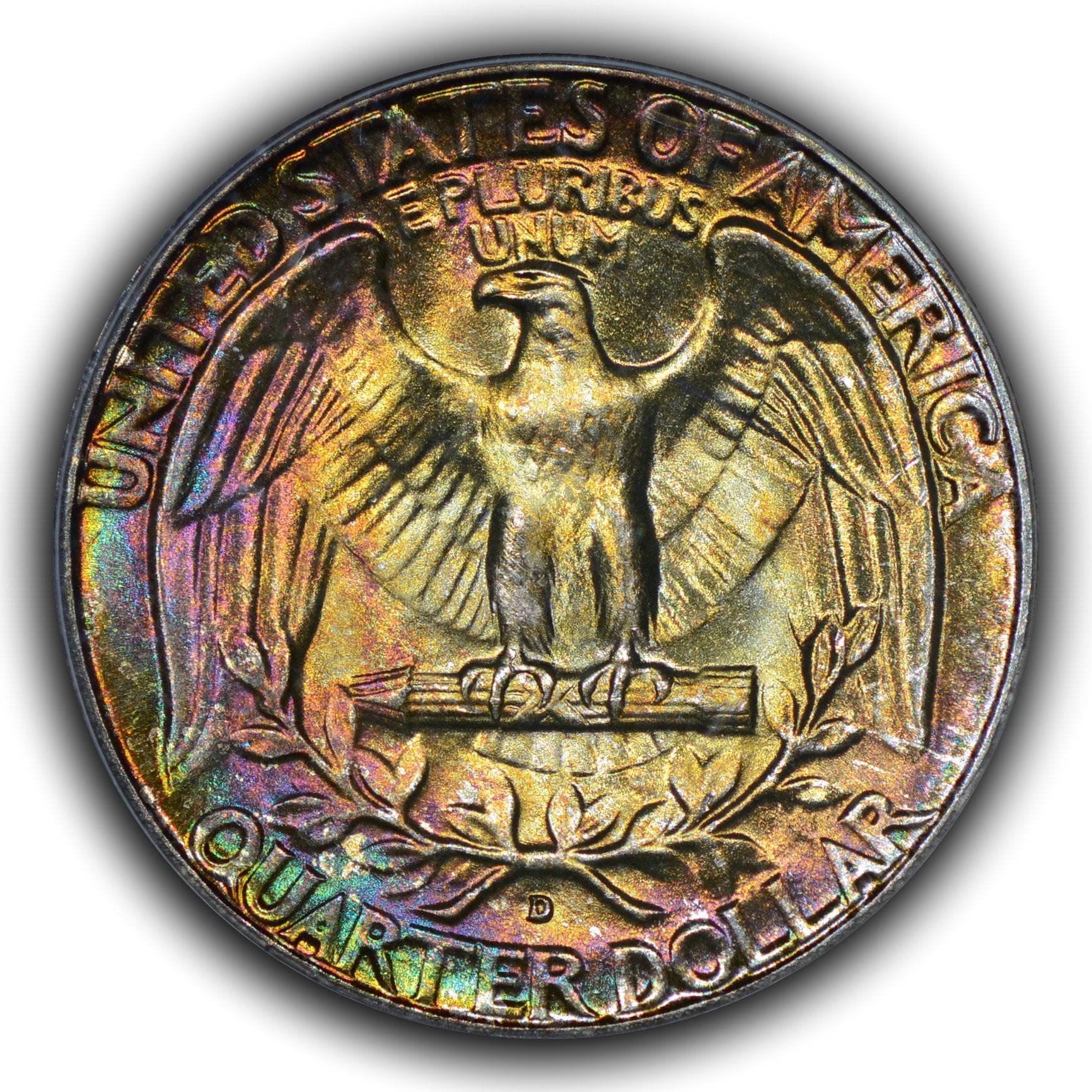
Above, paired obverse and reverse from a single Washington quarter illustrating characteristic colors obtained from some double US Mint Set coins that are consistent with autumn foliage.
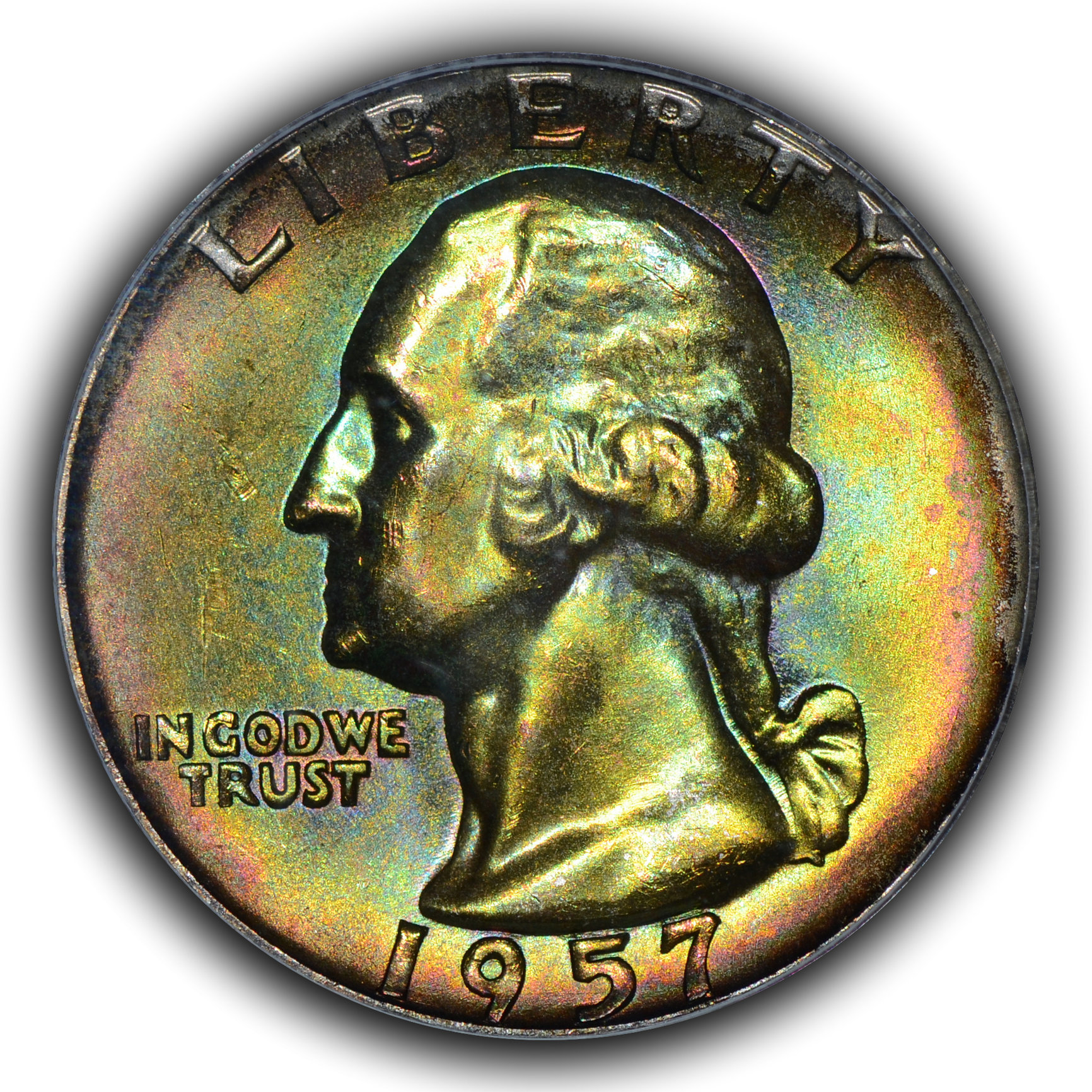
Please note that the fall images were all taken by me in the last few weeks and that all the coins, with the exception of the Queen Jadwiga, were purchased raw and submitted by me in the 1990s before the toning premium skyrocketed. This allowed me to open original government sets and pick out the most choice coins while paying very little premium, if any, for the individual pieces. The stability of their colors has remained over the last two decades plus of storage. Below are two more Washington quarter obverses that evoke thoughts of an autumn leaf pile or leaves falling onto a lawn. The 1949-D has a reverse covered in brown speckles while the 1957-D has a muted slate grey reverse indicative of its double US Mint Set origin.
Lastly, keep in mind that these are by no means the only colors or patterns that can be obtained from NT coins. Rather, it might be more appropriate to think of the colors as something one might look for while the patterns would likely be different. Having an idea of what a coin might or should look like following years in a specific storage environment should help the numismatist avoid questionable or outright bad pieces. While hardly definitive, keeping these colors in mind may help steer folks into safer numismatic waters.
Below, the obverse of two Washington quarters taken from double US Mint Sets showing toning similar to a leaf pile or a browning autumn lawn.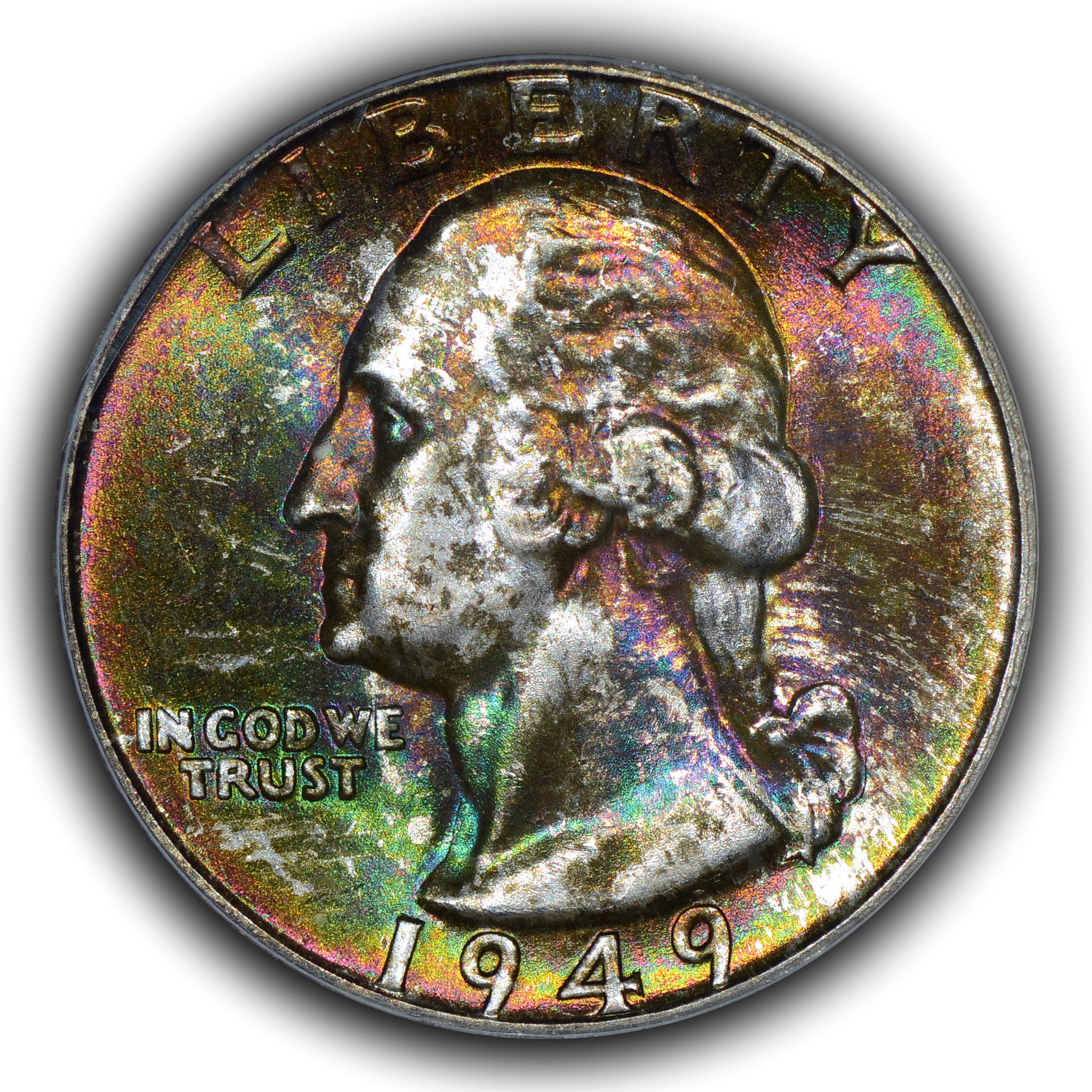
Comments
Love this thread. Coins with beautiful colors always speak to me.
Thanks Tom.
Wonderful photos and accompanying analysis!
The morning glory sequence is particularly surprising/striking.
Very enjoyable read, thanks for posting!
Gorgeous coins and a great article! Thanks for posting!
Nice.
rainbowroosie April 1, 2003
Nice write-up and, as always, stunning photos.
Super article and coins Tom.
Very Nice.
Hoard the keys.
Thumbs up
Latin American Collection
I like your Polish chick with a tan a rarity in or out of numismatics
Nice article, Tom.
Great thread, Tom. I recall seeing a picture of a Connecticut commem where the Charter Oak had all the colors of fall. Absolutely beautiful coin.
Cheers
Bob
Great read and photos!
Outstanding. Thanks for sharing
Great article and pics, as usual Tom. Gosh I love those quarters.
When I think of autumnal colors on a coin in my collection, I think this one fits the bill:
"She comes out of the sun in a silk dress,
running like a water color in the rain...."
Well done.
Very well said --- but for any newbie wanting to collect toned coins these lines are the most important...
This is where many years of experience becomes quite valuable. I have been around and examined coins long enough so that I recall the days when the majority of coins were not in TPG holders, the days prior to CAC and the days where expensive or important coins could be bid upon in major auctions raw and not certified. I have peeled back the paper to thousands of US double mint sets; gone through hundreds of Classic Whitman, Library of Coins or Dansco albums filled with MS examples of copper, silver or clad; and cracked open who knows how many velvet, cardboard, satin or plastic-lined presentation and display boxes. This has taught me what to look for in many niche areas and has allowed me to be suspicious when certain patterns or colors appear.
and...
First, I attempt to interrogate the surfaces of the coin to determine if the present appearance is consistent with what I would expect for the specific storage history of any particular piece.
If you dont get out and look at thousands of toned coins in their natural toning environment(s) you will never be able to tell AT from NT. Buying toned coins already slabbed is not learning. You have to see toners in their natural environment. Each type of 3rd party after market holder imparts its own colors and patters of toning. If you know these patterns you know how the coin was toned and whether its NT or AT.
I wish the TPGS would hire experienced toning experts to be a part of the grading room. If they would, the issue of AT vs. NT wouldnt require post after post after post.
Here’s one that might fit the bill.
Dave
Educational and real nice coins. The toning is out of this world.
Great article and photos!
Enjoyed the photos and text.
@TomB.....Tom, thank you for an incredibly thoughtful, analytical and balanced presentation on this subject. Many years ago, you and I exchanged thoughts on tarnish, back when I was doing various experiments with Artificial (or Accelerated) Tarnish. Your inputs, based on extensive 'in hand' experience is valuable to collectors who take the time to read and absorb what you have presented. Your excellent photography (coins and nature) help to bring home your points and reference to autumnal coloration. Cheers, RickO
Thank you for the kind words and I find myself compelled to bump the thread to the top in wake of ricko's post!
In honor of the memory of Cpl. Michael E. Thompson
Very cool!
My YouTube Channel
Great read and some really good points made. Not to mention the gorgeous coins attached to the article.
Well done, Tom. Thanks for sharing.