Hairlines on a gem CAC-approved gold dollar
 P0CKETCHANGE
Posts: 3,373 ✭✭✭✭✭
P0CKETCHANGE
Posts: 3,373 ✭✭✭✭✭
I recently added this type coin to my set, upgrading from an 1888 MS63 (non-CAC). I chose this coin because the photos indicated it would be a semi-proof like specimen with the eye appeal of a superb gem, and that was correct (see the linked video).
However, in-hand there are noticeable hairlines, primarily in the obverse fields. They are wispy, multi-directional and generally stop before the devices, so they do not seem similar to die polish lines I've encountered on other coins.
IMO, neither PCGS nor CAC could have missed them, so what conclusion should I draw? Are they actually die polish lines that I'm having trouble interpreting? Is it an otherwise higher graded coin (66/67) that was market graded to a 65? Something else?
Forgive the large quantity of photos. I tried to represent all angles/lighting. Watch the Vimeo videos at the bottom. 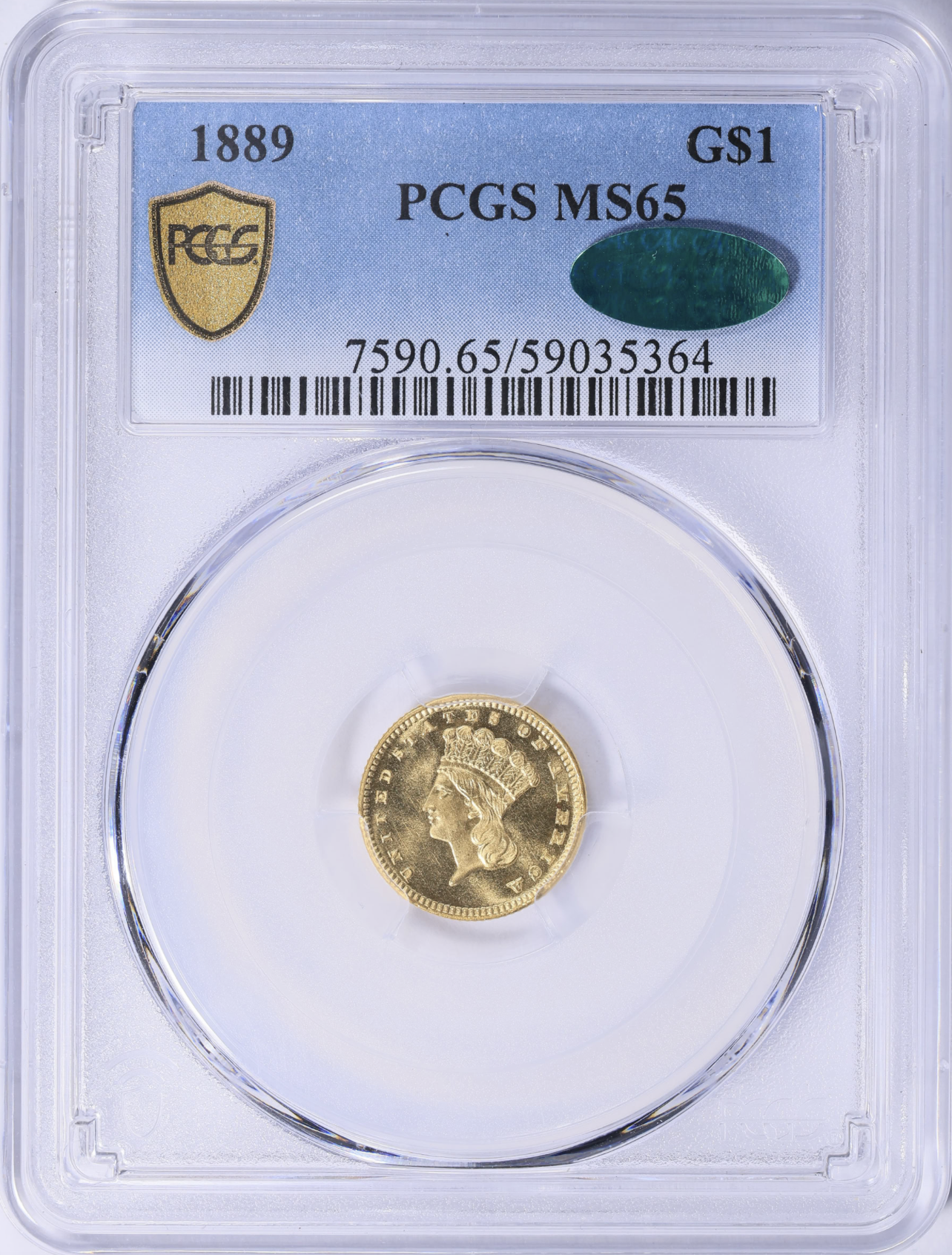
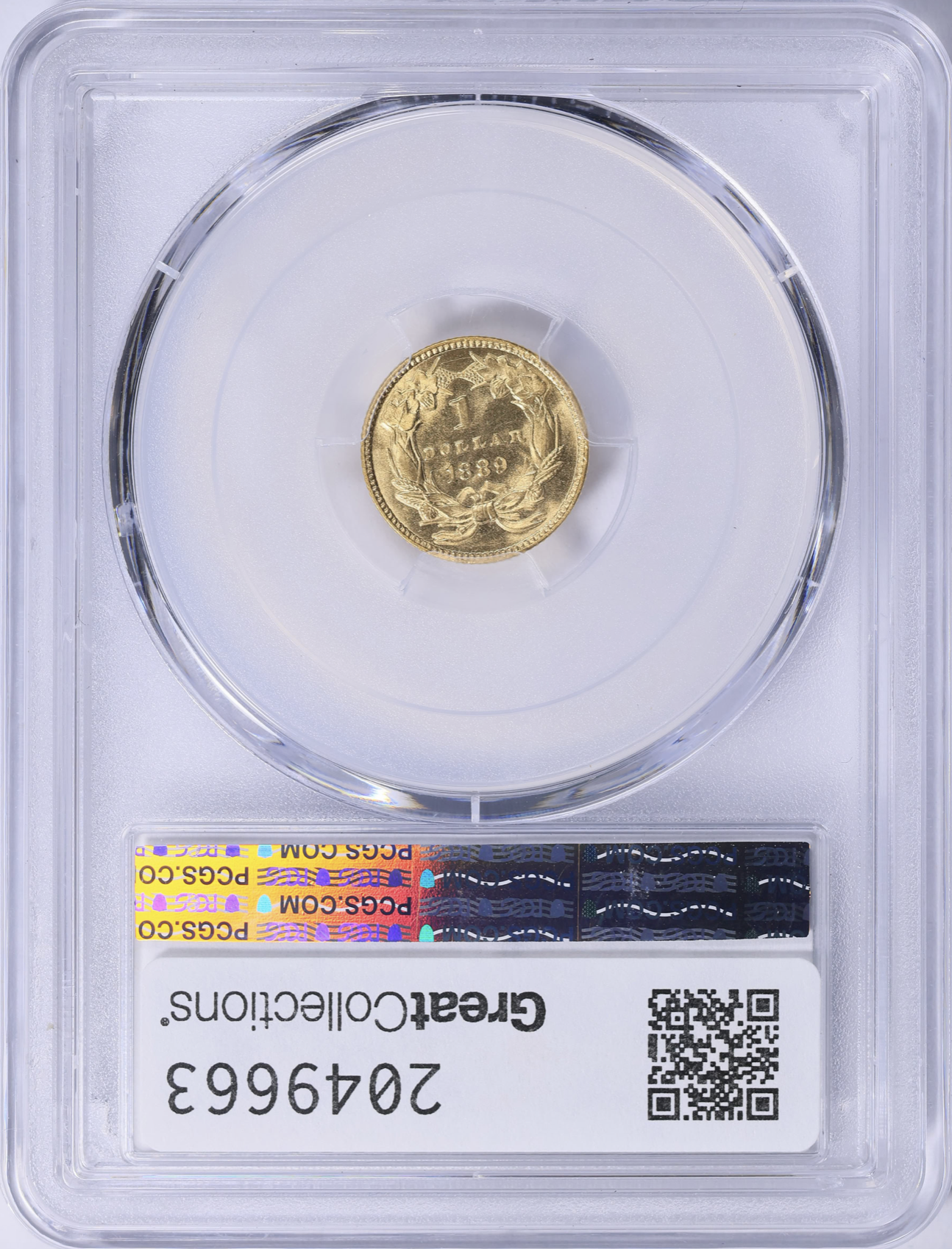
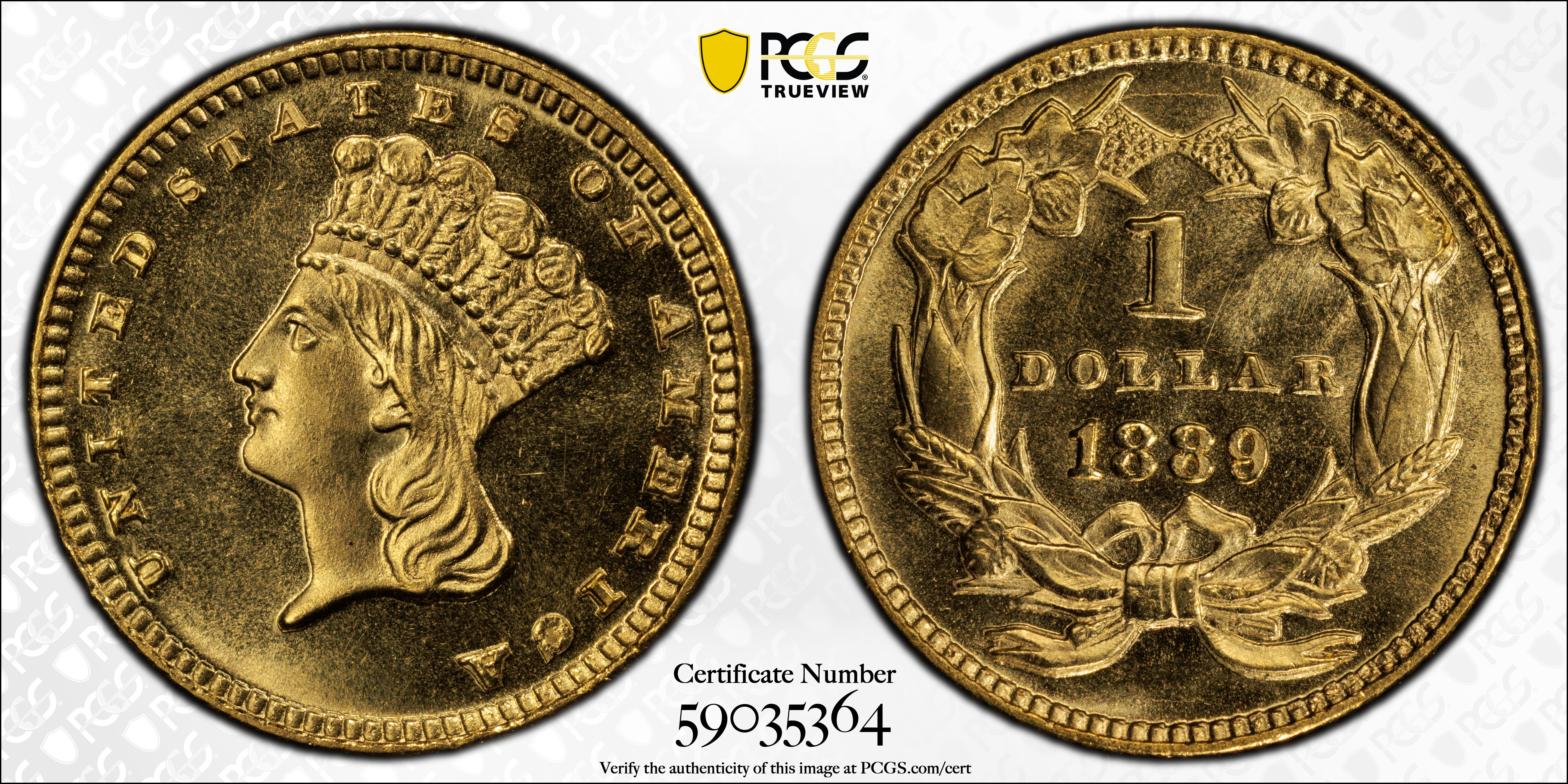
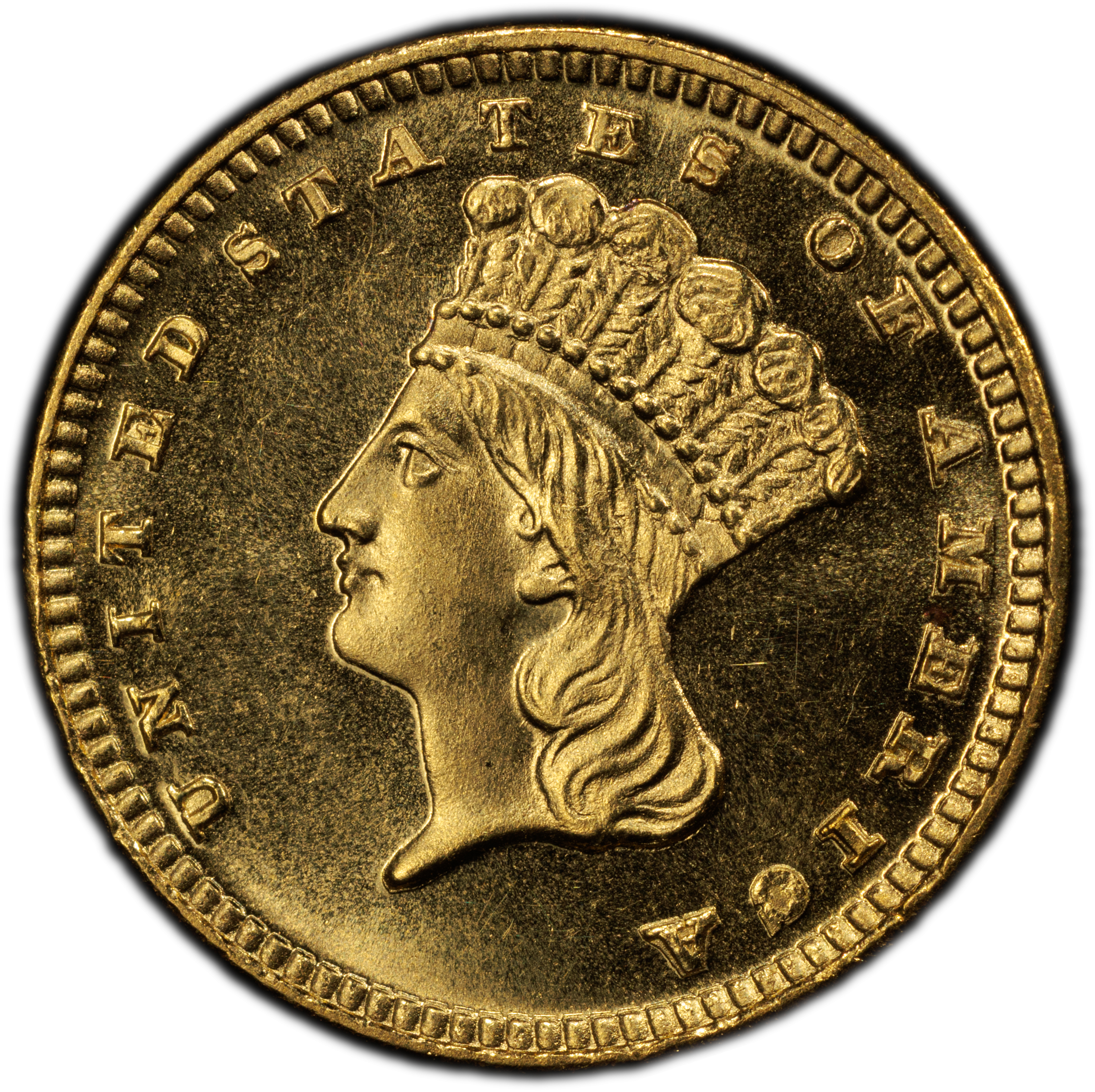
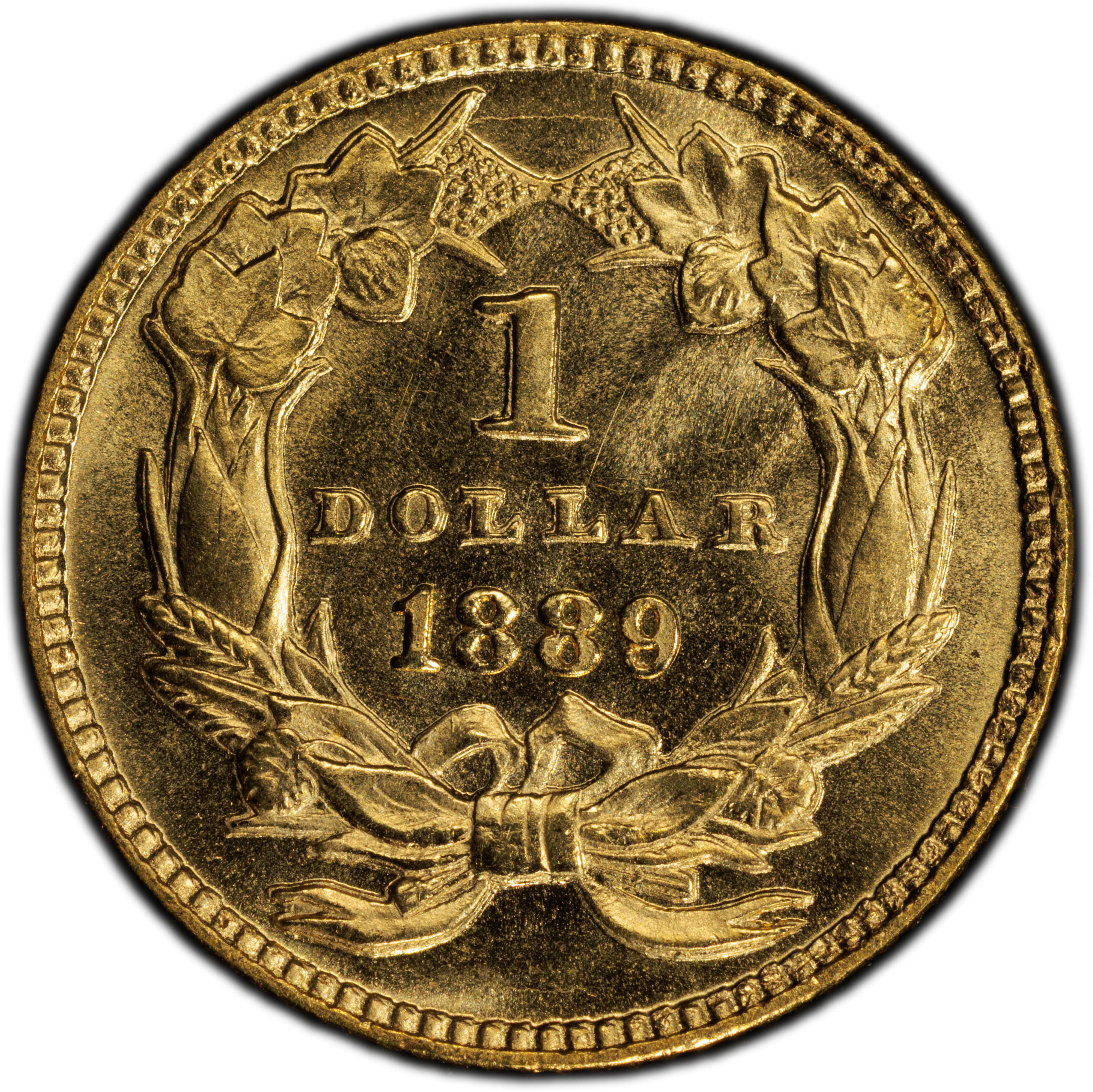
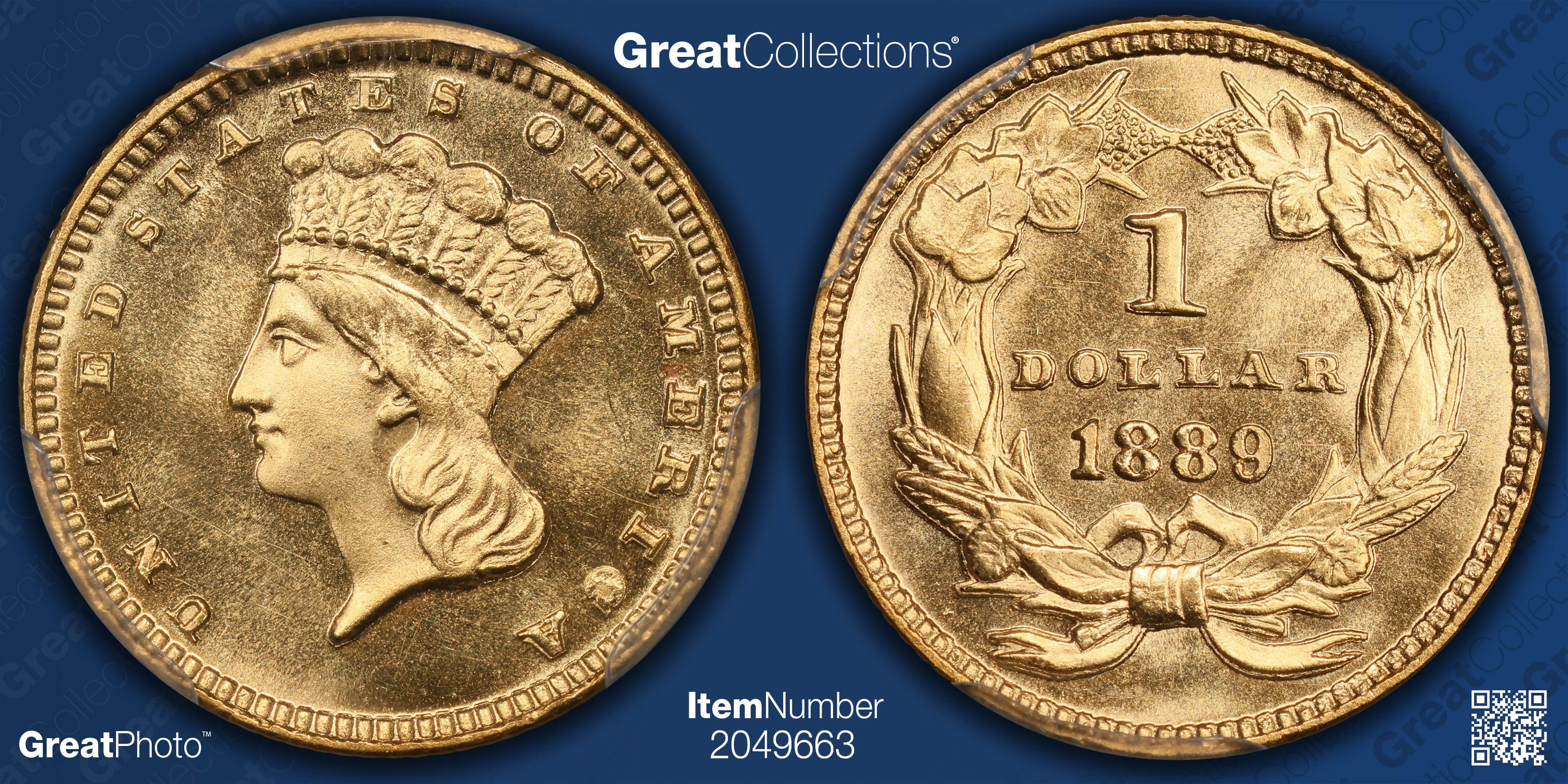
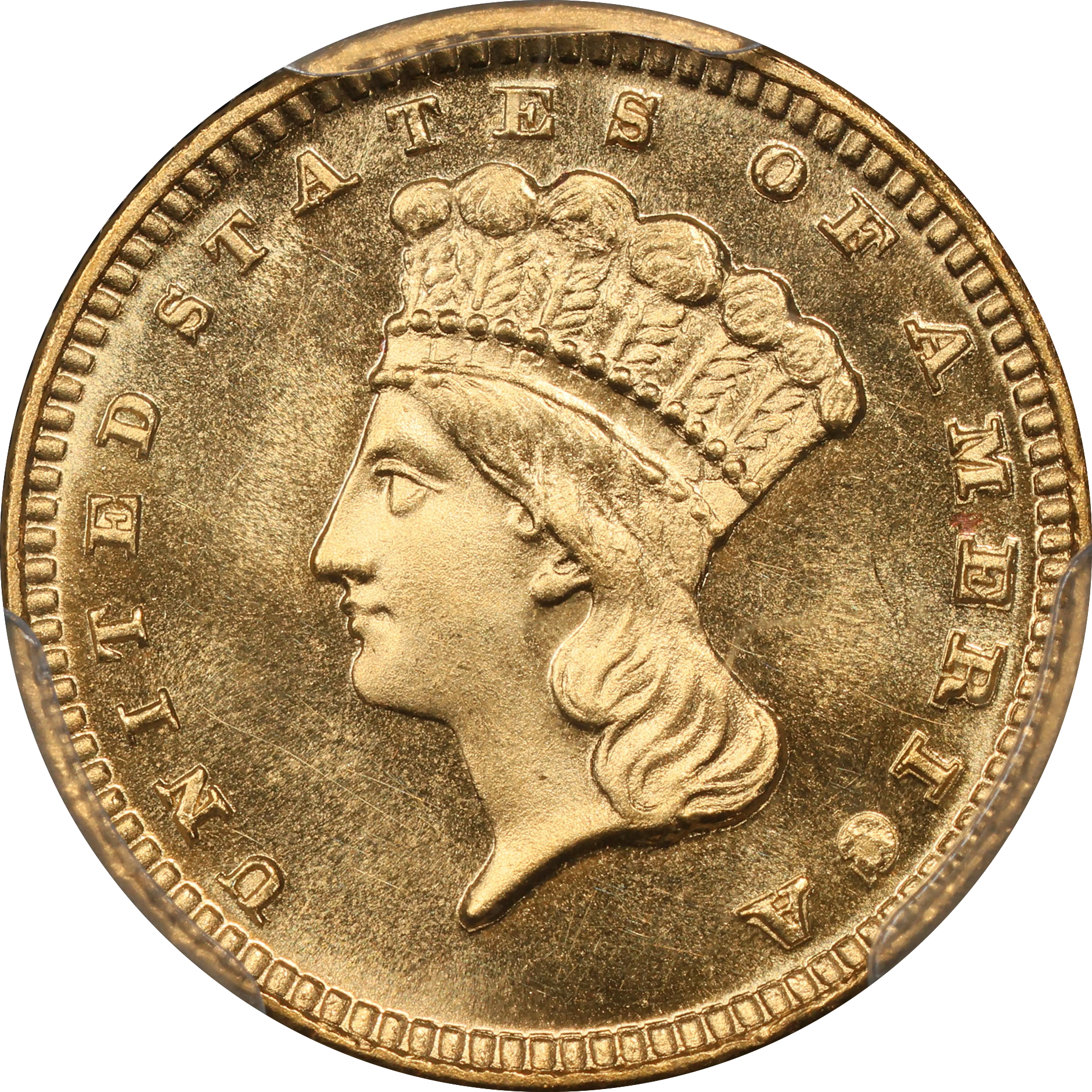
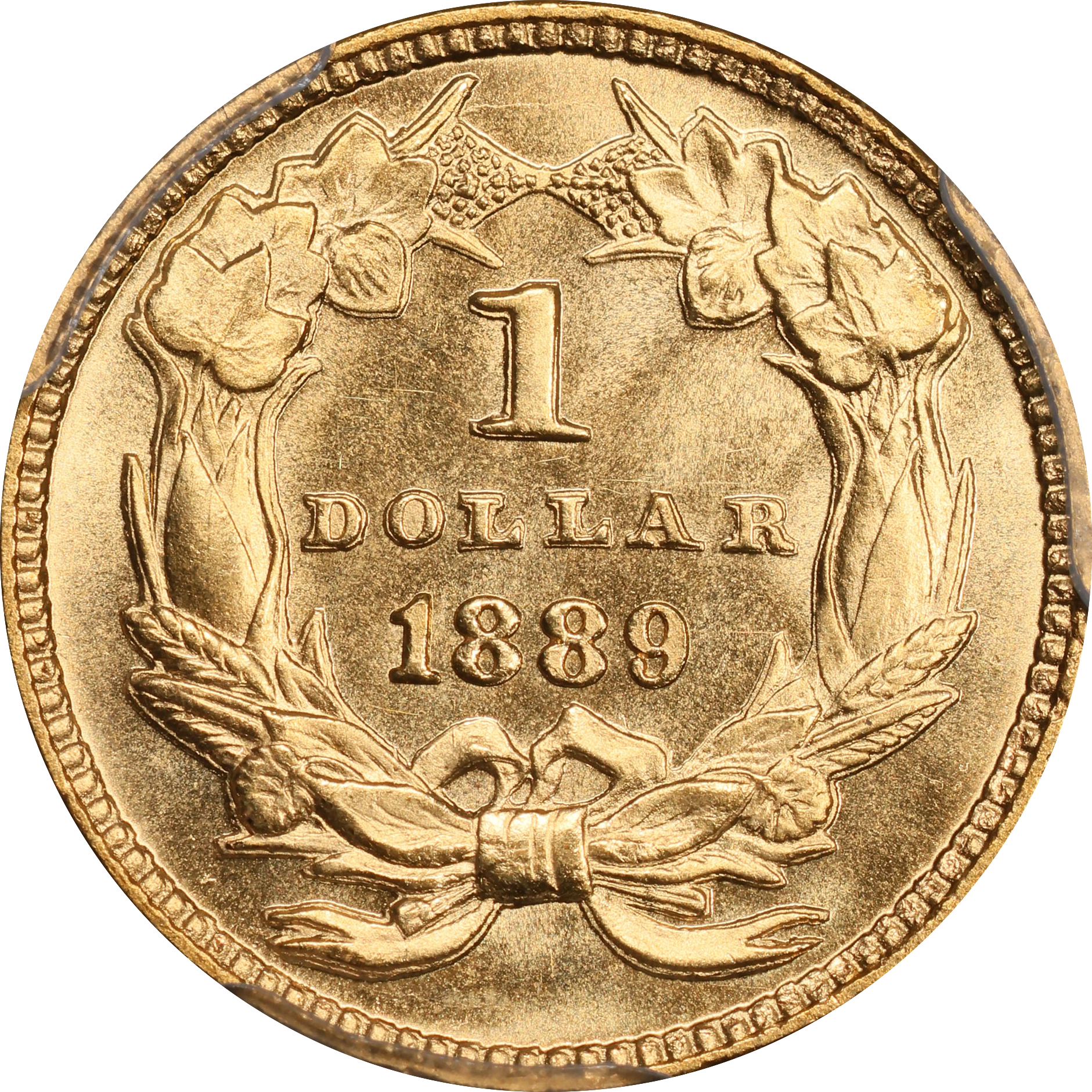
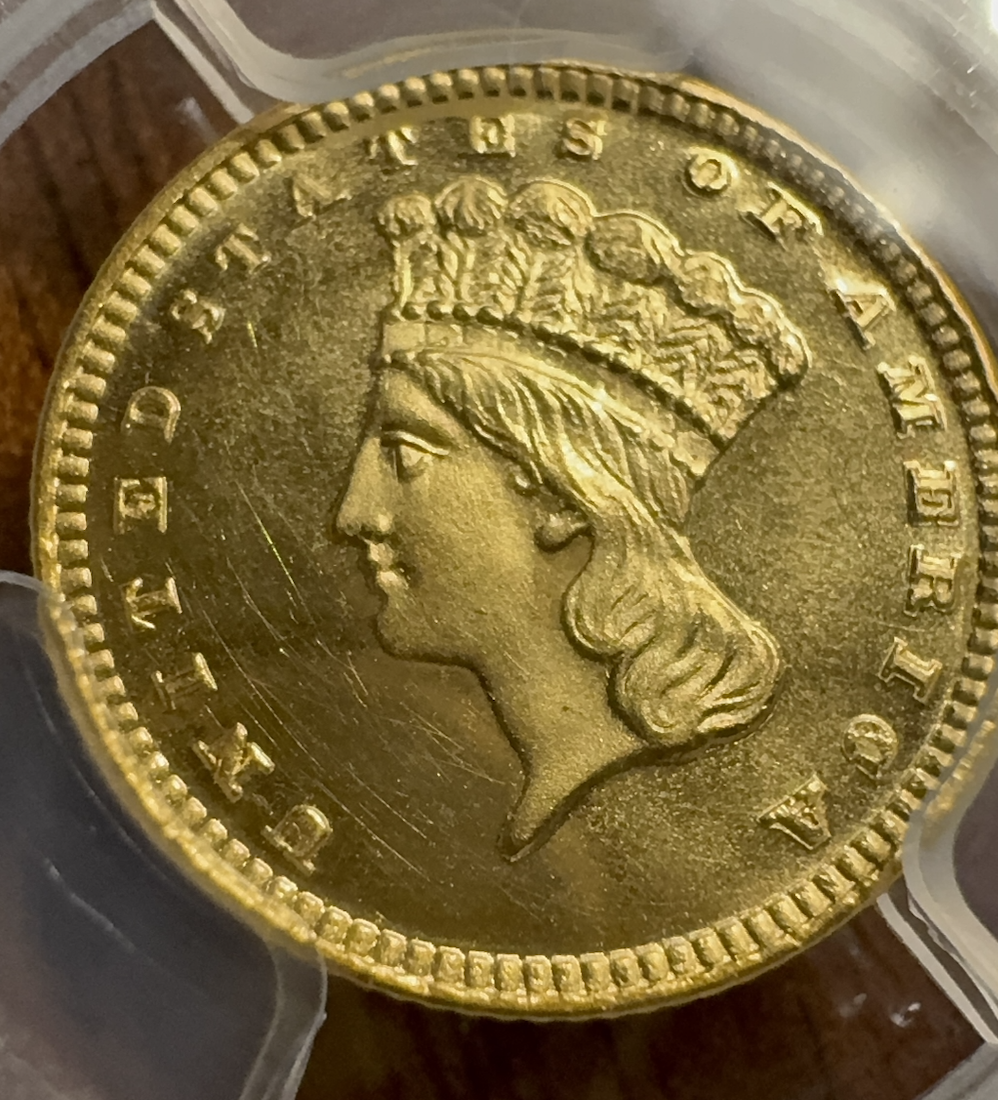
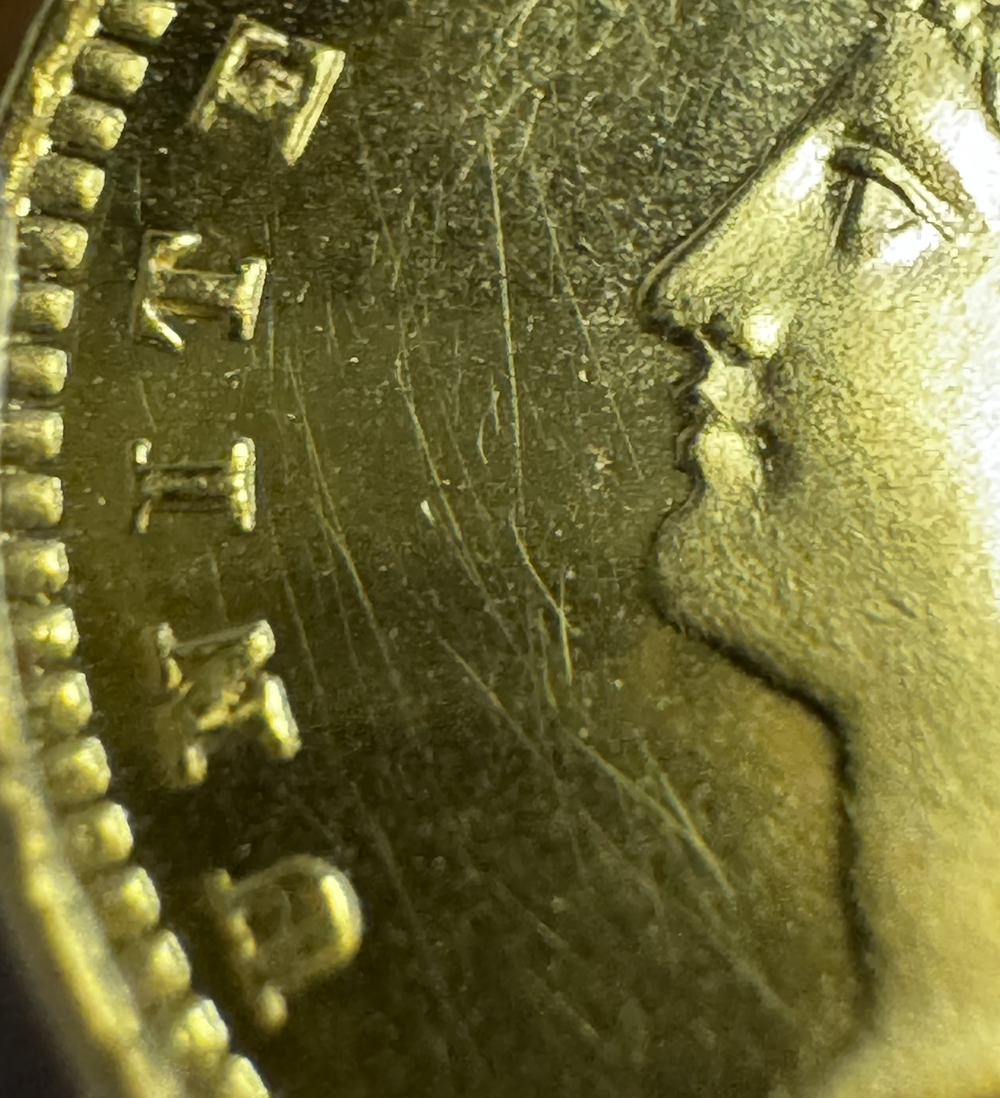
Higher Quality Video Links
Vimeo Video 1 (shows prooflike surfaces on obverse)
Vimeo Video 2 (shows the hairlines during rotation)
Nothing is as expensive as free money.
Comments
The coin looks to have practically no marks on it other than the lines in the fields. Without them it would likely grade higher than 65.
I agree with you that they don’t look like die polish.
I have completed a date set of gold dollars from 1880 to 1889, so I have some experience with these coins.
First, if you want a high grade type coin, I would gravitate toward an 1880, 1881 or 1882 coin. The mintages were much lower than the 1889, and the dies were fresher. There used to be confusion as to which pieces were Gem Mint State and which ones were Proofs in the old days. All of these coins are graded MS-65.
And if you want to go in this direction, this one is a PR-65, CAM, CAC
This is my 1889 which is PCGS graded MS-64, OGL.
I think that your concerns about the 1889 you purchased are justified. I think that the coin is a bit marginal for the MS-65 grade, and I don’t understand why CAC approved it. The piece should not have that many hairlines. That is just my opinion.
Nice coin!
I think that you are right about the semi-PL nature of the coin and that those lines show up more prominently than a non-PL coin, just like they would on a proof. I think similar lines are on many coins of the grade but they just aren't as apparent because of the surface texture.
chopmarkedtradedollars.com
The lines in question appear to be hairlines as opposed to die polish lines. If that’s the case, I’m surprised that PCGS graded it MS65 and more surprised that CAC srickered it. I’d feel the same way if the coin were designated PL or Proof.
Mark Feld* of Heritage Auctions*Unless otherwise noted, my posts here represent my personal opinions.
The examples in your collection are very attractive and sharply struck. I chose the 1889 as it is the last year of issue, and the typical selection for a type specimen. Based the CAC price guide, the 1881 and 1882 would cost 50% more in the same grade, with the 1880 being 2.4x as much. Plus, there are far fewer to choose from. Perhaps the relative pricing has adjusted accordingly in the marketplace since you purchased your coins.
Nothing is as expensive as free money.
If you are stuck on having to buy CAC approved coins, that's what you will have to do. The 1880, 1881, 1882 and 1889 gold dollars do not have CAC stickers. Frankly I don't care. I know that they are good coins for the grade. I paid a premium for the 1880 because it is very nice for an MS-65 graded piece. The line you see on the reverse is on the holder, which is an example of nice Old Green Label holder piece.
As I have posted many times before, CAC gets it right 97% of the time, but you cannot buy everything they sticker blindly. They make mistakes, and if you can't convince the next guy to accept an over graded item because of the sticker, you can lose a lot of money.
I'm not "stuck" on buying CAC approved coins. I only used the CAC guide as a relative pricing comparison. The PCGS guide shows similar price differentials for the 1880 and 1881, although the 1882 is a bit better at 21% higher.
That's great that you paid a premium for the 1880, but typically type collectors try to maximize the grade for the price, which is what I'm doing here. It was already a stretch in the budget to get to a 65 from a 64 on the 1889.
Nothing is as expensive as free money.
Not die polish, definite hair lines (whispy ones that appear totally unintentional) on what appear to be otherwise pristine and semi PL fields.
My take on your original premise ... "Is it an otherwise higher graded coin (66/67) that was market graded to a 65?" would appear to be the most accurate.
Take away those whispies and she sure looks absolutely 67 (or better). I mean, the portrait alone is near flawless, and other than those marks the luster seems absolutely sublime. Remembering that these are tiny coins, and these are minor surface imperfections that appear to be from ever so imperfect handling sometime in her life ...
.
Market grading is often looked at as a bad thing, and overall, I am not a big fan of the premise of net grading ... however at what point do all coins with any flaw need to be cast aside? I mean isn't all grading market grading?
While I might not buy it (they are noticeable after all - in images and videos - but at some point all coins have a price), I think both PCGS and CAC got it right ... even if it opens up a bag of worms for JA about stickering what appears to be a "market graded" coin.
.
In essence, if we look at the whole coin, it's too Gem not to be Gem. And so, the exception proves the rule.
.
And yes, I'm sure this also opens me up for some criticism, but it is what I see.
“We are only their care-takers,” he posed, “if we take good care of them, then centuries from now they may still be here … ”
Todd - BHNC #242
The 1889 is a more common date, but is not the best type coin because it seldom has the eye appeal of the earlier dates. The 1856, 1873 and 1874 are common dates too, but I usually find the two coins from the 1870s less attractive.
The 1889 is objectively the best type coin if measured on a “grade per dollar” basis, which allows maximizing the overall collection on a limited budget, enabling a higher average grade across the full set.
Subjectively, perhaps other dates are more attractive in general, but one can still cherry-pick an 1889 for superior eye appeal because additional budget spent chasing other issues will result in compromises elsewhere. Were money not a limiting factor, I’d gladly pursue a gem cameo proof like the one you posted.
In any case, I’m not entirely sure why you’re debating type year selection at all, since that wasn’t what the thread was about in the first place. Thank you for the relevant comments you did make about the coin.
Nothing is as expensive as free money.
Too many hairlines for me for a 65.
Like @PocketChange says, back in 2018 when I was looking for a nice Type 3 Gold Dollar for my Gold Type Set, buying one from 1889 allowed me to buy a higher grade based on my budget, compared to other dates. I bought mine from Dan and Katherine Duncan, from their old “Pinnacle Rarities”. The main photo shows the great detail, but failed to capture the luster of the coin in hand. The obverse and reverse photos show the luster. I still love this coin, and have no regrets! (Yes, as @BillJones correctly says, the dies for 1889 are often older, and you can see what I believe is a vertical die crack on the left side of the reverse).
Steve
My collecting “Pride & Joy” is my PCGS Registry Dansco 7070 Set:
https://www.pcgs.com/setregistry/type-sets/design-type-sets/complete-dansco-7070-modified-type-set-1796-date/publishedset/213996
If it were me, I would not want that many hairlines on a gem coin, although the PL nature of the coin probably makes them more prominent than on a non-PL coin. If the dealer has a return privilege, if I were you I would return it, as clearly you are not happy with the coin.
I suspect that you might be having 2nd thoughts because you posted it here for opinions and now your on an emotional trip.
I dont like seeing someone getting twisted up becasue of others opinions.
Student of numismatics and collector of Morgan dollars
Successful BST transactions with: Namvet Justindan Mattniss RWW olah_in_MA
Dantheman984 Toyz4geo SurfinxHI greencopper RWW bigjpst bretsan MWallace logger7 JWP BruceS bigjpst
JWP
Where did I say I’m not happy with the coin?
The auction house (GC) has a return policy, but it states they must be notified within 24 hours of receipt, so even if I wanted to return it, that window has long passed.
Nothing is as expensive as free money.
You did not say explicitly, I just got the impression you were not happy from your discussion. Guess I got the wrong impression!
I beg your pardon, but I’m not sure what gave you that indication. The only topic I pushed back on was the selection of the type year, which was a topic brought up that wasn’t particularly relevant to my post about my specific coin.
Nothing is as expensive as free money.
Hey im on your side. I think its a nice coin.
I apologize if I misunderstood.
Student of numismatics and collector of Morgan dollars
Successful BST transactions with: Namvet Justindan Mattniss RWW olah_in_MA
Dantheman984 Toyz4geo SurfinxHI greencopper RWW bigjpst bretsan MWallace logger7 JWP BruceS bigjpst
JWP
Fair enough 🙂. To set the record, I am actually quite happy with the coin. It faces up as a superb gem with flashily semi-PL surfaces, frosty devices, and barely a hit or nick to be seen. The overall eye appeal is excellent.
The extent of hairlines surprised me on a 65 CAC (which is why I first thought die polish), but they are barely visible to the naked eye on this minuscule coin, and then only under magnification and certain lighting.
I think @pursuitofliberty nailed it in his comment. Scroll up and read it if you missed it.
The intersection of TPG market grading, a coin’s market value and acceptability, and CAC’s approval standards is a multi-dimensional, contentious, interesting topic—and I think this coin is an interesting case study.
Forget about my personal feelings on the coin…what do you think of the ideas in bold above?
Nothing is as expensive as free money.
I think the point in the bold type is a plausible explanation for the coin's status as 65 CAC. It seems to me luster and the PL surfaces mitigated the hairlines.
Based on your final three photos I would not like the coin myself, but maybe I would seeing it in hand.
PCGS's tolerance of hairlines is perhaps the biggest grading challenge I face when submitting coins and grading raw coins.
I really like the coin, it has the look of a superb gem and I'm sure that is what carried the day at PCGS and CAC. The hairlines would bother me some, but at the right price I would be very happy to own that.
My Collection of Old Holders
Never a slave to one plastic brand will I ever be.
Let's assume that were it not for the obverse hairlines, the coin would actually make the superb gem grade MS67. However, with the hairlines it was net graded/approved down to an MS65 (which is where the evidence is pointing).
Was it appropriate for PCGS to net grade this coin to a 65? Where should PCGS draw the line re: hairlines?
Was it appropriate for CAC to approve this coin at PCGS' assigned grade at 65? Where should CAC draw the line?
What grade do you think the coin should have been assigned? Why?
Given the overall characteristics of the coin, how should its market value compare to a "standard" 65 CAC?
Nothing is as expensive as free money.
If a business strike coin had that many hairlines, would it receive a straight grade or would it get a details grade for being cleaned?
Worry is the interest you pay on a debt you may not owe.
"Paper money eventually returns to its intrinsic value---zero."----Voltaire
"Everything you say should be true, but not everything true should be said."----Voltaire
It is a business strike coin.
Mark Feld* of Heritage Auctions*Unless otherwise noted, my posts here represent my personal opinions.
I thought it was a proof since it was so flashy. I stand corrected.
Worry is the interest you pay on a debt you may not owe.
"Paper money eventually returns to its intrinsic value---zero."----Voltaire
"Everything you say should be true, but not everything true should be said."----Voltaire
If you would feel more comfortable doing so, please feel free to be seated. 😉
And I do think you raised an interesting question. My answer to it would be a straight grade. But the tougher part is what would the straight grade be?
Mark Feld* of Heritage Auctions*Unless otherwise noted, my posts here represent my personal opinions.
Cross thread alert: It’s all but guaranteed that a Proof 64 Trade dollar will exhibit some hairlines in the fields. And Proof 65 examples are very likely to, as well.
Why would a MS65 PL be any different than a proof? Same sort of delicate fields I’d imagine.
I didn’t say that a 65PL wouldn’t have any hairlines. However, hairlines are typically the predominant flaws on Proof coins, whereas in the case of circulation strikes, contact marks are as or more likely to be the issue.
Edited to add: Without the addition of quotation marks, not all readers will know that your above post included a quote from me in that other thread:
“It’s all but guaranteed that a Proof 64 Trade dollar will exhibit some hairlines in the fields. And Proof 65 examples are very likely to, as well.”
Mark Feld* of Heritage Auctions*Unless otherwise noted, my posts here represent my personal opinions.
I’m 99.9% sure that my coin was struck from both the same obverse and reverse dies as this PR66 example I pulled from CoinFacts, as multiple die markers on each align perfectly.
The reverse is JD-2, which is confirmed as also being used to strike circulation strikes. This would support what Bill said about there being difficulty separating circulation strikes and proofs in the past.
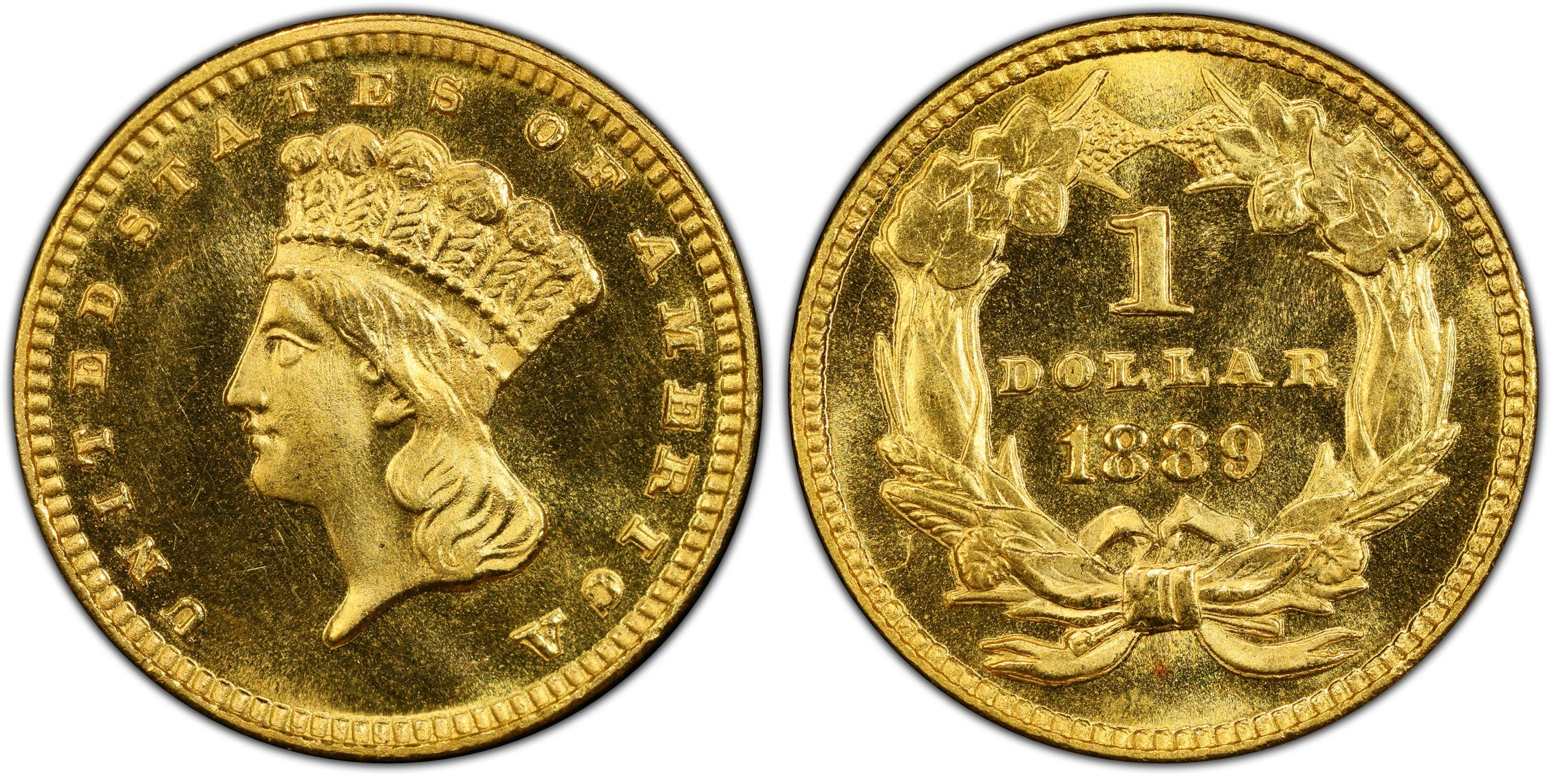
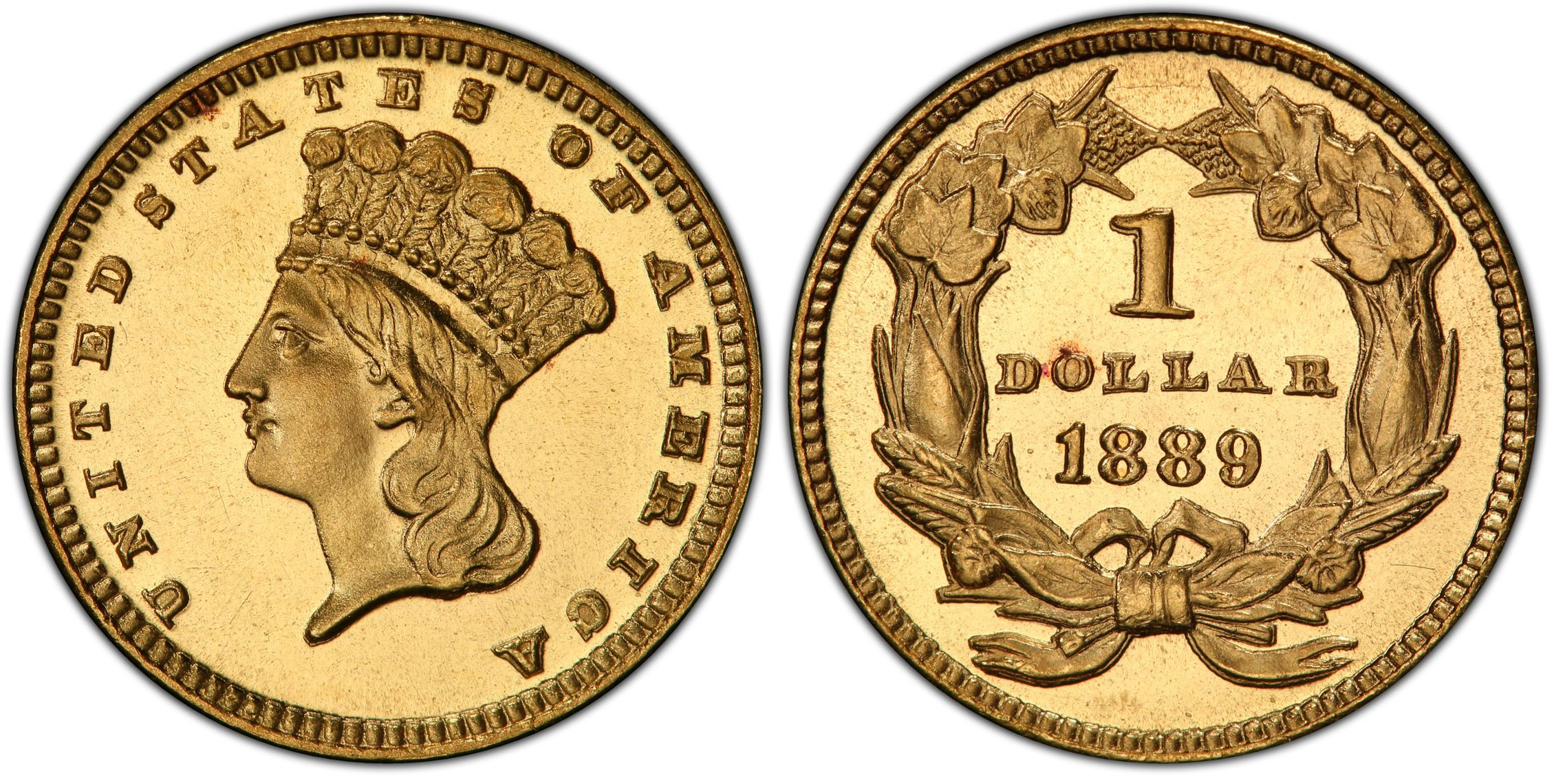
Proof 66
I’m also somewhat confident that the same reverse die struck this MS66PL, although quite a bit less so about the obverse due to the lighting. The reverse die is definitely the JD-2, though (light horizontal crack between top of wreath).
Proof-like 66
I’m having trouble with the obverse die attribution. Does anyone have a reference?
Nothing is as expensive as free money.
Not really a one size fits all answer for this situation, but these are my thoughts.
1) I dislike market/net grading in general, but this coin is one of those exceptions as it is so very nice that to details grade it seems a shame. I am more old school and would prefer the grade reflect the state of preservation and then let the market decide value. The current market grading is just the opposite, the grade is more about the value than the level of preservation.
2) I think CAC should have declined the coin, part of their goal is to weed out problem coins in the marketplace. Having said that part of the bean (especially in the early days) was to identify coins that JA would want to buy and make a market in. This may have been part of the reasoning for giving it a bean at CAC, maybe.
3) I think MS64+ or in the case of NGC MS64+* is appropriate as it has incredible eye appeal. Just my opinion, the hairlines bring it down to less than gem grade in a net grading situation.
4) This will really depend on the individual; I would not want to pay standard or guide 65 CAC for it. But I cannot fault anyone that would, it is a very eye appealing coin. This comes down to how much the positives outweigh the hairlines.
My Collection of Old Holders
Never a slave to one plastic brand will I ever be.
.
First, I'm glad to see more discussion here, because I think this is a great example for this debate.
I know I commented alread, but I want to try and tackle the questions you are posing here. Maybe more for myself than anything else.
.
All that said, the coin is not my specialty and the grade is not in my typical grade range of more definitive understanding, so take my opinions for what they are. Just like the grade and the sticker, but probably with MUCH les weight.
.
Also, that's interesting about the Die Marriage. Please keep us all informed.
“We are only their care-takers,” he posed, “if we take good care of them, then centuries from now they may still be here … ”
Todd - BHNC #242
Is it possible that the hairlines are in fact raised polish lines? Hard to tell from the photos.
The evidence (photos and my in-hand examination) do not support them being die polish lines. As others have said, they are more akin to the hairlines on a proof.
Nothing is as expensive as free money.
Those kinds of hairlines seem very common to the type and I have cataloged quite a few with CAC stickers that also had such hairilnes and were graded Gem or better.
My guess is that it could be an MS-66+ coin aside from hairlines, silent net-graded down and thus "nice for the grade" per the CAC sticker.
Since ALL grading is a matter of opinion, I am not particularly disturbed by this (and I do not personally collect the series nor CAC-approved coins).
Official PCGS account of:
www.TallahasseeCoinClub.com
I've had a few coins over the years that I've really liked until I over magnified the image........
It's a coincidence you mentioned 66+ as a comparison, as I just came across this MS66+ CAC example—which I am 100% sure is of the same obverse & reverse die pairing—that sold on Stacks in 2023. The TrueView suggests the coin may have similar hairlines to my coin, although of course the extent cannot be confirmed without examining in-hand.
Also of note, the reverse of the 66+ has a couple of lint strike-thrus, which is more typical of proof strikes because of the frequent polishing with cloths. This again goes back to Bill's comment about difficulty separating circulation strikes from proofs, especially since the same dies may have been used for both (I confirmed the reverse die JD-2 was, and am still trying to find information about obverse die attribution).
In addition, this cert# is no longer active. Who knows if the coin was simply crossed to another TPG, or if some sort of upgrade was being sought by the owner, but it piqued my interest.
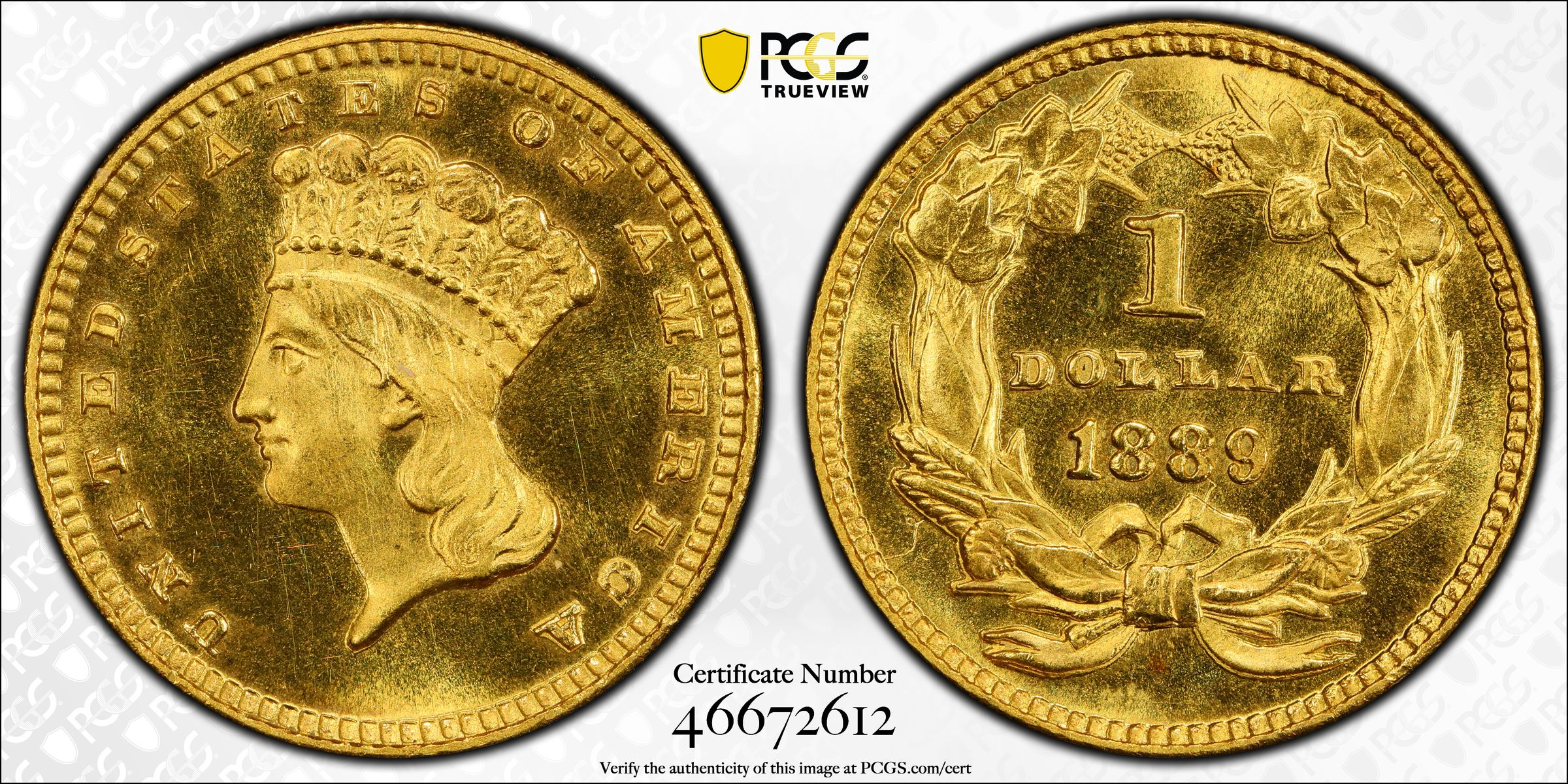
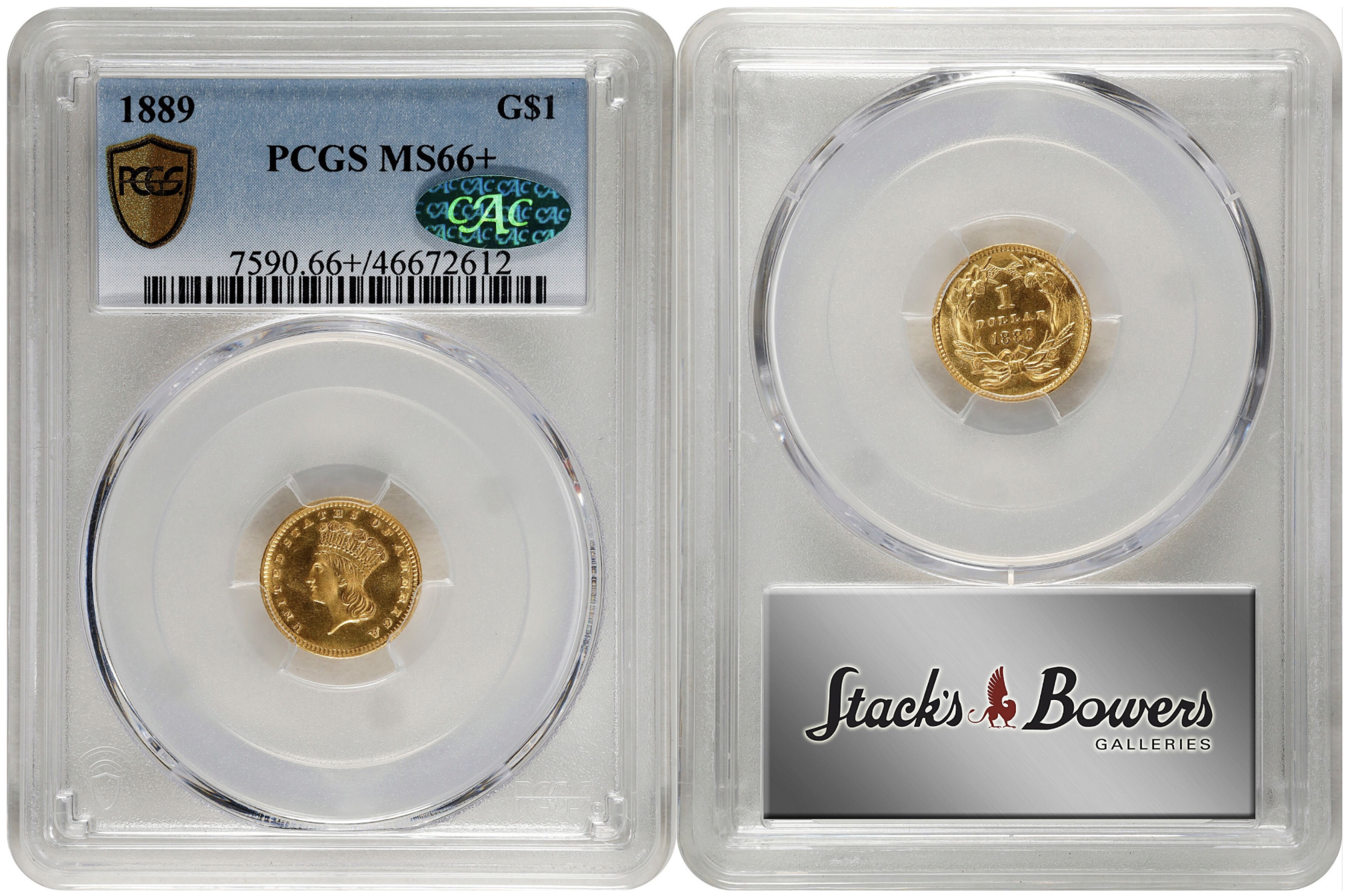
MS66+ CAC
Nothing is as expensive as free money.
Actually, I just realized that the Stacks MS66+ CAC coin is the SAME COIN as the PR66 coin I posted a few comments ago. Now, that is very interesting!!!
Nothing is as expensive as free money.
After all- isn’t EVERY coin except for the mythical 70+ silently net graded for something or another?
It’s a nice looking coin but the hairlines, not for me.
Exactly! As we speak, I am looking at a late nineteenth NGC PR-67+ UCAM type coin (not CAC, however) which has very, very limited, fleeting hairlines. . . . then absolutely NO other post-mint demerits. It's likely PR-68 in terms of appearance and lack of contact, but netted down slightly for those near-inevitable hairlines.
I prior said such light hairlines are "very common for the type", but really one might say the are "very common for the era" since it would be some years before there were many ways to truly insulate such coins from inevitable handling, no matter how brief.
Official PCGS account of:
www.TallahasseeCoinClub.com