Options
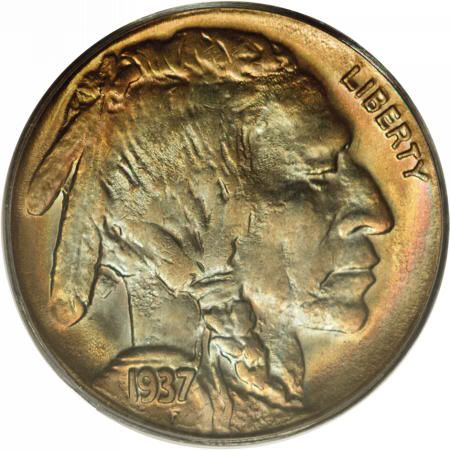
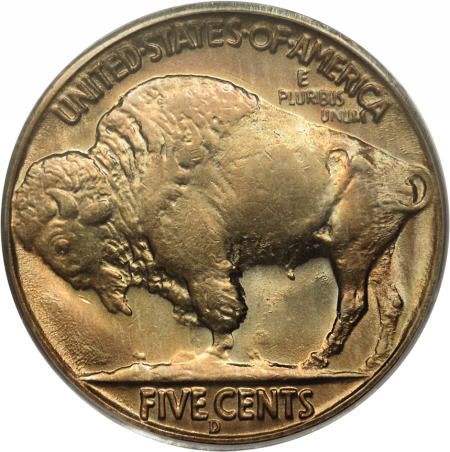
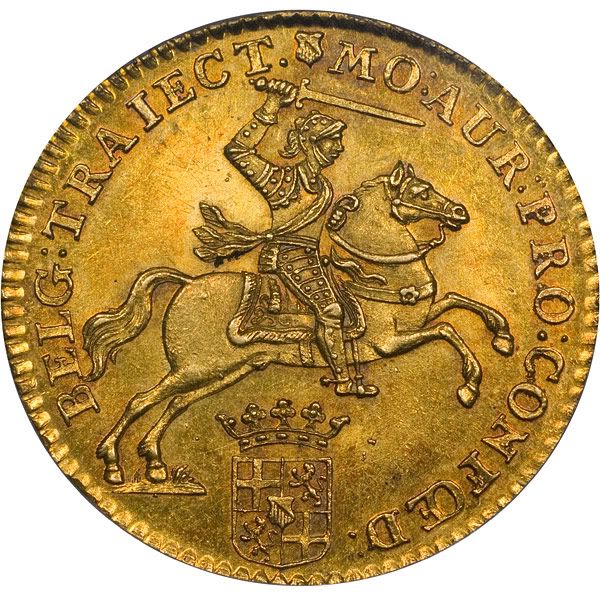
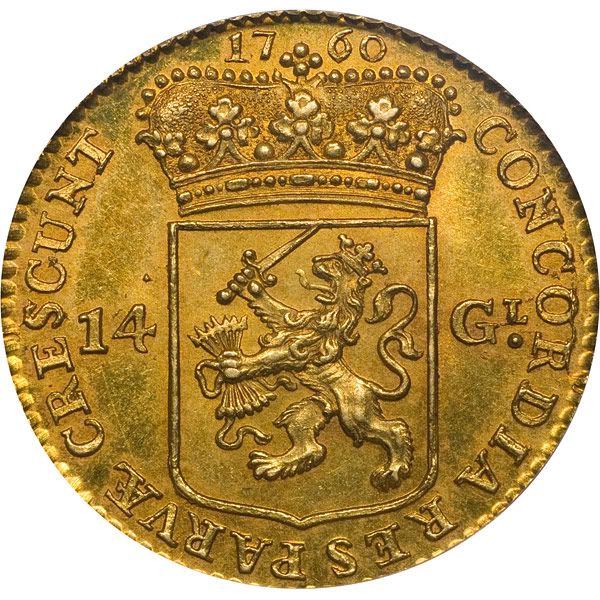
Just some pictures - random selection of some of the coolest coins, medals and tokens I've ever seen
 MidLifeCrisis
Posts: 10,617 ✭✭✭✭✭
MidLifeCrisis
Posts: 10,617 ✭✭✭✭✭
No rhyme or reason and not my coins...just some coins I really like. 




0
Comments
Many members on this forum that now it cannot fit in my signature. Please ask for entire list.
<< <i>whats the last coin and how much does it cost? >>
I think it's a 1760 Netherlands Utrecht Gold 14 Gulden and it would probably cost around $3,500.00.
Maybe finest known.......
I give away money. I collect money.
I don’t love money . I do love the Lord God.
<< <i>Maybe finest known....... >>
Nice!
<< <i>
<< <i>Maybe finest known....... >>
Nice! >>
Thanks....here is Norweb 4 escudos....
I give away money. I collect money.
I don’t love money . I do love the Lord God.
<< <i>Thanks....here is Norweb 4 escudos.... >>
PM sent.
I give away money. I collect money.
I don’t love money . I do love the Lord God.
Many members on this forum that now it cannot fit in my signature. Please ask for entire list.
<< <i>All nice coins and tokens, but if I had to choose one, it would be the Virginia token. Do you have any background info on it? >>
Uh, yeah...there are about 3 known. It's an awesome and prohibitively expensive coin! It's also one of my favorites!
From the old Coin Facts website:
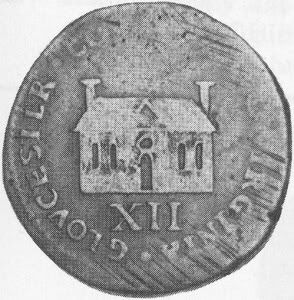
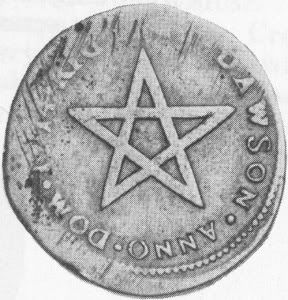
The 1714 Gloucester Token is a small brass piece that may have been a pattern intended for a silver Shilling. Prior to 1981, only two examples were known. Because the legends were incomplete, experts speculated that the building on the front of the coin was a warehouse or official government building (possibly a courthouse). The date is barely legible on the back, but enough detail remains to date it positively as 1714. The name on the back was believed to have been Richard Dawson. In 1981, a third(?) example turned up with sufficient detail to solve the question of the legends. Combining information from both coins, the obverse legend reads in full: "GLOVCESTER • COVRTHOVSE • VIRGINIA". The legend on the back of the coin reads: "RIGHAVLT DAWSON • ANNO • DOM • 1714".
__________________________________________________________________________________
From Louis Jordan's Department of Special Collections at the University of Notre Dame website:
Very little is known about the Gloucester Courthouse tokens beyond the information found on the tokens themselves. For over a hundred years it was thought only two examples survived, with both examples so well worn so that the full legend could not be determined. In 1875 Crosby mentioned one example owned by George Cram which was later sold to L. G. Parmelee and in recent times has been in the Garrett collection, then in the Roper collection and is now owned by Donald Groves of Long Island. Crosby also mentioned a specimen owned by Parmelee that can be traced back to the collection of Dr. Charles Clay. This piece was in the William Sumner Appleton collection which was donated to the Massachusetts Historical Society and then appeared in the 1976 ANA Convention sale held by Stacks Coin Company of New York City. It was purchased by Roper who discovered it to be a cast copy of the other surviving example. According to Hodder, Stacks refunded the purchase price and donated to copy to a public institution.
A second genuine example was discovered in 1981 in a collection of coins that had been accumulated over several decades by a resident of Gloucester, Virginia. It was subsequently sold in the Bowers and Ruddy sale of the Gerry Nelson collection of April 29-May 2, 1982 as lot one. Between the two original examples a description of the token can be constructed. On what is commonly called the obverse is a long building with a central door flanked by two tall windows on either side and a chimney at each end of the roof. Below the building is XII, leading one to suspect the coin was denominated as a shilling. Around the edge is the legend: "GLOVCESTER . COURTHOUSE . VIRGINIA ." with an outer border of round beads. On the reverse is a five pointed star with the legend: "RIGHAVLT . DAWSON . ANNO . DOM . 1714 ." and an outer border of round beads.
It is known that a Christopher Righault purchased land at Craney Creek near the Gloucester Courthouse in 1654 and obtained additional lands in 1668. It is suspected the Righault in the token legend is his relative, possibly a son. It is also known a Samuel Dawson was a landowner in the Abingdon Church section of Gloucester County, presumably this person or a relative is the Dawson mentioned in the legend.
In his description of the Garrett Collection David Bowers suggested the token may have been a tobacco warehouse receipt rather than a pattern for a shilling token. Hodder has suggested this is possible but if it were the case one might suspect more examples would have survived. Both examples are made of brass with a high copper content and measure 24 mm. in diameter but their weights greatly differ, with the Garrett-Roper-Groves example weighing 61.1 grains while the more worn, newly discovered example weighs only 43.44 grains.
Also, a third related token has been uncovered. A local Gloucester resident named Anthony German came upon this unique piece while searching for indian relics with a metal detector in the vicinity of the old courthouse. This latest find is smaller than the other examples at 18.2 mm. and is only 25.3 grains, leading some to call it a sixpence. It is extremely worn. On the obverse the central image (if there was one) is completely worn off but a few letters in the legend are legible; at about 7:00 o'clock are the letters "VLT ." (from Righault) and part of a beaded outer border, the remainder is worn smooth until about 3:00 to 4:00 o'clock where the letters "N . DO" (from anno domini, AN. DOM.) are visible. On the reverse at about 2:00 o'clock is a single point of the star and, from the legend, "715" The remainder of the reverse is worn smooth, except for what might be the tip of a point on the star at about 8:00 o'clock. Thus, this smaller size token shows a new date, 1715, and displays a reworking of the legend as the name Righault along with the AN. DOM. are on the obverse while the legend continued with the date on the reverse. Because of the large blank space it is not known if the location, Gloucester Courthouse Virginia, was mentioned. If it was on the obverse then the word Dawson would not fit and, if his name was included, would need to have been placed on the reverse. If the location was not on the obverse then Dawson could have easily fit in the available space and the location, if added, could have been on the reverse.
It now appears there are different size tokens from two different years associated with Righault. The legend "Gloucester Courthouse Virginia" may not refer specifically to the courthouse but to the location, as many southern rural areas were named by the closest landmark including courthouses (as the village of Appomattox Courthouse). Thus, the building on the obverse may be a courthouse or possibly some other structure as a business (possibly in a home) or less likely a warehouse (a warehouse would not usually have large windows and a small front door). It does appear Righault and Dawson formed a partnership of some kind that produced these private tokens.
That few examples remain (and those in poor condition) dramatically limit speculation on the nature of these pieces. Their small number and diverse weight are characteristic of patterns (i.e. prototypes). However, as privately made local products presumably produced by local artisans without the aid of advanced minting equipment, one might expect a certain uniformity in the planchet size but certainly there would be less standardization in planchet thickness, resulting in weight variations. Also, one would not expect experimentation with patterns by local artisans. Rather, once a die was prepared it would be put into use until it was not longer serviceable. Possibly these pieces were produced in fairly limited numbers for local use as coinage. There are still many unanswered questions about what appears to be the earliest datable private token produced in the colonies.
Not really looking for much these days but if I were, it might be a toner.
Many of the others are way cool. If MrEureka has internet in Europe you'll be hearing from him soon.
<< <i>Bidask, that's the most well-worn Saudi piece I've ever ever seen. I remember little of how that issue came about. Can you elucidate.
Many of the others are way cool. If MrEureka has internet in Europe you'll be hearing from him soon. >>
This coin is and NGC 61....here is an article i dug up on these coins ( disc's)!
“In Saudi Arabia, gold coins have always been important in the monetary system. For years, in fact, paper money was unacceptable, and to pay royalties to the government, Aramco once flew kegs of both gold and silver coins to jiddah. In 1952, when the Saudi Arabian Monetary Agency (SAMA) was formed, the first coin issued was a Saudi sovereign – a gold coin equal in weight and value to the British sovereign – that was later demonetized and today sells for about $124.
To collectors, however, the most interesting Saudi gold coins weren’t coins at all; they were “gold discs” Similar to coins, they were minted by the Philadelphia Mint in the 1940’s for Aramco, and bore, on one side, the U. S. Eagle and the legend “U. S. Mint, Philadelphia, USA” and, on the other side, three lines on the fineness and weight. They looked like coins, they were used as coins, but, technically, they weren’t coins.
In the 1950’s, numismatists were puzzled by these “discs” until-in 1957 – the story emerged in The Numismatist. Aramco, required to pay royalties and other payments in gold to the Saudi government, could not obtain the gold at the monetary price fixed by the United States so the U. S. government specifically began to mint the “discs” – actually bullion in coin form for these payments. In 1945, for example, the mint turned out 91,210 large discs worth $20, and, in 1947,121,364 small discs worth $5, according to The Numismatist.
Because most of the discs were melted down for bullion, or later redeemed for the Kingdom’s gold sovereigns, the discs are interesting additions to art collections. But care is necessary as counterfeits are common.”
(This article appeared on pages 2-5 of the September/October 1981 print edition of Saudi Aramco World. by Robert Obojski.)
On April 14, 1991, the New York Times printed an article by Jed Stevenson on the “disks” in reference to several which were to be sold by Stacks in an upcoming auction in May of 1991. Below are portions of that Article….
“Sometimes coins are minted for the strangest of reasons. Some Saudi Arabian bullion coins, several of which will be auctioned by Stack’s early next month, are a prime example.
The coins were struck in Philadelphia by the United States Mint in 1945 and 1947 to satisfy the obligations of the Arabian American Oil Company, or Aramco, which had been set up in Saudi Arabia by four American oil companies. The company was obliged to pay the Saudi Government $3 million a year in oil royalties and its contract specified that the payment be made in gold.
The United States dollar at the time was governed by a gold standard that, at least officially, made the dollar worth one thirty-fifth of an ounce of gold. But the price of gold on the open market had skyrocketed during World War II.
For a time the Saudis accepted payment in United States currency, but by 1945 they were insisting that the payments in gold be resumed. Aramco sought help from the United States Government. Faced with the prospect of either a cutoff of substantial amounts of Middle Eastern oil or a huge increase in the price of Saudi crude, the Government minted 91,120 large gold disks adorned with the American eagle and the words “U.S. Mint — Philadelphia.”
Aramco paid for the minting and the bullion. The coins were shipped off to Saudi Arabia.
These bullion coins weighed 493.1 grains, slightly more than a troy ounce, and were 91 2/3 percent gold and 8 1/3 percent copper. The fineness was that of the British sterling system then current in the Middle East. The United States standard was only 90 percent gold.
Most of the coins disappeared. The bullion coins were crated and shipped to Bombay, where the $35-an-ounce American gold was sold for $70 an ounce. Most of the coins were melted into bars and later sold in Macao.
In 1947, Aramco contracted for 121,364 smaller bullion coins with the same design, but weighing just 123.27 grains. Those coins actually saw some popular use in Saudi Arabia and traded for about $12, or 40 silver Saudi riyals. But the popularity declined after Swiss and Lebanese counterfeiters began striking coins that were similar but less valuable.
In 1951, Saudi Arabia began minting its own gold coins and melted down most of the remaining small and large bullion coins from the United States Mint, restriking them as Saudi coins.”
I give away money. I collect money.
I don’t love money . I do love the Lord God.