Options
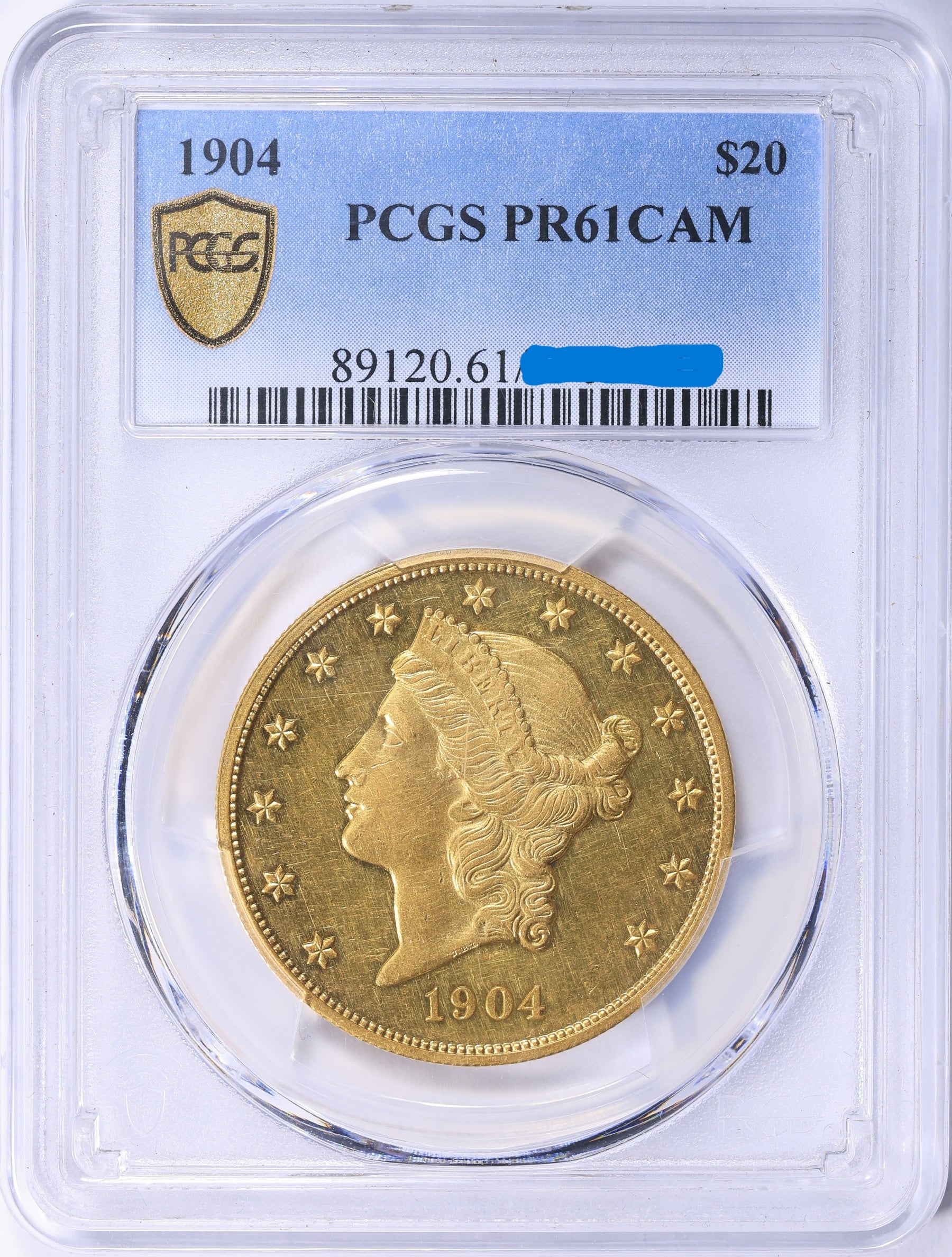
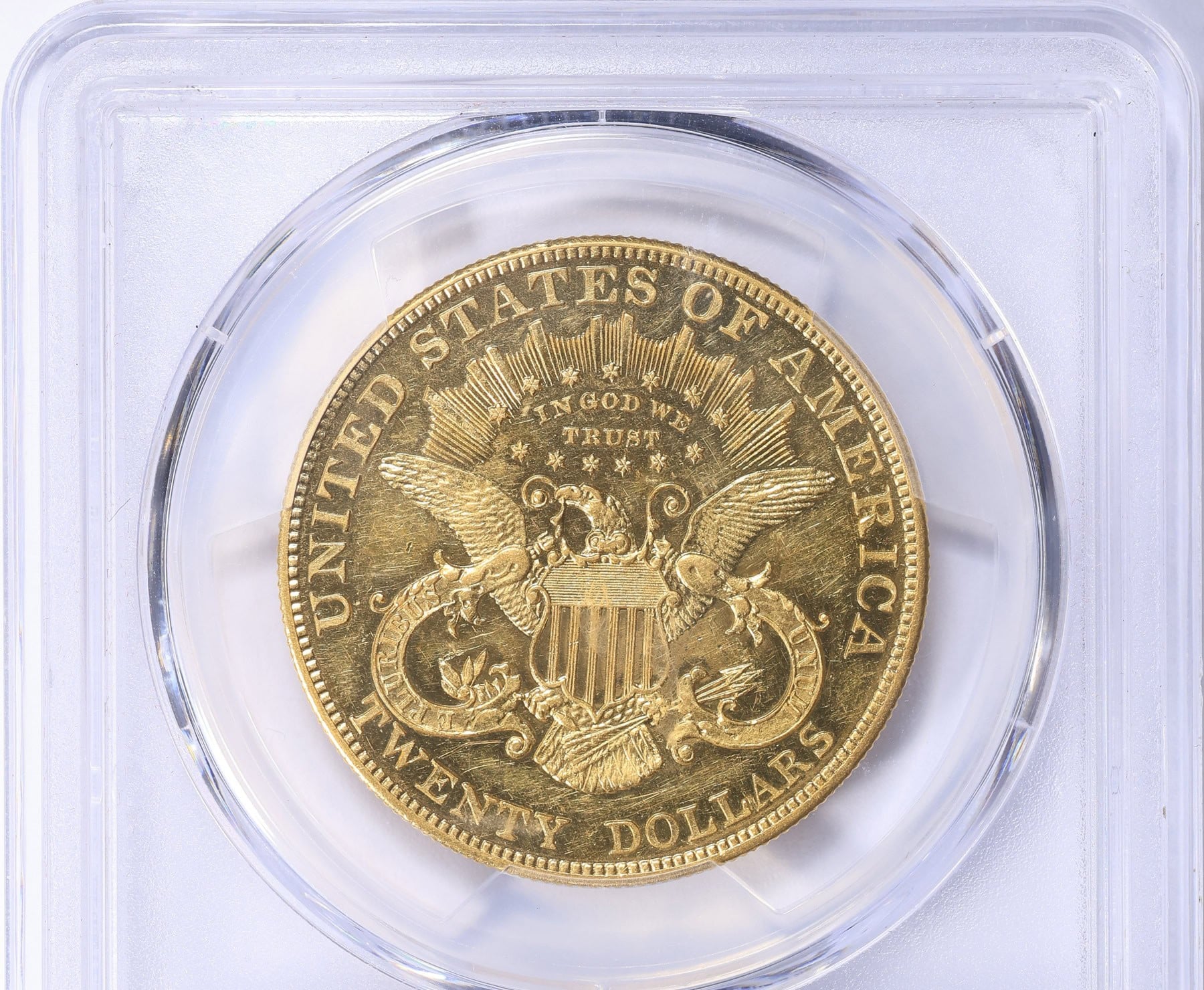
A Straight Grade PR61 CAM, You've Got to be Joking?
 Luxor
Posts: 616 ✭✭✭✭✭
I'm now convinced that if your coin is expensive or rare enough, it can be holed, bent, tooled, be ex-jewelry, scrubbed with a Brill-O pad, etc and it WILL straight grade.
-
Your hobby is supposed to be your therapy, not the reason you need it.
7
Comments
PF60-62 (60 is rarely awarded) tend not to be nice coins and have many hairlines, but I agree that one is excessive.
the die polish on that double eagle is brutal
Ouch
That looks like hairlines and not die polish.
Cleaned proofs often end up in 61 holders. This is nothing new.
Coin Photography
Back in the old days I would have graded it a Proof-60/60, even if the reverse might be a point higher. And I can’t see giving a coin like this a CAM.
You've got to be Joking that you’re now convinced that if a coin is expensive or rare enough, it can be holed, bent, tooled, be ex-jewelry, scrubbed with a Brill-O pad, etc and it WILL straight grade.
I don’t find the assigned grade of that coin surprising or offensive. I’ve also seen many rather common, lower value, heavily hairlined and/or cleaned Proof coins receive similar grades.
How nice do you think a Proof 61 coin should look?
Mark Feld* of Heritage Auctions*Unless otherwise noted, my posts here represent my personal opinions.
PR61 imo
Hairlines are what you would expect for a PR61.
I remember the days when an extremely harshly cleaned coin would not receive a net straight grade, or maybe this is one of those very elusive 220 grit sandpaper finish proofs?
-
Your hobby is supposed to be your therapy, not the reason you need it.
A lot of coins do receive detail grades for being “harshly cleaned”. But without seeing it in hand, I’m not going to take it as a given that the coin you posted has been cleaned to that degree. That said, sadly, I do see straight-grade coins that I think should have been detail-graded.
Mark Feld* of Heritage Auctions*Unless otherwise noted, my posts here represent my personal opinions.
I have a very nice 1948 Canadian silver dollar in a "Cleaned- UNC Detail" holder. It is not harshly cleaned. The coin has light scattered hairlines, which is not unusual to find on late 40's Canadian silver dollars which can come with mirrored prooflike surfaces that attract hairlines by just thinking about them. If that proof double eagle is eligible for a straight grade, my silver dollar most certainly is, too. I know I'm talking about PR vs. MS here but still- it would be nice to see some consistency from the graders when it comes to labeling coins "cleaned".
I think PR vs. MS makes a big difference. Because in general, Proof coins are far more likely than mint state coins to acquire hairlines without being cleaned. Still, I understand that there can be exceptions for the latter if they have mirrored surfaces.
Mark Feld* of Heritage Auctions*Unless otherwise noted, my posts here represent my personal opinions.
Yes, that is my point. Hairlines that would be barely visible on a satiny surface stand out like flashing lights on a mirrored one. The two coins haven't been handled any differently, so why are graded as though they were?
Maybe yours was unfairly punished. It’s hard to provide even a guess without seeing it in hand.
Mark Feld* of Heritage Auctions*Unless otherwise noted, my posts here represent my personal opinions.
IMO this is not at all unusual. Yes, it has been wiped, criss-cross hairlined, not cabinet friction, but we have seen this before.
Those who have done photography know different angle lighting can accentuate.
How many times have we seen wiped, scratched, nicked significant rare coins in straight graded holders?
This is a significant rare PR DE gold coin mintage 98.
I have seen many coins of various types more hairlined than mine in straight graded holders. If I expected mine to come back graded "Cleaned", I wouldn't have sent it in.
Sure- I understand.
That should not matter.
Even though the grade is 61, the coin looks beautiful to me.
In my opinion, there is too much rub on the cheek to call this piece mint. I’d call it PR-58 at best.
I’m not sure about the holed, bent etc but rare coins do get somewhat of a pass at tpg’s. This has been common knowledge and they have confirmed as such several times.
I have a proof 64 silver eagle that is still worth more than a spotted silver eagle!
I kind of dig the grade as it’s not typical.
As we know. For most folks here a 69 in a modern is a letdown.
Somewhat agree. But there are many historically important very rare coins that will need a straight grade label IMO. Proof DEs are iconic and sought after. Would you want those coins that are borderline represented in a Details holder? How many large gold coins in straight label holders have been wiped, that are not iconic?
Why would a coin "need" any particular grade? This seems like...
The Emperor's New Clothes
https://americanliterature.com/author/hans-christian-andersen/short-story/the-emperors-new-clothes
Giving a straight grade to a rare coin that wouldn't be given to a lesser coin in the identical condition is not "grading", IMO.
If TPGs can use subjective eye appeal criteria to up or down grade a coin then they can use rarity and weightiness of a proof DE vs an MS 1904. Its an immaterial or irrelevant opposing argument at this juncture. It happen and it will continue to happen whether we approve or disapprove. But hey, this is America, take your case to them, they will I am sure consider it if you can get a significant consensus from your peers.
I'm not arguing with anything you wrote and I'm not interested in taking a case to anybody.
I'm saying that using rarity as a factor in grading is not grading, where grading is "evaluating a coin based on its physical condition, particularly the amount of wear, preservation of its original surfaces, and quality of its manufacture."
If people want to assign grades based on rarity, go for it. But at least be honest about what's being done.
edited to add... And what I mean by being honest is making it clearly known that the number on the label isn't solely a representation of a coin's condition. Perhaps "Professional Coin Grading Service" could be changed to "Professional Coin Ranking Service", based on what it seems people want from them.
Eye appeal, is a widely recognized and published component of grading. Rarity is not. If the grading companies wish to include rarity as an additional component, they should publish it. To carry on the current practice without doing so is disingenuous.
Mark Feld* of Heritage Auctions*Unless otherwise noted, my posts here represent my personal opinions.
I agree. There are too many rarities with obvious problems including graffiti in straight graded holders. The 1870-S $3 and Dexter Class I 1804 Dollar come to mind. Also at least one of the 1913 Liberty Head nickels is cleaned.
I'd like to think that recognizing a coin as cleaned or damaged, regardless of rarity, would reinforce the concept of taking care of one's coins in their collection, i.e. how to protect and preserve them properly.
Custom album maker and numismatic photographer.
Need a personalized album made? Design it on the website below and I'll build it for you.
https://www.donahuenumismatics.com/.
Published component. Hmm. On the PCGS grading standard page?
It's subjective, so it does not matter if published, eye of the beholder is not a standard.
I put to you also provenance is a criteria, also subjective.
Not surprisingly, there’s no mention of provenance or rarity among the 4 Fundamental Components of Mint State Grading, as published by PCGS.
https://www.pcgs.com/news/4-fundamental-components-of-mint-state-grading
4 Fundamental Components of Mint State Grading
By Joshua McMorrow-Hernandez - March 21, 2022
The factors that separate the grades of various Mint State coins include strike, luster, surface preservation, and eye appeal. Courtesy of PCGS TrueView. Click image to enlarge.
Grading Mint State coins is both an art and, at PCGS, a science – a process that has been carefully and consistently curated for more than 35 years based on our strict standards. It goes without saying that there are distinctions in the gradations between a MS60 coin and a MS61 example, let alone an MS60 and MS70. Yet, the Mint State grading system is much different than the way grading works for circulated coins, where differences in wear are the key factors in distinguishing, say, an XF40 from an XF45.
What are the critical factors that go into grading Mint State coins, all of which show no circulation wear? There are four key considerations that go into grading Mint State coins, including:
Strike – The completeness/incompleteness of a coin’s intended detail when originally struck.
Luster – The strength and pattern of light reflected off a coin.
Surface preservation – The condition of the surface of a coin, notably marks and/or scratches.
Eye appeal – The elements that “grab” the viewer. The overall look of a coin. Often manifested as “toning.”
Mark Feld* of Heritage Auctions*Unless otherwise noted, my posts here represent my personal opinions.
Guidelines for Eye Appeal
Eye Appeal is one component of grade. For coins grading above MS/PR 60, eye appeal is one of the four components of grade.
Published here: https://www.pcgs.com/eyeappeal/
I'd GTG 60-61CAM on that one. The hairlines bother me, but that's the case for all PR60-61 coins. It's how they're graded and one reason why I don't have any.
Keeper of the VAM Catalog • Professional Coin Imaging • Prime Number Set • World Coins in Early America • British Trade Dollars • Variety Attribution
There are always a lot of opinions on grading. I can see one scratch between the two stars. A lot of time the scratches are so minor they dont show up except on an ange with a bright light. Thats proofs for you. Uncirclualted, but even the slightest bag mark will set you have 3-4 grades. Sorry. 61 is unfair, but 63 would be a gift. I'd love to see a video with a full rotation under bright single source light.
You are correct, it is published. But still subjective.
Rarity and provenance are not spelled out as a criteria. Not something that should shock anyone though if factored in. It happens in rare watches, collector cars, art etc.
Disagree factoring in rarity and provenance would be disengenuous. Opinions contain emotions, experience, knowledge, expertise. How do you examine and encapsulate a legendary, celebrated, iconic item tied to this marketplace without considering all of the above?
@MFeld didn't say that factoring in rarity and provenance would be disingenuous. He said doing so without publishing the fact it is happening is disingenuous.
edited to add... Rarity and provenance have nothing to do with a coin's state of preservation. Conflating those things (rarity/provenance & state of preservation) corrupts the concept of grading. IMO, it's not a good idea for coins to get their grades based on who owns/owned them or how many of them exist.
Eye appeal may be subjective, but at least it is a characteristic of the coin's appearance. Rarity is NOT related to anything about the coin's appearance or state of preservation.
All comments reflect the opinion of the author, even when irrefutably accurate.
I understand the rationale of allowing hairlines of proof surfaces as the mirrors are more delicate. You can find them on gem pieces too. I get it. I don't understand the logic of allowing them to this degree. It does look like someone took a Brillo pad to it. If this had been a proof like or normal business strike piece, is there anyone who would argue it belonged in a 60 or 61 holder?
I'm not disputing that this is how proof gold is actually graded, I'm just saying I understand the OP's frustration and questioning as to why proofs are graded more leniently particularly for more extreme examples.
I understand it also. But if the lower grades (such as PR60-PR62) aren’t utilized for examples that are heavily hairlined, under what circumstances could/should they be applied?
Mark Feld* of Heritage Auctions*Unless otherwise noted, my posts here represent my personal opinions.
Deeply impaired mirrors from rich toning, overly dipped pieces, and incidental hairlines. With the pattern of the hairlines on the example in the OP, it is hard for me to call it anything other than intentional. That's where the distinction lies for me. If it is obvious wiped or manipulated, it shouldn't be given a free pass. I understand that collectors once viewed cleaning as acceptable, but to me that doesn't change the calculus at all.
Edited: My point about toning goes to proof coins more broadly not limited to gold.
I don’t see rich toning and incidental hairlines as resulting in deeply impaired mirrors. And the large majority of Proof gold coins don’t appreciable toning, much less rich toning.
Please know, I'm not trying to be argumentative. But in reading my own posts, I can see where it would sound that way.😬
Mark Feld* of Heritage Auctions*Unless otherwise noted, my posts here represent my personal opinions.
I meant my comments more broadly and not just related to gold (.e.g. the toning comments). I have seen coins with impaired mirrors that weren't obviously cleaned. I had assumed that was from repeated dipping from thick toning, but could be something else causing it. Those would be prime candidates for low grade proof grades.
So many respected individuals here agree with the grade which makes me think I really need glasses or a better monitor as I still see a very harshly cleaned coin that should have received a details grade, and was only net straight graded due to its rarity and market value which is completely inconsistent with true unbiased 3rd party grading IMO. I don't believe this coin would get a straight grade over at CACG in a million years.
-
Your hobby is supposed to be your therapy, not the reason you need it.
Key line here: net straight graded due to its rarity and market value
Grading has never really been unbiased. It's merely a bunch of opinions. Truly, there's only one opinion that matters - yours, and you can choose to buy or not to buy.
Coin Photography
Looks like someone's kid got into their dad's or granddad's coin collection.
Throw a coin enough times, and suppose one day it lands on its edge.