🇪🇨 The Official Spoken Word on Ecuador’s Numismatic Journey: A Paradise of Rarity for PCGS Collect
 ricarf2386
Posts: 242 ✭✭✭
ricarf2386
Posts: 242 ✭✭✭
The Numismatic Reality of Ecuador: An Official Overview for the PCGS Community (Part 1)
Dear PCGS Message Board Community,
At the request of several members here, and as I previously committed to doing when I stepped up as the unofficial spokesperson for the PCGS Board in Ecuador, I am starting this thread to share a detailed, step-by-step look into how numismatics actually works in this country.
Over a series of upcoming posts, I will be breaking down the reality of our market, our history, and our unique connection to coinage. I will present this information thoroughly, analyzing each focus meticulously so we can explore this fascinating numismatic landscape together.
Part 1: A Brief Journey Through the History of Ecuadorian Coinage
To understand the modern numismatic reality of Ecuador, we must first look at its historical foundations. Ecuador's currency history actually begins long before the arrival of European conquerors, spanning four major eras that completely transformed how money and value were perceived in the region:
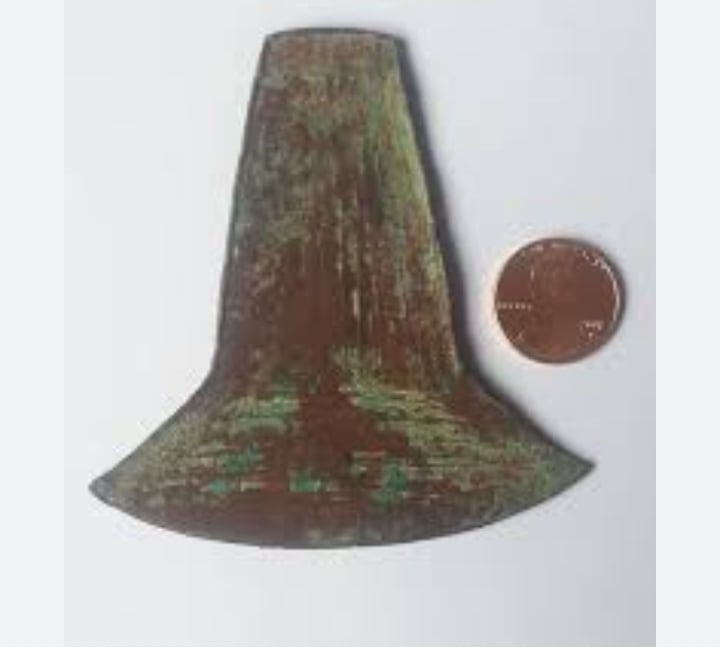
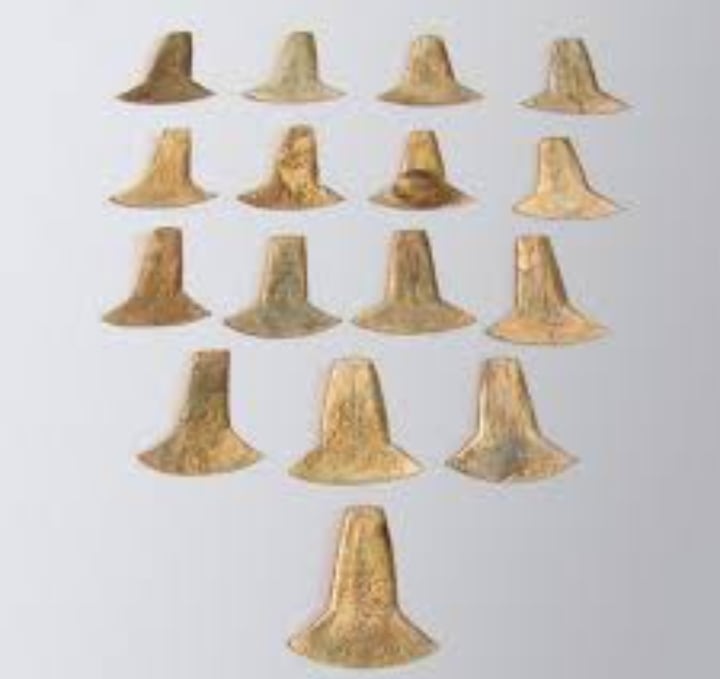
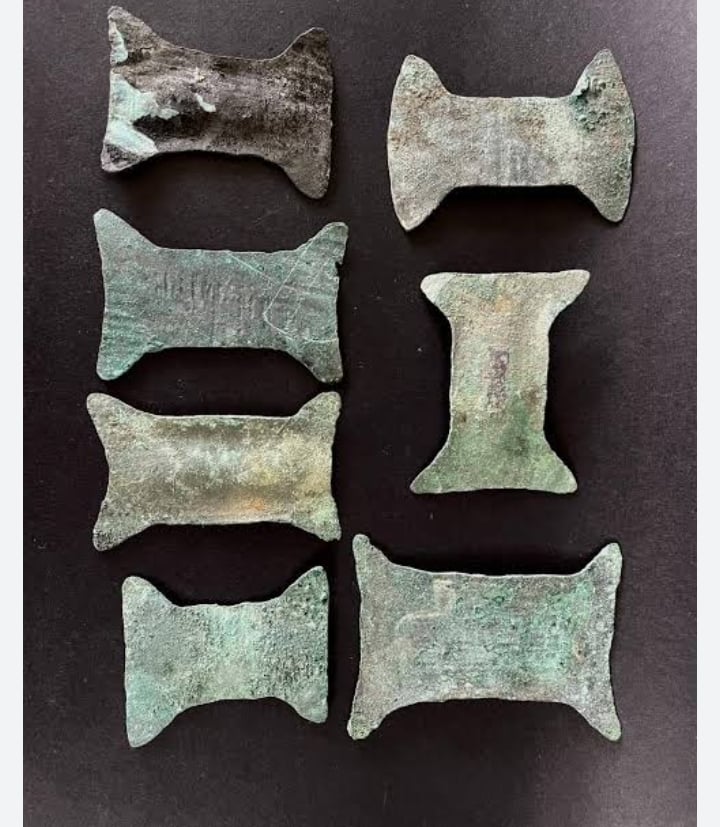
- The Pre-Columbian Era (The "Axe-Monies" and Trade): Long before coins existed, indigenous coastal cultures like the Milagro-Quevedo and Manteño-Huancavilca (approx. 500 AD – 1500 AD) developed highly sophisticated metalworking techniques. They created thin, standardized copper objects known as "Axe-Monies" (Hachas moneda). These copper axes met all the requirements of primitive currency: they were portable, durable, homogeneous, and often found wrapped in bundles. They were traded extensively across international coastal routes.
[Visual Reference: Pre-Columbian Copper Axe-Money (Hachas Moneda)]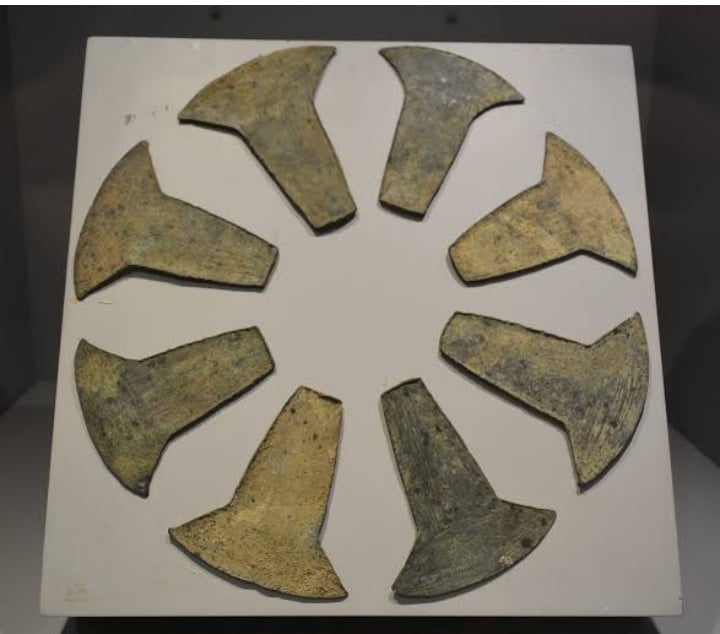
Comments
[Visual Reference: Historic Coinage from the Quito Mint (Casa de Moneda de Quito)]
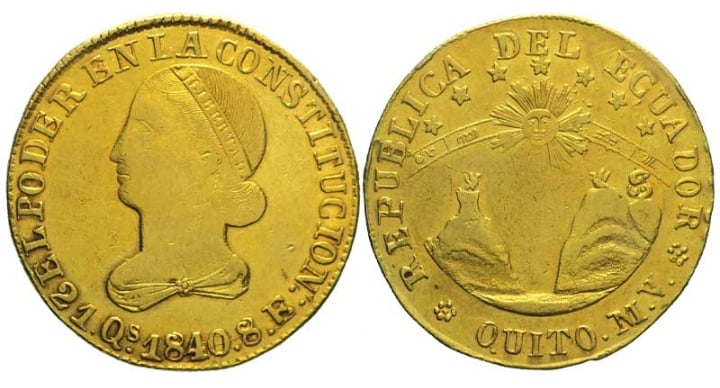
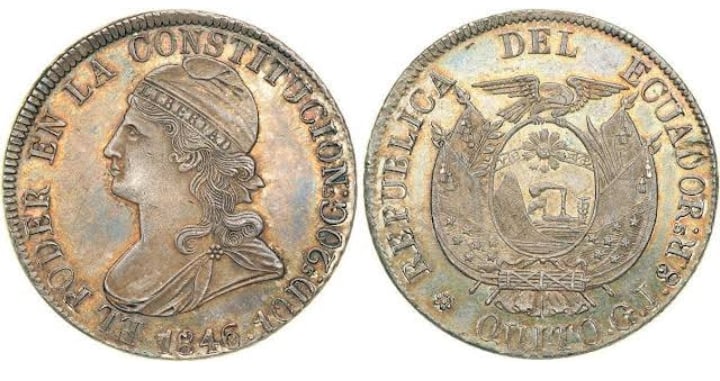
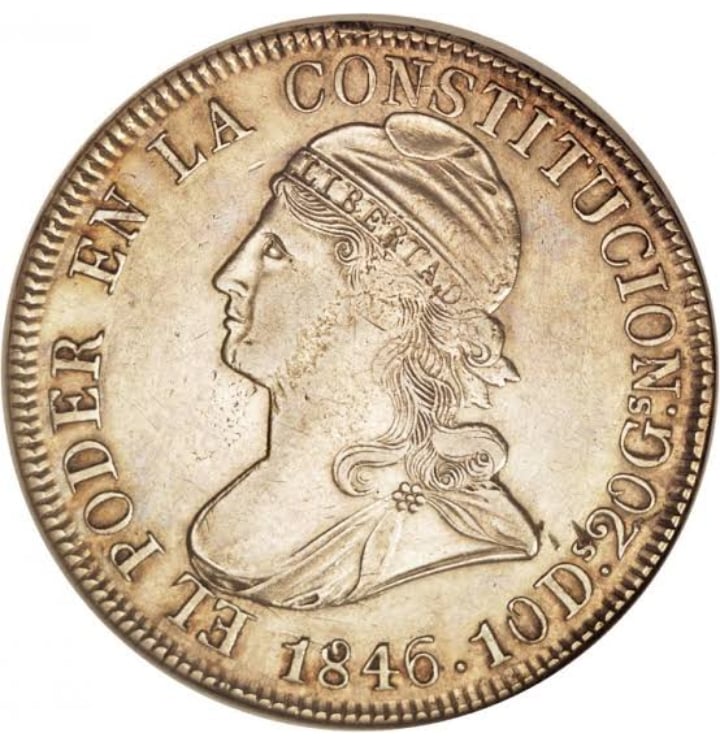
[Visual Reference: The Golden and Silver Eras of the Sucre Currency]
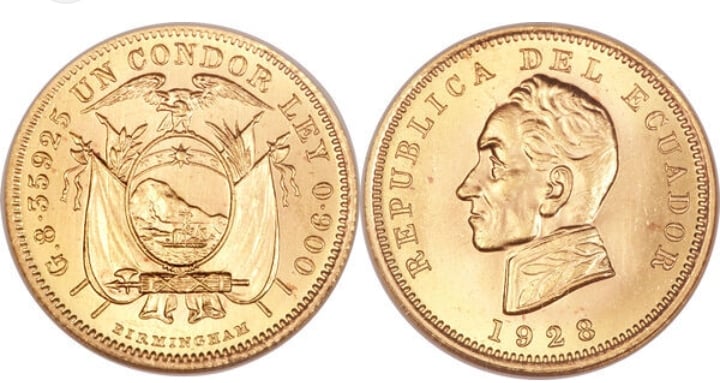
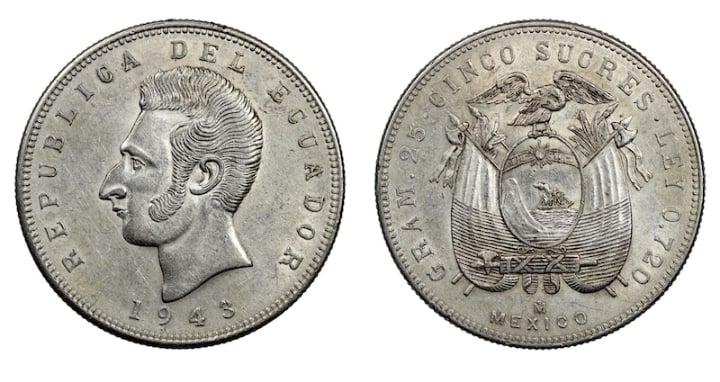
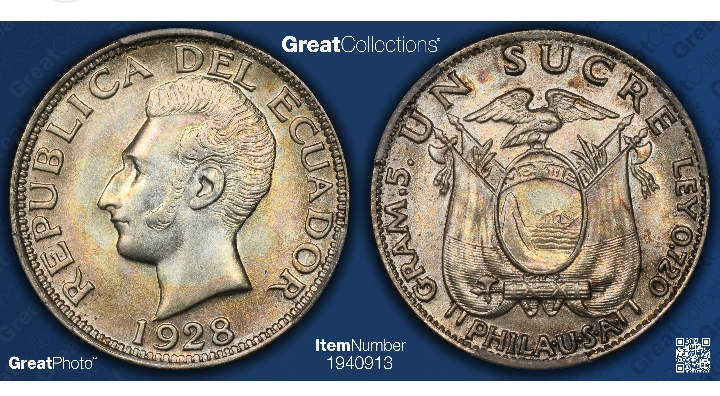
Good start, tell us more. Peace Roy
BST: endeavor1967, synchr, kliao, Outhaul, Donttellthewife, U1Chicago, ajaan, mCarney1173, SurfinHi, MWallace, Sandman70gt, mustanggt, Pittstate03, Lazybones, Walkerguy21D, coinandcurrency242 , thebigeng, Collectorcoins, JimTyler, USMarine6, Elkevvo, Coll3ctor, Yorkshireman, CUKevin, ranshdow, CoinHunter4, bennybravo, Centsearcher, braddick, Windycity, ZoidMeister, mirabela, JJM, RichURich, Bullsitter, jmski52, LukeMarshall, coinsarefun, MichaelDixon, NickPatton, ProfLiz, Twobitcollector,Jesbroken oih82w8, DCW
[Visual Reference: Modern Ecuadorian Fractional Coinage (2000-Present)]
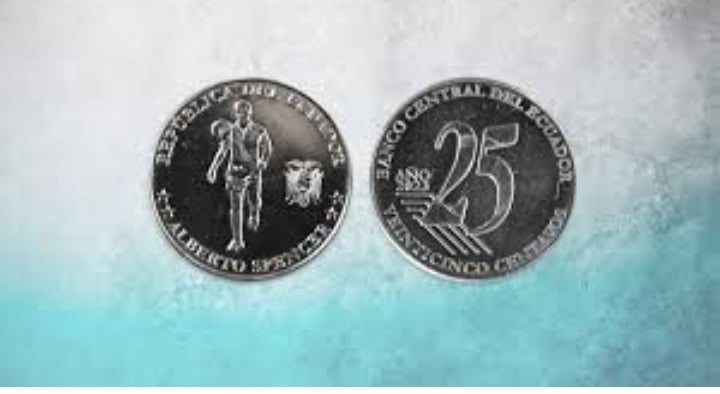
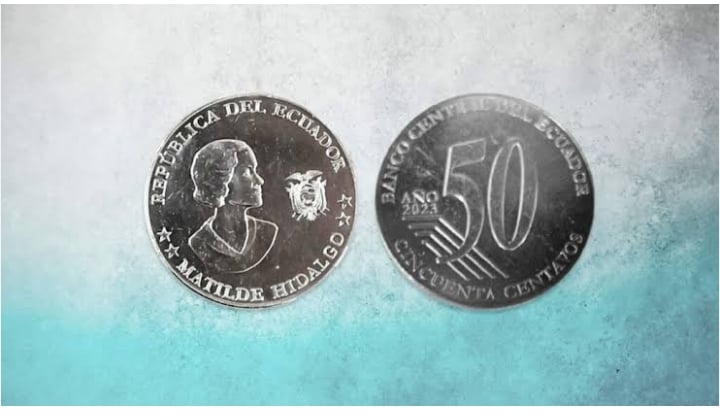
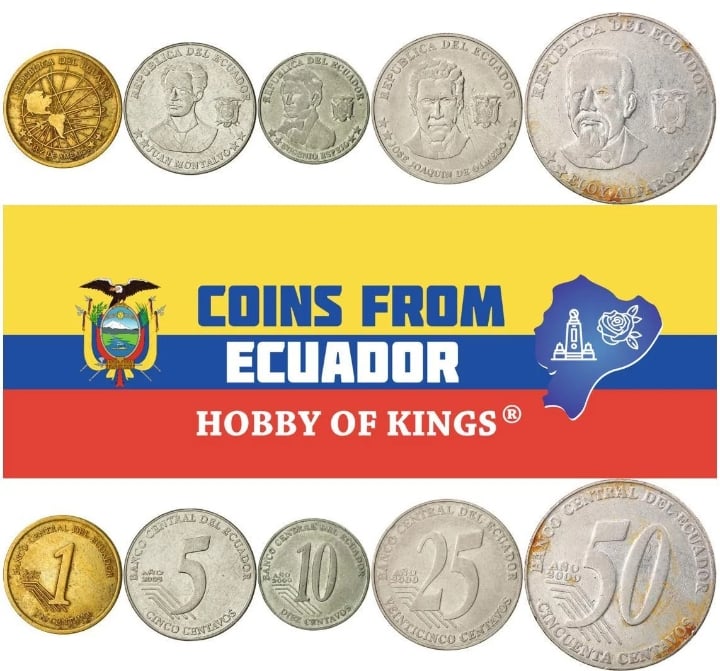
Part 2: The Great Shock of the Year 2000 and the Soul of Daily Commerce
To truly grasp Ecuador’s deep connection with the U.S. Dollar, we must step back in time to the year 2000, a moment of profound national upheaval and cultural shock. This monetary transition was neither smooth nor immediate. For the Ecuadorian people, letting go of the Sucre—a currency woven into their national identity and daily lives for over a century—was a painful process filled with deep uncertainty. In the beginning, when the first shipments of U.S. federal reserve notes and coins landed in the country, the public simply could not fully embrace or adapt to the new system. There was a natural, stubborn resistance born out of decades of habit. Citizens looked with deep distrust at these foreign green paper bills featuring unfamiliar faces, and at these heavy coins they suddenly had to calculate under a drastic fixed exchange rate of twenty-five thousand sucres per dollar. Elderly people and merchants in local open-air markets struggled to adapt, often feeling as though their hard-earned wealth was evaporating or that these new fractional denominations made no sense compared to the millions of sucres they were used to counting every single day. It was a period of massive confusion on the streets, where the fear of the unknown and the mourning of their national currency defined the early stages of dollarization.
Yet, time went on, and the remarkable resilience and adaptability of the Ecuadorian people completely reshaped that initial reality. As decades passed, what started as a desperate change forced by a severe economic crisis transformed into a highly organic and vital daily flow of cash. The U.S. Dollar evolved from being an unwelcome outsider into the very lifeblood of the entire society, seamlessly blending into the rhythm of popular culture. Today, the deep-seated distrust of the year 2000 is nothing but a distant memory. The actual flow of money in Ecuador is experienced raw on the streets, directly and unpretentiously. When a citizen walks through the bustling traditional markets of Quito, Guayaquil, or Cuenca, the dollar is the essential tool that drives daily survival and sustenance. The local population does not view the dollar as a luxury item or a distant collectible; they view it as the practical currency used regularly to secure basic needs, spending it to buy a pound of potatoes, a pound of rice, or the fresh vegetables of the day. It is precisely in this small-scale commerce, within the quick and humble exchanges of the neighborhood corner store, where the U.S. Dollar found its true purpose in South America, proving that a currency initially met with fear can become the most deeply human and practical driving force of an entire nation.
Part 3: The Real Market Movement – Virtual Auctions, Local Trade, and the Streets of Guayaquil
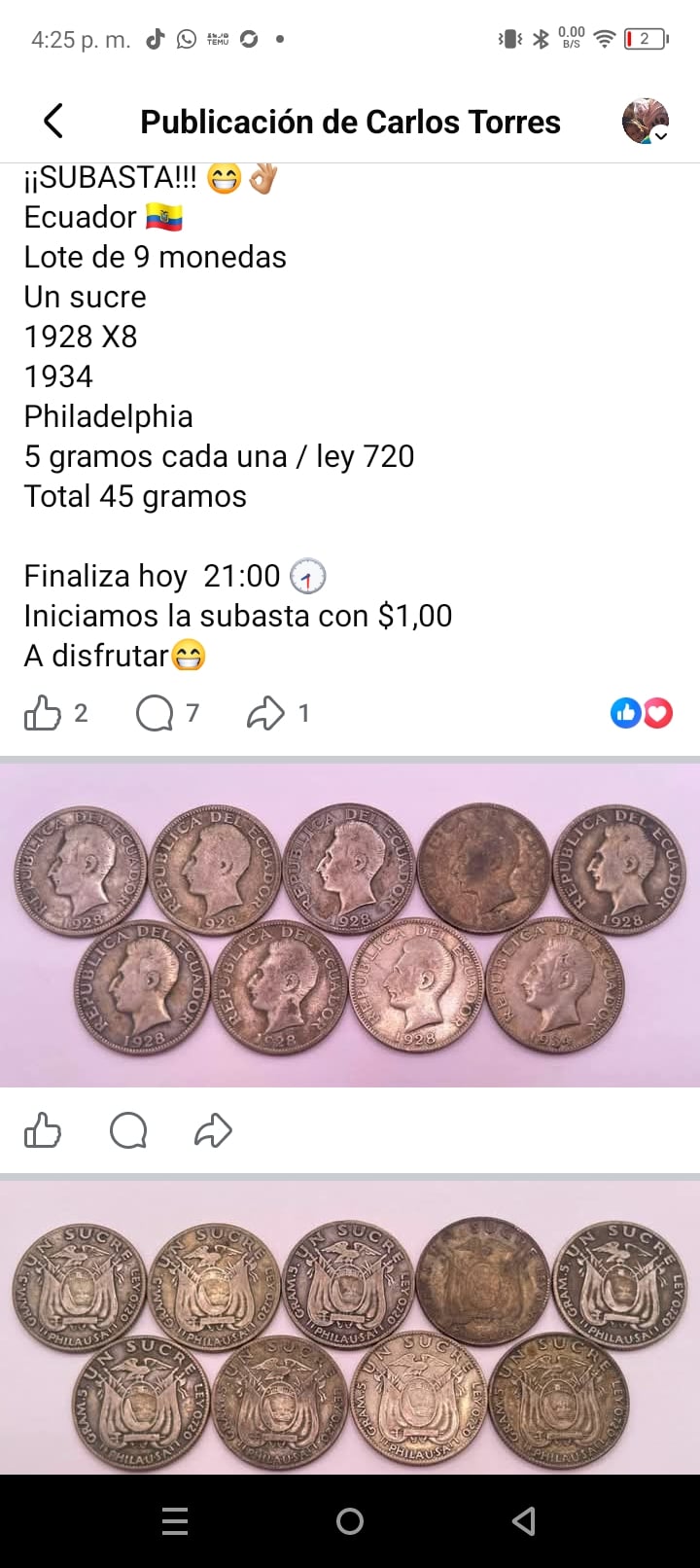
Moving past the historical narrative, it is time to pull back the curtain on where true numismatic adrenaline takes over in modern-day Ecuador. For an American collector accustomed to the corporate formality of platforms like Heritage Auctions or eBay, the high-end Ecuadorian marketplace will look like an exotic, underground circuit. Here, major historical masterpieces—ranging from scarce 19th-century Quito Mint gold ounces and colonial silver 8 Reales to coveted vintage silver Sucres—do not sit inside the velvet trays of prestigious brick-and-mortar galleries. Instead, the real commercial engine of the country moves at a blistering pace through weekly auctions organized directly on Facebook walls, livestream broadcasts, fixed-price direct sales, and private WhatsApp groups. This is the actual battleground for historical coinage, a digital ecosystem that moves thousands of dollars every week based purely on split-second timing, real-time bidding, and a dealer's word-of-mouth reputation within the community.
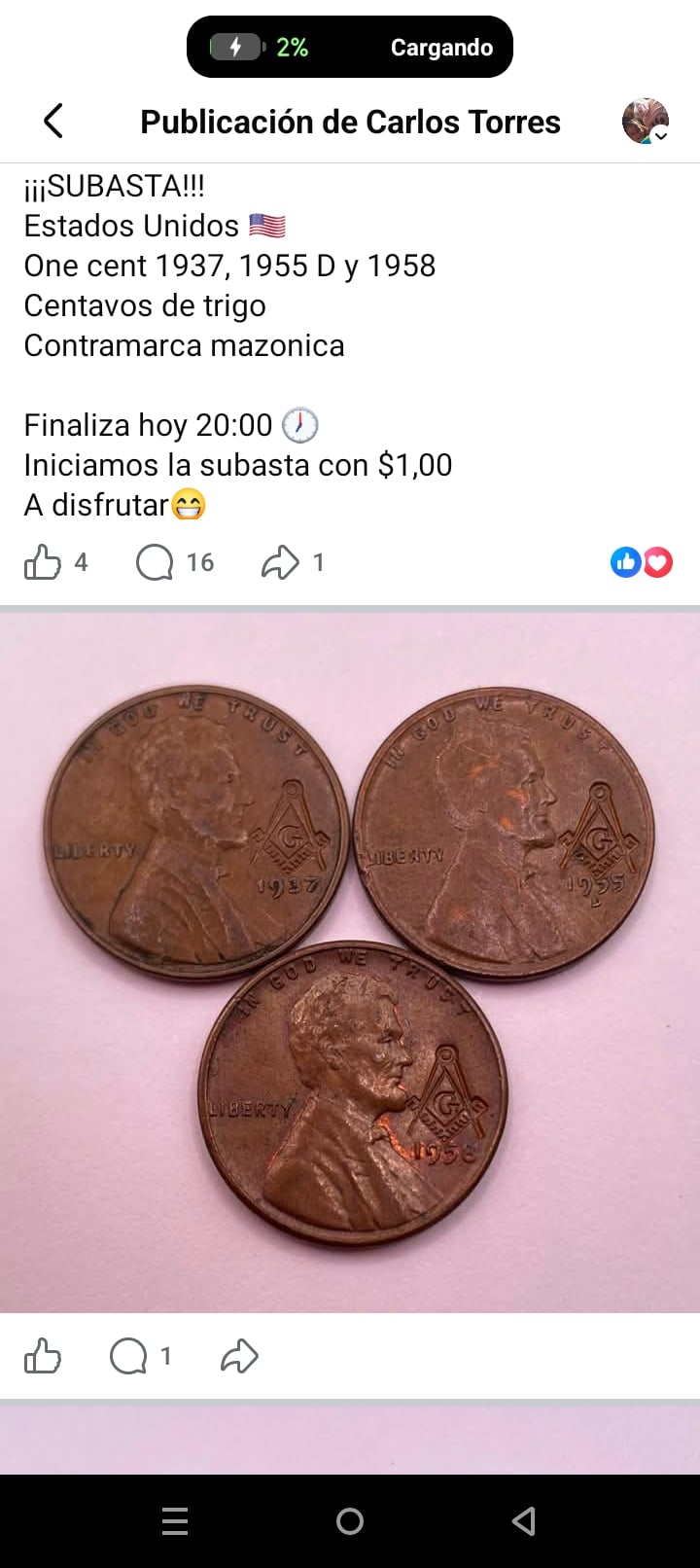
The market splits its energy between the high stakes of comment-section auctions and rapid-fire direct sales on Facebook Marketplace, where a collector has to be incredibly fast to claim a piece before someone else snatches it away. For a foreign observer, the most compelling aspect is that a massive portion of the items sold on these local platforms are actually iconic pieces of United States coinage. Due to dollarization and deep historical ties, it is incredibly common to run into silver Morgan Dollars, Peace Dollars, vintage Lincoln cents, and classic Washington quarters right in the local market. The vast majority of this U.S. material is traded completely raw, having been held for generations by Ecuadorian families. However, a very specific trend has emerged recently: the rise of self-proclaimed local grading companies within the country. These local entities replicate the look of U.S. slabs and encapsulate coins, promising authenticity and high grades, yet they completely lack the technical rigor, computerized databases, and international backing held by giants like PCGS or NGC. For the average local buyer, these domestic slabs often lead to a false sense of security and inflated prices. But for a trained eye, this chaotic environment is an absolute paradise. An advanced collector knows how to look past the local label, evaluates the raw coin or the U.S. silver through the plastic for what it truly is, and seizes the opportunity to cherrypick sleeping historical treasures at raw market prices, ready to ship them north to secure legitimate, top-tier third-party grading in the United States.
To see how this trade operates beyond the screen, you have to experience live numismatics under the heavy tropical heat of the coast. I headed straight into the bustling downtown center of Guayaquil, the commercial engine of Ecuador, to sit down for an in-depth conversation with a close friend and seasoned numismatic dealer who runs his own coin and banknote shop in the heart of the city. He faces the reality of this heavily informal market every single day, dealing with everyday citizens bringing in boxes filled with old family keepsakes, and local hobbyists hunting desperately for raw key dates. When I asked him what locals chase the most in his shop, his answer was definitive: local collectors are deeply obsessed with vintage high-denomination silver Sucres, especially the 1943 and 1944 5-Sucre pieces struck in the U.S., alongside rare colonial ounces. However, what truly sparks excitement in his daily trade is the unexpected flow of vintage U.S. material walking through his doors. Being a fully dollarized economy, it is incredibly common for average citizens in need of quick cash to bring in old American silver that families kept for generations as good luck charms—such as Morgan Dollars, Peace Dollars, and large Eisenhower Dollars. My friend emphasized that the biggest hurdle in Guayaquil is the lack of third-party grading culture; ninety-five percent of local trades happen with raw coins. This forces dealers to rely strictly on their eyes, touch, and digital scales to protect themselves against sophisticated counterfeits pouring in across the borders—a constant risk in a marketplace where official PCGS slabs are still viewed by many as a distant luxury, mostly reserved for export.
To back all of this up, I am attaching some live screenshots of typical daily auctions. To be completely honest, while local auctions run literally every single day of the week with massive crowd participation, finding an absolute masterpiece is a test of patience. Most daily listings consist of common collectibles, modern sets, or raw U.S. coins like Morgan Dollars being offered directly via smartphone chats. Yet, that is the true beauty of cherrypicking down here—you have to dig through mountains of everyday material to find that one spectacular sleeper.
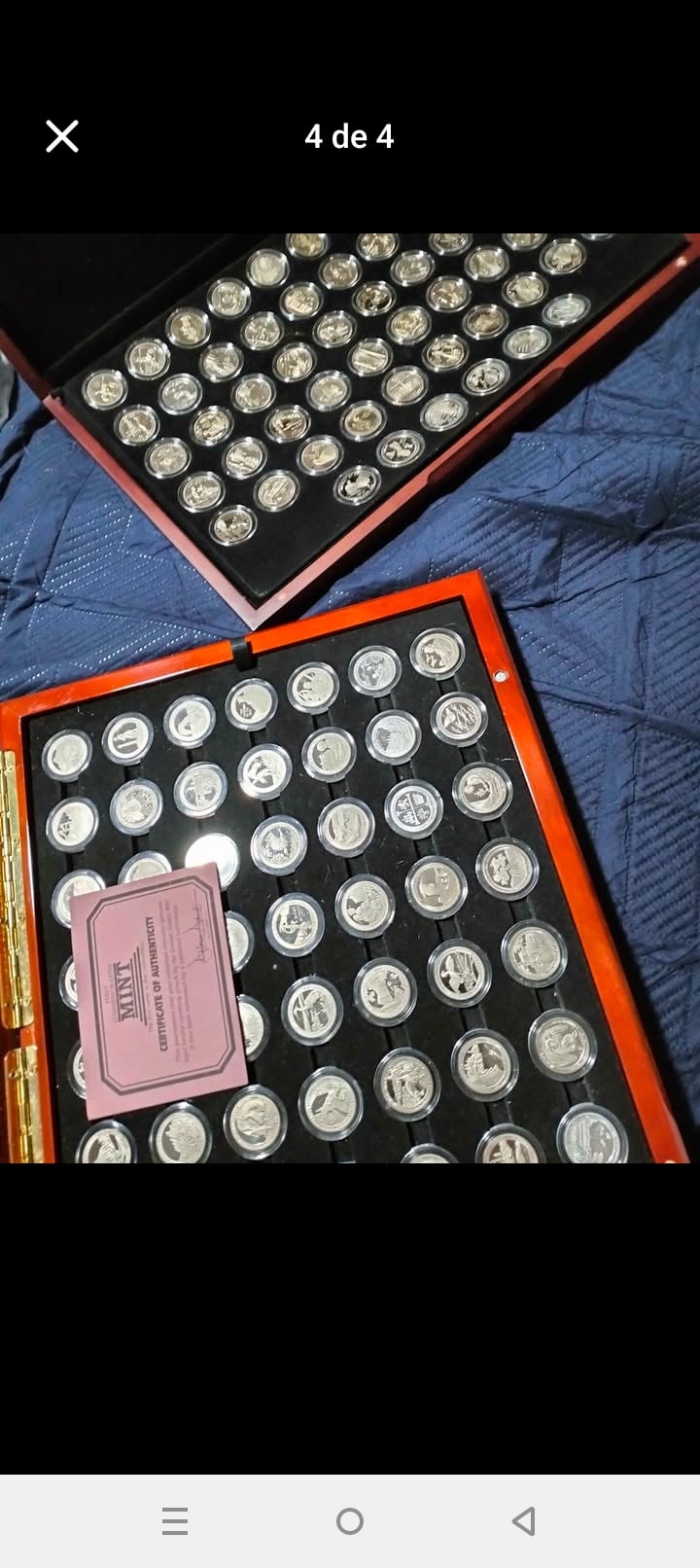
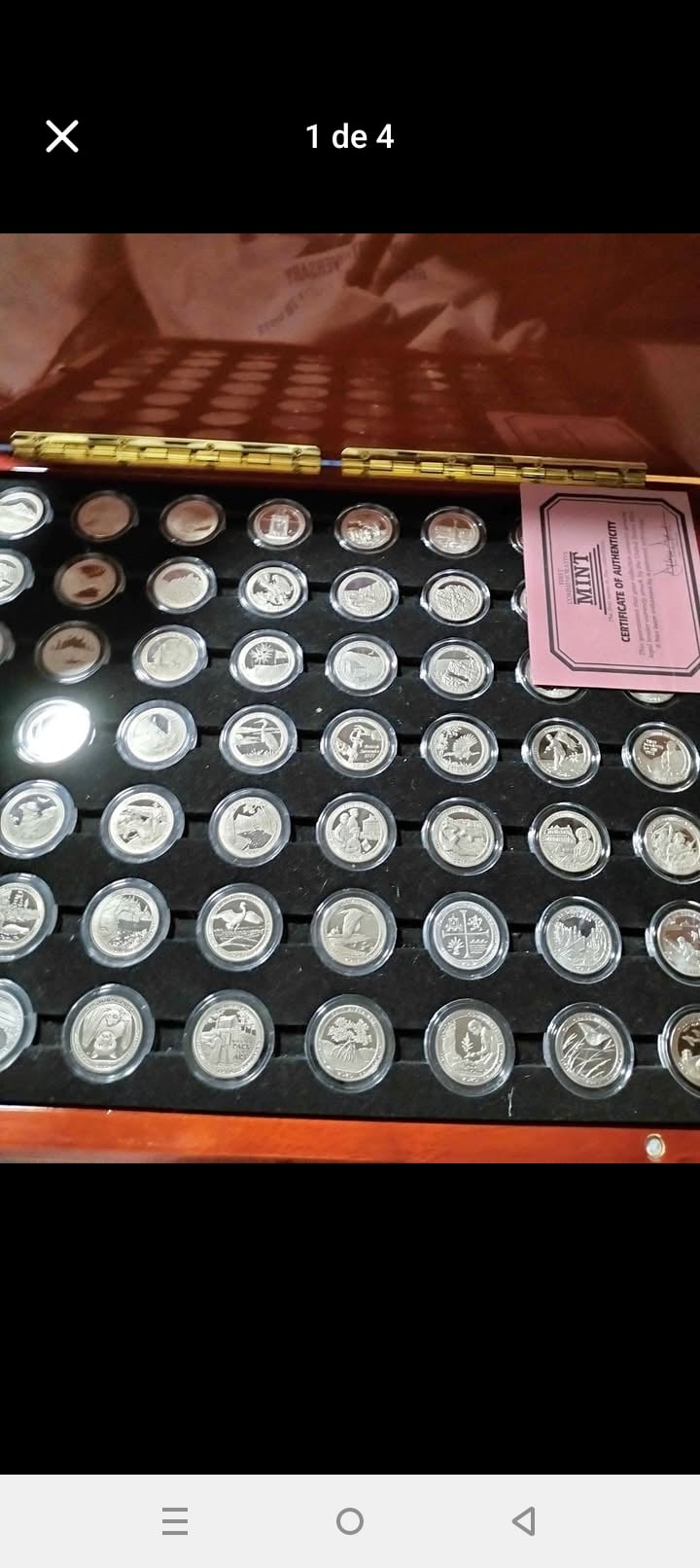
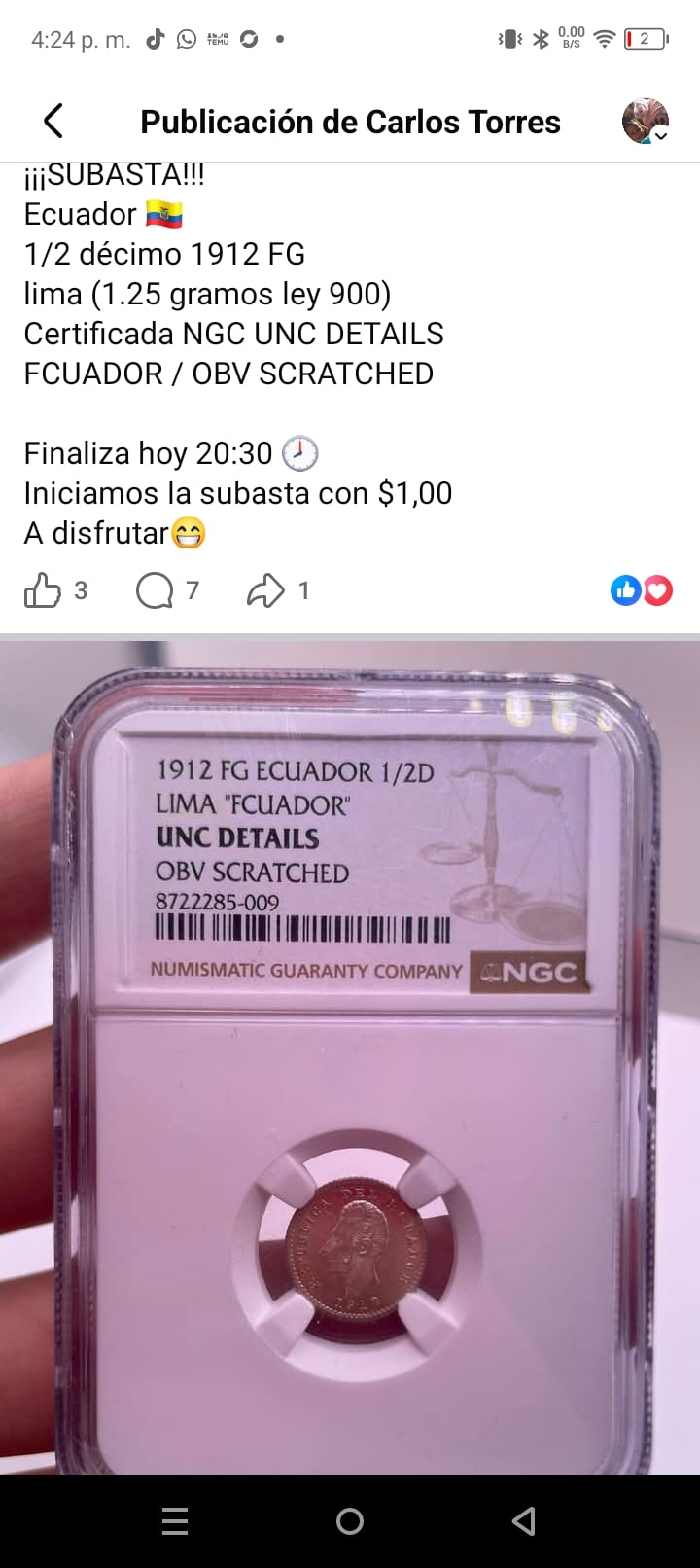
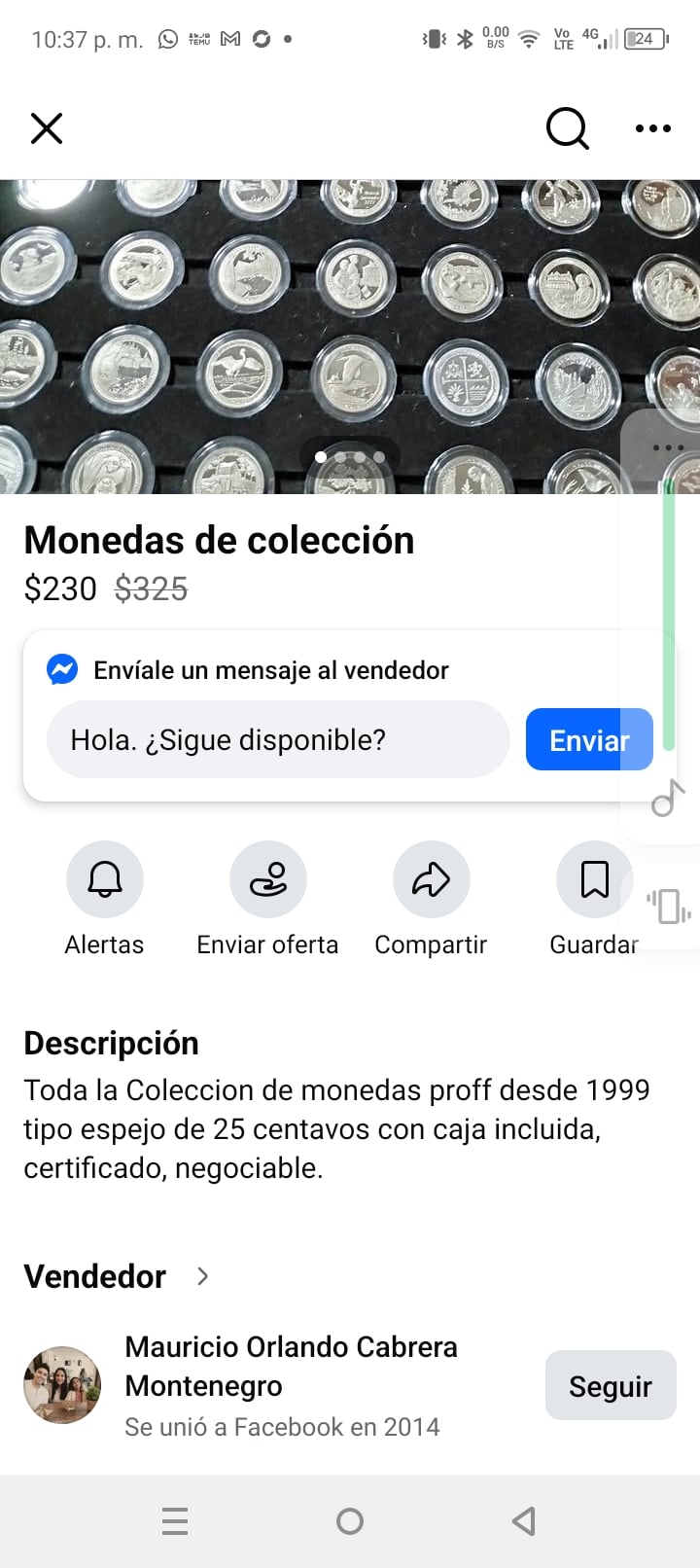
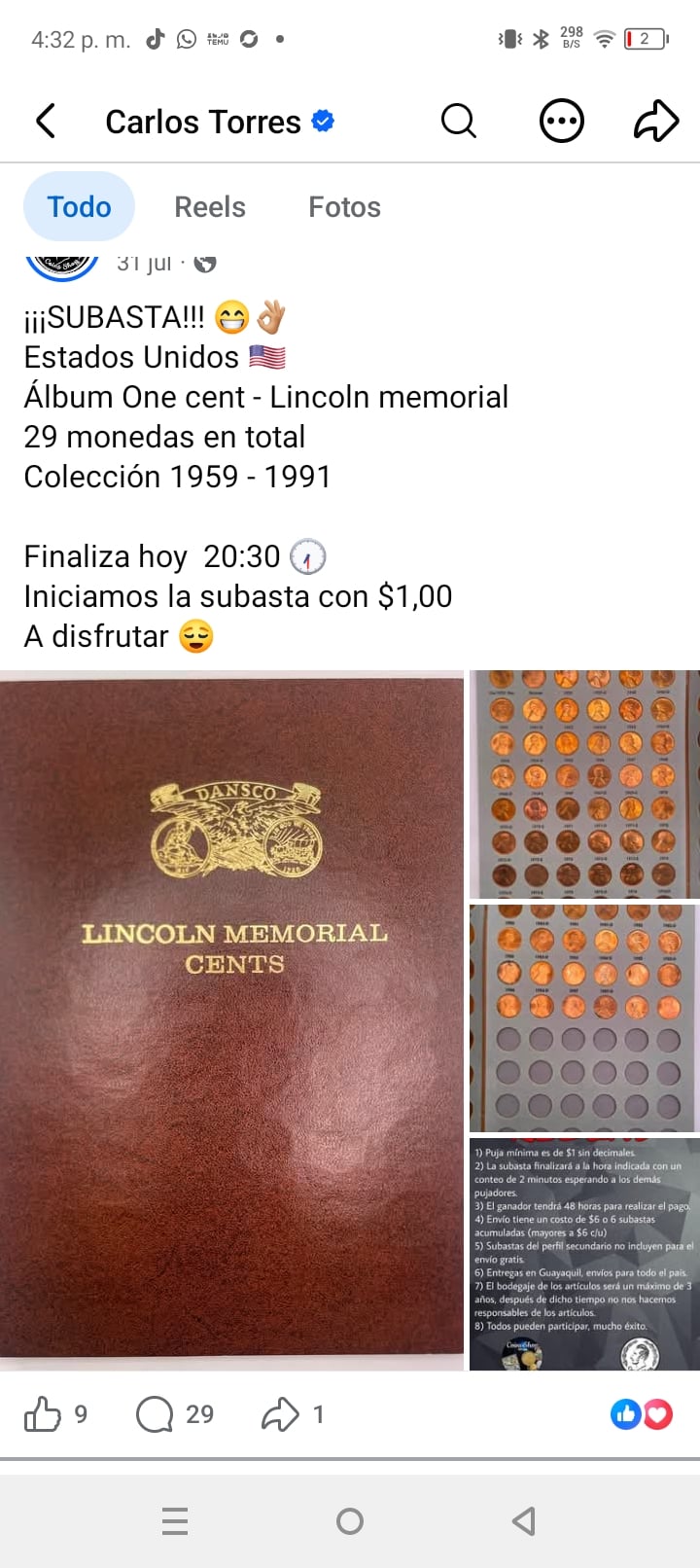
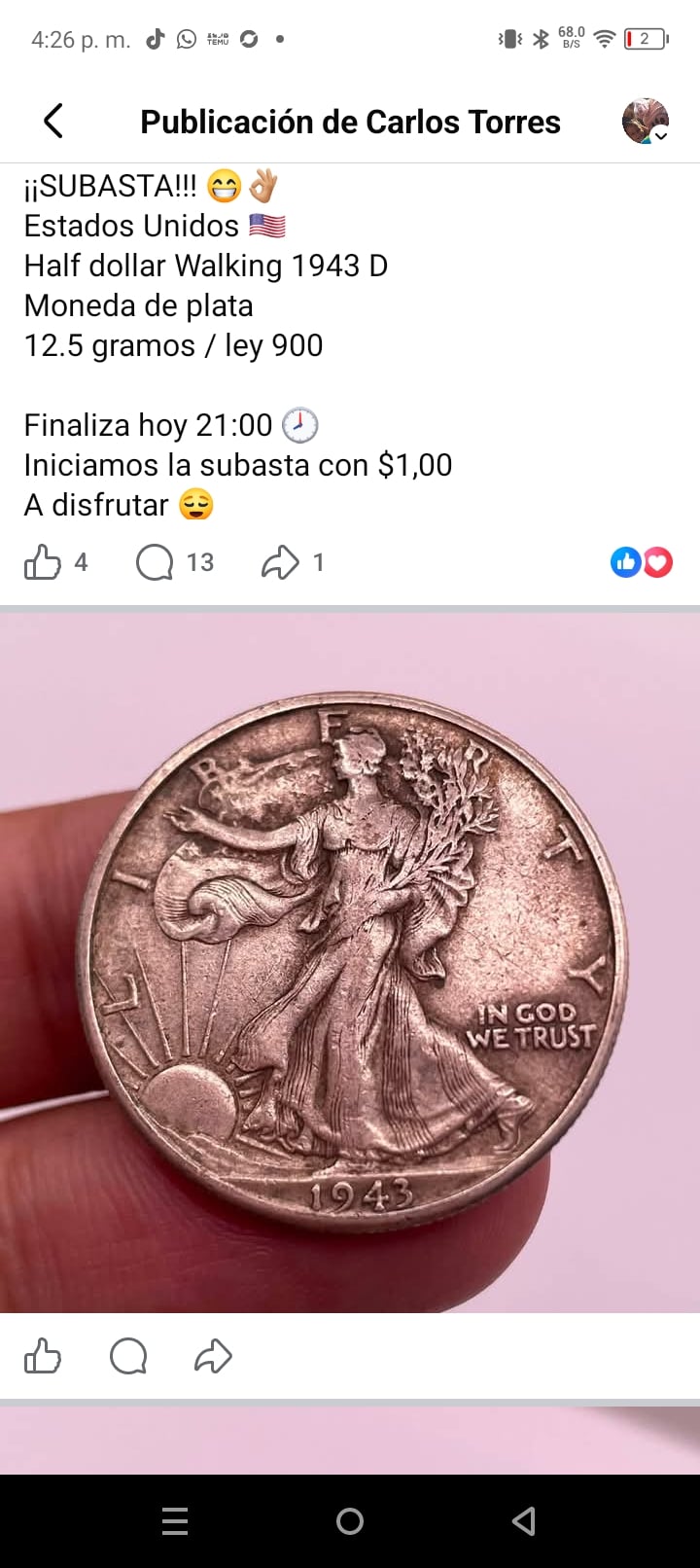
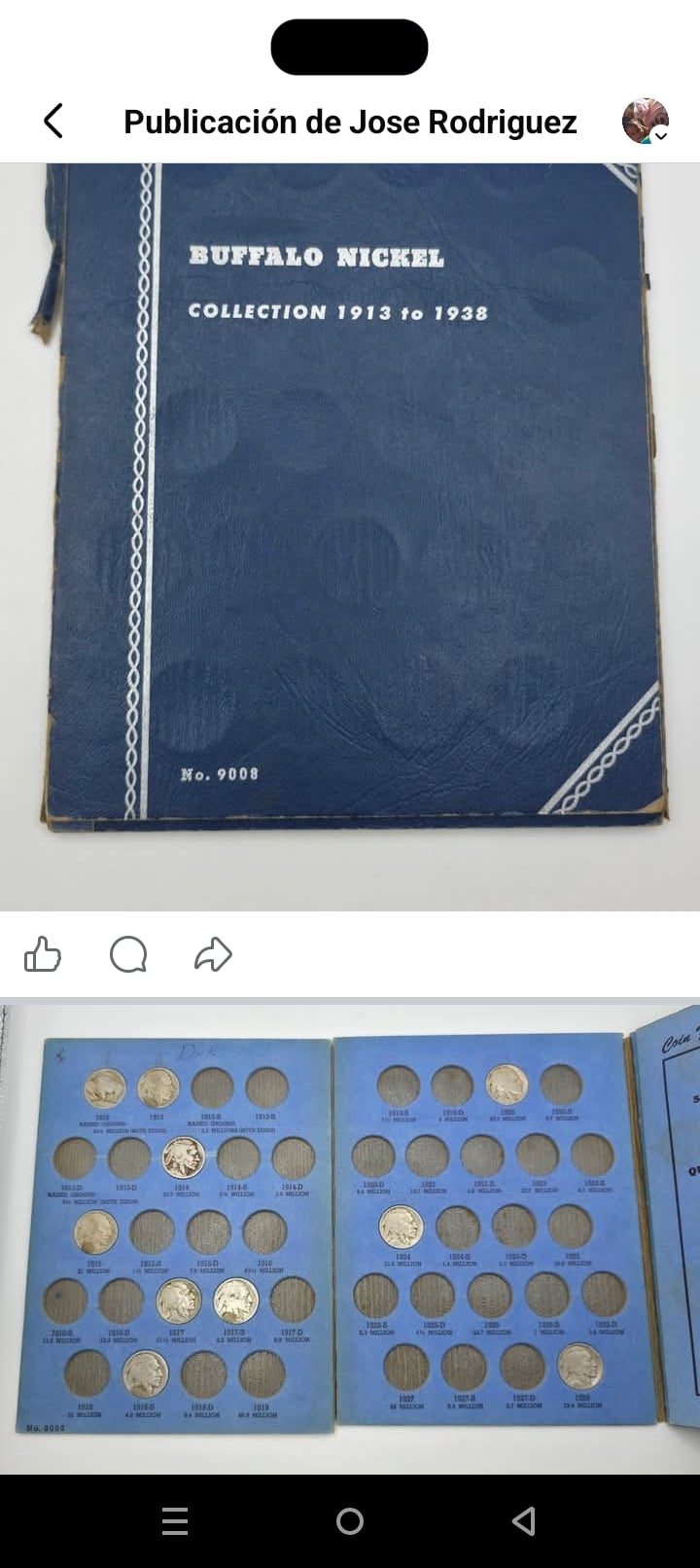
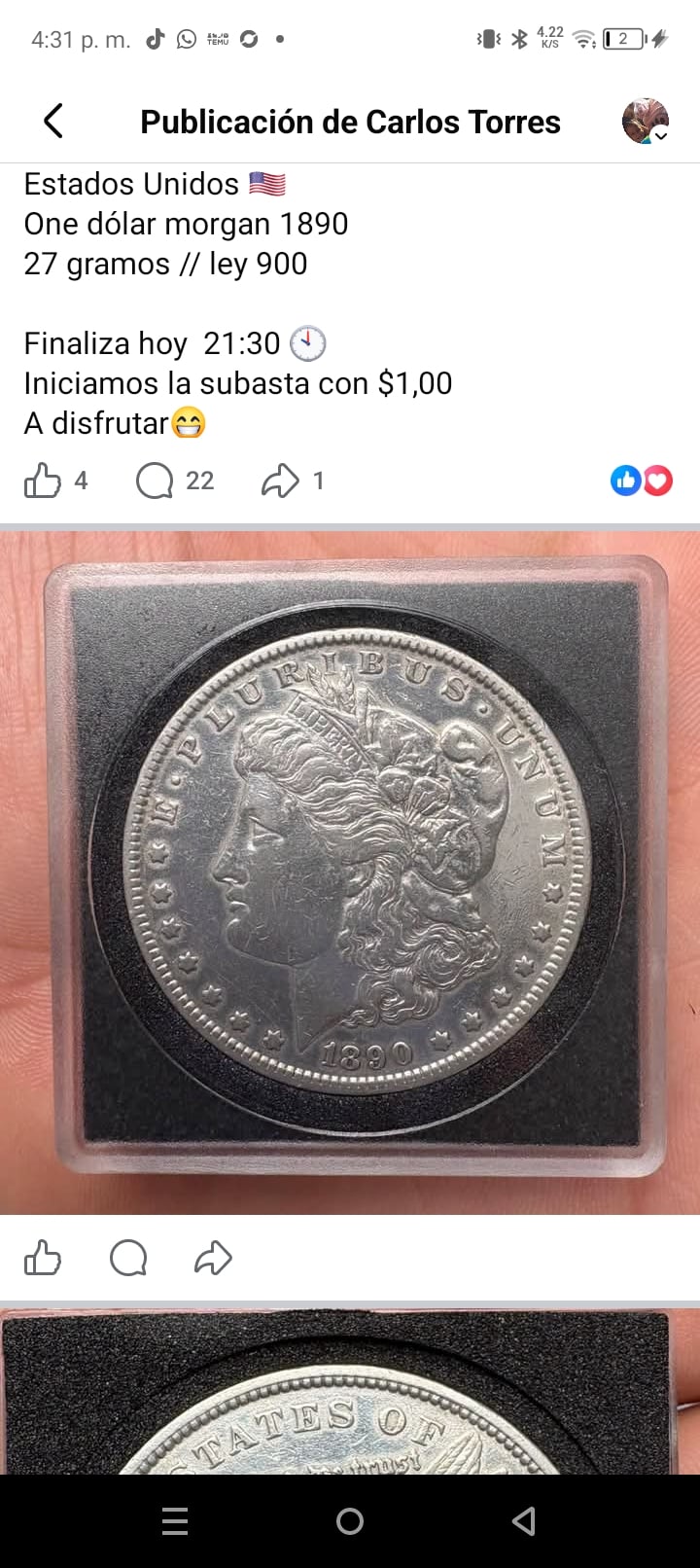
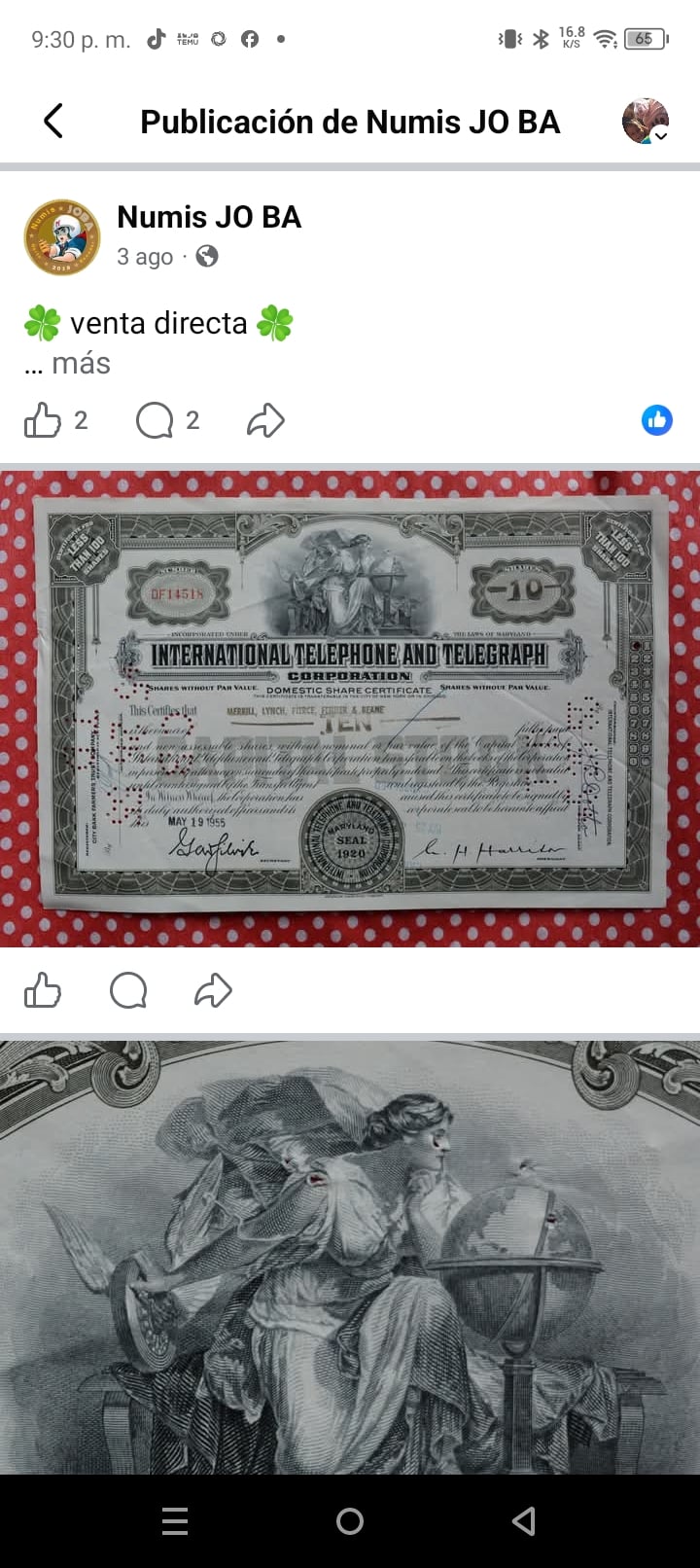
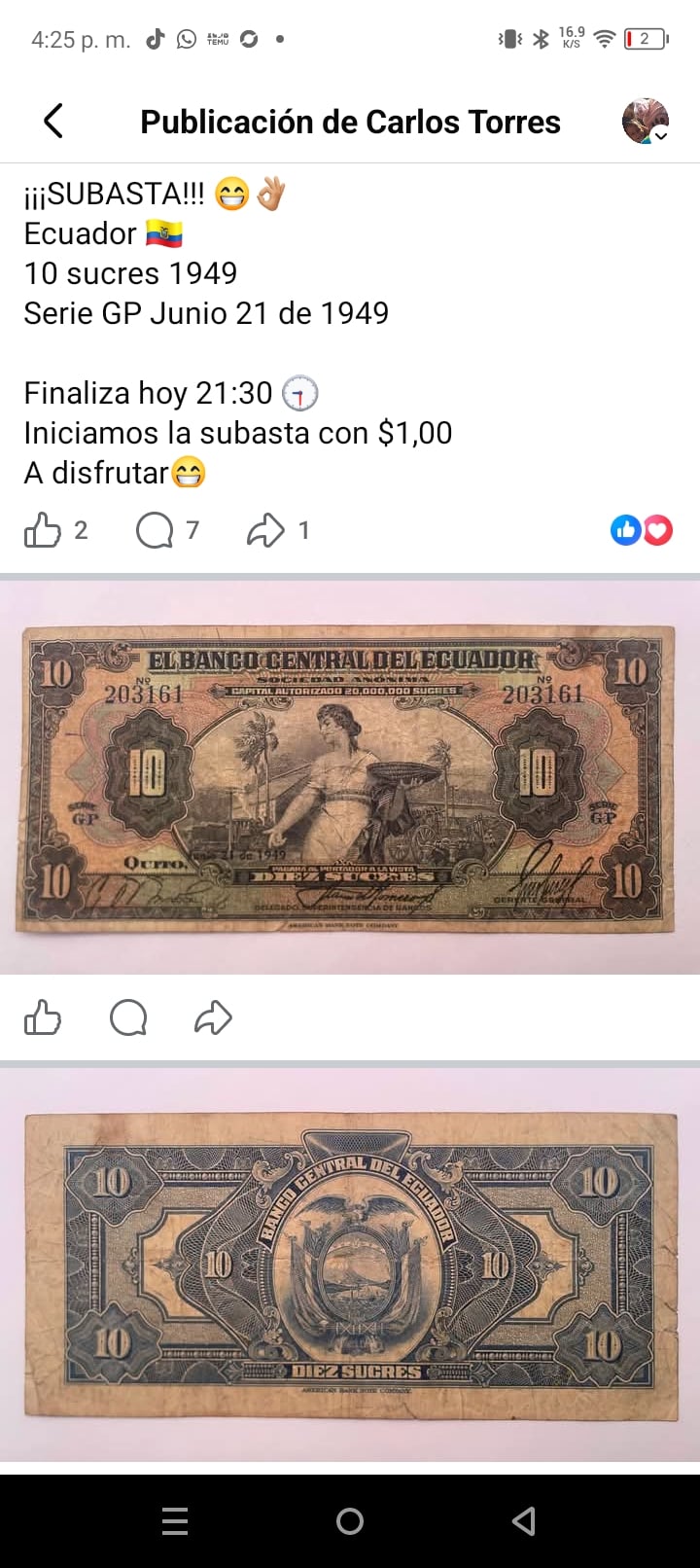
Well here's a little surprise from the coin counting machine at the bank. Two Ecuador 5 centavo coins.
I learned online that they are made of stainless steel and struck by the Royal Mint in the UK.
The coins are same diameter and thickness as a US nickel.
So, here are my questions for @ricarf2386 :
Are there vending machines and coin counting machines in Ecuador (I assume there are)?
Do these machines accept both the steel Ecuador coins and the copper-nickel alloy or clad US coins?
Do you ever see Canadian coins there? We see a few here in the US but they don't get very far since the machines do not accept steel coins
Thanks for your insights on this.
That's a good question and I'm also curious how the machines work there. Here in the U.S. my kids always check the coin machine reject bin. After that they always search for whatever may be magnetically stuck inside the top part of the machine that can be wiggled out with small fingers. I haven't seen an Ecuadorian coin yet, but they have found Canadian, Euro 2 cents and Bahamian coinage.
@ricarf2386 Thank you! Cool post!
I’ve only spent about 24 hours in Quito on my to the Galapagos, but I loved it and want to return. My lungs weren’t a fan though. I’m a sea level human.
Beautiful city and country, and the islands are life changing. It was so beautiful I completely forgot to go find some centavos to bring home. The boobies were disappointed in me.
Newbie collector of type and circulated Peace dollars, photographer of places and animals, player of instruments and builder of amplifiers, espresso industry professional, and a person distracted by shiny objects.
CACG Registry
MyCollect Registry
Hello JBK, thank you for your comments! I'm glad you found my thread on Ecuadorian numismatics interesting. To answer your questions based on how things work down here, here is a breakdown of our automated infrastructure and how our coin mechanisms operate:
Vending and Coin Counting Infrastructure in Ecuador
Yes, we have a fully modernized automated retail network. Electronic vending machines operate seamlessly nationwide in universities, malls, and offices. Also, our Central Bank (BCE) deploys public automated kiosks called "Centavomáticos" to exchange loose change. High-speed commercial sorters and counters are standard infrastructure across banks and major supermarkets here to handle daily cash flows.
Dual-Alloy Acceptance (U.S. CuNi vs. Ecuador Stainless Steel)
This is the most interesting technical part. Older coin mechanisms (like many traditional ones in the U.S.) rely on strict magnetic permeability thresholds, which inherently reject magnetic materials like steel. However, the standard electronic validators used in Ecuador (modern CPI/MEI, NRI, or Alberici units) utilize multi-frequency electromagnetic coils combined with optical sensors.
When our Central Bank introduced this new 2024 stainless steel series minted by The Royal Mint, the machines didn't need physical upgrades. Technicians simply updated the firmware and internal database of the validators.
Now, the machines are programmed with two distinct electronic acceptance windows for the 5-cent slot:
Since both coins share the exact same physical dimensions (21.21 mm diameter), they pass through the mechanical gates flawlessly, and the electronic sensor dynamically identifies and accepts the metallic composition in milliseconds.
We virtually never see Canadian coins here in general circulation. Unlike the U.S., where Canadian multi-ply plated steel coins enter circulation due to geographic proximity and high tourism, Ecuador is completely isolated from Canadian currency flows. If a Canadian steel coin ever ends up in someone's pocket and is fed into a machine, the validator rejects it instantly because its specific electromagnetic signature is not programmed into our local database, treating it simply as foreign debris or a token.
On a personal note, regarding Canadian coins, I actually do have Canadian pieces and coins from many different countries in my private collection. My father worked at the international airport here many years ago, which allowed him to put together a very diverse accumulation of global currencies over the decades!
Hope this clears up how our system handles both types of coins! Let me know if you have more questions about this new series.
Thanks! That's some great information.
Ah, interesante. Muy, muy interesante.
What a cool story about your kids checking the rejection slots! That's a classic way to find interesting foreign pieces.
Actually, since I have a contact in the United States, I'm planning in the near future to send some of these new Ecuadorian coins over there. If possible, I would love to send some as a gift for your kids so they can add them to their collections!
Thank you for your kind words, Regla 56!
Quito's altitude can definitely be a challenge if you are used to sea level, but I'm glad you loved it! Ecuador is a small country, but it is incredibly beautiful because we have four unique and gorgeous regions: the Coast, the Highlands (Sierra), the Amazon (Oriente), and of course, our Insular Region, the Galápagos Islands, which is always the absolute highlight! That blue-footed booby photo you took is stunning.
People here always try to be as kind and welcoming as possible to our visitors. Don't worry about missing out on the coins during your trip. As I told our other colleague, God willing, in a future not too far away, I plan to send some of these new Ecuadorian coins to the U.S. so you can add them to your collection as that missing souvenir!
By the way, as a little preview for everyone, I am already preparing Part 4 of this Ecuadorian numismatic series! In the next post, I will be sharing a story about a friend of mine—a street coin dealer who sets up a blanket display right on the sidewalk. He sells old world coins and vintage banknotes, but his main focus is actually U.S. numismatics. Stay tuned, because it shows a very unique and grassroots side of the coin hobby here!
Hello everyone! I woke up this morning to some amazing news—I have been promoted to "Collector" here on this prestigious forum! Honestly, it fills me with so much emotion and true happiness. Having joined just two months ago, seeing your support and engagement with the numismatic history of Ecuador means the world to me. Thank you so much!
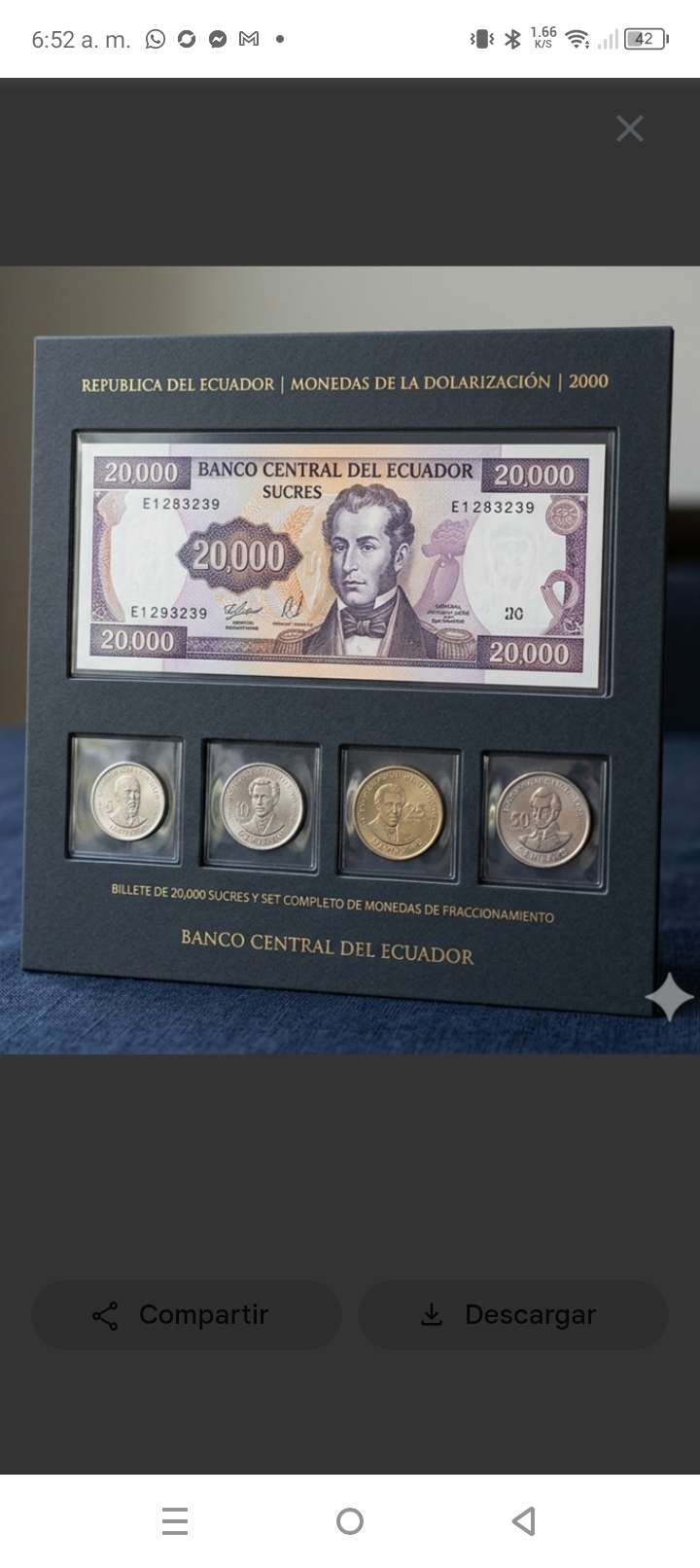
Seeing your genuine interest in these pieces, especially with the recent comments from @JBK and @Rule556, got my head spinning last night. I’ve been working on a potential project to help you guys nurture and expand your collections with a true piece of monetary history. My idea is to produce a small, limited run of a premium, custom-designed Ecuadorian Dollarization Set.
The concept is simple and elegant:
The Logistics: To ensure safe and fast delivery without international hassle, I would ship a single bulk batch of only 40–50 sets to my contact in New York. From there, she will distribute them domestically via USPS directly to your door.
Let's do a quick vote in the comments below! Please reply with:
🟢 GREEN DOT: If you are in favor and definitely want to introduce this set into your collection.
🔴 RED DOT: If you are not interested in this product.
Also, if you find this project interesting, please share the link to this thread in other areas of the PCGS Boards so more world coin collectors can join the discussion! Thank you all for your amazing support!
Dear Forum / Hi Richard (@ricarf2386),
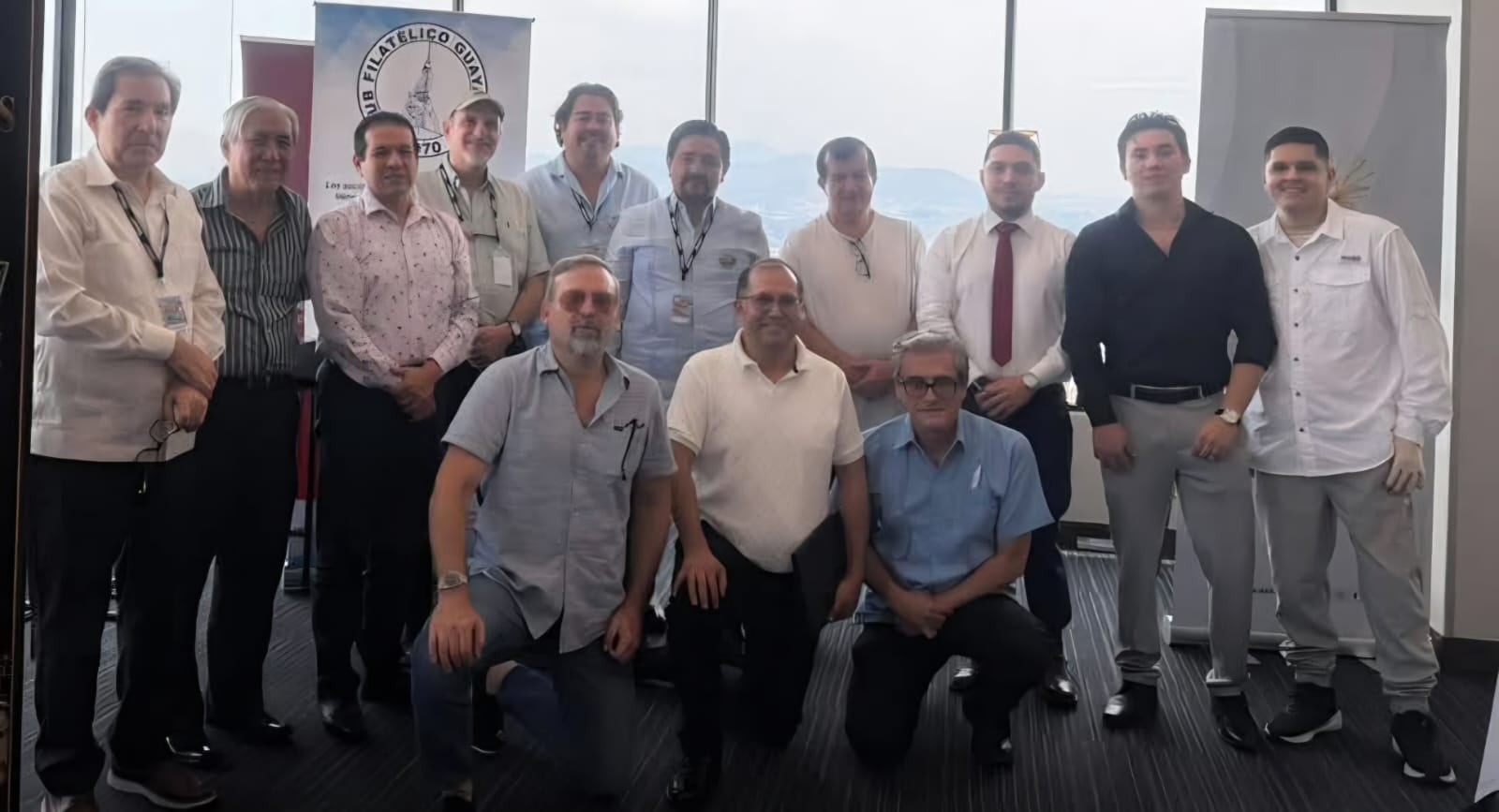
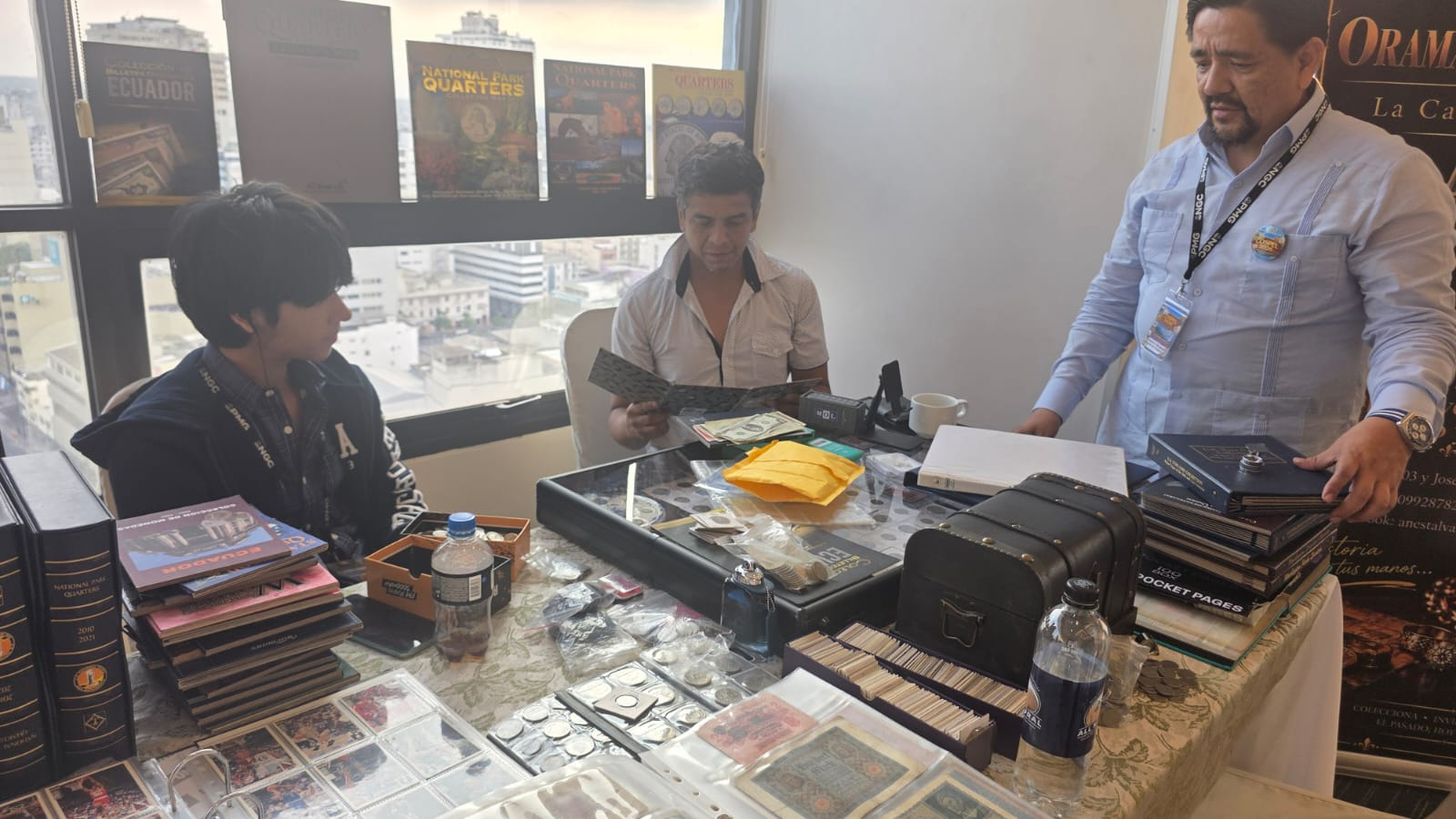
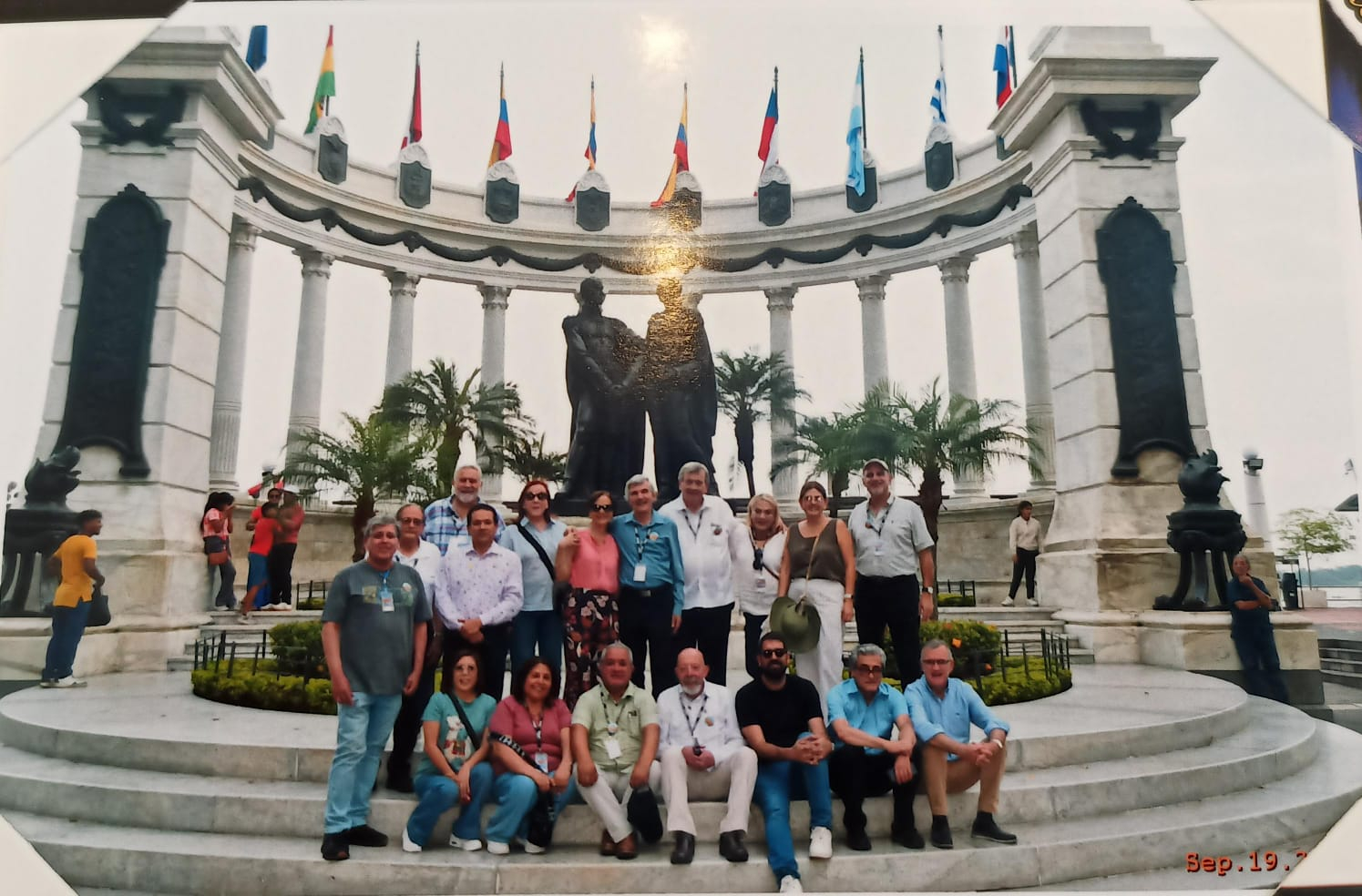
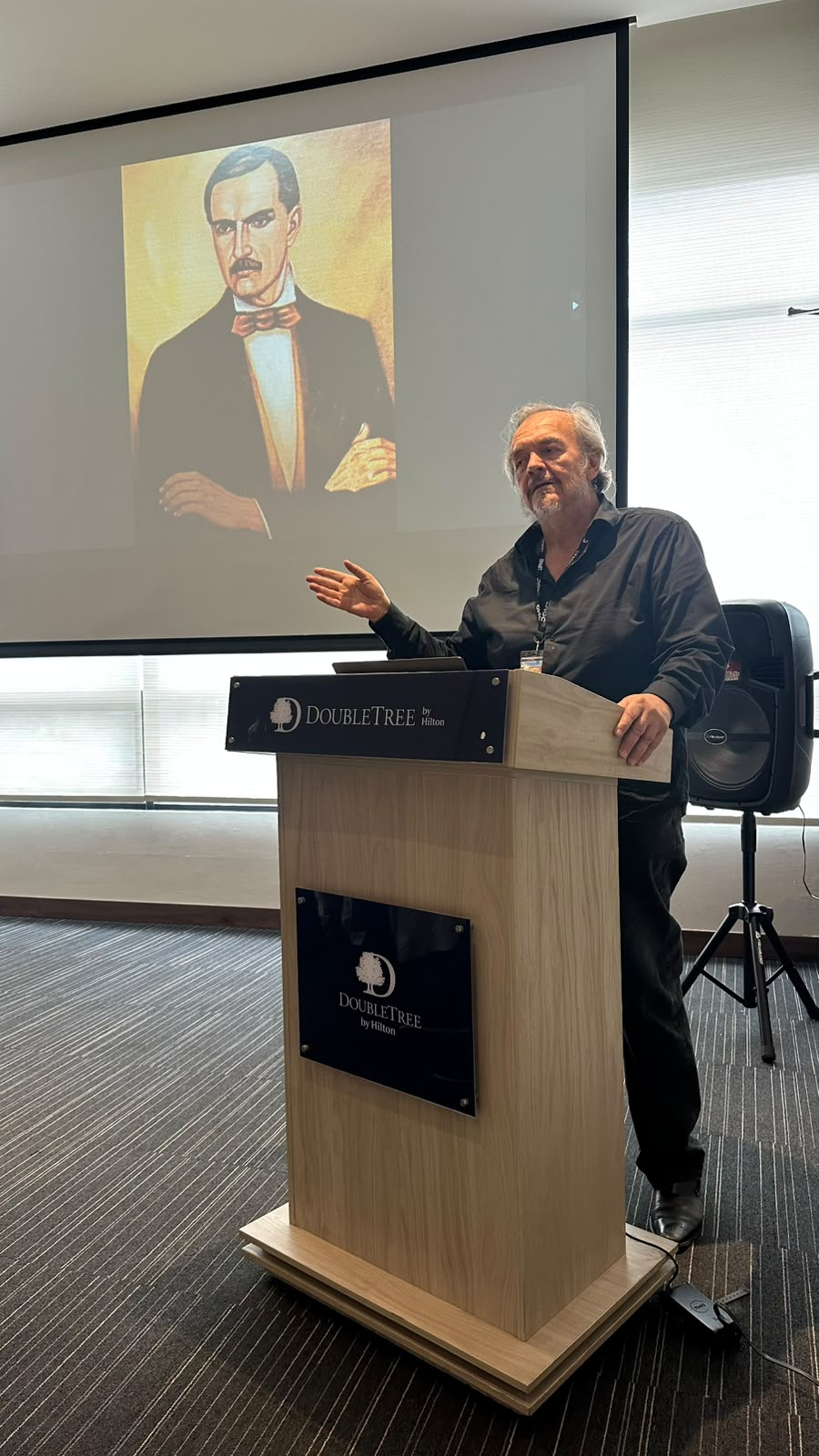
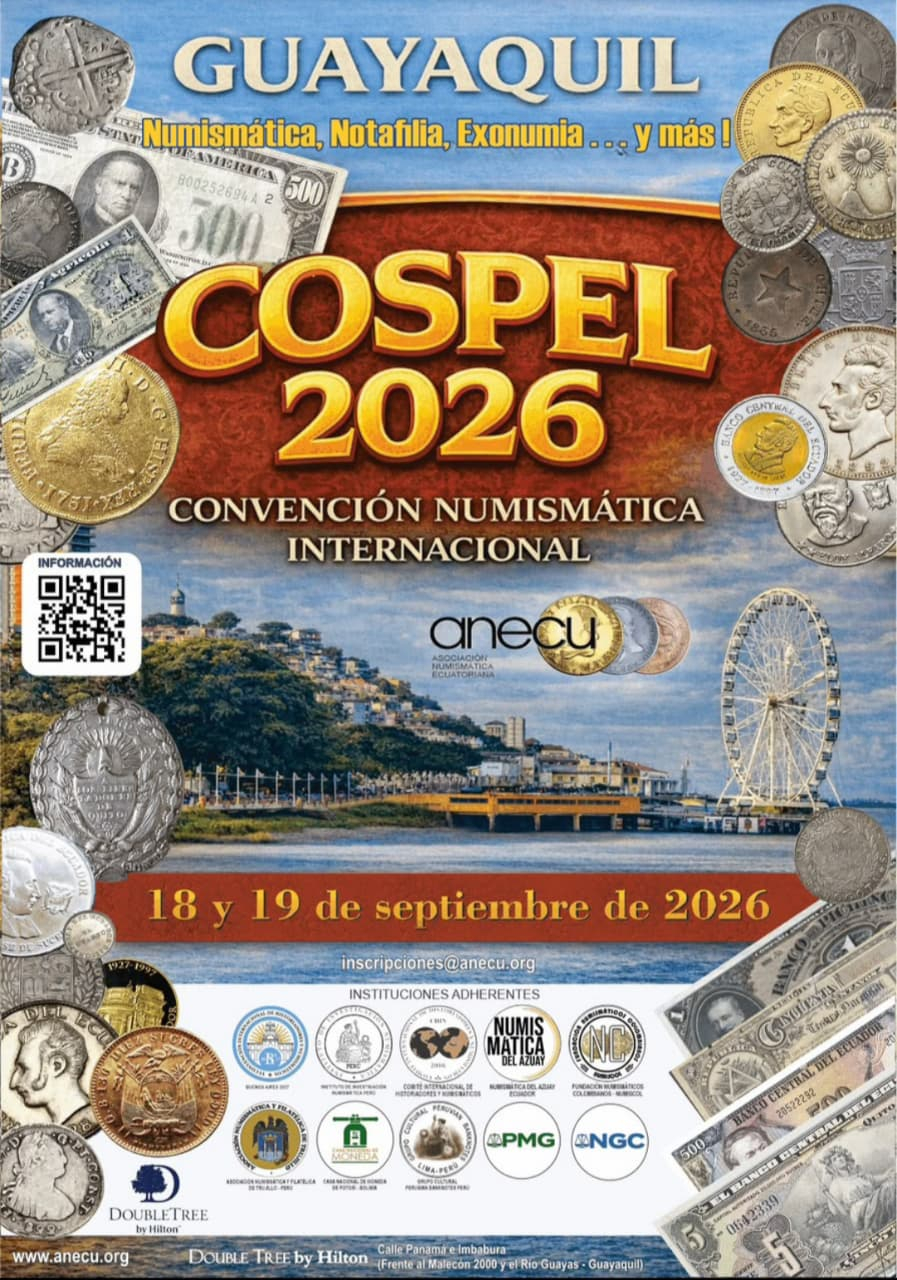
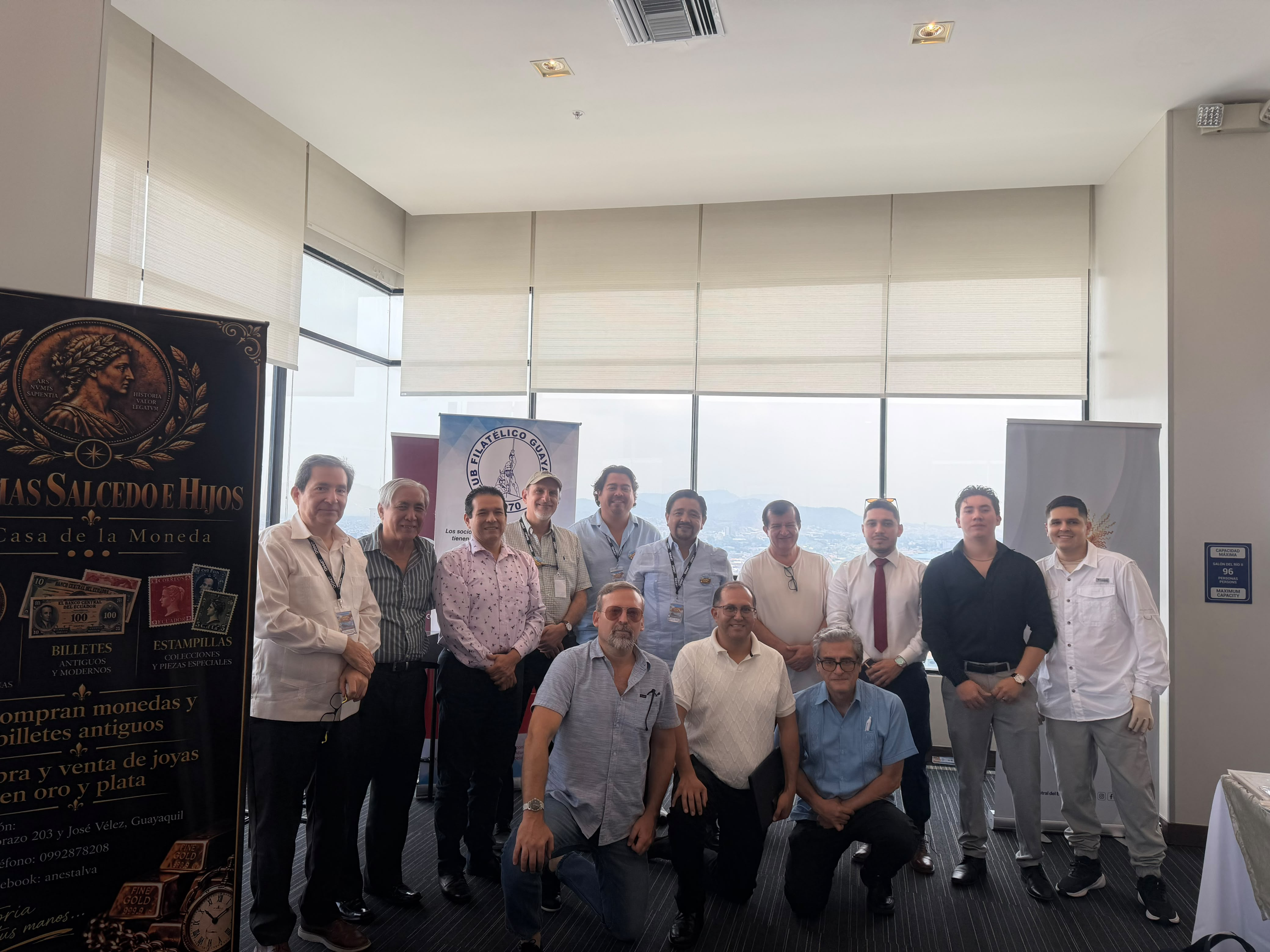
It is an honor to present to this forum a report on the most important numismatic event of the year in my country—a convention I had long planned to share with you all in proper detail. To my good fortune, this major gathering took place right here in my city, Guayaquil.
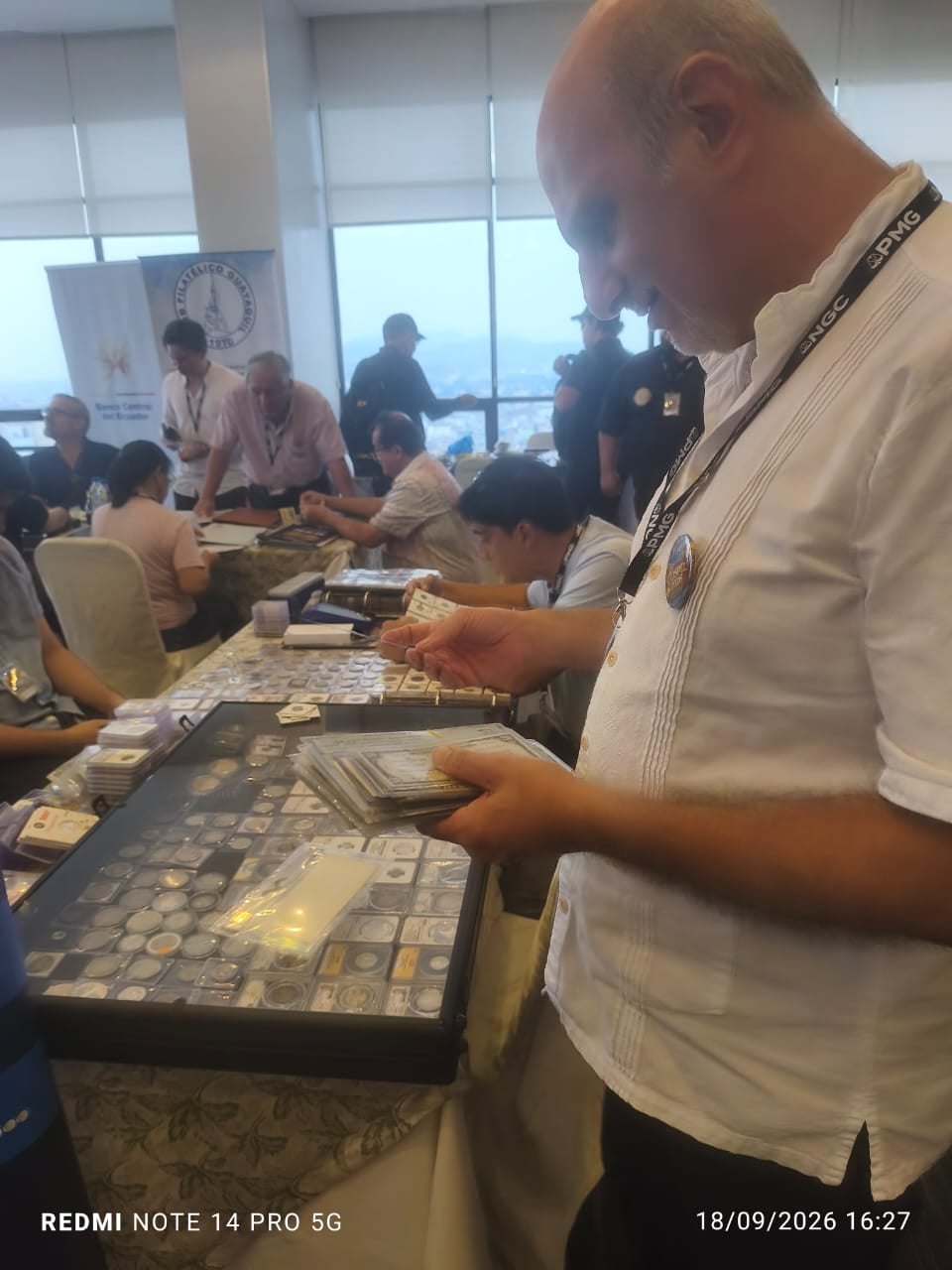
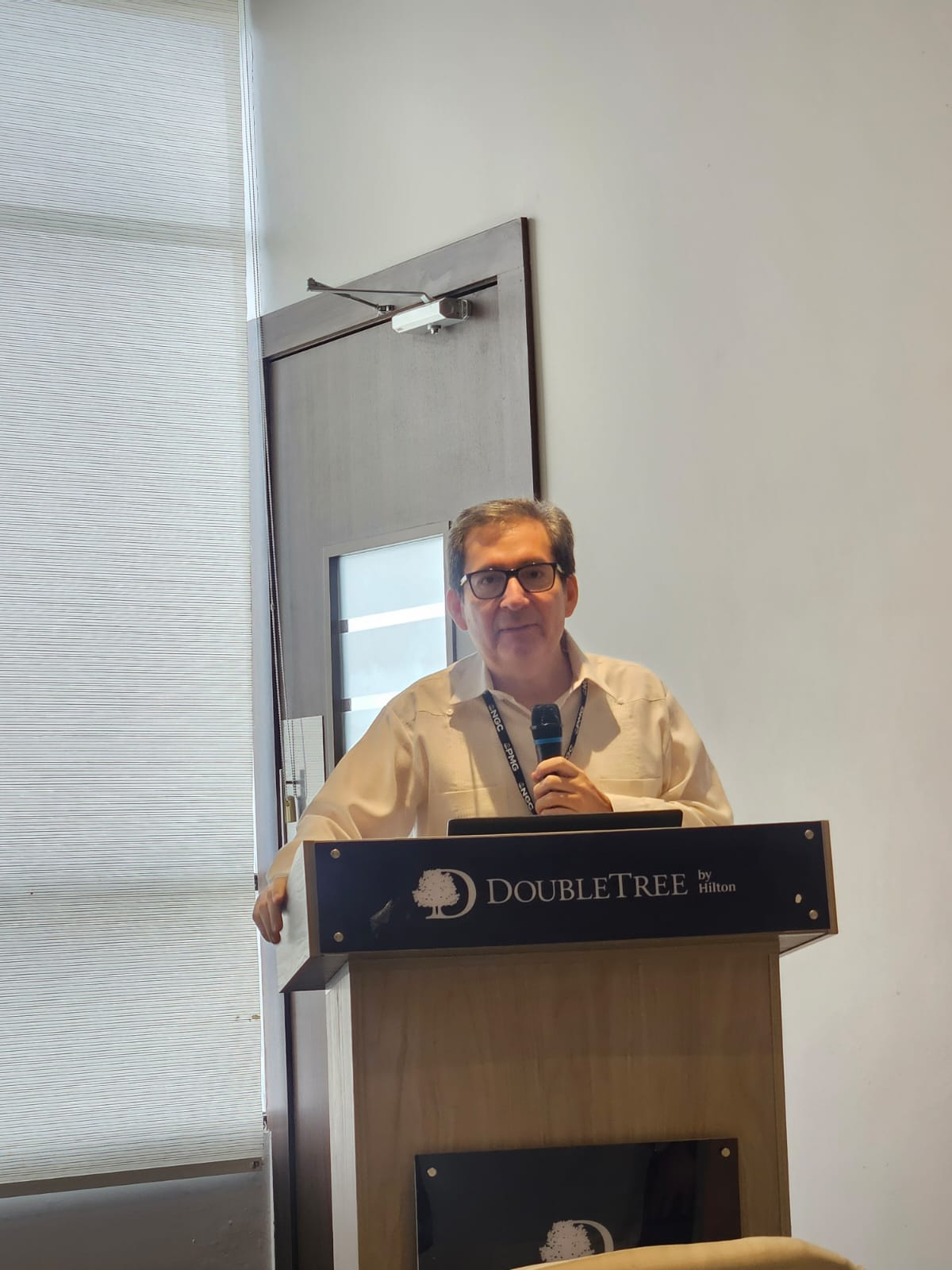
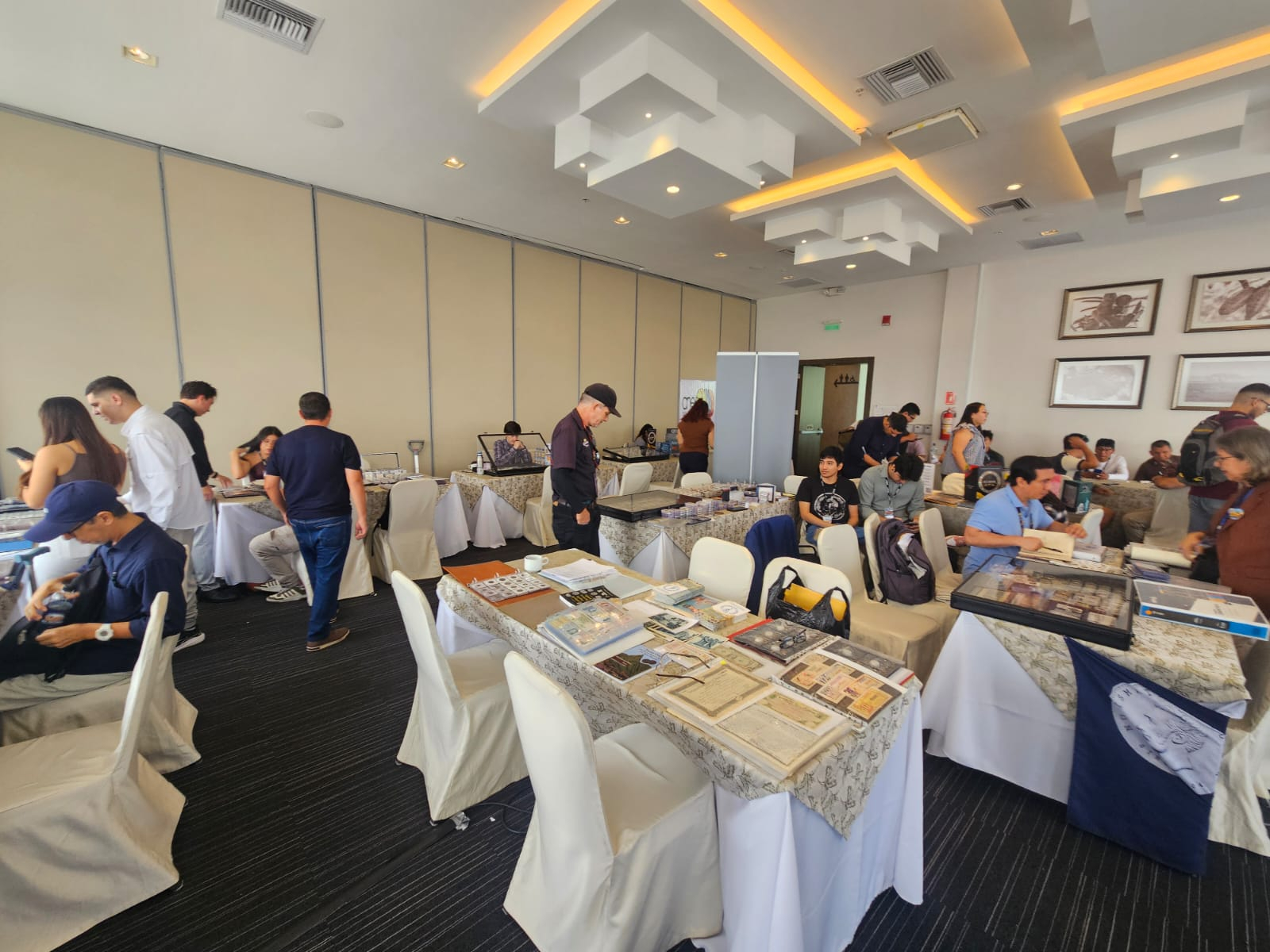
The COSPEL 2026 International Numismatic Convention was held on September 18th and 19th, 2026. It was organized by the Asociación Numismática Ecuatoriana (ANECU) under the leadership of its president, Roberto Mastalir Divisek, alongside a dedicated organizing committee including Melvin Sotomayor, Eduardo Giler, and Carlos Calderón, who managed the event's logistics flawlessly.
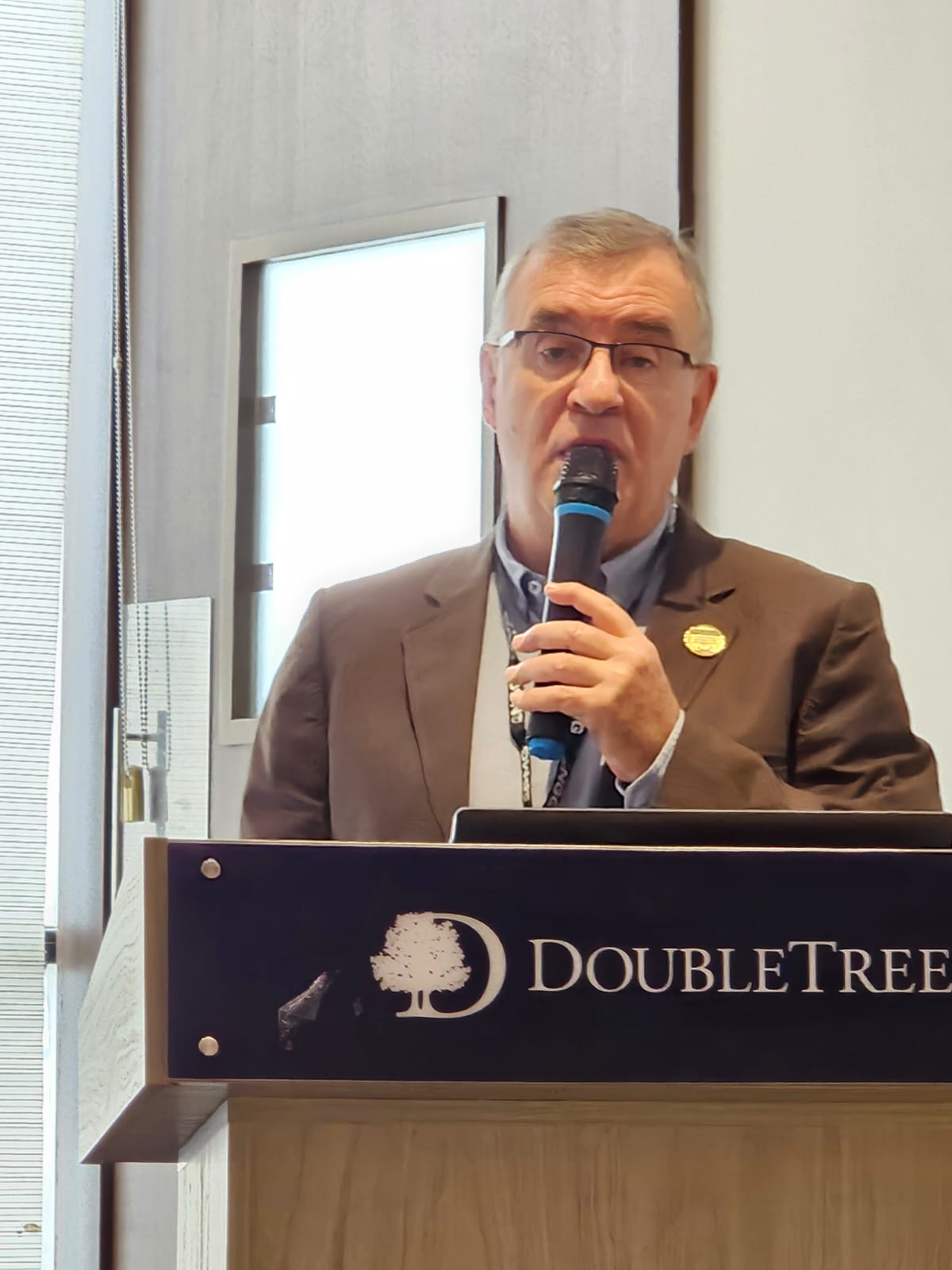
The convention took place at the DoubleTree by Hilton Hotel, a prime and strategic venue located very close to the iconic Malecón de Guayaquil, one of the city's most historic and prestigious landmarks.
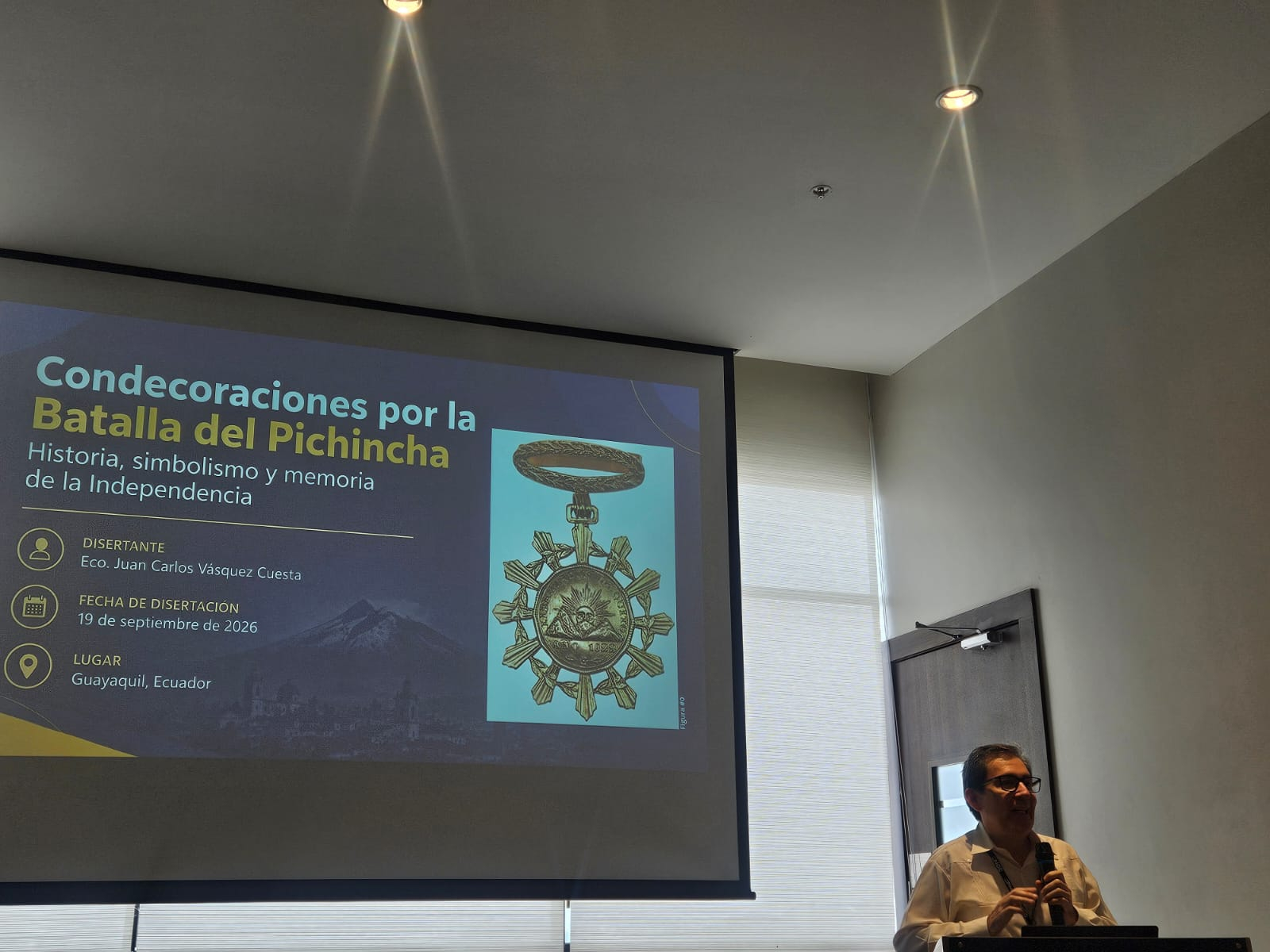
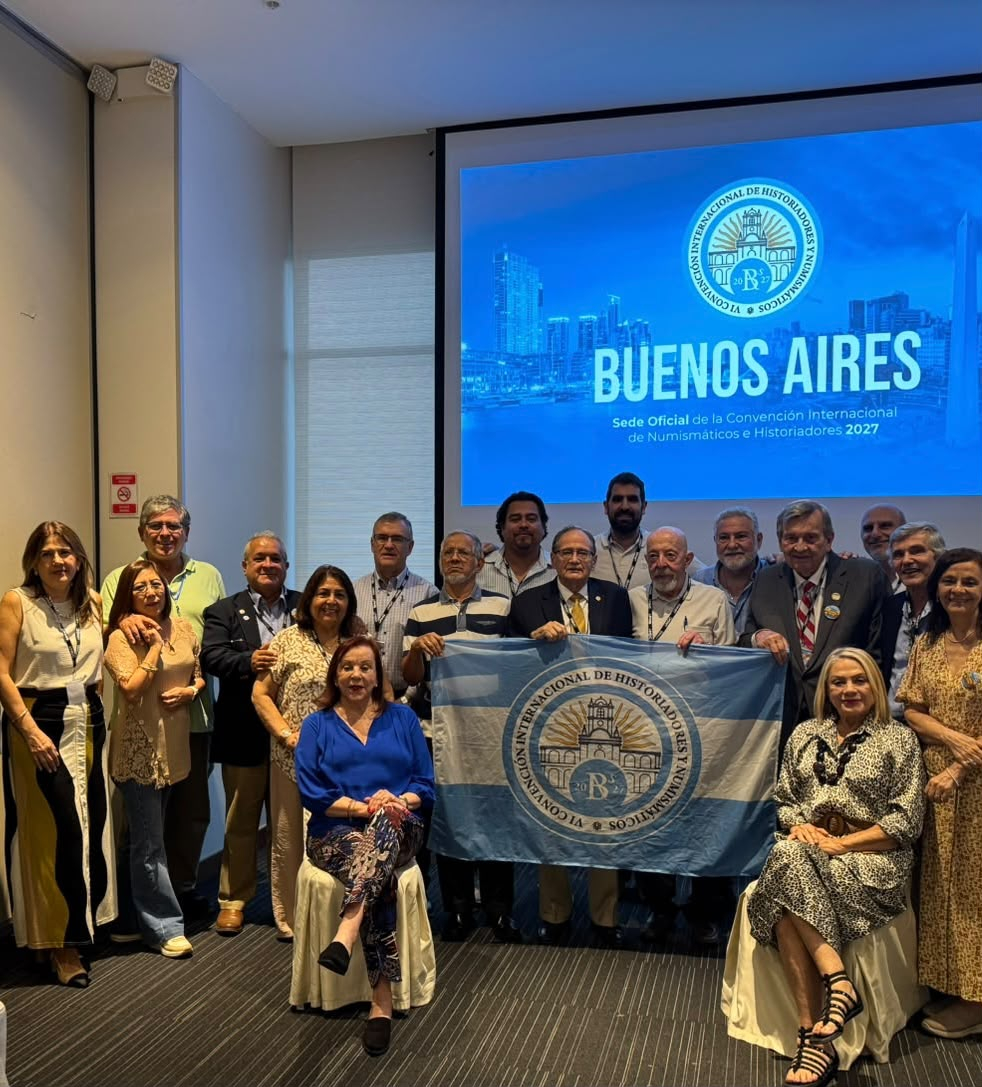
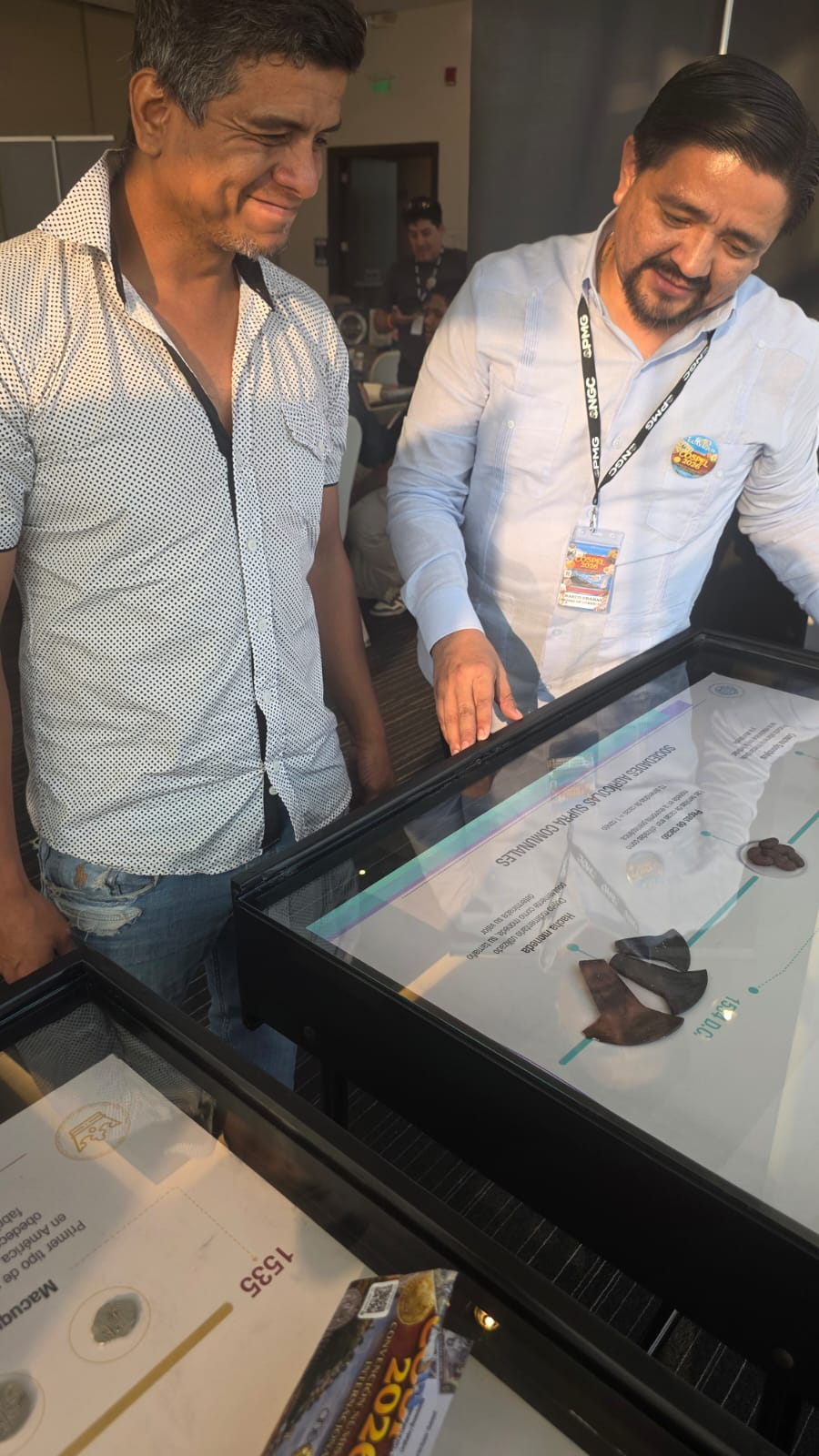
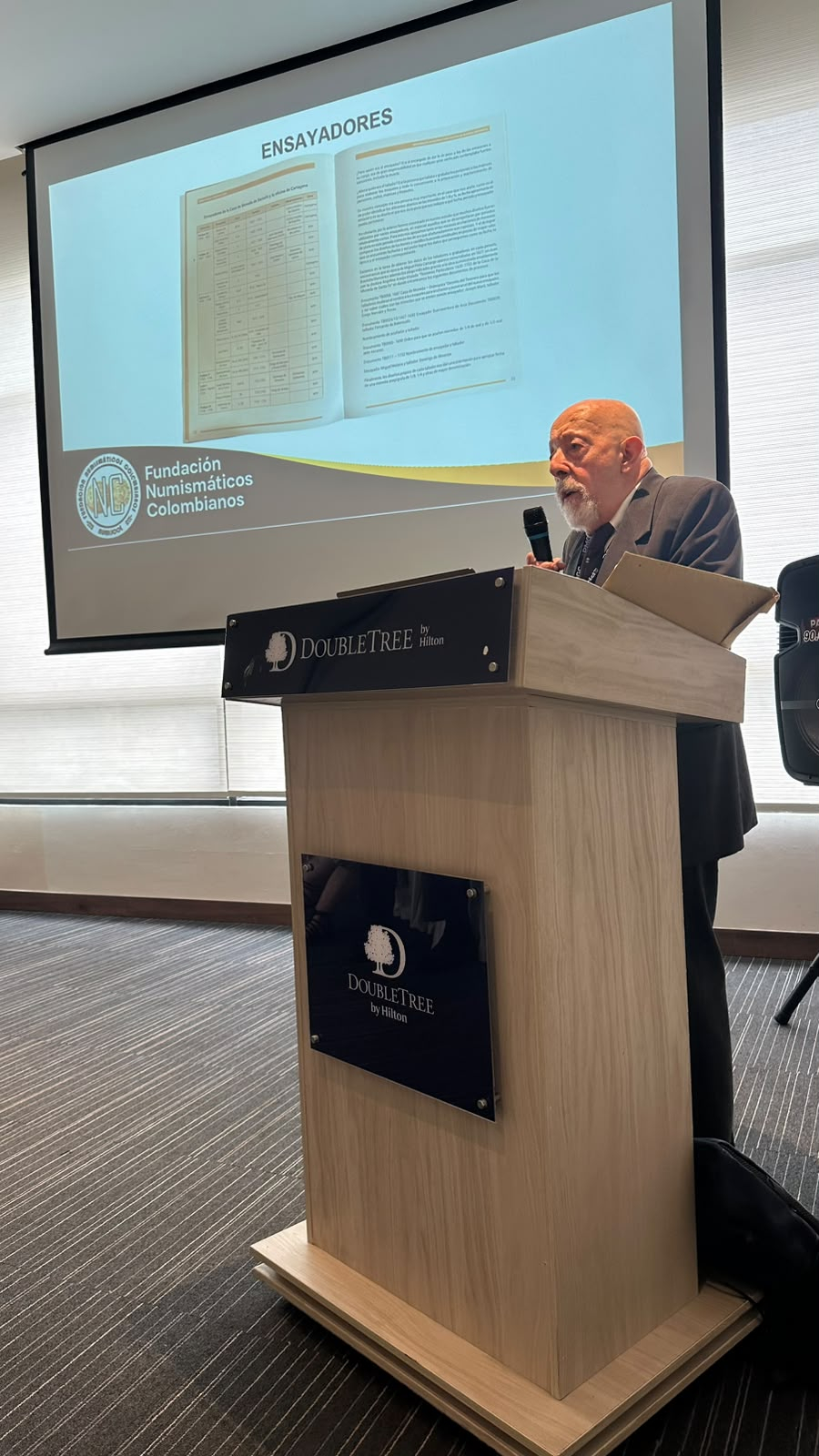
It is worth highlighting that the convention achieved a great international reach. It enjoyed the active participation and backing of prominent foreign entities such as the Fundación Numismáticos Colombianos (Numiscol), the Asociación Numismática y Filatélica de Trujillo (Peru), the Instituto de Investigación Numismática del Perú, and the Casa Nacional de Moneda de Bolivia. Renowned global grading companies like NGC and PMG were also represented. Valuable academic and commercial contributions were made through lectures and exhibits by these international guests, as well as by prominent local exhibitors and collectors from Ecuador, deeply enriching the dialogue surrounding our region's economic history.
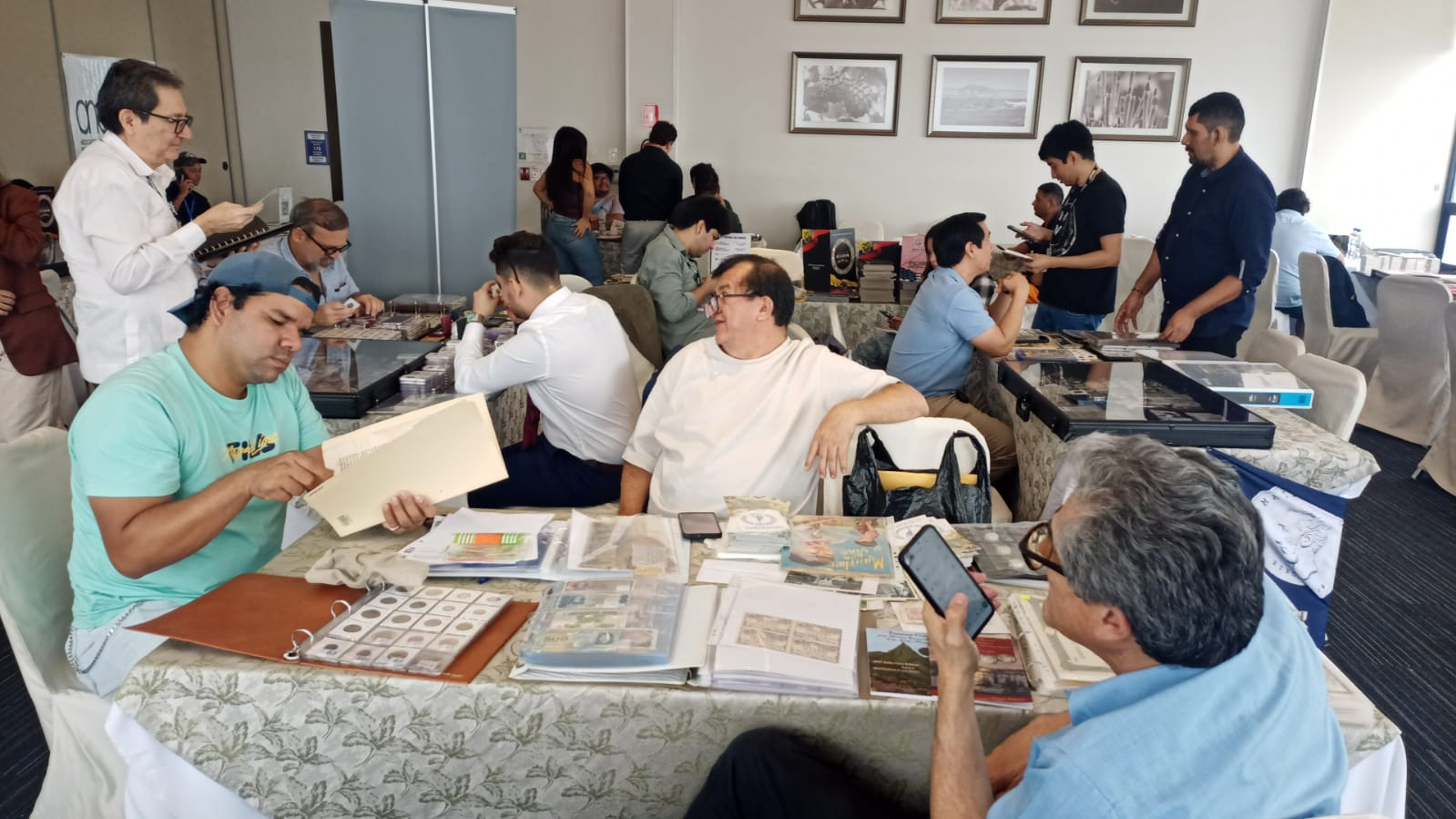
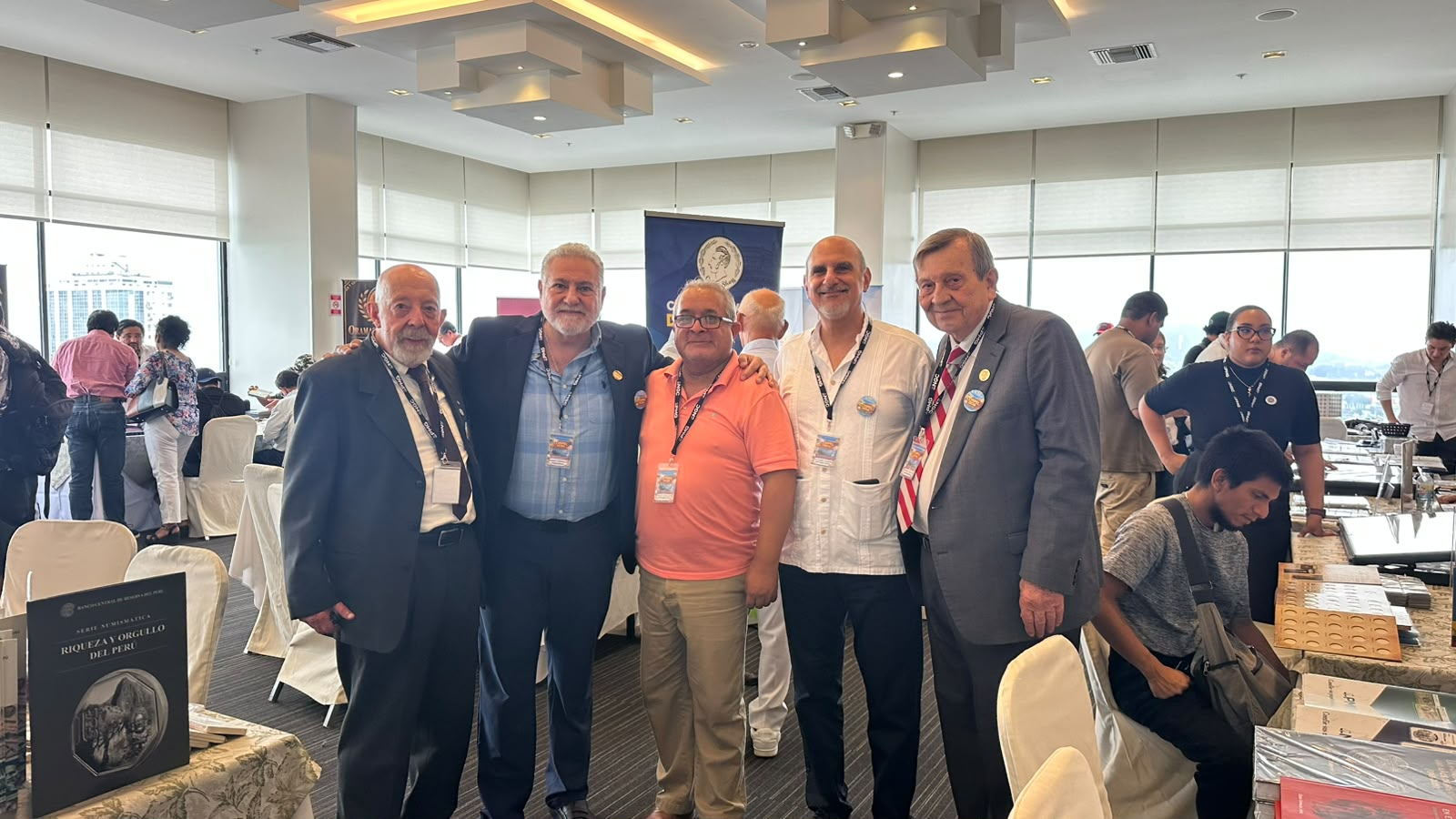
Regarding attendance, the event saw a considerable turnout. While numismatics in our country remains a select niche rather than a mass-market hobby, the most important takeaway is that the right people attended: serious collectors, investors, and focused academics. Despite being a specialized circle, there is a positive growth trend, as more people continue to join and become interested in the study and preservation of these pieces. Events like this continue to open doors to educate the general public, showing them the rich history they might sometimes carry right in their pockets.
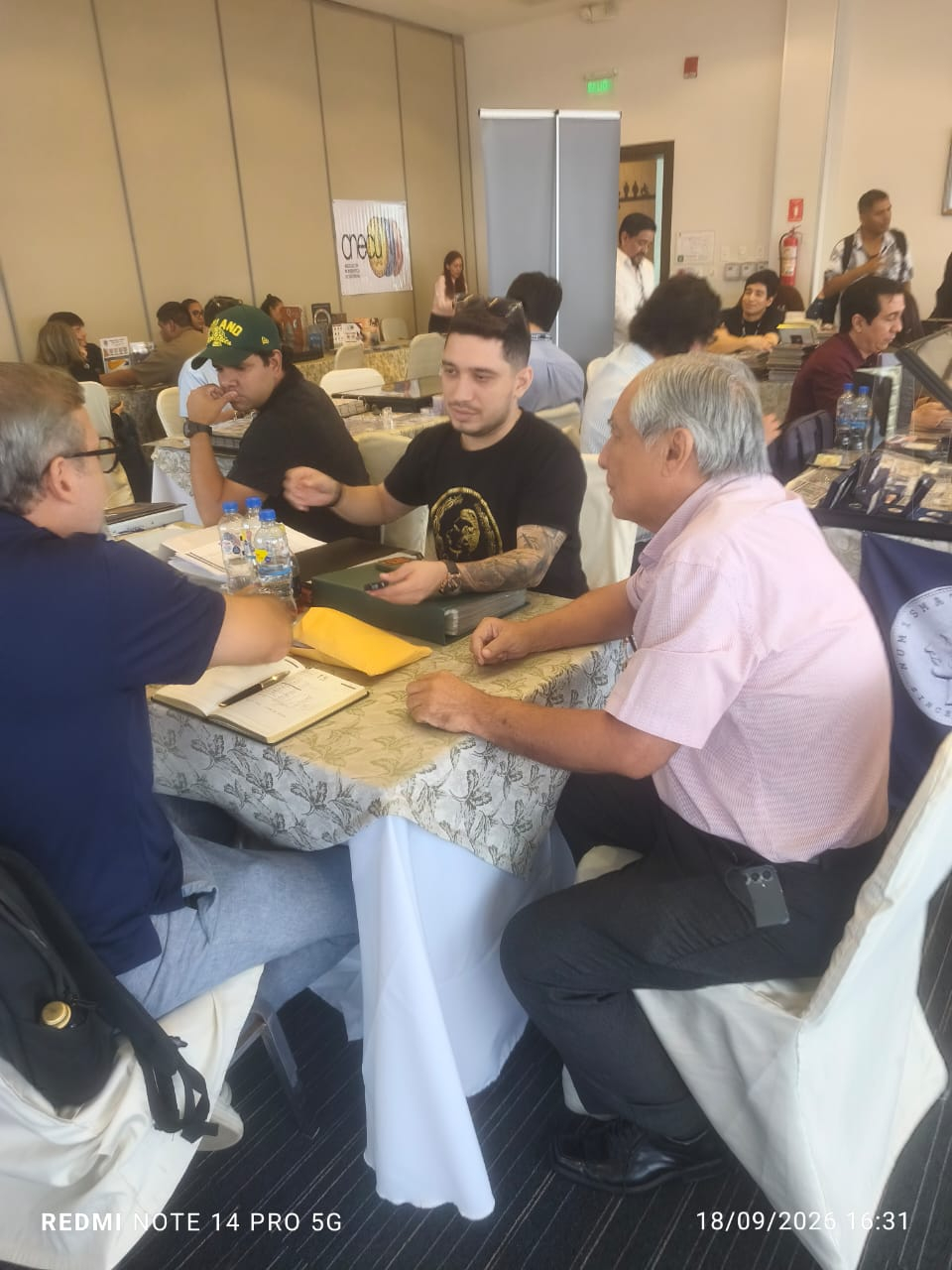
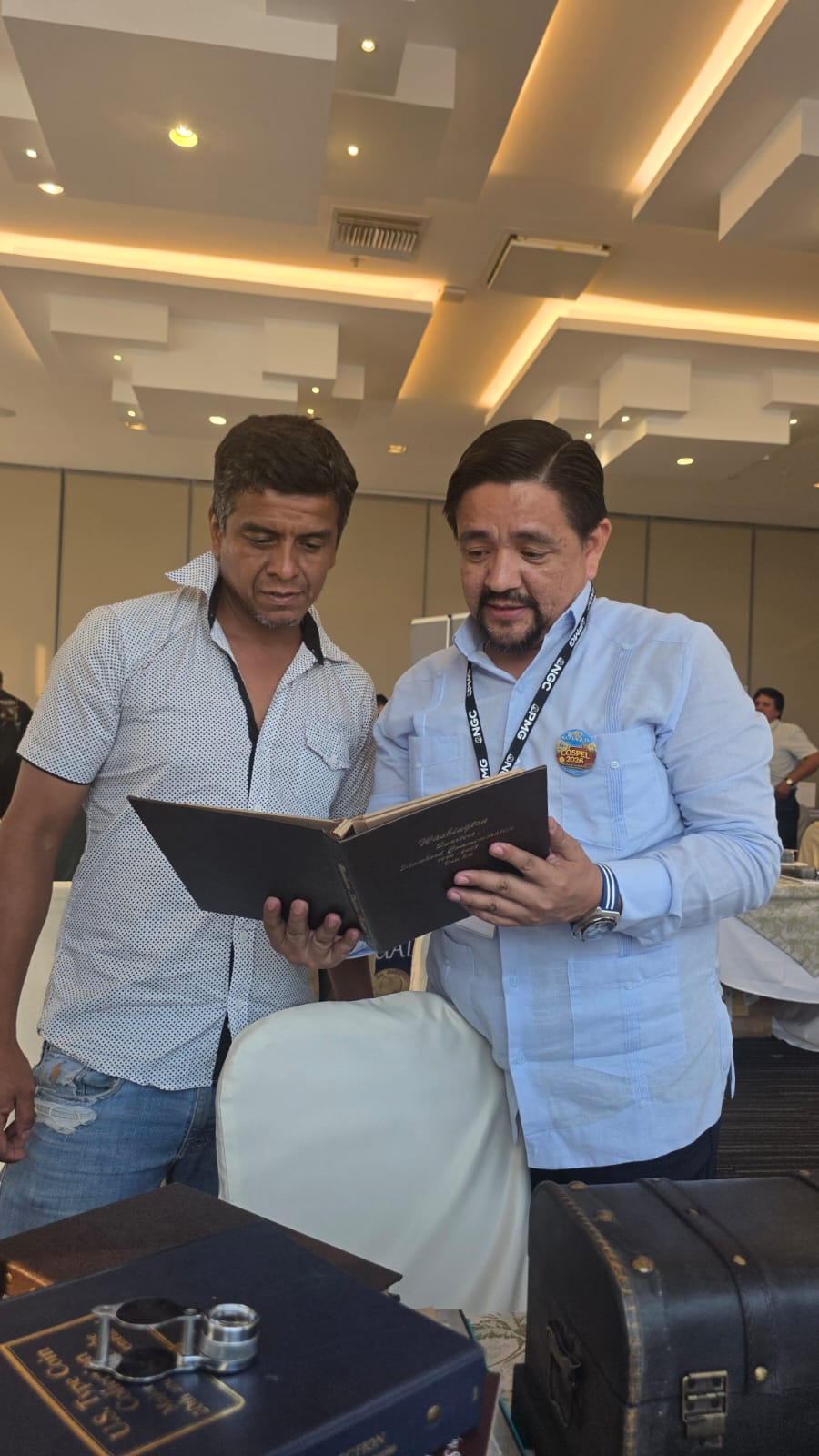
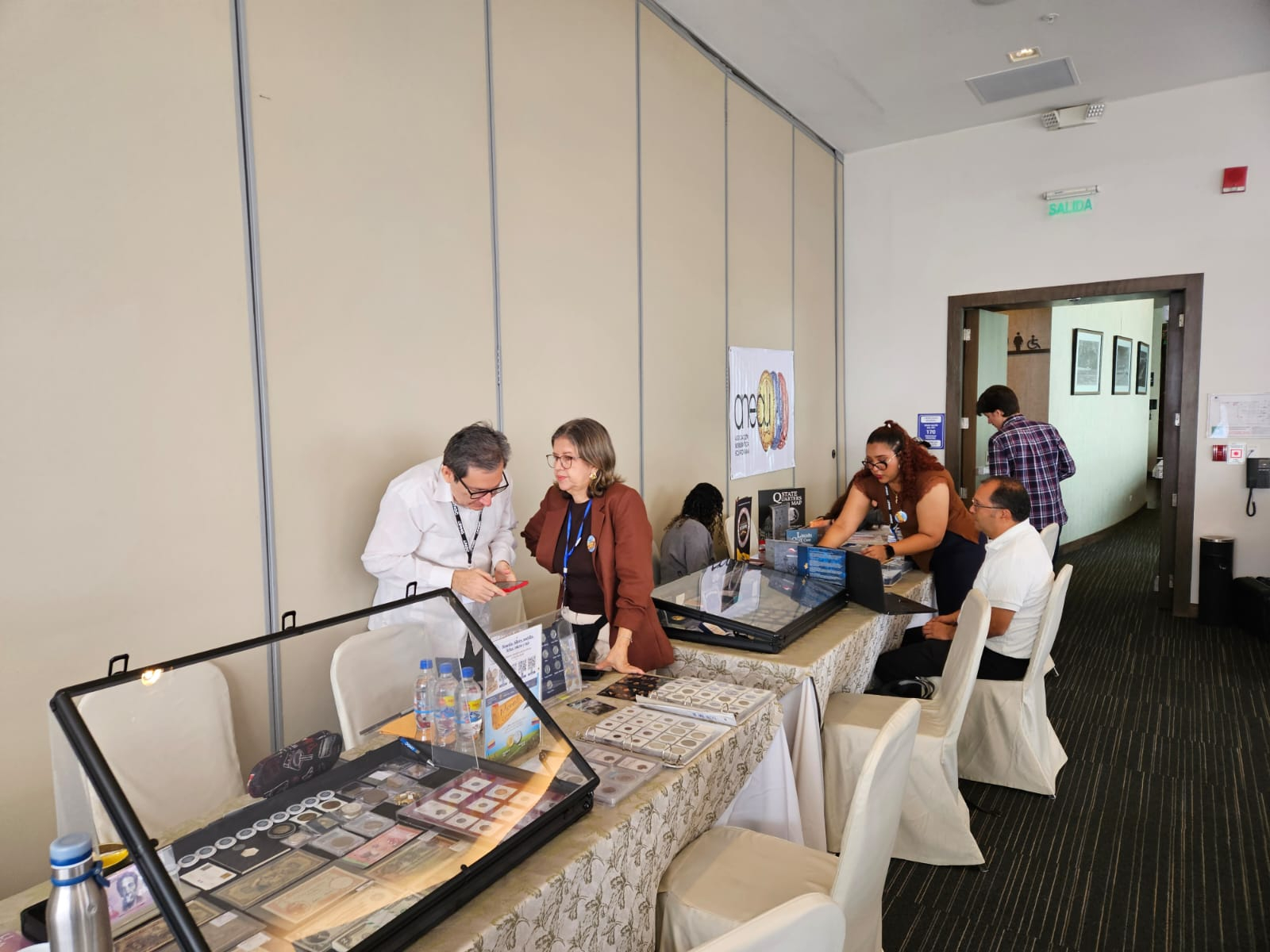
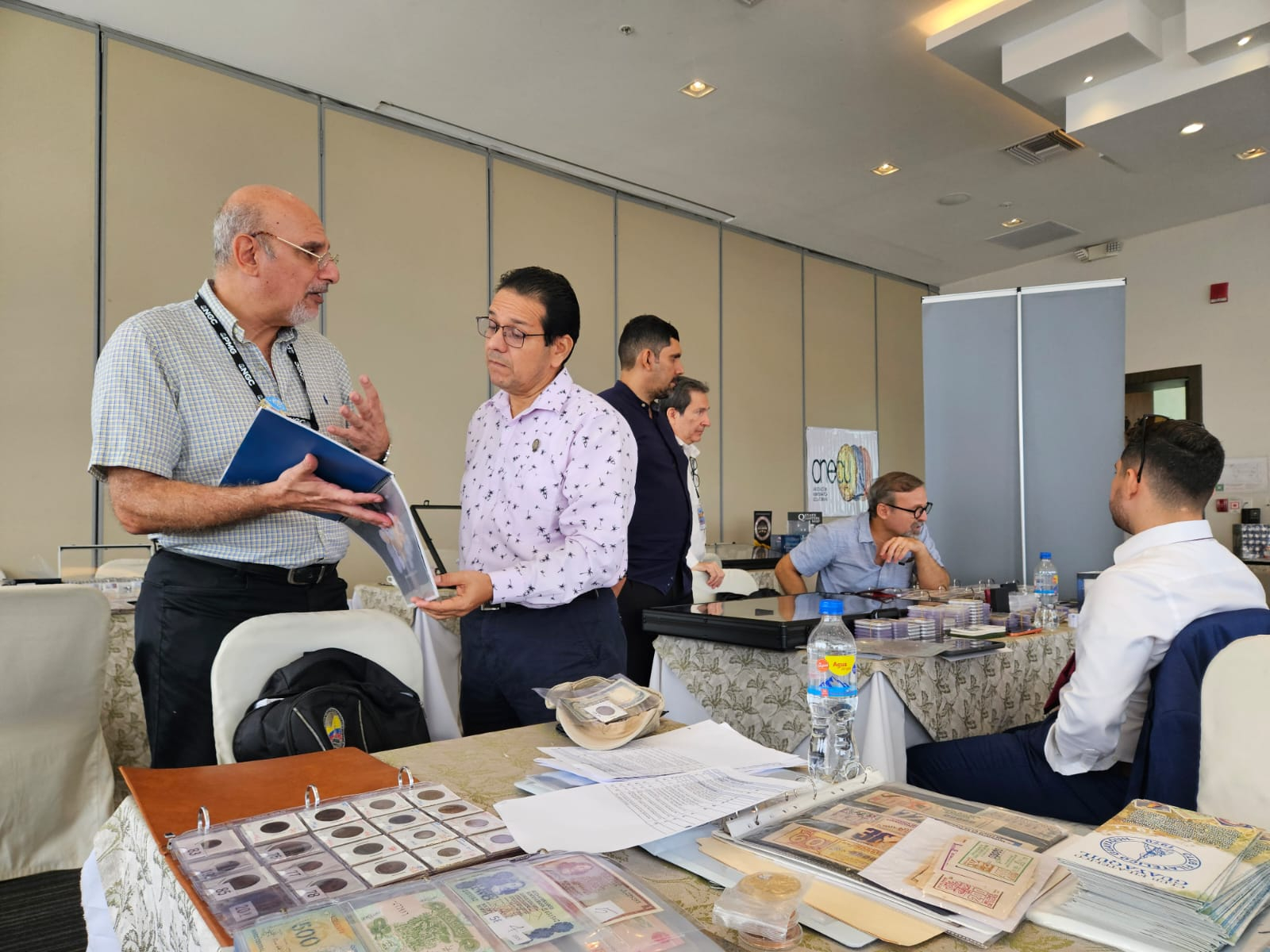
Due to work commitments, I was unfortunately unable to attend the entire event. However, on Saturday—the closing day—I managed to break away and head over. Even though my time was limited, the experience allowed me to enjoy a very harmonious atmosphere of great intellectual caliber, where local and international numismatic topics were debated with real depth. At the commercial tables and exhibits, I observed many high-value pieces: beautiful historical Ecuadorian Sucres, US Morgan Dollars, Colonial gold coinage, an excellent selection of world paper money, and even US Confederate currency notes.
Regrettably, I went through a bit of a "viacrucis" of my own: my cell phone completely ran out of battery inside the venue, making it impossible for me to capture first-hand photographs of these incredible pieces to show the forum.
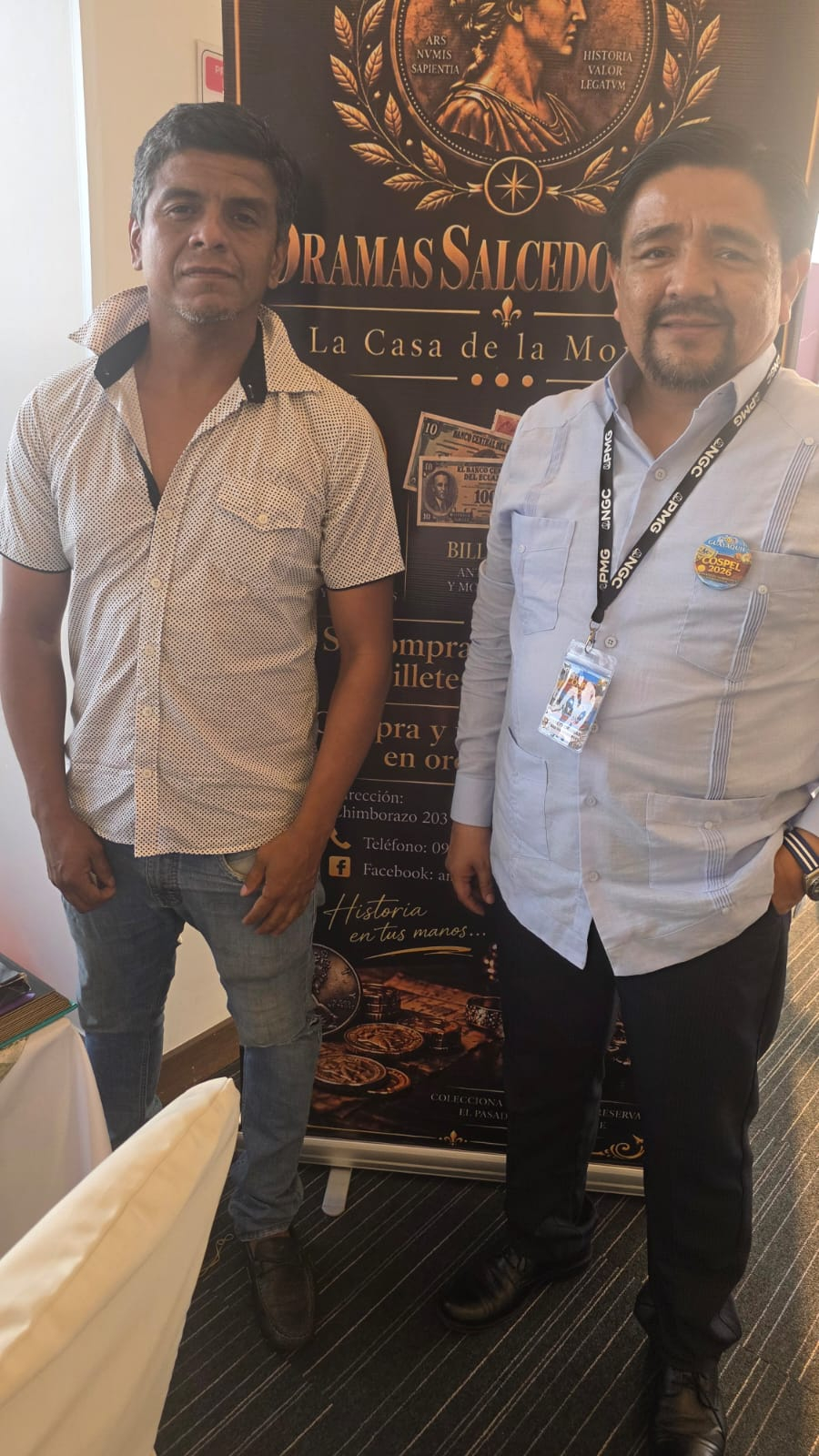
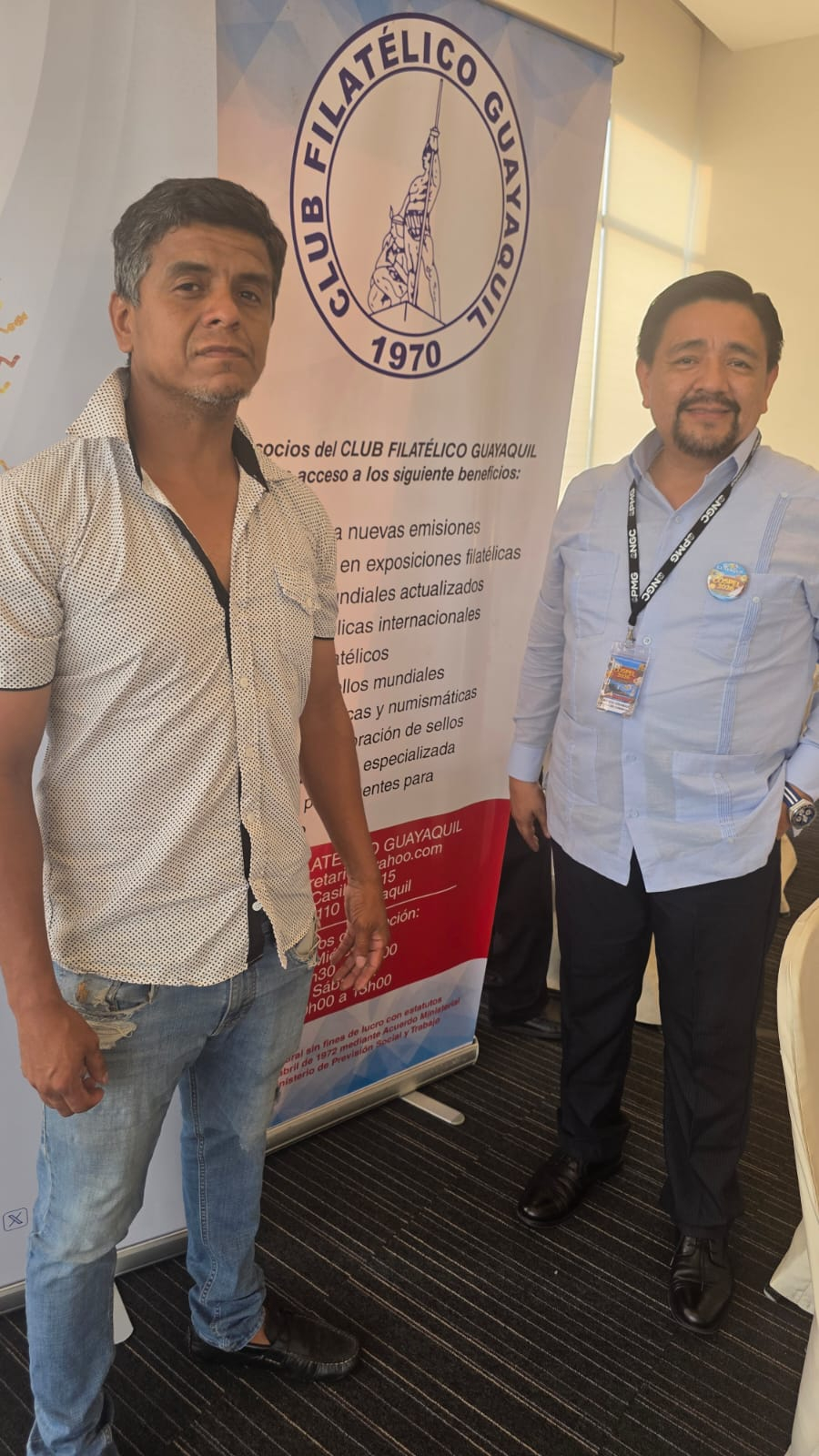
Fortunately, Attorney Marco Oramas Salcedo did me a huge favor on Saturday by providing photographic material so I could include it in this brief review. We had a great time talking about numismatics and agreed to meet again in the near future for an upcoming report.
To share my acquisitions from the event, I am happy to note that I purchased several Proof sets, a coin certified directly by PCGS (a 1991-S US Kennedy Half Dollar in Proof condition), and another 1983 50-cent coin featuring a silver-like plating and a countermark reading "1960" on one side and "1980" on the other. Truth be told, I have been doing some research and I think it has a context related to Kennedy, but well, it is still not that clear to me yet.
For my part, I congratulate the people who had the talent and dedication to put together this amazing numismatic event, hoping that it repeats more frequently so we can continue evolving the numismatic universe here in my country, Ecuador.
I also want to send a warm shout-out to The Penny Lady, from whom I have tried to capture a bit of her essence whenever she does her amazing show reports.
A big hug to all the wonderful people on this forum!
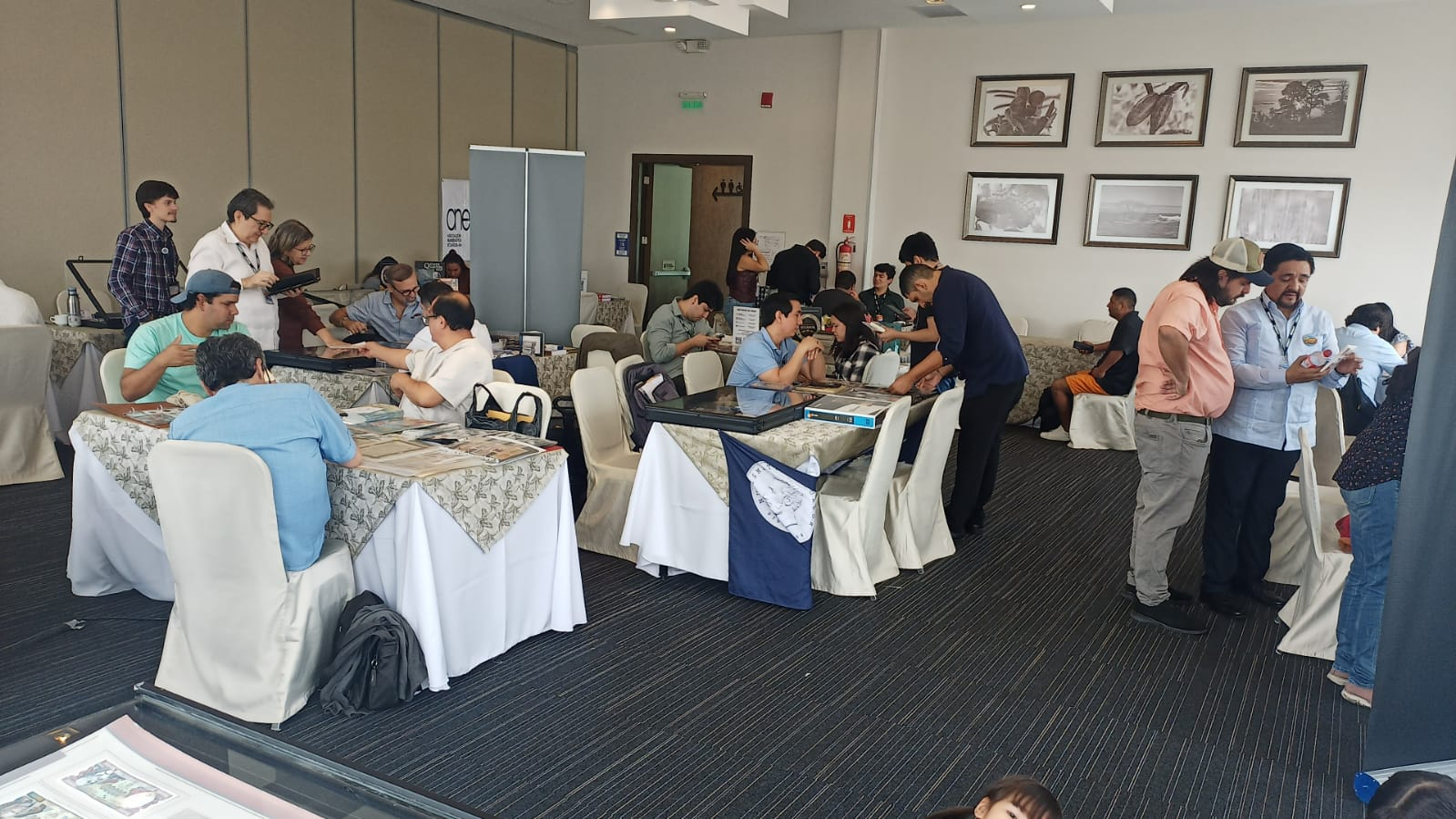
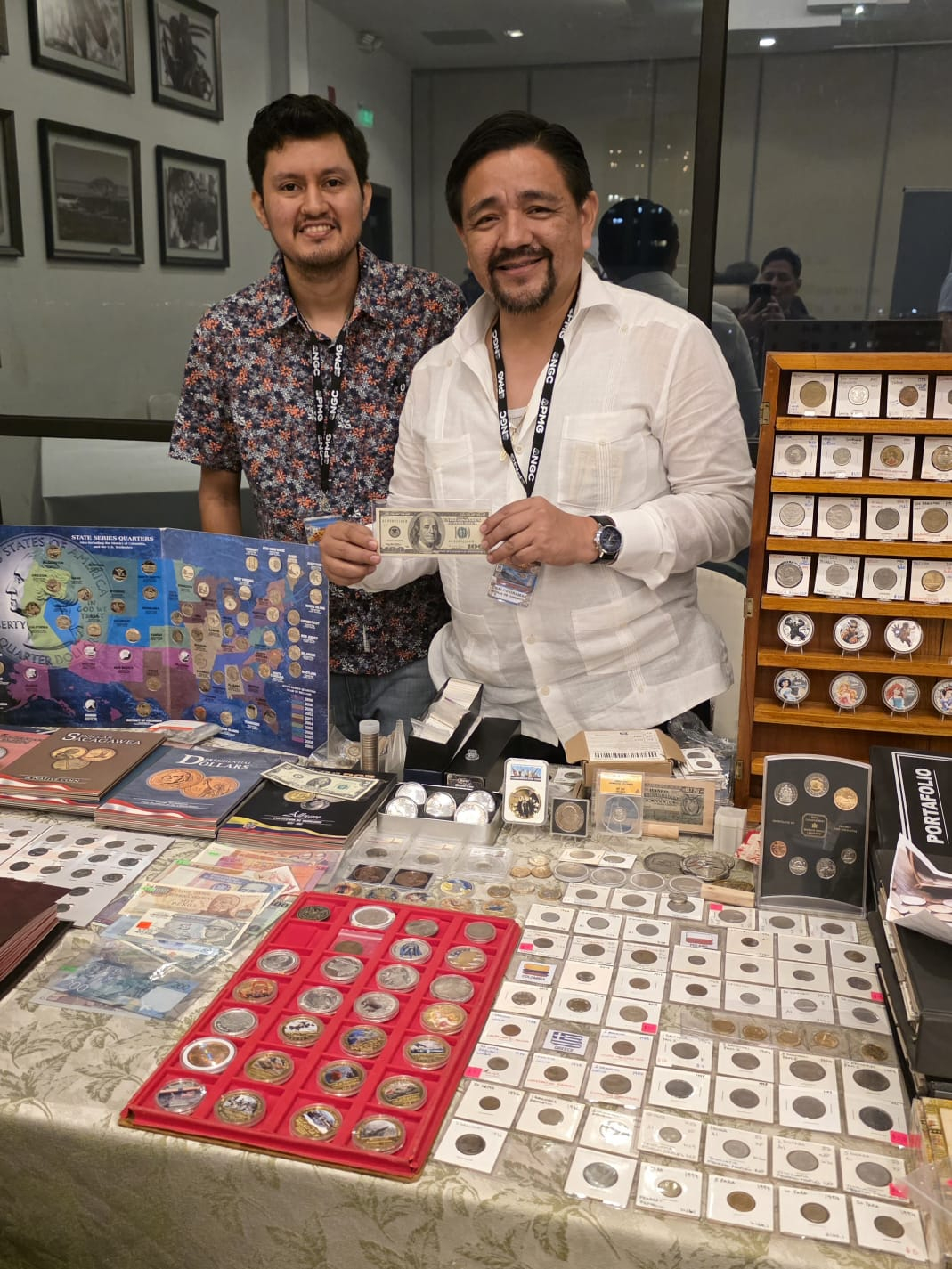
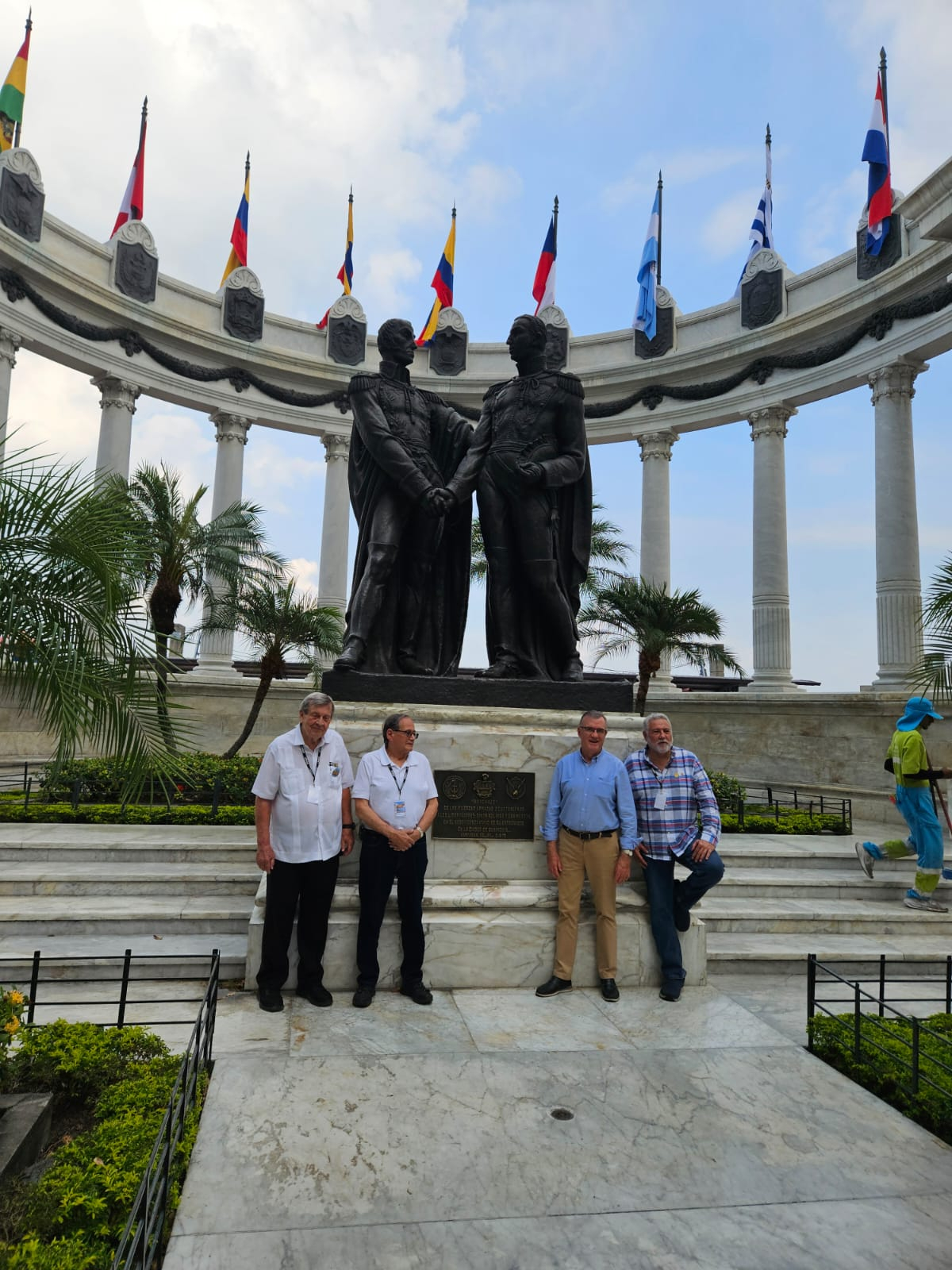
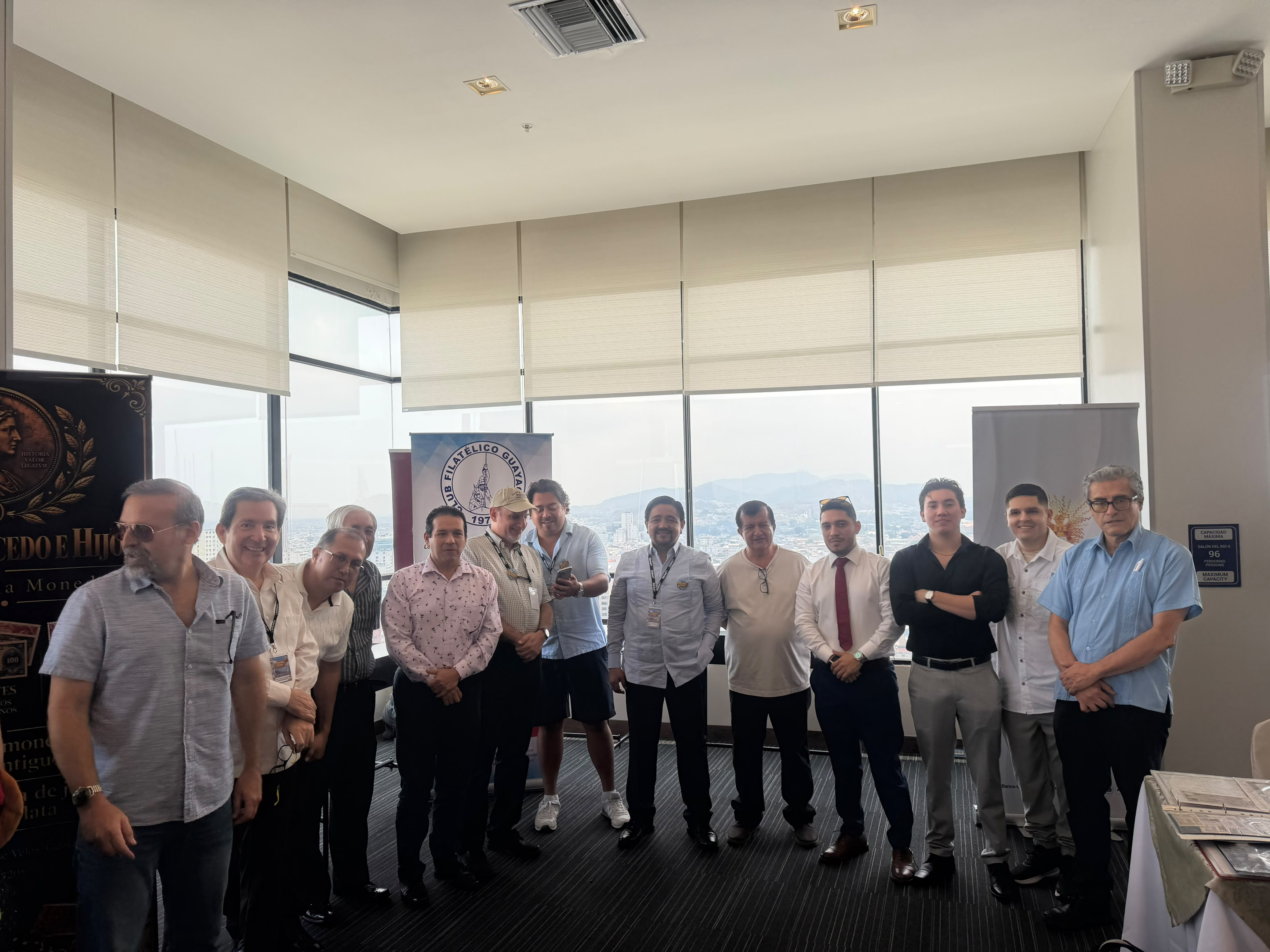
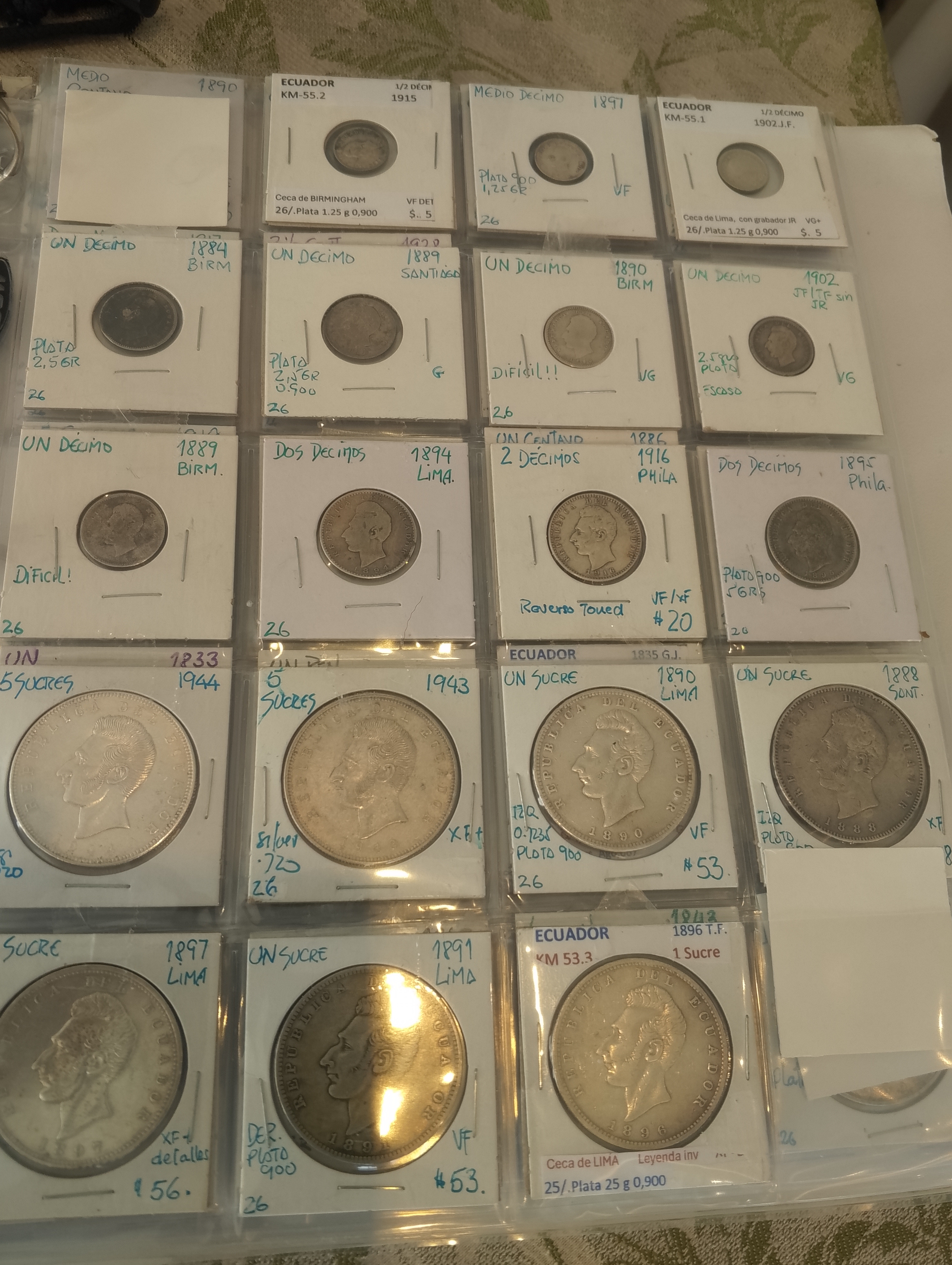
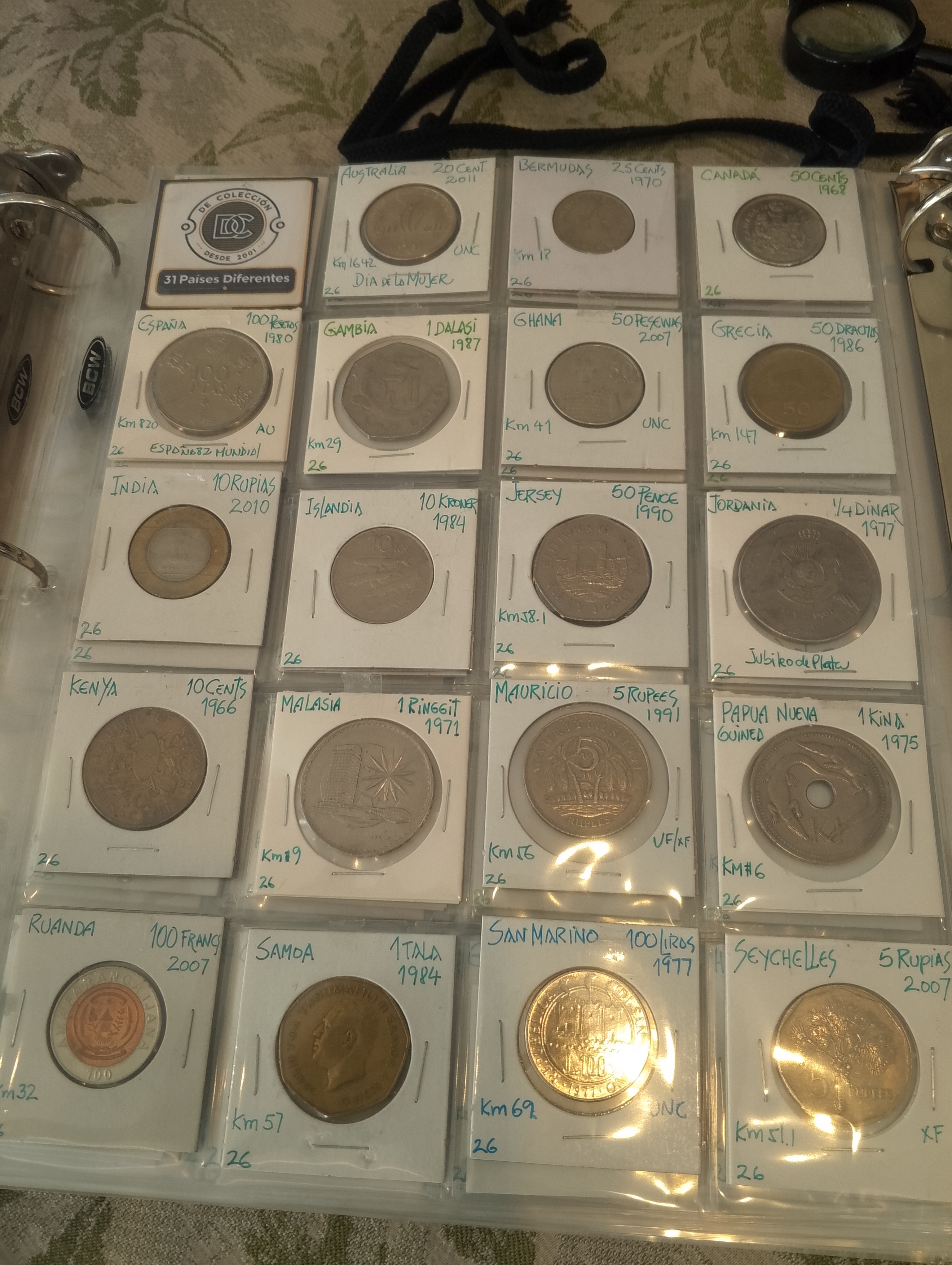
Glad to see such a vibrant market in Ecuador! Hopefully I can get there one of these days. Is it easy to bring coins in and out of the country? Legally?
Doggedly collecting coins of the Central American Republic.
Visit the Society of US Pattern Collectors at USPatterns.com.
Hi Andy! Thank you so much for your message. It is a true honor to have you commenting on this thread.
First of all, we would welcome you to Ecuador with open arms! Our country is beautiful, full of amazing places to visit, rich history, and a wonderful culture that I am sure you would love to experience in person.
Regarding your question about numismatics and entering the country: Yes, you can absolutely travel with your collection. If you bring your certified coins (slabs) in person inside your carry-on luggage or your pocket as part of your personal belongings, it is completely legal. You just need to keep in mind the international standard limit for cash declarations at the airport, which is under $10,000 USD. If your collection value stays below that, you can pass freely. The strict regulations and customs hurdles only apply when someone tries to ship coins from abroad through private couriers, which is usually restricted.
Now, regarding leaving the country and doing business: If your plan includes selling or buying high-value pieces during the convention, I highly recommend handling all transactions electronically via bank transfers or PayPal instead of carrying physical cash at the airport. Ecuador has strict currency controls and taxes on cash exiting the country. Anyone leaving with more than approximately $1,450 USD in physical cash is subject to a currency exit tax (ISD) on the excess, unless you formally declare exactly what you entered with upon arrival.
To avoid any unnecessary stress with customs officers when flying back home, electronic payments are definitely the safest and smartest route for international numismatists doing business here.
It would be an absolute privilege to welcome you to our convention in Guayaquil someday. In the meantime, I will continue traveling and visiting different collectors around the country to open the world's eyes to the amazing pieces handled here in Ecuador.
Best regards and a big hug!
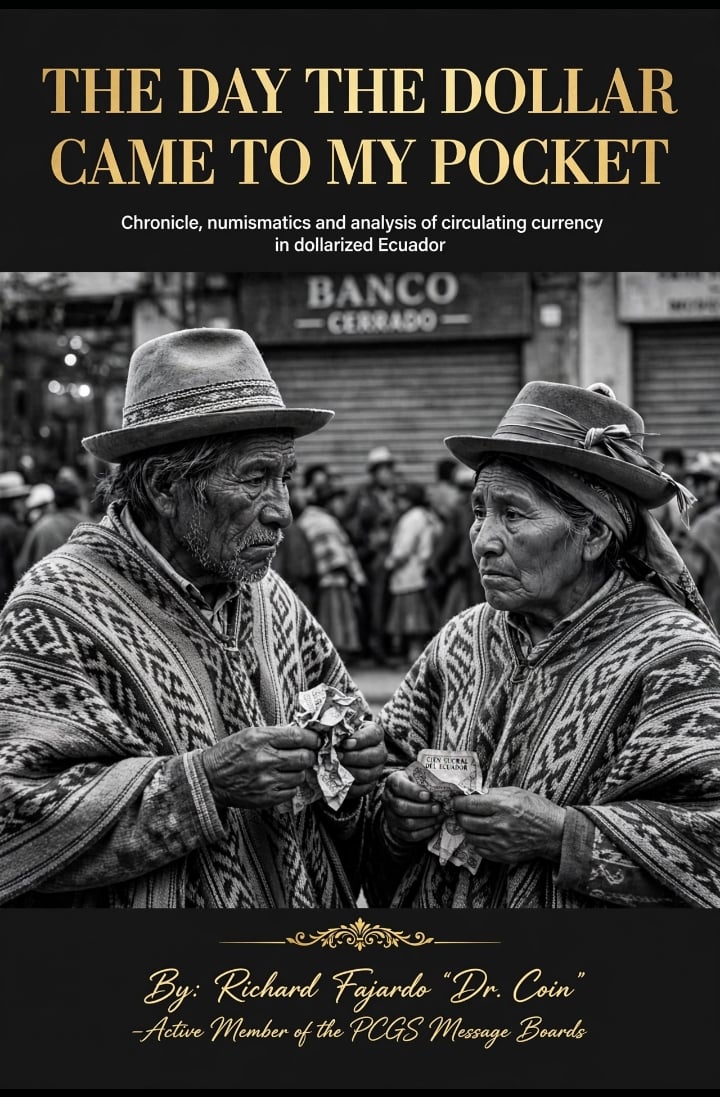
On a personal note, I am currently writing a book titled "The Day the Dollar Came to My Pocket" (El día que llegó el dólar a mi bolsillo) to document our country’s numismatic journey through dollarization.
This book will be written from my own perspective and personal experience, exploring how dollarization deeply touched the soul of our national identity. The work will combine our modern history, social chronicles, contemporary mint errors, and a forensic laboratory analysis of the clandestine counterfeits affecting our daily circulation. My goal is to educate both local merchants and the international community about this fascinating monetary reality.
For now, I already have the cover fully designed and most of the manuscript ready. I am currently in the process of adding the final forensic photographs and technical details. Once everything is completed, I will launch it very soon, first on digital platforms, followed by a limited physical print edition. I will keep you all updated for those who might be interested in reading a more detailed piece of my country's history.
I love the fact that many US struck coins literally say that on the reverse!
Still looking for these coins for my set:
1917 2½ Centavos (KM-61)
1918 10 Centavos (KM-62)
1928 2½ Centavos (KM-68)
It's great to see that you enjoy the coins from my country! It's a wonderful historical detail that many Ecuadorian coins from that era were actually struck right there, at the Philadelphia Mint.
I took a screenshot of the missing pieces you're looking for (the 1917 and 1928 2½ Centavos, and the 1918 10 Centavos) and already shared it with some collector friends here to check their inventory. If they happen to have any of them, I'd be happy to send you a PM to let you know, if that's okay with you. Best regards!
Awesome! I appreciate you!
🙂
Thank you for your posts and enthusiasm!
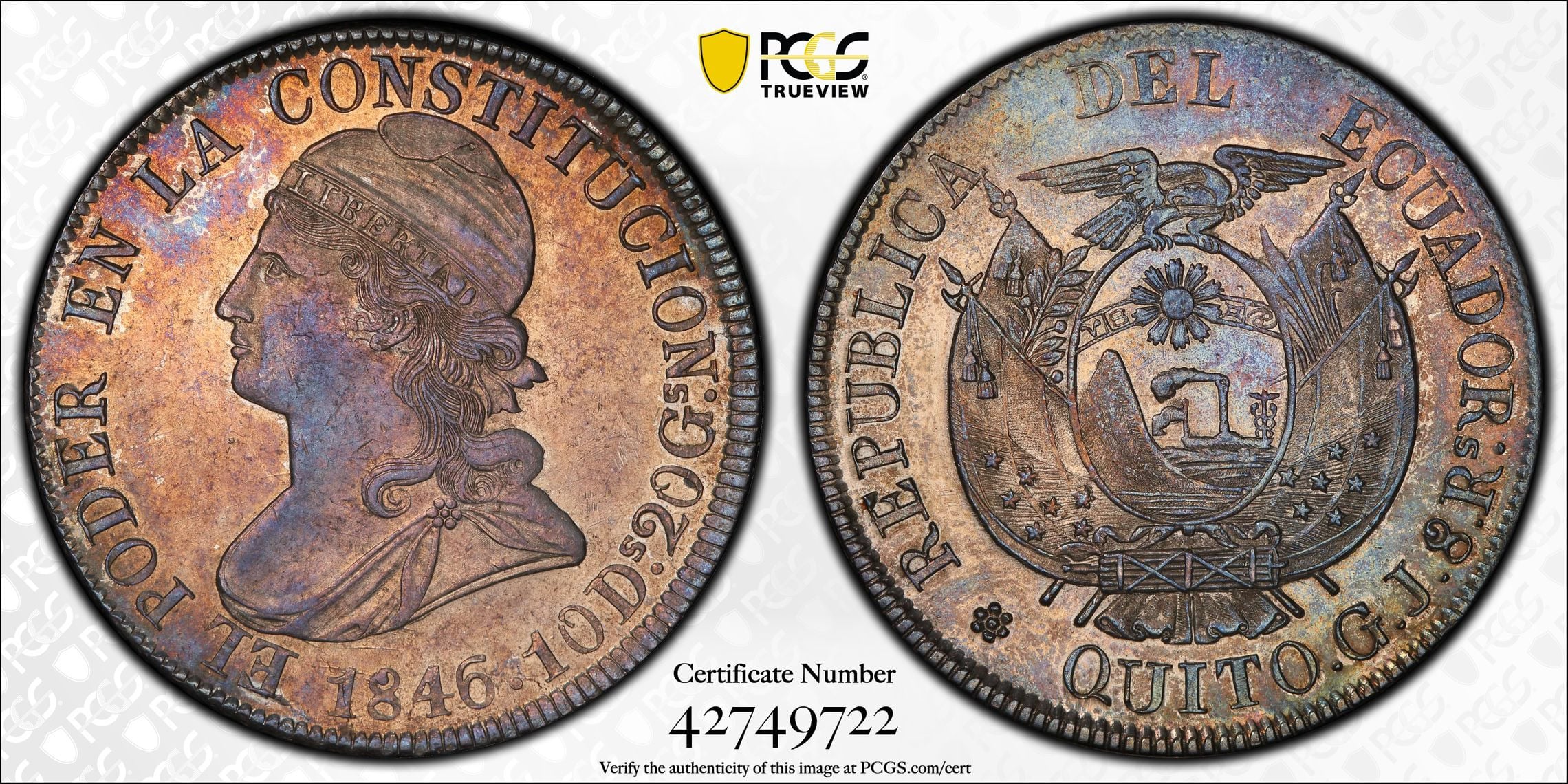
Latin American Collection
Thank you so much for showing a part of my country's history and Ecuadorian identity! It makes me truly happy to know that this coin is being protected by someone who appreciates my country's history. Best regards!
As a historical note, this coin was minted exactly 24 years after we finally broke free from Spanish colonial rule.
Do Ecuadorians follow or worry much about the fiscal situation in the US and the related risks for the dollar, or are they so happy to have something that’s close to a reliable store of value that the risks are ignorable? Does crypto have much of a following there?
Doggedly collecting coins of the Central American Republic.
Visit the Society of US Pattern Collectors at USPatterns.com.
As a historical note, this coin was minted exactly 22 years after we finally broke free from Spanish colonial rule.
Hi Andy. Thank you for your insightful question. From our perspective here in Ecuador, the average citizen lives day-to-day and doesn't follow U.S. fiscal policies. There is a widespread belief that since we use the U.S. dollar—a currency from a first-world superpower—we are automatically secure. This mindset creates a strong sense of stability, so people see no reason to investigate its internal risks.
The only time people feel a bit uneasy about it is during election cycles, when political campaigns manipulate the topic, claiming their opponents will remove dollarization—though everyone knows that would be foolish. While the transition from our old currency (the sucre) in 2000 was tough, the dollar is now completely stable and embraced by the country. As for cryptocurrencies, the local market is practically non-existent (almost nil). Only a tiny tech niche deals with them, while the vast majority continues to rely strictly on physical dollars for daily life.
Since you mentioned cryptocurrency, I’d like to ask you a question as well: How widely used are cryptocurrencies for everyday transactions in the U.S. right now? Based on your experience, do you think adopting cryptocurrencies here in Ecuador would be a viable business strategy or a reliable payment method for us?
I think most of the legal action in crypto here is between investors and speculators. There’s also probably a good amount of action in the world of drug dealers and money launderers. But for everyday purchases in legal markets, I don’t think crypto gets much use at all. FWIW, I do expect stable coins to gain substantial traction within the coming decade. I expect Bitcoin to fade in importance, but I’m in the minority on that point.
Doggedly collecting coins of the Central American Republic.
Visit the Society of US Pattern Collectors at USPatterns.com.
Hi Andy,
To be completely honest, my line of thinking is fully aligned with yours. For me, Bitcoin is not a reliable financial instrument for regular, day-to-day commerce either.
As a clear backing to what we both think, the heavy crash that Bitcoin suffered months ago caused a lot of people to suffer. Many investors panicked under the bearish pressure and ended up selling at a significant loss. Of course, there were also those intrepid enough to take advantage and buy cheaper during the summer lows, and now that Bitcoin has climbed back up, they recovered ground. However, that exact dynamic proves it is a purely unstable asset. No one knows for sure how it will hold up in the future, but based on what it demonstrated over the past months, it does not look promising as a transactional currency.
On the other hand, we must not forget that technology keeps advancing by leaps and bounds. I am not sure if you have heard recently about the developments surrounding the "metaverse" and the creation of these alternate universes where digital properties and virtual real estate are already being sold.
Taking this scenario into account, do you think it would be smart to invest in equities or assets within the metaverse right now? I imagine your answer might lean toward a no, since, as you well pointed out, your vision is much more closely aligned with the stability and real backing that stablecoins provide. I would love to hear your insights on this!
Best regards,
Although I haven’t studied the metaverse closely enough to know which companies or assets I’d want to buy, I’m sure it’s a growth industry. And if there were a way to buy into a cheap position of tokens that would ultimately be used as currency in the metaverse, I’d consider taking a purely speculative position. As for the future of money, I think the the field is wide open, that we’ll have increasing competition between an increasing number of currencies. Transactions between parties using two different currencies will become increasingly commonplace, and settled via digital clearinghouses.
Doggedly collecting coins of the Central American Republic.
Visit the Society of US Pattern Collectors at USPatterns.com.
Andy, to be honest, I feel deeply honored to be able to exchange messages with you in this thread. I’ll be completely sincere: I came to this forum with the mindset of a sponge. I have literally tried to empty out some brain matter and just leave the sponge inside my brain to be able to catch, absorb, and take in all the fascinating ideas that are discussed here.
This is a truly impressive world. Seeing how you all debate about gold, silver, complex transactions, and the future of the economy is a delight. Anyone who is willing to learn finds this space to be the perfect place to nourish themselves; one can come here knowing very little and leave like an eminence thanks to the massive contributions made by members like you.
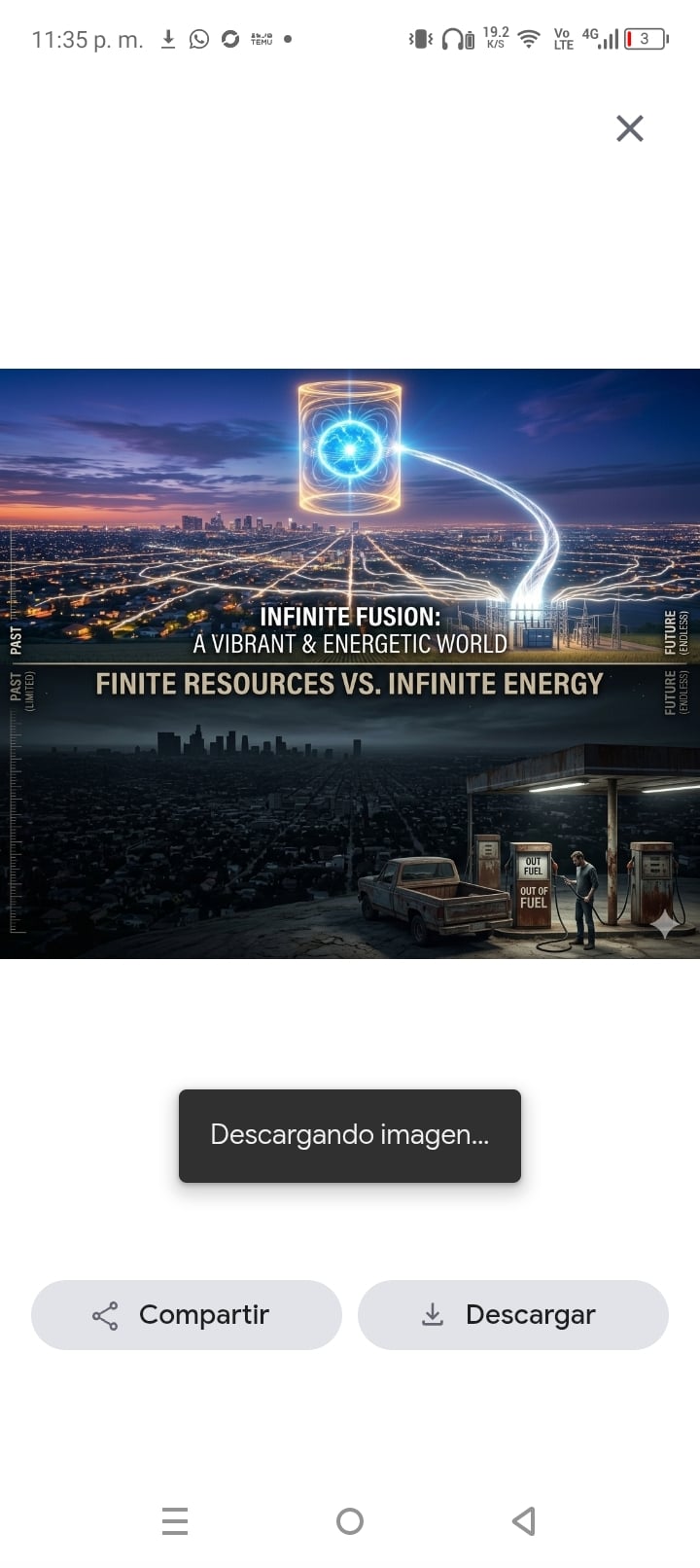
To top off my good luck, I recently had the chance to chat privately with another member of this community, and they completely opened my eyes to a world that still doesn't have much mainstream exposure: nuclear fusion. I became fascinated with the subject. Understanding that it is a tool that will revolutionize tomorrow and help ensure the planet is no longer so polluted seemed amazing to me. I promise you that if there were a direct and widespread way to invest money in that field today, I would do it with my eyes closed, because I am convinced that this is where the true revolution of the future lies.
Thank you so much for your time, for your detailed explanations regarding digital clearinghouses, and for sharing your knowledge with those of us who come here eager to learn. It is a true privilege to read you!
To complement this, this member of this forum reached out to me to create visual art and educate people through images about the advancements in nuclear fusion and how it will completely change the world. Here is some of what I was able to capture.