Options
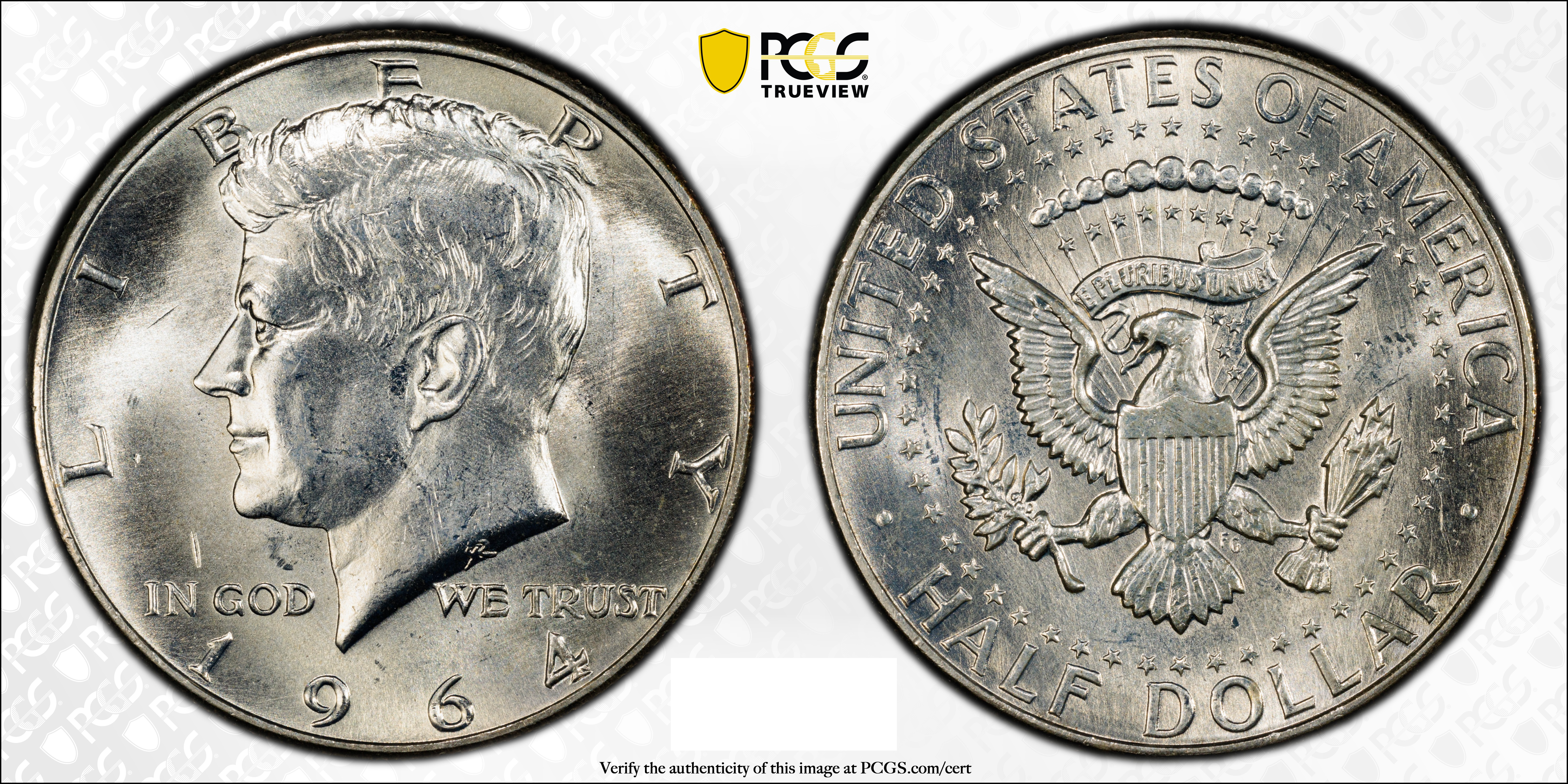
GTG - 1964 50c - REVEALED - Is PCGS Recognizing a Status Change on 1964 "SMS" Coins?
 FlyingAl
Posts: 4,508 ✭✭✭✭✭
FlyingAl
Posts: 4,508 ✭✭✭✭✭
Comments
Very nice coin as well as closeup!
I’m not the best with Kennedy halves but I’ll guess MS64
"Another day, another Collectors Universe forum scrolling session."
- Someone, probably
MS64, DDO as well, but couldn't find it on Variety Vista. Despite the die chip (or gouge) at the end of the crossbar of the 4 and die polish, I don't believe it is an SMS coin. This is mainly because I don't think the known specimens have a DDO, at least from the 2 TrueViews in CoinFacts (and also, this coin isn't there).
Edit: After seeing the better closeups of the 2 SMS coins on Coinfacts, the DDO is visible on both coins and on the OP.
MS64 SMS 😂
Because if anyone was gonna do something clever like that it would be @FlyingAl
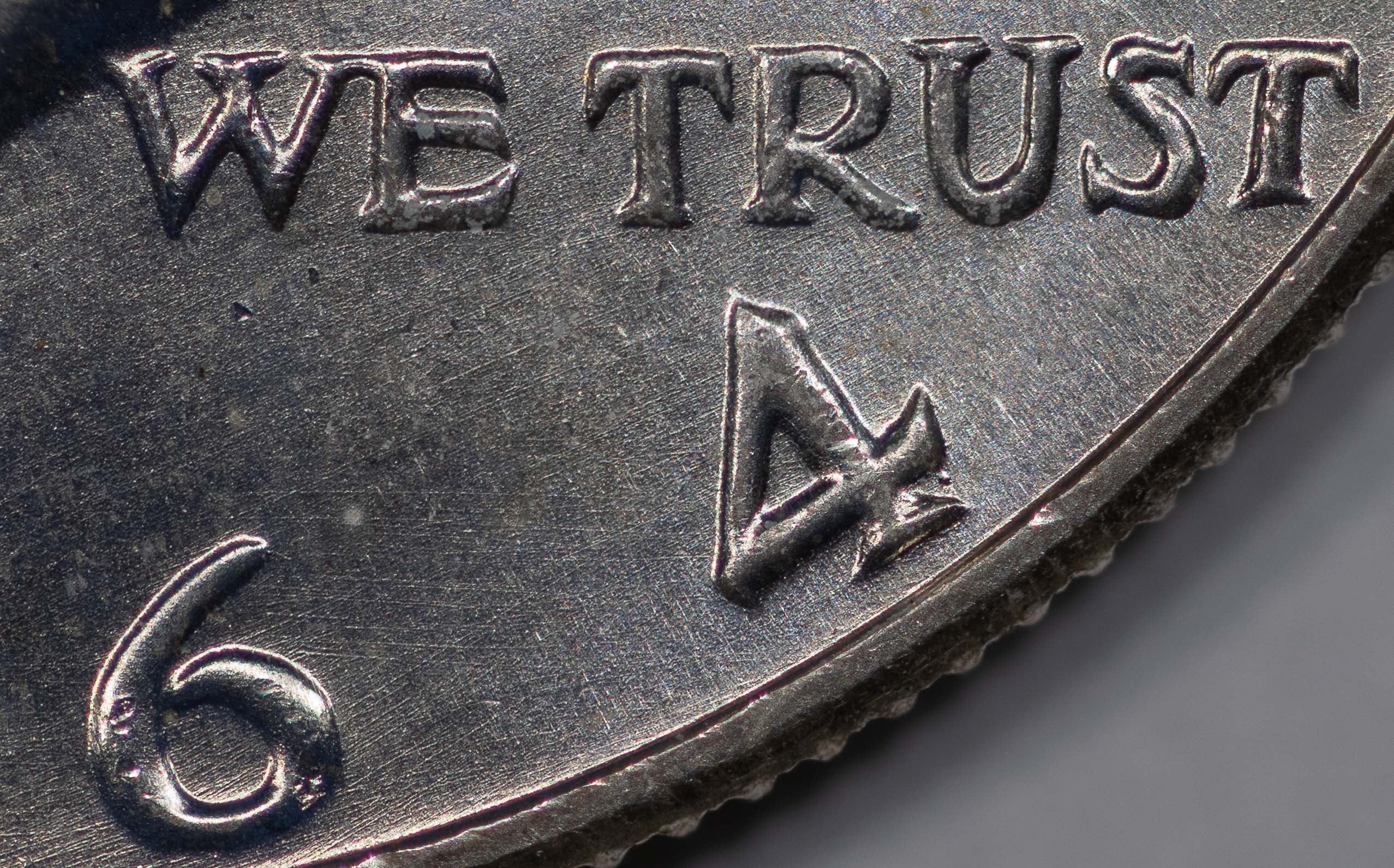
Hmmm...That close-up on the 4 is very interesting.
Why?
You think those split serifs are enough?
Die chip, SMS half 65?
Successful BST:here and ATS, bumanchu, wdrob, hashtag, KeeNoooo, mikej61, Yonico, Meltdown, BAJJERFAN, Excaliber, lordmarcovan, cucamongacoin, robkool, bradyc, tonedcointrader, mumu, Windycity, astrotrain, tizofthe, overdate, rwyarmch, mkman123, Timbuk3,GBurger717, airplanenut, coinkid855 ,illini420, michaeldixon, Weiss, Morpheus, Deepcoin, Collectorcoins, AUandAG, D.Schwager, blu62vette, morgan13, torinoCobra71, JWP, promethius88,
Nice SMS Coin. The Close up gave it awat. I was going to guess SP63.
The name is LEE!
The strike and condition look MS63 due to a lot of marks in hair, on neck, weak eagle head, dark spots. But the luster looks phenomenal, perhaps a bit PL! So maybe MS63+ but I wouldn't like owning the coin with all what's going on with it. I would only have to upgrade it eventually. But it's a DDO, that's the focus of your post. Nice find!
The more qualities observed in a coin, the more desirable that coin becomes!
My Jefferson Nickel Collection
Ms 64
I think your close-up image is a clue
PS:
Not an "SMS" issue.
MS65+
MS 64
Sometimes, it’s better to be LUCKY than good. 🍀 🍺👍
My Full Walker Registry Set (1916-1947):
https://www.ngccoin.com/registry/competitive-sets/16292/
IMO, not an SMS.
Looking forward to the rest of the story.
Regular MS-63
I collect world proof sets, coins featuring composers, mid-20th century U.S. proof coins, U.S. type coins, and whatever else I want.
MS66
WAG 65 DDO
This coin is a fun one, the grade as it sits now is MS65. Several of you have caught on to me - this one comes from the same die pair as the "SMS" examples.
That also makes it unique and causes intense consequences for the tale of the “SMS” coins of this date, but we will discuss that later.
To start, we must begin with defining how the 1964 “SMS” coins are attributed. Most of the TPG statements on these coins are rather vague, but for the halves things get a little clearer. PCGS states in the CoinFacts description from Ron Guth that “One of the interesting diagnostic features of the Specimen Strike 1964 Half Dollars is a small, raised defect that appears to hang from the crosslet of the 4. This defect has been seen on all examples except one. In an admittedly rare hypothetical situation where one of these remarkable coins was spent, the defect can be used to confirm the original status of the coin.”
This is the clearest direct quote of how PCGS attributes these coins - based on die pair. Even if a half is spent, the dangling 4 diagnostic can confirm the status, regardless of what the example looks like. To further support that die pairs are used to attribute these coins, we can pull a couple more quotes from major auction descriptions, which shows how the numismatic community at large expects the attribution process to go.
1) Heritage Auctions, 1964 SMS 50c, “The 1964 SMS Kennedy half dollar die markers readily confirm the identity of known examples: Reverse. An especially heavy die polishing line runs from the bottom right tip of the small middle serif in (O)F to A(MERICA). Another heavy die polishing line runs from the lower-right tip of the small lower serif of the F in HALF to the rim near the D in DOLLAR. Obverse. A tiny teardrop-shaped (or apostrophe-shaped) lump of metal hangs down from the underside of the crosslet on the 4, just right of the intersection with the upright of that digit.”
2) Heritage Auctions, another 1964 SMS 50c, “The 1964 SMS Kennedy half dollar is struck on a 90% silver planchet, from a single pair of dies, showing much sharper detail than the regular issue and having a satiny surface texture. Die markers include: on the obverse, a tiny apostrophe-shaped lump of extra metal protruding from the bottom edge of the crosslet of the 4 in the date; on the reverse, a discernible die polishing line connecting the bottom tip of the lower crossbar of the (O)F to the A(MERICA), and another connecting the same crossbar of the (HAL)F to the rim near the D(OLLAR). This Superb Gem example exhibits all of those markers clearly”
3) Another Heritage auctions half “All 1964 SMS half dollars show various die markers that identify a single die pair. Die Markers: Reverse. An especially heavy die polishing line runs from the bottom right tip of the small middle serif in (O)F to A(MERICA). Another heavy die polishing line runs from the lower-right tip of the small lower serif of the F in HALF to the rim near the D in DOLLAR. Obverse. A tiny teardrop-shaped (or apostrophe-shaped) lump of metal hangs down from the underside of the crosslet on the 4, just right of the intersection with the upright of that digit.”
4) Stacks Bowers, another half (this description is repeated for two coins) “The surfaces also show clear evidence of extensive and purposeful die preparation work. This preparation is most clearly observed by the discernible die polishing lines on the reverse connecting the bottom tip of the lower crossbar of the F in OF to the A in AMERICA and another prominent polishing line leading from the tip of the lower crossbar of the F in HALF extending all the way to the rim just near the D in DOLLAR. The principal diagnostic marker is on the obverse in the form of the so-called "Dangling 4" - a small but clearly defined protrusion hanging from the tip of the right crossbar in the 4 in the date that is evident on all but one known specimen. These dies appear to have been specifically prepared for just these few coins and have not been observed on any other 1964 half dollar.“
Virtually every description of a “SMS” half dollar comes with an explanation of the die diagnostics for the type - a detail only necessary if die matching could be used to attribute such coins. If you can't match them based on die pair, why do we even consider die diagnostics? The answer is obvious - the die markers are the way that these are attributed by the graders and the market.
Therefore, can we establish that this coin is indeed a match to that die pair? As it turns out, it’s rather easy.
1) Diagnostic 4 at date and doubled die obverse.
MS65:
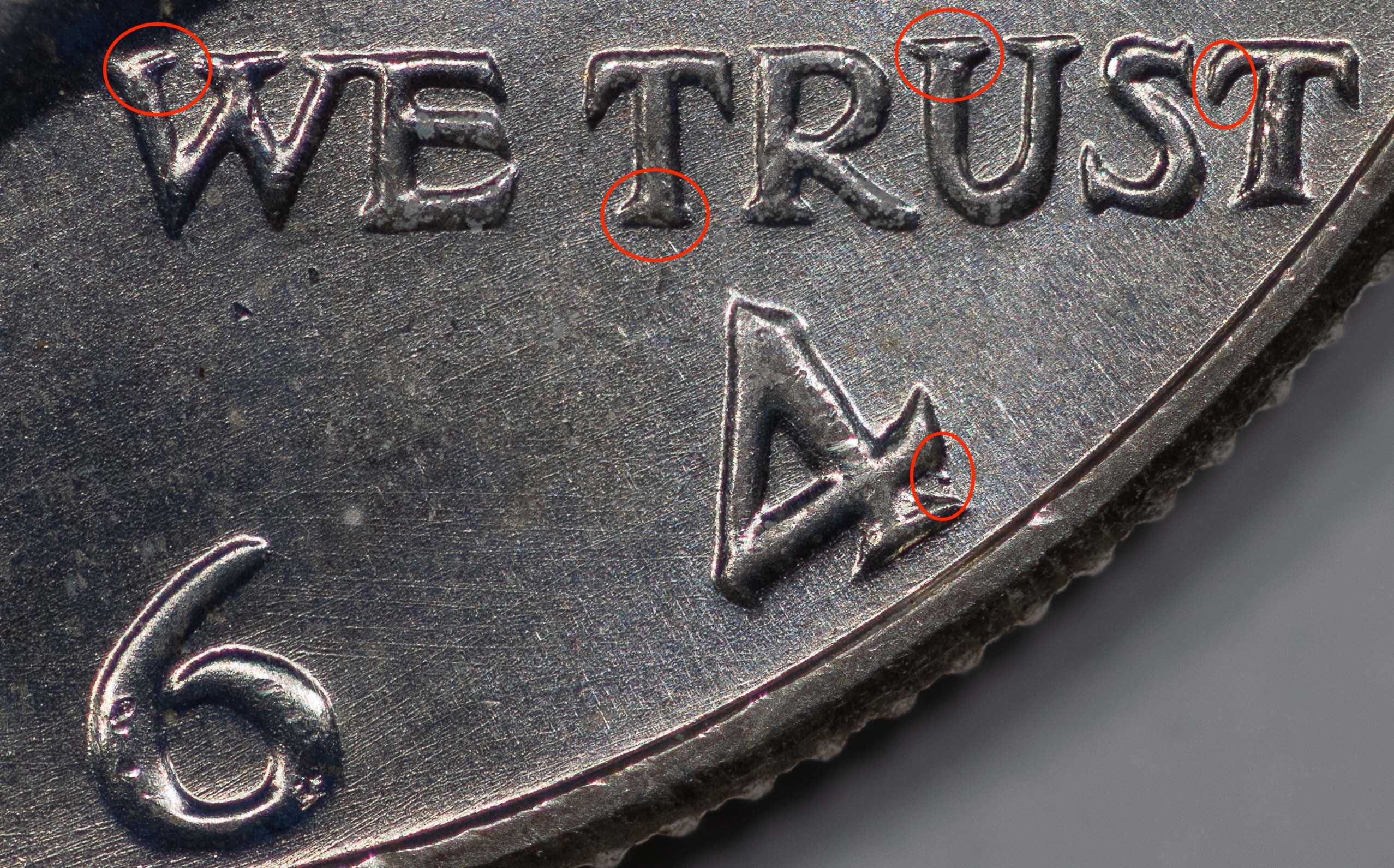
PCGS SP68:
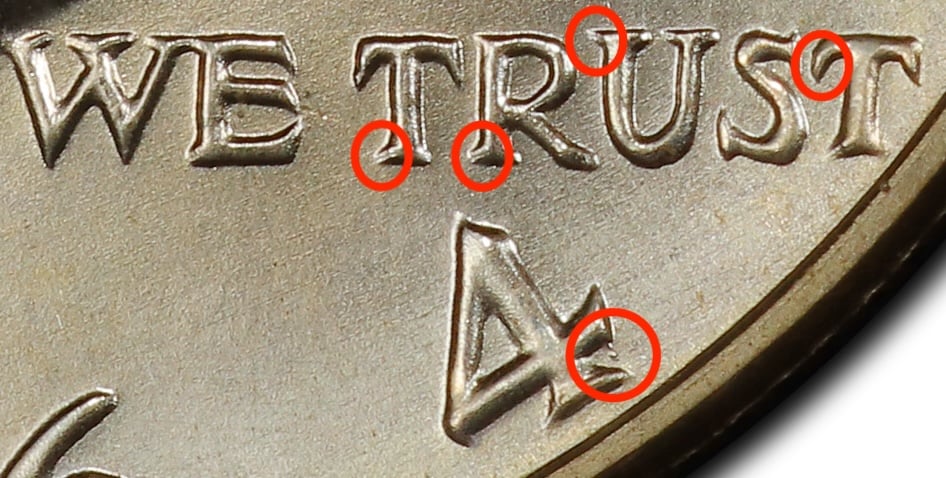
.
.
2) Diagnostic die polish in the obverse fields:
MS65:
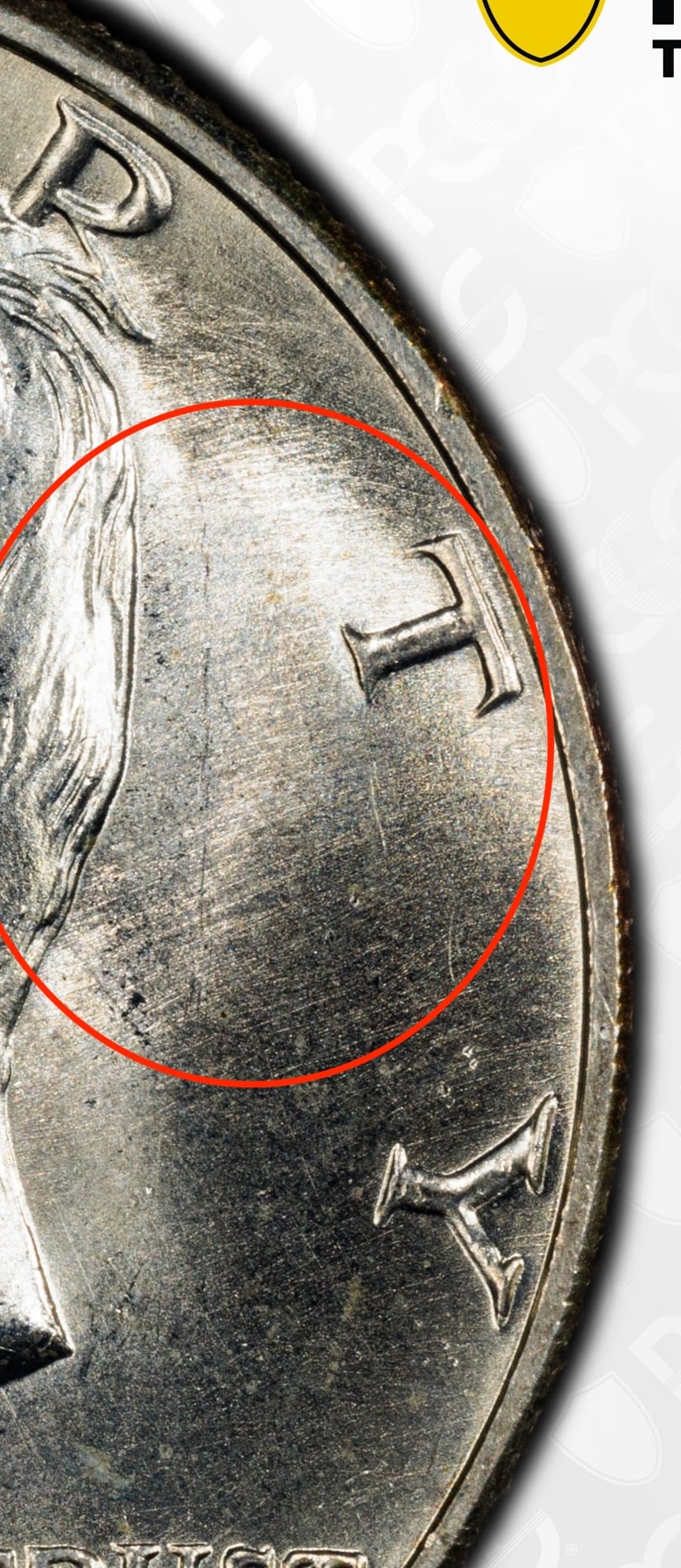
SP68:
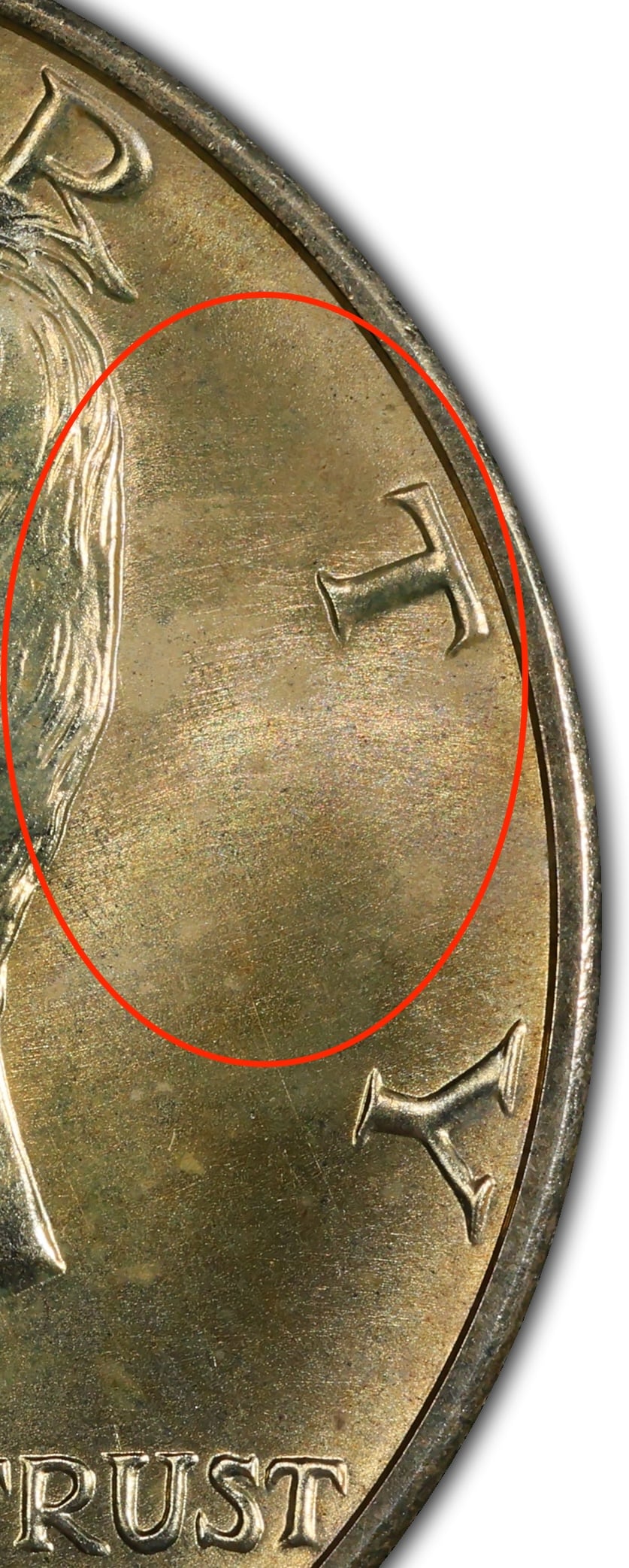
.
.
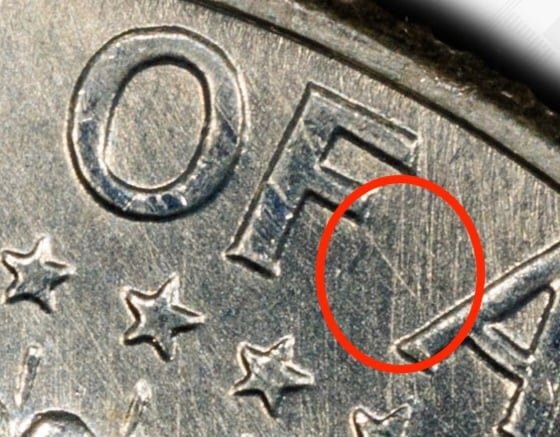
3) Diagnostic polish from OF on reverse:
MS65:
SP68:
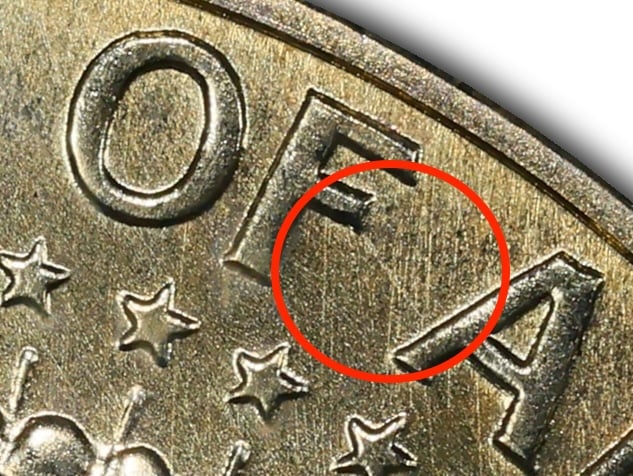
4) Diagnostic reverse polish:
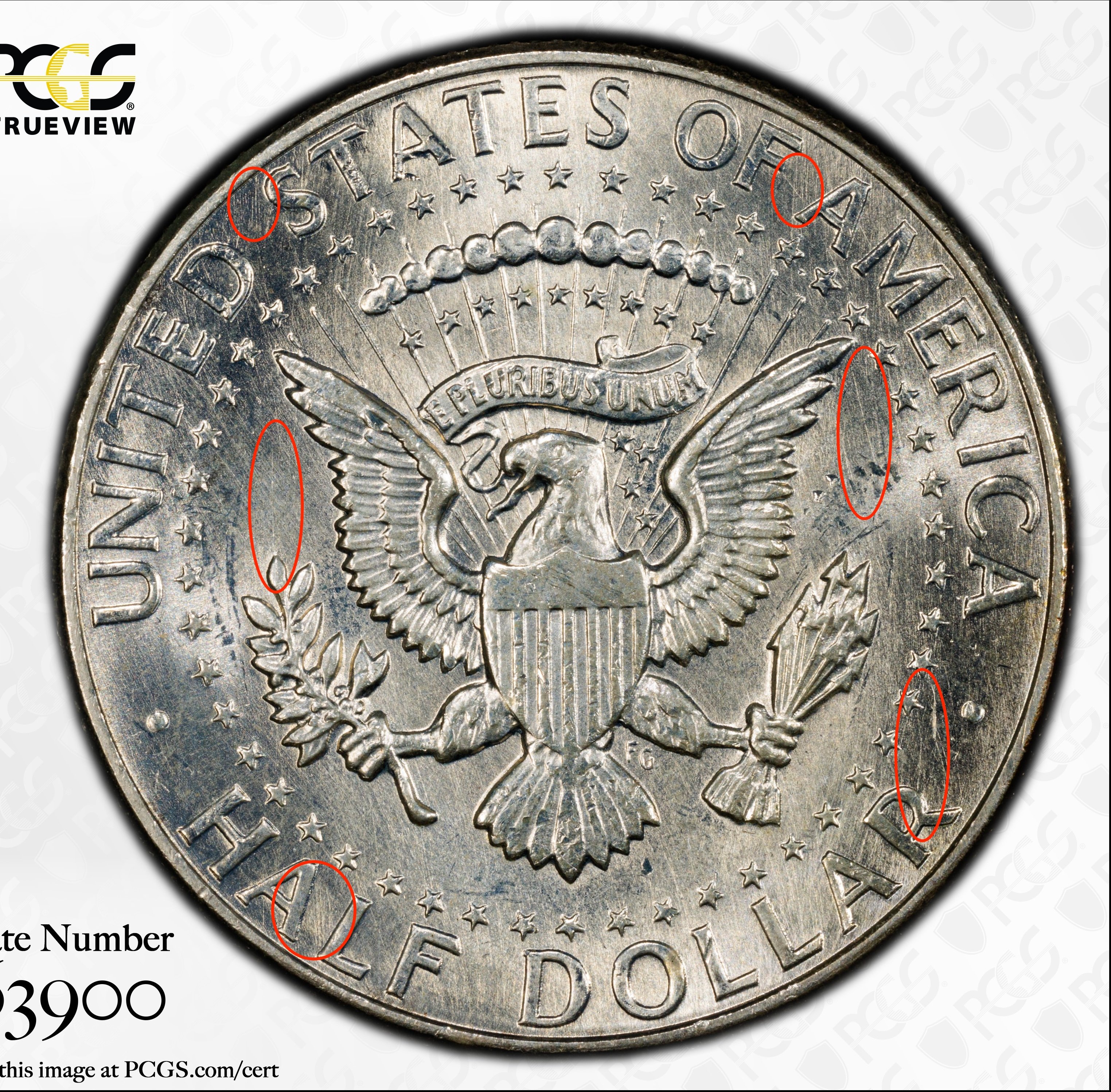
MS65:
SP68:
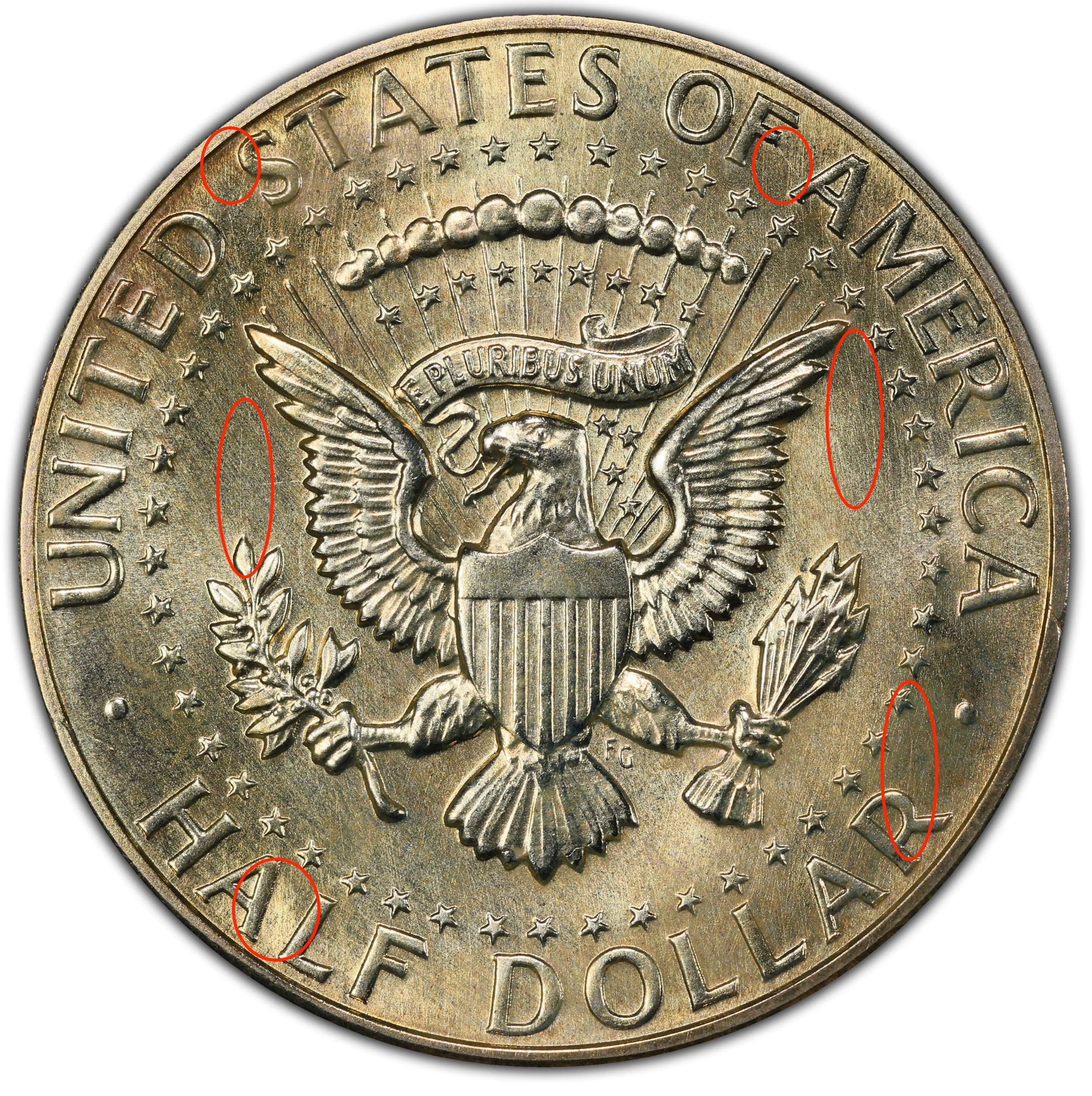
5) And many others, with one more posted below.
With a match confirmed, we can now get into the fun questions.
1) If die pair matching is how these coins are attributed, why was this coin improperly graded?
2) If it was properly graded, is PCGS officially walking back its statements on the uniqueness of the 1964 “SMS” coins?
For the first question, the only possibility here would be a mechanical error. If the coin is not a mechanical error on the label, question one does not apply and we can turn to question two. I cannot answer if this is a mechanical error, but PCGS might be able to.
Let’s assume that this is not a mechanical error for now, and then turn to the question of if PCGS is walking back their statements on these coins. If die pair matching cannot be used, then it becomes clear that special dies were not used to strike these coins - if they were special, then we would be able to use die pair matching. Otherwise, the story of all of these coins as seen in the auctions and statements above is wrong (some of which outright say that special preparation was used for the dies). It also becomes a wild guessing game of what the graders want to see to call a coin "SMS", but that's another discussion for a different day.
Rather, what PCGS would be attributing is not a Specimen strike, but rather a very good state of preservation. I.e., if die pair matching cannot be used, then the “SMS” coins are simply high grade, very well preserved examples of a 1964 set of MS coinage since the dies used and their preparation is not a factor in the attribution (status of preservation and appearance is what is important). If that is the case, then PCGS would have to walk back the last 30 years of attributions on these coins due to a change in status (any mention of die polish/markers must go, and the descriptions must be changed to reflect that only high grade examples will be attributed).
Lastly, a final counter to a potential argument of “Well, what if they struck circulation coins right after the “SMS” coins?” Each “SMS” half bears a small die crack off of the 1 in the date, which the MS65 OP example also bears. The OP coin bears a crack that is between the progression of the other “SMS” coins, which means that it must have been struck in between those examples, not after. This coin also happens to be unique in this slab - as the only known non-”SMS” example from these dies. The following images show the progression of the crack, and the end of the crack is denoted by the red line. The line is parallel with the upright of the 1 and moved rightwards until it meets the end of the crack. Unedited images are on the Coinfacts page for the 1964 "SMS" coins if you wish to verify the end of the crack for yourself.
Earliest die state (SP69):
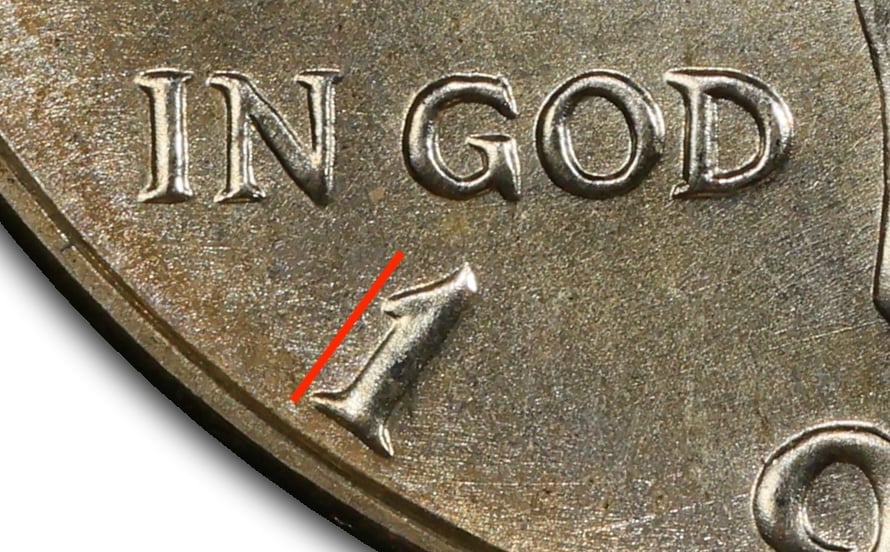
MS65:
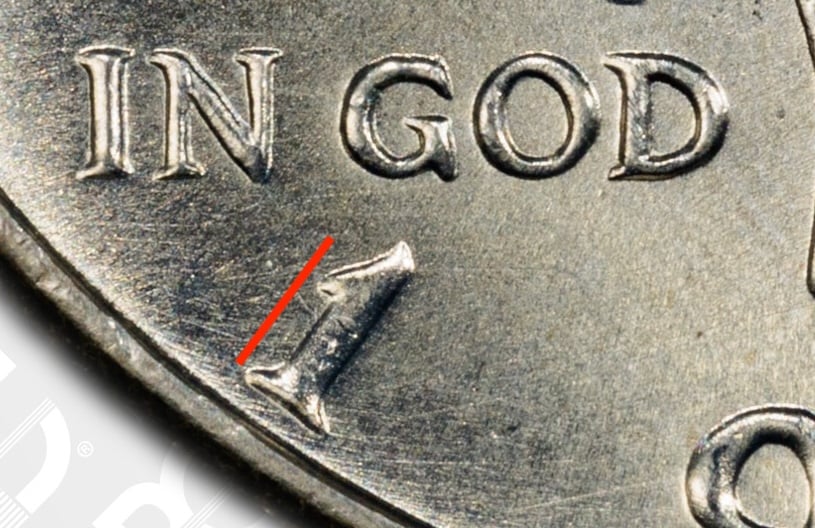
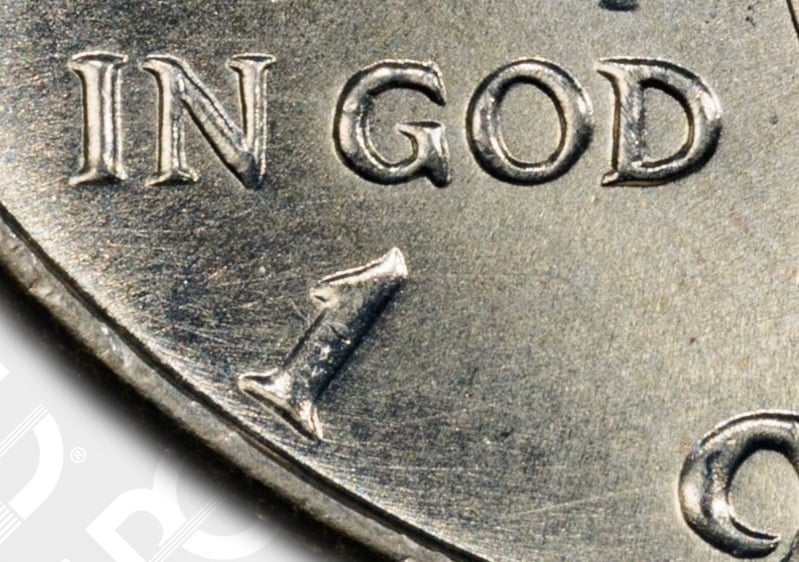
No red line to prove it is not hiding the end of the crack:
Later die state (SP68):
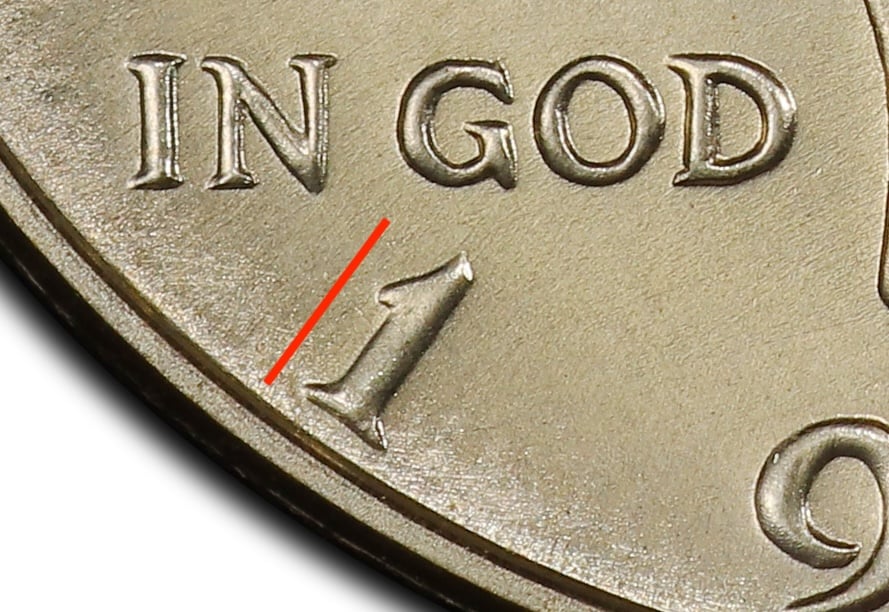
Latest die state, note cracks that appear to be forming in GOD (SP68):
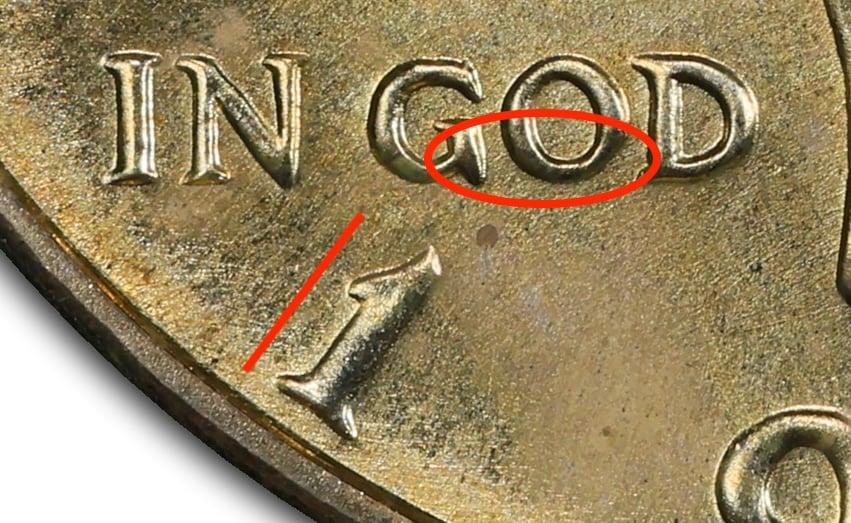
.
.
Based on this, we can conclude that these coins were struck in series, and unless the Mint stopped special strike production to strike a single business strike coin, there's a problem with the grade of this MS65 example or there's a problem with the story of the "SMS" coins.
So the question becomes - is PCGS finally overturning a multi-million dollar market with this half, or is it a mechanical error? It is of note I would be happy to let PCGS have another look at the OP MS65 coin, provided I'm not the one bearing the cost of shipping etc.
@PCGS_Hy @PCGS_Marketing @pcgs_education @PCGS_Cheyne @PCGS_Moderator
Coin Photography
Definitely not my series. It looks like an ordinary 63 and would make a mediocre 64 at best to me.
@FlyingAl Thanks so much for sharing your discovery & detailed research; this is really impressive. You've definitely nailed the die marriage. 👍
Regarding your final point, I am not convinced from the photos that there is a die progression in the four coins shown; they all actually look to me like they are probably the same die state. These are pretty fine details, so some variation in appearance due to strike and/or lighting may perhaps be expected.
On the line extending from the "1", there appears to be a little knob at the end (red arrows added below). The connection to the line isn't clear in every photo, however the line is very fine and might just not show up equally well. I do see the knob in every photo.
On the line through the "O", I can see at least the beginning of it in every photo (red arrows also added below). The amount of the full line that I can see varies from photo to photo, with the first and last photos showing the most (again, this could be a striking and/or lighting issue).
Well written. I think PCGS has got a lot of explaining to do. The die pair is a match....Not difficult to see that. So why, exactly is your coin not an SMS? And if the SMS dies/coins were uniquely prepared and handled, why did yours end up in a bin, banging around with all the regular 64's?
@IkesT - I can see what you're saying on the last point and I have considered that what we're seeing is just photographic differences. I'm going to send you a PM with more explanation (I don't want to clog up the thread with tons of images).
Coin Photography
Excellent work @FlyingAl (Alex) !
Mark Feld* of Heritage Auctions*Unless otherwise noted, my posts here represent my personal opinions.
I have long been skeptical of undocumented specimen coins and special proof coins that are undocumented. That includes the 1964 SMs coins. That said, it was very common to use retired proof dies from this era to subsequently strike business strike coins. It would not be surprising to see the same dies used to strike the SMS coins also used to strike business strike coins. Your counter argument is interesting, but I agree with @IkesT that you are not accounting for lighting or striking differences (including the possibility of different striking pressures).
I’m not convinced your research discredits the 1964 SMS coins entirely, but I do agree it raises a lot of questions worthy of additional study. It does confound the analysis for circulated SMS specimens as contemplated by Ron Guth though. Coin Facts should remove that statement.
Excellent work Flying Al.
Ron Guth’s quote isn’t (and I don’t think ever was) the sole requirement for PCGS to designate the prefix.
I would imagine to be called SP it would have to present the correct die markers, and also look like an SP
Head coin nerd @ Rarity7
Also, curious, do you think the coin looks similar to the imaged SP examples visible on CoinFacts? Strike/luster/texture etc
Head coin nerd @ Rarity7
I don’t know, can you provide a little more info?
J/K
What a great job on the research!!
Maybe you can get them to attribute this as a discovery coin - struck from SMS dies.
Unfortunately, that is what they have written. If they meant something else, they need to have wrote/posted something else, or at least remove that claim and revise what else they have. The premise that collectors would have to surmise and guess at unwritten requirements is dangerous best, and this also sets aside the fact that auction catalogers (the market at large?) have taken the statement at face value to mean exactly what it says it means - if a coin has the markers, it is a "SMS". Thus, their descriptions repeat variations of the same claim.
There's also issues of who gets to define what "looks like an SP" is. If circulation wear takes away those attributes (which attributes/requirements?), does it still count? Does one grader's opinion matter more than another's?
Coin Photography
Well said on all counts.
At the very least, it's a new doubled die.
Again, Ron Guth’s 20 year old CoinFacts commentary isn’t an accurate reflection of the intricacies of current numismatic nomenclature. I agree PCGS should update it, I’ll let them know.
The coin looking like an SP is a common-sense requirement for it being called SP. I don’t see how it could be suggested otherwise.
Weird that you didn’t answer my question about if you think it looks like the SPs lol.
It seems as though the coin is struck from the SP dies, though not with any special preparation, process, or subsequent handling. This seems like it could be a good case for a new variety of MS 1964 halves though, sort of like MS VAM 1H “Satin Proof Dies” Peace Dollars.
Yeah some graders opinions definitely matter more
Head coin nerd @ Rarity7
It’s also interesting that you managed to eat around all the parts of the CoinFacts commentary that would debunk your
coin like (this is direct copy and paste):
“ The 1964 Special Strike Kennedy Half dollars display very unique characteristics unseen on any other coins of the era. First of all, the strike is very sharp as it displays very clear details on both the obverse and the reverse. The coins also contain a smooth satin like appearance with the rims being very square and sharp. There are die polishing lines throughout the coins surfaces. These coins also tend to lack contact marks unlike business strike coins, indicating that they were struck and handled under extreme care.”
Seems to me like you’re just trying to use some outdated non-authoritative 20 year blip tucked away at the bottom of a CoinFacts page to strong-arm a very not-SP-looking coin into an SP holder
Head coin nerd @ Rarity7
For what it's worth, I've inferred quite the opposite from the @FlyingAl research and evidence: seems like he's trying to showcase to PCGS that 64 SMS SP holdered coins belong in non-SP holders.
It really depends on the definition of SMS. I think that up until now, it was largely assumed that every coin struck from those specific dies was SMS and that they all had the "look". Even if one was worn down to VF, but still had the die markers, it would be SMS. Now we have an uncirculated example from SMS dies that does not look like the others. This changes things.
Hopefully that’s the case, I’m not known for my optimism
Head coin nerd @ Rarity7
A lot to unpack here.
"Seems to me like you’re just trying to use some outdated non-authoritative 20 year blip tucked away at the bottom of a CoinFacts page to strong-arm a very not-SP-looking coin into an SP holder."
No, I have published research with my name on it where I state that these coins are simply fresh strikes off of new dies. This coin sitting in this holder would tend to prove that true, but alas I need PCGS to finally officially reverse their stance on the coins. If it ends up in a "SMS" holder in order to protect 30 years of inaccuracies, oh well I guess. I would much rather see PCGS stop attributing these coins all together.
"Again, Ron Guth’s 20 year old CoinFacts commentary isn’t an accurate reflection of the intricacies of current numismatic nomenclature. I agree PCGS should update it, I’ll let them know."
I don't dismiss twenty years of misleading collectors lightly. They had twenty years to fix it, why must I be the stimulus to actually make it happen?
"The coin looking like an SP is a common-sense requirement for it being called SP. I don’t see how it could be suggested otherwise."
Not true, for example, this 1964 quarter that appears to have finally been adjusted to MS66 after it sold as a SP66 for $9k (ouch).
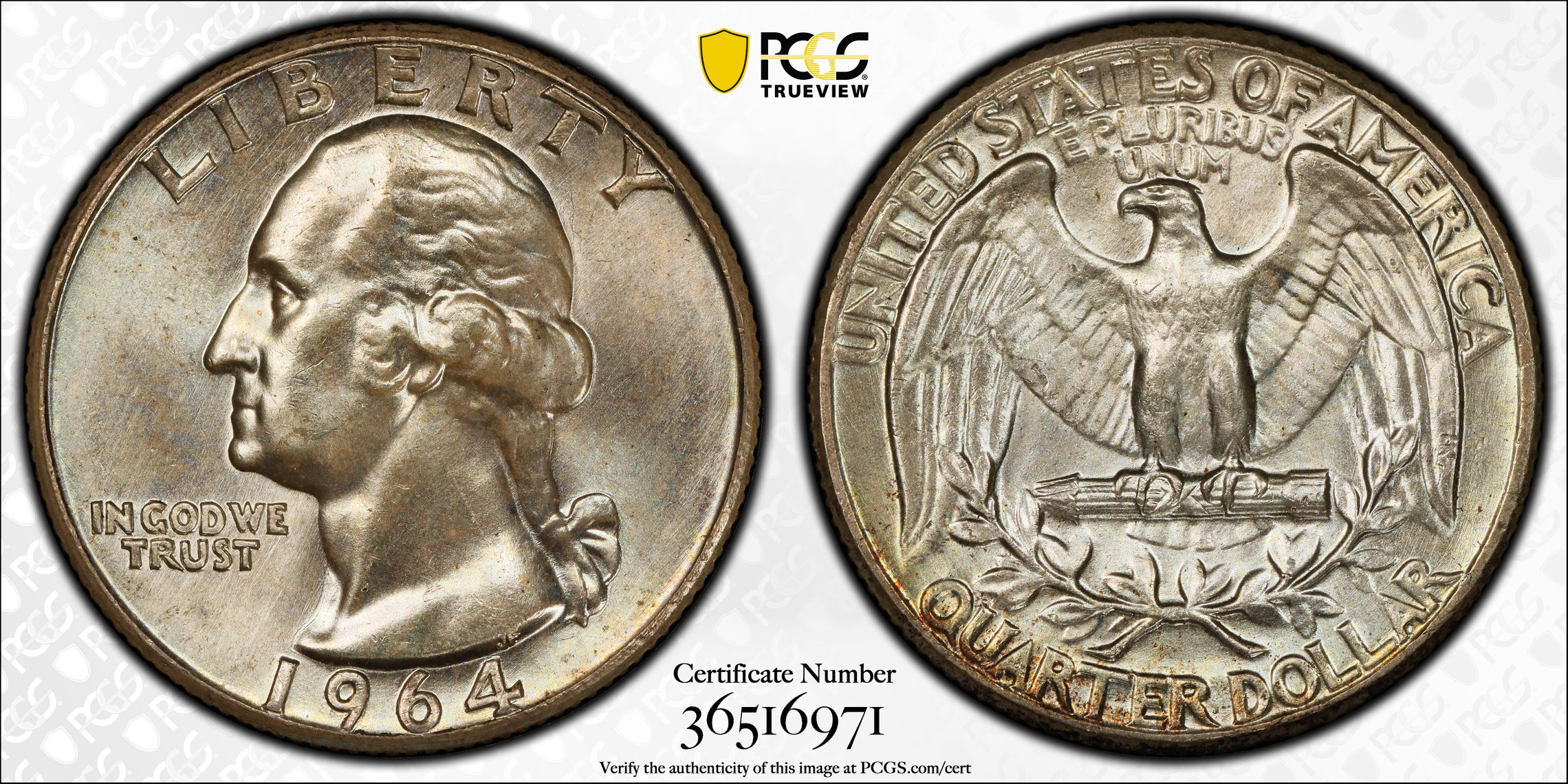
Also, the Ron Guth quote literally "suggests otherwise".
Weird that you didn’t answer my question about if you think it looks like the SPs lol.
Depends on your definition of SP. Hence why I asked based on whose definition. Regardless, the die state and cracks show that the OP coin and the "SMS" coins were struck in series, so the conditions of striking were the same. Therefore, it looks exactly like what the SP68s and SP69s would look like if they circulated too.
"It seems as though the coin is struck from the SP dies, though not with any special preparation, process, or subsequent handling. This seems like it could be a good case for a new variety of MS 1964 halves though, sort of like MS VAM 1H “Satin Proof Dies” Peace Dollars."
I say put them all in MS holders and grade the "special ones" in accordance with their state of preservation (just as straight MS68s/69s). Clearly, there was no special die preparation.
Finally, I left out that particular version of the PCGS quote because it is effectively contradicted by every other CoinFacts description of the coins and the main PCGS page on the "SMS" coins (plus the Ron Guth quote directly below it). The main page and three of the minor coin pages say (with minor variations for denomination at times):
"The special finish of 1964 SMS coins is characterized by a nice, smooth, satin-like appearance. The fields are usually well struck, very clean and tend to come without any major nicks or scratches. The edges for most 1964 SMS coins also tend to be square and sharp. The bust and legends are usually highly detailed and sharp on most examples, especially when compared to business strike coins. The surfaces are non-reflective compared to proof coins of the era, yet are not the same finish as regular-issue coins for the same year."
Note the number of "usually"s and "tend". They seem to be hedging their bets, and in doing so left so many qualifiers in there that you can fit a lot of coins in that description.
Coin Photography
I'm full of surprises I guess (@mattniss is correct).
Coin Photography
That certainly is nebulous. The coins in Coin Facts look to be well within the spectrum of what business strike production could produce from an early strike. They don’t appear that special to me.
Always be ware of individual coins or issues that need a story to sell.
I agree having something like that up for 20 years is a bad look, I hope they fix it soon.
That quarter doesn’t look SP and was probably a simple, but costly and unfortunate, mech error, I’m glad PCGS corrected it. It was corrected to MS because it doesn’t look SP, so I’m not sure I’m following you on this one. It’s just an example of exactly what I’m saying.
The SP coins are definitely SP, there’s no utility in squashing or rearranging the nomenclature.
Head coin nerd @ Rarity7
I’ve handled a nauseating amount of UNC 1964 coins, many hundreds of thousands.
I’ve also handled SP-designated 1964 halves, and other denoms, and they’re unlike any business strike coin I’ve ever encountered in a roll or bag, by a long ways. They have a very striking and unique appearance in hand. The market, TPGs, and practically all experts have considered these SPs for decades. I think grading companies (PCGS in this case) understand and designate them correctly.
There’s a semantics argument to be had about what to call the unique looking 1964 coins, I like SP.
Head coin nerd @ Rarity7
The only difference between the OP coin and the ones graded SP is that the OP coin saw circulation. That's why that coin is so important. It's tangible, and it's not an opinion. It was struck as the same die state and shows the same characteristics as the SP coins, and yet apparently having a few contact marks is a very very big deal indeed.
There is no evidence to suggest that the SP coins are anything but fresh strikes off of new dies that saw some special handling after the fact, and thus look "special". There are people who will say that they are obviously special. There are people who will say they are obviously not special. I've talked to people in both camps today. The opinions are opinions.
The Mint called them uncirculated (the same term they used for the mint sets of the year) when they gave them to the Smithsonian in 1964. That's what we should call them now. Not specimen, not SMS, uncirculated.
To illustrate my point, I digitally removed the contact marks from the OP coin and put those edited images side by side to a SMS coin (I chose examples where the lighting was most similar). The similarities are striking.
Coin Photography
Your coin does not show the same characteristics - strike sharpness, surface texture, etc. I’ve exhausted all the thoughts I have on the matter, good luck getting 1964 SP coins reclassified
Head coin nerd @ Rarity7
I like that you tried to isolate when the coin was struck. Let's assume for a minute that SMS strikes exist. Could this have been intended to be struck as an SMS coin, but was tossed into the circulation bin because it wasn't good enough? That brings up the question... Which determines strike type, intent or appearance?
Materially how are they different from well struck early strikes from a die? I also collect proof like coins including from the 19th and early 20th century. I could make the same arguments about many of them including the unique or near unique PL buffalo nickel I made several years ago as well as a PL half cent. Had I labeled them as “specimen” strikes no one would have taken me seriously. Just as PL coinage, while special, is within the normal range of quality from normal production business strikes so are the 1964 SMS coins IMHO. I could be convinced otherwise, but the Coin Facts images aren’t helping.
Edited: About the only undocumented specimen coin I could justify the designation for was Bruce’s 1794 specimen Flowing Hair Dollar.
Have you seen any of the 1964 SMS halves in hand?
Mark Feld* of Heritage Auctions*Unless otherwise noted, my posts here represent my personal opinions.
In fairness no. That’s why I remain agnostic and not a total denier. Having undoubtedly seen many, what are your thoughts on them and the OP’s coin?
Interesting thread with great discussions taking place.
Make thought is that in the absence of verified evidence that explains exactly how the multiple 1964 sets of coins present in the estate of Ms. Adams came to be made (perhaps she wrote the story in a diary the is yet to be discovered?) all the hobby has is speculation.
These coins are of better quality than other MS 1964 coins, so in that tespect they are special. Beyond that, the debate continues.