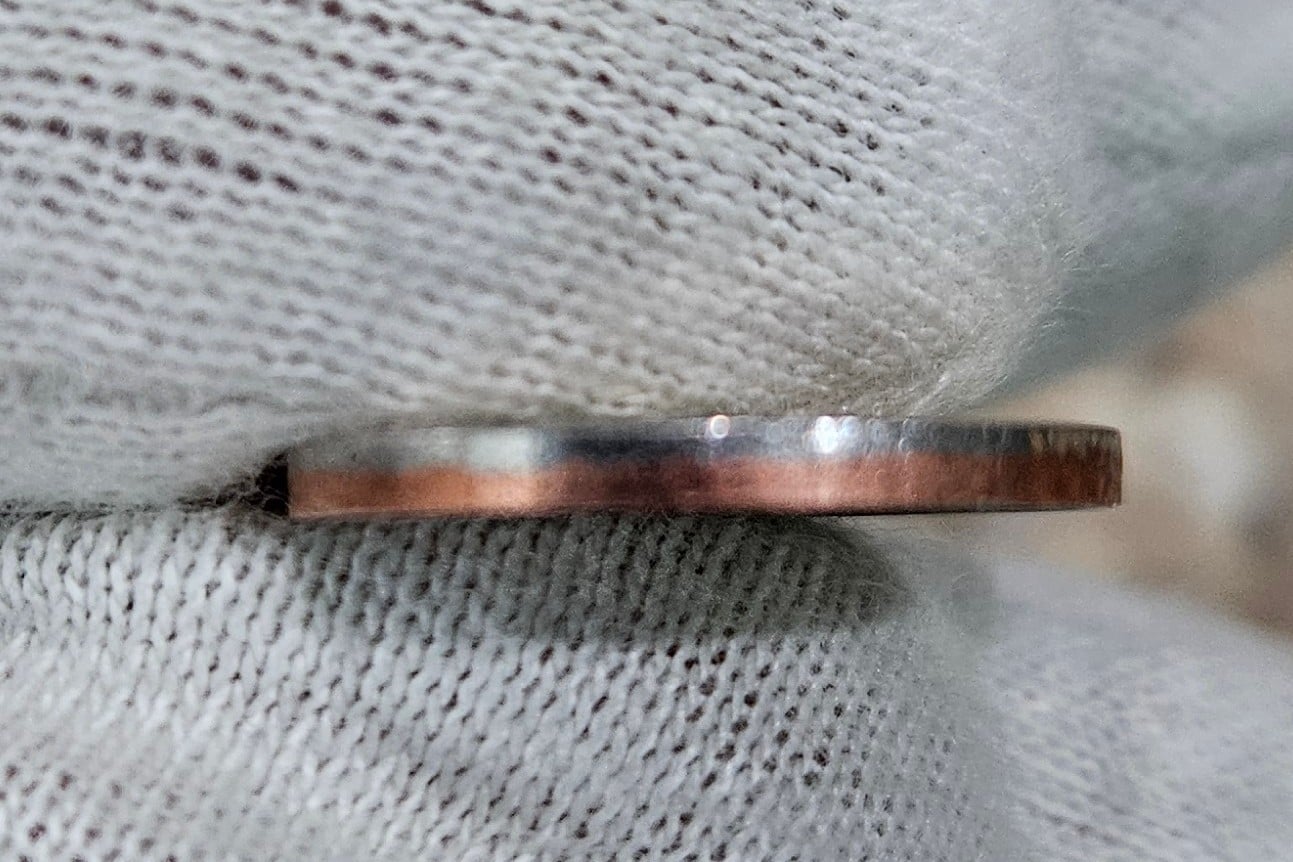
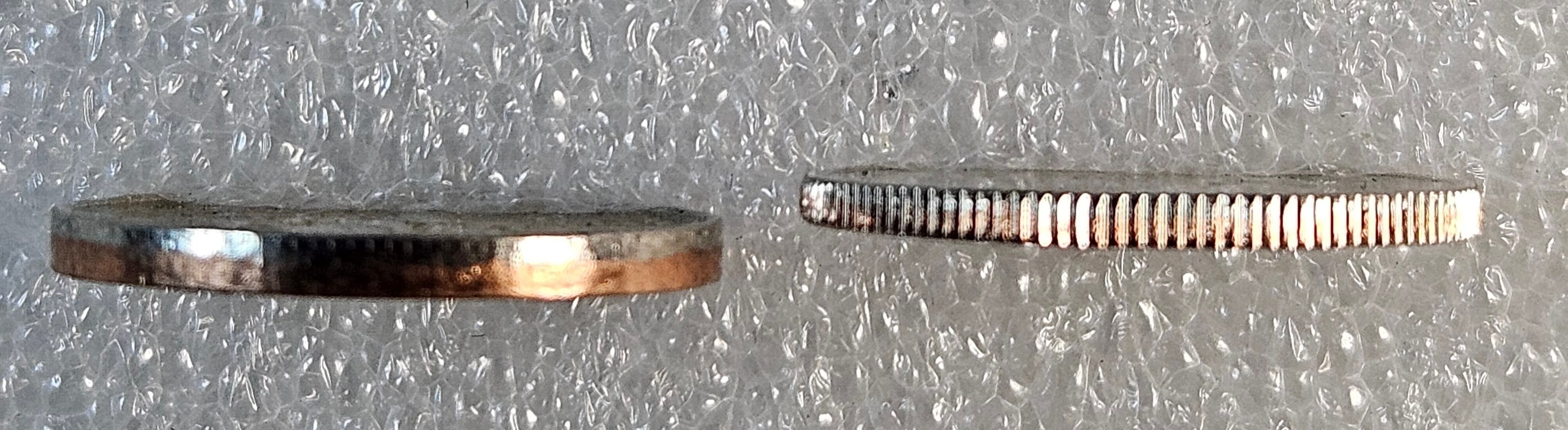
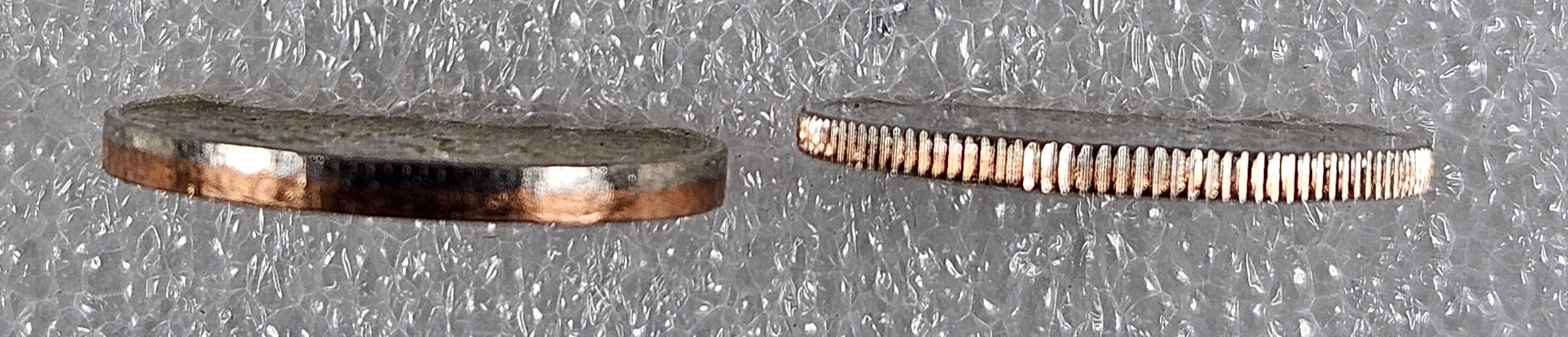
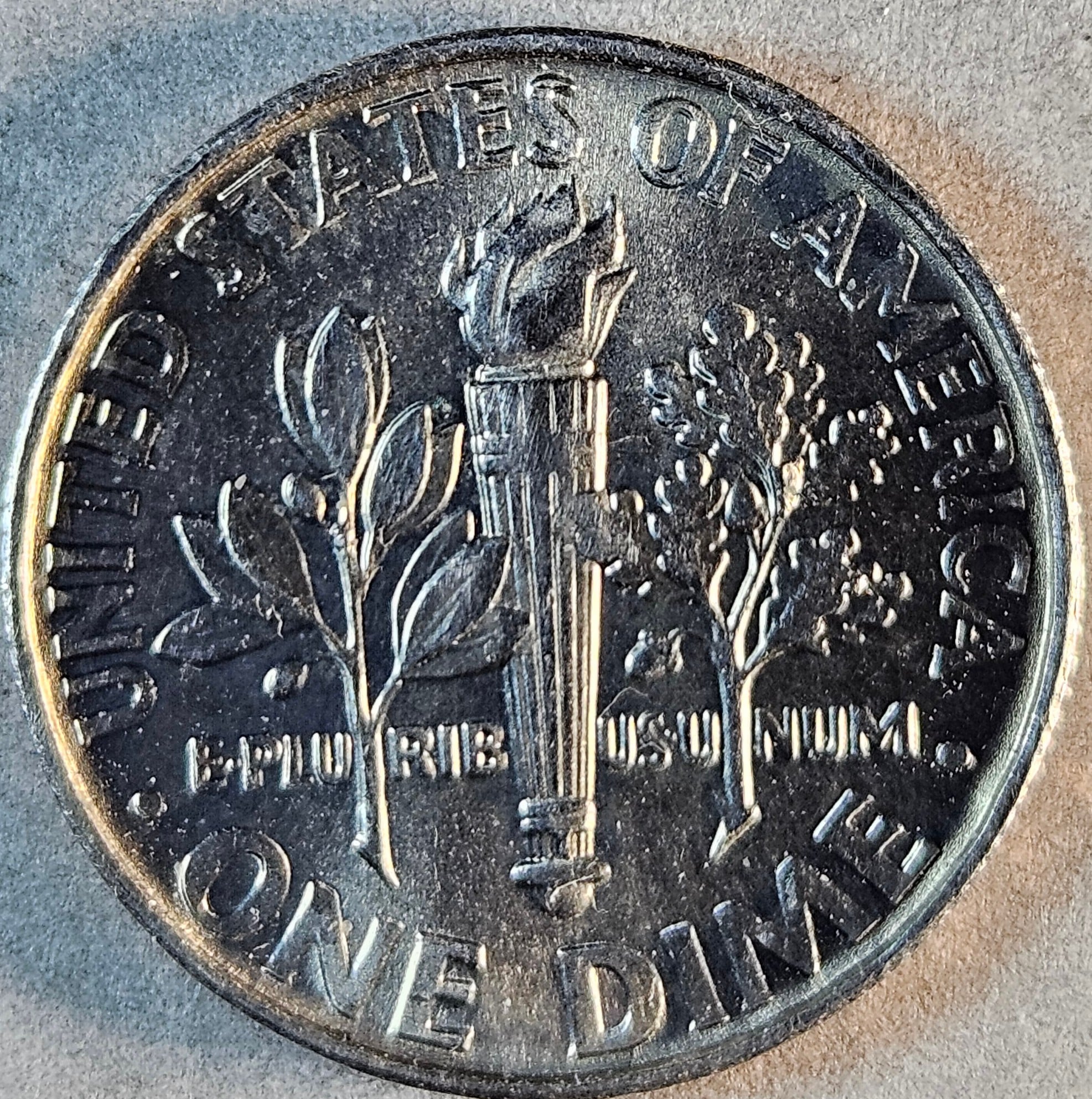
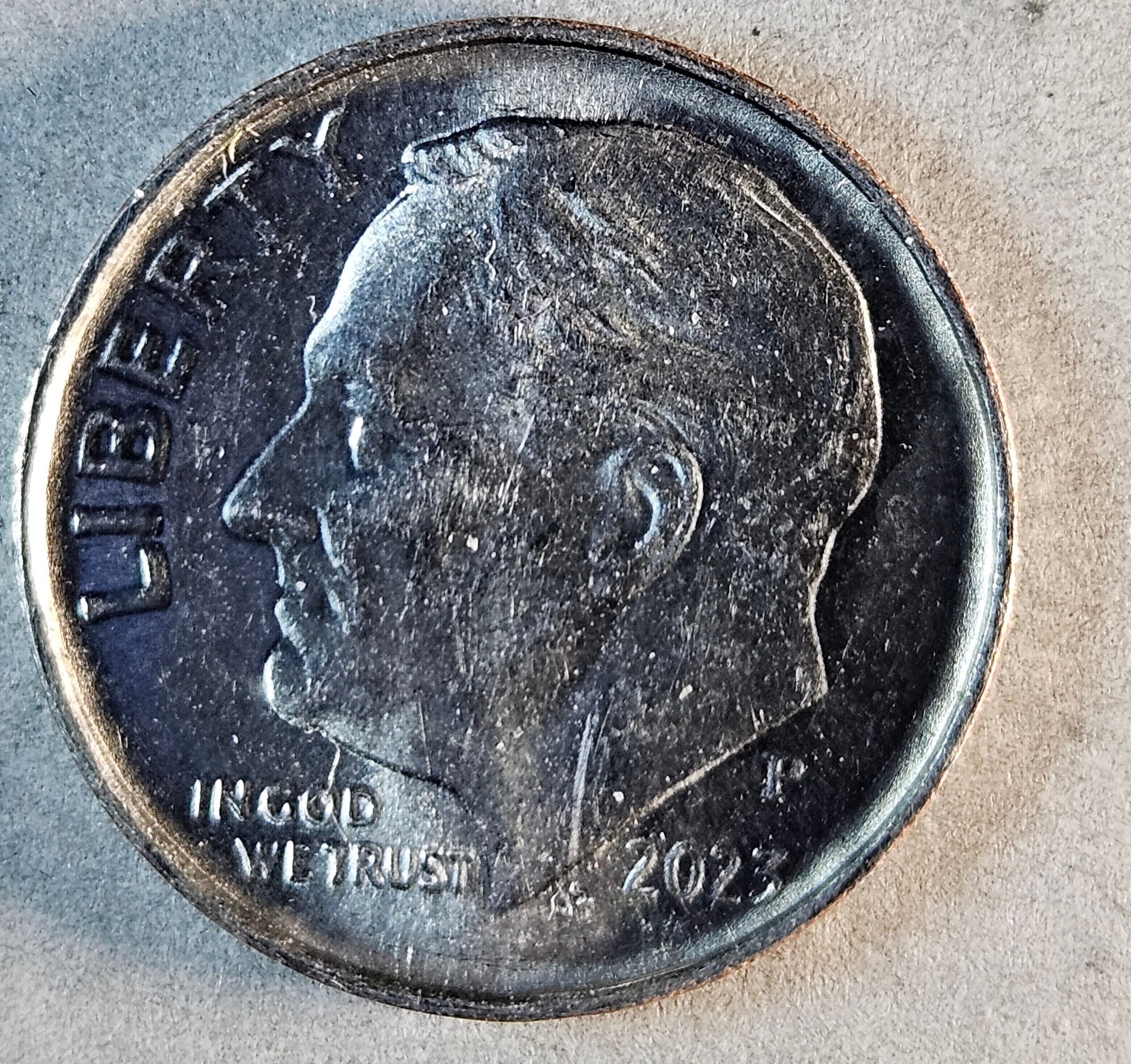
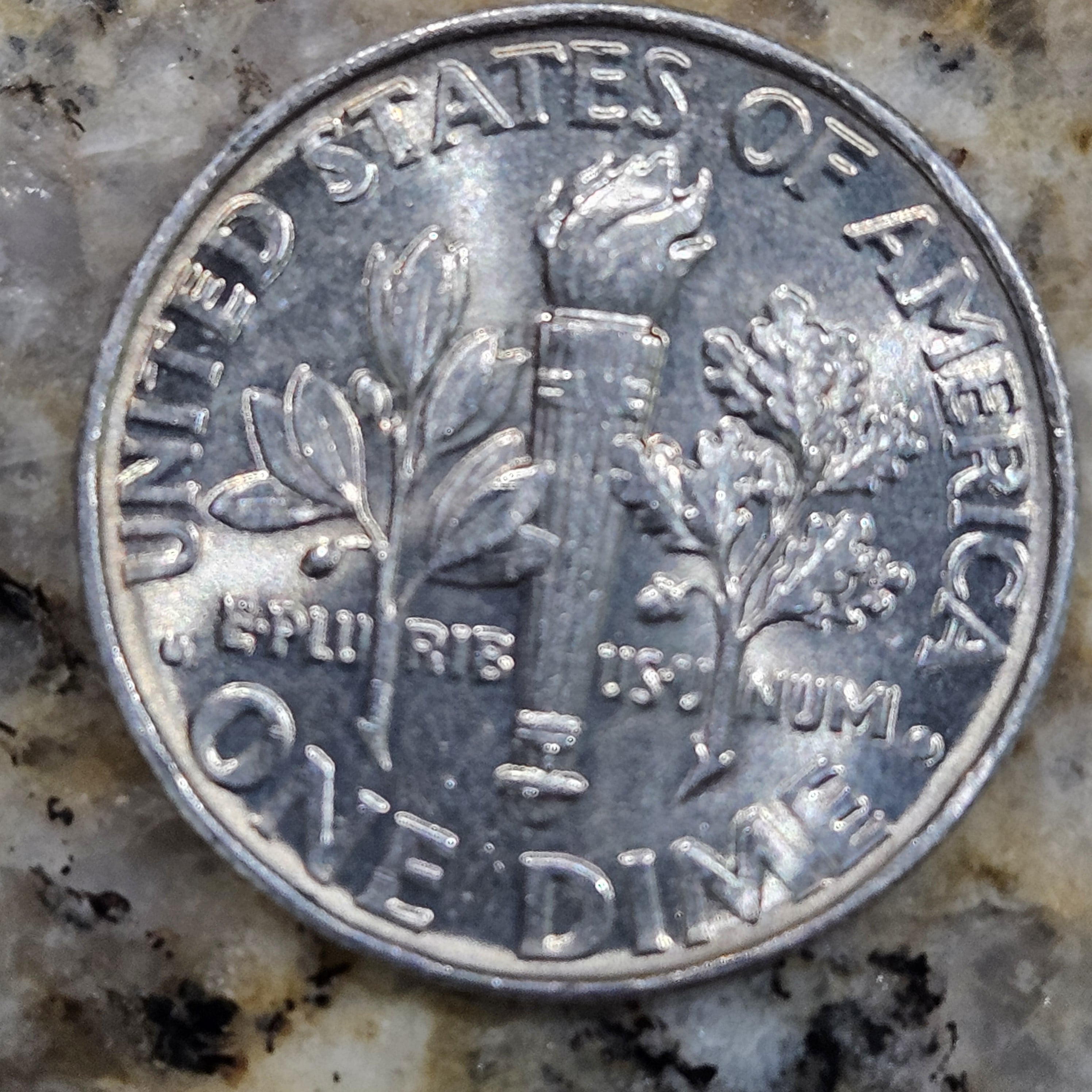
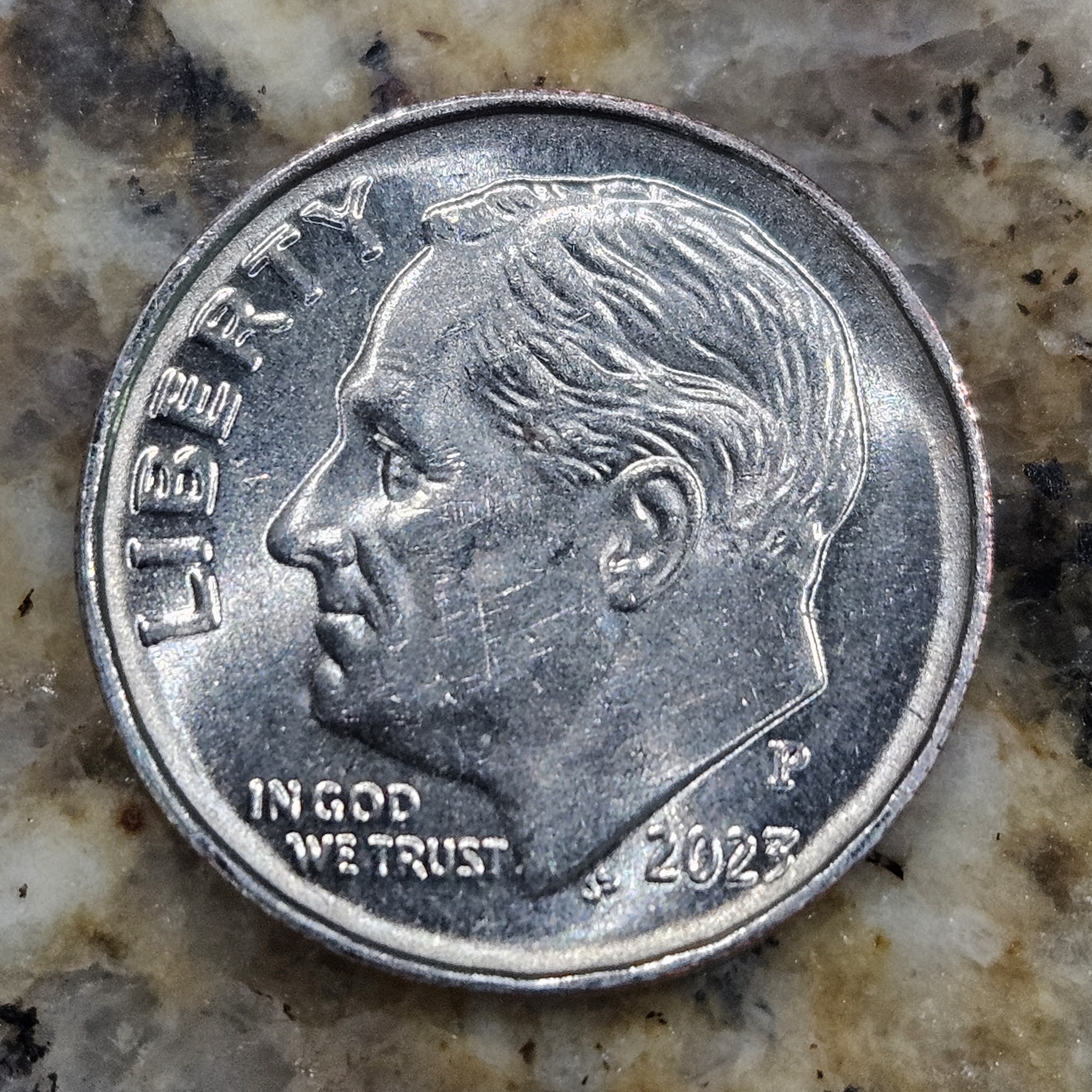
2023 P dime with a smooth edge (not a reeded edge). Anyone have a thought about this dime?
 JWP
Posts: 38,770 ✭✭✭✭✭
I found this dime when I searched a box of dimes yesterday. The edge is missing all 118 reeds for the edge and is completely smooth. The diameter is 17.3 mm (norm is 17.9 mm). The weight is 2.26 grams which is normal. What I found out when I looked into this dime, is that when the dime is stamped, the 118 reeds are created when the planchette is stuck and pressed into the e correct force and that is why the coins edge was not pressed completely into the edge of the die in order to place the reeds on the dime? With the weight being correct and the reeds missing on the dime, what else could have happened. I do not see where this is a PMD issue. Also, is the coin worth being sent to a TPG, feel free to post your thoughts and for your interest. 
USN & USAF retired 1971-1993
Successful Transactions with more than 100 Members
Best Answers
-
OptionsJWP
Posts: 38,770 ✭✭✭✭✭
I did not believe it is a dyer coin. The outer smooth edge is shows no damage or scratches. Not PMD IMHO. Any other ideas. Why is the weight correct, and the diameter is 0.6 mm smaller than the specs?
USN & USAF retired 1971-1993
Successful Transactions with more than 100 Members0 -
OptionsJWP
Posts: 38,770 ✭✭✭✭✭
IMHO, I still do not see PMD. I will try to do more research thos issue. I could be wrong, won't be the 1st time. Thanks for the comments.
USN & USAF retired 1971-1993
Successful Transactions with more than 100 Members0 -
OptionsJWP
Posts: 38,770 ✭✭✭✭✭
Yea, the TPG was just a thought. It really makes no sense to send it to be graded. Thanks tour your comment too.
USN & USAF retired 1971-1993
Successful Transactions with more than 100 Members0

Answers
It's a so-called dryer coin. Whether it involved an actual dryer or not, it was mechanically spun or tapped to flatten the edge. PMD.
The correct weight and smaller diameter usually indicates that it is a dryer coin.
This is probably an early stage dryer coin that has not had too much damage done to it yet.
Note how the rims are also slightly thicker, another indicator of a dryer coin.
No offense, but this is the classic approach that people take when improperly claiming a coin is an error. You need to explain how it happened in the minting process.
The rims are too high for a coin that was weakly struck (or any other coin, for that matter). The coin is otherwise fully struck obverse and reverse, so how did the planchet not expand enough to reach the collar? Also, the edges of the obverse and reverse fields curve up to the edge.
Lastly, I've personally seen it before.
You asked:
Dryer or similar mechanical process explains it. If you don't think that's the cause, then how do you explain it? 🤔
It looks like the early stages of a "spooned" coin.
You keep hitting it with the back of a spoon to make a ring out of it.
Wayne
Kennedys are my quest...