Home U.S. Coin Forum
Options

A comment on the never-ending question of how dies were overdated back in the day. 1847/ Tall 6 Half

CaptHenwayCaptHenway Posts: 33,978 ✭✭✭✭✭

This does not answer the question. This is just an observation.

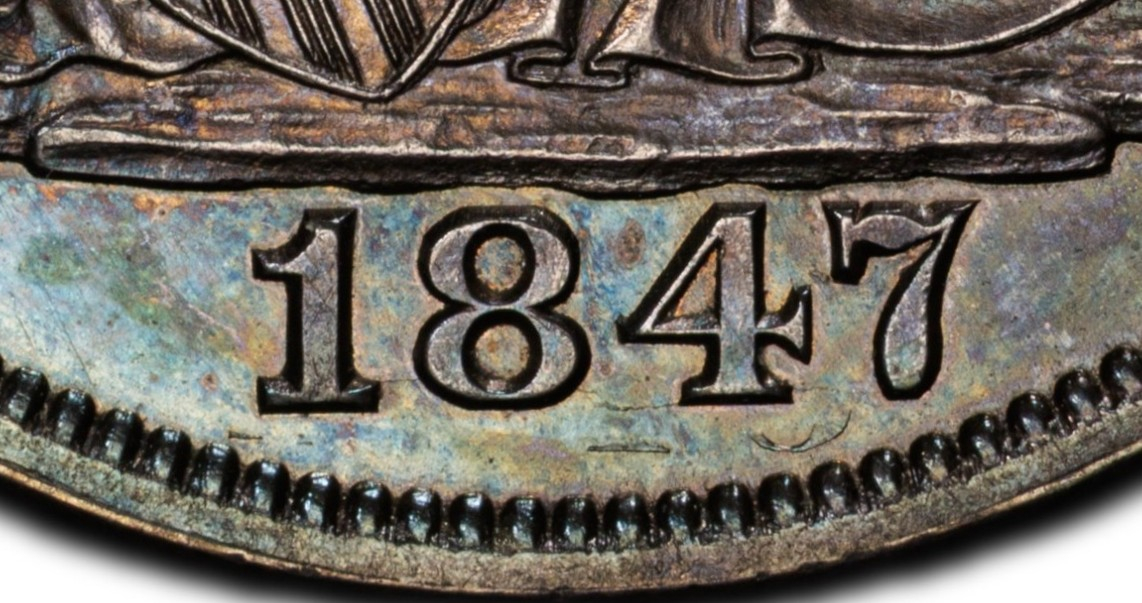
Over in the thread about 1847/6 Seated Half, I posted these images courtesy of PCGS COINFACTS.

Here is the 1847/ Tall 1846 Half. Note that the 1847 four-digit date logotype was significantly longer than the 1846 four-digit date logotype. It is also a bit off-center to the right, relative to the base of Miss Liberty above.
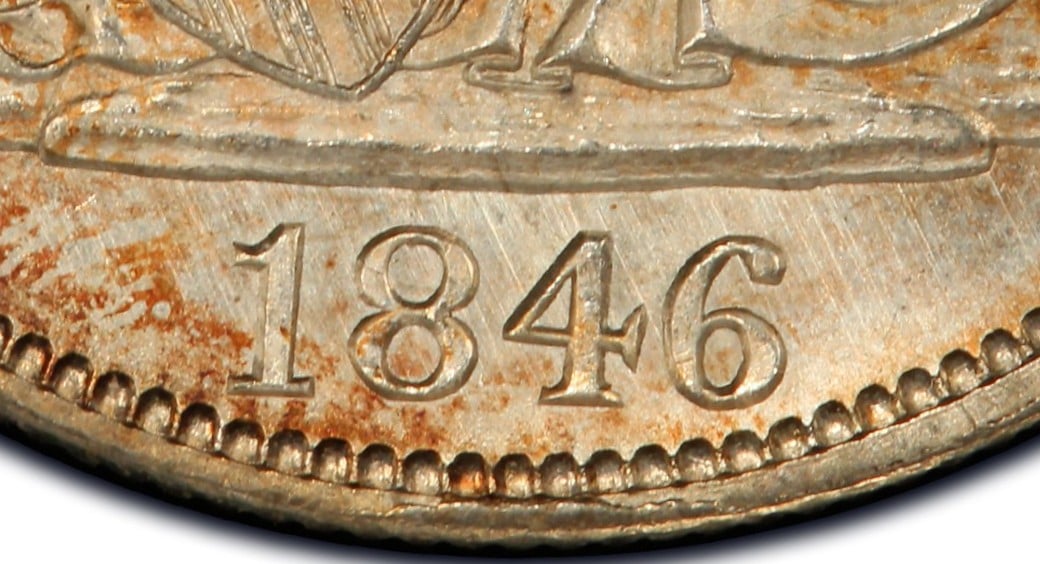
Here is the 1846 Tall Date. Compare the positions of the bottoms of the 1, the 4 and the 6 to the bottoms shown in the 1847/ Tall 1846 image. The positions prove that the underdate was the Tall 1846 variety.
Just for the record, here is the 1846 Medium Date. The date is wider than the Tall Date, and has heavier and longer bases.
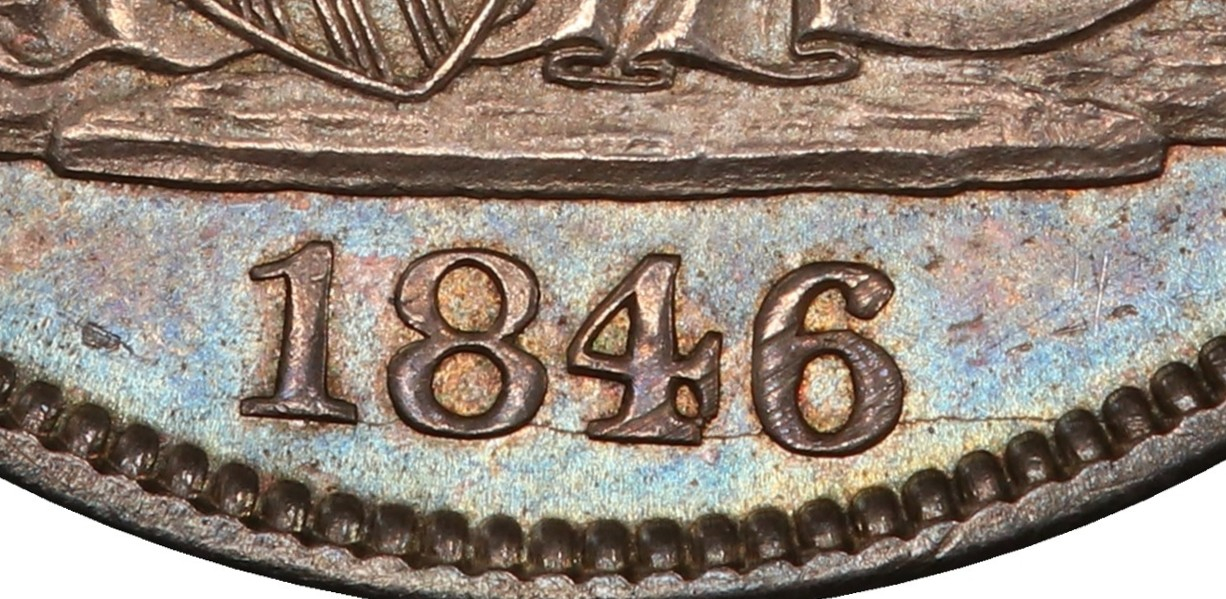
On the 1847/ 1_46 image, the bottom half of the upright of the original 4 is well away from the upright of the replacement 4. The bottom of the Tall 6 was well away from the upright of the replacement 7. In my opinion, these distances prove that the movement of metal by the replacement digits in a punched overdating procedure could not have been sufficient to fill in the original digits. Metal must have been added to the original die to fill in the original date digits, as many have theorized. This proves that they were right.

Why part of the original 1846 date survived that backfilling process, I do not know.

TD

Numismatist. 54 year member ANA. Former ANA Senior Authenticator. Winner of four ANA Heath Literary Awards; three Wayte and Olga Raymond Literary Awards; Numismatist of the Year Award 2009, and ANA Lifetime Achievement Award 2020. Also won the PNG's Robert Friedberg Award for "The Enigmatic Lincoln Cents of 1922," Available now from Whitman or Amazon.

Comments

  • Options
    johnny9434johnny9434 Posts: 32,912 ✭✭✭✭✭

    I like your observation of it. Makes sense

  • Options
    messydeskmessydesk Posts: 20,770 ✭✭✭✭✭
    edited July 27, 2026 6:16AM

    @CaptHenway said:
    This does not answer the question. This is just an observation.

    ...

    Why part of the original 1846 date survived that backfilling process, I do not know.

    TD

    The repair of the original date was either insufficient in the digits you can still see or part of it failed. Same reason that you can break one filing but the rest hold just fine.

  • Options
    AcarrollAcarroll Posts: 230 ✭✭✭✭

    It looks like the traces of the underdate visible are just the very highest points of the numbers, and therefore the deepest recesses on the dies.

  • Options
    CaptHenwayCaptHenway Posts: 33,978 ✭✭✭✭✭

    @Acarroll said:
    It looks like the traces of the underdate visible are just the very highest points of the numbers, and therefore the deepest recesses on the dies.

    Well, these remnants are virtually at the level of the field. If they represented the deepest recesses of the die, they would be high above the field on the coin.

    Numismatist. 54 year member ANA. Former ANA Senior Authenticator. Winner of four ANA Heath Literary Awards; three Wayte and Olga Raymond Literary Awards; Numismatist of the Year Award 2009, and ANA Lifetime Achievement Award 2020. Also won the PNG's Robert Friedberg Award for "The Enigmatic Lincoln Cents of 1922," Available now from Whitman or Amazon.
  • Options
    AcarrollAcarroll Posts: 230 ✭✭✭✭

    @CaptHenway said:

    @Acarroll said:
    It looks like the traces of the underdate visible are just the very highest points of the numbers, and therefore the deepest recesses on the dies.

    Well, these remnants are virtually at the level of the field. If they represented the deepest recesses of the die, they would be high above the field on the coin.

    The only thing that makes sense to me is if they planed down the die. But if they only did that around the date, then the field around the date would sit higher than the rest of the field. Unless they planed down the entire die and re-hubbed it. Backfilling the date and re punching it doesn't make sense to me because if a portion of the fill failed it wouldn't expose just the deepest parts of the old date punch.

  • Options
    Old_CollectorOld_Collector Posts: 1,181 ✭✭✭✭✭
    edited July 26, 2026 5:37PM

    @Acarroll said:

    @CaptHenway said:

    @Acarroll said:
    It looks like the traces of the underdate visible are just the very highest points of the numbers, and therefore the deepest recesses on the dies.

    Well, these remnants are virtually at the level of the field. If they represented the deepest recesses of the die, they would be high above the field on the coin.

    The only thing that makes sense to me is if they planed down the die. But if they only did that around the date, then the field around the date would sit higher than the rest of the field. Unless they planed down the entire die and re-hubbed it. Backfilling the date and re punching it doesn't make sense to me because if a portion of the fill failed it wouldn't expose just the deepest parts of the old date punch.

    Trying to learn here. Didn't they use a single hardened steel master punch to create the working dies, which would allow them to create the obverse without a date and then manually punch a date on the obverse and mint mark on the reverse? This was of course before the hub and die system.

    edit: and so they could simply repunch the date and mint mark if they had a die that was still useable.

  • Options
    AcarrollAcarroll Posts: 230 ✭✭✭✭

    @Old_Collector said:

    @Acarroll said:

    @CaptHenway said:

    @Acarroll said:
    It looks like the traces of the underdate visible are just the very highest points of the numbers, and therefore the deepest recesses on the dies.

    Well, these remnants are virtually at the level of the field. If they represented the deepest recesses of the die, they would be high above the field on the coin.

    The only thing that makes sense to me is if they planed down the die. But if they only did that around the date, then the field around the date would sit higher than the rest of the field. Unless they planed down the entire die and re-hubbed it. Backfilling the date and re punching it doesn't make sense to me because if a portion of the fill failed it wouldn't expose just the deepest parts of the old date punch.

    Trying to learn here. Didn't they use a single hardened steel master punch to create the working dies, which would allow them to create the obverse without a date and then manually punch a date on the obverse and mint mark on the reverse? This was of course before the hub and die system.

    I'm not sure, I'm trying to learn too. I just know that it looks like the remnants of the old date are the parts that are the highest in relief. I'm trying to run through scenarios that make sense to me.

  • Options
    CaptHenwayCaptHenway Posts: 33,978 ✭✭✭✭✭

    @Acarroll said:

    @Old_Collector said:

    @Acarroll said:

    @CaptHenway said:

    @Acarroll said:
    It looks like the traces of the underdate visible are just the very highest points of the numbers, and therefore the deepest recesses on the dies.

    Well, these remnants are virtually at the level of the field. If they represented the deepest recesses of the die, they would be high above the field on the coin.

    The only thing that makes sense to me is if they planed down the die. But if they only did that around the date, then the field around the date would sit higher than the rest of the field. Unless they planed down the entire die and re-hubbed it. Backfilling the date and re punching it doesn't make sense to me because if a portion of the fill failed it wouldn't expose just the deepest parts of the old date punch.

    Trying to learn here. Didn't they use a single hardened steel master punch to create the working dies, which would allow them to create the obverse without a date and then manually punch a date on the obverse and mint mark on the reverse? This was of course before the hub and die system.

    I'm not sure, I'm trying to learn too. I just know that it looks like the remnants of the old date are the parts that are the highest in relief. I'm trying to run through scenarios that make sense to me.

    Take a look at the 7, which is nice and bold. The surface of it is high above the field on the coin. Because the die is the opposite of the coin in relief, the surface of that 7 was very deep in the die.

    If you want to get a better idea of how the image in a die looks, get a piece of modeling clay and press a common coin into it. The highest parts of the coin will make the deepest impressions in the clay.

    The remnants of the bases of the 1, the 4 and the 6 from the original date are only slightly above the surface of the coin. They are in very shallow relief. Therefore, the depressions in the die that struck them must have been very shallow in the surface of the die.

    Numismatist. 54 year member ANA. Former ANA Senior Authenticator. Winner of four ANA Heath Literary Awards; three Wayte and Olga Raymond Literary Awards; Numismatist of the Year Award 2009, and ANA Lifetime Achievement Award 2020. Also won the PNG's Robert Friedberg Award for "The Enigmatic Lincoln Cents of 1922," Available now from Whitman or Amazon.
  • Options
    AcarrollAcarroll Posts: 230 ✭✭✭✭
    edited July 27, 2026 6:52AM

    @CaptHenway said:

    @Acarroll said:

    @Old_Collector said:

    @Acarroll said:

    @CaptHenway said:

    @Acarroll said:
    It looks like the traces of the underdate visible are just the very highest points of the numbers, and therefore the deepest recesses on the dies.

    Well, these remnants are virtually at the level of the field. If they represented the deepest recesses of the die, they would be high above the field on the coin.

    The only thing that makes sense to me is if they planed down the die. But if they only did that around the date, then the field around the date would sit higher than the rest of the field. Unless they planed down the entire die and re-hubbed it. Backfilling the date and re punching it doesn't make sense to me because if a portion of the fill failed it wouldn't expose just the deepest parts of the old date punch.

    Trying to learn here. Didn't they use a single hardened steel master punch to create the working dies, which would allow them to create the obverse without a date and then manually punch a date on the obverse and mint mark on the reverse? This was of course before the hub and die system.

    I'm not sure, I'm trying to learn too. I just know that it looks like the remnants of the old date are the parts that are the highest in relief. I'm trying to run through scenarios that make sense to me.

    Take a look at the 7, which is nice and bold. The surface of it is high above the field on the coin. Because the die is the opposite of the coin in relief, the surface of that 7 was very deep in the die.

    If you want to get a better idea of how the image in a die looks, get a piece of modeling clay and press a common coin into it. The highest parts of the coin will make the deepest impressions in the clay.

    The remnants of the bases of the 1, the 4 and the 6 from the original date are only slightly above the surface of the coin. They are in very shallow relief. Therefore, the depressions in the die that struck them must have been very shallow in the surface of the die.

    On the 1846 it looks like the very bottoms of the 1, 4, and 6 stick up the highest on the coin. They look higher than the bottom of the 8, which is not visible on the overdate coin. Has anyone ever measured the relief with a micrometer?

  • Options
    lilolmelilolme Posts: 2,978 ✭✭✭✭✭

    "Why part of the original 1846 date survived that backfilling process, I do not know."

    TD
    .
    .
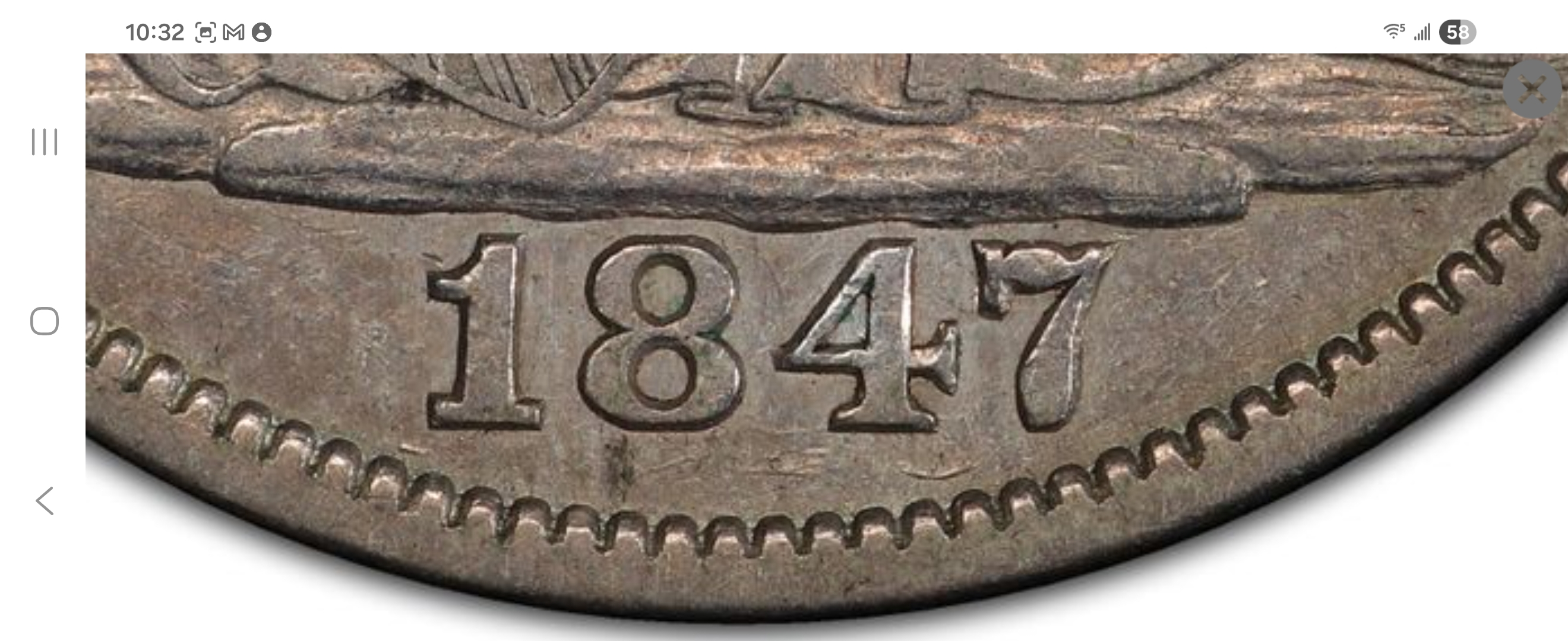
    I have not read or opened the other thread mentioned in the OP and I don't know the seated series at all. But this has to be a die failure (or whatever the best wording is) type of thing. Checking the price guide there is a link to the 1847/6 EDS which does not show the overdate to any degree.
    .
    https://www.pcgs.com/coinfacts/coin/1847-6-50c-wb-9-eds/804401
    .
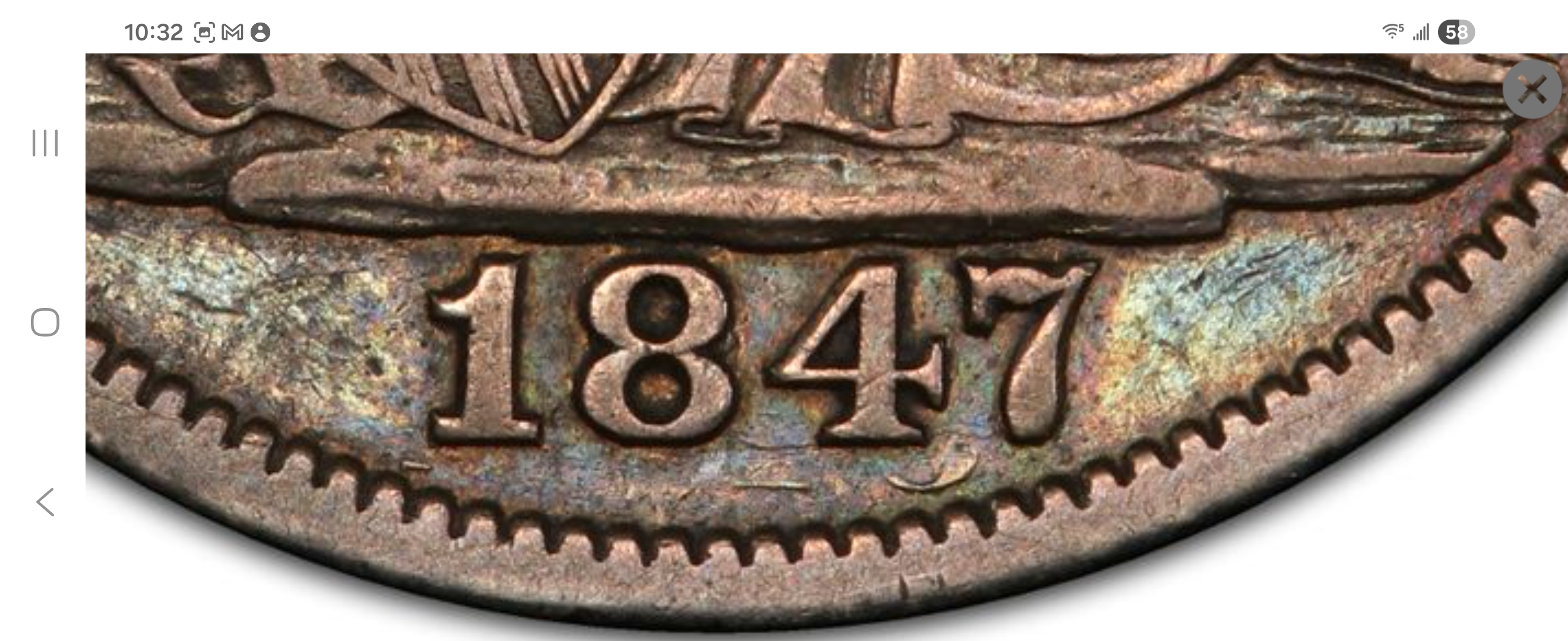
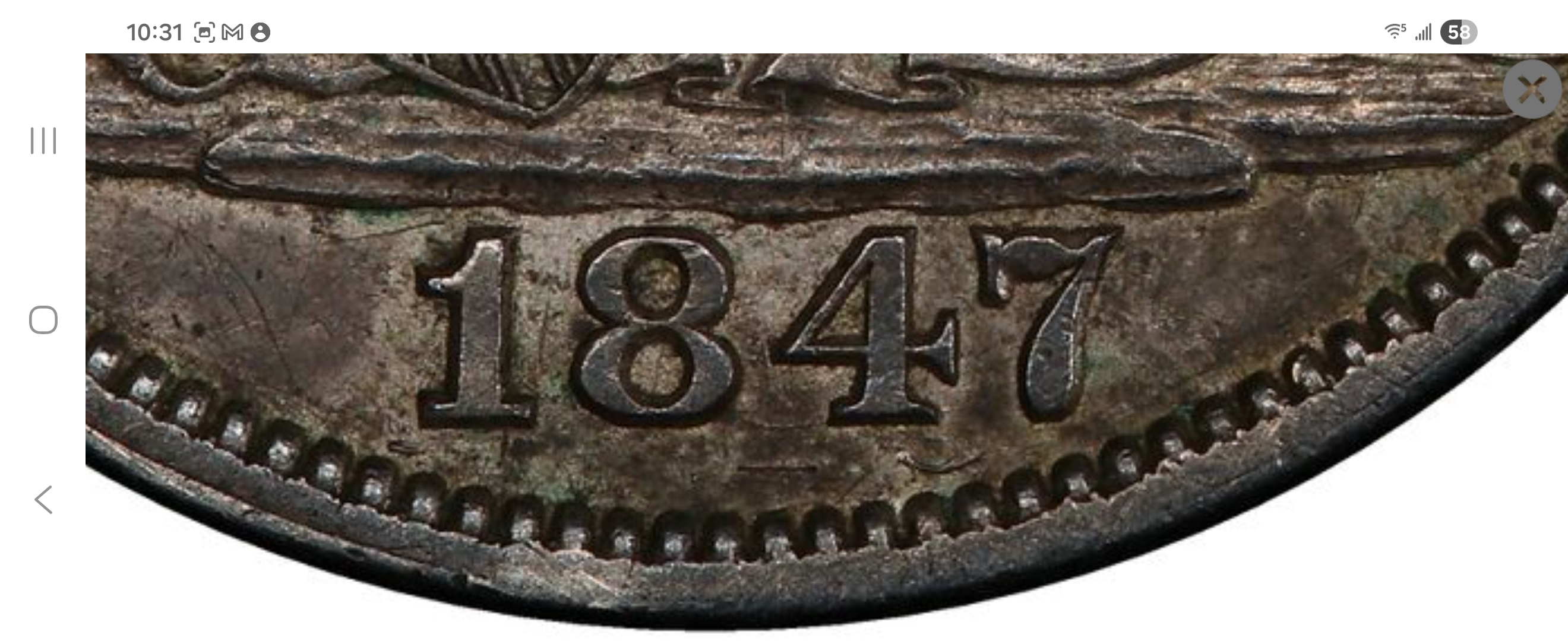
    Because pcgs website is not functioning correctly and I also can't see the More Images on the website coin facts page, I went to the coin facts App and then viewed the More Images. I took 3 screenshots with my phone of the enlarged date area and then transferred to the laptop. There appears to be some 'progression' differences in the amount of the overdate visible. (No particular order as I did a bulk copy and paste of the screenshot images)
    .


    https://youtube.com/watch?v=hYCRaWPlTIE Sophie Lloyd, guitar shred cover of Panama (Van Halen)

    https://youtube.com/watch?v=dOV1VrDuUm4 Ted Nugent, Hibernation, Live 1976

    RLJ 1958 - 2023

Leave a Comment

BoldItalicStrikethroughOrdered listUnordered list
Emoji
Image
Align leftAlign centerAlign rightToggle HTML viewToggle full pageToggle lights
Drop image/file