@mach19 said:
Can anyone tell me a decent coin scale I can purchase for a reasonable price ?
Amazon has all sorts of choices in the $10-20 range.
You understand that a war nickel has the exact same weight as nickels struck before and after the war? A digital scale will accomplish absolutely nothing when trying to identify a war nickel planchet.
@mach19 said:
Can anyone tell me a decent coin scale I can purchase for a reasonable price ?
Amazon has all sorts of choices in the $10-20 range.
You understand that a war nickel has the exact same weight as nickels struck before and after the war? A digital scale will accomplish absolutely nothing when trying to identify a war nickel planchet.
With some experience you can pretty reliably tell the difference by appearance, especially with circulated coins. With a lot of experience you might be able to tell the difference on well circulated coins by smell.
@JBK said:
With some experience you can pretty reliably tell the difference by appearance, especially with circulated coins. With a lot of experience you might be able to tell the difference on well circulated coins by smell.
They have a different look , don't know about the smell . I have welded most of my life.... my sense of smell is gone
Do you think that you have a planchet made of wartime composition? If so, take a picture of it next to a normal nickel of a similar condition, new or used. Post it here.
Numismatist. 54 year member ANA. Former ANA Senior Authenticator. Winner of four ANA Heath Literary Awards; three Wayte and Olga Raymond Literary Awards; Numismatist of the Year Award 2009, and ANA Lifetime Achievement Award 2020. Also won the PNG's Robert Friedberg Award for "The Enigmatic Lincoln Cents of 1922," Available now from Whitman or Amazon.
Note that there are other planchets in existence made for foreign coins in all sorts of sizes, both diameter and thickness, in various alloys, some of which darken with age. If yours is not the same basic size as a regular nickel it will need to be weighed and measured.
Numismatist. 54 year member ANA. Former ANA Senior Authenticator. Winner of four ANA Heath Literary Awards; three Wayte and Olga Raymond Literary Awards; Numismatist of the Year Award 2009, and ANA Lifetime Achievement Award 2020. Also won the PNG's Robert Friedberg Award for "The Enigmatic Lincoln Cents of 1922," Available now from Whitman or Amazon.
@JBK said:
With some experience you can pretty reliably tell the difference by appearance, especially with circulated coins. With a lot of experience you might be able to tell the difference on well circulated coins by smell.
They have a different look , don't know about the smell . I have welded most of my life.... my sense of smell is gone
@JBK said:
With some experience you can pretty reliably tell the difference by appearance, especially with circulated coins. With a lot of experience you might be able to tell the difference on well circulated coins by smell.
They have a different look , don't know about the smell . I have welded most of my life.... my sense of smell is gone
@CaptHenway said:
Note that there are other planchets in existence made for foreign coins in all sorts of sizes, both diameter and thickness, in various alloys, some of which darken with age. If yours is not the same basic size as a regular nickel it will need to be weighed and measured.
We need a specific gravity.
All comments reflect the opinion of the author, even when irrefutably accurate.
@mach19 said:
Can anyone tell me a decent coin scale I can purchase for a reasonable price ?
Yeah any of those on EBay that measure to the hundredth of on ounce and has a little metal test weight, otherwise they all seem to perform pretty much equally.
As far as a silver nickel weight, just look up the standard silver nickel weight from 1942 Ty 2 through 1945 on Coin Facts or wherever you normally do, preferably with the expected deviation range.
As far as I can find, there are only 4 nickels that have been struck on original silver nickel planchets and all are dated 1946. There are of course other off metal strikes and the very thin possibility that there is a actual 5 oz wartime planchet that did not get found and is still around, but the odds are long IMO.
The reason that I say four is based upon a statement by Breen that is made in the sale of the Carter Collins F-12 specimen sold by Heritage in 2003 and again in 2022 (same coin). This is the coin most collectors have seen. Heritage notes:
"...Walter Breen reported that at least four authenticated examples were known..."
That statement is repeated in both Heritage appearances.
Beyond that I have no documentation to support the other three, whether lore, or in private collections, Mark would know a lot more about that than me.
@mach19 said:
Can anyone tell me a decent coin scale I can purchase for a reasonable price ?
Yeah any of those on EBay that measure to the hundredth of on ounce and has a little metal test weight, otherwise they all seem to perform pretty much equally.
As far as a silver nickel weight, just look up the standard silver nickel weight from 1942 Ty 2 through 1945 on Coin Facts or wherever you normally do, preferably with the expected deviation range.
Repeating Walter Breen's comments absent confirmation is questionable.
Heritage references the "August 6, 2002 issue of Numismatic News", which you could probably get an article copy from the ANS.
Re weight ... both the copper-nickel and the silver planchets are the same diameter, thickness, and mass. That was a key condition of the wartime change: that existing coin-operated machines would accept the new coins without adjustment.
This makes it exceptionally difficult to sort large numbers of coins to find an off-metal error.
By the time we look at the SBA -> Golden Dollar change, we also need to mirror the electrical signature as well.
-----Burton ANA 50+ year/Life Member (now "Emeritus") Author: 3rd Edition of the SampleSlabs book, https://sampleslabs.info/
A fair question, but considering the rarity and overall condition of the piece, I suspect that any serious buyer would not care.
Numismatist. 54 year member ANA. Former ANA Senior Authenticator. Winner of four ANA Heath Literary Awards; three Wayte and Olga Raymond Literary Awards; Numismatist of the Year Award 2009, and ANA Lifetime Achievement Award 2020. Also won the PNG's Robert Friedberg Award for "The Enigmatic Lincoln Cents of 1922," Available now from Whitman or Amazon.
@BStrauss3 said:
Repeating Walter Breen's comments absent confirmation is questionable.
Heritage references the "August 6, 2002 issue of Numismatic News", which you could probably get an article copy from the ANS.
Re weight ... both the copper-nickel and the silver planchets are the same diameter, thickness, and mass. That was a key condition of the wartime change: that existing coin-operated machines would accept the new coins without adjustment.
This makes it exceptionally difficult to sort large numbers of coins to find an off-metal error.
By the time we look at the SBA -> Golden Dollar change, we also need to mirror the electrical signature as well.
Don't look at me, I didn't post the original material.
But imagine if we only had a technology that could detect silver in a coin by poin> @jmlanzaf said:
@BStrauss3 said:
Repeating Walter Breen's comments absent confirmation is questionable.
Heritage references the "August 6, 2002 issue of Numismatic News", which you could probably get an article copy from the ANS.
Re weight ... both the copper-nickel and the silver planchets are the same diameter, thickness, and mass. That was a key condition of the wartime change: that existing coin-operated machines would accept the new coins without adjustment.
This makes it exceptionally difficult to sort large numbers of coins to find an off-metal error.
By the time we look at the SBA -> Golden Dollar change, we also need to mirror the electrical signature as well.
Don't look at me, I didn't post the original material.
But imagine if we only had a technology that could detect silver in a coin by poin> @jmlanzaf said:
@JBK said:
With some experience you can pretty reliably tell the difference by appearance, especially with circulated coins. With a lot of experience you might be able to tell the difference on well circulated coins by smell.
Are you a dog? I’ve been a collector for 66 years and have never been able to use my nose for metal detection. Many years ago I was trying to determine if a Civil War token was made of copper/bronze or the much rarer brass. It had a yellow, brassy look. With CWTs, the difference is sometimes hard to detect. A well known New England exonumia dealer said the brass one could smell like fish.
Retired dealer and avid collector of U.S. type coins, 19th century presidential campaign medalets and selected medals. In recent years I have been working on a set of British coins - at least one coin from each king or queen who issued pieces that are collectible. I am also collecting at least one coin for each Roman emperor from Julius Caesar to ... ?
@JBK said:
With some experience you can pretty reliably tell the difference by appearance, especially with circulated coins. With a lot of experience you might be able to tell the difference on well circulated coins by smell.
Are you a dog? I’ve been a collector for 66 years and have never been able to use my nose for metal detection. Many years ago I was trying to determine if a Civil War token was made of copper/bronze or the much rarer brass. It had a yellow, brassy look. With CWTs, the difference is sometimes hard to detect. A well known New England exonumia dealer said the brass one could smell like fish.
I'm not sure it's the metal that smells so much as the stuff that it collects or "grows" during circulation. War nickels found in roll searching have a particular knack for taking on something or another.
And I'm pretty sure a handful of circulated 90% silver has a smell different than clad.
@JBK said:
With some experience you can pretty reliably tell the difference by appearance, especially with circulated coins. With a lot of experience you might be able to tell the difference on well circulated coins by smell.
Are you a dog? I’ve been a collector for 66 years and have never been able to use my nose for metal detection. Many years ago I was trying to determine if a Civil War token was made of copper/bronze or the much rarer brass. It had a yellow, brassy look. With CWTs, the difference is sometimes hard to detect. A well known New England exonumia dealer said the brass one could smell like fish.
I'm not sure it's the metal that smells so much as the stuff that it collects or "grows" during circulation. War nickels found in roll searching have a particular knack for taking on something or another.
And I'm pretty sure a handful of circulated 90% silver has a smell different than clad.
@JBK said:
With some experience you can pretty reliably tell the difference by appearance, especially with circulated coins. With a lot of experience you might be able to tell the difference on well circulated coins by smell.
Are you a dog? I’ve been a collector for 66 years and have never been able to use my nose for metal detection. Many years ago I was trying to determine if a Civil War token was made of copper/bronze or the much rarer brass. It had a yellow, brassy look. With CWTs, the difference is sometimes hard to detect. A well known New England exonumia dealer said the brass one could smell like fish.
Bill, are you sure that the dealer said “the brass one could smell like fish” as opposed to “ the bass one could smell like fish”? 😉
Mark Feld* of Heritage Auctions*Unless otherwise noted, my posts here represent my personal opinions.
@CaptHenway said:
A fair question, but considering the rarity and overall condition of the piece, I suspect that any serious buyer would not care.
I think a quite a few serious buyers would care - and I sure hope they would. Because if the market gives coins like that (which don’t appear to have received a straight grade) a pass, it could encourage more misgrading.
Mark Feld* of Heritage Auctions*Unless otherwise noted, my posts here represent my personal opinions.
@JBK said:
With some experience you can pretty reliably tell the difference by appearance, especially with circulated coins. With a lot of experience you might be able to tell the difference on well circulated coins by smell.
They have a different look , don't know about the smell . I have welded most of my life.... my sense of smell is gone
You might have a counterfeit. Henning counterfeits demand a decent price.
My records indicate (2) certified ones dated 1946, and (2) “reported” but not certified, so as far as I am concerned there are 2 known.
mikebyers.com Dealer in Major Mint Errors, Die Trials & Patterns - Author of NLG Best World Coin Book World's Greatest Mint Errors - Publisher & Editor of minterrornews.com.
Here are two coins that went under an XRF analyzer. The unusual sharp details, silver being softer than nickel led me to have them tested. And the 2nd coin is so proof-like, was it struck on a planchet made for striking proof coins? That would be from 1942, right?
Leo
The more qualities observed in a coin, the more desirable that coin becomes!
@JBK said:
With some experience you can pretty reliably tell the difference by appearance, especially with circulated coins. With a lot of experience you might be able to tell the difference on well circulated coins by smell.
Are you a dog? I’ve been a collector for 66 years and have never been able to use my nose for metal detection. Many years ago I was trying to determine if a Civil War token was made of copper/bronze or the much rarer brass. It had a yellow, brassy look. With CWTs, the difference is sometimes hard to detect. A well known New England exonumia dealer said the brass one could smell like fish.
I'm not sure it's the metal that smells so much as the stuff that it collects or "grows" during circulation. War nickels found in roll searching have a particular knack for taking on something or another.
And I'm pretty sure a handful of circulated 90% silver has a smell different than clad.
Let's not even get into taste. 🍴 😆
That makes sense, we put a silver impregnated disk around central venous lines and infection rates plummeted once they came into use, silver being bacteriocidal.
@JBK said:
With some experience you can pretty reliably tell the difference by appearance, especially with circulated coins. With a lot of experience you might be able to tell the difference on well circulated coins by smell.
Are you a dog? I’ve been a collector for 66 years and have never been able to use my nose for metal detection. Many years ago I was trying to determine if a Civil War token was made of copper/bronze or the much rarer brass. It had a yellow, brassy look. With CWTs, the difference is sometimes hard to detect. A well known New England exonumia dealer said the brass one could smell like fish.
I'm not sure it's the metal that smells so much as the stuff that it collects or "grows" during circulation. War nickels found in roll searching have a particular knack for taking on something or another.
And I'm pretty sure a handful of circulated 90% silver has a smell different than clad.
Let's not even get into taste. 🍴 😆
That makes sense, we put a silver impregnated disk around central venous lines and infection rates plummeted once they came into use, silver being bacteriocidal.
Wouldn't that be the opposite? The silver coins should lack smell.
All comments reflect the opinion of the author, even when irrefutably accurate.
@JBK said:
With some experience you can pretty reliably tell the difference by appearance, especially with circulated coins. With a lot of experience you might be able to tell the difference on well circulated coins by smell.
Are you a dog? I’ve been a collector for 66 years and have never been able to use my nose for metal detection. Many years ago I was trying to determine if a Civil War token was made of copper/bronze or the much rarer brass. It had a yellow, brassy look. With CWTs, the difference is sometimes hard to detect. A well known New England exonumia dealer said the brass one could smell like fish.
I'm not sure it's the metal that smells so much as the stuff that it collects or "grows" during circulation. War nickels found in roll searching have a particular knack for taking on something or another.
And I'm pretty sure a handful of circulated 90% silver has a smell different than clad.
Let's not even get into taste. 🍴 😆
That makes sense, we put a silver impregnated disk around central venous lines and infection rates plummeted once they came into use, silver being bacteriocidal.
Wouldn't that be the opposite? The silver coins should lack smell.
I thought it was already professionally hashed out and determined the sense of smell is highly overrated?
@JBK said:
I'm not sure it's the metal that smells so much as the stuff that it collects or "grows" during circulation. War nickels found in roll searching have a particular knack for taking on something or another.
Skin oils react with copper and silver (and alloys?), but not gold.
@JBK said:
I'm not sure it's the metal that smells so much as the stuff that it collects or "grows" during circulation. War nickels found in roll searching have a particular knack for taking on something or another.
Skin oils react with copper and silver (and alloys?), but not gold.
War nickels also have some other metals in the alloy that are highly reactive. A circulated war nickel that has spent long periods of time out of circulation (such as most of the ones you'll find in rolls today) can be especially crusty.
@jmlanzaf said:
I was just making a joke. As I suspect Tom knows.
I might be the only one who pays no attention to my post count.
You're not. I don't pay attention to it, either.
Stating you don't means- at least at that moment- you do.
No, it doesn't. Unless I made an effort right now, I couldn't tell you if anyone here has made 10 posts or 10 million. I don't even have a clue how many I've made.
Don't get me wrong- if anyone wants to focus on post counts, that's up to them. I don't care either way.
@leothelyon said:
Here are two coins that went under an XRF analyzer. The unusual sharp details, silver being softer than nickel led me to have them tested. And the 2nd coin is so proof-like, was it struck on a planchet made for striking proof coins? That would be from 1942, right?
Leo
They were not making Proof coins at San Francisco in the 1940's.
Numismatist. 54 year member ANA. Former ANA Senior Authenticator. Winner of four ANA Heath Literary Awards; three Wayte and Olga Raymond Literary Awards; Numismatist of the Year Award 2009, and ANA Lifetime Achievement Award 2020. Also won the PNG's Robert Friedberg Award for "The Enigmatic Lincoln Cents of 1922," Available now from Whitman or Amazon.
@jmlanzaf said:
I was just making a joke. As I suspect Tom knows.
I might be the only one who pays no attention to my post count.
You're not. I don't pay attention to it, either.
Stating you don't means- at least at that moment- you do.
No, it doesn't. Unless I made an effort right now, I couldn't tell you if anyone here has made 10 posts or 10 million. I don't even have a clue how many I've made.
@jmlanzaf said:
I was just making a joke. As I suspect Tom knows.
I might be the only one who pays no attention to my post count.
You're not. I don't pay attention to it, either.
Stating you don't means- at least at that moment- you do.
No, it doesn't. Unless I made an effort right now, I couldn't tell you if anyone here has made 10 posts or 10 million. I don't even have a clue how many I've made.
7,226 (in case you were/are curious.)
He's winning! You're only at 1,638.
Please up your game.
All comments reflect the opinion of the author, even when irrefutably accurate.
Comments
@Byers may have some insight.
BST transactions: dbldie55, jayPem, 78saen, UltraHighRelief, nibanny, liefgold, FallGuy, lkeigwin, mbogoman, Sandman70gt, keets, joeykoins, ianrussell (@GC), EagleEye, ThePennyLady, GRANDAM, Ilikecolor, Gluggo, okiedude, Voyageur, LJenkins11, fastfreddie, ms70, pursuitofliberty, ZoidMeister,Coin Finder, GotTheBug, edwardjulio, Coinnmore, Nickpatton, Namvet69,...
Are there any war nickel planchets? Yes, see Heritage archives.
Were those planchets found after 1945 versus during 1942-1945? Unknown, and probably unknowable at this point.
I assume he's talking about off metal strikes in later years.
To the OP: you can google the off-metal strikes.
https://coins.ha.com/itm/errors/1946-5c-jefferson-nickel-struck-on-a-war-nickel-planchet-fine-12-pcgs-from-late-1942-through-1945-nickels-were-struck-on/a/63199-92043.s?ic4=ListView-ShortDescription-071515
All comments reflect the opinion of the author, even when irrefutably accurate.
How might one find the weight ?
Redbook
PCGS Coin Facts
Google
[5.0 grams, if you really can't find it.]
All comments reflect the opinion of the author, even when irrefutably accurate.
TY
Can anyone tell me a decent coin scale I can purchase for a reasonable price ?
Amazon has all sorts of choices in the $10-20 range.
You understand that a war nickel has the exact same weight as nickels struck before and after the war? A digital scale will accomplish absolutely nothing when trying to identify a war nickel planchet.
Thank you ! I did not realize this
With some experience you can pretty reliably tell the difference by appearance, especially with circulated coins. With a lot of experience you might be able to tell the difference on well circulated coins by smell.
They have a different look , don't know about the smell . I have welded most of my life.... my sense of smell is gone
Do you think that you have a planchet made of wartime composition? If so, take a picture of it next to a normal nickel of a similar condition, new or used. Post it here.
Note that there are other planchets in existence made for foreign coins in all sorts of sizes, both diameter and thickness, in various alloys, some of which darken with age. If yours is not the same basic size as a regular nickel it will need to be weighed and measured.
It's an overrated sense anyways. You're good.
LOL , thank you !
We need a specific gravity.
All comments reflect the opinion of the author, even when irrefutably accurate.
Yeah any of those on EBay that measure to the hundredth of on ounce and has a little metal test weight, otherwise they all seem to perform pretty much equally.
As far as a silver nickel weight, just look up the standard silver nickel weight from 1942 Ty 2 through 1945 on Coin Facts or wherever you normally do, preferably with the expected deviation range.
As far as I can find, there are only 4 nickels that have been struck on original silver nickel planchets and all are dated 1946. There are of course other off metal strikes and the very thin possibility that there is a actual 5 oz wartime planchet that did not get found and is still around, but the odds are long IMO.
The reason that I say four is based upon a statement by Breen that is made in the sale of the Carter Collins F-12 specimen sold by Heritage in 2003 and again in 2022 (same coin). This is the coin most collectors have seen. Heritage notes:
"...Walter Breen reported that at least four authenticated examples were known..."
That statement is repeated in both Heritage appearances.
Beyond that I have no documentation to support the other three, whether lore, or in private collections, Mark would know a lot more about that than me.
The scales are easy enough to use as well
Here are the two Heritage links:
https://coins.ha.com/itm/jefferson-nickels/1946-5c-struck-on-war-time-silver-planchet-fine-12-pcgs/a/308-6287.s
https://coins.ha.com/itm/errors/1946-5c-jefferson-nickel-struck-on-a-war-nickel-planchet-fine-12-pcgs-from-late-1942-through-1945-nickels-were-stru/a/63199-92043.s
And here is the PCGS cert: https://www.pcgs.com/cert/27861087
Repeating Walter Breen's comments absent confirmation is questionable.
Heritage references the "August 6, 2002 issue of Numismatic News", which you could probably get an article copy from the ANS.
Re weight ... both the copper-nickel and the silver planchets are the same diameter, thickness, and mass. That was a key condition of the wartime change: that existing coin-operated machines would accept the new coins without adjustment.
This makes it exceptionally difficult to sort large numbers of coins to find an off-metal error.
By the time we look at the SBA -> Golden Dollar change, we also need to mirror the electrical signature as well.
ANA 50+ year/Life Member (now "Emeritus")
Author: 3rd Edition of the SampleSlabs book, https://sampleslabs.info/
How did this one receive a straight grade with the damage on both the obverse and reverse?
BST transactions: dbldie55, jayPem, 78saen, UltraHighRelief, nibanny, liefgold, FallGuy, lkeigwin, mbogoman, Sandman70gt, keets, joeykoins, ianrussell (@GC), EagleEye, ThePennyLady, GRANDAM, Ilikecolor, Gluggo, okiedude, Voyageur, LJenkins11, fastfreddie, ms70, pursuitofliberty, ZoidMeister,Coin Finder, GotTheBug, edwardjulio, Coinnmore, Nickpatton, Namvet69,...
A fair question, but considering the rarity and overall condition of the piece, I suspect that any serious buyer would not care.
Or an XRF.
“In matters of style, swim with the current; in matters of principle, stand like a rock." - Thomas Jefferson
My digital cameo album 1950-64 Cameos - take a look!
Tom is the world's largest booster of specific gravity.
All comments reflect the opinion of the author, even when irrefutably accurate.
Don't look at me, I didn't post the original material.
But imagine if we only had a technology that could detect silver in a coin by poin> @jmlanzaf said:
That would not be a necessary test in this case, I assume that you were just inflating your post count.
Well war nickel planchets "found" compared to "struck"?
"When they can't find anything wrong with you, they create it!"
Really ? What do you think !
I was just making a joke. As I suspect Tom knows.
I might be the only one who pays no attention to my post count.
All comments reflect the opinion of the author, even when irrefutably accurate.
Obviously, it confused a couple people.
It is technically incorrect. We don't call struck "coins" "planchets".
All comments reflect the opinion of the author, even when irrefutably accurate.
Are you a dog? I’ve been a collector for 66 years and have never been able to use my nose for metal detection. Many years ago I was trying to determine if a Civil War token was made of copper/bronze or the much rarer brass. It had a yellow, brassy look. With CWTs, the difference is sometimes hard to detect. A well known New England exonumia dealer said the brass one could smell like fish.
I'm not sure it's the metal that smells so much as the stuff that it collects or "grows" during circulation. War nickels found in roll searching have a particular knack for taking on something or another.
And I'm pretty sure a handful of circulated 90% silver has a smell different than clad.
Let's not even get into taste. 🍴 😆
Heard it taste like chicken 👎
Bill, are you sure that the dealer said “the brass one could smell like fish” as opposed to “ the bass one could smell like fish”? 😉
Mark Feld* of Heritage Auctions*Unless otherwise noted, my posts here represent my personal opinions.
I think a quite a few serious buyers would care - and I sure hope they would. Because if the market gives coins like that (which don’t appear to have received a straight grade) a pass, it could encourage more misgrading.
Mark Feld* of Heritage Auctions*Unless otherwise noted, my posts here represent my personal opinions.
You might have a counterfeit. Henning counterfeits demand a decent price.
My records indicate (2) certified ones dated 1946, and (2) “reported” but not certified, so as far as I am concerned there are 2 known.
Here are two coins that went under an XRF analyzer. The unusual sharp details, silver being softer than nickel led me to have them tested. And the 2nd coin is so proof-like, was it struck on a planchet made for striking proof coins? That would be from 1942, right?
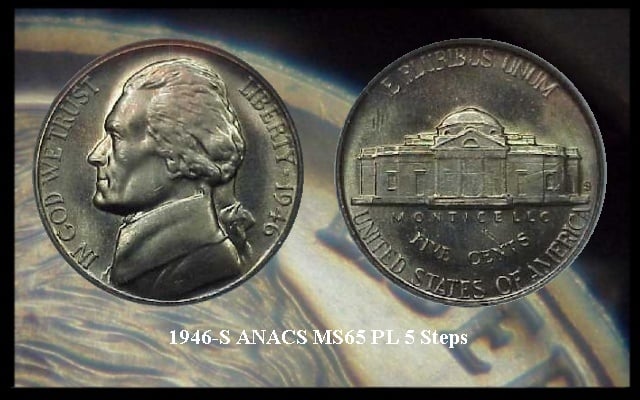
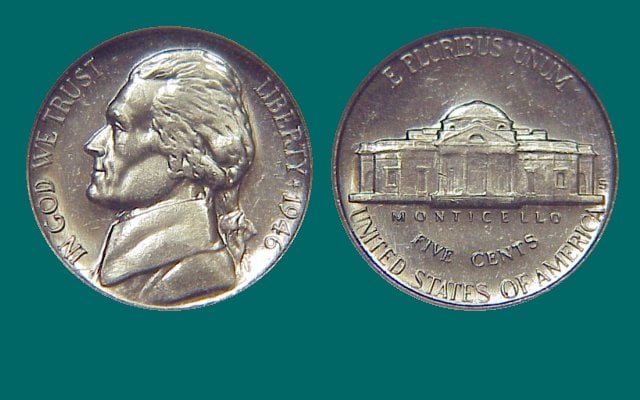
Leo
The more qualities observed in a coin, the more desirable that coin becomes!
My Jefferson Nickel Collection
That makes sense, we put a silver impregnated disk around central venous lines and infection rates plummeted once they came into use, silver being bacteriocidal.
Wouldn't that be the opposite? The silver coins should lack smell.
All comments reflect the opinion of the author, even when irrefutably accurate.
I thought it was already professionally hashed out and determined the sense of smell is highly overrated?
Skin oils react with copper and silver (and alloys?), but not gold.
You're not. I don't pay attention to it, either.
Stating you don't means- at least at that moment- you do.
War nickels also have some other metals in the alloy that are highly reactive. A circulated war nickel that has spent long periods of time out of circulation (such as most of the ones you'll find in rolls today) can be especially crusty.
No, it doesn't. Unless I made an effort right now, I couldn't tell you if anyone here has made 10 posts or 10 million. I don't even have a clue how many I've made.
Don't get me wrong- if anyone wants to focus on post counts, that's up to them. I don't care either way.
They were not making Proof coins at San Francisco in the 1940's.
7,226 (in case you were/are curious.)
He's winning! You're only at 1,638.
Please up your game.
All comments reflect the opinion of the author, even when irrefutably accurate.
I'm a grower, not a shower.