Are graders more forgiving on tougher dates that are known to come heavily marked?
 Matt04
Posts: 468 ✭✭✭
Matt04
Posts: 468 ✭✭✭
As the title states, are graders more forgiving on dates that are known to come heavily marked?
I’ve noticed that certain dates in the Washington Quarter series seem to come much rougher than others, especially some of the 1960s issues. The 1960s Denver quarters, for example, are known for having a lot of contact marks and bag marks from the mint, with truly clean examples being much harder to find.
When looking at MS67 examples of the 1962-D, I can’t help but notice how many seem to have a surprising number of marks for the grade. It’s something I don’t see at all on 1930s, 1940s, or 1950s Washington quarters graded at the same level.
Is this because graders are more forgiving on dates that are known to come heavily marked, or is there another reason certain later-date Washington quarters can still reach high mint-state grades despite having more visible marks?
Samples:
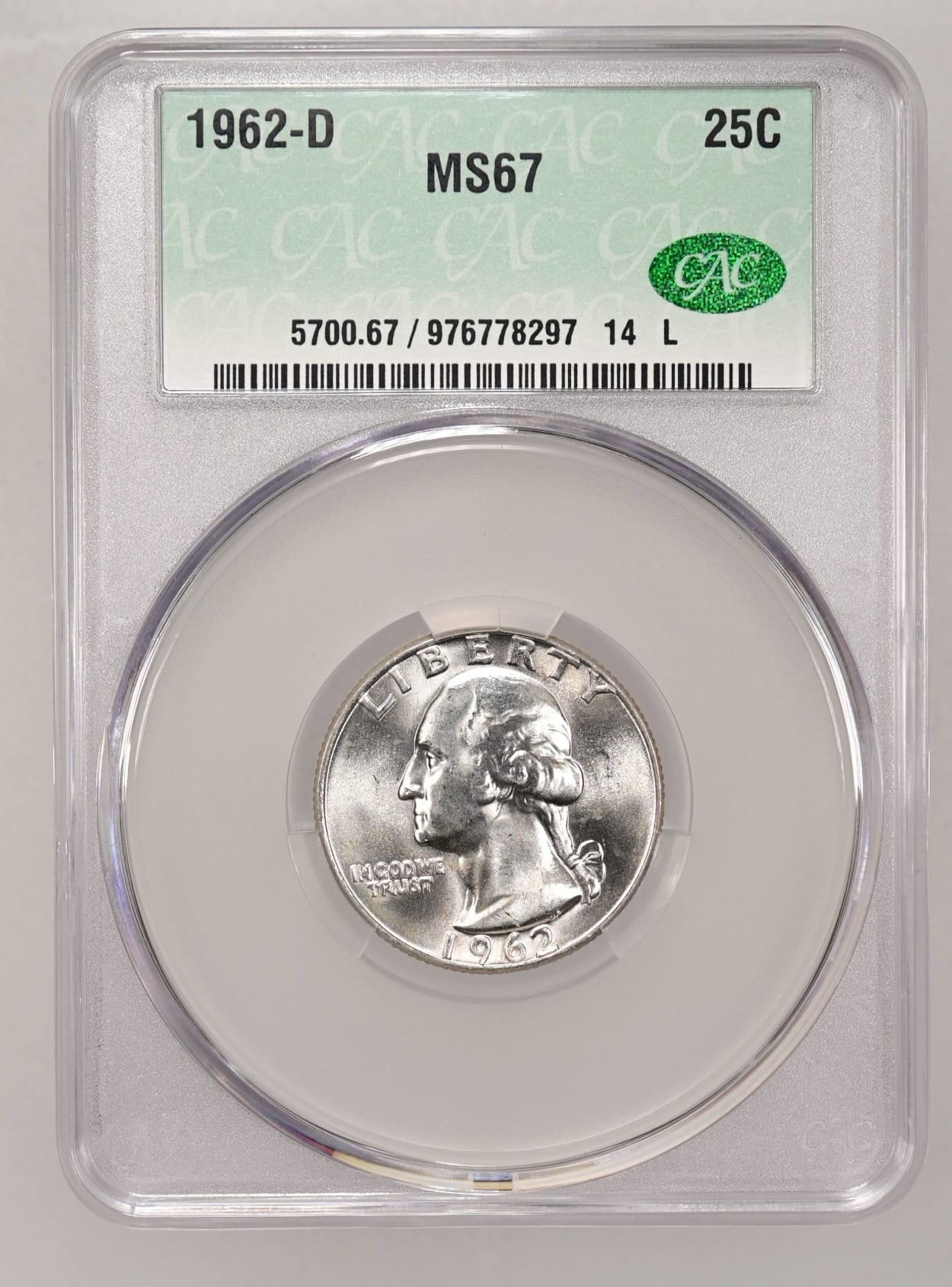
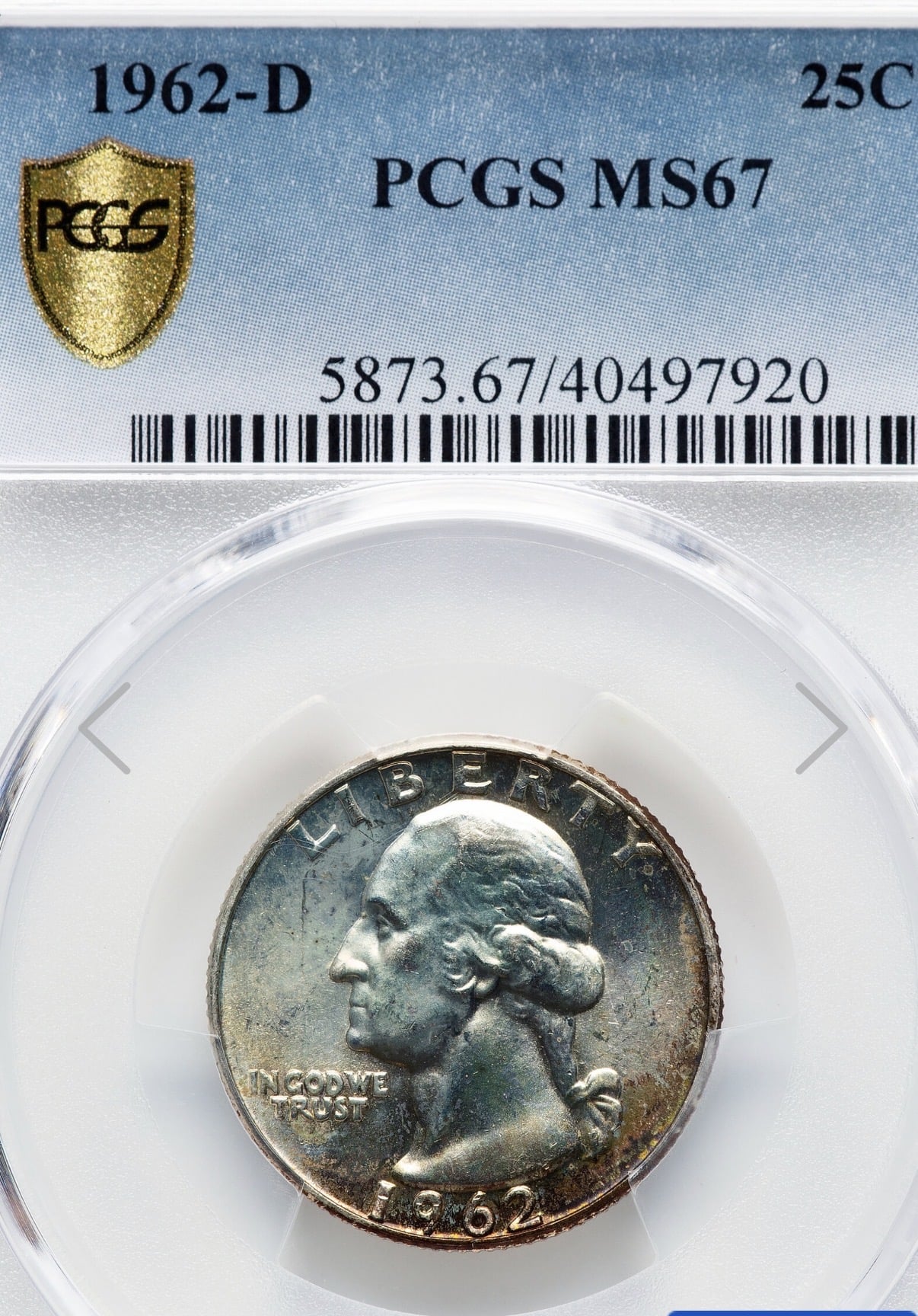
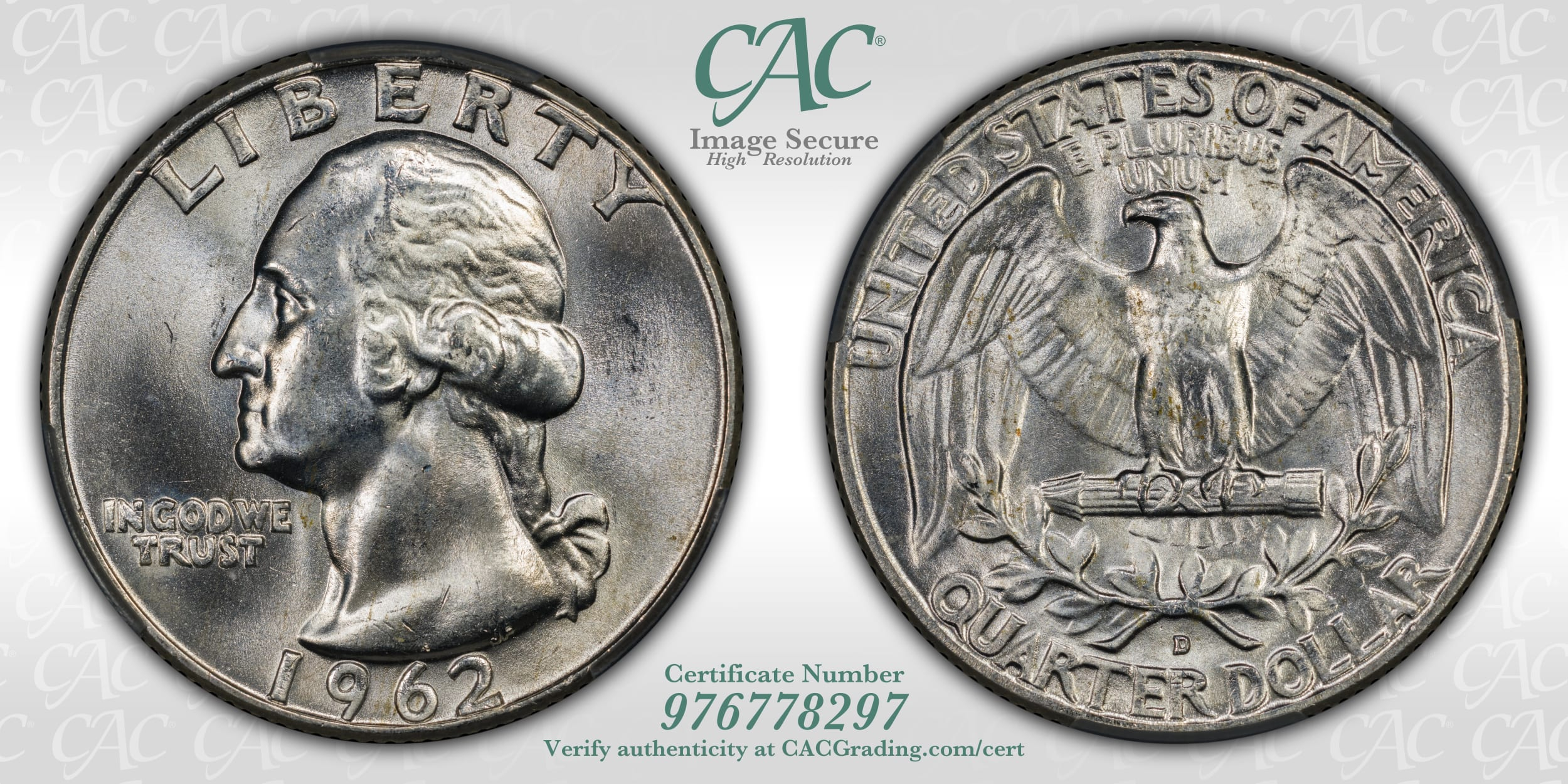
1961-D:
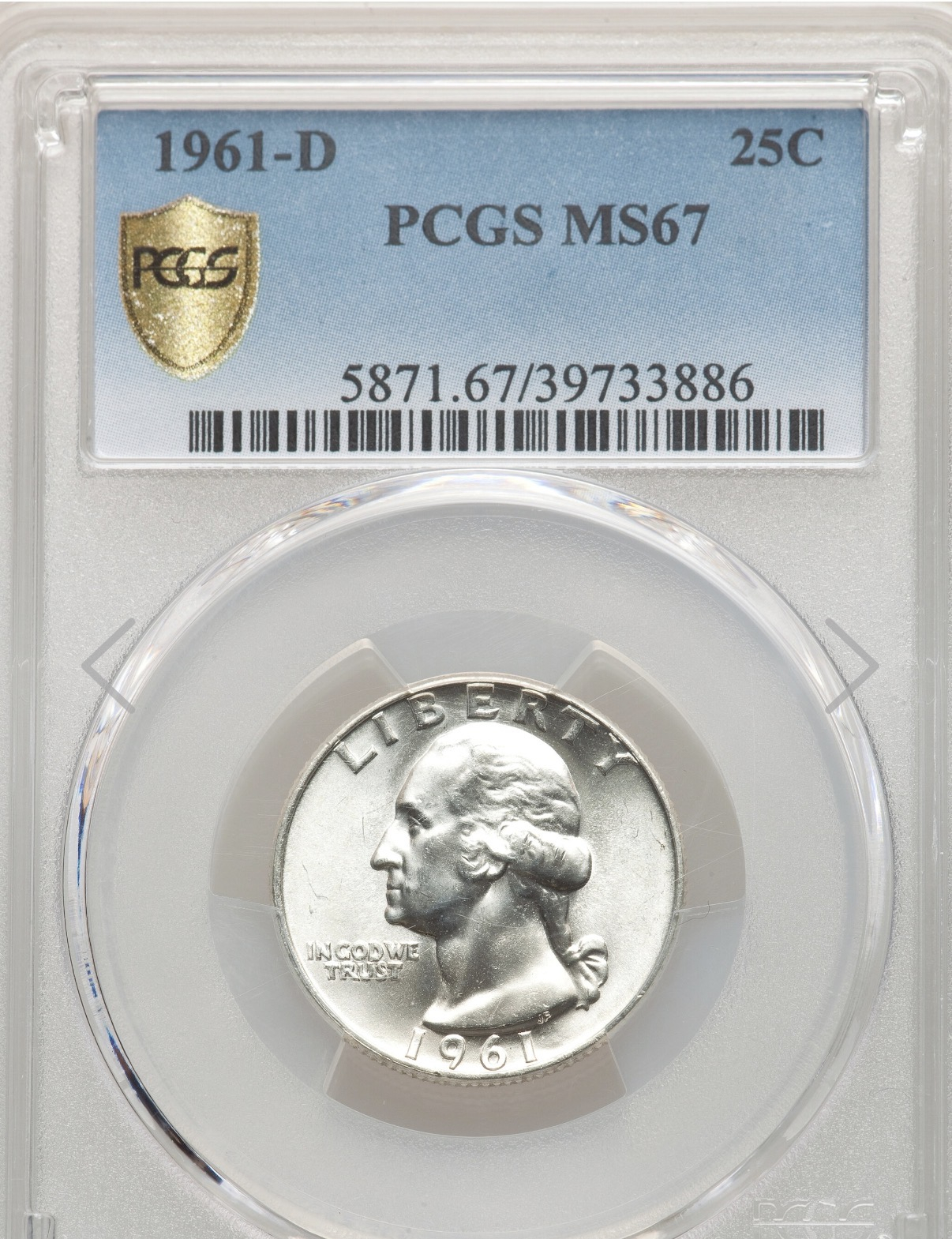
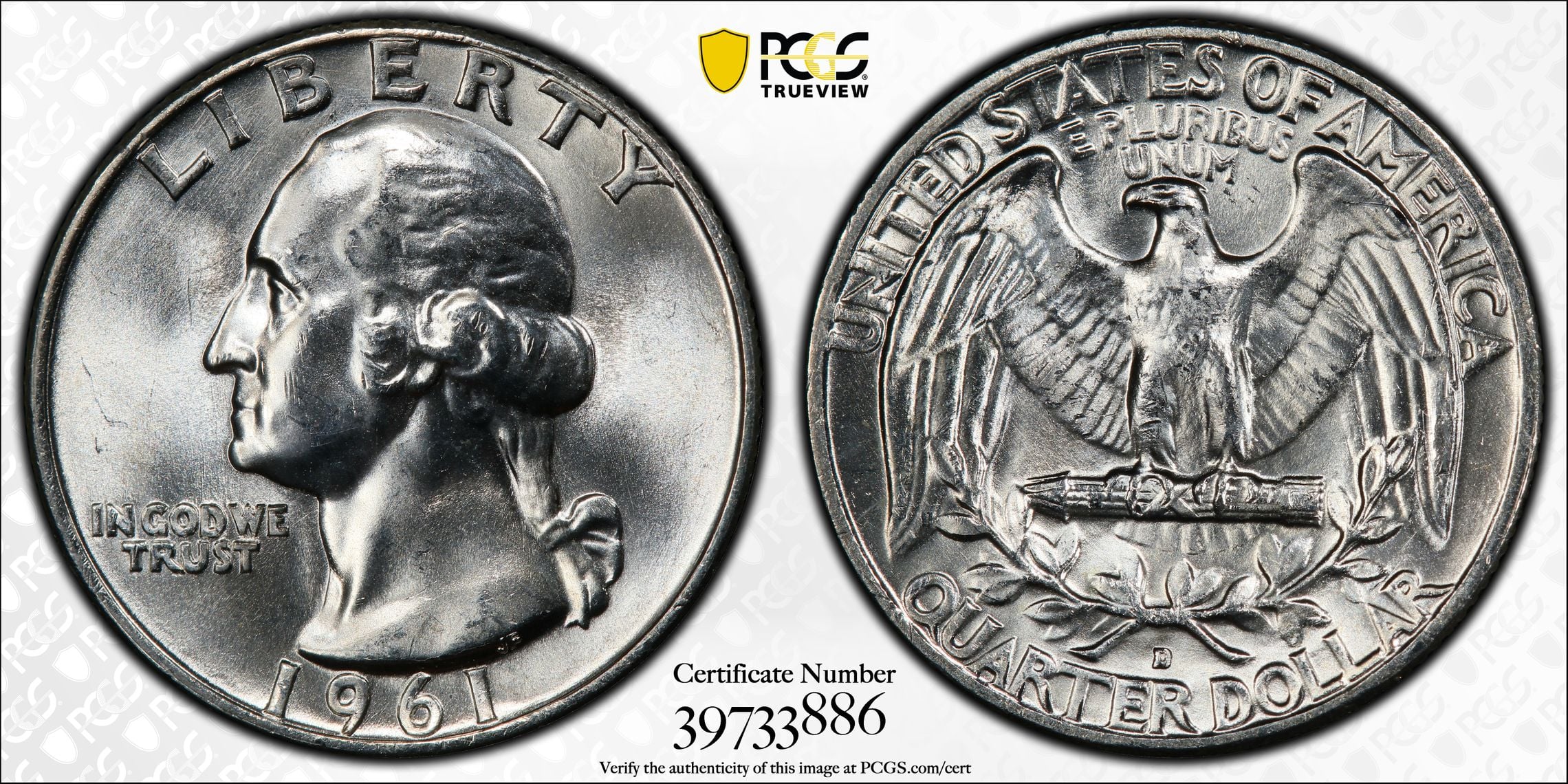
Comments
On mint state Morgan dollars, it seems that a CC mint mark adds a point to the assigned grade.
Worry is the interest you pay on a debt you may not owe.
"Paper money eventually returns to its intrinsic value---zero."----Voltaire
"Everything you say should be true, but not everything true should be said."----Voltaire
Love the 62 d 👍
Thats the issue i have with the grading services. ALL dates should be graded to the same criteria. If there aint no 67's for a given date there aint no 67's.
This does not happen in all cases, but it happens enough to make one more selective when buying CC dollars.
The so-called “chestnut grading” has been around for as long as I’ve been a collector. The concept is the rarer the date, the loser the grading, which is wrong. You pay high prices for the date. You should not get overcharged by lose grading as well.
“Are graders more forgiving on tougher dates that are known to come heavily marked?”
In general, no. If you’re proficient at grading and look at enough coins, you’ll eventually see some examples of pretty much any date that appear to be over-graded and others that look under-graded. That’s the nature of grading.
Mark Feld* of Heritage Auctions*Unless otherwise noted, my posts here represent my personal opinions.
All dates should be treated equally however graders do need to consider if the date/mint had known luster or strike issues, but such should limit coin's ability to get MS66 and higher grade. Bagmarks, scratches, rim nicks, etc should treated equally for all coins, period.
18th century coins seem to be graded on a curve. One must view these coins in hand and ,if possible, seek out a professional who specializes in these cruder coins or rely on CAC. Same with Pioneers.
You will not get anyone at a TPG to admit this but yes it is true. Production in the late 50's to mid/late 60's was sheet at most of the mint facilities. The reason you see the leniency from the TPG's is because of the registry, a lot of pressure has been placed on the TPG's by big spending whales and the dealers that support them to loosen the grading so that sets can have matching grades in sufficient quantities. If there was not registry pressure you would see less of this.
My Collection of Old Holders
Never a slave to one plastic brand will I ever be.
I've seen Colonial coins with issues such as verdigris or environmental damage that straight grades and if it was on a copper cent, wouldn't.
It makes me wonder, any pop reports from the late 90's to early 00's of the 60's date Washington Quarters graded at pcgs? Wondering how many were actually graded 66 & 67
Not a US series, but the grades on the coins I own are not consistent, and I own more of these than practically anyone else and in better quality too.
Which grade is "correct" is a matter of opinion, but I think anyone looking at my entire collection concurrently would see the obvious inconsistency. Most are NGC coins because they have graded a lot more, but I have numerous PCGS coins too.
For many types of coins, the populations of higher grade examples will have increased significantly (by percentage, if not number) since the late 90’s to early 00’s. Welcome to the world of expected population increases (as well as gradeflation) over a period of 20+ years.
So I don’t see how checking on those numbers would tell you much of anything about the coins you’re asking about.
Mark Feld* of Heritage Auctions*Unless otherwise noted, my posts here represent my personal opinions.
A strong example is the number of either PCGS or NGC MS67 clad Ike dollars. They used to be as scarce as hen's teeth and now they pop up fairly often.
Seems like a lot of 84-S Morgan $'s get AU-55-58 grades that look as good or better than common date 62's. The 1886-O Morgan's are about the same.
The problem here is that the prices for the 1884-S Morgan Dollar become "moon shots" as soon as you call it "Mint State." Using the 2026 Red Book, the value for an AU-50 is $405. In MS-60, it's $9,500 and heads rapidly for outer space from there.
The 1884-S dollar is a common coin. I won a well circulated one in a club door prize raffle. In Mint State, it's scarce to rare. The graders don't want to stick their neck out for the grading guarantees.
This is the realm of market grading. Services put a grade associated to the value they believe it should have. Similar case to a cleaned 1804 dollar receiving an MS-63 grade. The services control a portion of the market, and 1884-S morgans are a great example.
"But seek ye first the kingdom of God and His righteousness and all these things shall be added unto you" Matthew 6:33. Young fellow suffering from Bust Half fever.
BHNC #AN-10
JRCS #1606
I hope not, the tougher dates are tough for a reason. I would hate to buy a 65 that really is a 63 having paid up for it.
Don’t forget about colonials with tooling and/or scratches. There were two straight graded coins over the past year that I was very interested in bidding on but upon closer inspection saw that one was clearly tooled around part of the device and the other had an old long scratch that were not caught by the TPG’s.
How can a TPG differentiate between an MS-69 and a 70 yet can’t see tooling on a circulated coin? John Wooden had a saying, be quick but don’t hurry.
I agree, I don't think those issues are missed. I think they're forgiven.
That’s the problem. A flaw is a flaw. End of story.
I had a gorgeous semi-key Liberty Seated dollar which was bright uncirculated and didn't have a mark on it. After several submissions, the best I could get is an MS-62. Now look at a typical MS-62 Morgan dollar, there will be scratches all over it.
An authorized PCGS dealer, and a contributor to the Red Book.
If the coin was truly uncirculated and literally “didn’t have a mark on it” (which is hard to fathom) yet, despite multiple submissions, only graded MS62, chances are that it was over-dipped or lightly cleaned.
Mark Feld* of Heritage Auctions*Unless otherwise noted, my posts here represent my personal opinions.
No
They might give them more scrutiny.
I think that there are two factors:
Yes, key dates can be found with grading that does not seem to correspond to the coin's condition
.
.
Some of what people are seeing may just be selection bias. The key dates that actually make it back into the market and get resubmitted are often the lower-end survivors, while the true top-end pieces are usually locked away in strong collections. That can skew perceptions of grading consistency..