Options
VG Seated dollar definition
 logger7
Posts: 9,944 ✭✭✭✭✭
logger7
Posts: 9,944 ✭✭✭✭✭
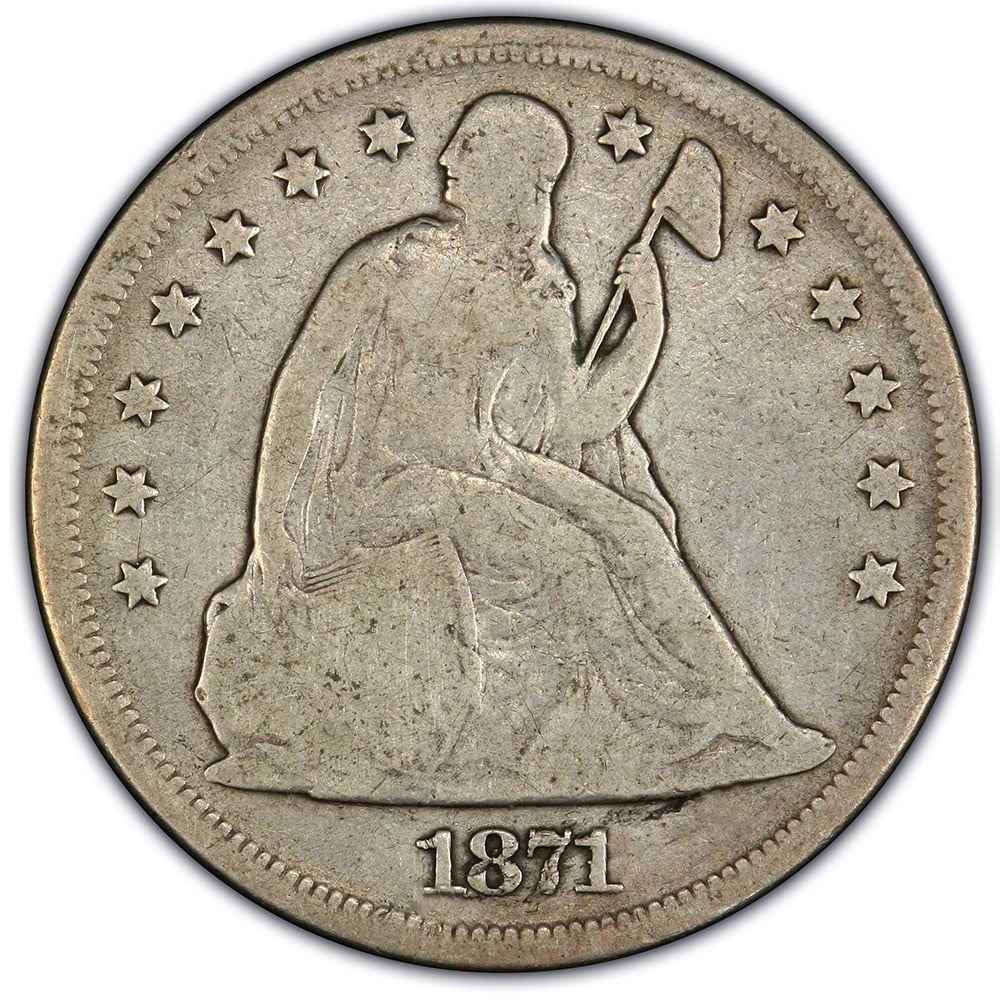
In my book by Q. David Bowers, "Grading coins from photographs", it gives the definition of a VG Seated dollar as having 2 to 3 letters in "Liberty" on the shield as visible. I looked at the PCGS "photograde" and I'm not seeing the 2-3 letters visible: https://www.pcgs.com/photograde#/SeatedDol/Grades
VG8
VG10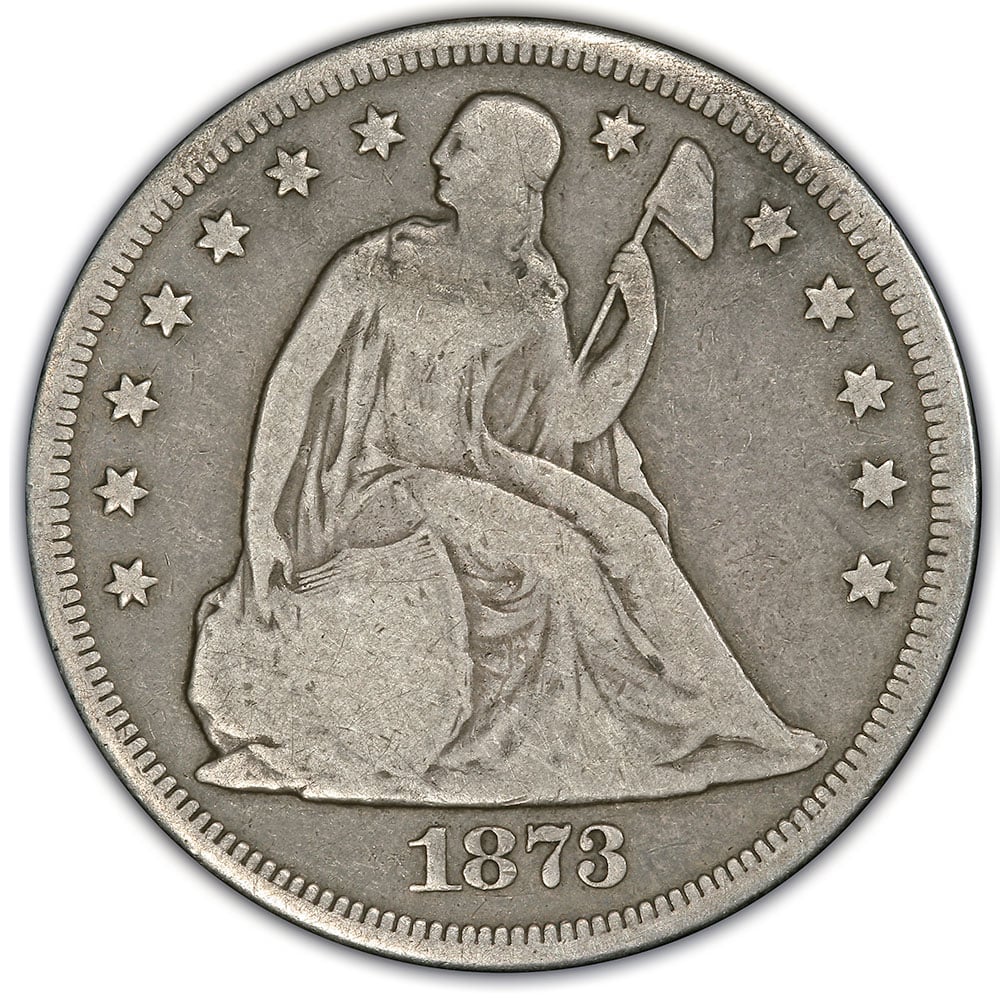
What are graders considering specifically on the bright lines between the grades? A lot of dealers are going to use the strict definitions when buying and claim in the two examples here that they are "good" not "very good".
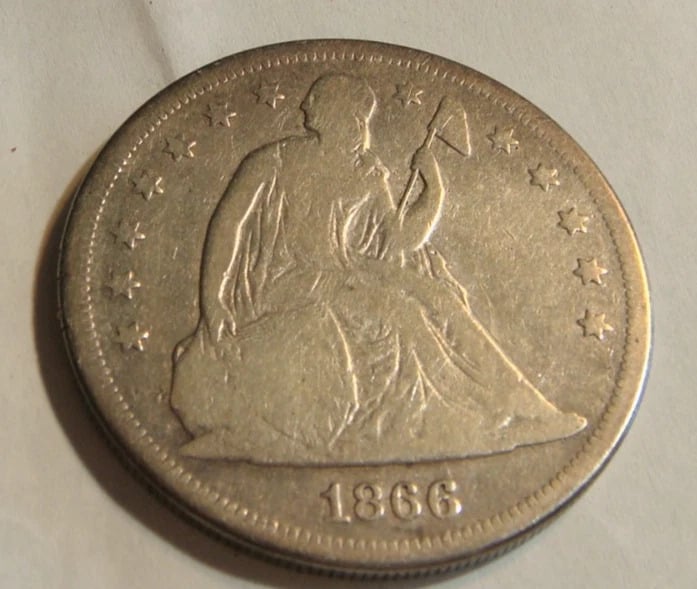
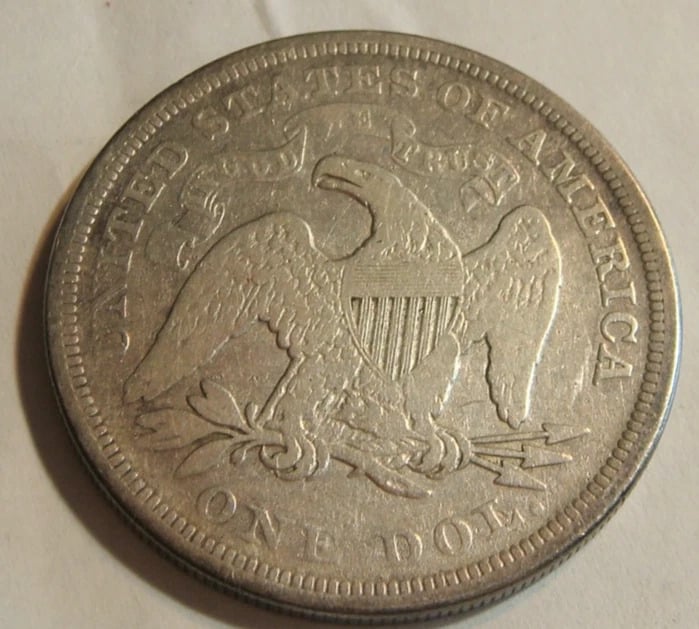
This is my example:
4
Comments
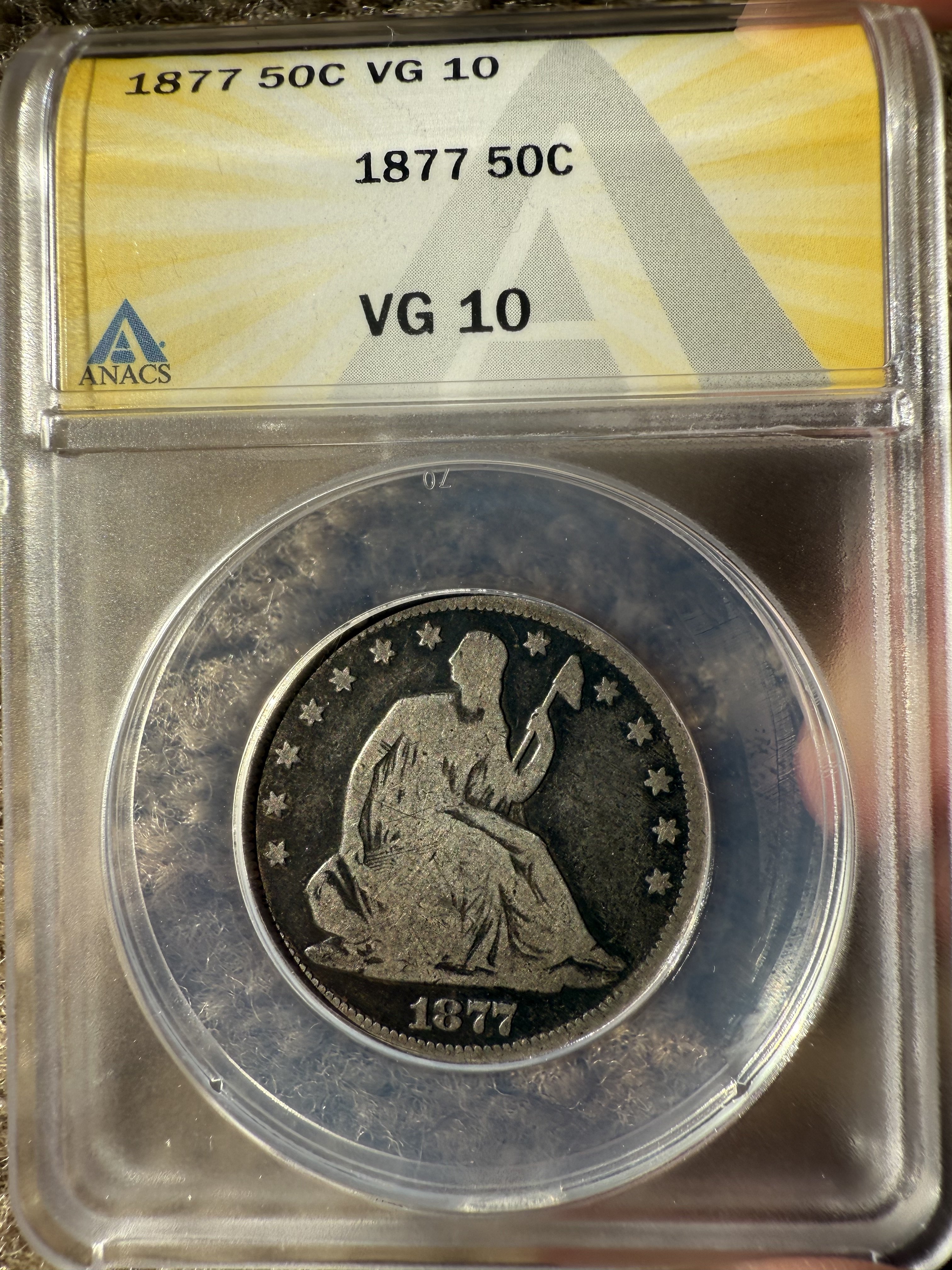
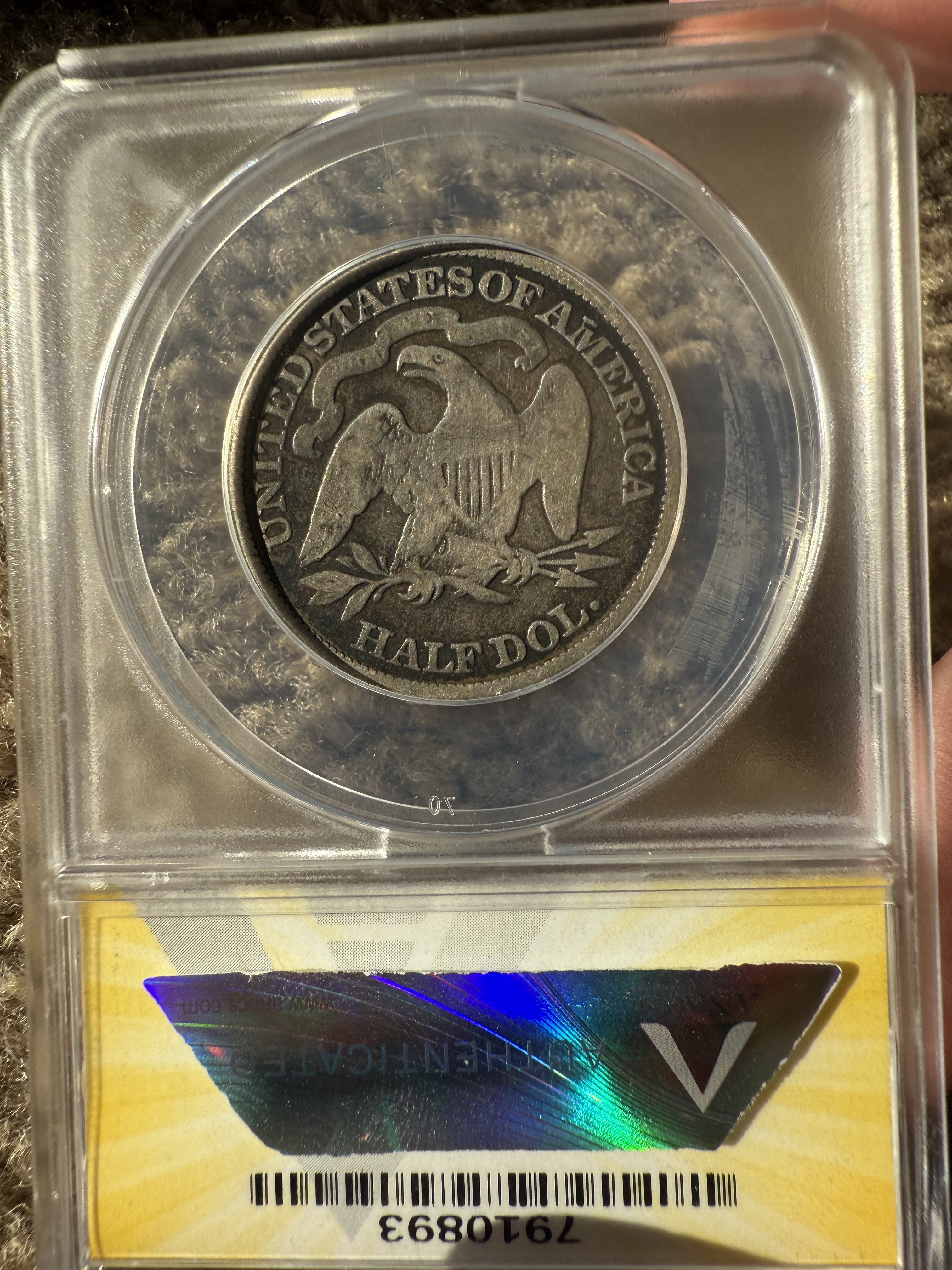
They must be basing it off the reverse. Here’s one I sent to ANACS a while ago that got VG10.
"Another day, another Collectors Universe forum scrolling session."
- Someone, probably
maybe they feel like theres enough there to give the grade?
There is a PCGS Grading book which might have their definitions in text.
I have the "Official ANA Grading Standards for United States Coins, 4th Ed."
Its rules for the shield area are:
G-4: Date is weak but visible. Shield is worn smooth. Most of rim is visible.
VG-8: Entire shield is weak, and most gown details are worn smooth.
Some letters in LIBERTY are visible. Rim is complete.
F-12: Shield lines weak at center. Four letters of LIBERTY are clear.
To be fair it is a little nicer in-hand, but I agree it seems a little iffy for being close to Fine.
The reverse definitely carries the grade, might be borderline-fine (photo does not do it justice) but I’m surprised the obverse didn’t make it tank! I will also say though, the eye appeal is pretty good for being a lower grade.
"Another day, another Collectors Universe forum scrolling session."
- Someone, probably
Really "wasted" look for that grade.
Fair enough
Really only thing I have to say in positive of the coin is that the photos don’t necessarily show all the details of the coin, especially the reverse but yeah, I mean nice as the coin is, standards aren’t the same, though how could they be? They’re (almost) never consistent!
"Another day, another Collectors Universe forum scrolling session."
- Someone, probably
The date looks tooled.
I'd grade GD04 VG10 VG08 VG08
I have a Brown & Dunn grading book from the early 60's that grades like Bowers. I can also remember all the sale ads in Coin World back then stated they used B&D grading.
I see your logic, especially with the reverse grade(s) yet must respectfully disagree.
It's hard to lump in coins such as my 1866 Seated dollar with comparable VG examples on the PCGS page. I realize the challenge is to get the coin into the holder, if there are hairlines, etc. that preclude a straight grade, some will use artificial means to "wear it down" to be acceptable to the graders, I heard a show manager once offering to take a coin into the bathroom and do that for me. Personally I'd rather have a coin as it is and be "details" than wear it down to the next lower grade.
Letters in Liberty showing for a VG has always been a sort of "red herring." The strike or die wear may have not supported it. When grading seated coins was basically by photograde/B&D/ANA standards in the 70's through 90's, you went by the totality of the coin, including the rims and stars, eagles feathers, drapery folds, etc. Even a Fine-VF seated coin can be found with weak to no letters in LIBERTY....ex. a VF-20 1875-cc 20c piece with minimal letters in Liberty showing. Oddly, I recall that 20c piece still showing traces of luster in the devices.
Similarly, I remember considering buying what I thought was an AG/Good 1796 half back in the 1980's. I ended up passing on it due to the $9K G-VG price....I believe the letters were worn into the rim in places. The next person up bought it immediately at $9K and flipped it for $12K as a strong Good to VG. One of my first major lessons learned that isolated weak areas on a coin doesn't necessarily drop it to the lowest common/safest grade. This was sort of a leftover of the VG "LIB rule" among many seated collectors that still exists today.......but, it doesn't always hold water. And even a VG seated could have weak rims depending on the date/mint.
First, the grading on Twenty Cent Pieces is different from other seated coins because the letter in the “LIBERTY” are raised, not incuse. They wear off quicker. Second, many 1875-CC Twenty Cent Pieces are poorly stuck on the upper right wing of the eagle and the corresponding area on the shield on the obverse. Therefore, the “LIBERTY” is often weak on those coins, even in EF.
Third, it’s long been noted that the “LIBERTY” on Seated Dollars is higher in the center than other seated coins. When the “LIBERTY” was used as a grading point, the middle letters could missing, yet the coin still graded “Fine.”
I agree with the grades on the 1871 and 1873 Seated Dollars. I think that the 1877 half dollar in the ANACS VG-10 holder is over graded. My grade is Good-6. I also do not find the coin attractive.
Finally, I don’t know what a “1796 Seated Half” is. Grading on low grade early coins is different. Without pictures, I can’t comment. A 1796 half dollar is a very tough coin. The “chestnut grading system” where rare coins get a grading boost for rarity comes into play. I don’t agree with it, but that attitude and system have been around since I started out as a collector in the 1960s.
This is my 1859 CAC 8 Seated Dollar
That price is very nice for the grade.
Looks so much better, especially the reverse.