To What Degree Must Dealers Be Honest With Descriptions?
 FlyingAl
Posts: 4,362 ✭✭✭✭✭
FlyingAl
Posts: 4,362 ✭✭✭✭✭
We've all heard the old adage to never grade from photos, which often leads people to say that a good description from a dealer can be more valuable than pictures itself. That in itself can be debated, but not now.
This leads to my question about dealer ethics...
To what degree must a dealer be honest with their online description of a coin? Is hyperbole allowed? If so, to what degree?
If I purchase a coin based on a dealer's description and find that it is inaccurate, should I be granted a return? If so, how inaccurate must the description be?
Discuss!
1
Comments
define honest description
If someone sells a coin for which they believe they provided an accurate description, should they be expected to allow a return because the buyer disagrees with the description?
Bottom line: Return options should be discussed before a purchase is made.
Not sure if I understand the point.
Every dealer who writes a description has their own way of writing it. It's up to you to interpret it, interpret the photos, and you can most definitely ask for additional in-hand photos or even a video. Some coins will even have trueviews or auction photos for you to base your opinion off of. At the end of the day, reputable dealers should/would honor a return for any valid reason including not liking a coin in hand.
I know several collectors as of recently who bought a coin online and didn't like the coin in hand as much and returned it. That's a perfectly acceptable reason since you're not seeing the coin in hand when you initially buy it.
Collector of Capped Bust Halves, SLQ's, Commems, and random cool stuff! @davidv_numismatics on Instagram
Was the coin graded by a TPG service? I suspect that matters because in part the valuation is predicated on a TP grade opinion. However, not all coins at the same grade level are created equal. It might not be an issue of ethics or dishonesty... but one of experience and simply not being aware of the attributes of a specific date within a series.
Your questions may appear to be adequately framed, however there seems to be more to consider. Personally, if you are dissatisfied with the coin, the dealer in most instances should accept a return as long as the return time is reasonable or perhaps as a condition of the sale, a return privilege for a specific period of time is negotiated. Dealer ethics is a very slippery slope and it just might be best to create a "memo of understanding" in connection with the purchase that does not come across as buying on approval.
Some dealers understand coins and how to best describe them- others do not. I am not making excuses for those that do not as you have the choice to buy from a dealer that has proven himself to your satisfaction.
How would a dealer best describe a coin such as this? And how would that description compromise his ethics?
Experience the World through Numismatics...it's more than you can imagine.
If I call a VF coin XF or brown copper as red-brown, then I am a liar and a thief.
If I tell you the coin came from a 100-year-old safe at my great grandad's house that had been locked for 80 years, then I'm just a liar but not a thief.
If I tell you it's the first looking Morgan you're likely to ever see, then I'm just engaging in hyperbole.
I really don't understand the question. Lies that affect value create damages. Stories that enhance marketability create no damages. But I really don't know what you're trying to get at.
All comments reflect the opinion of the author, even when irrefutably accurate.
I asked a dealer, once, if a coin had a good strike and he said ‘yes, for the grade’. That should’ve tipped me off! lol. It turned out to be the flattest example I had ever seen. I kept the coin, because it was charmingly original and in an older holder. I eventually sold it, but didn’t lose any money. I made a few bucks, but I held it for many years.
Edit to add: this was in the mid 90s right before the Dawn of the Internet. A lot of business was done by mail order lists where good pictures were not readily available. It was my first ever certified coin purchase.
Sometimes, it’s better to be LUCKY than good. 🍀 🍺👍
My Full Walker Registry Set (1916-1947):
https://www.ngccoin.com/registry/competitive-sets/16292/
A fair description paints an image in the buyer's mind that does not disappoint when the coin is received.
Custom album maker and numismatic photographer.
Need a personalized album made? Design it on the website below and I'll build it for you.
https://www.donahuenumismatics.com/.
That statement will be false in many scenarios. Let me clarify: If you call a VF coin XF or brown copper as red-brown, then you could be a liar and a thief, ignorant, uneducated, or unprofessional. If you can accurately grade and knowingly misrepresent a coin and sell a VF coin XF or brown copper as red-brown, then you would likely be a liar and a thief. But even then, the line is subjective as grading itself isn't exact.
MONSTER TONE A+++++ COIN BUY NOW RARITY RARE COIN SILVER BU UNCIRCULATED
...or something like that
"But seek ye first the kingdom of God and His righteousness and all these things shall be added unto you" Matthew 6:33. Young fellow suffering from Bust Half fever.
BHNC #AN-10
JRCS #1606
Mistakes happen. OBVIOUSLY, I'm referring to intentional misrepresentation.
All comments reflect the opinion of the author, even when irrefutably accurate.
The boundary can be found in legislation against misrepresentation of a product and false advertising laws that are already in place. Obviously if a retail business runs a scam, they can be penalized in court. Same rules should apply to a coin dealer who is describing coins. I am a believer of more freedom of speech from the dealer which would indirectly encourage the increase of the buyer's skills for recognizing a good product.
Answering "To what degree must a dealer be honest with their online description of a coin?": An unmistakable coin scam, the dealer should be punished. Regarding the gray areas, keep them open. We can't punish first amendment rights that are not directly associated with a crime.
Ethics: A coin dealer should describe a coin as best as they can.
"But seek ye first the kingdom of God and His righteousness and all these things shall be added unto you" Matthew 6:33. Young fellow suffering from Bust Half fever.
BHNC #AN-10
JRCS #1606
Exactly what I was thinking.
Student of numismatics and collector of Morgan dollars
Successful BST transactions with: Namvet Justindan Mattniss RWW olah_in_MA
Dantheman984 Toyz4geo SurfinxHI greencopper RWW bigjpst bretsan MWallace logger7 JWP BruceS bigjpst
JWP
Not a coin dealer, but I am a professional in my business.
MUST can be a pretty damning judgement and difficult standard. Defining whether something crosses the line into willful misrepresentation can be difficult to prove (although easy to accuse). Outright fraud is a little easier to dedect, sometimes.
When there is some opinion in part of the description that could be misinterpreted (but is not meant to fraudulently deceive), there is some ignorance in what is being stated, or maybe there is some lack of skill in how something is being shown ... I think it should be given a general pass (even if we may decide not to do business with them in the future).
So, other than outright fraud, I don't think a dealer has to do anything, other than accept a return if what they provide is not what can reasonably be expected from an educated buyer.
However, what they do and how they handle things greatly affects their future business. And the pool is only so big.
.
I'm okay with (and can even appreciate) favorable images, reasonable hyperbole (oxymoron?), and descriptive liberties in the way a coin is advertised ...
... but I will always appreciate a dealer who, when asked, will say something like ... "well, you can't really see this in the image, but there's some marks at ... the color is not quite as vibrant as the images show ... it has some whispy hairlines that I think will preclude it from getting a bean ... etc., etc." Things I might not be able to see in hand, but that the dealer will want me to know to make a reasonable and somewhat educated purchase.
.
FWIW the last coin I purchased on-line from a dealer where I did call first had a similar conversation. I went through with it, and decided in hand his comments were maybe a little much to do about nothing (to me at least) ... but he knows I am particular, no one wants a return and I absolutely appreciated him letting me know.
“We are only their care-takers,” he posed, “if we take good care of them, then centuries from now they may still be here … ”
Todd - BHNC #242
Auction companies all around the world are breathing a sigh of relief right now...
Speaking of hyperbole - I remember the Legend auction description florishes that Laura wrote - ala "can't find any significant issues even with a strong glass" or "you'd have to use a neutron microscope to find any blemish". Those aren't exact quotes but the strong glass and neutron microscope are verbatim.
"She comes out of the sun in a silk dress,
running like a water color in the rain...."
Ethics VS Greed.
I am reminded of this quote:
“I looked in your cup to see if you had enough.
You looked in mine to check if I had more.
That difference says everything. We are not the same.”
As long as the images are accurate and as long as the dealer has a return policy for online purchases, do the descriptions really matter?
I try to follow the Boy Scout motto, even though some of the boy scouts or scoutmaster didn't back then.
The history of a coin is rarely known to a dealer. It doesn't really help your business anyway if you embellish the reality. It's no one's business if a coin has been submitted a number of times before it got its current grade, that's a statistical demographic irrelevant to the current reality. Good pictures, proper description should be enough with ample return options.
As a legal matter, I suspect that you would be nuts to try to take legal action against a dealer based on your disagreement with the description. You would have to prove fraud, I suspect, to get any relief, and that would require proving that the dealer purposely lied about something material.
Bottom line--Make sure you understand your return privilege before buying. Personally, I would not buy a coin I did not hold in my hand without a decent return privilege (although I have never returned a coin, I always feel better knowing that I can.
My take is that a description needs to be pretty accurate if your goal is to be a relevant/ respectable dealer. If not your reputation will e sullied and you won’t last very long.
Be honest and folks will seek you out.
While @The_Dinosaur_Man 's comment really is the most appropriate, there's room for "puffery" in all sales and buyers should be both accustomed to it and immune to it. Note that puffery is statements like "Best I've seen," "PQ," "Possible upgrade." Deception is like "Top pop None finer" without mentioning that the statement doesn't take into account other TPG's pop reports.
There are “respected” dealers who seemingly juice most of their pictures. It’s mathematically impossible for said dealers to have so many rainbow fluorescent looking coins with perpendicular images and there are dealers who I’m very familiar with their writing style and descriptions that within a few seconds I can tell if they like the coin. I would never buy a coin without return privileges but in 30+ years I’ve returned only one coin.
I think the dealer is far more credible when nothing is omitted, and that's quite rare. If I can see reeding marks or fingerprints clearly, it should be part of 'grade limiting' description of the coin, not ignored by the dealer in hopes that the buyer is half blind.
Commems and Early Type
@FlyingAl, any hope of a reasonable discussion ended when you used “dealer” and “ethics” in the same sentence.
"Those who would give up essential Liberty, to purchase a little temporary Safety, deserve neither Liberty nor Safety," --- Benjamin Franklin
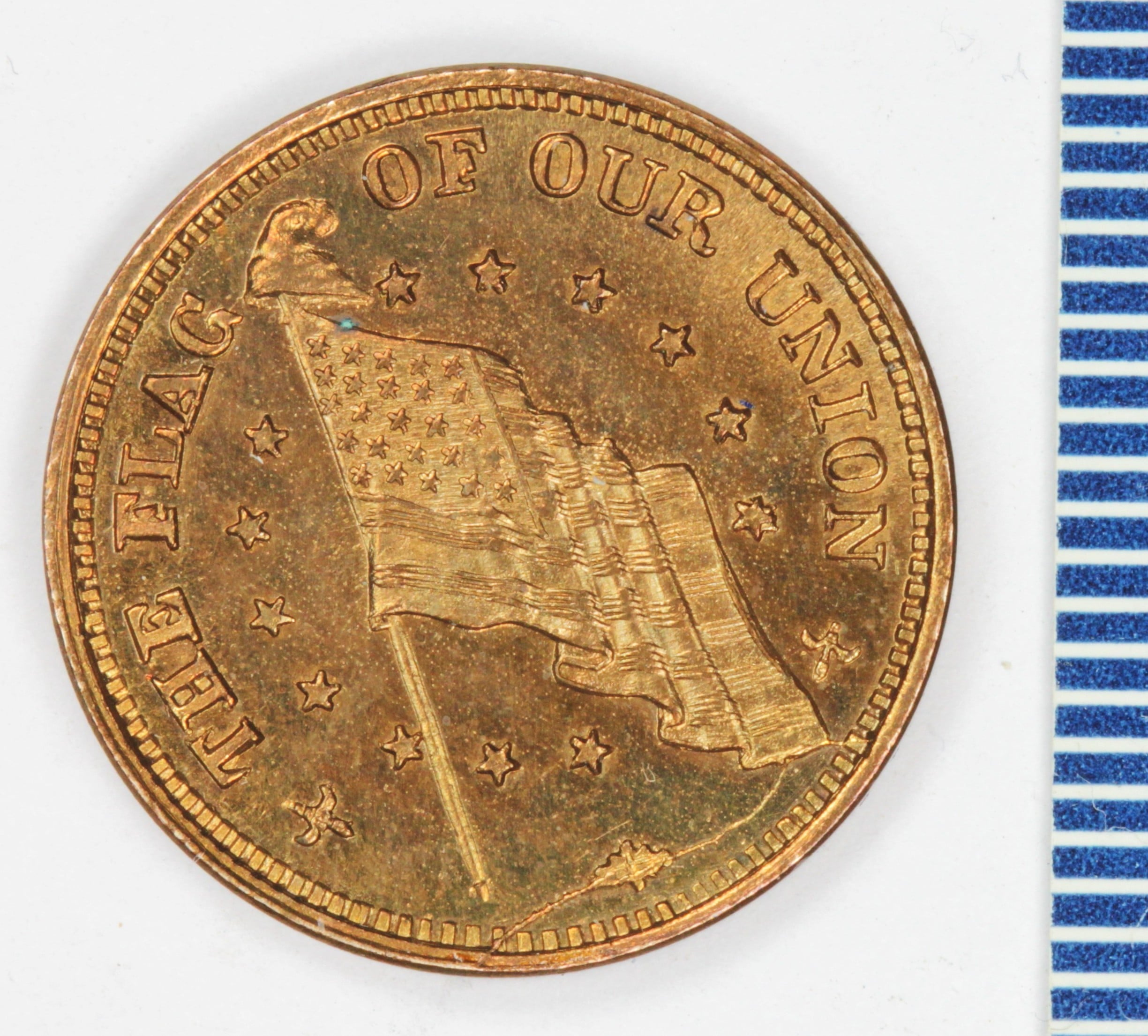
... my last ebay send-back... I think it's pretty obvious...
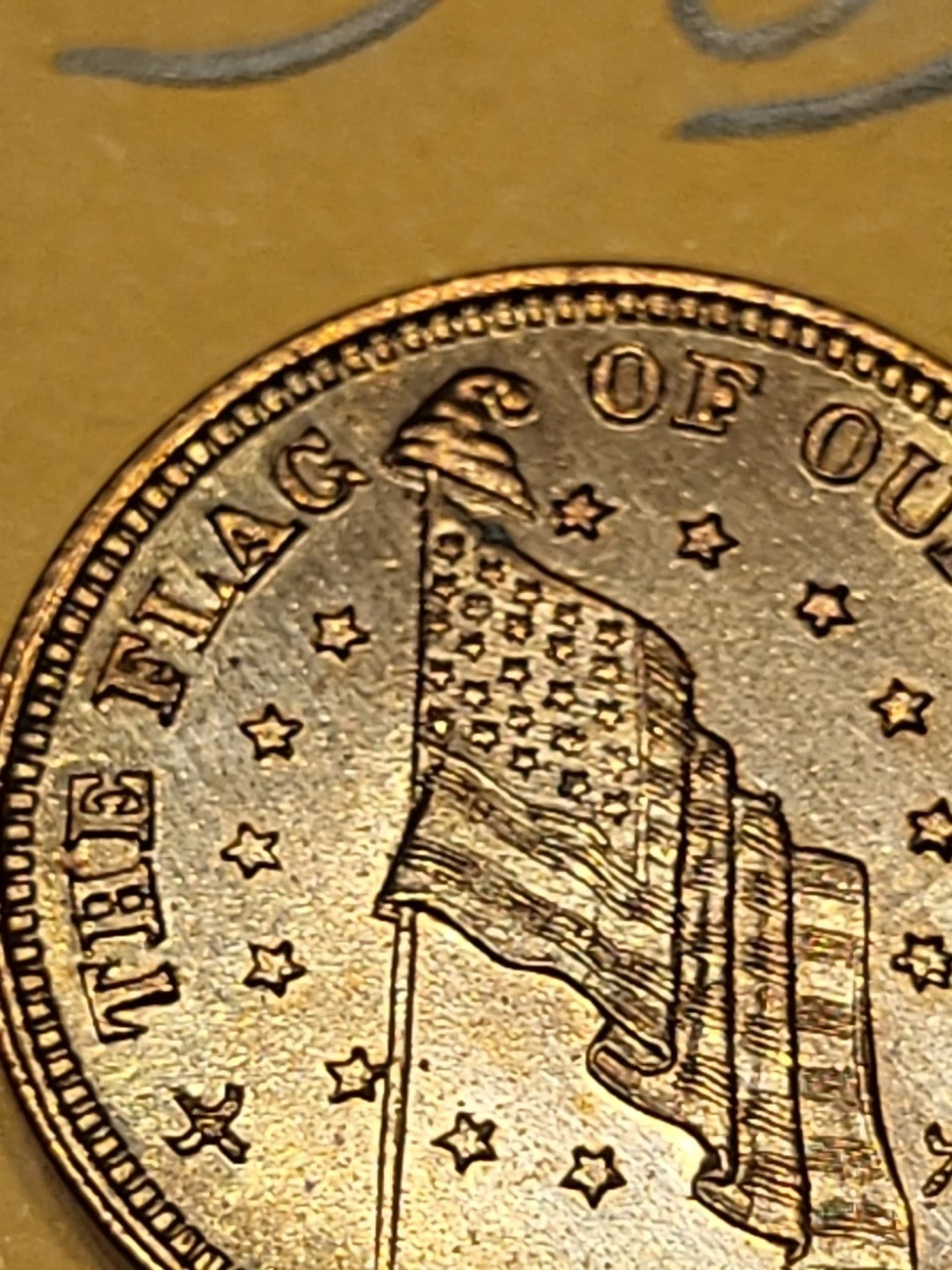
Seller's Pic
My pic...
Successful BST transactions with: SilverEagles92; Ahrensdad; Smitty; GregHansen; Lablade; Mercury10c; copperflopper; whatsup; KISHU1; scrapman1077, crispy, canadanz, smallchange, robkool, Mission16, ranshdow, ibzman350, Fallguy, Collectorcoins, SurfinxHI, jwitten, Walkerguy21D, dsessom.
For the Bay starting today:
Now live: New coin condition requirements
Hello Team,
The new coin condition requirements are now live on eBay as part of the first phase of rollout. These changes apply to:
What’s happening now
At this stage, listings without condition details are not yet blocked, but it’s important to start preparing now.
What’s coming next
Listings without condition data may be blocked or hidden after these dates.
What to do now
Begin updating your existing listings that are missing condition information
I still see a lot of holes and ways around honesty and integrity. Time will tell I guess.
USAF veteran 1984-2005
EBay will not even remove counterfeit coins and counterfeit coins in counterfeit holders -- and they worry about adding more description.
Completely, if leaving a description.
Very interesting! I tried my best to leave the OP intentionally vague to allow people to state what came to mind, and we got a wide variety of opinions.
So far, we have a range of responses from dealers should be completely honest to a dealer can really say what they want so long as they are willing to accept the consequences of the description being bad, whatever that may be.
Consensus seems to be that dealers should not intentionally misrepresent coins that they sell.
For fun, I looked up the definition of false advertising since a couple people brought that up (I hadn't even considered legal repercussions for a poor description when I started this thread). Cornell's Legal Information Institute states that:
"False advertising is an actionable civil claim under Section 43(a) of the Lanham Act. A party who successfully sues for false advertising may be entitled to either damages or injunctive relief.
To bring a claim for false advertising, the plaintiff must show:
The defendant made false or misleading statements as to their own products (or another’s);
Actual deception occurred, or at least a tendency to deceive a substantial portion of the intended audience;
The deception is material in that it is likely to influence purchasing decisions;
The advertised goods travel in interstate commerce; and
There was a likelihood of injury to the plaintiff.
Notably, the plaintiff does not need to show that they suffered actual injury from the defendant’s allegedly false advertising. That said, puffery, or claims a person could not reasonably rely upon, are not grounds for a false advertising claim."
The last sentence seems to be the most important, since an experienced dealer would likely not be misled by a poor description, but it may be that a novice buying a details coin that they later found out was misrepresented might have a chance in court. Not that it would be worth the legal fees, but interesting to think about.
A couple more guiding questions:
Do more experienced dealers get more leeway with their descriptions, or less?
Do obviously false statements (IMO), such as describing a PR67 coin as "flawless" constitute intentionally misrepresenting a coin?
Coin Photography
Regarding your additional two guiding questions:
I suspect that (at least) the well liked, more experienced dealers get extra leeway with their descriptions. But I don’t think they should. And if they’re going to be held to a different standard than less experienced dealers, I’d prefer that the standard be higher, not lower.
I’m under the impression that many sellers don’t use the word “flawless” literally. And if they don’t, they’re not engaging in intentional misrepresentation. However, when it comes to describing coins of all grades, I oppose the use of the word “flawless” - at least without some type of qualification such as “appears” or “without magnification”.
Mark Feld* of Heritage Auctions*Unless otherwise noted, my posts here represent my personal opinions.
Grading is subjective.
Therefore one may describe a coin as xyz grade and then when sent into a grading company comes back cleaned. this may or may not be market acceptable. This and other issues are a grey area and even the best photos can't be judged. Best to buy with coin in hand, even then some slip thru.
General example -
1926-S Peace Dollar: CACG MS64+ with Super Cartwheel Luster, Low Pop High End Gem. Dishonesty? No
If your talking mail order ymmv. It’s your responsibility to learn how to grade and view coins.
I don’t know degrees of truth. I suppose omitting the truth even one degree is a lie; and think descriptions and exaggerations and embellishments are just a simple part of numismatics that many get wrong ( in an attempt to sell). A good cataloguer can paint a picture with words which may convince a buyer, or bidder more than the photo of the coin itself.
``https://ebay.us/m/KxolR5
Describing coins for sale / retail transaction is salesmanship. The dealer may describe points about how the coin is a great investment, focusing on its attributes.
Descriptions can be subjective. Numismatic investment is risky. Many don’t know how to grade and examine coins then consequently lose money.
I don't buy as many raw coins as I did decades ago, both because I buy fewer coins and those I buy are more likely to be graded now depending upon the source. I'm also mostly buying from auctions because dealers almost never sell what I collect especially in the quality I will buy.
When I used to buy more variety up to roughly 20 years ago, I mostly bought from eBay. My experience was (and is) that most sellers were silent on any negatives the coin has but did and do not explicitly misrepresent it.
I prefer they say less, but provide high quality images. Just the facts please. "No returns" means "no sale" AFAIC.
Here is an AI-generated description that is an utter waste of time: "The US Indian Head Cent 1902 coin is a 123-year-old piece of American history made of copper with a fineness of 0.95. This business strike coin features the iconic Indian Head design and was minted in Philadelphia. A circulated, ungraded, and uncertified coin, it holds a special place as a small cent denomination coin from the United States. This collectible piece is a crucial part of any coin enthusiast's collection, showcasing the rich heritage and craftsmanship of American numismatics."
My hobby website Groovycoins.com, new and improved!
Nicely circulated coin here.......... dishonest?
"But seek ye first the kingdom of God and His righteousness and all these things shall be added unto you" Matthew 6:33. Young fellow suffering from Bust Half fever.
BHNC #AN-10
JRCS #1606