Home U.S. Coin Forum

Indian Head Cent Struck On $2-1/2 Gold Planchet

mr1931Smr1931S Posts: 6,953 ✭✭✭✭✭
edited April 21, 2026 1:47PM in U.S. Coin Forum

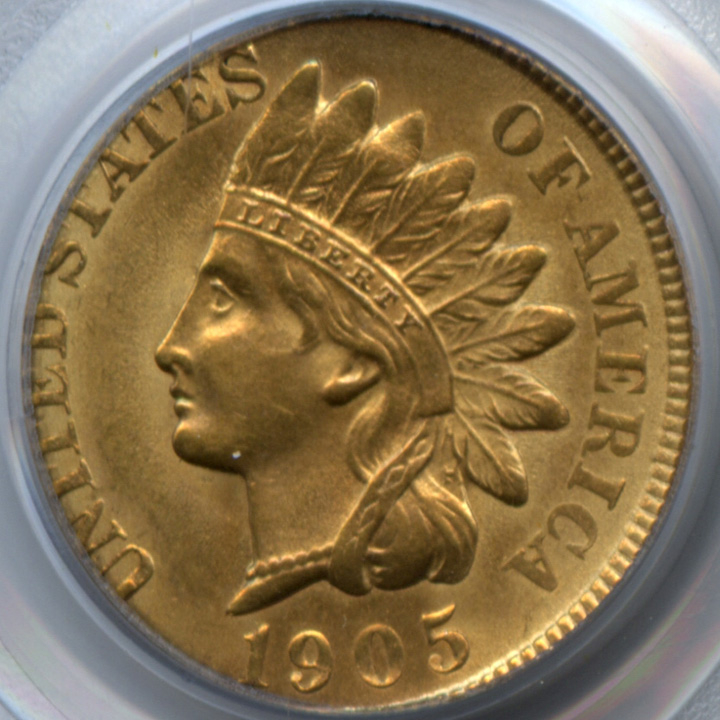
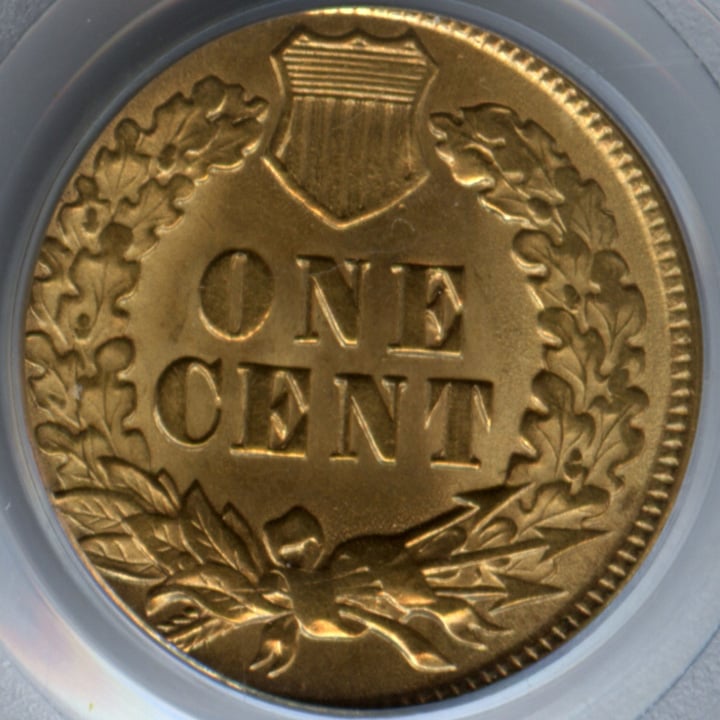
Do error coins get more exotic than this? The 1905 piece seen below is unique.

From Mike Byers website:

There are five Indian cents known that are stuck on gold planchets. Among them are three dated 1900, this piece dated 1905, and an example dated 1906. The Judd pattern reference lists 1900 and 1907 gold cents in the section on mint errors. However, Andrew W. Pollock, III, listed the 1900 gold Indian cents as P-1990 in the regular pattern section of his reference. Pollock writes: "Listed in Judd as a mint error, but it is difficult to imagine that a Mint employee would be so careless as to feed gold planchets into a coinage press fitted with one-cent piece dies." Pollock suggests that these pieces may have been deliberately struck for one or more collectors.

The following Census of gold Indian cents was compiled from a variety of sources, including uspatterns.com, minterrornews.com, Donald Taxay's 1976 Catalogue and Encyclopedia, Andrew Pollock's 1994 United States Patterns and Related Issues, the Judd reference, and selected auction catalogs. Conversations with Fred Weinberg and Richard Snow provided additional background.

1900 MS65 PCGS. Col. E.H.R. Green; B.G. Johnson; Abner Kreisberg Corporation 1/1975 auction, lot 609; Mike Byers; Auction '89 (Superior, 7/1989), lot 856; Bowers and Merena (8/1991), lot 4103; recently PCGS authenticated as a 1900 Indian cent struck on a gold $2.50 planchet, and graded MS65. The 1991 ANA catalog gives a weight of 65.8 grains, 1.3 grains too much for a quarter eagle planchet.

1900 AU55. Heritage (8/1993), lot 8000. The 1993 ANA catalog gives a weight of 4.35 grams (67.12 grains), 2.62 grains too much for a quarter eagle planchet.

  1. Michael Hodder reported in a May 14, 1996 letter to Q. David Bowers that he had personally seen three different pieces, all with weights in the range of 65.8 to 67.1 grains. See Bowers' A Buyer's and Enthusiast's Guide to Flying Eagle and Indian Cents, p. 427.

1905 MS64 PCGS. Apparently unknown to the numismatic community prior to the current offering. Weight: 64.5 grains, the standard weight for a quarter eagle planchet.

1906 AU58 NGC. Stack's (6/2004), lot 4097; Stack's (9/2009), lot 4299. Weight: 64.4 grains, within the 0.25 grain tolerance for a quarter eagle planchet.

  1. Listed in the Judd pattern book, and in Donald Taxay's Catalogue and Encyclopedia [of] U.S. Coins. The 1907 gold Indian cent is currently unlocated.

There is one example dated 1900 that was stuck in silver, from the identical dies as the 1900 gold Indian cents, suggesting they were all made at or near the same time.

This example has brilliant yellow surfaces with frosty mint luster. A few faint hairlines on the cheek prevent a Gem grade assignment. This stunning gold Indian cent is one of the truly amazing error coins of all time and is unique for the date. https://mikebyers.com/10136968.html
Einstein’s view of God was non-traditional and pantheistic, focusing on the harmony, order, and intelligibility of the cosmos rather than a personal deity. His quotes reveal a profound respect for the universe’s mysteries, a belief in rational laws, and a moral philosophy grounded in compassion and understanding, bridging science and spirituality.

“My religion consists of a humble admiration of the illimitable superior spirit who reveals himself in the slight details we are able to perceive with our frail and feeble mind.”

Albert Einstein (14 March 1879--18 April 1955)

Comments

  • mr1931Smr1931S Posts: 6,953 ✭✭✭✭✭
    edited April 21, 2026 2:01PM

    .25 grain weight tolerance for $2-1/2 gold planchet. .25 grains would be 1/1920 oz. (Troy). 1/4 grain is the lightest weight in my set of troy weights that came with my scales. Seems that the gold Indian cents bearing the date 1900 might be non-mint products since they are way off the tolerance limit for $2-1/2 gold planchets. Experts on wrong metal errors feel free to chime in here.

    Einstein’s view of God was non-traditional and pantheistic, focusing on the harmony, order, and intelligibility of the cosmos rather than a personal deity. His quotes reveal a profound respect for the universe’s mysteries, a belief in rational laws, and a moral philosophy grounded in compassion and understanding, bridging science and spirituality.

    “My religion consists of a humble admiration of the illimitable superior spirit who reveals himself in the slight details we are able to perceive with our frail and feeble mind.”

    Albert Einstein (14 March 1879--18 April 1955)

  • LakesammmanLakesammman Posts: 17,643 ✭✭✭✭✭

    Several years ago I had a chance to buy one from Bowers and Merena - don't recall the date, $50k. I was too chicken to buy it raw.

    "My friends who see my collection sometimes ask what something costs. I tell them and they are in awe at my stupidity." (Baccaruda, 12/03).I find it hard to believe that he (Trump) rushed to some hotel to meet girls of loose morals, although ours are undoubtedly the best in the world. (Putin 1/17) Gone but not forgotten. IGWT, Speedy, Bear, BigE, HokieFore, John Burns, Russ, TahoeDale, Dahlonega, Astrorat, Stewart Blay, Oldhoopster, Broadstruck, Ricko, Big Moose, Cardinal.
  • RelaxnRelaxn Posts: 1,191 ✭✭✭✭✭

    There is a Buffalo Nickel struck on gold planchet which I think is as cool as they come... but of the same ilk as the one tou posted

  • ByersByers Posts: 1,901 ✭✭✭✭✭

    @mr1931S said:
    Do error coins get more exotic than this? The 1905 piece seen below is unique.

    From Mike Byers website:

    There are five Indian cents known that are stuck on gold planchets. Among them are three dated 1900, this piece dated 1905, and an example dated 1906. The Judd pattern reference lists 1900 and 1907 gold cents in the section on mint errors. However, Andrew W. Pollock, III, listed the 1900 gold Indian cents as P-1990 in the regular pattern section of his reference. Pollock writes: "Listed in Judd as a mint error, but it is difficult to imagine that a Mint employee would be so careless as to feed gold planchets into a coinage press fitted with one-cent piece dies." Pollock suggests that these pieces may have been deliberately struck for one or more collectors.

    The following Census of gold Indian cents was compiled from a variety of sources, including uspatterns.com, minterrornews.com, Donald Taxay's 1976 Catalogue and Encyclopedia, Andrew Pollock's 1994 United States Patterns and Related Issues, the Judd reference, and selected auction catalogs. Conversations with Fred Weinberg and Richard Snow provided additional background.

    1900 MS65 PCGS. Col. E.H.R. Green; B.G. Johnson; Abner Kreisberg Corporation 1/1975 auction, lot 609; Mike Byers; Auction '89 (Superior, 7/1989), lot 856; Bowers and Merena (8/1991), lot 4103; recently PCGS authenticated as a 1900 Indian cent struck on a gold $2.50 planchet, and graded MS65. The 1991 ANA catalog gives a weight of 65.8 grains, 1.3 grains too much for a quarter eagle planchet.

    1900 AU55. Heritage (8/1993), lot 8000. The 1993 ANA catalog gives a weight of 4.35 grams (67.12 grains), 2.62 grains too much for a quarter eagle planchet.

    1. Michael Hodder reported in a May 14, 1996 letter to Q. David Bowers that he had personally seen three different pieces, all with weights in the range of 65.8 to 67.1 grains. See Bowers' A Buyer's and Enthusiast's Guide to Flying Eagle and Indian Cents, p. 427.

    1905 MS64 PCGS. Apparently unknown to the numismatic community prior to the current offering. Weight: 64.5 grains, the standard weight for a quarter eagle planchet.

    1906 AU58 NGC. Stack's (6/2004), lot 4097; Stack's (9/2009), lot 4299. Weight: 64.4 grains, within the 0.25 grain tolerance for a quarter eagle planchet.

    1. Listed in the Judd pattern book, and in Donald Taxay's Catalogue and Encyclopedia [of] U.S. Coins. The 1907 gold Indian cent is currently unlocated.

    There is one example dated 1900 that was stuck in silver, from the identical dies as the 1900 gold Indian cents, suggesting they were all made at or near the same time.

    This example has brilliant yellow surfaces with frosty mint luster. A few faint hairlines on the cheek prevent a Gem grade assignment. This stunning gold Indian cent is one of the truly amazing error coins of all time and is unique for the date. https://mikebyers.com/10136968.html

    The finest known of the (3) 1900 gold Indian Head Cents has a great pedigree and story. Prior to me purchasing it in auction 50 years ago for $7775. (Fred Weinberg was the underbidder), it was in the collections of Col. E.H.R. Green and B.G. Johnson.

    Abner Kreisberg Corporation 1/1975 auction, lot 609; Mike Byers:

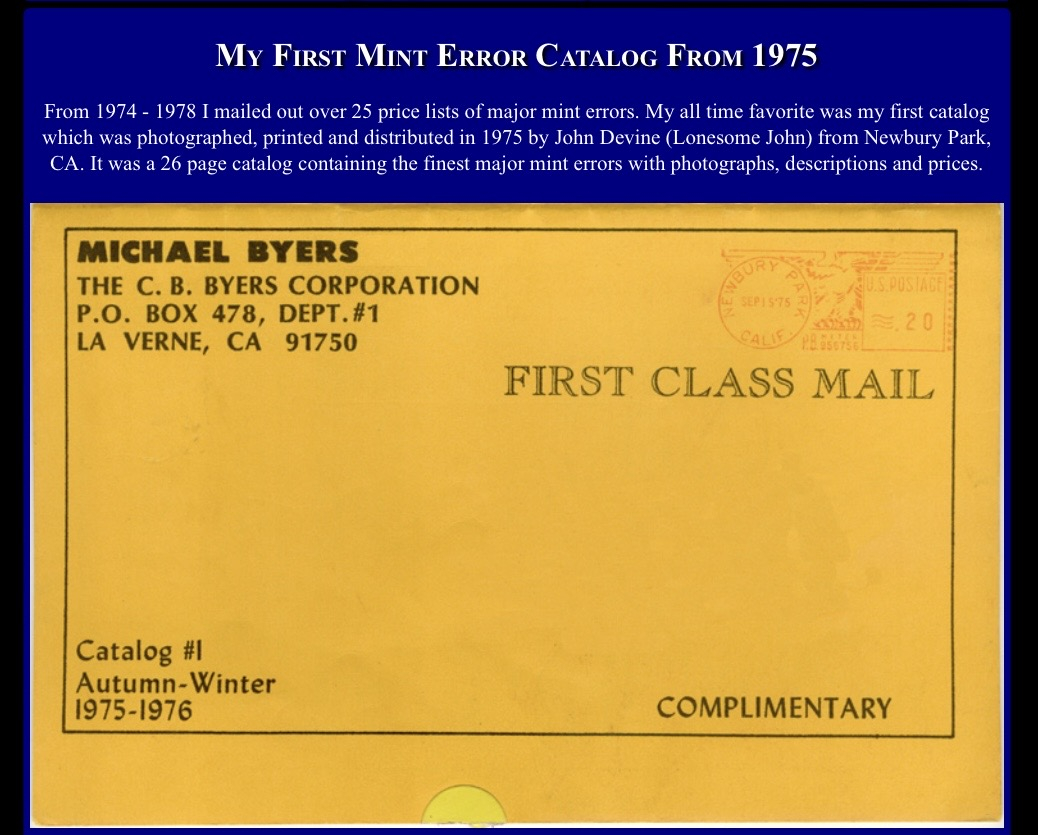
    John (Lonesome John) Devine published my first mint error catalog the same year. It featured my gold Indian Head Cent and my $20 1851 struck on a Large Cent planchet, among other mint errors.
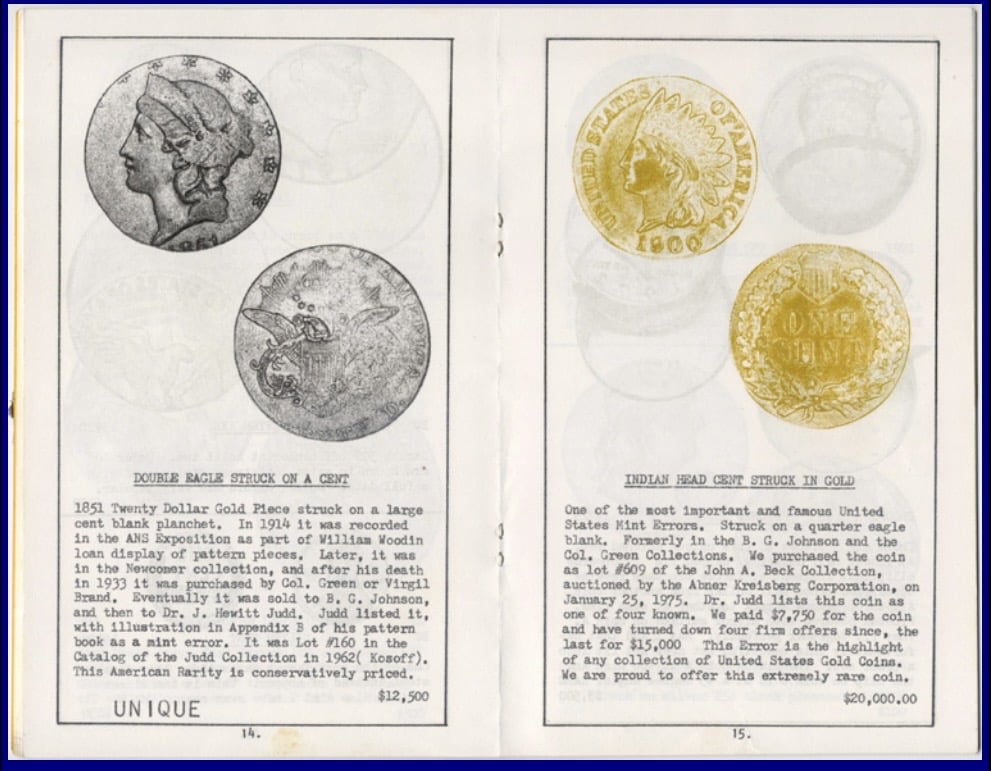
    Paul Nugget ( National Coin Investments, partner Larry Dememer) purchased it from me. Two decades later, it ended up with Andy Lustig, who sold it back to me.

    I walked it thru PCGS and it graded MS 65.


    It has traded hands a few times since then.

    Regarding the weight of the gold $2 1/2 planchets, that is an interesting observation. The 1900 dated gold Indian Head Cents could have been intentionally struck on rejected planchets since they were overweight. Instead of melting the rejected planchets, a mint employee intentionally used these planchets to strike gold Indian Head Cents.

    Of course, this does not explain why the 1905 and 1906 dated gold Indian Head Cents were struck on gold planchets of the standard weight. Certainly a mystery!

    mikebyers.com Dealer in Major Mint Errors, Die Trials & Patterns - Author of NLG Best World Coin Book World's Greatest Mint Errors - Publisher & Editor of minterrornews.com.
  • TomthemailcarrierTomthemailcarrier Posts: 749 ✭✭✭✭✭

    Is the reverse incuse? It sure looks that way!

  • ByersByers Posts: 1,901 ✭✭✭✭✭

    @Relaxn said:
    There is a Buffalo Nickel struck on gold planchet which I think is as cool as they come... but of the same ilk as the one tou posted

    The unique 1913 Gold Buffalo Nickel has its own fascinating story. Originally purchased raw, certified by PCGS as a detailed grade ‘test cut’, sold in a Heritage Auction for $78k, I submitted it to NGC and it was certified as a straight grade, I sold it for $400k to Jim Gately who has the #1 PCGS Buffalo Nickel Registry Set, then it crossed to PCGS as a straight grade! Wild story!

    Here is the full story published in Mint Error News:

    https://minterrornews.com/discoveries-3-22-22-unique-gold-buffalo-certified-by-ngc-au-53.html

    mikebyers.com Dealer in Major Mint Errors, Die Trials & Patterns - Author of NLG Best World Coin Book World's Greatest Mint Errors - Publisher & Editor of minterrornews.com.
  • ByersByers Posts: 1,901 ✭✭✭✭✭

    @Tomthemailcarrier said:
    Is the reverse incuse? It sure looks that way!

    Not incuse.

    mikebyers.com Dealer in Major Mint Errors, Die Trials & Patterns - Author of NLG Best World Coin Book World's Greatest Mint Errors - Publisher & Editor of minterrornews.com.
  • mr1931Smr1931S Posts: 6,953 ✭✭✭✭✭

    Of course, this does not explain why the 1905 and 1906 dated gold Indian Head Cents were struck on gold planchets of the standard weight. Certainly a mystery!

    Thanks for sharing your experience with gold IHCs. Overweight, out of tolerance gold planchets ending up with penny planchets about to be struck? The mint was extremely careful accounting for gold. Gold coin planchets got special attention at the mint. Made clandestinely and left the Mint in somebody's pocket would be my best guess as to what happened. Gold Indian Head pennies are very cool, very exotic mint made items regardless of the circumstances of how they came to be.

    Einstein’s view of God was non-traditional and pantheistic, focusing on the harmony, order, and intelligibility of the cosmos rather than a personal deity. His quotes reveal a profound respect for the universe’s mysteries, a belief in rational laws, and a moral philosophy grounded in compassion and understanding, bridging science and spirituality.

    “My religion consists of a humble admiration of the illimitable superior spirit who reveals himself in the slight details we are able to perceive with our frail and feeble mind.”

    Albert Einstein (14 March 1879--18 April 1955)

  • ByersByers Posts: 1,901 ✭✭✭✭✭

    @mr1931S said:
    Of course, this does not explain why the 1905 and 1906 dated gold Indian Head Cents were struck on gold planchets of the standard weight. Certainly a mystery!

    Thanks for sharing your experience with gold IHCs. Overweight, out of tolerance gold planchets ending up with penny planchets about to be struck? The mint was extremely careful accounting for gold. Gold coin planchets got special attention at the mint. Made clandestinely and left the Mint in somebody's pocket would be my best guess as to what happened. Gold Indian Head pennies are very cool, very exotic mint made items regardless of the circumstances of how they came to be.

    I agree! Deliberately struck and taken out! Imagine that!

    mikebyers.com Dealer in Major Mint Errors, Die Trials & Patterns - Author of NLG Best World Coin Book World's Greatest Mint Errors - Publisher & Editor of minterrornews.com.
  • mr1931Smr1931S Posts: 6,953 ✭✭✭✭✭
    edited April 22, 2026 7:59PM

    Mint worker shows up for a day's work with $2-1/2 gold coin in pocket. Intercepts a gold planchet about to be struck and throws the $2-1/2 he came to work with into the collecting bin with the newly struck $2-1/2s. Leave work with gold planchet to be used another day when worker or worker he is in cahoots with is making pennies.

    Einstein’s view of God was non-traditional and pantheistic, focusing on the harmony, order, and intelligibility of the cosmos rather than a personal deity. His quotes reveal a profound respect for the universe’s mysteries, a belief in rational laws, and a moral philosophy grounded in compassion and understanding, bridging science and spirituality.

    “My religion consists of a humble admiration of the illimitable superior spirit who reveals himself in the slight details we are able to perceive with our frail and feeble mind.”

    Albert Einstein (14 March 1879--18 April 1955)

  • smuglrsmuglr Posts: 563 ✭✭✭✭

    @Tomthemailcarrier said:
    Is the reverse incuse? It sure looks that way!

    Right? It sure has the appearance of incuse.

  • yosclimberyosclimber Posts: 5,258 ✭✭✭✭✭

    @smuglr said:

    @Tomthemailcarrier said:
    Is the reverse incuse? It sure looks that way!

    Right? It sure has the appearance of incuse.

    It looks normal to me.
    The lighting angle is from the bottom.

Leave a Comment

BoldItalicStrikethroughOrdered listUnordered list
Emoji
Image
Align leftAlign centerAlign rightToggle HTML viewToggle full pageToggle lights
Drop image/file