Grading Help - Capped Bust Halves
 Matt04
Posts: 378 ✭✭✭
Matt04
Posts: 378 ✭✭✭
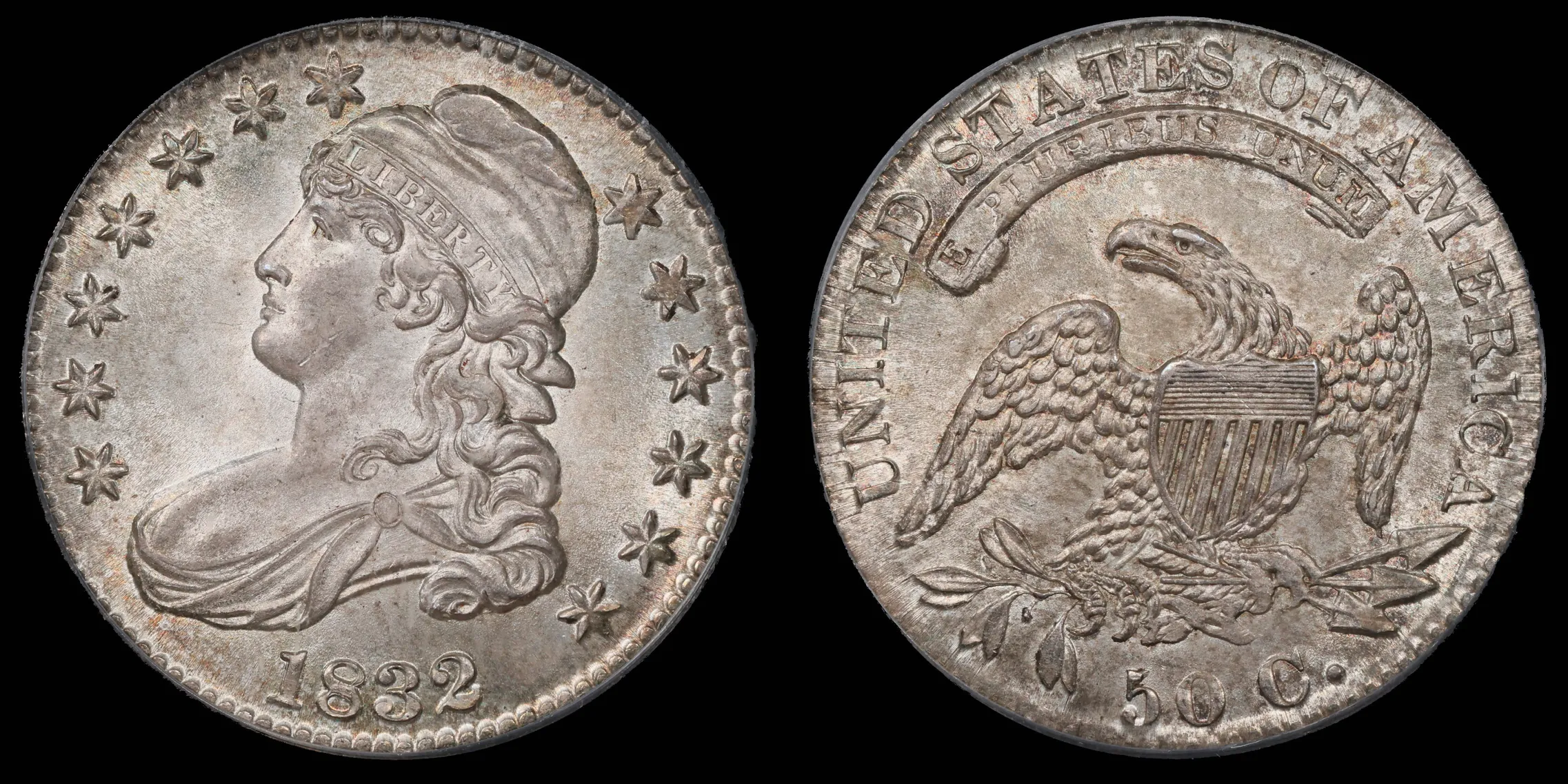
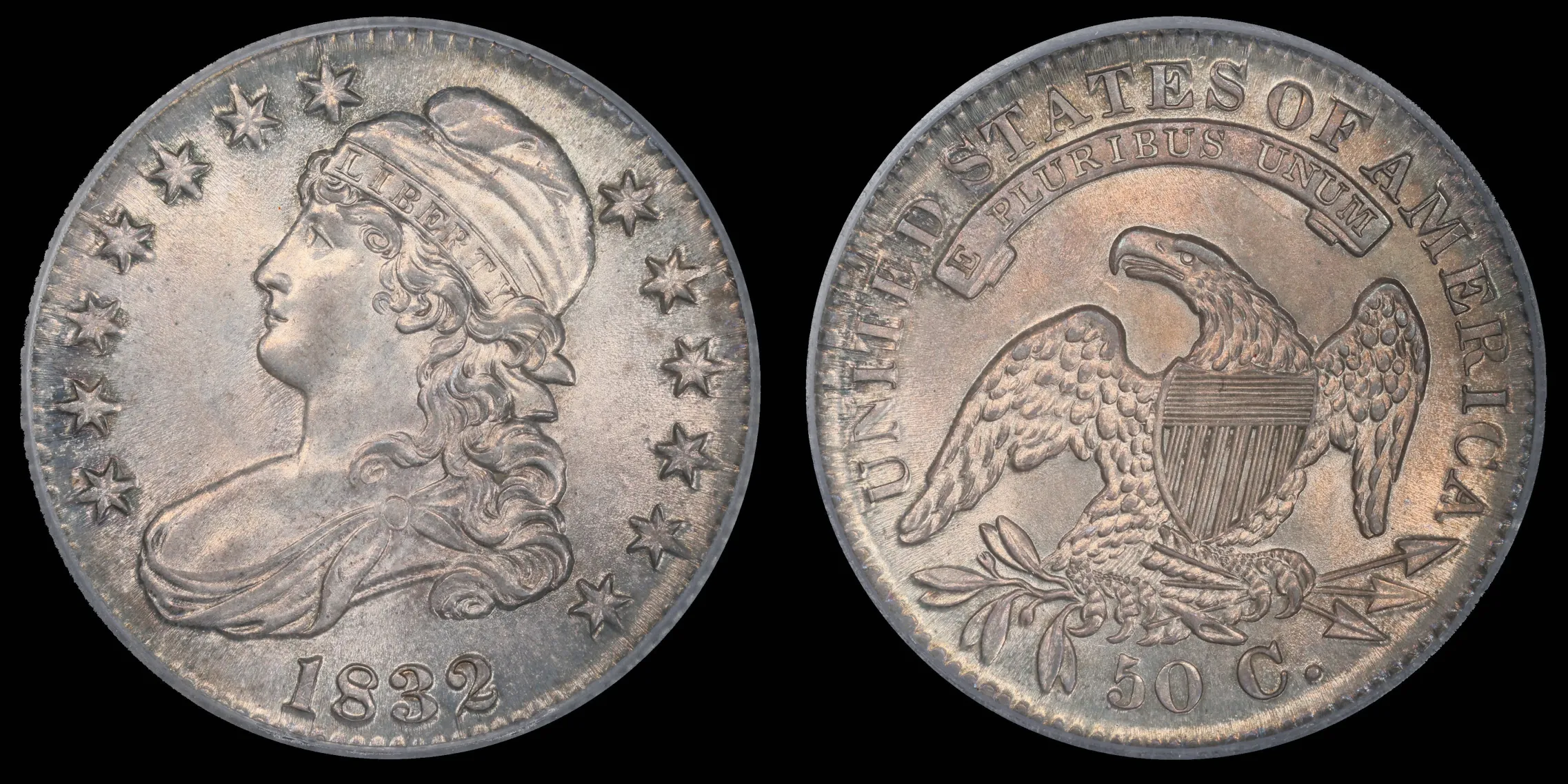
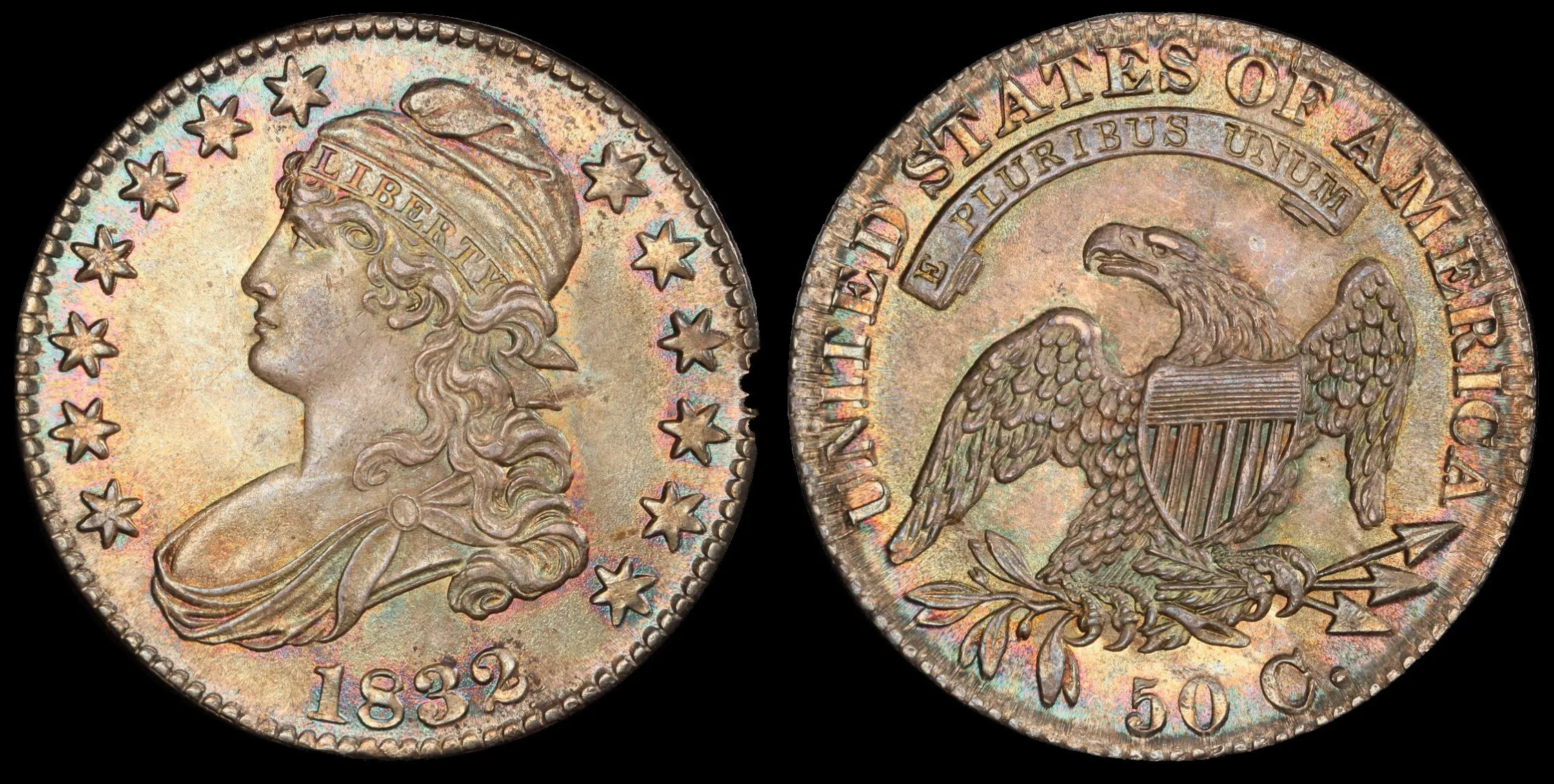
When it comes to Capped Bust Halves, what are the key details you look for on higher-grade pieces to help distinguish between lower and higher Mint State grades? Sample photos attached above. Currently trying to learn how to grade these pieces properly.
0
Comments
Can't help you out, but just wanted to say those three look extremely high grade, especially the last one.
Mid to higher MS grades, I'm thinking.
"“Those who sacrifice liberty for security/safety deserve neither.“(Benjamin Franklin)
"I only golf on days that end in 'Y'" (DE59)
Also curious about weaker strikes. Does that detract from the grade on an older piece with inconsistencies ? I noticed the reverse eagle feathers and overall eagle details some higher grades have less detail, others have more sharper details.
Marks, strike and luster. Also eye appeal adds.
Pictures sometimes hides these features so I find it very difficult to grade from pictures.
The higher graded “Mint State” examples should display less rub/“cabinet friction”. And I’m not being facetious in saying that. Other important considerations include luster, marks, eye-appeal and to a lesser extent, strike. Based just on the images provided, to me, the last coin looks like it should be graded the highest of the group. But even if it’s not, that wouldn’t cause me to answer your question differently than I did.
Mark Feld* of Heritage Auctions*Unless otherwise noted, my posts here represent my personal opinions.
Love the last one 👍
Do you have a way to attribute them? I would suggest having someone attribute the coins before worrying about their grade. Maybe one of the bust half guys will see this and can do an attribution for you with pics.
Uncirculated CBH's are hard to grade from images. While one can get a general idea of wear (at least if you understand the striking particulars of a given Die Marriage), and the surface marks (not including fine hairlining or "brush" marks) with an honest image, it is often extremely difficult to pick up the nuances of luster and frost, cabinet friction and other parts of the overall grade.
Eye appeal can be difficult as well, as not all lighting setups and angles show the coins in their best light.
This is a coin and value point where I think having a trusted TPG, maybe even a 4th Party like CAC, and even a specialist eye is worthwhile. A good serious in-hand look at the coin (if you know how to grade and access issues) is almost a requirement. Sometimes, coins that are well photographed can be fairly well accessed from images alone, but the father up the grade scale you go, and the more microscopic the issues are, the more difficult it is.
This applies to all coins actually, not just CBH's, but I digress ...
.
Regarding your images;
The first one is easiest for me to read. She appears to be a solid 63, shot 64 type coin, with natural rolling luster, and nice "original" color. I LOVE the overall look. The mark on the jaw line hurts a little (it is focal), but that's really the only distraction from "as struck" that I see. I would still want to see it in hand first, but I would be comfortable expecting what I would get.
The second one looks off. Not sure if it is the image or the coin, but the luster does not look quite natural, nor does the color, so I suspect it is the image ... but I would still be wary. Surface enhancements, questionable toning or other nefarious trickery? It could be a very high grade, but again, something doesn't look right to me.
The third image is probably a solid 64 plus type coin. It's hard to get a understanding of the luster (on the obverse especially) so I could be wrong. I believe the color is showing the coin in it's most glamourous light, but it all feels natural and attractive. Marks are minimal (a thin toned over hairline from the lips into the field) and a tick on the cheekbone, and the strike is an overall plus. Light staining from ??? on the obverse above the cap and around the date would have me looking closely at the surfaces there. The reverse looks sublime. I think I know what I would see, but I would be a little less sure of exactly what this coin would look like in hand than I would be with the first coin.
.
my 2c ...
“We are only their care-takers,” he posed, “if we take good care of them, then centuries from now they may still be here … ”
Todd - BHNC #242
@Snaps
Two of the examples were trueviews I found from PCGS/auctions online. But I do own the piece photographed above (second one of the three).
I’m just trying to understand key features/points to look at to decipher grades. For example, I’ve learned how to grade Washington Quarters and key details such as cheek hits, clear fields, no hits on the reverse bird are points I look for to determine grades.
Is there any source online to know how to attribute the halves? There seems to be a lot of varieties
Follow up
Attribution is usually best with an Overton based manual (Early Half Dollar Die Varieties 1794-1836, by Al Overton, is the defacto standard), but some use the http://maibockaddict.com/ site as an online reference
first is a 1832 O-102, r.1
second is a 1832 O-103, r.1
the third is an O-119 (this is a better DM, r.4-)
“We are only their care-takers,” he posed, “if we take good care of them, then centuries from now they may still be here … ”
Todd - BHNC #242
They look like MS63, 64, 65 as I scroll thru the images. All of mine are in the VF to high AU area, so I'm not real familiar with UNC pieces. I do know that all of them ae very nice!
Louis Armstrong
Just a suggestion to fine tune your grading skills on CBH - go do lot viewing at an auction that has a good n'ber of CBH and hide the grades and write them down on paper. After grading 20, then check them to the TPG services and compare results. If you miss the grades by one 1 point, then you are on your way. If you miss by more than 1 grade for more than 5 of them, then do it again and again, until you get them within 1 point. This is the school of hard knocks.....
I’m going to read between the lines here and guess that you’re truly curious about the middle coin as I recognize it as one in an ICG holder graded MS65.
I would heed @pursuitofliberty advice and be wary, especially if you haven’t examined the coin in hand.
BHNC #248 … 140 and counting.
@Pnies20
I own that particular CBH, here are some closeups. My first time owning a CBH so for me its fun to have them in hand and learning so picked that one up.
(Please note the dark lines are not scratches just shadows casted from scratches on the plastic slab)
*Note, there is concern for the reverse, obverse seems okay. I notice minimal hairlines if any mostly below the cheek but minimal and its mostly a dark shaded spot when not up against light.
I understand photos will never do justice to knowing how to grade any sort of coin, but hopefully these photos are somewhat sufficient. I've been trying to learn through photos key points to look for, I get wear is something that you must see by eye especially in UNC
@Matt04 seeing as you have it for sale for 65 money, I would consider trying to have it graded at our host (or wherever else you choose). Buyers will have a lot more confidence in the coin in a PCGS holder.
BHNC #248 … 140 and counting.
@Matt04
I also immediately recognized the second image, but have never seen the coin in hand and did not want to disparage it as I thought it might still be for sale.
I had just noticed you said you owned the coin and was going to ask it you had better images, and so I appreciate the follow up .
Hopefully that will advance the discussions.
My take is not favorable.
The luster does not look correct, and upon review of these images, I suspect the coin has been "pebbled". This also explains the odd color as that type of treatment, as I remember, caused an unusual light refraction.
Hopefully this will get some other opinions.
.
This is, of course, only my opinion. I have not seen the coin in hand. YMMV
“We are only their care-takers,” he posed, “if we take good care of them, then centuries from now they may still be here … ”
Todd - BHNC #242
@pursuitofliberty
Opinion on the obverse? I agree with the toning/luster on the reverse.
The key thing I noticed for this CBH besides for that toning/luster was the minimal markings/hits on the actual coin itself when compared to lets say at 63 or 64.
My answer will be speculative, but I suspect the whole coin was "enhanced" in much the same way.
The obverse looks different because it actually had some high point and field friction/wear/ticks/hairlining that is now "masked". There are/were some ticks on the face near the eye (but they are unnatural now).
Again ... working from multiple images, without the coin in hand.
The luster is not natural IMO. This precludes all else, but also will help account for the lack of marks.
Lack of marks alone will never justify a grade. Luster is MORE important IMO.
Surface preservation on very high AU and Unc coins is probably THE most important thing, and if this coin was "boinked", as I suspect it has been, it is a no grade.
My 2c ... YMMV
“We are only their care-takers,” he posed, “if we take good care of them, then centuries from now they may still be here … ”
Todd - BHNC #242
MS63
MS65
MS66
How’d I do?
I have an 1818 in PCGS 62. It has the slight rub or cabinet friction you mention. I was thinking 58 when I sent it in because of the slight rub, but as you said they seem to be a little more forgiving on lower mint state grades.
I also recognize this coin from a very recent auction as well as a recent FB group post. The 1832 bought the price it did due to the holder it is in and there are plenty of crackout artists who browse that auction site, so it didn’t sell cheap, it sold for an accurate market value. Slab aside, for a bust half to be a 65 it needs to be a knockout stunner in terms of either luster or surface preservation, with minimal ticks. Looking at 65 CAC bust halves will give you a good idea of what to look for.
When I saw the coin at auction, I personally graded it a 62, maybe a 63 but like @pursuitofliberty stated, something is funky. It however does not have the surface preservation or luster of a 65 and I don’t think you’ll get anything close to the number you were asking for it.
Bust halves in MS grades are practically impossible to get a good handle of from photos, without seeing the coin in hand and rotating it under a light. The previous comments have summarized how to grade these coins perfectly, I don’t have much to add.
Collector of Capped Bust Halves, SLQ's, Commems, and random cool stuff! @davidv_numismatics on Instagram