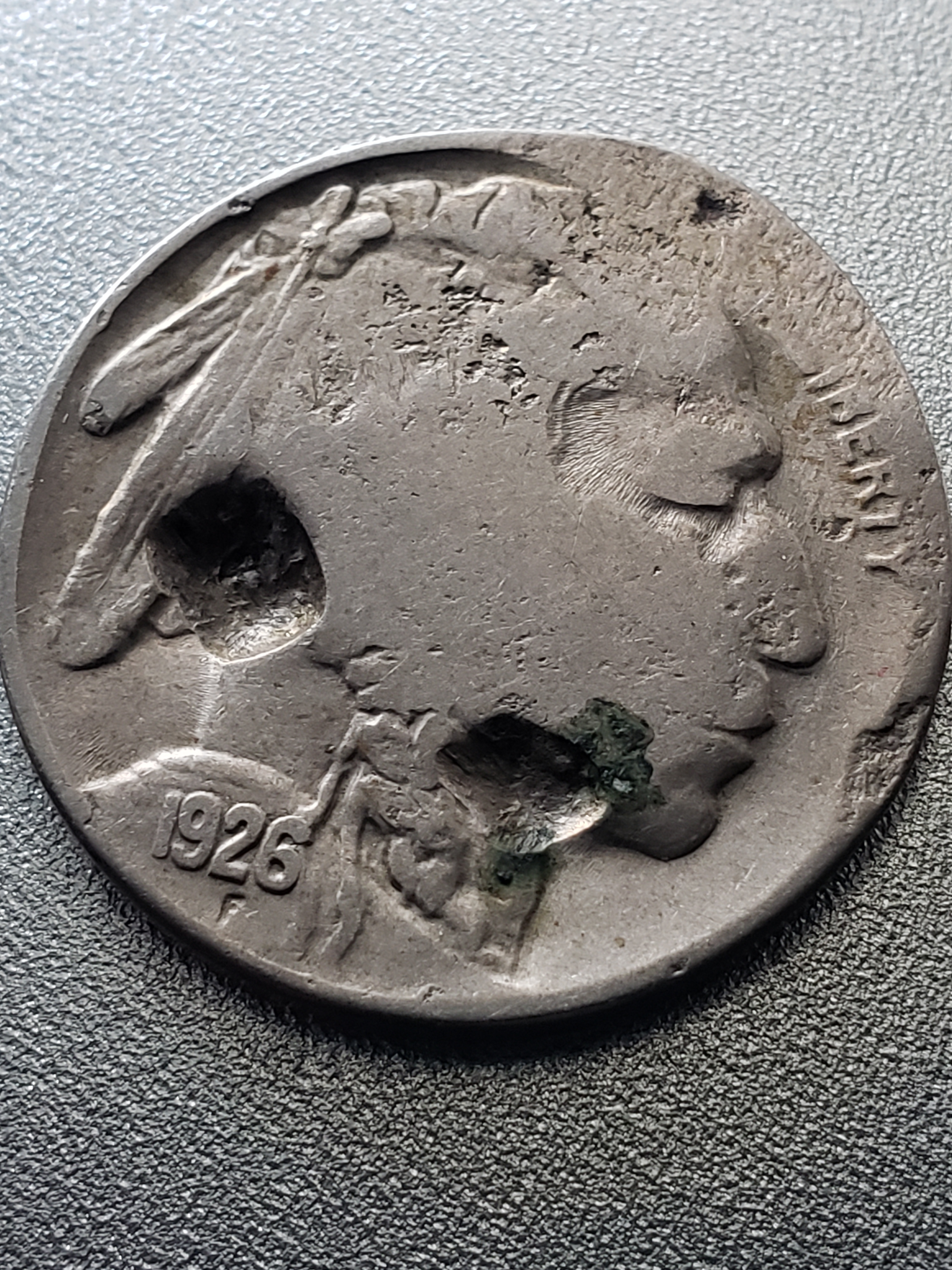
1926 Buffalo Nickel Broadstruck with Rockwell Testmarks
 SeanGon
Posts: 4 ✭
SeanGon
Posts: 4 ✭
I a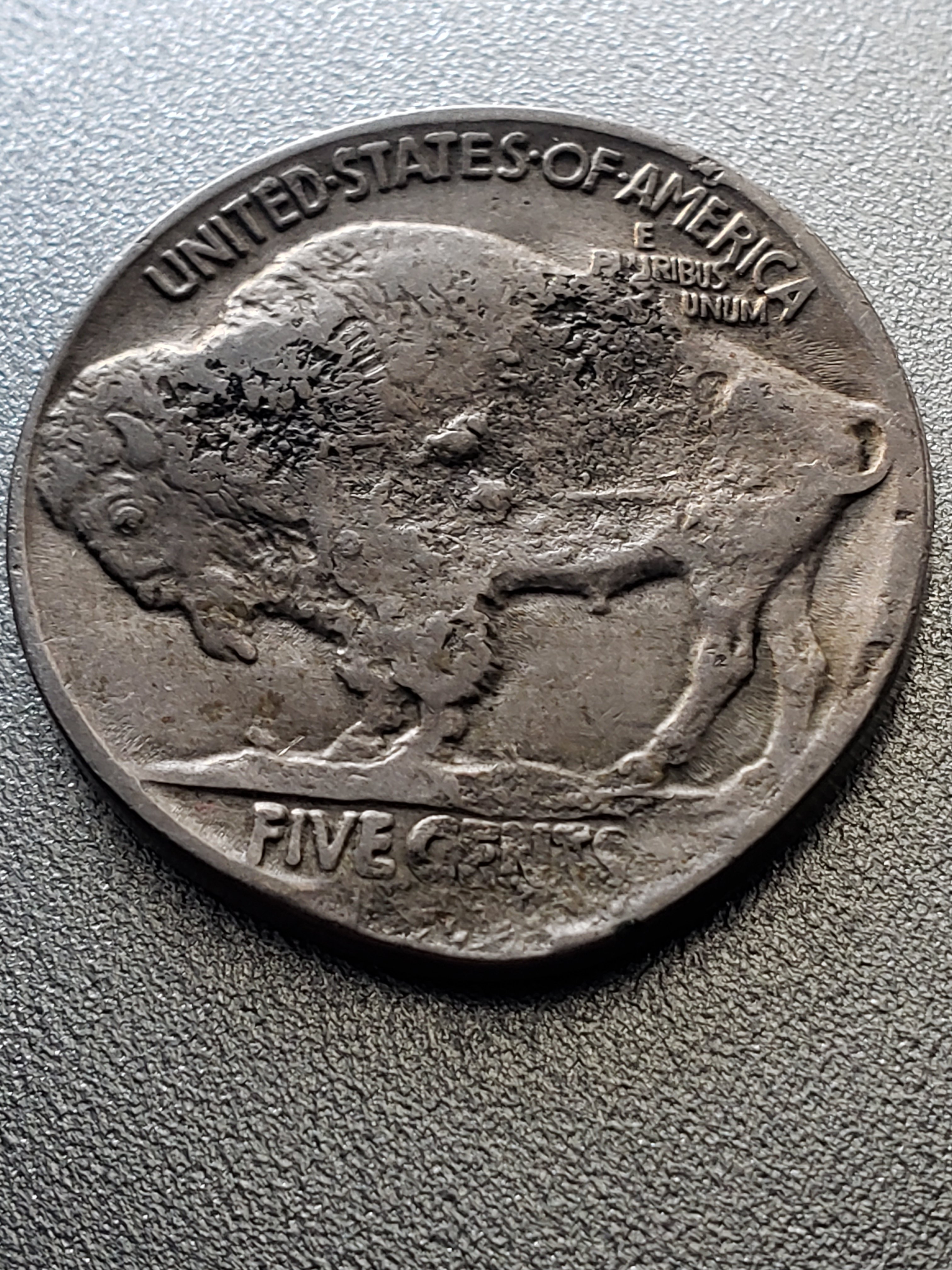
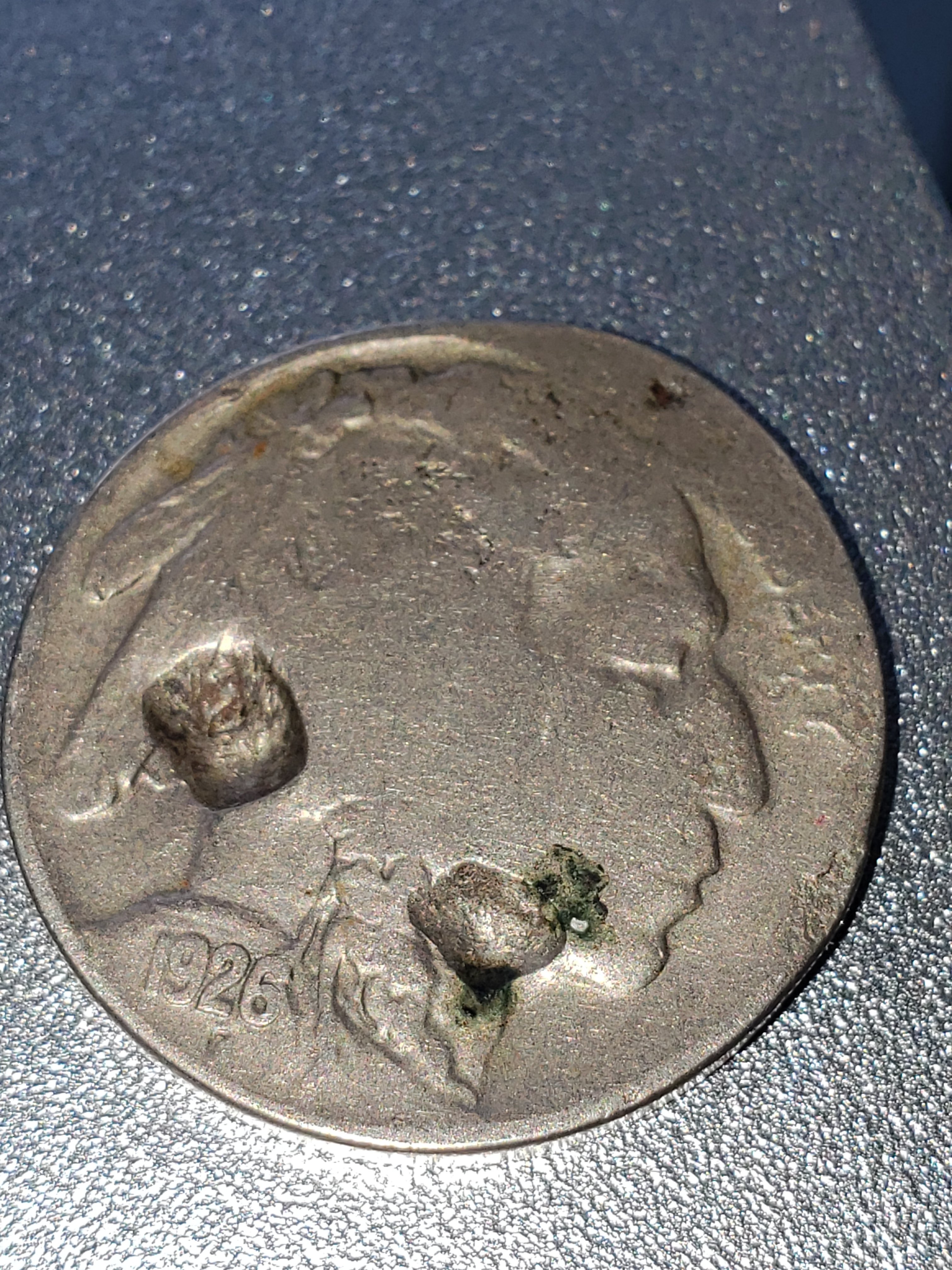
I am thinking that these 2 marks might just be Rockwell test marks that happened to a planchet "pre strike". I know its a long shot and if so it would be a beyond crazy rare find. I've done a lot of research on the Rockwell Testmarks and everything is lining up fact wise that explains the coins life from start to finish as to how the coin became to look the way it looks. If the
1.There are two different depths within each of indentation marks. Yes they are 1/32" and 1/16" in depth. *
2. Due to the Rockwell testmarks happening pre strike, The obverse's features (The Feathers or jaw line and throat) will have stretched out the original circular test marks once the coin was struck making them slightly oblong and not circular.
3. If this is true then Inside each of the (test marks/indentations) you should be able to see the coins design features i.e. The feathers or the jawline or throat and they are raised (which these are)
4. The coin as a whole besides the test marks, appears to be elliptical and broadstruck. On the reverse it looks like it was possibly struck through cloth? * So with a coin like mine that looks like has been broadstuck and has went through a pressure strike adjustment of some sort as well as other errors (possible struck through grease or cloth on reverse) and It appears elliptical as well. So I am curious as to your thoughts before I send it off to Mr. James Wiley In Texas if you think that that's what has happened here?
Comments
That's a no on both counts. I don't know if the mint was doing Rockwell tests at that time, but even if they were the marks would be very small, those are much, much too large. That is just just damage from being struck with something. It is also not broadstruck, just damaged. It was flattened on the edge. What you are seeing as cloth marks is just from the surface the coin was on when it was damaged.
I'd start by doing research on the minting process. That coin is very obviously just heavily damaged. No broadstrike, no test marks.
There is nothing there that could happen during the striking of the coin
therefore it is all damage. A broadstrike is a coin that is struck out of collar
and yours is clearly struck in collar. As suggested, learn how coins are struck
and study on what an actual error is. About 99% of anomolies are just damage.
So I have 3. questions (Please and thank you)
1.How can the inside of the indentations have raised detail marks that follow the lines of the feathers and jawline perfectly and without any distortion?
If you look closely at the 2 indentation marks you can see and follow for example the feather's continued design lines from outside the indentation into the indentation, same with the jaw line and the coins designs remain raised from outside the indentation into the indentation.
Which leads me to my second question.
2. What can make indentations into a coin and leave raised design features of the coin and not leave any counter mark or buldge on the opposite side of the coin?(An example would be if you shoot a coin with a BB gun the inside of the indentation would be smooth and any raised areas would be flattened and the opposite side of the coin would have a slight circular buldge protruding.
3. On the obverse side of the coin the face of the Indian it is swollen and larger than a regular Buffalo Nickel Indians face what causes that?
Thank you for all the help.
-sean
Instead of asking what caused the damage, ask how that could have happened when the coin was struck
which is the only time an error can occur. If you study the minting process, you would realize that what
you have could not have happened at that time. There are only certain things that can happen to cause
an error when the coin is struck and these are recognizable but there are an infinite amount of things that
can cause damage and unless you were there at the time it happened, you may never know how it happened
as is the case in your Buffalo Head.. How it happened doesn't really matter though as damage is damage.
Step 1: strike some kind of punch on the obverse to create the indentations.
Step 2: turn the coin over and hammer the resulting bulges back down, which creates the flattened area on the obverse.
I've done generally similar things many times. If you've never messed around with coins and tools I would suggest that it is highly educational.
Your coin is not just damaged, it is obviously damaged. Feel free to ask anyone else if you don't like the answers you get here, but what is clear is that you need a better understanding of the minting process. That coin screams "damage" from a mile away.
If you can see obverse details inside the depressions then that is 100% indisputable proof that they occurred after the coin was struck. The die couldn't possibly reach down into the depressions to strike that area!
My apologies I guess I was not clear.
Inside the indentations the features are " Raised" not flat had you looked at the pictures closely you would have seen that 1.They actually follow the feather and the jaw's feature /design lines into the indentation seamlessly. Again "Inside the indentations the coins feature/design details are "Raised" not flat. Now had they been done with a Punch or BB gun then the "test mark" would still be perfectly circular and the inside of the indentations would be smooth and flat. Also on the opposite side of the coin if you just hammered it flat as you stated then that side of the coins features would also be flat and smooth and not raised like mine is. I have done a lot of research on this and I wouldn't be here just wasting your time. I was hoping to find someone with some actual knowledge not just dismissing it before actually studying it. Per the literature in regards to "Rockwell Testmarks" it states that if they are testing the strength of the planchet "Pre-Strike" then there will be "Two indentations" close to eachother and thier depths should be 1/32" and 1/16". Of which my two indentations depths are exactly, had you actually looked at the pictures closely before you made your comment you would have noticed that they are not only different sizes thet are different depths. You would have also noticed there are "raised" features inside the Indentations that literally follow the coins feature/design lines. Which I might add is impossible to do with a punch or shooting it with a BB gun. When using a punch or shooting it with a BB gun, per the literature on it, it will leave a slight raised area around the perimeter of the impact mark. My coin does not have that, mine is flat. So had you read up on Rockwell Testmarks you would know these things. As well as the initial circular mark will not remain perfectly circular "If the test marks left on the planchet are then struck onto a coins features" The circular testmark will become oblong, due to the original circular mark is now stretched slightly, as it follows the coins features which will also leave the coins features "raised" inside the indentation(s) as well as on the reverse the features will be raised. Not flat and smooth doing it the way you said you had done it. Anyhow thank you and have a good evening.
So, a die is flat, how did it strike down inside the depressions? I did examine the pictures carefully, but everything lines up with post-strike damage. The depressions are much too large to be test marks, corresponding damage on the reverse, which would not bulge out if on a hard surface like steel, the coin is flattened out of shape on the edge. I don't come here to argue, you came asking questions and you got answers, what you choose to do with them is up to you.
You were looking for someone to agree with you, that's all. You will never learn anything with that approach.
Anyone with any coin experience is not going to tell you that your nickel is anything but damaged.
In all your “studying “:on Rockwell Testmarks, did you actually look at the size of an actual mark?
chopmarkedtradedollars.com
Please spend, a coin dealer won't even be able to offer face value.
Micah Langford - https://www.oldglorycoinsandcurrency.com/