I see a lot of excellent advice posted for collectors here. But what bad advice have you read?

I’ll start and I realize that numerous people might disagree.
“Buy the “key” dates first”.
I think this is poor advice. Because when someone is starting out, their level of knowledge is low and their collecting preferences haven’t been firmly established. And that means that they’re more likely to make purchasing mistakes and/or change their minds about what they want to collect. If they buy the (more expensive) key dates first, the cost of tuition can be unnecessarily high.
Mark Feld* of Heritage Auctions*Unless otherwise noted, my posts here represent my personal opinions.
Comments
-
Similar thought, Mark. "Buy the best that you can afford." I think it should be "buy the best that you can understand." If one doesn't have much experience or understanding about "the best", then one will likely make regrettable mistakes.
Seated Half Society member #38
"She comes out of the sun in a silk dress,
running like a water color in the rain...."25 -
The reason people say “buy the keys first” might be due to the fact that just about every collection of albums and folders I’ve ever purchased in 16 years is missing the coins that would have provided the maximum benefit to the guy who was filling the album for fifty years, then selling. And all the holes ? Key, semi key, low population or low survival dated coins in the series. Not to say these guys and gals didn’t enjoy a life of collecting. My advice is always the same : enjoy yourself. I think the worst advice is not born of advisement , but of criticism.
3 -
@TwoSides2aCoin said:
The reason people say “buy the keys first” might be due to the fact that just about every collection of albums and folders I’ve ever purchased in 16 years is missing the coins that would have provided the maximum benefit to the guy who was filling the album for fifty years, then selling. And all the holes ? Key, semi key, low population or low survival dated coins in the series. Not to say these guys and gals didn’t enjoy a life of collecting. My advice is always the same : enjoy yourself. I think the worst advice is not born of advisement , but of criticism.How do you define “maximum benefit”? Is it a matter of enjoyment? Financial return? Something else?
Mark Feld* of Heritage Auctions*Unless otherwise noted, my posts here represent my personal opinions.
0 -
Buy the sticker or plastic and not the coin. Yes, I really saw someone post something to that effect a few years ago.
4 -
@MFeld said:
@TwoSides2aCoin said:
The reason people say “buy the keys first” might be due to the fact that just about every collection of albums and folders I’ve ever purchased in 16 years is missing the coins that would have provided the maximum benefit to the guy who was filling the album for fifty years, then selling. And all the holes ? Key, semi key, low population or low survival dated coins in the series. Not to say these guys and gals didn’t enjoy a life of collecting. My advice is always the same : enjoy yourself. I think the worst advice is not born of advisement , but of criticism.How do you define “maximum benefit”? Is it a matter of enjoyment? Financial return? Something else?
I guess maximum benefit to be the study of the hobby or series one chooses to collect, as one possibility.
Another maximum benefit is upgrading the set or series or coin, along that path. Yet, ultimately I would like to think an increase in value over that time would be a major factor in “why” such advice is given. Key dates unlike others in a series seem to supply that financial reward and growth. So long as they’re not problematic.0 -
@TwoSides2aCoin said:
@MFeld said:
@TwoSides2aCoin said:
The reason people say “buy the keys first” might be due to the fact that just about every collection of albums and folders I’ve ever purchased in 16 years is missing the coins that would have provided the maximum benefit to the guy who was filling the album for fifty years, then selling. And all the holes ? Key, semi key, low population or low survival dated coins in the series. Not to say these guys and gals didn’t enjoy a life of collecting. My advice is always the same : enjoy yourself. I think the worst advice is not born of advisement , but of criticism.How do you define “maximum benefit”? Is it a matter of enjoyment? Financial return? Something else?
I guess maximum benefit to be the study of the hobby or series one chooses to collect, as one possibility.
Another maximum benefit is upgrading the set or series or coin, along that path. Yet, ultimately I would like to think an increase in value over that time would be a major factor in “why” such advice is given. Key dates unlike others in a series seem to supply that financial reward and growth. So long as they’re not problematic.My guess is that a large majority of collectors would do worse financially by buying key dates first than they would with some alternative options. The non-financial benefits you mentioned can be achieved without buying the keys first.
Mark Feld* of Heritage Auctions*Unless otherwise noted, my posts here represent my personal opinions.
6 -
I agree that "buying the key dates first" is not great advice. You need some experience with the type before you throw big money at the expensive coins. There is also the matter of finding the right one. Most keys are harder to find, and they don't show up as often. Buying the first you see can be a big mistake.
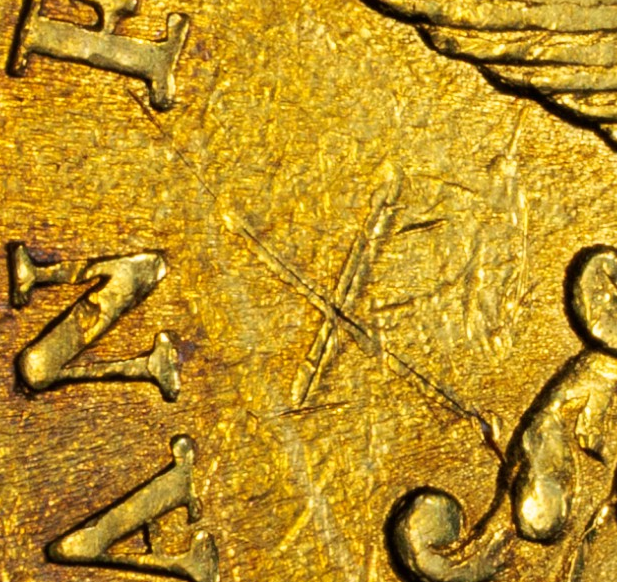
Now for a controversial comment. “Everything which as a CAC sticker is properly graded.” CAC gets it right probably 97%+ of the time, BUT there are mistakes. I have pictures of quite a few of them, but this one will suffice.
When I was working on a set of Type I gold dollars, I ran into this piece at a show.
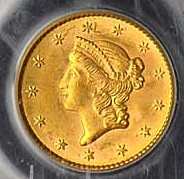
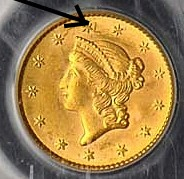
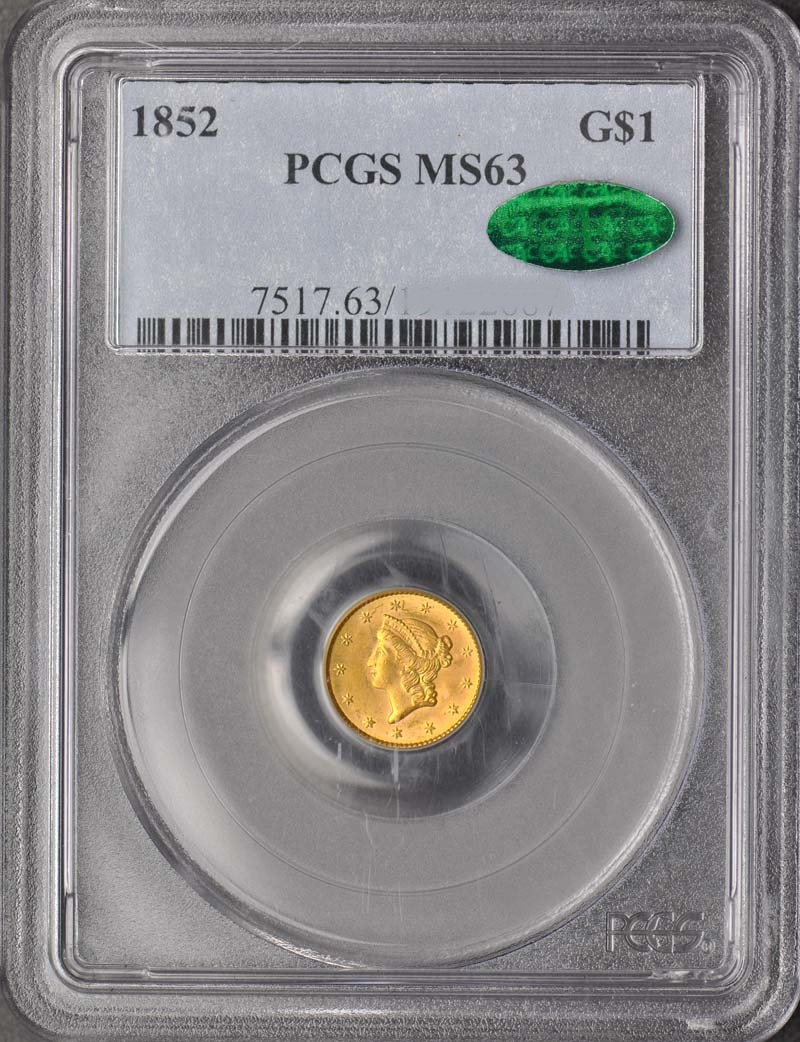
You will note that an "L" has been scratched into the top of the obverse of this piece. CAC must have missed it.
There is no perfect substitute for knowing how to grade coins and being observant. Even the best make mistakes.
Retired dealer and avid collector of U.S. type coins, 19th century presidential campaign medalets and selected medals. In recent years I have been working on a set of British coins - at least one coin from each king or queen who issued pieces that are collectible. I am also collecting at least one coin for each Roman emperor from Julius Caesar to ... ?7 -
-
The worst advice is harsche advice.
7 -
@BillJones said:
I agree that "buying the key dates first" is not great advice. You need some experience with the type before you throw big money at the expensive coins. There is also the matter of finding the right one. Most keys are harder to find, and they don't show up as often. Buying the first you see can be a big mistake.I agree with you for the coins you and many on this forum collect, but not for the general collector population. They mostly don't collect at the required financial level and the series they collect is either very common or still not that hard to buy. They have to be mostly collecting 20th century US series circulating in the 1960's. For these series, I also consider it poor advice due to the relative value proposition but been wrong recently.
For numerous earlier US series, key date doesn't have the same context since an above average to disproportionate percentage of the coins are scarce to very rare.
For non-US coinage where I've never heard collectors elsewhere use the term at all, the concept can be completely meaningless. In my primary collecting interest, most of the 84 date/MM combinations from one of the mints qualify as "key" measured by the difficulty in finding it. By observation and inference, I have a good idea of the relative scarcity, but that's all. I haven't seen enough of them.
1 -
Go to the Precious Metals Forum
All comments reflect the opinion of the author, even when irrefutably accurate.
10 -
"Buying the key dates first" is an over-simplification. I would say that considering opportunity cost is one of the concepts imbedded in that phrase and that it does suit more advanced collectors better than beginners. I view opportunity cost as when a rare, key date does come up for sale, I think it's wise to reflect on the "opportunity" which might dictate how to approach buying or bidding on that particular coin. If you are serious about your goals and it is critical to get "that coin", you buy the key date. It's nice if this happens early because a key date is usually a centerpiece that defines a collection with greater weight than more common coins. Just some nuance in my view.
2 -
A few years back there was a thread about gold versus Bitcoin. At the time I was a staunch supporter of gold and would have nothing to do with Crypto. I can't point to any one person as it was the current market at the time that drew me in but I decided to sell my gold purchased at roughly 1,500 for around 2,200. Then I bought in to Bitcoin around 112,000 and eventually sold for 100,000.
Luckily I got out before it crashed completely but my gold would have been worth far more.
0 -
"If you are serious about your goals and it is critical to get "that coin", you buy the key date."
I think Mark's point is that for people just starting out in the hobby, the chance they'll be able to correctly identify "that coin" is small. Look at how many beginners come here with their parking lot errors- if they can't figure those out, how are they going to recognize "that coin" when they see it?
3 -
“If you don’t buy this coin now, you may never get a chance to buy one like it again”.
“The thrill of the hunt never gets old”
PCGS Registry: Screaming Eagles
Copperindian
Copperindian II
Indy Eagles
Gold Rush
Bust CapsRetired sets: Soaring Eagles
Copperindian
Nickelodeon
Early WalkersSuccessful transactions: Eagle Eye, redraider, winesteven, renomedphys, splitaces, oreville, ajaan, Cent1225, onlyroosies, justindan, blitzdude, DesertMoon, johnnyb, Heubschgold, SunshineRareCoins, ParadimeCoins, ndeagles, Southern_Knights, pcgsregistrycollector, BruceS
2 -
“Stock up on 1970’s and 1980’s clad proof sets, they are poised to breakout big next year.”
Many happy BST transactions7 -
“Only buy certified/graded coins.”
I think this is solid advice for people just starting out, yet I’d actually encourage anyone who wants to be serious about the hobby to go through a TPG submission process (not overly expensive coins obviously).
I’ve been lucky to have had some excellent mentorship in my younger years that helped me develop my eye for both quality and what I like. That said, no experience has been more lasting or valuable than my first few submissions. Coins I thought were UNCs coming back 55s, obviously ATd coins that I wasn’t able to discern…..overgrading the hell out of just about everything.
Some might say, “this is exactly why inexperienced collectors shouldn’t buy raw coins”……
I would say looking back that getting slapped around a few times by our hosts 20ish years ago provided great lessons and helped me grow as a numismatist and a collector much more than staying on the sidelines would have……both with overall grading skills as well as determining originality/what the TPGs are likely to think.
I dont really buy many raw coins anymore but the last one I did was over $1000 and I am very thankful to have found it knowing it was a PQ+ example despite not being in a holder (yet).
So…..I wouldn’t recommend someone coming out of the gates guns blazing buying raw stuff just to submit, but I think that if a new collector has the opportunity to examine lots of raw material he is well served by submitting some favorites as part of the overall educational process.
6 -
I agree with the sentiments around "buying the key date (s) first" and understand "opportunity costs" too... but when I'm just starting out, I don't have enough experience to recognize those (good) opportunities and would likely miss them unless I had a mentor or a seasoned collector to get advice from. Everyone wants a steep learning curve with minimal tuition... plan accordingly!
Another piece of advice... at least tangentially... is if you're wondering where to start in your collecting journey and haven't decided on one particular series: Start a Type Set... and usually a Dansco 7070 gets recommended. I suppose if you don't mind going really slow (it took me three starts and 25 years to complete mine) it could work, but it requires really learning how to GRADE pretty much every series- at least to the point where you can recognize deficiencies in encapsulated coins. I learned this concept on the second iteration of this set when I went to sell...
 Collecting: Dansco 7070; Middle Date Large Cents (VF-AU); Box of 20;
Successful BST transactions with: SilverEagles92; Ahrensdad; Smitty; GregHansen; Lablade; Mercury10c; copperflopper; whatsup; KISHU1; scrapman1077, crispy, canadanz, smallchange, robkool, Mission16, ranshdow, ibzman350, Fallguy, Collectorcoins, SurfinxHI, jwitten, Walkerguy21D, dsessom.0 -
I tend not to take advice (surprise surprise), but the worst advice I ever took was Alan Herbert's whom suggested storing mint set singles in the mint set packaging was a convenient and inexpensive means to keep them. I lost hundreds and hundreds of Gems to the tarnish this caused.
tempus fugit extra philosophiam.1 -
Taking advice from one who consistently can't properly spell words is high on my list of advice to ignore. Too lazy to look up how to correctly spell commonly used words is a red flag that any advice a so-called expert might have to offer about collecting art, which is what coin collecting really is, is "for the birds" and to be ignored. No disrespect for birds intended.
"Two things are infinite: human stupidity and the universe; and I'm not sure about the universe."
-Albert Einstein-Mistakes are natural. But repeated mistakes without reflection are something else. That may be the “stupidity” he was referring to. In research, he admitted uncertainty openly. “If we knew what it was we were doing, it would not be called research, would it?” This shows humility. Even a Nobel laureate accepted doubt. That humility makes the quote less cynical and more observational.
1 -
"The higher the grade, the better the coin." I think most here know this isn't true. There are slabbed dogs at most every grade level. Train your eye to see the difference! Unfortunately (IMO), many who chase registry points don't value quality distinctions and will make compromises due to impatience or for rankings glory.
Seated Half Society member #38
"She comes out of the sun in a silk dress,
running like a water color in the rain...."6 -
@BillJones said:
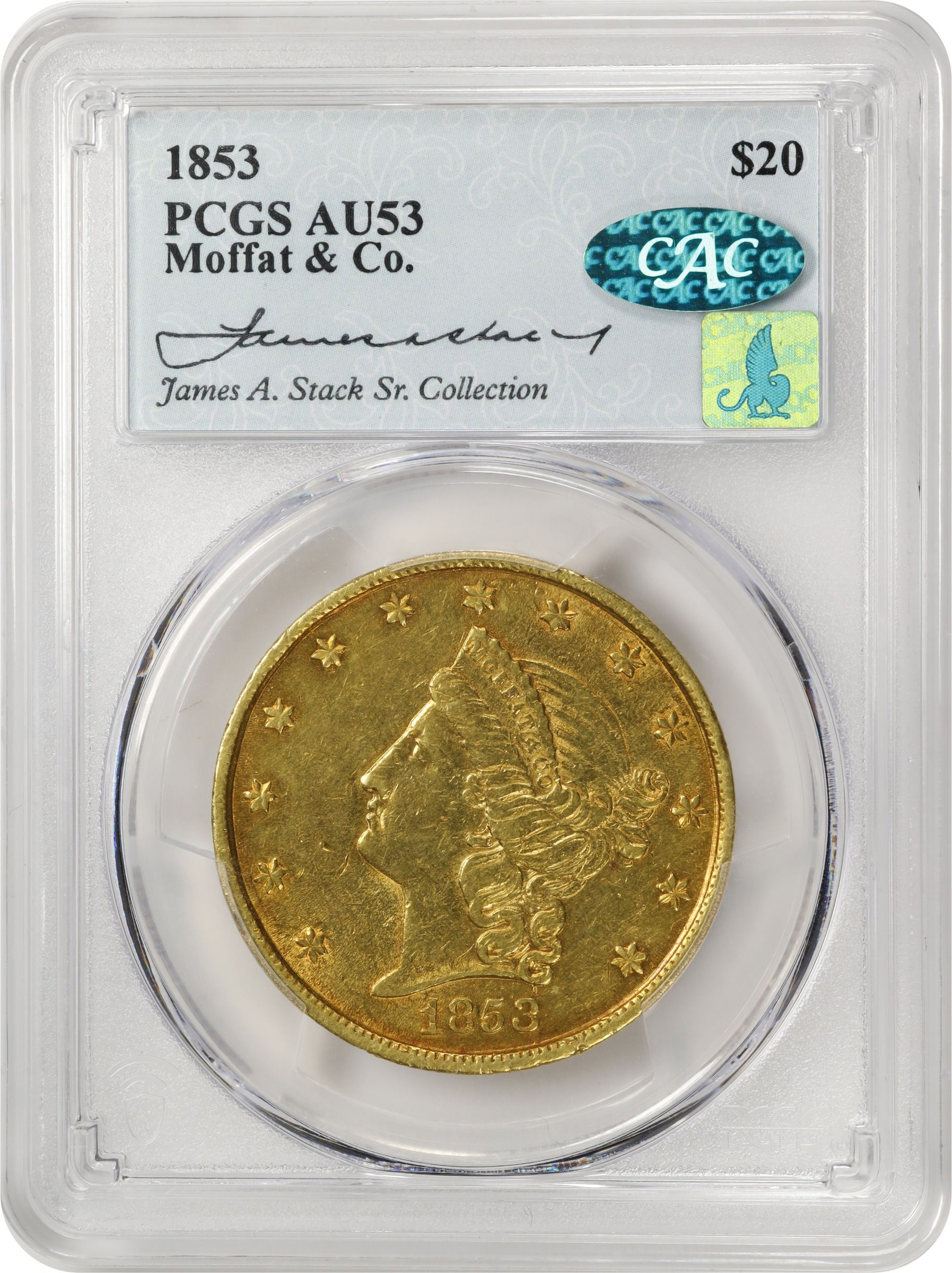
I agree that "buying the key dates first" is not great advice. You need some experience with the type before you throw big money at the expensive coins. There is also the matter of finding the right one. Most keys are harder to find, and they don't show up as often. Buying the first you see can be a big mistake.Now for a controversial comment. “Everything which as a CAC sticker is properly graded.” CAC gets it right probably 97%+ of the time, BUT there are mistakes. I have pictures of quite a few of them, but this one will suffice.
When I was working on a set of Type I gold dollars, I ran into this piece as a show.
You will note that an "L" has been scratched into the top of the obverse of this piece. CAC must have missed it.
There is no perfect substitute for knowing how to grade coins and being observant. Even the best make mistakes.
Good advice. Everyone makes mistakes.

chopmarkedtradedollars.com
3 -
talking with some one who speaks nonsense or who suddenly became a 90 coin pro. just a story like the rest
0 -
Do not waste money on coin research books that will provide knowledge. Put that money directly into coins!
Thanksgiving 2026 National Battlefield Coin Show November 27 & 28, 2026 at the Eisenhower Hotel Ballroom, Gettysburg, PA. No Early Bird passes for this show. WWW.AmericasCoinShows.com0 -
Yogi Berra said, "You can see a lot, just by looking." Learning how to look at a coin...takes practice, practice, practice.
1 -
You can make a lot of money collecting coins. 😎
LCoopie = Les0 -
@mr1931S said:
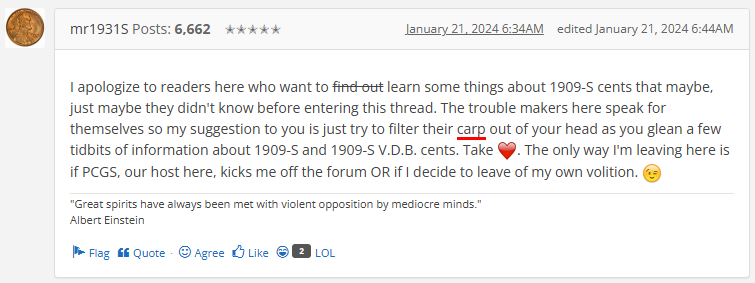
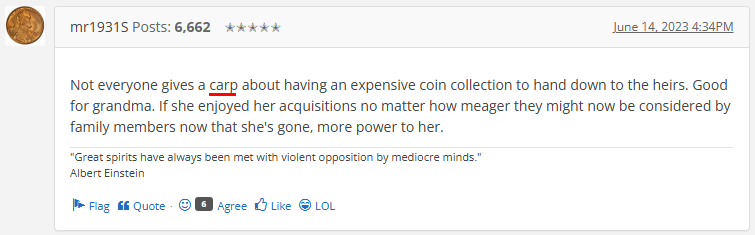
Taking advice from one who consistently can't properly spell words is high on my list of advice to ignore. Too lazy to look up how to correctly spell commonly used words is a red flag that any advice a so-called expert might have to offer about collecting art, which is what coin collecting really is, is "for the birds" and to be ignored. No disrespect for birds intended.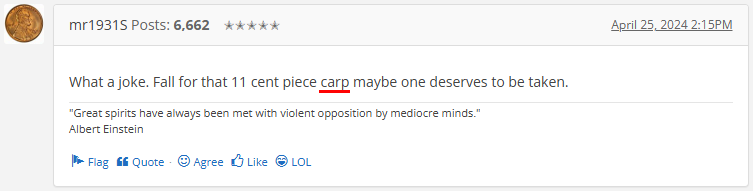
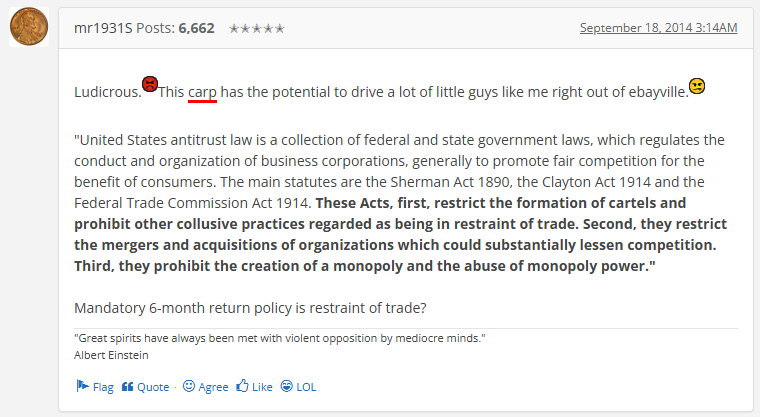
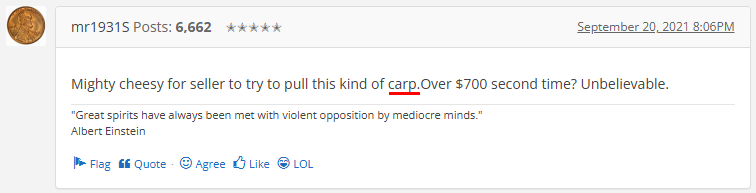
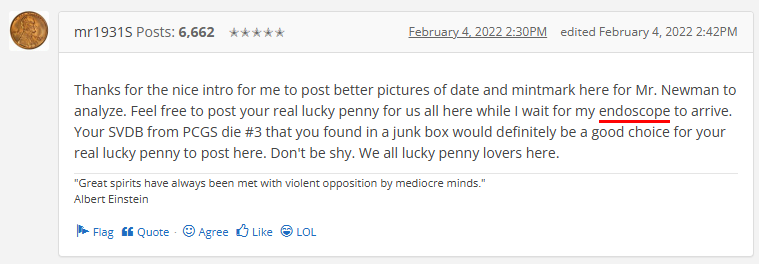
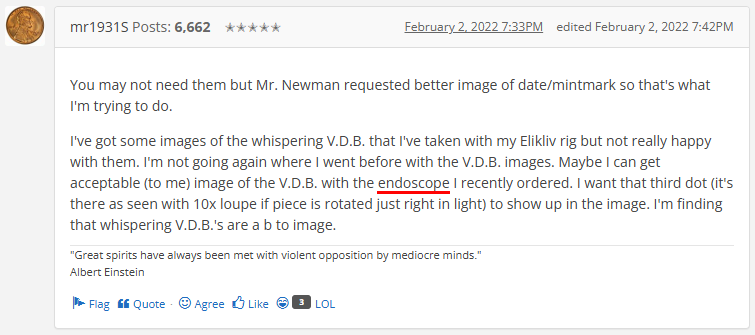 2
2 -
Anything with "coins" and "investment" in the same sentence.
All glory is fleeting.1 -
@291fifth said:
Anything with "coins" and "investment" in the same sentence.So you’d disagree with both of these pieces of advice? :
Buy coins as an investment.
Don’t buy coins as an investment.Mark Feld* of Heritage Auctions*Unless otherwise noted, my posts here represent my personal opinions.
6 -
***Oops! But the above by Shortnock was intended to reflect good advice. Sorry, dunno how to edit.
0 -
Fortunately dismissed the advice, but the NJ Guy that called for 2024 gold and silver Flowing Hair not capable to sale out and would be trading at spot.
0 -
@shortnock said:
***Oops! But the above by Shortnock was intended to reflect good advice. Sorry, dunno how to edit.If you want to edit a post, look at its top right corner to the right of the date and you’ll see a little gear icon, like below.
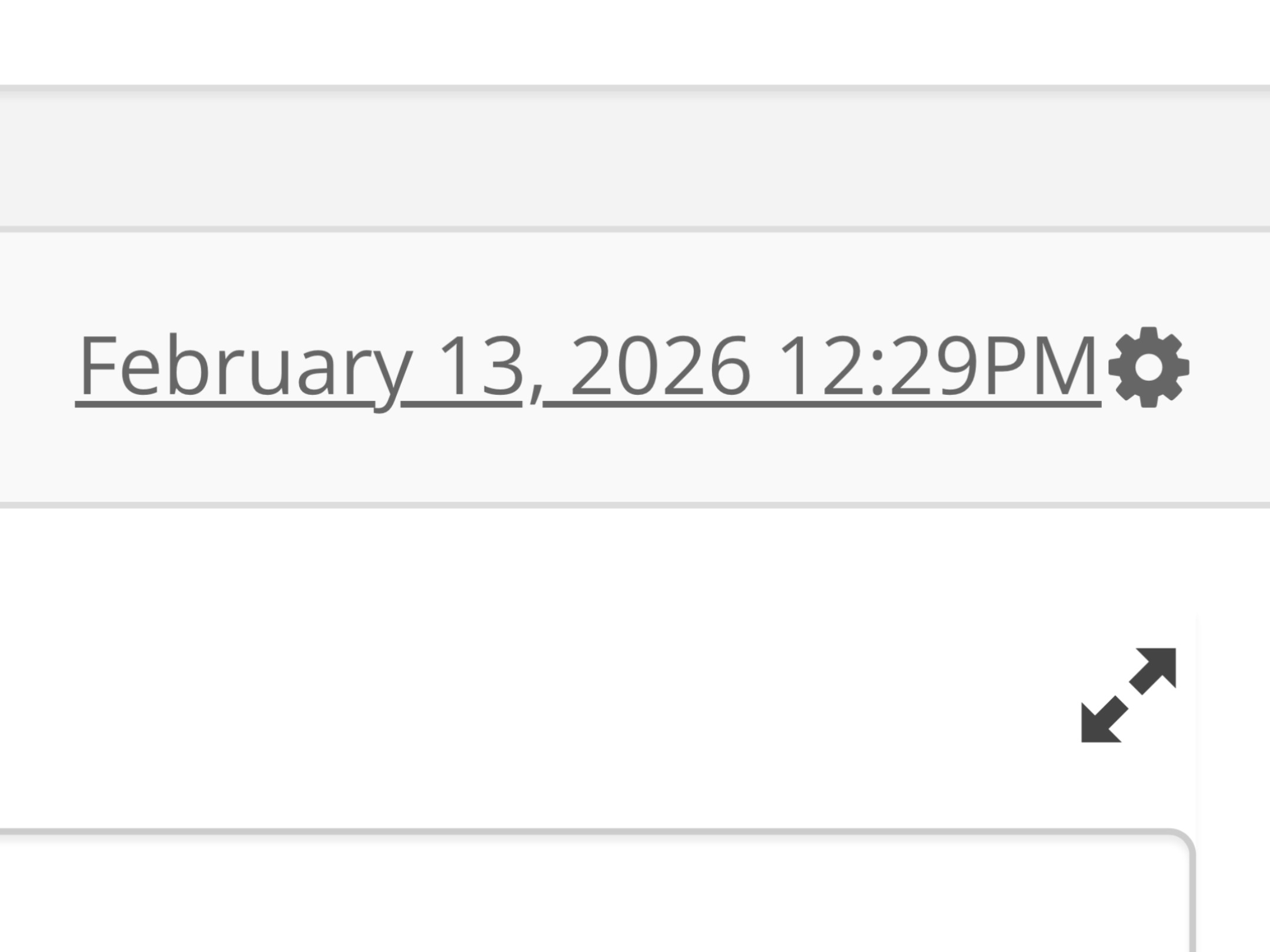
Click on that and “Edit” will appear. Click on that and you’ll be able to make changes to your post.
Mark Feld* of Heritage Auctions*Unless otherwise noted, my posts here represent my personal opinions.
1 -
@mr1931S said:
Taking advice from one who consistently can't properly spell words is high on my list of advice to ignore. Too lazy to look up how to correctly spell commonly used words is a red flag that any advice a so-called expert might have to offer about collecting art, which is what coin collecting really is, is "for the birds" and to be ignored. No disrespect for birds intended.This is absurd. If someone has a terrific eye for art or coins, who cares how well they spell?
0 -
"Trust me!"
Professional Numismatist, Retired. 55 year member ANA. Former ANA Senior Authenticator. Winner of four ANA Heath Literary Awards; three Wayte and Olga Raymond Literary Awards; Numismatist of the Year Award 2009, and ANA Lifetime Achievement Award 2020. Winner of the PNG's 2026 Robert Friedberg Award for "The Enigmatic Lincoln Cents of 1922," Available now from Whitman or Amazon.2 -
"Buy what you like" - Obviously we want to collect what we want, but for someone starting out, they're buying EVERYTHING before they really know what they like.
Beginning collectors should show a lot more restraint and discipline in their purchases and try to see/handle/learn as much as possible on the front end.
5 -
@MFeld said:
I’ll start and I realize that numerous people might disagree.“Buy the “key” dates first”.
I think this is poor advice. Because when someone is starting out, their level of knowledge is low and their collecting preferences haven’t been firmly established. And that means that they’re more likely to make purchasing mistakes and/or change their minds about what they want to collect. If they buy the (more expensive) key dates first, the cost of tuition can be unnecessarily high.This is what I was thinking before even clicking on the thread. It's like saying "make expensive mistakes up front before you fully understand what you're collecting." Also, since key dates are usually in the context of building a date/mint set, you can treat the key date to your series as a reward to yourself to persevering through the set building experience. Of course, famous key dates are often more available than lower profile semi-keys.
John
Keeper of the VAM Catalog • Professional Coin Imaging • Prime Number Set • World Coins in Early America • British Trade Dollars • Variety Attribution3 -
@MICHAELDIXON said:
Do not waste money on coin research books that will provide knowledge. Put that money directly into coins!I spent about $100 for the Kevin Flynn book on 1894-S dimes and consider my purchase of this well-written book easily worth $100. $100 is certainly not going very far if I were to try to save up to buy an actual genuine 1894-S dime for my collection.
Having said this, it's alarming to see the resistance that people these days have for learning anything new. It's like, "Read a book?! Are you kidding me?" Carl Sagan called this posture a kind of "celebration of ignorance."
"Two things are infinite: human stupidity and the universe; and I'm not sure about the universe."
-Albert Einstein-Mistakes are natural. But repeated mistakes without reflection are something else. That may be the “stupidity” he was referring to. In research, he admitted uncertainty openly. “If we knew what it was we were doing, it would not be called research, would it?” This shows humility. Even a Nobel laureate accepted doubt. That humility makes the quote less cynical and more observational.
0 -
@Barberian said:
@mr1931S said:
Taking advice from one who consistently can't properly spell words is high on my list of advice to ignore. Too lazy to look up how to correctly spell commonly used words is a red flag that any advice a so-called expert might have to offer about collecting art, which is what coin collecting really is, is "for the birds" and to be ignored. No disrespect for birds intended.This is absurd. If someone has a terrific eye for art or coins, who cares how well they spell?
Maybe they misled us by misspelling the actual coin they were talking about.
"But seek ye first the kingdom of God and His righteousness and all these things shall be added unto you" Matthew 6:33. Young fellow suffering from Bust Half fever.
BHNC #AN-10
JRCS #16060 -
@Barberian said:
@mr1931S said:
Taking advice from one who consistently can't properly spell words is high on my list of advice to ignore. Too lazy to look up how to correctly spell commonly used words is a red flag that any advice a so-called expert might have to offer about collecting art, which is what coin collecting really is, is "for the birds" and to be ignored. No disrespect for birds intended.This is absurd. If someone has a terrific eye for art or coins, who cares how well they spell?
Generally speaking, poor spelling goes hand in hand with poor writing. Intentional poor spelling is sometimes used by a good writer to create an effect with his or her audience. Intentional poor spelling does have it's place in literature and, happily, can usually be identified as such unless the reader is a maroon who doesn't know his VDBs from his BVDs.
"Two things are infinite: human stupidity and the universe; and I'm not sure about the universe."
-Albert Einstein-Mistakes are natural. But repeated mistakes without reflection are something else. That may be the “stupidity” he was referring to. In research, he admitted uncertainty openly. “If we knew what it was we were doing, it would not be called research, would it?” This shows humility. Even a Nobel laureate accepted doubt. That humility makes the quote less cynical and more observational.
1 -
@mr1931S said:
@Barberian said:
@mr1931S said:
Taking advice from one who consistently can't properly spell words is high on my list of advice to ignore. Too lazy to look up how to correctly spell commonly used words is a red flag that any advice a so-called expert might have to offer about collecting art, which is what coin collecting really is, is "for the birds" and to be ignored. No disrespect for birds intended.This is absurd. If someone has a terrific eye for art or coins, who cares how well they spell?
Generally speaking, poor spelling goes hand in hand with poor writing. Intentional poor spelling is sometimes used by a good writer to create an effect with his or her audience. Intentional poor spelling does have it's place in literature and, happily, can usually be identified as such unless the reader is a maroon who doesn't know his VDBs from his BVDs.
What about his microscope from his endoscope?
 2
2 -
“Buy the coin, not the holder” is excellent advice.
However, the holder and the sticker (or lack thereof) must be considered, especially if not viewing the coin in hand or if one wants to maximize future value. Or, if one lacks proficiency or confidence as a grader.
4 -
You should not become a collector only based on your ability to read a label.
1 -
@IkesT said:
@mr1931S said:
@Barberian said:
@mr1931S said:
Taking advice from one who consistently can't properly spell words is high on my list of advice to ignore. Too lazy to look up how to correctly spell commonly used words is a red flag that any advice a so-called expert might have to offer about collecting art, which is what coin collecting really is, is "for the birds" and to be ignored. No disrespect for birds intended.This is absurd. If someone has a terrific eye for art or coins, who cares how well they spell?
Generally speaking, poor spelling goes hand in hand with poor writing. Intentional poor spelling is sometimes used by a good writer to create an effect with his or her audience. Intentional poor spelling does have it's place in literature and, happily, can usually be identified as such unless the reader is a maroon who doesn't know his VDBs from his BVDs.
What about his microscope from his endoscope?
Maybe he stores his collection somewhere inside his body.
1 -
@mr1931S said:
@Barberian said:
@mr1931S said:
Taking advice from one who consistently can't properly spell words is high on my list of advice to ignore. Too lazy to look up how to correctly spell commonly used words is a red flag that any advice a so-called expert might have to offer about collecting art, which is what coin collecting really is, is "for the birds" and to be ignored. No disrespect for birds intended.This is absurd. If someone has a terrific eye for art or coins, who cares how well they spell?
Generally speaking, poor spelling goes hand in hand with poor writing. Intentional poor spelling is sometimes used by a good writer to create an effect with his or her audience. Intentional poor spelling does have it's place in literature and, happily, can usually be identified as such unless the reader is a maroon who doesn't know his VDBs from his BVDs.
What does good spelling and writing have to do with selecting good coins?
0 -
I never listen to “maroons”!
0 -
As far as this forum goes most "bad advice" is corrected. What goes on while on the floor of a show is a different story.
Thats why its best to ask questions then to pay later.
I paid for my education and from time to time I still do.
Nobody is perfect.Student of numismatics and collector of Morgan dollars
Successful BST transactions with: Namvet Justindan Mattniss RWW olah_in_MA
Dantheman984 Toyz4geo SurfinxHI greencopper RWW bigjpst bretsan MWallace logger7 JWP BruceS bigjpst
JWP PROMETHIUS880 -
@Tomthemailcarrier said:
I never listen to “maroons”!
I make an occasional exception for U of C Maroons, but the Purple actually grant degrees in Numismatics.
1 -
Sometimes it is better to be patient and wait for another coin if you don't love the one that you are considering.*
*good advice, but this rule does not apply if you are old (like me) and it is a coin that is rarely available.
 0
0 -
@IkesT said:
@mr1931S said:
Taking advice from one who consistently can't properly spell words is high on my list of advice to ignore. Too lazy to look up how to correctly spell commonly used words is a red flag that any advice a so-called expert might have to offer about collecting art, which is what coin collecting really is, is "for the birds" and to be ignored. No disrespect for birds intended.I use carp all the time because it sounds better than crap. Plus I don’t want affend any wussies that I would otherwise consider sushi 🤣
0 -
@mr1931S said:
@MICHAELDIXON said:
Do not waste money on coin research books that will provide knowledge. Put that money directly into coins!I spent about $100 for the Kevin Flynn book on 1894-S dimes and consider my purchase of this well-written book easily worth $100. $100 is certainly not going very far if I were to try to save up to buy an actual genuine 1894-S dime for my collection.
Having said this, it's alarming to see the resistance that people these days have for learning anything new. It's like, "Read a book?! Are you kidding me?" Carl Sagan called this posture a kind of "celebration of ignorance."
Great point on the Flynn book, but I think the Get a Red Book advice typically seen on here is actually part of the problem. It’s way too vague for a beginner. Most people today aren't avoiding learning; they're just choosing the speed of the internet over the bulk of a library. If we don't give people context on what to study based on their interests, we shouldn't be surprised when they stop asking questions.
1





resized.jpg)











Leave a Comment
Categories
- All Categories
- 520.1K Coins and Currency - PCGS
- 328.6K U.S. Coin Forum
- 14.8K PCGS Set Registry Forum
- 5.2K Q & A Forum
- 41.4K World & Ancient Coins Forum
- 3K U.S. & World Currency Forum
- 96.4K Buy, Sell, & Trade - U.S. Coins
- 7.3K Buy, Sell & Trade - World & Ancient Coins
- 1.5K Buy, Sell & Trade - Currency
- 61 Random
- 246.2K Trading Cards, Autographs and Memorabilia - PSA
- 90.3K Trading Cards & Memorabilia Forum
- 1.7K Autographs Forum
- 16.4K PSA Set Registry Forum
- 22K Sports Talk
- 115K Buy, Sell & Trade - Cards & Memorabilia
- 663 Buy, Sell & Trade - Autographs
- 2.2K Stamps
- 1.5K Stamps Forum
- 670 Buy, Sell & Trade - Stamps
- 83 Coin Shows
- 83 General Coin Show Information and Discussion
- 11.9K Misc
- 11.9K Testing Forum