Home U.S. Coin Forum

Definitive proof that 1888 last 8 over 7 is not an overdate,


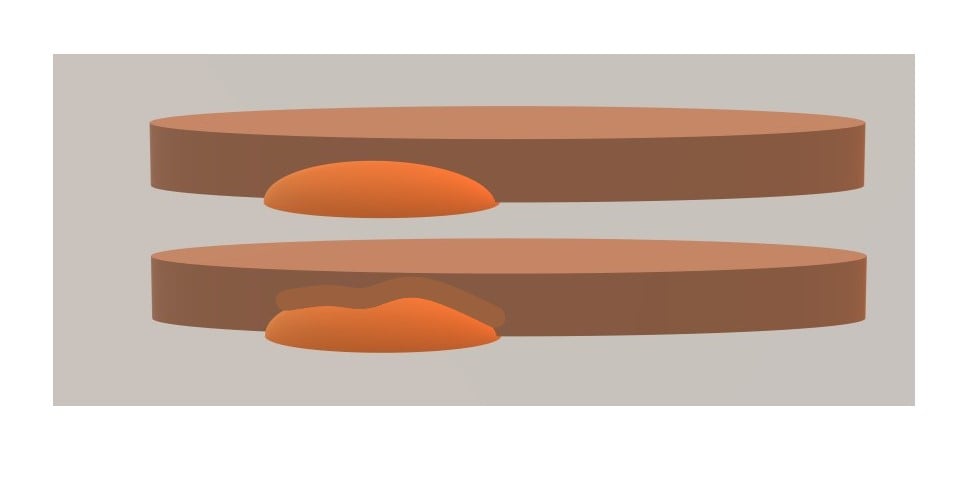
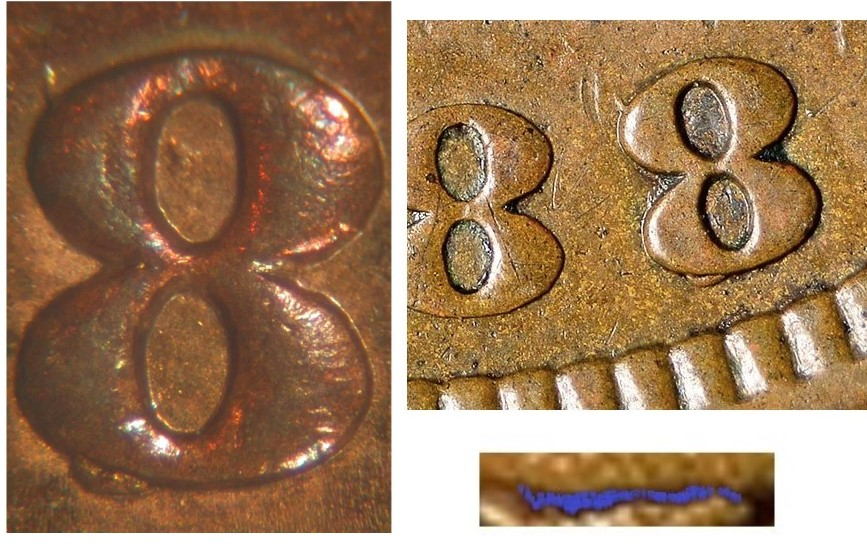
The issue that was missed for 56 years that cannot be explained away. The top of the nub cannot be irregular, no matter how it gets sliced.

It is a re-hubbed damaged 1888 Snow-10

https://scientific-certifications-1888-i.shorthandstories.com/methods-of-the-1888-us-mint-regarding-worn-indian-head-cent-dies/index.html

«1

Comments

  • TypekatTypekat Posts: 639 ✭✭✭✭✭

    Am I following you correctly that the coins that we call ‘1888/7’ are struck from a later version of the Snow-10 die - which started out as a proof die with no evidence of what is now called an overdate?

    30+ years coin shop experience (ret.) Coins, bullion, currency, scrap & interesting folks. Loved every minute!

  • tradedollarnuttradedollarnut Posts: 20,580 ✭✭✭✭✭

    I’ve said so for decades

  • TwoSides2aCoinTwoSides2aCoin Posts: 44,962 ✭✭✭✭✭

    Makes cents.That is an intense amount of study and publishing. Curious how our resident experts will see this analysis.
    CaptHenway , FredWeinberg , Rick Snow or even DCarr would be the guys I would share this with, first. That’s a bold claim.

  • johnny9434johnny9434 Posts: 31,447 ✭✭✭✭✭

    Interesting, I like

  • BillJonesBillJones Posts: 35,654 ✭✭✭✭✭

    So, another Indian Cent overdate goes to the dust bin along with the 1869 over 8.

    Retired dealer and avid collector of U.S. type coins, 19th century presidential campaign medalets and selected medals. In recent years I have been working on a set of British coins - at least one coin from each king or queen who issued pieces that are collectible. I am also collecting at least one coin for each Roman emperor from Julius Caesar to ... ?
  • CopperindianCopperindian Posts: 3,064 ✭✭✭✭✭

    A similar thread was posted by the OP almost two years ago (@IkesT references it above). Since then, members have periodically posted comments in that thread, almost universally refuting the OP’s hypothesis.
    @Sberry002: But I’ll bite - what’s different this time around? Did you furnish your theory to any of the TPG’s and/or Cherrypickers? If so, what was the response? If not, why not? And, if not, why are you starting this thread again?

    “The thrill of the hunt never gets old”

    PCGS Registry: Screaming Eagles
    Copperindian
    Copperindian II
    Indy Eagles
    Gold Rush

    Retired sets: Soaring Eagles
    Copperindian
    Nickelodeon
    Early Walkers

    Successful transactions: redraider, winesteven, renomedphys, splitaces, oreville, ajaan, Cent1225, onlyroosies, justindan, blitzdude, DesertMoon, johnnyb, Heubschgold, SunshineRareCoins, ParadimeCoins, ndeagles, Southern_Knights, pcgsregistrycollector

  • JBKJBK Posts: 17,266 ✭✭✭✭✭
    edited February 13, 2026 10:06AM

    The subtitle from the document at the OP's link:

    A story discovered from relentless investigation of the rarest error coin in US mint. history

    Seems a little hyperbolic to me, but what do I know, since I thought an overdate might be a variety rather than an error, and in any case it's been completely off my radar all these years.

  • CopperindianCopperindian Posts: 3,064 ✭✭✭✭✭

    @ChrisH821 said:
    Whatever it is, I think it's massively overrated.

    Interesting. Since its 1970 discovery, there are 77 in the PCGS pop. As there’s only a nominal amount graded UNC, some of that # is likely upgrade attempts. To a IHC collector, this overdate (yes, it is an overdate), is hardly overrated, let alone massively overrated.

    “The thrill of the hunt never gets old”

    PCGS Registry: Screaming Eagles
    Copperindian
    Copperindian II
    Indy Eagles
    Gold Rush

    Retired sets: Soaring Eagles
    Copperindian
    Nickelodeon
    Early Walkers

    Successful transactions: redraider, winesteven, renomedphys, splitaces, oreville, ajaan, Cent1225, onlyroosies, justindan, blitzdude, DesertMoon, johnnyb, Heubschgold, SunshineRareCoins, ParadimeCoins, ndeagles, Southern_Knights, pcgsregistrycollector

  • cmerlo1cmerlo1 Posts: 8,015 ✭✭✭✭✭

    @CaptHenway said:

    @BillJones said:
    So, another Indian Cent overdate goes to the dust bin along with the 1869 over 8.

    I was the one who spent ten years back in the 70's and 80's convincing Ken Bressett to downgrade the so-called 1869/68 cent to a mere repunched date. I was right. I also lobbied against the 1863/2 Three Cent Silver, the 1861/0 Half Dime and the 1893/2 Dime.

    I lobbied for the 1853/4 Quarter being accepted as an overdate, and provided the theory that it was done to allow the Mint to use up a perfectly good "With Rays" reverse die that would otherwise have had to be scrapped. I firmly believe that these were struck in 1854. I was consulted on the discovery pieces of the 1877/6-CC Dime and the 1877/6 Half Dollar

    I see no reason to doubt the overdate status of the main variety of the 1888/7 cent.

    Overdates came in interesting clusters. After the 1877/6 pieces you had the massive group of 1880/various remnants of 79 Dollars, followed by the singleton 1881/0 $5 die. (There were also some various 1882 Dollars that I proposed as 1882/1 overdates back in the 70's, but they were not strong enough to be convincing.) Then you had the group of 1883/2 Shield nickels.

    Then you had another cluster with two different 1887/6 Dollar dies, two different 1887/6 Three Cent Nickel dies, and the 1888/7 Cent die. Then they stopped for a while, except for the singleton 1901/0-S $5 and the 1909/8 $20. The pairs resumed with the 1918/7-D Nickel and the 1918/7-S Quarter, the 1942/41-P&D Dimes, and the 1943/42-S Cent and the 1943/42-P Nickels.

    TD

    The same can be said for major 20th century US doubled dies (including the overdates, which are also doubled dies).

    • 1909-1910 (cents)
    • 1917-1918 (cent, nickels)
    • 1932-1937 (cents, nickels, dimes,quarters, halves)
    • 1941-1947 (cents, nickels, dimes,quarters, halves)
    • 1955-1964 (cents, nickels, dimes,quarters, halves)
    • 1969-1973 (cents)
    • 1994-1995 (cents)
    You Suck! Awarded 6/2008- 1901-O Micro O Morgan, 8/2008- 1878 VAM-123 Morgan, 9/2022 1888-O VAM-1B3 H8 Morgan | Senior Regional Representative- ANACS Coin Grading. Posted opinions on coins are my own, and are not an official ANACS opinion.
  • messydeskmessydesk Posts: 20,687 ✭✭✭✭✭

    S1 and S10 have totally different date positions. OP has gone through a lot of trouble, words, and pictures to prove nothing. Did he even explore how dies are repaired to become overdates? I stopped reading when I saw the assertion that S10 became S1.

  • @CaptHenway said:

    @BillJones said:
    So, another Indian Cent overdate goes to the dust bin along with the 1869 over 8.

    I was the one who spent ten years back in the 70's and 80's convincing Ken Bressett to downgrade the so-called 1869/68 cent to a mere repunched date. I was right. I also lobbied against the 1863/2 Three Cent Silver, the 1861/0 Half Dime and the 1893/2 Dime.

    I lobbied for the 1853/4 Quarter being accepted as an overdate, and provided the theory that it was done to allow the Mint to use up a perfectly good "With Rays" reverse die that would otherwise have had to be scrapped. I firmly believe that these were struck in 1854. I was consulted on the discovery pieces of the 1877/6-CC Dime and the 1877/6 Half Dollar

    I see no reason to doubt the overdate status of the main variety of the 1888/7 cent.

    Overdates came in interesting clusters. After the 1877/6 pieces you had the massive group of 1880/various remnants of 79 Dollars, followed by the singleton 1881/0 $5 die. (There were also some various 1882 Dollars that I proposed as 1882/1 overdates back in the 70's, but they were not strong enough to be convincing.) Then you had the group of 1883/2 Shield nickels.

    Then you had another cluster with two different 1887/6 Dollar dies, two different 1887/6 Three Cent Nickel dies, and the 1888/7 Cent die. Then they stopped for a while, except for the singleton 1901/0-S $5 and the 1909/8 $20. The pairs resumed with the 1918/7-D Nickel and the 1918/7-S Quarter, the 1942/41-P&D Dimes, and the 1943/42-S Cent and the 1943/42-P Nickels.

    TD

    how do you explain the irregular top of the nub?

  • jmlanzafjmlanzaf Posts: 40,336 ✭✭✭✭✭

    @Sberry002 said:

    @CaptHenway said:

    @BillJones said:
    So, another Indian Cent overdate goes to the dust bin along with the 1869 over 8.

    I was the one who spent ten years back in the 70's and 80's convincing Ken Bressett to downgrade the so-called 1869/68 cent to a mere repunched date. I was right. I also lobbied against the 1863/2 Three Cent Silver, the 1861/0 Half Dime and the 1893/2 Dime.

    I lobbied for the 1853/4 Quarter being accepted as an overdate, and provided the theory that it was done to allow the Mint to use up a perfectly good "With Rays" reverse die that would otherwise have had to be scrapped. I firmly believe that these were struck in 1854. I was consulted on the discovery pieces of the 1877/6-CC Dime and the 1877/6 Half Dollar

    I see no reason to doubt the overdate status of the main variety of the 1888/7 cent.

    Overdates came in interesting clusters. After the 1877/6 pieces you had the massive group of 1880/various remnants of 79 Dollars, followed by the singleton 1881/0 $5 die. (There were also some various 1882 Dollars that I proposed as 1882/1 overdates back in the 70's, but they were not strong enough to be convincing.) Then you had the group of 1883/2 Shield nickels.

    Then you had another cluster with two different 1887/6 Dollar dies, two different 1887/6 Three Cent Nickel dies, and the 1888/7 Cent die. Then they stopped for a while, except for the singleton 1901/0-S $5 and the 1909/8 $20. The pairs resumed with the 1918/7-D Nickel and the 1918/7-S Quarter, the 1942/41-P&D Dimes, and the 1943/42-S Cent and the 1943/42-P Nickels.

    TD

    how do you explain the irregular top of the nub?

    How do your explain your obsession with this coin?

    All comments reflect the opinion of the author, even when irrefutably accurate.

  • CregCreg Posts: 1,487 ✭✭✭✭✭

    I mocked earlier threads. I apologize for minimizing. I reread everything, my shortcomings do not allow me to judge. I begrudge you nothing as a result of your work.
    Subjectively, I have an image of someone trying to touch an elbow behind the back through the legs with the other hand. Not Occam, not Einstein, more like Escher.

  • CaptHenwayCaptHenway Posts: 33,639 ✭✭✭✭✭

    @Sberry002 said:

    @CaptHenway said:

    @BillJones said:
    So, another Indian Cent overdate goes to the dust bin along with the 1869 over 8.

    I was the one who spent ten years back in the 70's and 80's convincing Ken Bressett to downgrade the so-called 1869/68 cent to a mere repunched date. I was right. I also lobbied against the 1863/2 Three Cent Silver, the 1861/0 Half Dime and the 1893/2 Dime.

    I lobbied for the 1853/4 Quarter being accepted as an overdate, and provided the theory that it was done to allow the Mint to use up a perfectly good "With Rays" reverse die that would otherwise have had to be scrapped. I firmly believe that these were struck in 1854. I was consulted on the discovery pieces of the 1877/6-CC Dime and the 1877/6 Half Dollar

    I see no reason to doubt the overdate status of the main variety of the 1888/7 cent.

    Overdates came in interesting clusters. After the 1877/6 pieces you had the massive group of 1880/various remnants of 79 Dollars, followed by the singleton 1881/0 $5 die. (There were also some various 1882 Dollars that I proposed as 1882/1 overdates back in the 70's, but they were not strong enough to be convincing.) Then you had the group of 1883/2 Shield nickels.

    Then you had another cluster with two different 1887/6 Dollar dies, two different 1887/6 Three Cent Nickel dies, and the 1888/7 Cent die. Then they stopped for a while, except for the singleton 1901/0-S $5 and the 1909/8 $20. The pairs resumed with the 1918/7-D Nickel and the 1918/7-S Quarter, the 1942/41-P&D Dimes, and the 1943/42-S Cent and the 1943/42-P Nickels.

    TD

    how do you explain the irregular top of the nub?

    Why is the underdate different of every one of the many 1880/whatever Morgan Dollars? The process is, by its very nature, non-standard.

    Numismatist. 54 year member ANA. Former ANA Senior Authenticator. Winner of four ANA Heath Literary Awards; three Wayte and Olga Raymond Literary Awards; Numismatist of the Year Award 2009, and ANA Lifetime Achievement Award 2020. Author of "The Enigmatic Lincoln Cents of 1922," Available now from Whitman or Amazon.
  • Assuming a new 1887 die to begin with, the geometry at the top of the nub comes from the bottom of the incused 7. In the case of this nub, it is approximately 55 percent of the 8. That means the lowest 55 percent of the pristine incused 7 is what must be formed.

    The way the nub looks would require extra random metal in the bottom of the incused 7..

  • IkesTIkesT Posts: 4,164 ✭✭✭✭✭

    @Sberry002 said:

    @CaptHenway said:

    @BillJones said:
    So, another Indian Cent overdate goes to the dust bin along with the 1869 over 8.

    I was the one who spent ten years back in the 70's and 80's convincing Ken Bressett to downgrade the so-called 1869/68 cent to a mere repunched date. I was right. I also lobbied against the 1863/2 Three Cent Silver, the 1861/0 Half Dime and the 1893/2 Dime.

    I lobbied for the 1853/4 Quarter being accepted as an overdate, and provided the theory that it was done to allow the Mint to use up a perfectly good "With Rays" reverse die that would otherwise have had to be scrapped. I firmly believe that these were struck in 1854. I was consulted on the discovery pieces of the 1877/6-CC Dime and the 1877/6 Half Dollar

    I see no reason to doubt the overdate status of the main variety of the 1888/7 cent.

    Overdates came in interesting clusters. After the 1877/6 pieces you had the massive group of 1880/various remnants of 79 Dollars, followed by the singleton 1881/0 $5 die. (There were also some various 1882 Dollars that I proposed as 1882/1 overdates back in the 70's, but they were not strong enough to be convincing.) Then you had the group of 1883/2 Shield nickels.

    Then you had another cluster with two different 1887/6 Dollar dies, two different 1887/6 Three Cent Nickel dies, and the 1888/7 Cent die. Then they stopped for a while, except for the singleton 1901/0-S $5 and the 1909/8 $20. The pairs resumed with the 1918/7-D Nickel and the 1918/7-S Quarter, the 1942/41-P&D Dimes, and the 1943/42-S Cent and the 1943/42-P Nickels.

    TD

    how do you explain the irregular top of the nub?

    Two words: Yub Nub

    https://www.youtube.com/watch?v=np6vAuS0KNs&list=RDnp6vAuS0KNs&start_radio=1

  • jmlanzafjmlanzaf Posts: 40,336 ✭✭✭✭✭
    edited February 13, 2026 8:03PM

    @Sberry002 said:
    Assuming a new 1887 die to begin with, the geometry at the top of the nub comes from the bottom of the incused 7. In the case of this nub, it is approximately 55 percent of the 8. That means the lowest 55 percent of the pristine incused 7 is what must be formed.

    The way the nub looks would require extra random metal in the bottom of the incused 7..

    There ya go! You explained it yourself.

    If you stamp an 8 over a 7, you kind of expect to damage the 7. The don't ablate the metal to make the 8, they stamp it really hard. Metal will...nay, MUST move.

    You could turn this question around. If those are the remnants of the 8, where is the rest of the 8? This must "require extra random metal in the bottom of the incused" 8.

    All comments reflect the opinion of the author, even when irrefutably accurate.

  • messydeskmessydesk Posts: 20,687 ✭✭✭✭✭

    @Sberry002 said:

    @CaptHenway said:

    @BillJones said:
    So, another Indian Cent overdate goes to the dust bin along with the 1869 over 8.

    I was the one who spent ten years back in the 70's and 80's convincing Ken Bressett to downgrade the so-called 1869/68 cent to a mere repunched date. I was right. I also lobbied against the 1863/2 Three Cent Silver, the 1861/0 Half Dime and the 1893/2 Dime.

    I lobbied for the 1853/4 Quarter being accepted as an overdate, and provided the theory that it was done to allow the Mint to use up a perfectly good "With Rays" reverse die that would otherwise have had to be scrapped. I firmly believe that these were struck in 1854. I was consulted on the discovery pieces of the 1877/6-CC Dime and the 1877/6 Half Dollar

    I see no reason to doubt the overdate status of the main variety of the 1888/7 cent.

    Overdates came in interesting clusters. After the 1877/6 pieces you had the massive group of 1880/various remnants of 79 Dollars, followed by the singleton 1881/0 $5 die. (There were also some various 1882 Dollars that I proposed as 1882/1 overdates back in the 70's, but they were not strong enough to be convincing.) Then you had the group of 1883/2 Shield nickels.

    Then you had another cluster with two different 1887/6 Dollar dies, two different 1887/6 Three Cent Nickel dies, and the 1888/7 Cent die. Then they stopped for a while, except for the singleton 1901/0-S $5 and the 1909/8 $20. The pairs resumed with the 1918/7-D Nickel and the 1918/7-S Quarter, the 1942/41-P&D Dimes, and the 1943/42-S Cent and the 1943/42-P Nickels.

    TD

    how do you explain the irregular top of the nub?

    How do you explain the moving date?

  • @jmlanzaf said:

    @Sberry002 said:
    Assuming a new 1887 die to begin with, the geometry at the top of the nub comes from the bottom of the incused 7. In the case of this nub, it is approximately 55 percent of the 8. That means the lowest 55 percent of the pristine incused 7 is what must be formed.

    The way the nub looks would require extra random metal in the bottom of the incused 7..

    There ya go! You explained it yourself.

    If you stamp an 8 over a 7, you kind of expect to damage the 7. The don't ablate the metal to make the 8, they stamp it really hard. Metal will...nay, MUST move.

    You could turn this question around. If those are the remnants of the 8, where is the rest of the 8? This must "require extra random metal in the bottom of the incused" 8.

    It definitely pains me to admit you have a good point. It concerns me that it may be unprovable. It also messes up the title of this discussion. But it is the point of it being a discussion.

    I still think the material missing in the top of the nub is not right, but I will definitely try to understand more precisely how and where die steel moves when you screw an 8 over a deep incused 7. There is a fair amount of 7 to backfill. The fact that it is deep to begin with, is odd.

    As for remnants of an 8. There are remnants of a shallow third 8 in the inner loops of at least the last 2 8s of Snow-1. Just like countless RPDs. This was enough to declassify Snow-2 as an overdate, but for some reason not Snow-1.

    For the record, I strongly believe Snow-2 is an overdate. but that's another story.

  • World67World67 Posts: 13,088 ✭✭✭✭✭

    Explain this.

  • jmlanzafjmlanzaf Posts: 40,336 ✭✭✭✭✭

    @Morgan White said:
    Explain this.

    You left the chocolate on the dashboard

    All comments reflect the opinion of the author, even when irrefutably accurate.

  • fathomfathom Posts: 2,067 ✭✭✭✭✭

    @ChrisH821 said:
    Whatever it is, I think it's massively overrated.

    100%

    Barely naked eye, overpromoted.

  • tradedollarnuttradedollarnut Posts: 20,580 ✭✭✭✭✭

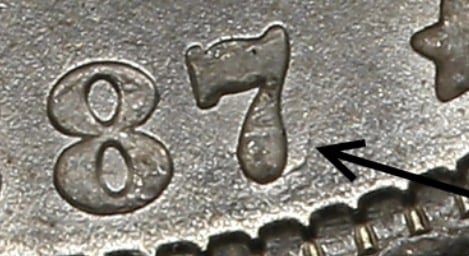
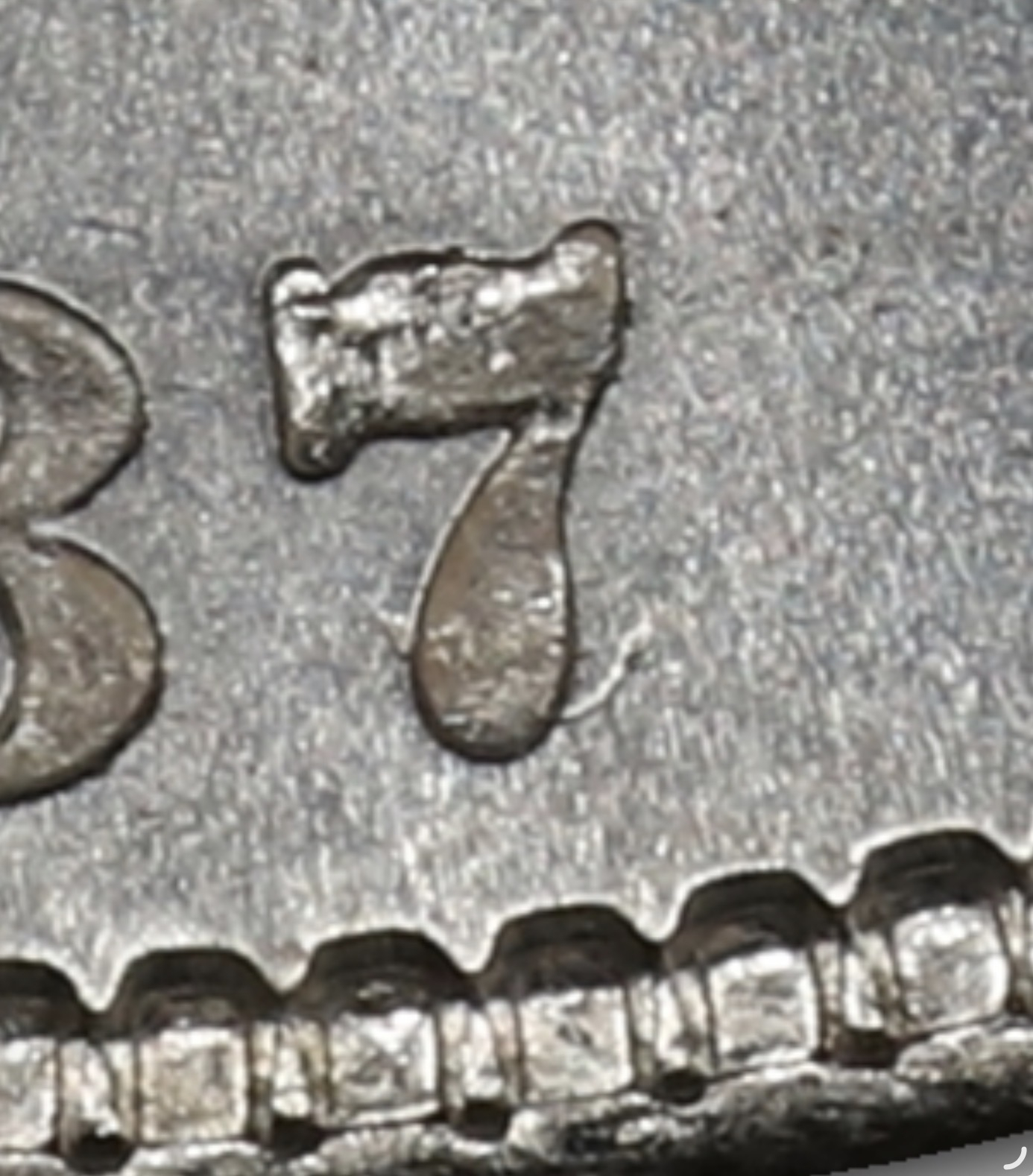
    I suppose if the mind wants to take random lines and create overdates out of them, far be it from me to argue. But I’d never ever buy one without clear visual underdigit
  • IkesTIkesT Posts: 4,164 ✭✭✭✭✭

    @Sberry002 said:

    @jmlanzaf said:

    @Sberry002 said:
    Assuming a new 1887 die to begin with, the geometry at the top of the nub comes from the bottom of the incused 7. In the case of this nub, it is approximately 55 percent of the 8. That means the lowest 55 percent of the pristine incused 7 is what must be formed.

    The way the nub looks would require extra random metal in the bottom of the incused 7..

    There ya go! You explained it yourself.

    If you stamp an 8 over a 7, you kind of expect to damage the 7. The don't ablate the metal to make the 8, they stamp it really hard. Metal will...nay, MUST move.

    You could turn this question around. If those are the remnants of the 8, where is the rest of the 8? This must "require extra random metal in the bottom of the incused" 8.

    It definitely pains me to admit you have a good point. It concerns me that it may be unprovable. It also messes up the title of this discussion. But it is the point of it being a discussion.

    This is not a discussion.

    I still think the material missing in the top of the nub is not right, but I will definitely try to understand more precisely how and where die steel moves when you screw an 8 over a deep incused 7.

    Stop thinking and trying to understand.

    For the record, I strongly believe Snow-2 is an overdate. but that's another story.

    Stop believing.

  • messydeskmessydesk Posts: 20,687 ✭✭✭✭✭

    @tradedollarnut said:
    I just don’t think these line up

    The repair to allow the die to be redated 1888 results in a weak spot on the die at the bottom of the 8 where the 7 protrudes. In addition to the metal moving a little when the date is repunched, there is opportunity for the repair to break, either when the date is punched or later when it is used (see also 1882-O/S $1 early and late die stages).

  • IkesTIkesT Posts: 4,164 ✭✭✭✭✭

    @messydesk said:

    @IkesT said:

    @Sberry002 said:

    @jmlanzaf said:

    @Sberry002 said:
    Assuming a new 1887 die to begin with, the geometry at the top of the nub comes from the bottom of the incused 7. In the case of this nub, it is approximately 55 percent of the 8. That means the lowest 55 percent of the pristine incused 7 is what must be formed.

    The way the nub looks would require extra random metal in the bottom of the incused 7..

    There ya go! You explained it yourself.

    If you stamp an 8 over a 7, you kind of expect to damage the 7. The don't ablate the metal to make the 8, they stamp it really hard. Metal will...nay, MUST move.

    You could turn this question around. If those are the remnants of the 8, where is the rest of the 8? This must "require extra random metal in the bottom of the incused" 8.

    It definitely pains me to admit you have a good point. It concerns me that it may be unprovable. It also messes up the title of this discussion. But it is the point of it being a discussion.

    This is not a discussion.

    I still think the material missing in the top of the nub is not right, but I will definitely try to understand more precisely how and where die steel moves when you screw an 8 over a deep incused 7.

    Stop thinking and trying to understand.

    For the record, I strongly believe Snow-2 is an overdate. but that's another story.

    Stop believing.

    Not a Journey fan?

    I am, actually. 👍

    I like that song as well, it just isn't applicable in this particular case. ;)

  • tradedollarnuttradedollarnut Posts: 20,580 ✭✭✭✭✭

    “The repair to allow the die to be redated 1888 results in a weak spot on the die at the bottom of the 8 where the 7 protrudes. In addition to the metal moving a little when the date is repunched, there is opportunity for the repair to break, either when the date is punched or later when it is used (see also 1882-O/S $1 early and late die stages).”

    Nice in theory but the bulge at the bottom isn’t where it should be and it’s hard to ‘move’ a void when metal moves

  • CaptHenwayCaptHenway Posts: 33,639 ✭✭✭✭✭

    Can we get a name change on this thread, please?

    Numismatist. 54 year member ANA. Former ANA Senior Authenticator. Winner of four ANA Heath Literary Awards; three Wayte and Olga Raymond Literary Awards; Numismatist of the Year Award 2009, and ANA Lifetime Achievement Award 2020. Author of "The Enigmatic Lincoln Cents of 1922," Available now from Whitman or Amazon.
  • IkesTIkesT Posts: 4,164 ✭✭✭✭✭

    @CaptHenway said:
    Can we get a name change on this thread, please?

    How about this?

  • @IkesT said:

    @CaptHenway said:
    Can we get a name change on this thread, please?

    How about this?

    There is plenty of proof it is 1888 over 1888. I think it can proven that t

  • IkesTIkesT Posts: 4,164 ✭✭✭✭✭

    @Sberry002 said:
    There is plenty of proof it is 1888 over 1888. I think it can proven that t

    Stop thinking.

  • @Sberry002 said:

    @jmlanzaf said:

    @Sberry002 said:
    Assuming a new 1887 die to begin with, the geometry at the top of the nub comes from the bottom of the incused 7. In the case of this nub, it is approximately 55 percent of the 8. That means the lowest 55 percent of the pristine incused 7 is what must be formed.

    The way the nub looks would require extra random metal in the bottom of the incused 7..

    There ya go! You explained it yourself.

    If you stamp an 8 over a 7, you kind of expect to damage the 7. The don't ablate the metal to make the 8, they stamp it really hard. Metal will...nay, MUST move.

    You could turn this question around. If those are the remnants of the 8, where is the rest of the 8? This must "require extra random metal in the bottom of the incused" 8.

    It definitely pains me to admit you have a good point. It concerns me that it may be unprovable. It also messes up the title of this discussion. But it is the point of it being a discussion.

    I still think the material missing in the top of the nub is not right, but I will definitely try to understand more precisely how and where die steel moves when you screw an 8 over a deep incused 7. There is a fair amount of 7 to backfill. The fact that it is deep to begin with, is odd.

    As for remnants of an 8. There are remnants of a shallow third 8 in the inner loops of at least the last 2 8s of Snow-1. Just like countless RPDs. This was enough to declassify Snow-2 as an overdate, but for some reason not Snow-1.

    For the record, I strongly believe Snow-2 is an overdate. but that's another story.

    I think the point regarding the irregular profile at the top of the nub is proof it is not a 7. I'll add that the 1925/4 overdate calls added doubt about the lack of flaws inside the bottom loop of the 8. and finally, the existence of a remnant 8 in that lower loop of the 8.

  • CaptHenwayCaptHenway Posts: 33,639 ✭✭✭✭✭

    Think the rain will hurt the rhubarb?

    Numismatist. 54 year member ANA. Former ANA Senior Authenticator. Winner of four ANA Heath Literary Awards; three Wayte and Olga Raymond Literary Awards; Numismatist of the Year Award 2009, and ANA Lifetime Achievement Award 2020. Author of "The Enigmatic Lincoln Cents of 1922," Available now from Whitman or Amazon.
  • HalfDimeHalfDime Posts: 937 ✭✭✭✭✭
    edited February 19, 2026 8:48AM

    The die is the opposite of how this picture looks, so the seven was incuse on the die. When they punched in the deeper eight, it shoved metal up and into the remaining portion of the seven at the base and deformed it by slightly lifting it at the edge.

    So the edge if the seven is slightly smaller than it should be because the eight punch filled it slightly in.

  • @HalfDime said:

    The die is the opposite of how this picture looks, so the seven was incuse on the die. When they punched in the deeper eight, it shoved metal up and into the remaining portion of the seven at the base and deformed it by slightly lifting it at the edge.

    So the edge if the seven is slightly smaller than it should be because the eight punch filled it slightly in.

    a rounded line of separation.

  • IkesTIkesT Posts: 4,164 ✭✭✭✭✭

    Rhubarb.

  • tradedollarnuttradedollarnut Posts: 20,580 ✭✭✭✭✭

    Question-what was the exact dating process in 1887? Individual punch or complete date punch?

  • CaptHenwayCaptHenway Posts: 33,639 ✭✭✭✭✭

    @tradedollarnut said:
    Question-what was the exact dating process in 1887? Individual punch or complete date punch?

    Four digit gang punch.

    Numismatist. 54 year member ANA. Former ANA Senior Authenticator. Winner of four ANA Heath Literary Awards; three Wayte and Olga Raymond Literary Awards; Numismatist of the Year Award 2009, and ANA Lifetime Achievement Award 2020. Author of "The Enigmatic Lincoln Cents of 1922," Available now from Whitman or Amazon.
  • @jmlanzaf said:

    @Sberry002 said:
    Assuming a new 1887 die to begin with, the geometry at the top of the nub comes from the bottom of the incused 7. In the case of this nub, it is approximately 55 percent of the 8. That means the lowest 55 percent of the pristine incused 7 is what must be formed.

    The way the nub looks would require extra random metal in the bottom of the incused 7..

    There ya go! You explained it yourself.

    If you stamp an 8 over a 7, you kind of expect to damage the 7. The don't ablate the metal to make the 8, they stamp it really hard. Metal will...nay, MUST move.

    You could turn this question around. If those are the remnants of the 8, where is the rest of the 8? This must "require extra random metal in the bottom of the incused" 8.

    I spent time to research precisely what happens to material when hubbing an 8 through an existing 7.

    The metal moves in a way that modifies the shape of the line of separation. It does not damage it. There is a direct correlation between the profile of the line of separation and profile of the incused object being hubbed through,
    This means that the irregular profile of line of separation of the nub is directly correlated to an irregular incused shape that was hubbed thru.

    I added the research to the end of my report.

    I'm still unsure what you're saying regarding the 8.

  • IkesTIkesT Posts: 4,164 ✭✭✭✭✭

    Is this the report you are talking about?

  • @CaptHenway said:

    @Sberry002 said:

    @CaptHenway said:

    @BillJones said:
    So, another Indian Cent overdate goes to the dust bin along with the 1869 over 8.

    I was the one who spent ten years back in the 70's and 80's convincing Ken Bressett to downgrade the so-called 1869/68 cent to a mere repunched date. I was right. I also lobbied against the 1863/2 Three Cent Silver, the 1861/0 Half Dime and the 1893/2 Dime.

    I lobbied for the 1853/4 Quarter being accepted as an overdate, and provided the theory that it was done to allow the Mint to use up a perfectly good "With Rays" reverse die that would otherwise have had to be scrapped. I firmly believe that these were struck in 1854. I was consulted on the discovery pieces of the 1877/6-CC Dime and the 1877/6 Half Dollar

    I see no reason to doubt the overdate status of the main variety of the 1888/7 cent.

    Overdates came in interesting clusters. After the 1877/6 pieces you had the massive group of 1880/various remnants of 79 Dollars, followed by the singleton 1881/0 $5 die. (There were also some various 1882 Dollars that I proposed as 1882/1 overdates back in the 70's, but they were not strong enough to be convincing.) Then you had the group of 1883/2 Shield nickels.

    Then you had another cluster with two different 1887/6 Dollar dies, two different 1887/6 Three Cent Nickel dies, and the 1888/7 Cent die. Then they stopped for a while, except for the singleton 1901/0-S $5 and the 1909/8 $20. The pairs resumed with the 1918/7-D Nickel and the 1918/7-S Quarter, the 1942/41-P&D Dimes, and the 1943/42-S Cent and the 1943/42-P Nickels.

    TD

    how do you explain the irregular top of the nub?

    Why is the underdate different of every one of the many 1880/whatever Morgan Dollars? The process is, by its very nature, non-standard.

    Your true statement doesn't actually apply to the question.

  • IkesTIkesT Posts: 4,164 ✭✭✭✭✭

    @Sberry002 said:

    @jmlanzaf said:

    @Sberry002 said:
    Assuming a new 1887 die to begin with, the geometry at the top of the nub comes from the bottom of the incused 7. In the case of this nub, it is approximately 55 percent of the 8. That means the lowest 55 percent of the pristine incused 7 is what must be formed.

    The way the nub looks would require extra random metal in the bottom of the incused 7..

    There ya go! You explained it yourself.

    If you stamp an 8 over a 7, you kind of expect to damage the 7. The don't ablate the metal to make the 8, they stamp it really hard. Metal will...nay, MUST move.

    You could turn this question around. If those are the remnants of the 8, where is the rest of the 8? This must "require extra random metal in the bottom of the incused" 8.

    I spent time to research precisely what happens to material when hubbing an 8 through an existing 7.

    The metal moves in a way that modifies the shape of the line of separation. It does not damage it. There is a direct correlation between the profile of the line of separation and profile of the incused object being hubbed through,
    This means that the irregular profile of line of separation of the nub is directly correlated to an irregular incused shape that was hubbed thru.

    I added the research to the end of my report.

    Is this the research at the end of the report?

Leave a Comment

BoldItalicStrikethroughOrdered listUnordered list
Emoji
Image
Align leftAlign centerAlign rightToggle HTML viewToggle full pageToggle lights
Drop image/file