A Coin That Didn't Sticker as an MS66, Then Stickered as an MS67 (pics)
 Luxor
Posts: 577 ✭✭✭✭✭
Luxor
Posts: 577 ✭✭✭✭✭
Here's a common daye dollar I've had for many years in an older NGC holder as an MS66 that I always thought was very strong for the grade and one day also quite awhile back tried it at CAC with a few other pieces and it didn't sticker in the NGC 66 holder. I later decided that CAC was having a bad day and decided to crack the coin and try it at PCGS and see what happens as I was still convinced this coin was at least a 66+ if not a 67. So it comes back from PCGS as a 67. I later upgraded to a PL coin and decided to put this one in a GC auction and checked the box to have this and the others I consigned to be tried at CAC. Low and behold CAC now likes it as a 67 in a PCGS holder. So the point of this verbose post is just to show that no service is truly consistent (as everyone already knows) and to always trust your own grading skills if you really believe the grading experts were too tough that day. I wish I had a pic of the coin in the old NGC 66 holder but never thought to photograph it.
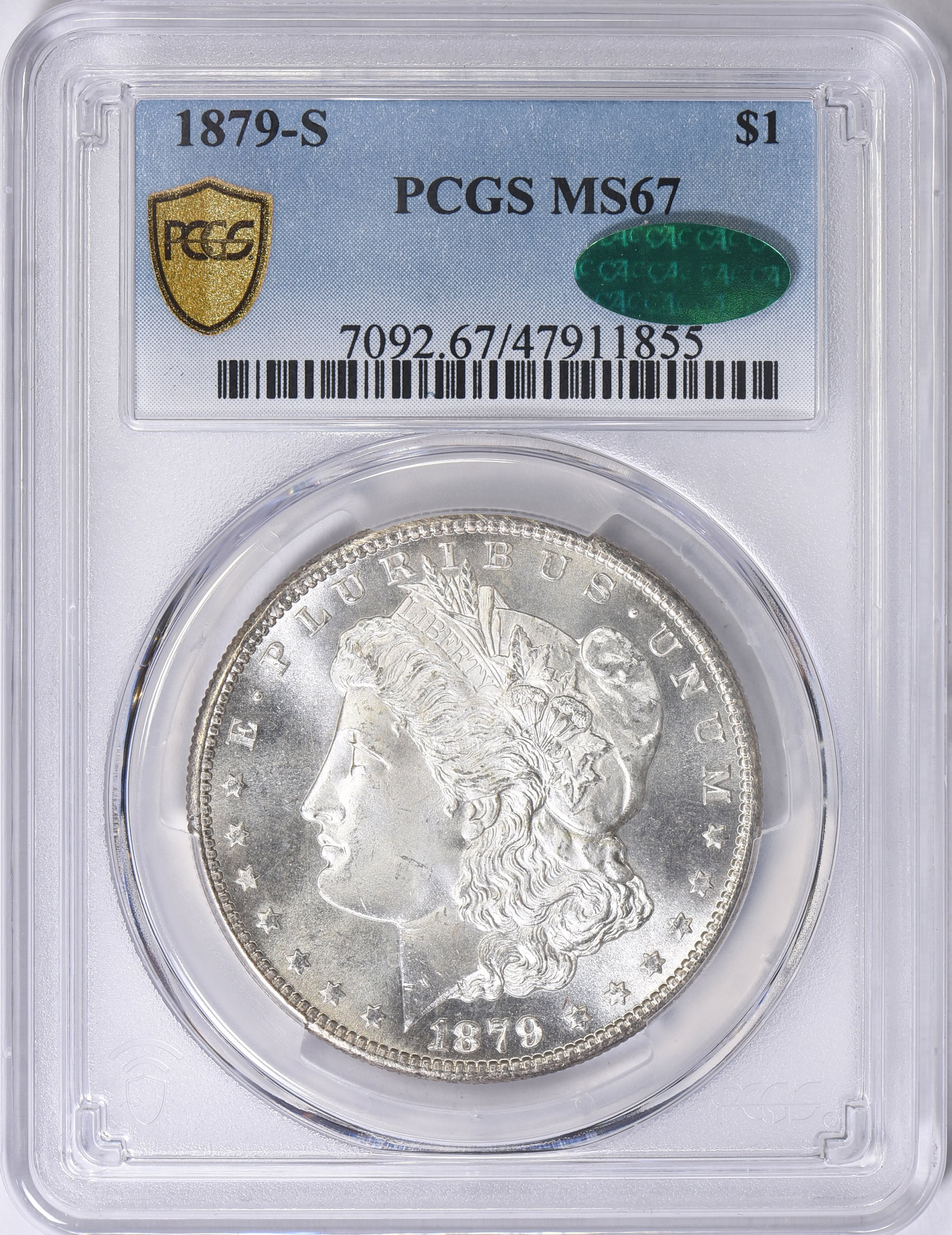
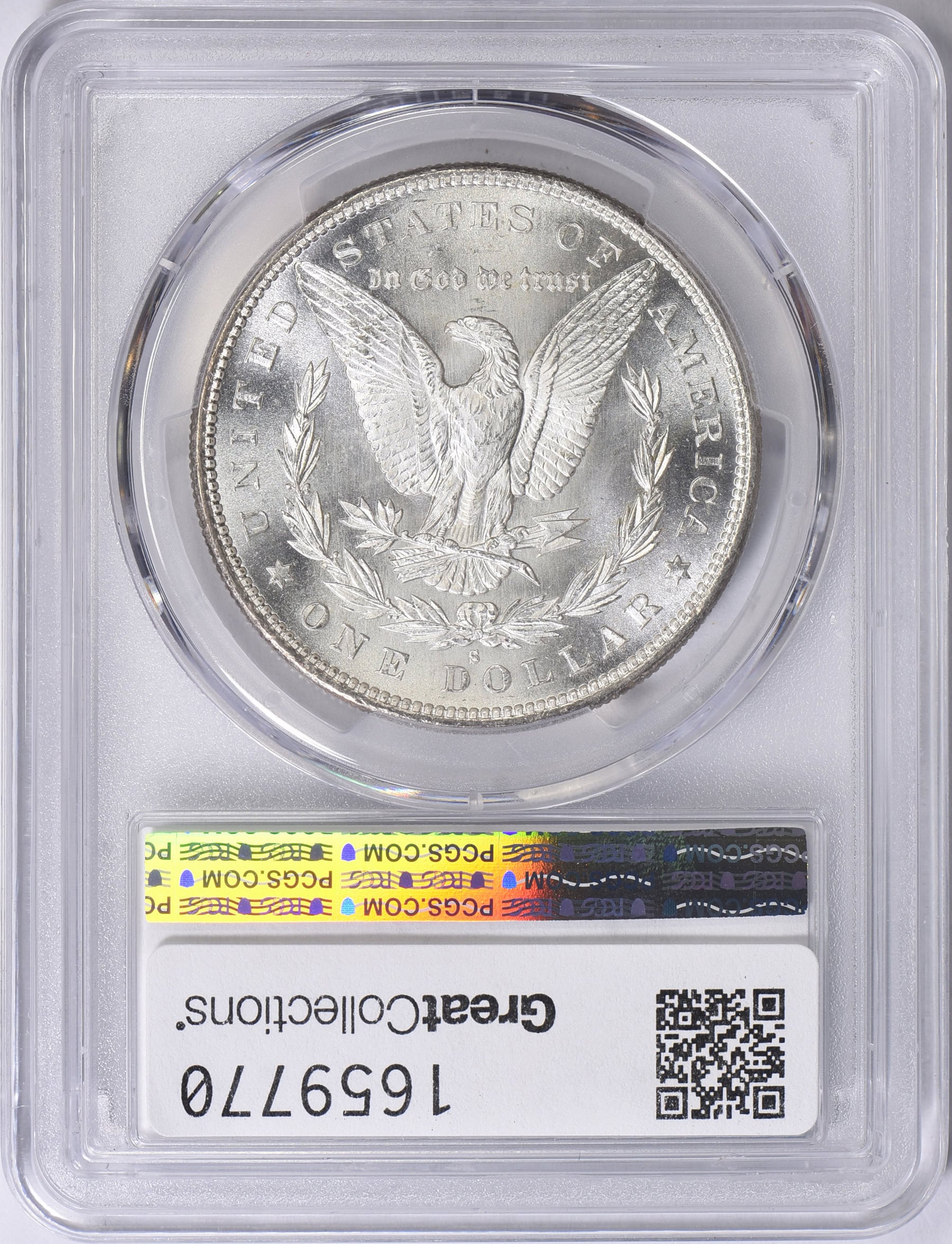
-
Your hobby is supposed to be your therapy, not the reason you need it.
Comments
This is not the first story I've heard like that. I've stayed out of all of the CAC discussions (until now), but that's EXACTLY why I don't use CAC for stickers or grading. Too inconsistent. Before someone points it out, I know inconsistency examples can be found in all TPG's. However, as a whole, I'm amazed at how consistent PCGS, NGC, and even ANACS is. I do have some CAC green beans in my collection, but they came that way and they passed my requirements, not someone else's.
IMO, a coin in a new PCGS holder simply looks better than viewing a coin through thicker old ngc plastic. More flash gets through.
Grade the holder, not the coin.

I was going to say something similar. Beyond the holder letting in more light by virtue of being thinner and having the prongs, an old holder could be scuffy or otherwise hinder the ability to look at some part of the coin. It's all conjecture since we can't see how the coin used to look in the older holder, but I wonder if a coin looks great to CAC but they decide they can't see some (even little) part of the coin, if that's enough reason to not sticker it. Plenty of old holders have stickers, but I haven't handled enough to get a feel for whether coins in beat up holders are harder to sticker even if the coin looks great. In a similar vein, I believe (but don't quote me) that some of the grading companies won't cross coins in certain newer holders because of what they can and can't see of the edge/rim.
With all that said, my defense here is only as a plausible reason why this could happen that isn't simple inconsistency. Inconsistency is just as much a possibility, but I'm not sure the information in this example leaves inconsistency as the only possibility.
Ultimately, coins are graded by humans, and humans by our very nature are inconsistent.
Newbie collector of type and circulated Peace dollars, photographer of places and animals, player of instruments and builder of amplifiers, espresso industry professional, and a person distracted by shiny objects.
Amen to that!
"But seek ye first the kingdom of God and His righteousness and all these things shall be added unto you" Matthew 6:33. Young fellow suffering from Bust Half fever.
BHNC #AN-10
JRCS #1606
That is certainly true but it is more so for small coins with thicker toning where the luster doesn’t pop. Even with a fatter holder, it is hard to imagine a Morgan Dollar not looking solid as a 66 but it looks fine for a 67.
Interesting. Very impressing coin.
CAC lovers get ready to slam me for voicing my opinion. If CAC can't determine if a small, thick toned coin meets the criteria for a sticker, then it's unfair to keep the fee. The fee should be fully refunded. I'm stopping short of saying that keeping the fee in a case such as this is unethical, but it's approaching it.
Do you also feel that it’s unfair for NGC and PCGS to keep the grading fees when they grade small, thick-toned coins one grade on a submission and then another grade when the coins are submitted another time? And what about when they do the same for brilliant, color-free coins? Maybe when they do that, they should refund the grading fees and pay an additional penalty amount on top of it? 😉
Mark Feld* of Heritage Auctions*Unless otherwise noted, my posts here represent my personal opinions.
Out of curiosity, has this been noticed within the same TPG? For example, if it was an MS66 at NGC and then upgraded later to an MS67?
Not a "CAC lover" but I was a CPA for 45 years, a patent and business attorney for 35 and in business for decades. We did not provide free services.
Go to your doctor and get a check up, everything is fine, so you should not be charged? Your patent was denied by the PTO so you should not pay anything? Think about what you do -- come check my HVAC and it's fine so it's free? Services cost money despite the outcome. It is your choice to never slab a coin or send it to CAC, think about it rationally.
I’m not taking that position or the one you quoted, but I think your hypothetical is distinguishable. This isn’t just an issue of grade inconsistency. He is directly responding to TDN’s implicit argument that the plastic prevented CAC from being able to grade the coin properly not merely inconsistency in the grade with the ability to grade the coin in its native form. His (the other poster you quoted) argument is in essence that if the plastic prevents you from offering a fair opinion and doing your job, you shouldn’t charge for it. Of course, when you claim to be able to distinguish the nuances in grading enough to significantly affect market perception, hold out your ability to separate coins into tiers through said plastic, and you are grading the graders as opposed to offering a de novo assessment, many would argue that you should be held to a higher standard.
I didn't read it this way. I read it as if they couldn't make a determination vs having made one.
It is a binary choice, the very most simple kind in life, it either stickers or it does not -- nobody outside knows the exact process but they spend time looking at the coin and you pay. You get a small refund if it does not sticker. However, you pay nothing if it is a coin that they will not consider because it is outside of their stated eligible coins. Not stickering IS making a decision, a decision not to sticker it after examining the coin, so they charge a little less than for a sticker but still a fee for the exam.
Um, one coin? No prior photo? No conclusion is possible.
You raise fair points. I’ll offer what I think you’ll agree is a scenario which occurs frequently and isn’t necessarily distinguishable from the one I replied to. In their crossover services, PCGS and NGC review coins which are in the holders of other companies and decide whether to cross them at whatever minimum grade is noted on the submission invoice. No doubt, many crossover coins are small, thickly/deeply toned and in holders which lack ideal visibility. Also, no doubt, a good number of those coins receive different/inconsistent results when submitted multiple times. Should the crossover fees be reimbursed in such cases?
Mark Feld* of Heritage Auctions*Unless otherwise noted, my posts here represent my personal opinions.
There are submitters, and then there are submitters ..........
Excellent counterpoint, but I would argue it is still going to be somewhat distinguishable. The services in a crossover are expected to be more conservative because there is liability once they crack that slab and there are grading guarantees. No such guarantee is made by CAC (as opposed to CACG). And I think that argument would have far more weight with smaller coins where the optics are quite different although I will concede I have seen some larger richly toned Seated coins in old NGC MS67 holders that would similarly be vulnerable. That is not the situation here as we are looking at an essentially blast white Morgan Dollar.
Apples and oranges. Both PCGS and NGC have refunded my fees when I send them something that they don't authenticate/grade. By others comments here, not mine, CAC keeps the fees even when not able to determine if a coin should be stickered because of the particular holder it's in or has "thick toning".
In short, CAC was inconsistent just like NGC/PCGS and collectors/dealers. Even I can be inconsistent in grading at times. 😈😏. There is too much expectation in this hobby for perfection. No one bats 100%.
In fact, doesn't PCGS and NGC pay the difference in value if they downgrade a coin. By what others are saying here, NOT ME, CAC keeps the fee even if they are unable to determine if a coin is graded properly or not.
Many flaws in your reasoning. If I go to my doctor and he says I'm healthy, then he DID do his job. If an HVAC company comes out and does an annual check on my system and say it is in good working order, they DID their job. But again, others here, NOT ME, are saying that CAC is unable to determine in some cases if a coin deserves a bean. They did not do what they charged for.
Thank you.
Isn’t the expectation that the crossover services are more conservative due to potential liability offset by the expectation that CAC is more conservative due to its strict standards?
Whatever your answer, however dissimilar the mentioned scenarios might be, each company is far from perfect and inconsistent results are a fact of (coin submission) life. But under ordinary circumstances, I don’t think they owe refunds when that occurs.
Mark Feld* of Heritage Auctions*Unless otherwise noted, my posts here represent my personal opinions.
P. S. I'm not suggesting CAC provide free services. I'm saying they should not charge for what they cannot do, again, AS OTHERS, NOT ME, have said here.
Speaking of apples and oranges…PCGS and NGC are paid to provide grading opinions, so if they fail to do so, they should refund the fee (as you say they have done for you). Whereas CAC is paid to review coins for possible stickers and shouldn’t refund the submission fee unless they decline to consider the coin for a sticker. And as far as I know, that’s what they do when ineligible coins are submitted there.
Mark Feld* of Heritage Auctions*Unless otherwise noted, my posts here represent my personal opinions.
The difference is the degree. Here, I don’t think so.
I agree with you and in a post below my quoted reply, I posted something similar. I don’t buy TDN’s argument for this coin - I think CAC was simply inconsistent and wrong in one of its assessments not that it couldn’t see through the plastic. And I agree that no refund is due. He paid for an opinion which is what he received.
An opinion that the coin doesn't deserve a sticker simply because CAC can't determine if it deserves one or not, because of the old holder or "thick toning" is not what the submitter paid for. In this case the submitter is given the impression that the coin doesn't deserve a sticker when CAC doesn't know if it deserves one or not. AGAIN, NOT MY WORDS!!!!!!!!
I’m not ascribing those positions to you. TDN made the plastic argument and Mark posted a series of scenarios to which I was responding.
I have nothing else I can add to this post. Those that are misreading my point are not going to ever understand my point, so I'll leave it all as is.
Thank you for clarifying.
All of our posts considered, it sounds as if you, I and @MWallace
probably have very similar views.
I’m not certain but I think that several years ago, I saw one or more CAC submissions in which the PCGS and/or NGC holders were in such bad shape that CAC couldn’t get a good enough view of the coins to make a determination. So they declined to review them and I presume, didn’t charge a submission fee. I’m sorry that I don’t remember more clearly or specifically.
Mark Feld* of Heritage Auctions*Unless otherwise noted, my posts here represent my personal opinions.
Beautiful arguments above. Right. Wrong. I don't care. It's nice to see people articulate and defend their positions.
This hobby has to have the smartest senior citizens in the world 🙌
You make arguments and have never even submitted a coin for stickering, so you are in essence clueless to the process but have strong opinions. lol
CAC stickering exists for the purpose of considering a coin in a holder and deciding if it merits a bean. If they either do not think it does or examine it and cannot make a call they have fulfilled their service obligation under the contract of service (read it some time so you know what you are talking about). Just like the examples you used, in both cases it was nothing more than an exam and you paid the minimum fee per your agreement prior to the service.
If it is a coin that they do not consider, and they have a list of those that they do -- they return it without a charge.
As Ed Koch would have said, "I can explain it to you, but I cannot comprehend it for you."
I submitted coins to CAC once, for stickering. I was not happy with the results. I will never again submit a coin to them for stickering.
That's just my way of dealing with a system with too many unknowns, which costs money--don't use it. YMMV
I still will buy a stickered coin. I believe that, over a large enough sample size, a CAC sticker has validity (and, hence, value). But I won't be playing the stickering game with my coins.
All arguments aside, if the coin gets a green sticker at 67 shouldn't it really have gotten a gold sticker at 66?
The owner of the coin should be a responsible adult and be able to look at a slab and determine if someone can adequately examine the coin -- the coin owner makes the decision to send it in and take up their time. This is analogous to not showing up for your hypothetical doctor appointment and being charged a fee, or not being home for your HVAC guy and getting billed for his standard travel charge. You are the adult and have to make the decision.
No, not unless upon resubmission, they thought the coin was an especially high quality 67 (or better).
Mark Feld* of Heritage Auctions*Unless otherwise noted, my posts here represent my personal opinions.
Assumes facts not in evidence.
As you probably know since you invoked contract law, the plain meaning of the contract governs and any ambiguities are construed against the draftsman. Can you provide a citation in the document below to support your contention?
https://www.cacgrading.com/legal/submitteragreement
When you start making broad proclamations about contracts without actually citing the contract, you lose instant credibility. Platitudes get you nowhere.
And for the record, I did not take the position that CAC owed a refund.
I think @Mwallace ‘s reading comprehension is fine. Before sarcastically mocking someone else’s reading comprehension I’d suggest you go back and actually read this thread. The response was to a hypothetical raised by another poster.
And I damned proud of the fact that I don't need to pay someone else to tell me if I like a coin or not.
When people run out of substance and facts, they begin insulting the person they disagree with. That says more about you than me. I wear your insults proudly.
This board often has heated discussions and disagreements. Nothing wrong with that until someone like you starts with the personal insults. Please read the forum rules and guidelines, #2 especially.
I know I said I was going to stop posting in this thread, but I couldn't help it. LOL!!
Short answer is yes. You won’t be getting the long answer
BHNC #248 … 140 and counting.
Do we forget what the original purpose of the CAC sticker was? It designates a coin that CAC wants to make a sight unseen market in. It is totally their right to decide not to make a market in a certain coin at a certain grade in a certain holder and then change their mind when the coin is in a different grade in a different holder showing different attributes
This is forgotten (or not known at all) REALLY often.
The sticker has evolved and grown to mean a lot of different things to different people but this core tenet is still what drives the entire existence of CAC Stickering.
chopmarkedtradedollars.com
That's what I was going to say. I think it's inaccurate to say that CAC "can't determine" if a coin deserves a sticker. They are determining that the coin is not market acceptable for whatever reason. I suppose one of those reasons could very well be the appearance of the coin in the holder it's in.
If this is correct (I'm certainly not saying it isn't correct, just that I do not know this), it's all the more reason for me not to submit coins to them.
“one day also quite awhile back tried it at CAC”
CAC has been in existence for what - 20 years now? In the beginning, they were told they were too tight. And there’s been an additional 20 years of gradeflation. CAC slowed it, but they didn’t stop it. Today’s B coin certainly could be yesteryear’s C.
Too tight + grade creep + new holder = this thread
I think the original purposes of the CAC sticker were to:
1) Identify solid-for-the-grade (or better) coins
2) Discourage coin doctoring
3) Combat gradeflation
4) Make a market in certain CAC-stickered coins
I’ve seen quite a few people post that the purpose is to sticker coins that CAC wants to make a market in. However, while they no doubt, want to make a market in certain coins, as long as the submissions are of high enough quality, CAC must also sticker large quantities of coins in which they have no interest in making a market. Their bidding history over the years has made it clear that they want to make markets in certain stickered coins, but have no interest in others.
Mark Feld* of Heritage Auctions*Unless otherwise noted, my posts here represent my personal opinions.
I think all services are consistent in not giving the benefit of the doubt to a coin in a holder that is hindering the decision process. If the NGC holder had any scratches or scuffs that made it difficult to get a good read on the coin, it's not going cross or sticker. The new, blemish-free plastic made it much easier to read the coin and, as TDN says, makes it look better. The rest of the experiment, not that this was an experiment, would have been to try and cross it at PCGS before cracking it out.
Keeper of the VAM Catalog • Professional Coin Imaging • Prime Number Set • World Coins in Early America • British Trade Dollars • Variety Attribution
No one who knows how to grade and who is not depending on the CAC marketing strategy, would accuse CAC of consistency. I have a picture file full of CAC misfires. I’ll buy CAC approved coins, but only if I approve of them also.
The ‘Sight Unseen’ market was one of the original intentions of all third party grading from the onset, to my understanding. Do we now require, or will we in the future, have a grading company to “Bean the Bean”, so to speak?