What really caught my attention though is a chBU '69 being offered for $6. This translates to $240 per roll just for chBU. These coins are considered common and you can get one in two out of three '69 mint sets which we consider very common but they aren't any longer. Indeed Dave's offers them for $26 each with no guarantee any of the coins will make "chBU" and a virtual certainty they'll all need to be soaked in acetone and three or four coins are no good at all because they were so poorly made or the tarnish won't come off. It's not so very unusual for entire sets to be bad but the six cu/ ni clad and nickel coins are usually OK. Less than 2% of the half dollars were nice in 1969 and now they are far scarcer because of tarnish, spotting, and streaking. Little white spots are left on coins that were tarnished too long.
This is a powder keg. Apparently the demand is up around a couple hundred nice coins of every date and mint per month (some dates seem to get less demand) and the hobby is having trouble supplying it. This demand keeps increasing and the number that can be be supplied is being whittled down. So what happens next year when the demand is 300 coins per month and fewer more tarnished sets is all we can offer?
Obviously a market is developing for singles and for Gem singles. This can get crazy. It's fascinating to watch it unfold. In hindsight it looks like it shouldda been easy to predict. One thing that it doesn't take Nostradamus to predict is that scarcer coins are going far higher. It's difficult to lay your hands on a lot of these coins and you might have way more customers than scarcities so how do you restock when no old collections walk in the door. If you wait long enough one might saunter in but it sure won't have a Gem '69 in it.
$22.99 each for 1964 BU Washington quarters? Almost $40 for a PF68 1964 quarter? Are these people on crack? Melt value is around $16-$17 with silver at an all time high.
Edit: My apologies, the proof was a NGC PF69. That’s still more than the PCGS Price Guide for a PCGS coin.
I know a lot of people including most traditionalists have no idea where I'm coming from in this thread so let me try to get to the heart of it in as few words as I can. There are about 25 significant sources of mint sets, about 15 for BU singles and now (suddenly) about 10 for BU rolls at retail. All the brick and mortar coin shops hardly add up to a source of mint sets at all because their sets go to wholesale. In aggregate coin shops might amount to 2 or 3 significant sources for BU singles because they have few customers. And all combined they don't sell BU rolls either at wholesale or at retail. They get few BU rolls worth much of a premium and these tend to go into the cash register.
Traditionalists think of the coin market as what goes on in the coin shop but this is less true now days and not true at all for modern coins. Coin shops deal in coins minted between 1792 and 1965. You might find a 1794 half dime but you will not find a 1974 dime. Shops don't stock them because US coins made after 1964 are a "specialty market" like bank notes from Zimbabwe or bus tokens from Massachusetts. They have no stock and no demand. Their only function is to supply mint sets to the wholesale market.
This is the problem and it's two fold. There are very few sets surviving and there are jobbers and wholesalers who are picking off a lot of these sets before they get to market. The number of sets flowing to the big retailers is decreasing and has been for years but it didn't matter to markets because it just meant fewer sets to cut up. Meanwhile the demand for singles has been rising and is apparently bumping up against supply constraints the big retailers are experiencing. Since virtually all BU modern singles (and rolls) originate in mint sets this leaves supply in a bind. Wholesalers, retailers, customers, and collectors can no longer just go out and buy a mint set because they are gone. They don't look gone because if you offer bid you can get a lot coming in but they'll taper off quickly because sellers can't easily replenish their stocks in a world where the sets have already been consumed.
So here we are. Demand from the general public keeps creeping higher as available sets dwindle. You feed this demand and it gets stronger but feeding it depletes the supply. Here we have this tiny demand that's only about ten times what it was 40 years ago but entropy and neglect have decimated the supply. This growing demand is beginning to drive the market as evidenced by the sale of BU mint set rolls for the first time. Every roll represents another box full of mint sets gone.
If demand continues to increase it will simply bury any ability to supply it. This tiny demand for hundreds of coins is swamping the supply of mint sets made in the MILLIONS and coins made in the BILLIONS. This is what is so incredible!
Moderns were as common as grains of sand on the beach but where do you go to buy a 1983 quarter that isn't all scratched up? We outthought ourselves. We never noticed that even sand can degrade and some weren't so common to start with.
I hear what you’re saying I guess I’m lucky because I have an LCS that purchases lots of mint sets from walk-in customers and they don’t check them very hard because I found silver dollars and tokens inside of some of them not to mention I scored that 86P Kennedy MS68 from there.
Roughly every 3 to 5 months they’ll have a large box to sell me and they sell at good prices and it still comes up around $2000.
@Coinscratch said:
I hear what you’re saying I guess I’m lucky because I have an LCS that purchases lots of mint sets from walk-in customers and they don’t check them very hard because I found silver dollars and tokens inside of some of them not to mention I scored that 86P Kennedy MS68 from there.
You are lucky. None of the shops around here has had many sets come in over the counter in years. When they do it's usually later date stuff. In the old days you'd see hundreds of nice pristine sets in boxes come in with estate sales. Now most seem to come in much smaller quantities and later dates. (especially ~1990 to 2010. Most of the sets coming into coin shops are original. They're often tarnished but they have not been picked over.
“So here we are. Demand from the general public keeps creeping higher as available sets dwindle. You feed this demand and it gets stronger but feeding it depletes the supply. Here we have this tiny demand that's only about ten times what it was 40 years ago but entropy and neglect have decimated the supply. This growing demand is beginning to drive the market as evidenced by the sale of BU mint set rolls for the first time. Every roll represents another box full of mint sets gone.
If demand continues to increase it will simply bury any ability to supply it. This tiny demand for hundreds of coins is swamping the supply of mint sets made in the MILLIONS and coins made in the BILLIONS. This is what is so incredible!”
You know I love you CK, but your dire predictions on Clad only remind me of the "Great Horse Manure Crisis," at the turn of the 20th Century, where the sheer volume of horse dung, urine, and carcasses threatened to bury streets and spread disease, leading planners to despair (solved of course by the rapid adoption of automobiles and electric transport).
Relax, there will be plenty of Clad coins to go around for a long time to come. Condition rarities on the other hand are quite another story.
Just my 2 cents.
Wondercoin.
Please visit my website at www.wondercoins.com and my ebay auctions under my user name www.wondercoin.com.
@Coinscratch said:
I hear what you’re saying I guess I’m lucky because I have an LCS that purchases lots of mint sets from walk-in customers and they don’t check them very hard because I found silver dollars and tokens inside of some of them not to mention I scored that 86P Kennedy MS68 from there.
Roughly every 3 to 5 months they’ll have a large box to sell me and they sell at good prices and it still comes up around $2000.
With your post as a prompt my AI Copilot said this;
_I get the horse‑manure analogy, Mitch — but that crisis was solved by a new
technology that replaced the entire system. Automobiles didn’t make horses
produce less waste; they made horses irrelevant.
In the clad market there is no equivalent “automobile” coming. Nothing is going
to replace mint sets, regenerate them, or reverse 60 years of attrition. Every
BU roll that appears today still represents a box of mint sets permanently
removed from the ecosystem. That’s not theory — that’s arithmetic.
I’m not predicting the end of clad coins. I’m saying the supply of uncirculated
examples is far smaller than people assume, and shrinking faster than anyone
expected. The coins exist by the billions, but the mint‑set pipeline that
produces true BU coins is finite and nearly exhausted.
Condition rarities are absolutely part of the story — but the supply mechanics
behind them are the story. When demand rises even a little, it stresses a system
that can’t replenish itself.
That’s the part I’m pointing at._
Me- I like it but maybe it should have more of the echo of the sheer absurdity that such a massive supply could be depleted without us noticing it! We've been down there in the trenches for decades up to our proverbial knees in mint sets so how can it dry up? Simple enough, first the trenches got shallow and muddy in spots and now I'm seeing dry land here and there.
Or to put it another way. Some BU rolls are quite scarce. It never used to matter only because of the existence of mint sets. It matters now because the land has been drained and the trenches are drying. This stuff simply wasn't saved and even in a drought the land still is always absorbing everything because while water tables lower human nature remains constant.
@pruebas said:
Won’t this entire “problem” be solved by capitalism (ie. prices increasing as supply dwindles)?
Bingo!
Prices on many are already up five or ten fold at retail and now wholesale demand is coming into existence. Keep in mind that not all of this demand is for fully brilliant MS-63 (chBU) but also for higher grade coins like MS-65. A lot of retailers are vying for a piece of the market and defining it by their actions and pricing. Right now today mint sets remain a big part of the supply for these coins but looking around the web you see fewer being offered and a lot of "sold out" signs on websites.
I don't see a lot of people being dissuaded from working on a chBU or even a Gem set because prices go up. Nice handpicked chBU coins can make an attractive collection with many higher grade coins at the same price. But there are stoppers in every series even in chBU. An MS-65 '72-D quarter is more common than a nice chBU '69.
The question is how far do prices have to rise to discourage collecting. People will look at that last hole in their collection and decide how much they're willing to pay to get it. This sets the benchmark for the entire series.
@cladking said:
Traditionalists think of the coin market as what goes on in the coin shop but this is less true now days and not true at all for modern coins. Coin shops deal in coins minted between 1792 and 1965. You might find a 1794 half dime but you will not find a 1974 dime. Shops don't stock them because US coins made after 1964 are a "specialty market" like bank notes from Zimbabwe or bus tokens from Massachusetts. They have no stock and no demand. Their only function is to supply mint sets to the wholesale market.
The three local shops I'm familiar with all have binders of modern coins for sale and between them (allowing for the few pieces that might be missing at one or the other) , you could put together complete sets of cents through dollars from 1965 to date if you were so inclined.
@cladking said:
Traditionalists think of the coin market as what goes on in the coin shop but this is less true now days and not true at all for modern coins. Coin shops deal in coins minted between 1792 and 1965. You might find a 1794 half dime but you will not find a 1974 dime. Shops don't stock them because US coins made after 1964 are a "specialty market" like bank notes from Zimbabwe or bus tokens from Massachusetts. They have no stock and no demand. Their only function is to supply mint sets to the wholesale market.
The three local shops I'm familiar with all have binders of modern coins for sale and between them (allowing for the few pieces that might be missing at one or the other) , you could put together complete sets of cents through dollars from 1965 to date if you were so inclined.
FWIW...
Please stop with observable facts - at least for those who prefer to make claims and predictions, instead.😉
Mark Feld* of Heritage Auctions*Unless otherwise noted, my posts here represent my personal opinions.
@cladking said:
Traditionalists think of the coin market as what goes on in the coin shop but this is less true now days and not true at all for modern coins. Coin shops deal in coins minted between 1792 and 1965. You might find a 1794 half dime but you will not find a 1974 dime. Shops don't stock them because US coins made after 1964 are a "specialty market" like bank notes from Zimbabwe or bus tokens from Massachusetts. They have no stock and no demand. Their only function is to supply mint sets to the wholesale market.
The three local shops I'm familiar with all have binders of modern coins for sale and between them (allowing for the few pieces that might be missing at one or the other) , you could put together complete sets of cents through dollars from 1965 to date if you were so inclined.
FWIW...
Every coin shop i know has more clad than they know what to do with.
All comments reflect the opinion of the author, even when irrefutably accurate.
@cladking said:
Scarcer ones are under a couple dozen all the way down to unique.
I'm curious- how do you know that's so?
If there were any other 1964 clad quarters than the one known it would be found by now and if it wasn't there's a 60% chance it has been destroyed. There are two known 75 PR dimes. Perhaps more will turn up. 1988 RR half dollars appear in about .6% of mint sets. As more data is acquired this number might drift up or down but it's not to change much.
The topic is BU rolls/varieties, I believe. 1964 clad quarters are errors, not BU roll coins or varieties. As far as the 60% chance of being destroyed, where does that figure come from? Couldn't it be 77% or 48%? 75 PR dimes are also not related to BU roll availability, are they? And I have to admit I don't know what a 1988 RR half dollar is but would be interested in learning where the "about .6%" figure comes from and how it was determined.
@cladking said:
Traditionalists think of the coin market as what goes on in the coin shop but this is less true now days and not true at all for modern coins. Coin shops deal in coins minted between 1792 and 1965. You might find a 1794 half dime but you will not find a 1974 dime. Shops don't stock them because US coins made after 1964 are a "specialty market" like bank notes from Zimbabwe or bus tokens from Massachusetts. They have no stock and no demand. Their only function is to supply mint sets to the wholesale market.
The three local shops I'm familiar with all have binders of modern coins for sale and between them (allowing for the few pieces that might be missing at one or the other) , you could put together complete sets of cents through dollars from 1965 to date if you were so inclined.
FWIW...
Wanna bet? I wager they don't have a nice attractive chBU '82-P quarter and they certainly don't have an '84 cent with flat clean surfaces. These are simple facts. Sure they may well have a nice chBU '69 quarter but I wager they don't have one better. I could develop a list of hundreds and hundreds of coins they do not have or are most unlikely to have.
I've seen hundreds of these books and rarely see much special in them. Just a few collectors could easily keep them all plucked clean. I've gotten a few Gems and quite a few nice varieties out of them. I once saw four nice gemmy '82-P quarters in one. Of course I asked where he got them so I could track down more. He remembered but it was a dead end. $2 each was all they cost.
You picture these sources like a random grouping of XF and AU bust half dollars. But It doesn't work this way. Nothing is random and these coins come out of the same mint sets as the retailers unload from trucks.
You can check every book in the country and there will not be a nice gemmy '82-P quarter in one of them. Most will have an empty spot there because even poor examples are in demand. Your dealer has no means to restock and does not participate in the market. He can not order a roll of '69 quarters in MS-65 or in MS-63. He might buy a few '69 mint sets and remember his book is empty but these coins will be tarnished and he might not get one in chBU unless he bought at least 5 of them. Then where does he get his '69 mint sets for stock.
The problem is structural because the sets are gone and the scarcities are scarce.
@Coinscratch said:
I hear what you’re saying I guess I’m lucky because I have an LCS that purchases lots of mint sets from walk-in customers and they don’t check them very hard because I found silver dollars and tokens inside of some of them not to mention I scored that 86P Kennedy MS68 from there.
Roughly every 3 to 5 months they’ll have a large box to sell me and they sell at good prices and it still comes up around $2000.
That is a handsome Kennedy half. Nice score.
Thanks and I sold it pretty quickly. Now resides in Florida
Every coin shop i know has more clad than they know what to do with.
It's all the same. States quarters, mint sets, proof sets, and maybe a few rolls of bicentennial quarters.
The demand is becoming specific. Real collectors don't go down to the local shop and buy a pint of clad and a buck of moderns. They want specific coins. Right now nobody can seem to get 1976 nickels. No, they aren't rare but those selling into the growing demand need them. A lot of them darkened in the mint sets and for some reason this date doesn't clean up well. Meanwhile nearly 50% of the mintage of sets is gone. The wholesale price is north of $40/ roll.
So sell already! If the coins aren't really worth $1 apiece then sell. Nobody has them to sell and making them from sets is a lot of work and isn't free. It can easily be calculated but by my calculations by the time most people could assemble a roll there would be no more sets for sale at the current price.
@MFeld said:
Please stop with observable facts - at least for those who prefer to make claims and predictions, instead.😉
OK, I'll make a prediction then: If you go look, you'll find none of those shops will have a 1794 half dime available for sale.
If they do, the only possible explanation is that a 1794 half dime is more readily available than most modern roll coins.
You're probably 50 times more likely to get a 1794 than a nice well struck and pristine 1982 quarter. Not only is there a market and a reason for the old coin to appear at a coin shop but there are far more of them. They made 86,000 of them!! It's unlikely they made so many of the quarters and if they did they are almost all in circulation. Far more than 99.9% of 1982 quarters are no longer pristine and no mechanism existed to sift out nice ones.
It's vaguely possible Paul and Judy's or Numismatic News '82 sets had the best specimens pulled out so dozens of Gems might exist in theory (I doubt any were grade). But they aren't walking into any coin shop. Some heir might spend them but nobody's going to spend the hypothetical half dimes. This is the attrition I keep talking about. It's not random except when it is. The half dimes are still with us, the quarters are not.
@cladking said:
Traditionalists think of the coin market as what goes on in the coin shop but this is less true now days and not true at all for modern coins. Coin shops deal in coins minted between 1792 and 1965. You might find a 1794 half dime but you will not find a 1974 dime. Shops don't stock them because US coins made after 1964 are a "specialty market" like bank notes from Zimbabwe or bus tokens from Massachusetts. They have no stock and no demand. Their only function is to supply mint sets to the wholesale market.
The three local shops I'm familiar with all have binders of modern coins for sale and between them (allowing for the few pieces that might be missing at one or the other) , you could put together complete sets of cents through dollars from 1965 to date if you were so inclined.
FWIW...
Wanna bet? I wager they don't have a nice attractive chBU '82-P quarter and they certainly don't have an '84 cent with flat clean surfaces. These are simple facts. Sure they may well have a nice chBU '69 quarter but I wager they don't have one better. I could develop a list of hundreds and hundreds of coins they do not have or are most unlikely to have.
I'm telling you they have what I told you they have- BU moderns. Whether they have what you want in the condition you demand is irrelevant to that fact.
@cladking said:
You're probably 50 times more likely to get a 1794 than a nice well struck and pristine 1982 quarter. Not only is there a market and a reason for the old coin to appear at a coin shop but there are far more of them. They made 86,000 of them!! It's unlikely they made so many of the quarters and if they did they are almost all in circulation. Far more than 99.9% of 1982 quarters are no longer pristine and no mechanism existed to sift out nice ones.
Early federal coinage is notorious for production issues generally and many have been lost through attrition over more than two centuries. That’s why it is a $2500-$3000 even in good condition. I know many clad coins were mishandled but sheer volume and probability are not on your side.
Just as you say no one cared about 1982 quarters, few probably cared about 1794 half dimes prior to the Civil War era. The staggering difference in mintages shows why the probability of a pristine 1982 quarters are much higher than for early federal coinage.
For comparison, PCGS has certified 345 1982-P and 477 1982-D quarters in the lofty grade of MS66 or higher. There are likely many more as the PCGS Price Guide Value is $60 for each in MS66, removing the financial incentive to submit.
By contrast, PCGS has certified 202 1794 half dimes in all grades combined with 54 mint state examples. This is likely skewed from resubmissions as it is worth more than $2,000 even in G4 condition.
By contrast, PCGS has certified 202 1794 half dimes in all grades combined with 54 mint state examples. This is likely skewed from resubmissions as it is worth more than $2,000 even in G4 condition.
>
I've seen only fifteen or twenty of these but only one or two were well struck by good dies.
This is the issue here. 1794 half dimes were well enough struck by good enough dies few people care about things like strike and die condition. There are more significant factors like wear, surface condition from centuries of "care", bends and holes to be concerned with heavily worn and misaligned dies. But this is the problem with '82-P quarters. Most of them looked like junk coming off the dies and what was saved was mostly random. This means well made coins are rare.
About 1% of roll coins are reasonably well made but in this case this just means, less misaligned, less weakly struck, and less worn dies. It DOES NOT MEAN THEY ARE GEM. Privately made mint set coins are far better with more than 1% being Gem and another 3 or 4% being close. There are no Gems or gemmy coins in souvenir sets. It's mere coincidence that they used all bad runs to make the 10,000 set. There are lots of very clean poorly made coins in these sets that can get high grades if that's what you're looking for: Clean coins. Clean is good. Lots of collectors are primarily concerned with unblemished coins. Good for them.
I know of only four sources for Gems. Paul and Judy sets, Numismatic News sets and a flat pack set that comes in a big yellow envelope (plus the bag I acquired in 1982). When I do the math it leaves only a couple hundred coins -maybe. It depends on your standards for "Gem" because even the very best coin is not the kind of quality you can find in a regular mint set like the '81. Don't forget that there has been a high attrition on these 200 coins. They tend to be lost, stolen, or mistaken for pocket change. They corrode and tarnish because they aren't sitting in humidity controlled vaults like the half dime. A lot of people who got the '82 set as a subscription premium with Numismatic News had lost track of their set by 1983 and it was far more likely to have a gemmy coin than a whole roll of quarters of which very very few were saved. By 1986 all that survived pristine of the mintage was perhaps 40,000 coins in various types of mint sets and 40,000 coins in singles and rolls. Perhaps more than half of these are gone now. A lot of the other half have been sold to individuals outside the mainstream hobby. A lot of XF's and AU's survived in circulation for years since they got a lot of attention early and were plucked from circulation and many go back and forth. But those are pretty much gone now too and circulation has been stripped of this coin all the way down to nice attractive F.
As long as no more than 20 or 40,000 collectors want this coin scarcity doesn't matter. So long as people will settle for a cull VG from circulation than quality doesn't matter either. But this in numismatics and rarity and quality have always been the ruling considerations. Even a bad 1794 is worth $1000! But a comparably scarce '82 quarter is about $9 wholesale. The 1794 maintains its price despite the fact so few can afford it. The '82 maintains its price principally because collectors are so scarce.
I'm not suggesting we'll be able to buy old half dimes by the roll or the price will decline. I'm merely saying BU rolls of '82-P quarters appear to be headed to prices more reflective of their scarcity. Maybe Gems and well made moderns will never go up a lot but they are CERTAIN to keep up with the price of BU rolls that are soaring.
By contrast, PCGS has certified 202 1794 half dimes in all grades combined with 54 mint state examples. This is likely skewed from resubmissions as it is worth more than $2,000 even in G4 condition.
>
I've seen only fifteen or twenty of these but only one or two were well struck by good dies.
This is the issue here. 1794 half dimes were well enough struck by good enough dies few people care about things like strike and die condition. There are more significant factors like wear, surface condition from centuries of "care", bends and holes to be concerned with heavily worn and misaligned dies. But this is the problem with '82-P quarters. Most of them looked like junk coming off the dies and what was saved was mostly random. This means well made coins are rare.
About 1% of roll coins are reasonably well made but in this case this just means, less misaligned, less weakly struck, and less worn dies. It DOES NOT MEAN THEY ARE GEM. Privately made mint set coins are far better with more than 1% being Gem and another 3 or 4% being close. There are no Gems or gemmy coins in souvenir sets. It's mere coincidence that they used all bad runs to make the 10,000 set. There are lots of very clean poorly made coins in these sets that can get high grades if that's what you're looking for: Clean coins. Clean is good. Lots of collectors are primarily concerned with unblemished coins. Good for them.
I know of only four sources for Gems. Paul and Judy sets, Numismatic News sets and a flat pack set that comes in a big yellow envelope (plus the bag I acquired in 1982). When I do the math it leaves only a couple hundred coins -maybe. It depends on your standards for "Gem" because even the very best coin is not the kind of quality you can find in a regular mint set like the '81. Don't forget that there has been a high attrition on these 200 coins. They tend to be lost, stolen, or mistaken for pocket change. They corrode and tarnish because they aren't sitting in humidity controlled vaults like the half dime. A lot of people who got the '82 set as a subscription premium with Numismatic News had lost track of their set by 1983 and it was far more likely to have a gemmy coin than a whole roll of quarters of which very very few were saved. By 1986 all that survived pristine of the mintage was perhaps 40,000 coins in various types of mint sets and 40,000 coins in singles and rolls. Perhaps more than half of these are gone now. A lot of the other half have been sold to individuals outside the mainstream hobby. A lot of XF's and AU's survived in circulation for years since they got a lot of attention early and were plucked from circulation and many go back and forth. But those are pretty much gone now too and circulation has been stripped of this coin all the way down to nice attractive F.
As long as no more than 20 or 40,000 collectors want this coin scarcity doesn't matter. So long as people will settle for a cull VG from circulation than quality doesn't matter either. But this in numismatics and rarity and quality have always been the ruling considerations. Even a bad 1794 is worth $1000! But a comparably scarce '82 quarter is about $9 wholesale. The 1794 maintains its price despite the fact so few can afford it. The '82 maintains its price principally because collectors are so scarce.
I'm not suggesting we'll be able to buy old half dimes by the roll or the price will decline. I'm merely saying BU rolls of '82-P quarters appear to be headed to prices more reflective of their scarcity. Maybe Gems and well made moderns will never go up a lot but they are CERTAIN to keep up with the price of BU rolls that are soaring.
For the record, it was @cameonut2011 who posted “By contrast, PCGS has certified 202 1794 half dimes in all grades combined with 54 mint state examples. This is likely skewed from resubmissions as it is worth more than $2,000 even in G4 condition.”
Mark Feld* of Heritage Auctions*Unless otherwise noted, my posts here represent my personal opinions.
As they go up it's a great time to dump ones you don't want or think are overpriced. The biggest drag on the market going forward is likely to be the lack of supply so it will actually help the market to sell into it.
@cameonut2011
By contrast, PCGS has certified 202 1794 half dimes in all grades combined with 54 mint state examples. This is likely skewed from resubmissions as it is worth more than $2,000 even in G4 condition.
>
I've seen only fifteen or twenty of these but only one or two were well struck by good dies.
This is the issue here. 1794 half dimes were well enough struck by good enough dies few people care about things like strike and die condition. There are more significant factors like wear, surface condition from centuries of "care", bends and holes to be concerned with heavily worn and misaligned dies. But this is the problem with '82-P quarters. Most of them looked like junk coming off the dies and what was saved was mostly random. This means well made coins are rare.
About 1% of roll coins are reasonably well made but in this case this just means, less misaligned, less weakly struck, and less worn dies. It DOES NOT MEAN THEY ARE GEM.
Take a peak at the extant gem 1794 half dimes in Coin Facts that are plate coins. The coins were struck for commerce and enjoyed the 18th century analog to the same standard of care that the quarters received. In terms of rarity, quality of strike, etc., the 1794 coins are in a league of their own.
This is not to say that there aren’t clad issues that are sleepers. There probably are some that will appreciate in another 40-50 years, and I may be alive to see it and remember this thread. But regardless, your comparison is not apt.
@cameonut2011
By contrast, PCGS has certified 202 1794 half dimes in all grades combined with 54 mint state examples. This is likely skewed from resubmissions as it is worth more than $2,000 even in G4 condition.
>
I've seen only fifteen or twenty of these but only one or two were well struck by good dies.
This is the issue here. 1794 half dimes were well enough struck by good enough dies few people care about things like strike and die condition. There are more significant factors like wear, surface condition from centuries of "care", bends and holes to be concerned with heavily worn and misaligned dies. But this is the problem with '82-P quarters. Most of them looked like junk coming off the dies and what was saved was mostly random. This means well made coins are rare.
About 1% of roll coins are reasonably well made but in this case this just means, less misaligned, less weakly struck, and less worn dies. It DOES NOT MEAN THEY ARE GEM.
Take a peak at the extant gem 1794 half dimes in Coin Facts that are plate coins. The coins were struck for commerce and enjoyed the 18th century analog to the same standard of care that the quarters received. In terms of rarity, quality of strike, etc., the 1794 coins are in a league of their own.
This is not to say that there aren’t clad issues that are sleepers. There probably are some that will appreciate in another 40-50 years, and I may be alive to see it and remember this thread. But regardless, your comparison is not apt.
Referring to the comparison of 1982 quarters (or other clad/roll coins) to 1794 Half Dimes as “not apt” was remarkably kind and generous.
Mark Feld* of Heritage Auctions*Unless otherwise noted, my posts here represent my personal opinions.
Speaking of condition rarity Clad quarters, here is a cool finest known “plate coin” at PCGS I had the pleasure of winning at Heritage this afternoon! The “key date” in the series as well (no official Mint sets issued in this particular year)!
I’ve been looking for clad coins like this particular one for 42+ years now. Might be the nicest ever; I’ll compare it to my finest known coin in same grade next week.
Wondercoin
Please visit my website at www.wondercoins.com and my ebay auctions under my user name www.wondercoin.com.
@wondercoin said:
Speaking of condition rarity Clad quarters, here is a cool finest known “plate coin” at PCGS I had the pleasure of winning at Heritage this afternoon! The “key date” in the series as well (no official Mint sets issued in this particular year)!
I’ve been looking for clad coins like this particular one for 42+ years now. Might be the nicest ever; I’ll compare it to my finest known coin in same grade next week.
Wondercoin
Congratulations, Mitch - that looks like a beauty.
Mark Feld* of Heritage Auctions*Unless otherwise noted, my posts here represent my personal opinions.
@cladking said:
But this is the problem with '82-P quarters. Most of them looked like junk coming off the dies and what was saved was mostly random. This means well made coins are rare.
About 1% of roll coins are reasonably well made but in this case this just means, less misaligned, less weakly struck, and less worn dies. It DOES NOT MEAN THEY ARE GEM… When I do the math it leaves only a couple hundred coins -maybe….
As long as no more than 20 or 40,000 collectors want this coin scarcity doesn't matter…. The '82 maintains its price principally because collectors are so scarce.
Your math isn’t working out. Even if only 1% were well made and only 10% of those were gem or better and survive, your math would still be way off. And I think the percentage is much higher.
@wondercoin said:
Speaking of condition rarity Clad quarters, here is a cool finest known “plate coin” at PCGS I had the pleasure of winning at Heritage this afternoon! The “key date” in the series as well (no official Mint sets issued in this particular year)!
I’ve been looking for clad coins like this particular one for 42+ years now. Might be the nicest ever; I’ll compare it to my finest known coin in same grade next week.
Wondercoin
Nice.
All comments reflect the opinion of the author, even when irrefutably accurate.
@cladking said:
But this is the problem with '82-P quarters. Most of them looked like junk coming off the dies and what was saved was mostly random. This means well made coins are rare.
About 1% of roll coins are reasonably well made but in this case this just means, less misaligned, less weakly struck, and less worn dies. It DOES NOT MEAN THEY ARE GEM… When I do the math it leaves only a couple hundred coins -maybe….
As long as no more than 20 or 40,000 collectors want this coin scarcity doesn't matter…. The '82 maintains its price principally because collectors are so scarce.
Your math isn’t working out. Even if only 1% were well made and only 1% of those were gem or better and survive, your math would still be way off. And I think the percentage is much higher.
@jmlanzaf
You’re right. In posting in haste, I made a typo. Even accepting at face value only 1% were well made and if only a 1/10th of those were gem (a likely underestimate), we’d still have close to 1 million coins from both mints combined.
@jmlanzaf said:
But 50,000 surviving gems should be just fine.
Unless 150,000 collectors suddenly decide to collect the series and nothing less than gem will do. Then what?
Then the same thing happens that would happen if 150,000 collectors wanted 1804 dollars. [Don't we all want one. ] Then the price goes up and some of your 150,000 collectors will have to settle for a circulated clad quarter. Which is stil better than the 1804 dollars where we are screwed. Lol.
I just fail to see where the problem is. Coins are made for commerce, not mass hoarding. If all seated coinage had been hoarded rather than spent and suffered attrition, there would be more gem specimens. But we would also have suffered through a 100 year depression and the country would have collapsed.
All comments reflect the opinion of the author, even when irrefutably accurate.
@cameonut2011 said: @jmlanzaf
You’re right. In posting in haste, I made a typo. Even accepting at face value only 1% were well made and if only a 1/10th of those were gem (a likely underestimate), we’d still have close to 1 million coins from both mints combined.
Yes. As I said, I accept the basic premise. I just don't see the tragedy. Coins meant for commerce were used for commerce. Some got saved by people who loved them. Most weren't. It's been that way for several hundred years.
All comments reflect the opinion of the author, even when irrefutably accurate.
@cladking said:
But this is the problem with '82-P quarters. Most of them looked like junk coming off the dies and what was saved was mostly random. This means well made coins are rare.
About 1% of roll coins are reasonably well made but in this case this just means, less misaligned, less weakly struck, and less worn dies. It DOES NOT MEAN THEY ARE GEM… When I do the math it leaves only a couple hundred coins -maybe….
As long as no more than 20 or 40,000 collectors want this coin scarcity doesn't matter…. The '82 maintains its price principally because collectors are so scarce.
Your math isn’t working out. Even if only 1% were well made and only 10% of those were gem or better and survive, your math would still be way off. And I think the percentage is much higher.
If only 40,000 gems survived as you posited, the prices would likely be much higher.
And 10% of 1% comes out to only 1 out of every 1,000 coins made. Do you really believe gems are that scarce?
Edited: Corrected math.
1% of production was well made as evidenced by the fact that 1% of roll coins were well made. This means the mintage was around 5 million but only .02% of these were saved. Very little sifting was done because for one people weren't saving rolls in those days so obtaining them to sift was almost impossible and more importantly people didn't care about quality of clad quarters. This was back when even Morgan dollars still had only a small premium for Gems. The few rolls saved were random but it's obvious the mint set coins were heavily screened and probably from multiple bags in some cases because the odds of two of the producers getting a nice bag by chance are very low.
It's a virtual certainty that I found the best coin of this date but even this coin is not fully struck up on the "I" of "LIBERTY". It's merely as close as the came. Even hammered strikes will have minor strike deficiencies and this coin is only "hammered" relative 1982-P quarters. If I recall my math suggested about 800 Gems and then I rounded it down to "200" in existence due to the improbability of even one single true Gem surviving. Clean specimens are very tough but what's REALLY tough about this date isn't finding one still in BU OR finding one clean. WHAT"S REALLY TOUGH is finding one that was made with all the detail of the die. I tracked down a bag of well made coins but it was pure blind luck that this bag had been gently handled and it was probably bag when the hopper was neatly empty. I believe gently handled bags in that era were common but my sample size is too small to know.
I've been chasing this specific date a very long time. If you don't believe they were poorly made just take a close look at the strike and die condition of those VG- F you see in circulation. They have numerous severe defects on every parameter. Dies weren't beaten to death like 1966 quarters but they were overused and they were never aligned properly to start with. Several changes to the design were made this year and these probably contributed to the poor striking. Probably they needed a little more pressure because of these problems but that adjustment wasn't made.
If I'm right in my math then where are these well made coins? It is the fact that I don't see them that keeps me lowering the number surviving. Nobody saved any by mere chance and it required a lot of effort. So why aren't there more in holders? Of course an individual who searched and located a nice well made coin but it had the typical marking on it probably treasures it in his collection and might not know that if it grades MS65 it's worth the cost of grading but he has little incentive to submit it.
We're right back where we started in 1982. Do we collect these coins at all and if we do what kind of specimen do we want. Then you looked in bags and now if you want nice coins you look in slabs. You got 4000 tries in a bag and only one in the slab. You have way better chance with the slabs and all the coins in slabs look nice and most collectors will find what they want on the very first try. To each his own.
@cameonut2011 - "If only 40,000 gems survived as you posited, the prices would likely be much higher."
This is kindda my point in a nutshell. There may be not even a single true Gem '82-P quarter if defined by being in the top 95%ile on every single parameter. So why are no collectors chasing such a coin. There may be no Gem 1984-P pennies with flat attractive surfaces and no carbon spots. Nice Gem '69 quarters are nearly as elusive as the Gem '83-P @wondercoin posted above.
If these were classics there would be many collectors seeking them. There is demand today but the supply doesn't really exist and what does exist is widely distributed. Many collect nice attractive moderns in slabs, raw, and from circulation. I've seen several nice Gem '82-P quarters in circulation in F to AU that were very attractive with solid strikes and no gouges or corrosion.
But these are considerations mostly for the future because there's not much of a collector base now. Yes, there are very serious and knowledgeable people collecting them but there's no "market" because there are too few and they don't interact much except with the registry set collectors. Markets sort these things out. It's the interaction between collectors and markets that really hammer out what's what. Demand drives markets and today it's more supply driving them. This is changing as evidenced by the increases in BU roll prices.
@cladking said:
This means the mintage was around 5 million but only .02% of these were saved.
Based on what?
If I'm right in my math then where are these well made coins? It is the fact that I don't see them that keeps me lowering the number surviving…. Nobody saved any by mere chance and it required a lot of effort. So why aren't there more in holders?
That you don’t see them doesn’t mean that they don’t exist. And there are likely thousands or more in rolls, mint sets, or in vaults that people have forgotten about. The demand is not there; thus, there is little reason to search through the extant populations. TPG populations are lower because there is little financial incentive to submit them
In short, apathy contributes to not searching through for gems.
@cladking said: @cameonut2011 - "If only 40,000 gems survived as you posited, the prices would likely be much higher."
This is kindda my point in a nutshell. There may be not even a single true Gem '82-P quarter if defined by being in the top 95%ile on every single parameter. So why are no collectors chasing such a coin. There may be no Gem 1984-P pennies with flat attractive surfaces and no carbon spots. Nice Gem '69 quarters are nearly as elusive as the Gem '83-P @wondercoin posted above.
If these were classics there would be many collectors seeking them. There is demand today but the supply doesn't really exist and what does exist is widely distributed. Many collect nice attractive moderns in slabs, raw, and from circulation. I've seen several nice Gem '82-P quarters in circulation in F to AU that were very attractive with solid strikes and no gouges or corrosion.
But these are considerations mostly for the future because there's not much of a collector base now. Yes, there are very serious and knowledgeable people collecting them but there's no "market" because there are too few and they don't interact much except with the registry set collectors. Markets sort these things out. It's the interaction between collectors and markets that really hammer out what's what. Demand drives markets and today it's more supply driving them. This is changing as evidenced by the increases in BU roll prices.
Congratulations - you’ve posted more than 70 times to this thread. I think most of us are aware of your experiences and opinions on this subject by now.
Mark Feld* of Heritage Auctions*Unless otherwise noted, my posts here represent my personal opinions.
@MFeld said:
Congratulations - you’ve posted more than 70 times to this thread. I think most of us are aware of your experiences and opinions on this subject by now.
🤣 I’m not use to seeing the snarky version of MFeld.
@MFeld said:
Congratulations - you’ve posted more than 70 times to this thread. I think most of us are aware of your experiences and opinions on this subject by now.
🤣 I’m not use to seeing the snarky version of MFeld.
I admit to engaging in such behavior, on occasion.
Mark Feld* of Heritage Auctions*Unless otherwise noted, my posts here represent my personal opinions.
I get that CK can get more than a bit over-enthused about post-1964 coinage, but rather than putting he and his favorite coins down, we (and especially younger collectors) should be thanking him and paying attention to the points he's making.
He may be "way early to the party," but 30, 50, and 100 years from now, collectors will be paying what we would consider to be incredible prices for gem 60s, 70s, and 80s clad coins. Those future collectors will be thanking people like CK who had the foresight and desire to put away really nice examples, just as we do today with pr and early 20th century coinage. If everyone in the past had simply thrown up their hands and said that the current coins are dirt common and will never be worth anything, we wouldn't have coins to collect today.
So, instead of putting CK and his fav coins down, we should be asking him to put together a list of the toughest post-64 coinage. I may be too old to get in that game, but others are not and it will be a large part of future collecting.
Comments
Dave's Coins is expanding their offerings of modern BU singles and including better coins like Gem BU '67 for $13.
https://davescollectiblecoins.com/product-category/quarters-2/washington/page/21/
What really caught my attention though is a chBU '69 being offered for $6. This translates to $240 per roll just for chBU. These coins are considered common and you can get one in two out of three '69 mint sets which we consider very common but they aren't any longer. Indeed Dave's offers them for $26 each with no guarantee any of the coins will make "chBU" and a virtual certainty they'll all need to be soaked in acetone and three or four coins are no good at all because they were so poorly made or the tarnish won't come off. It's not so very unusual for entire sets to be bad but the six cu/ ni clad and nickel coins are usually OK. Less than 2% of the half dollars were nice in 1969 and now they are far scarcer because of tarnish, spotting, and streaking. Little white spots are left on coins that were tarnished too long.
This is a powder keg. Apparently the demand is up around a couple hundred nice coins of every date and mint per month (some dates seem to get less demand) and the hobby is having trouble supplying it. This demand keeps increasing and the number that can be be supplied is being whittled down. So what happens next year when the demand is 300 coins per month and fewer more tarnished sets is all we can offer?
Obviously a market is developing for singles and for Gem singles. This can get crazy. It's fascinating to watch it unfold. In hindsight it looks like it shouldda been easy to predict. One thing that it doesn't take Nostradamus to predict is that scarcer coins are going far higher. It's difficult to lay your hands on a lot of these coins and you might have way more customers than scarcities so how do you restock when no old collections walk in the door. If you wait long enough one might saunter in but it sure won't have a Gem '69 in it.
Apparently Apmex has been selling singles and rolls for some time and I hadn't realized it. They even have a small supply of some of the better stuff.
https://www.apmex.com/category/52650/washington-quarters?page=8
$22.99 each for 1964 BU Washington quarters? Almost $40 for a PF68 1964 quarter? Are these people on crack? Melt value is around $16-$17 with silver at an all time high.
Edit: My apologies, the proof was a NGC PF69. That’s still more than the PCGS Price Guide for a PCGS coin.
I know a lot of people including most traditionalists have no idea where I'm coming from in this thread so let me try to get to the heart of it in as few words as I can. There are about 25 significant sources of mint sets, about 15 for BU singles and now (suddenly) about 10 for BU rolls at retail. All the brick and mortar coin shops hardly add up to a source of mint sets at all because their sets go to wholesale. In aggregate coin shops might amount to 2 or 3 significant sources for BU singles because they have few customers. And all combined they don't sell BU rolls either at wholesale or at retail. They get few BU rolls worth much of a premium and these tend to go into the cash register.
Traditionalists think of the coin market as what goes on in the coin shop but this is less true now days and not true at all for modern coins. Coin shops deal in coins minted between 1792 and 1965. You might find a 1794 half dime but you will not find a 1974 dime. Shops don't stock them because US coins made after 1964 are a "specialty market" like bank notes from Zimbabwe or bus tokens from Massachusetts. They have no stock and no demand. Their only function is to supply mint sets to the wholesale market.
This is the problem and it's two fold. There are very few sets surviving and there are jobbers and wholesalers who are picking off a lot of these sets before they get to market. The number of sets flowing to the big retailers is decreasing and has been for years but it didn't matter to markets because it just meant fewer sets to cut up. Meanwhile the demand for singles has been rising and is apparently bumping up against supply constraints the big retailers are experiencing. Since virtually all BU modern singles (and rolls) originate in mint sets this leaves supply in a bind. Wholesalers, retailers, customers, and collectors can no longer just go out and buy a mint set because they are gone. They don't look gone because if you offer bid you can get a lot coming in but they'll taper off quickly because sellers can't easily replenish their stocks in a world where the sets have already been consumed.
So here we are. Demand from the general public keeps creeping higher as available sets dwindle. You feed this demand and it gets stronger but feeding it depletes the supply. Here we have this tiny demand that's only about ten times what it was 40 years ago but entropy and neglect have decimated the supply. This growing demand is beginning to drive the market as evidenced by the sale of BU mint set rolls for the first time. Every roll represents another box full of mint sets gone.
If demand continues to increase it will simply bury any ability to supply it. This tiny demand for hundreds of coins is swamping the supply of mint sets made in the MILLIONS and coins made in the BILLIONS. This is what is so incredible!
Moderns were as common as grains of sand on the beach but where do you go to buy a 1983 quarter that isn't all scratched up? We outthought ourselves. We never noticed that even sand can degrade and some weren't so common to start with.
I hear what you’re saying I guess I’m lucky because I have an LCS that purchases lots of mint sets from walk-in customers and they don’t check them very hard because I found silver dollars and tokens inside of some of them not to mention I scored that 86P Kennedy MS68 from there.
Roughly every 3 to 5 months they’ll have a large box to sell me and they sell at good prices and it still comes up around $2000.
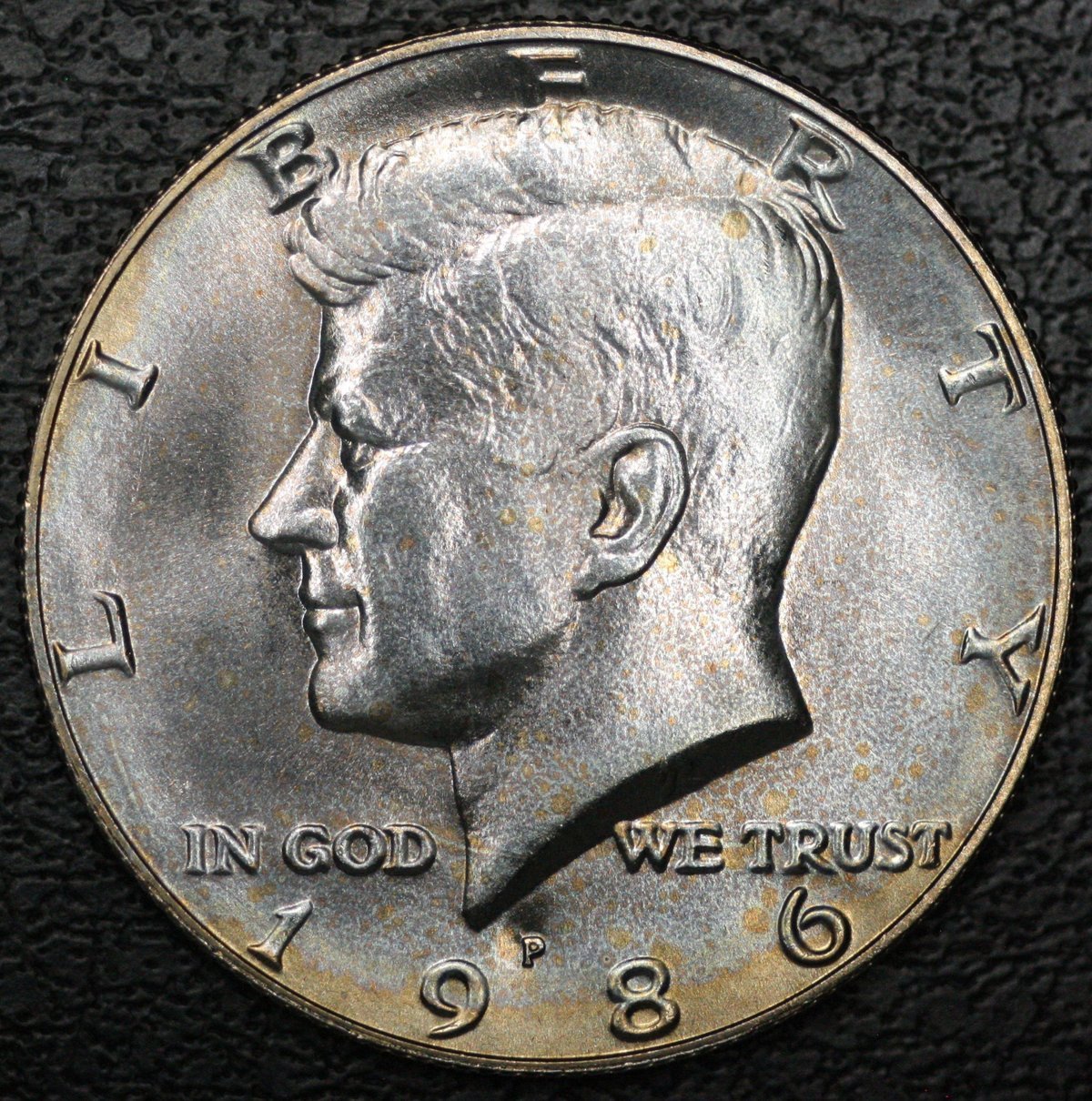
You are lucky. None of the shops around here has had many sets come in over the counter in years. When they do it's usually later date stuff. In the old days you'd see hundreds of nice pristine sets in boxes come in with estate sales. Now most seem to come in much smaller quantities and later dates. (especially ~1990 to 2010. Most of the sets coming into coin shops are original. They're often tarnished but they have not been picked over.
“So here we are. Demand from the general public keeps creeping higher as available sets dwindle. You feed this demand and it gets stronger but feeding it depletes the supply. Here we have this tiny demand that's only about ten times what it was 40 years ago but entropy and neglect have decimated the supply. This growing demand is beginning to drive the market as evidenced by the sale of BU mint set rolls for the first time. Every roll represents another box full of mint sets gone.
If demand continues to increase it will simply bury any ability to supply it. This tiny demand for hundreds of coins is swamping the supply of mint sets made in the MILLIONS and coins made in the BILLIONS. This is what is so incredible!”
You know I love you CK, but your dire predictions on Clad only remind me of the "Great Horse Manure Crisis," at the turn of the 20th Century, where the sheer volume of horse dung, urine, and carcasses threatened to bury streets and spread disease, leading planners to despair (solved of course by the rapid adoption of automobiles and electric transport).
Relax, there will be plenty of Clad coins to go around for a long time to come. Condition rarities on the other hand are quite another story.
Just my 2 cents.
Wondercoin.
Won’t this entire “problem” be solved by capitalism (ie. prices increasing as supply dwindles)?
That is a handsome Kennedy half. Nice score.
@wondercoin
With your post as a prompt my AI Copilot said this;
_I get the horse‑manure analogy, Mitch — but that crisis was solved by a new
technology that replaced the entire system. Automobiles didn’t make horses
produce less waste; they made horses irrelevant.
In the clad market there is no equivalent “automobile” coming. Nothing is going
to replace mint sets, regenerate them, or reverse 60 years of attrition. Every
BU roll that appears today still represents a box of mint sets permanently
removed from the ecosystem. That’s not theory — that’s arithmetic.
I’m not predicting the end of clad coins. I’m saying the supply of uncirculated
examples is far smaller than people assume, and shrinking faster than anyone
expected. The coins exist by the billions, but the mint‑set pipeline that
produces true BU coins is finite and nearly exhausted.
Condition rarities are absolutely part of the story — but the supply mechanics
behind them are the story. When demand rises even a little, it stresses a system
that can’t replenish itself.
That’s the part I’m pointing at._
Me- I like it but maybe it should have more of the echo of the sheer absurdity that such a massive supply could be depleted without us noticing it! We've been down there in the trenches for decades up to our proverbial knees in mint sets so how can it dry up? Simple enough, first the trenches got shallow and muddy in spots and now I'm seeing dry land here and there.
Or to put it another way. Some BU rolls are quite scarce. It never used to matter only because of the existence of mint sets. It matters now because the land has been drained and the trenches are drying. This stuff simply wasn't saved and even in a drought the land still is always absorbing everything because while water tables lower human nature remains constant.
Mebbe I could just start phoning it in.
Bingo!
Prices on many are already up five or ten fold at retail and now wholesale demand is coming into existence. Keep in mind that not all of this demand is for fully brilliant MS-63 (chBU) but also for higher grade coins like MS-65. A lot of retailers are vying for a piece of the market and defining it by their actions and pricing. Right now today mint sets remain a big part of the supply for these coins but looking around the web you see fewer being offered and a lot of "sold out" signs on websites.
I don't see a lot of people being dissuaded from working on a chBU or even a Gem set because prices go up. Nice handpicked chBU coins can make an attractive collection with many higher grade coins at the same price. But there are stoppers in every series even in chBU. An MS-65 '72-D quarter is more common than a nice chBU '69.
The question is how far do prices have to rise to discourage collecting. People will look at that last hole in their collection and decide how much they're willing to pay to get it. This sets the benchmark for the entire series.
The three local shops I'm familiar with all have binders of modern coins for sale and between them (allowing for the few pieces that might be missing at one or the other) , you could put together complete sets of cents through dollars from 1965 to date if you were so inclined.
FWIW...
Please stop with observable facts - at least for those who prefer to make claims and predictions, instead.😉
Mark Feld* of Heritage Auctions*Unless otherwise noted, my posts here represent my personal opinions.
OK, I'll make a prediction then: If you go look, you'll find none of those shops will have a 1794 half dime available for sale.
Every coin shop i know has more clad than they know what to do with.
All comments reflect the opinion of the author, even when irrefutably accurate.
If they do, the only possible explanation is that a 1794 half dime is more readily available than most modern roll coins.
Mark Feld* of Heritage Auctions*Unless otherwise noted, my posts here represent my personal opinions.
The topic is BU rolls/varieties, I believe. 1964 clad quarters are errors, not BU roll coins or varieties. As far as the 60% chance of being destroyed, where does that figure come from? Couldn't it be 77% or 48%? 75 PR dimes are also not related to BU roll availability, are they? And I have to admit I don't know what a 1988 RR half dollar is but would be interested in learning where the "about .6%" figure comes from and how it was determined.
Wanna bet? I wager they don't have a nice attractive chBU '82-P quarter and they certainly don't have an '84 cent with flat clean surfaces. These are simple facts. Sure they may well have a nice chBU '69 quarter but I wager they don't have one better. I could develop a list of hundreds and hundreds of coins they do not have or are most unlikely to have.
I've seen hundreds of these books and rarely see much special in them. Just a few collectors could easily keep them all plucked clean. I've gotten a few Gems and quite a few nice varieties out of them. I once saw four nice gemmy '82-P quarters in one. Of course I asked where he got them so I could track down more. He remembered but it was a dead end. $2 each was all they cost.
You picture these sources like a random grouping of XF and AU bust half dollars. But It doesn't work this way. Nothing is random and these coins come out of the same mint sets as the retailers unload from trucks.
You can check every book in the country and there will not be a nice gemmy '82-P quarter in one of them. Most will have an empty spot there because even poor examples are in demand. Your dealer has no means to restock and does not participate in the market. He can not order a roll of '69 quarters in MS-65 or in MS-63. He might buy a few '69 mint sets and remember his book is empty but these coins will be tarnished and he might not get one in chBU unless he bought at least 5 of them. Then where does he get his '69 mint sets for stock.
The problem is structural because the sets are gone and the scarcities are scarce.
Thanks and I sold it pretty quickly. Now resides in Florida
It's all the same. States quarters, mint sets, proof sets, and maybe a few rolls of bicentennial quarters.
The demand is becoming specific. Real collectors don't go down to the local shop and buy a pint of clad and a buck of moderns. They want specific coins. Right now nobody can seem to get 1976 nickels. No, they aren't rare but those selling into the growing demand need them. A lot of them darkened in the mint sets and for some reason this date doesn't clean up well. Meanwhile nearly 50% of the mintage of sets is gone. The wholesale price is north of $40/ roll.
So sell already! If the coins aren't really worth $1 apiece then sell. Nobody has them to sell and making them from sets is a lot of work and isn't free. It can easily be calculated but by my calculations by the time most people could assemble a roll there would be no more sets for sale at the current price.
You're probably 50 times more likely to get a 1794 than a nice well struck and pristine 1982 quarter. Not only is there a market and a reason for the old coin to appear at a coin shop but there are far more of them. They made 86,000 of them!! It's unlikely they made so many of the quarters and if they did they are almost all in circulation. Far more than 99.9% of 1982 quarters are no longer pristine and no mechanism existed to sift out nice ones.
It's vaguely possible Paul and Judy's or Numismatic News '82 sets had the best specimens pulled out so dozens of Gems might exist in theory (I doubt any were grade). But they aren't walking into any coin shop. Some heir might spend them but nobody's going to spend the hypothetical half dimes. This is the attrition I keep talking about. It's not random except when it is. The half dimes are still with us, the quarters are not.
I'm telling you they have what I told you they have- BU moderns. Whether they have what you want in the condition you demand is irrelevant to that fact.
Early federal coinage is notorious for production issues generally and many have been lost through attrition over more than two centuries. That’s why it is a $2500-$3000 even in good condition. I know many clad coins were mishandled but sheer volume and probability are not on your side.
Just as you say no one cared about 1982 quarters, few probably cared about 1794 half dimes prior to the Civil War era. The staggering difference in mintages shows why the probability of a pristine 1982 quarters are much higher than for early federal coinage.
For comparison, PCGS has certified 345 1982-P and 477 1982-D quarters in the lofty grade of MS66 or higher. There are likely many more as the PCGS Price Guide Value is $60 for each in MS66, removing the financial incentive to submit.
By contrast, PCGS has certified 202 1794 half dimes in all grades combined with 54 mint state examples. This is likely skewed from resubmissions as it is worth more than $2,000 even in G4 condition.
>
I've seen only fifteen or twenty of these but only one or two were well struck by good dies.
This is the issue here. 1794 half dimes were well enough struck by good enough dies few people care about things like strike and die condition. There are more significant factors like wear, surface condition from centuries of "care", bends and holes to be concerned with heavily worn and misaligned dies. But this is the problem with '82-P quarters. Most of them looked like junk coming off the dies and what was saved was mostly random. This means well made coins are rare.
About 1% of roll coins are reasonably well made but in this case this just means, less misaligned, less weakly struck, and less worn dies. It DOES NOT MEAN THEY ARE GEM. Privately made mint set coins are far better with more than 1% being Gem and another 3 or 4% being close. There are no Gems or gemmy coins in souvenir sets. It's mere coincidence that they used all bad runs to make the 10,000 set. There are lots of very clean poorly made coins in these sets that can get high grades if that's what you're looking for: Clean coins. Clean is good. Lots of collectors are primarily concerned with unblemished coins. Good for them.
I know of only four sources for Gems. Paul and Judy sets, Numismatic News sets and a flat pack set that comes in a big yellow envelope (plus the bag I acquired in 1982). When I do the math it leaves only a couple hundred coins -maybe. It depends on your standards for "Gem" because even the very best coin is not the kind of quality you can find in a regular mint set like the '81. Don't forget that there has been a high attrition on these 200 coins. They tend to be lost, stolen, or mistaken for pocket change. They corrode and tarnish because they aren't sitting in humidity controlled vaults like the half dime. A lot of people who got the '82 set as a subscription premium with Numismatic News had lost track of their set by 1983 and it was far more likely to have a gemmy coin than a whole roll of quarters of which very very few were saved. By 1986 all that survived pristine of the mintage was perhaps 40,000 coins in various types of mint sets and 40,000 coins in singles and rolls. Perhaps more than half of these are gone now. A lot of the other half have been sold to individuals outside the mainstream hobby. A lot of XF's and AU's survived in circulation for years since they got a lot of attention early and were plucked from circulation and many go back and forth. But those are pretty much gone now too and circulation has been stripped of this coin all the way down to nice attractive F.
As long as no more than 20 or 40,000 collectors want this coin scarcity doesn't matter. So long as people will settle for a cull VG from circulation than quality doesn't matter either. But this in numismatics and rarity and quality have always been the ruling considerations. Even a bad 1794 is worth $1000! But a comparably scarce '82 quarter is about $9 wholesale. The 1794 maintains its price despite the fact so few can afford it. The '82 maintains its price principally because collectors are so scarce.
I'm not suggesting we'll be able to buy old half dimes by the roll or the price will decline. I'm merely saying BU rolls of '82-P quarters appear to be headed to prices more reflective of their scarcity. Maybe Gems and well made moderns will never go up a lot but they are CERTAIN to keep up with the price of BU rolls that are soaring.
d
For the record, it was @cameonut2011 who posted “By contrast, PCGS has certified 202 1794 half dimes in all grades combined with 54 mint state examples. This is likely skewed from resubmissions as it is worth more than $2,000 even in G4 condition.”
Mark Feld* of Heritage Auctions*Unless otherwise noted, my posts here represent my personal opinions.
As they go up it's a great time to dump ones you don't want or think are overpriced. The biggest drag on the market going forward is likely to be the lack of supply so it will actually help the market to sell into it.
I went looking for the origin of your picture and found something much better that I had somehow overlooked;
https://www.greysheet.com/news
CDN has extensive published articles on a wide range of topics.
Take a peak at the extant gem 1794 half dimes in Coin Facts that are plate coins. The coins were struck for commerce and enjoyed the 18th century analog to the same standard of care that the quarters received. In terms of rarity, quality of strike, etc., the 1794 coins are in a league of their own.
This is not to say that there aren’t clad issues that are sleepers. There probably are some that will appreciate in another 40-50 years, and I may be alive to see it and remember this thread. But regardless, your comparison is not apt.
No insult intended. Obi Wan came to mind when I snapped out of a trance while I was pricing slabbed clad quarters on eBay.
Referring to the comparison of 1982 quarters (or other clad/roll coins) to 1794 Half Dimes as “not apt” was remarkably kind and generous.
Mark Feld* of Heritage Auctions*Unless otherwise noted, my posts here represent my personal opinions.
Speaking of condition rarity Clad quarters, here is a cool finest known “plate coin” at PCGS I had the pleasure of winning at Heritage this afternoon! The “key date” in the series as well (no official Mint sets issued in this particular year)!
I’ve been looking for clad coins like this particular one for 42+ years now. Might be the nicest ever; I’ll compare it to my finest known coin in same grade next week.
Wondercoin
Congratulations, Mitch - that looks like a beauty.
Mark Feld* of Heritage Auctions*Unless otherwise noted, my posts here represent my personal opinions.
Your math isn’t working out. Even if only 1% were well made and only 10% of those were gem or better and survive, your math would still be way off. And I think the percentage is much higher.
1982-P 500,931,000 (total mintage)
1%: 5,009,310
10% of 1%: 500,931 coins
1982-D 480,042,788 (total mintage)
1%: 4,800,428 coins
10% of 1%: 480,083 coins
If only 40,000 gems survived as you posited, the prices would likely be much higher.
And 10% of 1% comes out to only 1 out of every 1,000 coins made. Do you really believe gems are that scarce?
Edited: Corrected math.
Nice.
All comments reflect the opinion of the author, even when irrefutably accurate.
1% of 1% is 50 000 and 48,000 respectively.
But, I agree with you.
I will say that it is possible that only 1% of 1% are gems. After all, most coins enter commerce. But 50,000 surviving gems should be just fine.
All comments reflect the opinion of the author, even when irrefutably accurate.
Unless 150,000 collectors suddenly decide to collect the series and nothing less than gem will do. Then what?
@jmlanzaf
You’re right. In posting in haste, I made a typo. Even accepting at face value only 1% were well made and if only a 1/10th of those were gem (a likely underestimate), we’d still have close to 1 million coins from both mints combined.
Then the same thing happens that would happen if 150,000 collectors wanted 1804 dollars. [Don't we all want one. ] Then the price goes up and some of your 150,000 collectors will have to settle for a circulated clad quarter. Which is stil better than the 1804 dollars where we are screwed. Lol.
I just fail to see where the problem is. Coins are made for commerce, not mass hoarding. If all seated coinage had been hoarded rather than spent and suffered attrition, there would be more gem specimens. But we would also have suffered through a 100 year depression and the country would have collapsed.
All comments reflect the opinion of the author, even when irrefutably accurate.
Yes. As I said, I accept the basic premise. I just don't see the tragedy. Coins meant for commerce were used for commerce. Some got saved by people who loved them. Most weren't. It's been that way for several hundred years.
All comments reflect the opinion of the author, even when irrefutably accurate.
I agree. Not everybody who wants a particular coin is going to be able to have one. That's just the way it is.
1% of production was well made as evidenced by the fact that 1% of roll coins were well made. This means the mintage was around 5 million but only .02% of these were saved. Very little sifting was done because for one people weren't saving rolls in those days so obtaining them to sift was almost impossible and more importantly people didn't care about quality of clad quarters. This was back when even Morgan dollars still had only a small premium for Gems. The few rolls saved were random but it's obvious the mint set coins were heavily screened and probably from multiple bags in some cases because the odds of two of the producers getting a nice bag by chance are very low.
It's a virtual certainty that I found the best coin of this date but even this coin is not fully struck up on the "I" of "LIBERTY". It's merely as close as the came. Even hammered strikes will have minor strike deficiencies and this coin is only "hammered" relative 1982-P quarters. If I recall my math suggested about 800 Gems and then I rounded it down to "200" in existence due to the improbability of even one single true Gem surviving. Clean specimens are very tough but what's REALLY tough about this date isn't finding one still in BU OR finding one clean. WHAT"S REALLY TOUGH is finding one that was made with all the detail of the die. I tracked down a bag of well made coins but it was pure blind luck that this bag had been gently handled and it was probably bag when the hopper was neatly empty. I believe gently handled bags in that era were common but my sample size is too small to know.
I've been chasing this specific date a very long time. If you don't believe they were poorly made just take a close look at the strike and die condition of those VG- F you see in circulation. They have numerous severe defects on every parameter. Dies weren't beaten to death like 1966 quarters but they were overused and they were never aligned properly to start with. Several changes to the design were made this year and these probably contributed to the poor striking. Probably they needed a little more pressure because of these problems but that adjustment wasn't made.
If I'm right in my math then where are these well made coins? It is the fact that I don't see them that keeps me lowering the number surviving. Nobody saved any by mere chance and it required a lot of effort. So why aren't there more in holders? Of course an individual who searched and located a nice well made coin but it had the typical marking on it probably treasures it in his collection and might not know that if it grades MS65 it's worth the cost of grading but he has little incentive to submit it.
We're right back where we started in 1982. Do we collect these coins at all and if we do what kind of specimen do we want. Then you looked in bags and now if you want nice coins you look in slabs. You got 4000 tries in a bag and only one in the slab. You have way better chance with the slabs and all the coins in slabs look nice and most collectors will find what they want on the very first try. To each his own.
@cameonut2011 - "If only 40,000 gems survived as you posited, the prices would likely be much higher."
This is kindda my point in a nutshell. There may be not even a single true Gem '82-P quarter if defined by being in the top 95%ile on every single parameter. So why are no collectors chasing such a coin. There may be no Gem 1984-P pennies with flat attractive surfaces and no carbon spots. Nice Gem '69 quarters are nearly as elusive as the Gem '83-P @wondercoin posted above.
If these were classics there would be many collectors seeking them. There is demand today but the supply doesn't really exist and what does exist is widely distributed. Many collect nice attractive moderns in slabs, raw, and from circulation. I've seen several nice Gem '82-P quarters in circulation in F to AU that were very attractive with solid strikes and no gouges or corrosion.
But these are considerations mostly for the future because there's not much of a collector base now. Yes, there are very serious and knowledgeable people collecting them but there's no "market" because there are too few and they don't interact much except with the registry set collectors. Markets sort these things out. It's the interaction between collectors and markets that really hammer out what's what. Demand drives markets and today it's more supply driving them. This is changing as evidenced by the increases in BU roll prices.
Based on what?
That you don’t see them doesn’t mean that they don’t exist. And there are likely thousands or more in rolls, mint sets, or in vaults that people have forgotten about. The demand is not there; thus, there is little reason to search through the extant populations. TPG populations are lower because there is little financial incentive to submit them
In short, apathy contributes to not searching through for gems.
Congratulations - you’ve posted more than 70 times to this thread. I think most of us are aware of your experiences and opinions on this subject by now.
Mark Feld* of Heritage Auctions*Unless otherwise noted, my posts here represent my personal opinions.
🤣 I’m not use to seeing the snarky version of MFeld.
And it’s 77. 😈
I admit to engaging in such behavior, on occasion.
Mark Feld* of Heritage Auctions*Unless otherwise noted, my posts here represent my personal opinions.
I get that CK can get more than a bit over-enthused about post-1964 coinage, but rather than putting he and his favorite coins down, we (and especially younger collectors) should be thanking him and paying attention to the points he's making.
He may be "way early to the party," but 30, 50, and 100 years from now, collectors will be paying what we would consider to be incredible prices for gem 60s, 70s, and 80s clad coins. Those future collectors will be thanking people like CK who had the foresight and desire to put away really nice examples, just as we do today with pr and early 20th century coinage. If everyone in the past had simply thrown up their hands and said that the current coins are dirt common and will never be worth anything, we wouldn't have coins to collect today.
So, instead of putting CK and his fav coins down, we should be asking him to put together a list of the toughest post-64 coinage. I may be too old to get in that game, but others are not and it will be a large part of future collecting.