PCGS Mistake... 1812 50C NOT Double Struck
 jacrispies
Posts: 1,399 ✭✭✭✭✭
jacrispies
Posts: 1,399 ✭✭✭✭✭
Saw this lady on Ebay. Bust half errors are my main interest of study. This double striking effect apparent only on the face of Liberty (highest point on obverse) is the result of a great shift between the dies causing extreme machine doubling. Notice there is no other evidence of doubling on any other devices. Although this example is dramatic and could sell for a small premium, it is not a mint error and not double struck. Seller had this coin listed two days ago for $15,000, lowered it to $14,000, then ended the listing for an unknown reason.


Here are a few other examples to compare with. I believe 1813 is the yeardate with the highest machine doubling casualties.


"But seek ye first the kingdom of God and His righteousness and all these things shall be added unto you" Matthew 6:33. Young fellow suffering from Bust Half fever.
BHNC #AN-10
JRCS #1606
Comments
If the doubling is caused by a die shift during striking, wouldn't this still qualify as an error? It's a miss struck coin.
Good thought. Technically, since it is unique (unlike a repeated variety), it could be categorized as a mint error. I would make the case that it shouldn't be in a mint error holder for consistency sake. Imagine all the lincoln cents that exhibit machine doubling in PCGS mint error holders...
"But seek ye first the kingdom of God and His righteousness and all these things shall be added unto you" Matthew 6:33. Young fellow suffering from Bust Half fever.
BHNC #AN-10
JRCS #1606
The obverse is “double struck” technically, but it is a different mechanic and there is a big difference in value. Many similar coins in holders are not marked double struck as @jacrispies shows.
Ex Peterson 1813 Reverse is perfect.....
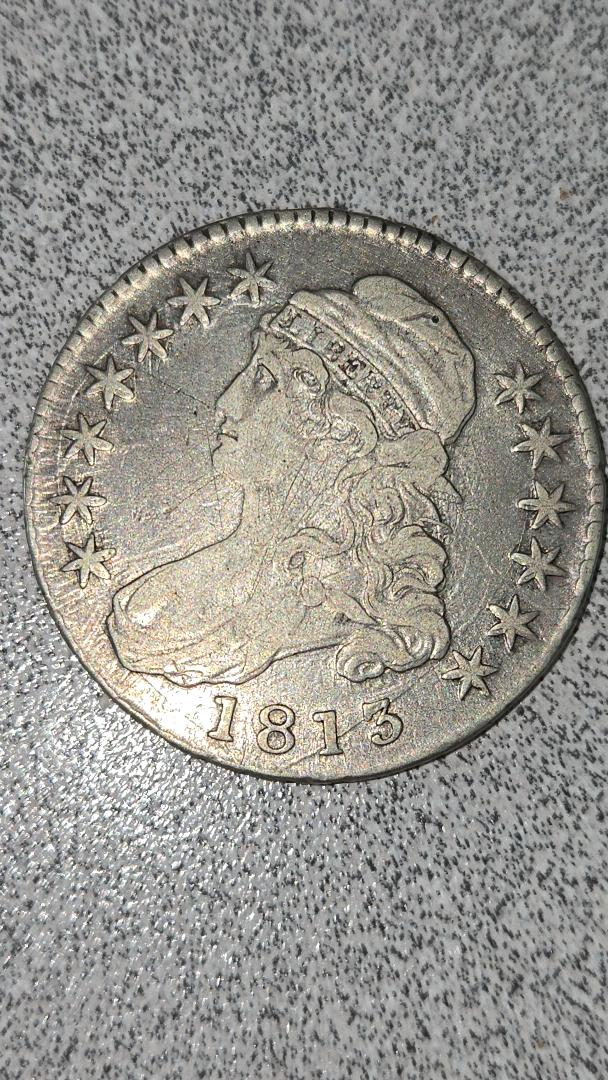
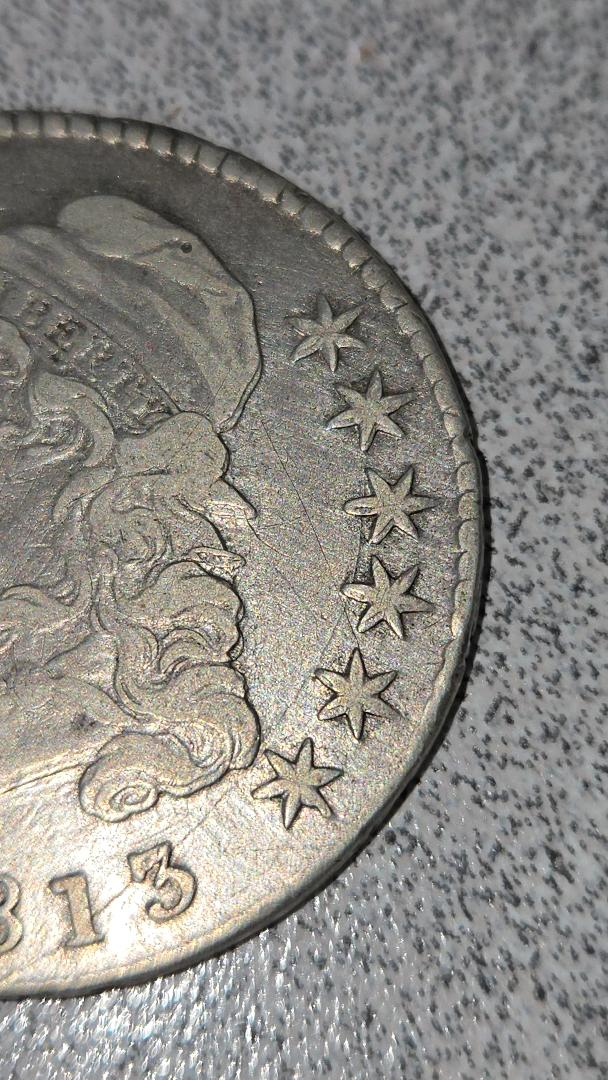
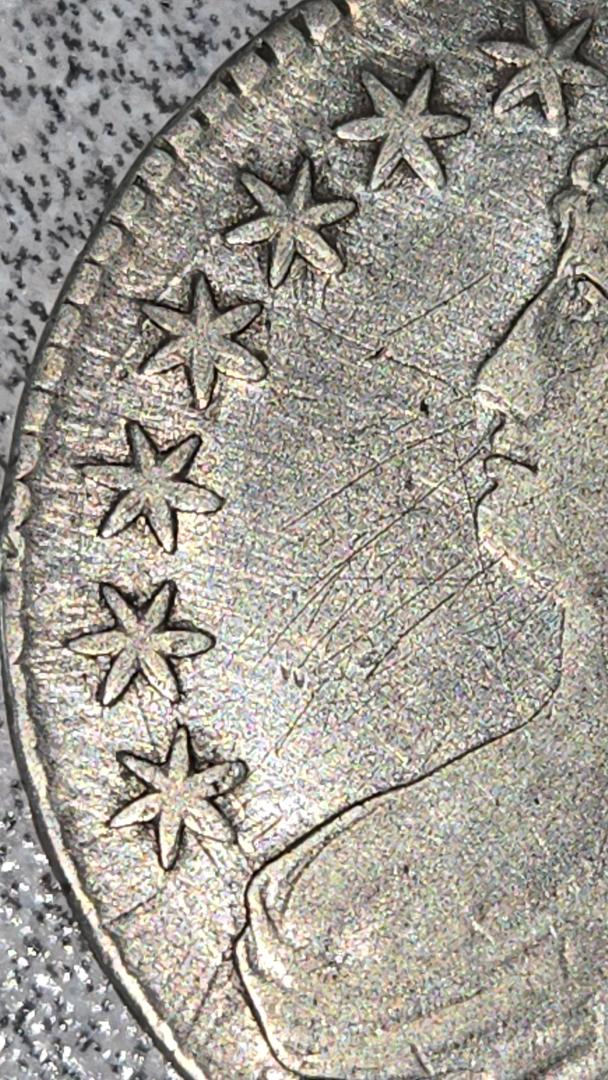
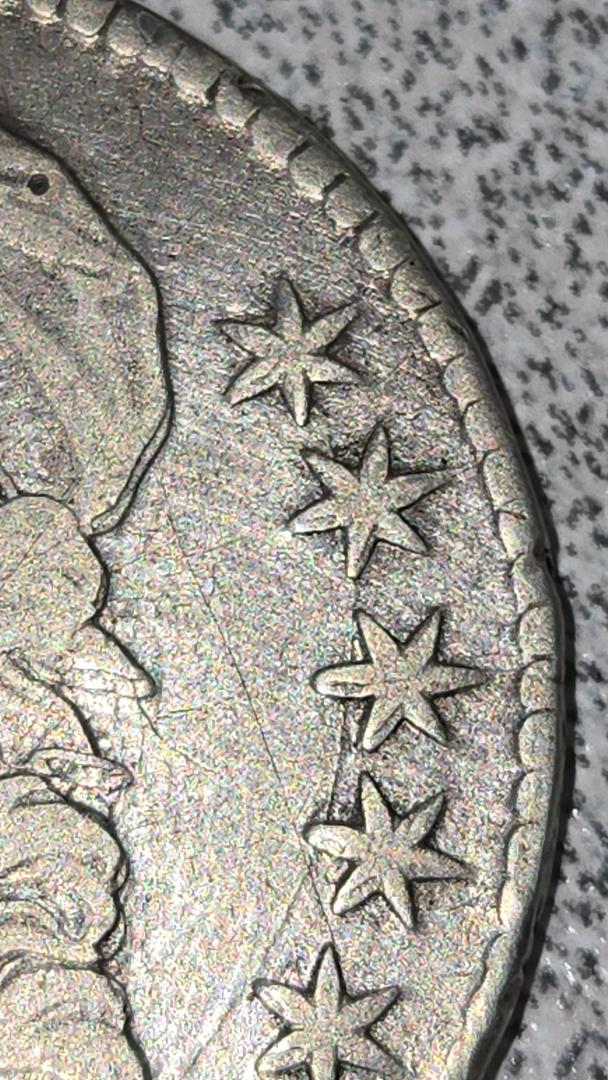
I wish they would have named it the “double chin” variety!
"She comes out of the sun in a silk dress,
running like a water color in the rain...."
That looks like the clearest case of a PCGS warranty claim I have seen in several years. What is shocking is someone clearly paid for the Mint error service and the reason it takes so long is many(all?) of them are sent to their SME.
11.5$ Southern Dollars, The little “Big Easy” set
Coin tracked to this dealer via youtube, September 6th, 2025 who claimed the coin is in his personal collection.
"But seek ye first the kingdom of God and His righteousness and all these things shall be added unto you" Matthew 6:33. Young fellow suffering from Bust Half fever.
BHNC #AN-10
JRCS #1606
I have seen this on other PCGS coins also. Calling major machine doubling, die shift doubling, or die bounce doubling as “double struck”
If it’s large enough, is machine doubling or die shift doubling a legitimate double strike? After all, at least one of the dies did hit the coin twice…
Any sort of bouncing would be pronounced. Because the die kept level and shifted horizontally, this can't be considered a double strike. Evidence lies in the flat but shifted devices, hence the term "shelf-like doubling."
"But seek ye first the kingdom of God and His righteousness and all these things shall be added unto you" Matthew 6:33. Young fellow suffering from Bust Half fever.
BHNC #AN-10
JRCS #1606
@jacrispies Im not sure what you mean in your prior post. Are you saying that the coin in the OP can be created with a single impact of the obverse die?
My impression of the mechanics was that the die descends a single time, but being loose it “bounces or rotates” during the strike on rebound and hits the planchet again.
Yes, as far as I understand, machine doubling happens on one impact of the obverse die. What is seen on bust halves is a radical version of it, being the shelves and shifting are larger.
A double strike or any kind of second vertical impact would make a clear second set of devices.
"But seek ye first the kingdom of God and His righteousness and all these things shall be added unto you" Matthew 6:33. Young fellow suffering from Bust Half fever.
BHNC #AN-10
JRCS #1606
@FredWeinberg
I want to agree. I don't know if i can. Lol. I'm not sure how much of it is semantic and how much is a real difference. That is rather extreme separation in the mouth region. The die must have bounced and "struck" twice.
All comments reflect the opinion of the author, even when irrefutably accurate.
That is essentially what I find when searching for machine doubling. There are various forms of it also. I believe the OP is the one errorRef.com is calling push doubling. Here are some links and a quote from and old article (1999).
Machine Doubling (errorRef) with Push Slide and Rim restricted
https://www.error-ref.com/machine-doubling/
Push doubling errorRef link
https://www.error-ref.com/push-doubling/
From old pcgs write up:
https://www.pcgs.com/News/Collecting-My-Thoughts-Understanding-Machine-Doubling-Damage
From the very first, attempts were made to claim that doubling was caused by the die twisting at the moment of impact. A little thought will discount that theory, because you are dealing with a die which is meshing with the forming design on the coin under 25 or more tons per square inch of pressure. The amount of force needed to rotate the die under those conditions would run into the thousands of tons. If such a force were available, it would shove the entire design out of position. MDD always affects only part of the design, so this cannot be the cause. To prove my point, hold your hands together, with your fingers interlaced. Now, try and move one hand sideways without moving the other.
The evidence is very clear that MDD occurs after the strike. The coin design is complete, meaning the die pair has done its job. The bouncing/chattering die moves metal that has already been formed. Struck metal has a different appearance than the metal shoved or moved by the bouncing die. Because of this difference it is possible to trace anything that occurs during the minting process. Anything that happens after the strike cannot be traced as to time or place.
https://youtube.com/watch?v=hYCRaWPlTIE Sophie Lloyd, guitar shred cover of Panama (Van Halen)
https://youtube.com/watch?v=dOV1VrDuUm4 Ted Nugent, Hibernation, Live 1976
RLJ 1958 - 2023
they don't have machine doubling like that. When I first look at it, I think it is a die error, like the die has been struck by another die, a clash. But if that would be the case, we would see more than one example and Busties are variety crazies and would had recorded it by now. That coin looks like it was struck twice, not just machine doubling.
That coin looks like it was struck ONCE and then THEN the die lifted up and struck again. That is not just movement that is part of the striking process itself which causes machine doubling.
Quoting the second error reference website above on push doubling:
New collectors will often mistake common push doubling as being a doubled die or a in collar rotated double strike.
This source entails that push doubling does not act as a second strike.
If we need to compare this double profile example to double struck examples, I can take photos of some of my genuine double struck halves. But machine doubled vs double struck examples are shown in this article mentioned earlier:
https://www.error-ref.com/push-doubling/
"But seek ye first the kingdom of God and His righteousness and all these things shall be added unto you" Matthew 6:33. Young fellow suffering from Bust Half fever.
BHNC #AN-10
JRCS #1606
This multi-struck coin pictured below, having that "double profile," clearly is a double struck coin because all the devices are affected. One thing all centered double struck bust halves exhibit are saw-tooth dentils, clear split doubling around the periphery.
This is clearly different than the machine doubled examples above.
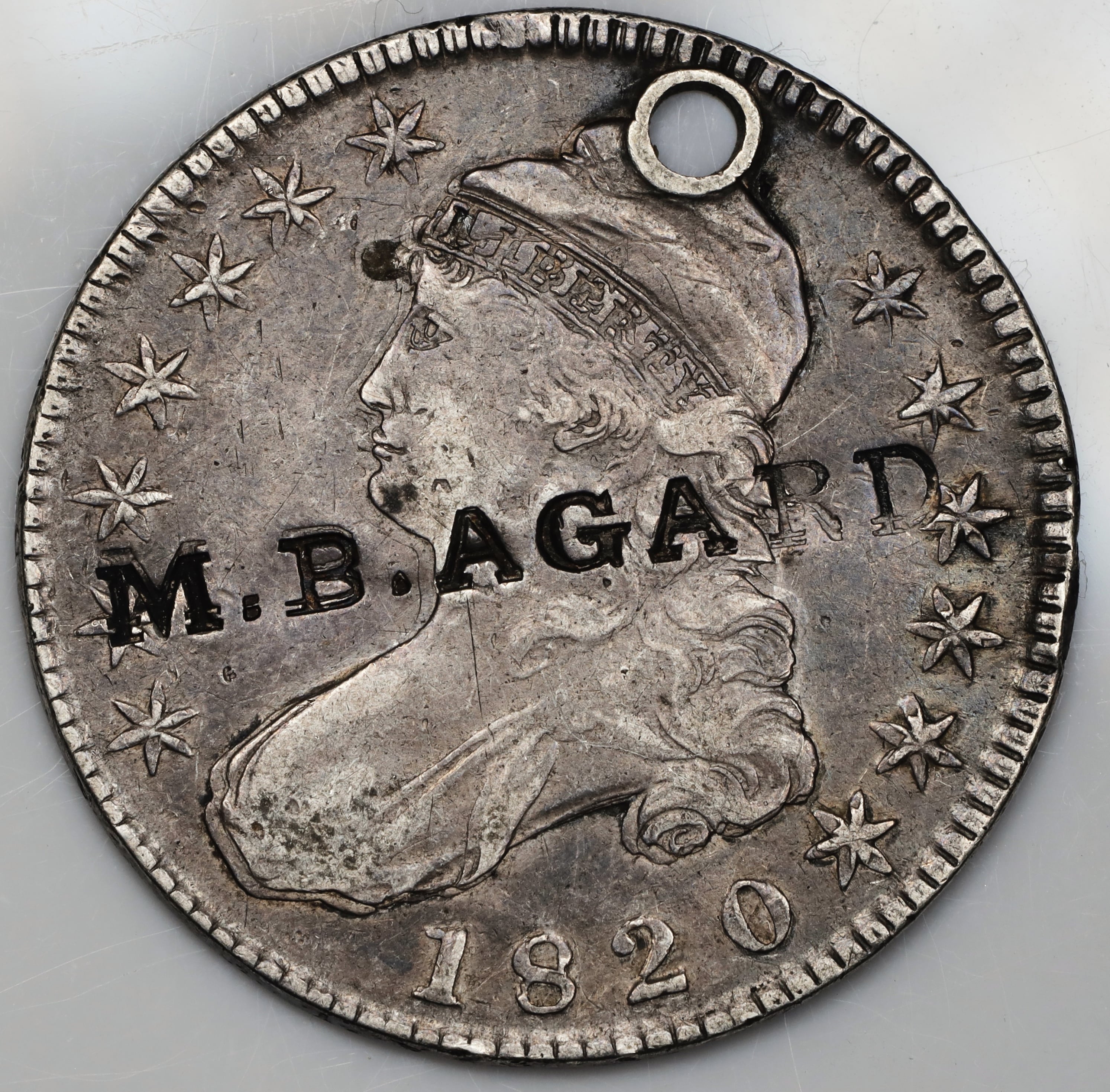
"But seek ye first the kingdom of God and His righteousness and all these things shall be added unto you" Matthew 6:33. Young fellow suffering from Bust Half fever.
BHNC #AN-10
JRCS #1606
@jacrispies Yes they are clearly different. Your holed example definitely shows two separate strikes.
Conversely, I think the OP example is a single strike, but two impacts from a loose obverse die. The first impact impressed the obverse details properly, but then the loose die “bounced” and created a shallow second impression at the highest relief area. I’m not able to explain the results otherwise.