Options
Care for an Unboxing? Another addition to the MacNeil medals
 Weiss
Posts: 9,942 ✭✭✭✭✭
When you're a box of 20 collector, you come up with all sorts of ways to rationalize additional purchases 
If you've got what you feel is the finest silver 1901 MacNeil Pan American Exposition medal, well then it should be fine to have that anchor hold down the bronze and the gilt version, right? I mean, they're kinda the same thing? And if you can own the bronze, silver, and gilt of the 1901, then maybe it's ok to get this one as well?
You know that if it's wrapped in cut up bread wrappers, it's going to be good 
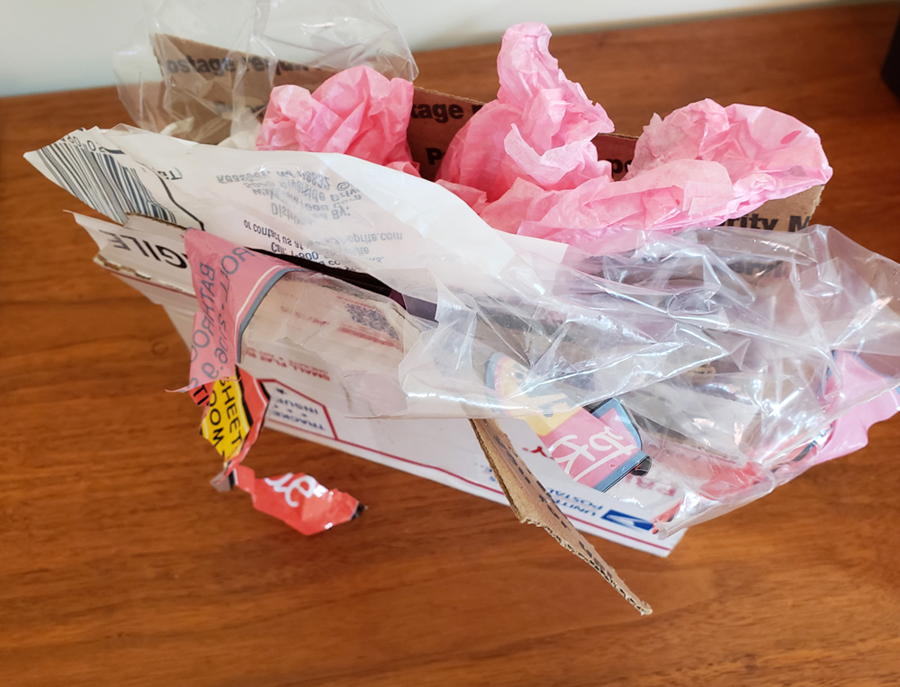
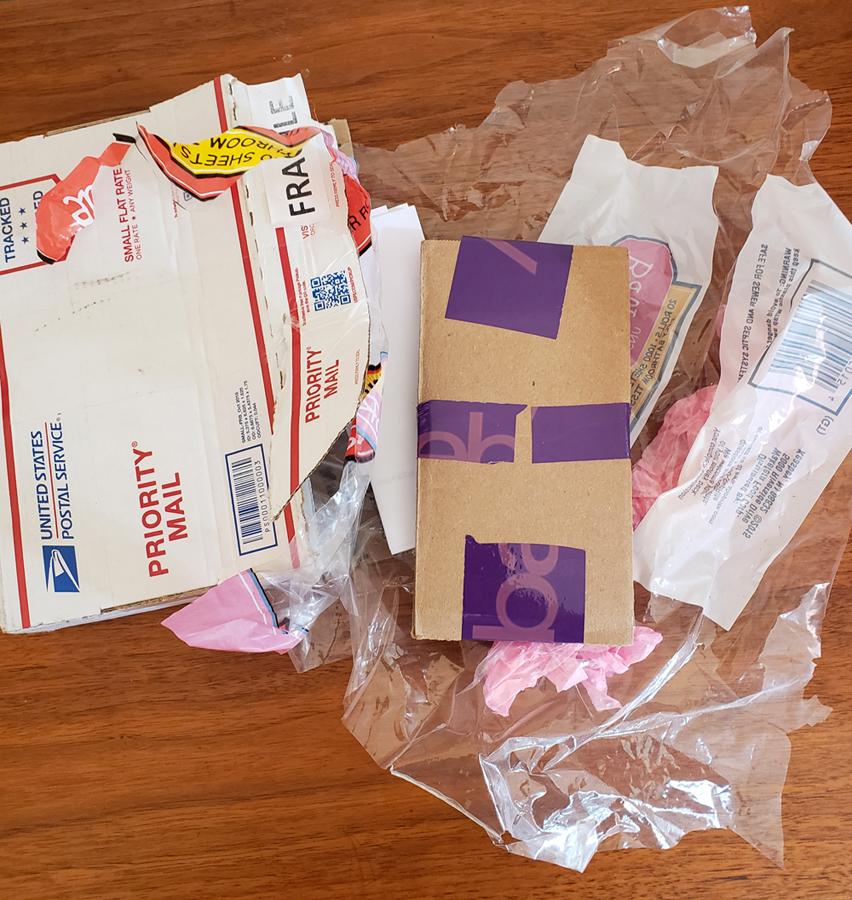
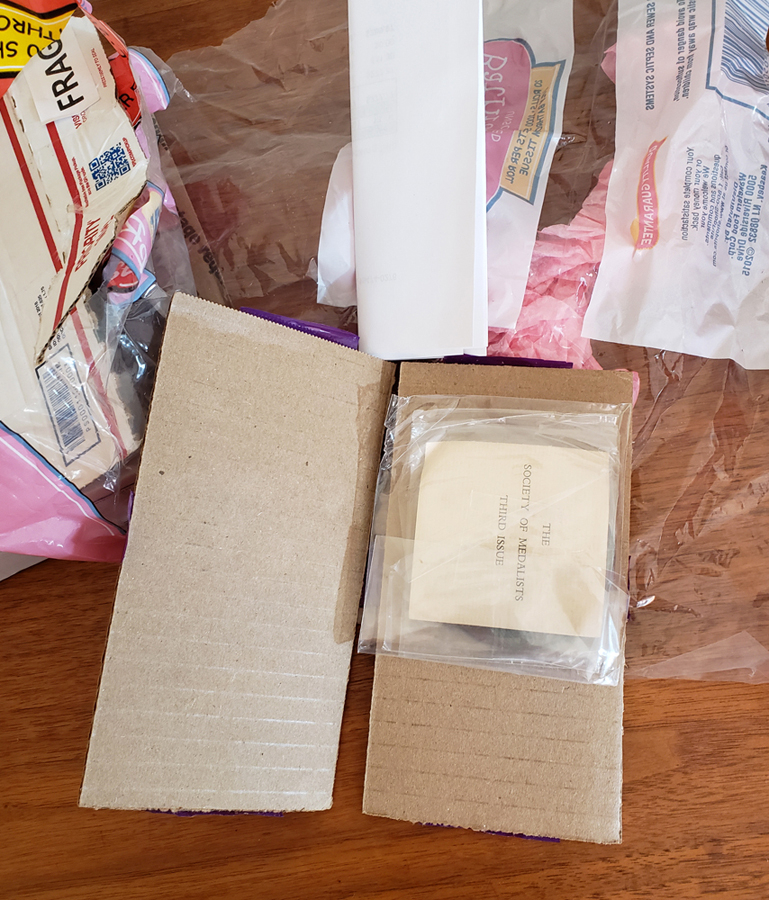
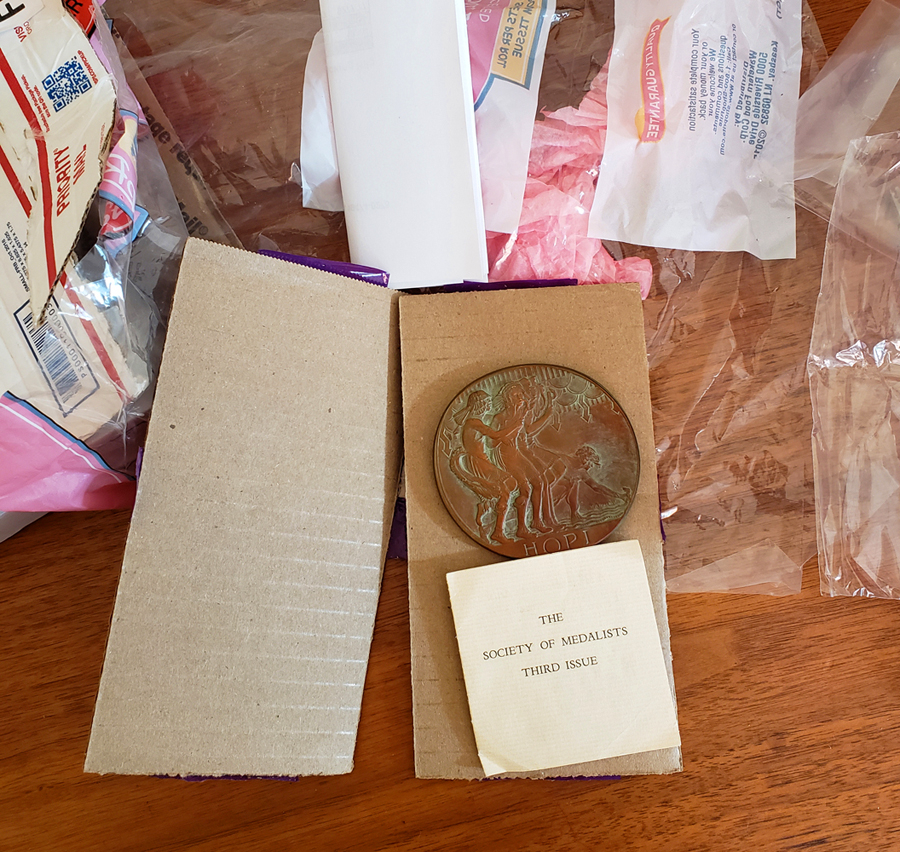
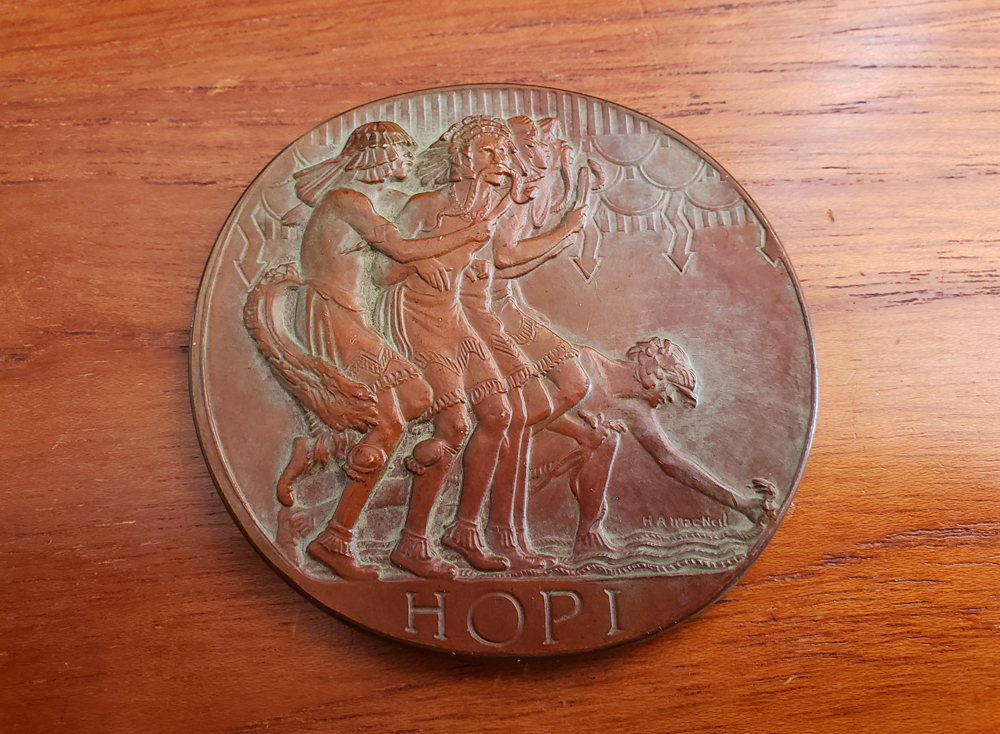
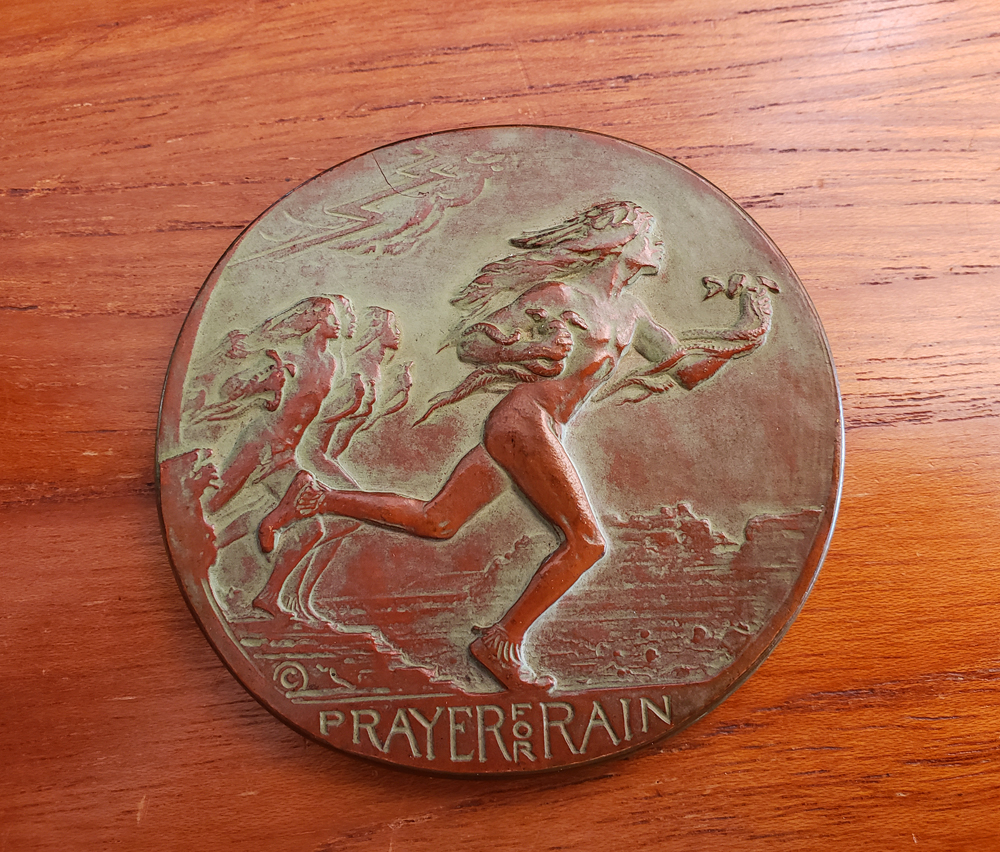
The Society of Medalists third issue (1931)
Hermon A. MacNeil
SOM-3.2
Baxter 354 Marquesee 251
74mm x 70mm AE
Edgemarked: The Society of Medalists Third Issue / Medallic Art CO. NY.
We are like children who look at print and see a serpent in the last letter but one, and a sword in the last.
--Severian the Lame
--Severian the Lame
8
Comments
Compare and contrast with MacNeil's 1896 "Moqui Runner / Moqui Prayer for Rain / The Returning of the Snakes" and also the 1901 Pan American Exposition medal by MacNeil:
--Severian the Lame
Love that one. Congrats.
@Weiss.... Beautiful medal....and interesting unboxing....Cheers, RickO
The patination on your medal is much more extreme than the pictured example in "American Art Medals 1909-1995 by David Alexander. The book mentions that there are four notably different patinations on this issue. I would classify yours as a type 4, intense sea green. I wonder if the original buyers could pick what patination they preferred?
Glad the above comment was posted because I was curious about the patina and wondered if it was acceptable...or some type of verdigris.
On another note, on eBay shipping, there should be a whole thread on unusual packaging methods... Some people craft their own boxes from larger boxes, some cover it in dozens of old postage stamps, others stuff it with whatever is at hand... I love the ingenuity of humankind.
He who knows he has enough is rich.
I have to be careful looking at these. I checked others by the seller and the Anna Hyatt Huntington Africa medal almost got me, but I just don’t need to go down that rabbit hole.
I corresponded with Alex (MedallicArtCollector) about which of the four versions of patination this medal represents. He agreed that it was 3.2, or the "light tan with sea green highlights" as shown in Alexander. I'm open to other opinions, though. Here's MedallicArtCollector's take. His website is a real treat:
http://medallicartcollector.com/hermon-a-macneil_biography.html
--Severian the Lame
Having looked at the images on medallicartcollector's site I agree that it is a SOM 3.2 and not a 3.4 as I had originally thought. Apparently the 3.4 variant has sharply squared rims and yours does appear to have beveled rims. Your example appears to be a very well cared for example that has seen little handling over the years. The Alexander book gives the total production for the issue as 1,713 bronze and 25 silver. No breakdown by patination type is given.
Regardless of what type your medal is it is a great find and a very handsome piece!
This is one of my favorites of the series. Did MAC accept orders for this well after 1931 and is the 1731 minted the cumulative total or just original orders?
Experience the World through Numismatics...it's more than you can imagine.
MedallicArtCollector told me that the total mintage across all bronze finishes was 1731. So while I suppose orders could have come in later, they wouldn't have impacted that cumulative total.
I would be very interested to find out what the breakdown was by finish, and if MacNeil had anything to do with the patination himself. I suspect applying finishes to bronze requires "A very particular set of skills". But it would be neat if MacNeil had been involved to any extent.
--Severian the Lame
I bought the example I currently own about 5-6 years ago. The finish on mine is fairly light
Experience the World through Numismatics...it's more than you can imagine.
As a sculptor MacNeil would have been well versed in the patination process. My guess is that he was involved but may not have done the actual patination himself. I wonder if the different patinas represent different production runs for the medal? If these were struck over a period of time this could have been the way the various runs were distinguished from each other.
Nice I like
That was hot!
Several others in the series also used the green patination process - I have a wonderful Great Lakes example that has happened to avoid being added to my active inventory. For those interested in the different finishes used on the SOM medals, check Alex's on site listings (linked above): Series & Collections > Society of Medalists > Variants