Options
Buffalo Nickel - Question Regarding Surface
 JoeLewis
Posts: 1,913 ✭✭✭✭
JoeLewis
Posts: 1,913 ✭✭✭✭
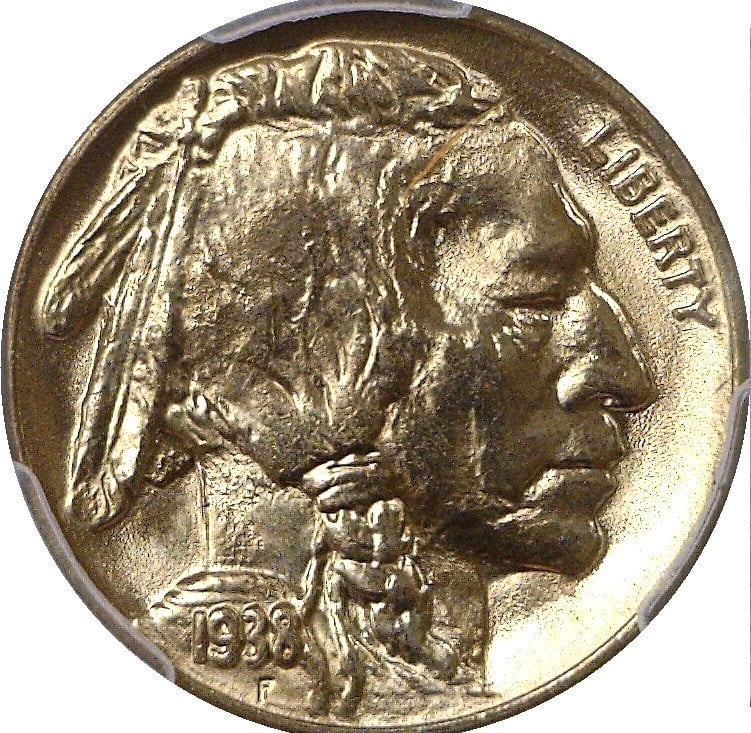
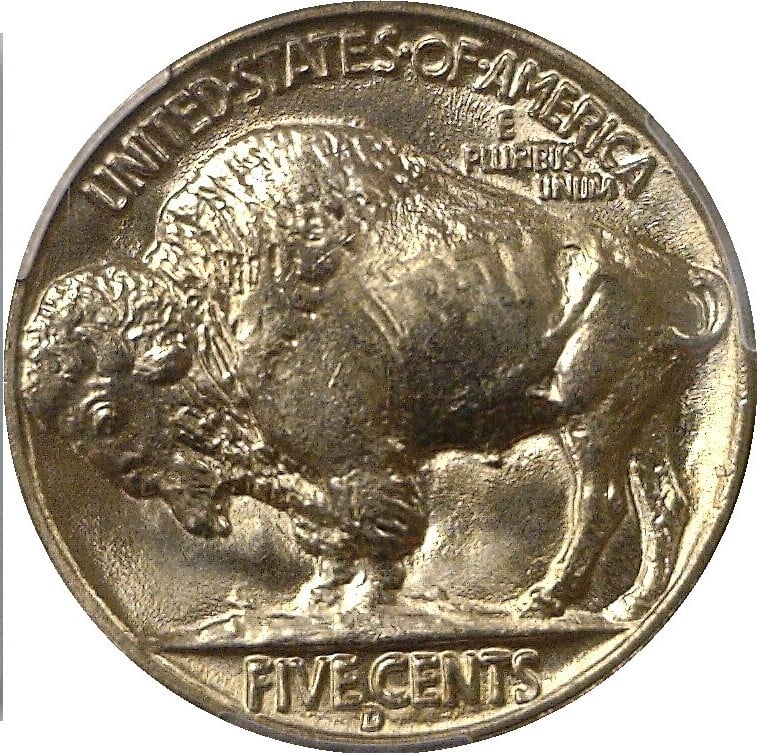
Hi everyone. I'm trying to learn a little more about strike and die state. When looking at this nickel I see roughness on the neck, hair details, and some on the Buffalo's body. Is this due to strike, later die state, design, or something else? Thanks!
US and British coin collector, and creator of The Ultimate Chuck E. Cheese's and Showbiz Pizza Place Token & Ticket Guide
1
Comments
I will let the experts weigh in here, but the strike looks pretty good to me.
Nice looking coin!
Very nice buff! Nice horn and tail
Maybe just a touch under the typical strike for the date but still a good strike overall. There appears to be some die erosion so it would have to be considered a late die state. Not too bad, tho-really late die states are unusual for the '38-D.
What does the holder say?
That's what I'm trying to learn. Is the die erosion the stuff on the neck?
US and British coin collector, and creator of The Ultimate Chuck E. Cheese's and Showbiz Pizza Place Token & Ticket Guide
MS67
US and British coin collector, and creator of The Ultimate Chuck E. Cheese's and Showbiz Pizza Place Token & Ticket Guide
Also, I would never have guessed this was a below average strike for the date! I know 38-Ds are usually struck very well, but I thought this one was a little above average strike. I need to study more of these.
US and British coin collector, and creator of The Ultimate Chuck E. Cheese's and Showbiz Pizza Place Token & Ticket Guide
More so the flow lines in the fields than the roughness on the neck (this is common on most dates-I believe it to be a die clash.) Flow lines and, in some cases distorted lettering are indicators of an advanced die state. I will try and find some images illustrating this.
Thanks!
US and British coin collector, and creator of The Ultimate Chuck E. Cheese's and Showbiz Pizza Place Token & Ticket Guide
Here is a 1938-D obverse which is the typical well struck coin. Note how the hair detail directly above the braid ribbon shows some detail in the hairlines.
And here is the typical well struck reverse (same coin as above) with perhaps a slightly above strike. Note the excellent detail on the bison's shoulder that extends down to the upper leg and the near full detail on his head.
Your coin shows slightly less detail in these areas. Remember-the '38-D is typically very well struck.
It's a worn die.
jom
The top coin is a very late die state coin whereas the bottom coin is from an early mid die state. What a difference!
Thanks for the visuals!
US and British coin collector, and creator of The Ultimate Chuck E. Cheese's and Showbiz Pizza Place Token & Ticket Guide
Those are both Mint state coins. Notice how the underdigit on the EDS coin is so much clearer than on the LDS coin. As I've said many times before-die state is critical on doubled dies especially and it's also important on regular issue stuff, too.
It's hard to visualize how a clash could show up on an incused area of a die but here is clear evidence that it does happen. The neck and hump can be clearly seen on the Indian's neck and adjacent field on this coin.
Here's an overlay of the obverse die. This is from a properly aligned die. On Buffalo nickels, the reverse was the hammer die and the obverse was the anvil die.
Thanks!
US and British coin collector, and creator of The Ultimate Chuck E. Cheese's and Showbiz Pizza Place Token & Ticket Guide
@koynekwest.... Great overlay... these can be very helpful, especially to new collectors. Cheers, RickO
Thanks, ricko!
Here's one of the reverse. It wasn't unusual at all for the dies to clash when there was die rotation. The end result will be different when that occurred.