What can PCGS, NGC & ICG & ANACS do to help improve the spotting problem on Silver Bullion Coins?
 GRANDAM
Posts: 8,785 ✭✭✭✭✭
GRANDAM
Posts: 8,785 ✭✭✭✭✭
OK, I know there will be those of you who say NO WAY this will work,,,, you will cut me down and find a hundred reasons to fault this but everyone told the Wright Brothers they would never fly,,,,, they said an automobile will never replace a horse,,,,they said a man will never walk on the moon and return safely to earth, but all of these things happened, Surely we can improve the spotting problem on .999 silver bullion coins.
My suggestion is no big secret,,,,, lots of people do it. You ask why would a 3rd party grading service want to be bothered with this? The answer is to improve brand quality and reduce the number of problem coins floating around in their holders. Like it or not, wether it is the grading company's fault or not (which it isn't) problem coins in anyone'e holder hurts the brand name. Sure have a disclaimer saying it (spoting) can happen but you still have problem coins floating around in your holder which only hurts your brand.
My suggestion is to process all all silver bullion coins by soaking them in acetone for an hour or so. I do this and have for years and have had no spotting problems since doing this.
You don't have to pay a $150,000 per year employee to do this. Hire an entry level person for $20 / hr or whatever the going rate is in California to do this. Set up a special area so you don't blow the place up but I am sure they already use acetone to some degree so they know how to handle it. . Have sealable containers of various size to put orders in. You could have custom trays made that hold 50 or more coins in individual slots so they don't bump each other. You set the trays in the custom tub filled with acetone. Have drain holes in the tray bottoms. Have a stand made where you sit the tray down and the coins are pushed up and you grab them and put them back in the tube. You set-up a soaking process, have proper ventilation,,,,, wear surgical gloves when handling the coins and no finger prints will result from this process. It CAN be done if the motivation is there. What is your brand worth to you? Don't start more than you can finish in one day. Even if they soak for a day or two acetone won't hurt them. Make this a part of the process and it won't affect the graders.
OK, you say this will add costs and slow down the grading, sure it will but what is your brand repuation worth? I would make it MADATORY on certain bullion coins that have these problems such as Silver Eagles, Maple Leafs, Panda, Kookaburra's Krugerrand's and all modern bullion coins that are .999 silver. I have never seen a spotting problem on 90% coins but I know occasionally one does but I have handled hundreds of 90% coins and can't recall a single one spotting like .999 bullion does.
OK, you say this is cutting into profits and it will so charge a nominal additional fee of $1 - $2 per coin. When this starts happening note it in the terms of service stating this is done to significantly reduce the chances of it happening. You don't have to guarantee it and make that clear. One person can surely do more than enough coins during a day to pay his salary at the additional charge of $1 - $2 or even $3 per coin and it could be a money maker not a loss to the company. If more than one person is needed hire them. I believe the fee could be easily made up to the submitter when selling the coin and stating the coins have been treated. Also one coin prevented from spotting could easily pay for 25 or more treating fee's. I for one would gladly pay the added cost for this SERVICE.
Would this be a hassel and cost some money to start it up? Sure it will but it can be streamlined to be done quickly and efficiently and again,,,,,,, WHAT IS YOUR BRAND REPUATION WORTH.
I believe the first third party grading company to do this would take a HUGE lead in modern silver bullion coin grading.
PS,,, don't forget to give me a finders fee for the suggestion.

Comments
To implement your idea would cost at least $250,000. You can't use acetone in an unventilated room. Unless they have a vented chemistry lab already, they'd have to build one.
That's not necessarily a game stopper, but....
Personally, why not allow spotted coins to be 70s. Then they have no problem. I toned 66 doesn't become a 65. If you consider the spots to be NT, why should a spotted 70 not still be a 70?
All comments reflect the opinion of the author, even when irrefutably accurate.
Not a chance ... sorry.
Nothing!
It's their location, remember back in the 70's there used to be a big problem with cars rusting from the salt air if you lived along the coast. Then the auto makers started dipping the car bodies in a special anti rust solution and the problem was solved.
It's the salt in the air -
Whether you think you can or, think you can't, you're right.
What does acetone actually do to the silver? What chemical reaction is taking place?? And there is no detrimental affect like loss of luster? Is this comparable to spraying a coin with a clear gloss ( which also requires plenty of ventilation)? Silver naturally spots...perhaps that is why people are constantly polishing their silver utensils & why there is a market for "silver polish" in the first place!!
You have spent many hours dreaming of a solution to the spotting dilemma! Be far easier if the Mint stopped cleaning their dies with chems that allegedly leave residue that cause spotting over time.
It would be cost prohibitive for the TPG to dip the ASE before encapsulating them. Even if they did, there's a good likelihood many would get contact marks from all the extra handling.
Alternative is to buy monster boxes full of them, dip them yourself and send them in for grading.
Not cheap but no spots!
I like the OP's suggestion in principle, but realistically it'll fall on the shoulders of submitters to do a soak prior to sending the coins in.
Yes, I acetone all my submissions myself. However my suggestion is for coins you don't submit yourself that don't get acetoned and spot later causing great financial loss to all concerned.
My suggestions lays out a way to streamline handling and soaking to make very easy to handle. Custon trays built for ease of handling and ease of picking up where you can where gloves and not touch the coins and not bang them around. If I was an artist I would draw a concept picture but I am not.
If you could detect the presence of a substance that might cause spotting and only treat it if detected that’d be more economical. Not sure what’s available in the realm of detection though. Doesn’t have to be a $1M+ machine. Sometimes different spectrums of light can illuminate chemicals.
It is a total waste of all the money spent on coins that spot. Once spotted they are worth melt 90% of them anyway. Imagine having alot of money wrapped in 1995-W Silver Eagles that have spotted and most of them have. I just think that the problem should be taken more seriously or refuse to grade them. Spotted coins in your holder hurts your brand.
We put a man on the moon we can surely improve the issue with spotting bullion coins
and yes the Mints should take the problem more seriously and do their part but most don't care enough to do anything.
In 2018 the Canadian Mint started a treatment that has greatly improved their spotting problem. They were the worst for spotting for many years. Now from the coins I own their process seems to have helped. If Canada can do it why can't other Mints do it? Everyone knows it is caused with a chemical used by the Mints to either treat planchets or clean dies and the chemical not being properly removed. Find another way to rinse them. Bullion coins have been around for years and this problem has only shown up in the last 30 - 40 yrs or so. I have rolls of 1986 Engelhard Prospector silver rounds that have never spotted. Surely they can determine what chemical that they use now that they didn't use it the past. It shouldn't take a rocket scientist (puned intended) to solve this problem.
Everyone needs to do their part if we want to correct this problem.
You can slow it but not stop it. Please provide case studies that acetone halts silver spotting and there is no risk of long term damage.
"Causes of Corrosion
Nonferrous (non-iron) metals corrode primarily because of reactions with corrosive gases, also called “atmospheric pollution.” Even ferrous metals are severely impacted by these same corrosive gases, which act as corrosion accelerants. Metals corrode faster near the sea because there are higher levels of chlorides in the air, which are particularly damaging to stainless steel and aluminum. In fact, if we look at materials in general, the same corrosive gases that corrode and rust metals impact materials across the board."
https://www.pfonline.com/articles/slowing-corrosion-through-cleaning-and-packaging
@Onastone ....Acetone will not harm the silver coins... There is no reaction between the silver and acetone and no loss of luster. The spots are due to a residue from the minting process. They are not the same as tarnish (which is why people polish silverware etc.). Many years ago, Russ told me to soak my ASE's in acetone when I get them, to avoid spotting... I have, and have no spotting. Of course, not all ASE's will spot...so I may just be lucky. Cheers, RickO
Nothing unless coins in vacuum. Reaction with the atmosphere is a cause of tarnish / spots per the Coin Preservation Handbook.
When I resume attending shows post Covid I plan any buying of silver bullion coins to be raw. The slabbed ones I have are nice but a bulky storage issue. It’s tough get all the money anyway on a MS70 mod.
Yes, I am retiring from this thread also,,,,,, the acetone process can be done. Somebody just has to want to
"GET ER DONE" maybe hire Larry the Cable Guy to do the job. Because "GOOD OLD RED NECK COUNTRY BOYS always "GET ER DONE"
Austa-La-Vista Baby!!!!!
The key word is bullion.
It doesn't do anything to the silver. It possibly washes something off. Like washing food residue off of a metal spoon.
At least one video from the mint shows them coating trays of planchets with some sort of oil before they are fed into the press. Perhaps that's one of the sources.
Sounds like GRANDAM THE CABLE GUY should set up a large scale operation including a still to recover the acetone. After all you want to use fresh acetone each time and the better grades would be costly unless you bought a truckload.
why gripe about something you can't control? seems to be a waste of time and effort in doing such foolish ideas, focus on what you can control not what you can't
coins for sale (like anyone cares after all not what they want won't give them wealth or status)
https://photos.app.goo.gl/VXLHL2FJNaNq5KYq7
Cast coin in resin before encapsulating
Once the spotting has started, will acetone remove the spots? Reminds me of the Cat in the Hat Comes Back, where he continually tries to remove some pink spots!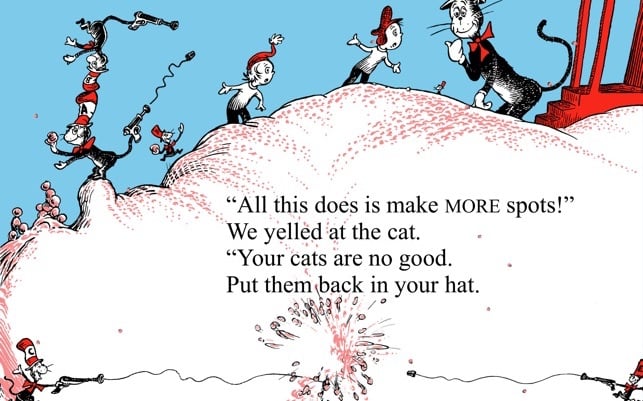
Generally, acetone will not remove the spots once they are visible.
I had a dealer tell me that he submits his modern silver coins using the PCGS restoration service because he believes it helps prevent spotting. I never found any evidence to support his claim and would assume that if it were true PCGS would provide that recommendation as well.
This would present a challenge for 1st strike submissions
What would there be to restore for a ms70 ASE right from a mint tube?
It sounds like an expensive option compared to doing an acetone rinse yourself.
Worry is the interest you pay on a debt you may not owe.
"Paper money eventually returns to its intrinsic value---zero."----Voltaire
"Everything you say should be true, but not everything true should be said."----Voltaire
He said it would remove any surface contaminates that would potentially cause spotting. Said he used it on modern silver pandas and Perth mint coins.
So what does he instruct PCGS to do to restore those coins? Do they have some sort of standard process? Or does he just check the box and PCGS does something, or maybe even nothing?
That I don't know. I assume he just checks the box but not sure what (if anything) PCGS does.
I thought this was an issue with how the mint was rinsing the blanks prior to striking. If this is indeed the case, why should the responsibility fall on the grading services?
Ok- I was bored this afternoon. Taking the original assumptions: 1 worker paid @ $20/hr., soaking each coin for an hour...
PCGS graded 2,400,000 coins in the last 12 months. Say half of them are bullion, that's 1,200,000 coins per year. There are 250 working days in a year, 1,200,000 / 250 = 4,800 coins to be processed each day. Estimate 2 minutes per coin for handling/tracking and such, 4,800 * 2 = 9,600 / 60 = 160 hours per day required. Clearly, one person won't be enough- you'd need 20 people at that rate. $20/hr. * 40 * 52 = $41,600 * 20 = $832,000 yearly salary. Including typical non-salary costs to employers, $1,250,000/year.
I think those estimates are likely to be optimistic. Once the time required for cleaning/decontamination of the soaking equipment and chemical handling is included, I'd expect that the number of coins actually cleaned per hour would be cut at least in half. Even more people would need to be hired to handle that part of the process, doubling (or more) the yearly expense to hire employees. This doesn't include the cost of the facility, supplies and equipment required- figuring 4 oz./per coin for acetone (soaking then rinsing), they'd go through 150 gallons of the stuff daily. Hazardous waste disposal is another cost. Setting up a place to do this would involve an area large enough for 20 or more people to move around without interfering with each other. There is a lab where I work which is about 1,000 sq.ft. and there are generally 6 to 8 workers there at any one time. 1,000 / 8 = 125 sq. ft. per worker * 20 workers = 2,500 sq. ft. at a minimum. Does PCGS have that much unused office space? What is Newport Beach real estate/office space going for these days?
I'd be surprised if this would be a money maker at $3/coin. Since the current restoration fee for moderns is $28/coin, my WAG is that this service would need to be priced around $10/coin to even have a hope of breaking even. Those submitting individual coins might not complain too much about having to pay an extra $10 for grading but I wonder if the people who do bulk submissions would be willing to pay that much more, especially considering coins that don't meet the minimum grade requested never get holdered.
And, per original assumptions, there's no guarantee offered that the treatment will even work.
I've thought that from the beginning. PCGS guaranteed the grade. Even though they came out of the mint tubes already spotted PCGS pretty much spent a lot of $$ showing that their holders and handling weren't responsible for the spots.