Options
1930 Canadian nickel Question
 Coin_nut1977
Posts: 1,517 ✭✭✭✭✭
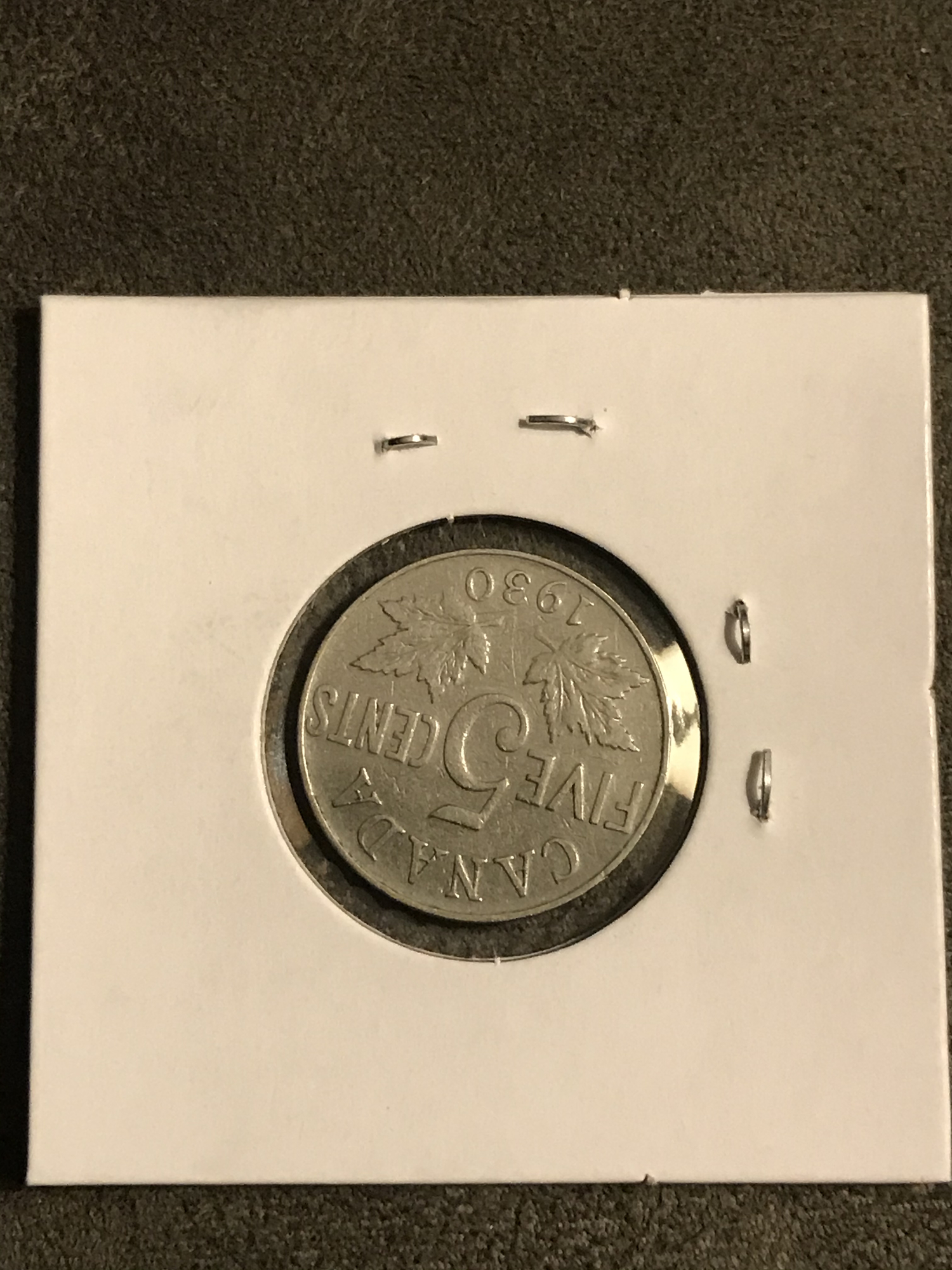
Just found this early CRH. My question was, Is this nickel considered rotated? Or in tolerance. If so, worth maybe a $1.00? Help appreciated!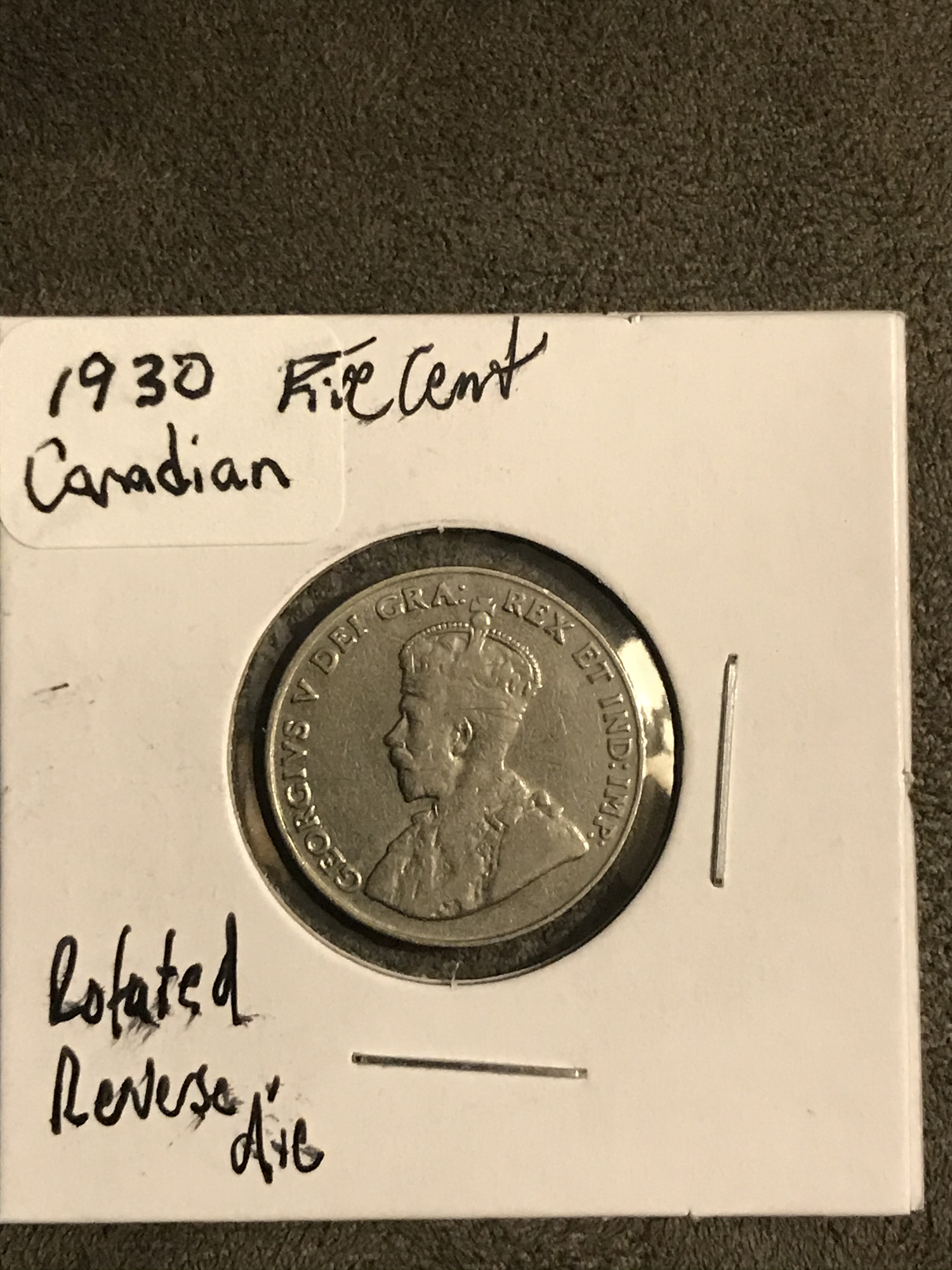
1
Comments
Nice Canadian coin.
25
Nice CRH find. Very minor rotation. Not enough to add any additional value.
BTW: you have this listed as a "rotated reverse die" on the 2x2. How do you know it isn't a "rotated obverse die"?
Thats a cool score
A good album coin. If you found that in roll searching it would be unusual. The rotation is very minor so no added value is likely.
I've never found a nice Canadian nickel like that in a roll.
Now FLATTEN THOSE STAPLES!
It was found CRH. I found a 1931 a few months ago. Thanks for the feedback.
Please, I am not trying to hijack your post, but how do you know for sure it is rotated without showing proof like this one or similar:
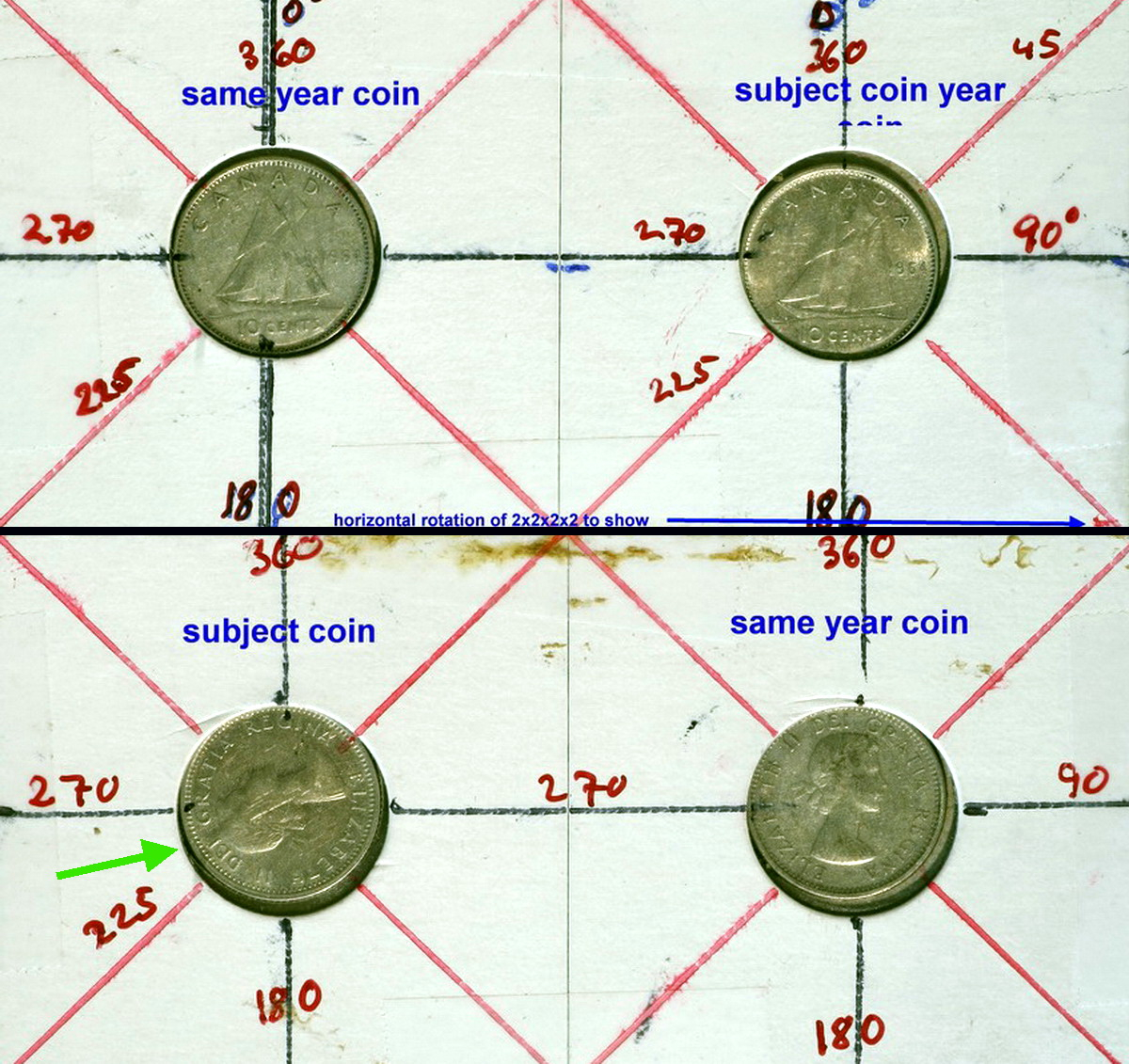
Wasn’t for sure that’s why I asked
It’s slightly rotated. Not going to all the graphs. You sorta get the knowledge that it’s not dramatic rotation.
You don't need to draw lines on the 2x2 to see that the coin in the first post has a slight rotation.
Yep... slight rotation... not significant enough for a premium, but interesting ....and a nice coin to keep in the collection. Cheers, RickO
Agree with the comments that die rotation is not a premium.
Most people here don't know much about greyside coinage (Canadian) so they miss some of the valuable coins they might pass over in roll hunts. I lived in southeast Michigan for over 30 years so I have seen my share of Canadian coinage and purchased nice pieces as well - especially cameo Proof like specimens.
Pre 1921, Canadian nickels were usually a silver/copper alloy. Started at 92.5% silver and dropped to 80% silver. In 1922 the nickels were actually 100% nickel - imagine that!
By 1942 nickel was removed as it was a critical wartime material. So nickels were made of Tombac - 88% copper , 12% zinc.
1944 and 1945 were steel and nickel/chrome plated. Again the war was affecting coinage compositions as copper was critical as well.
1946 resumed the 100% nickel composition.
Then 1951 saw the reintroduction of the nickel/chrome plated steel composition. (Korean war?)
In 1955 they switched back to 100% nickel until 1981 when they switched to 75% copper 25% nickel.
By 1999 they were back to the nickel/chrome plated steel which may be in place today. (my Charleton book is dated 2004).
Keep in mind that the Sudbury mine in eastern Ontario was/is one of the largest nickel mines in the world. It made sense to insure this mine kept running, war or no war, so if there was peacetime, they tended to use nickel in coinage.
On a personal note, my parents took the family to western Ontario in the summer of 1967 on a fishing trip. Great trip but not much in the way of coin shops in the small towns on the trans Canadian highway. On the way home we did find one and I bought a 1967 Centennial set which I still have somewhere in storage. At the time people were hoarding the 1967 nickels because they were a one-year design with a rabbit on the reverse and they were pure nickel.
Keep hunting - maybe you will find one of those "rabbit" nickels.
“In matters of style, swim with the current; in matters of principle, stand like a rock." - Thomas Jefferson
My digital cameo album 1950-64 Cameos - take a look!