75 Years ago today, 12/16/44: The beginning of the Battle of the Bulge
 SkyMan
Posts: 9,610 ✭✭✭✭✭
75 Years ago today was the beginning of the Battle of the Bulge, the biggest, deadliest battle the US fought in World War II. The US suffered roughly 90,000 casualties, the British roughly 1,400 casualties, and the Germans roughly 90,000 casualties in the Battle. For the US and Germany, of these casualties, each suffered roughly 40,000 dead or missing.
On December 16, 1944 Hitler launched an attack from Germany in the Ardennes sector (roughly the area around Luxembourg and southern Belgium) against the US Army. He employed his strategic reserve of forces to do this. His goal was to cross the Meuse river, capture Antwerp (the main Allied supply port), split the US and British forces, and, if successful, force the British to perform an oversized "Dunkirk".
The Allies were caught completely by surprise. They thought that Hitler would save his reserves for a defense of the Rhine. Four US Army divisions were attacked by roughly 25 German divisions. The US Army would suffer it's worst defeat in the European theater of WW II in the early stages of the battle when over 10,000 men of the 106 infantry division, and supporting forces, were surrounded and captured.
The German offensive pushed a bulge into the allied lines. The Battle lasted for roughly a month, but the end result, defeat for Germany, was clear by Christmas 1944. While the battle was technically a battle of the Allies against the Germans, in reality it was a battle fought overwhelmingly by US forces against German forces. The US pulled in forces from throughout it's front, notably the 82nd and 101st airborne divisions and Patton's 3rd Army, to hold and eventually counterattack the Germans. Of particular note, the 101st airborne, the all African-American 969 artillery battalion, and Combat Command B of the 10th armored division were surrounded at Bastogne, an important road hub in the center of the Front, on December 19. Their sacrifice and determination stopped the Germans from forwarding essential supplies to troops at the leading edge of their offensive, effectively halting the offensive in the central sector. On December 26, the 4th armored division from Patton's 3rd Army, coming up from the South, broke through and opened a corridor to the Bastogne troops.
There was much hard fighting from December 26 to mid January. In the end, Germany's strategic reserve, and the German population's morale, was essentially destroyed. The net result was when the Allies started their strategic offensive in the West in February the offensive proceeded much more rapidly, and at much lower cost, than had been expected. Germany surrendered in less than 4 months from the end of the Battle of the Bulge.
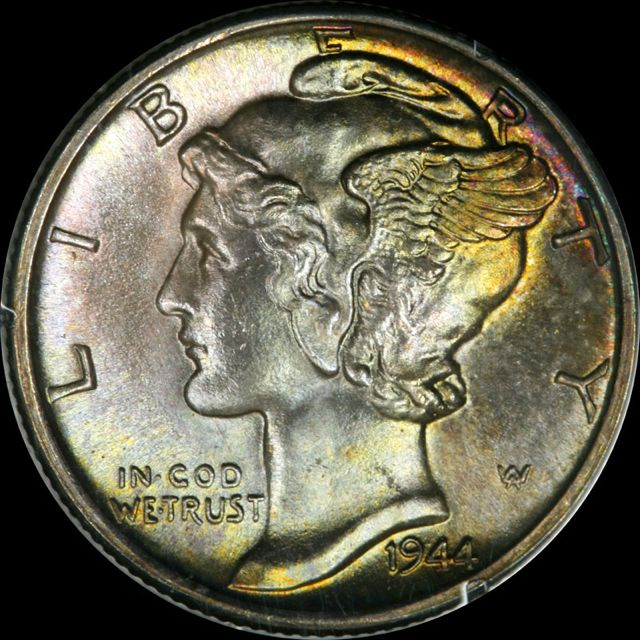
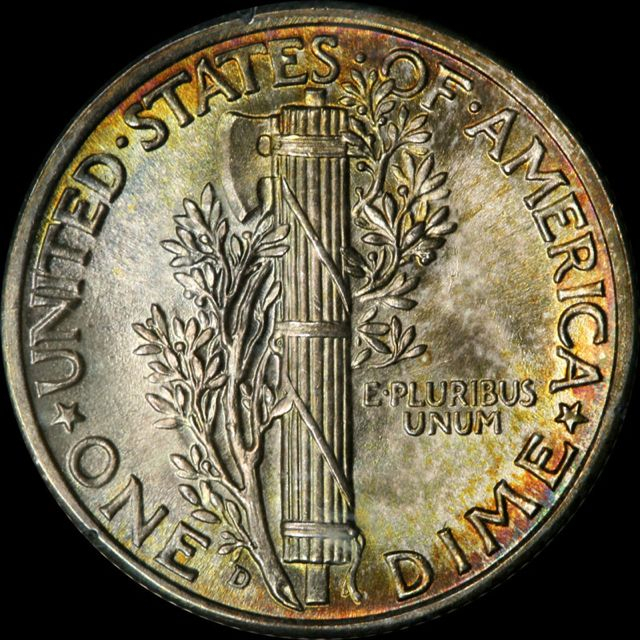
Post a coin from 1944 or 1945 in honor of the Allied men and women who fought in the Battle of the Bulge. Pictures from the era are also a good thing to post.
Comments
I lived for several months in a small town in France called Forbach. It's so close to the border it was actually on the German side of the Maginot line. Down the road a bit was the American war cemetery at St. Avold. It's lesser-known than the cemetery at Normandy, but by a small margin more US servicemen are interred there. If you ever get the chance, please visit one of these WWII sites. The meticulous upkeep of the cemetery is breathtaking and the honor paid to our dead FAR exceeds anything else I saw in the war cemeteries of the European countries. It is a fitting and proper use of tax dollars.
The story of Bastogne is the stuff of legend.
"Nuts!"
If I can dig up some of my photos from the area I'll share them.
One of the town fathers near where I grew up was in the U.S. Army, and fought in the Battle of the Bulge. He got a fair-sized piece of shrapnel in the ass during the Battle, and it was his ticket home. He fully recovered, lived to about ninety years old and hasn't been gone very long.
My Collection of Old Holders
Never a slave to one plastic brand will I ever be.
This file photograph taken in December 1944, shows US soldiers somewhere on the western Front during the German troops drive into the US lines during The Battle of The Bulge Photo: AFP / STF
Successful transactions with : MICHAELDIXON, Manorcourtman, Bochiman, bolivarshagnasty, AUandAG, onlyroosies, chumley, Weiss, jdimmick, BAJJERFAN, gene1978, TJM965, Smittys, GRANDAM, JTHawaii, mainejoe, softparade, derryb, Ricko
Bad transactions with : nobody to date
Thanks for sharing! My grandfather was in sierck-les-bains France with the Ten armored division when he was awaken. He was instructed that him and his crew of tanks had to expidite their resources to headquarters in Bastogne. They didn't really know what to expect when they arrived. He ended up taking shrapnel to the face and lost a couple of toes to frost bite. This time of year was always tough on him.
My uncle Frank got a Bronze Star cleaning up after that battle. Pushing the Nazis back into Germany.
Great stuff.....thanks for sharing.
the stuff legends are made of. we better not forget it
Thanks for the history post.... I was two years old at the time... I recall hearing many stories of the war as I grew up...It was a fresh in the memories of all the adults at the time. Cheers, RickO
The greatest generation!
My father in law, SSGT Don Klein, was supplying the front lines....Several times he got lost and ended up on the wrong side and had to high tail it out of there, asap.
bob
During my time in the Army, I was sent to Germany for a year before the Iraq War. Being a history buff, Bastogne, Belgium was one of the first places I traveled. An amazing place full of history, and dedicated with a beautiful monument to what are ancestors did there.
Dead Cat Waltz Exonumia
"Coin collecting for outcasts..."