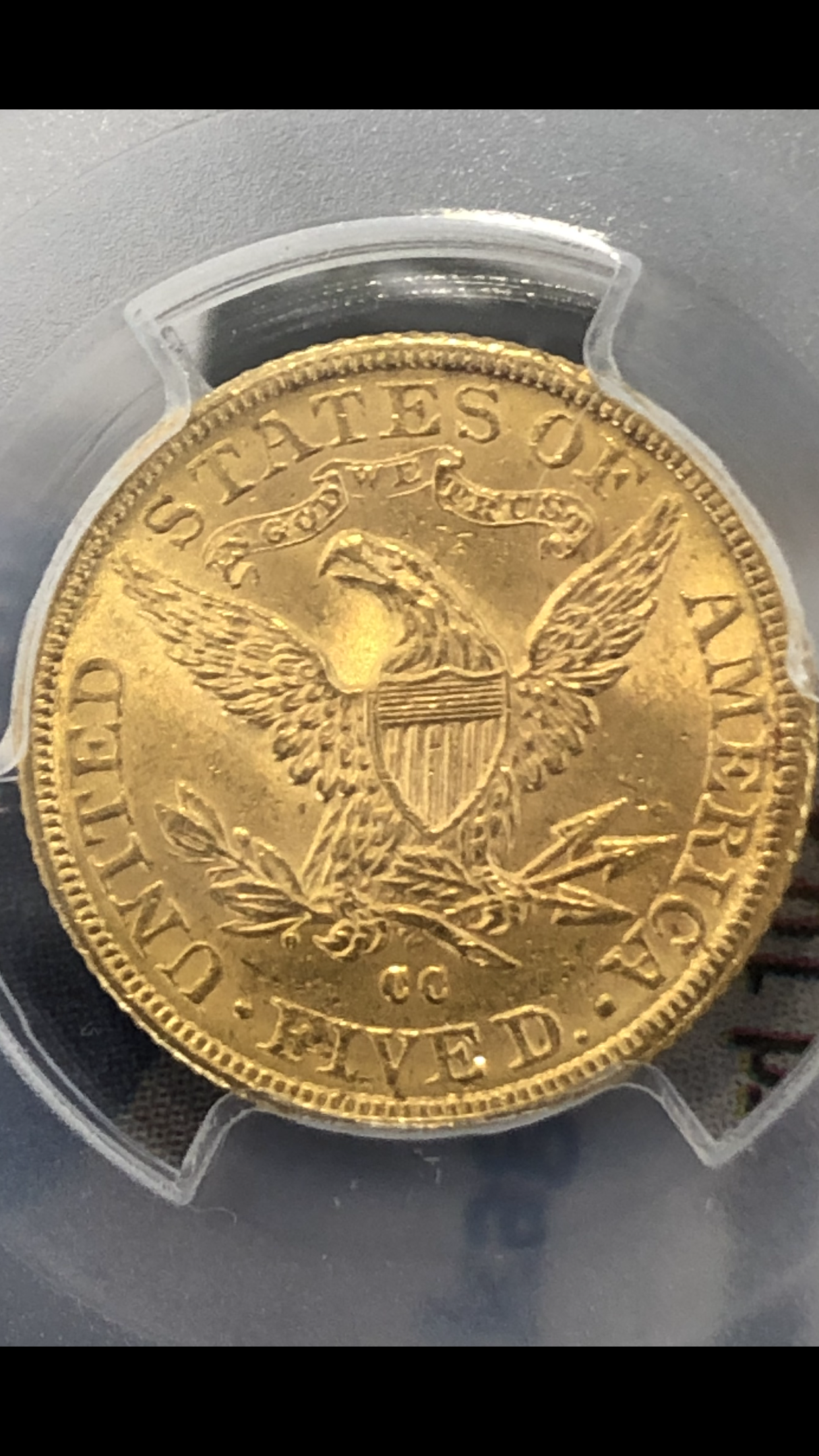
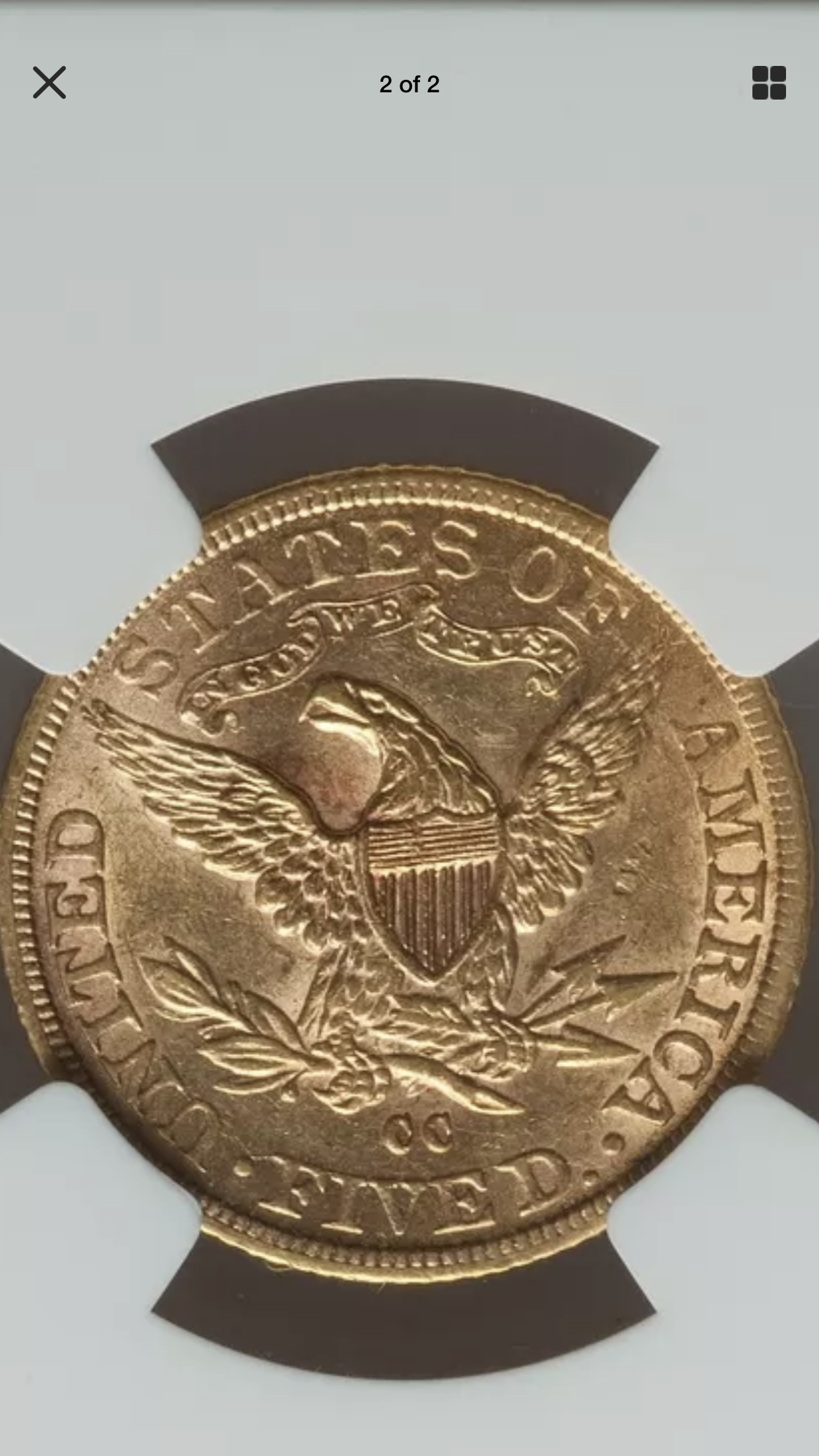
A pair of 1891-CC Half Eagles, opinions (con, neutral, pro, or others)?
 KollectorKing
Posts: 4,820 ✭✭✭✭✭
KollectorKing
Posts: 4,820 ✭✭✭✭✭



1
KollectorKing
Posts: 4,820 ✭✭✭✭✭
Comments
First one decent, frosty original 61/62. Second one a dipped out mid range AU. I'd pick door number 1.
Both are presentable examples for their grades. I don't see any real problems for a CC.
They are gold and CC, what's not to like?? Cheers, RickO
@KollectorKing This must be a Trick Question thread, b/c both coins are 1891-CC Quarter Eagles, not 1890-CC as listed in the thread title! — LOL! 😆🧐😁
Stuart
Collect 18th & 19th Century US Type Coins, Silver Dollars, $20 Gold Double Eagles and World Crowns & Talers with High Eye Appeal
"Luck is what happens when Preparation meets Opportunity"
I know that this is no longer the case as these both appear to be graded. But, years ago I remember reading, with pics, that the broken ribbon under the WE is an indication of a counterfeit. I wonder when this was dispelled.
bob
Thanks Stuart for pointing out the error, correction made.
HALF EAGLES!
I like the first one better.
My YouTube Channel
Color is better on the first, at least in those photos.
I would think for most 19th century gold and silver that a missing piece of the design (from polishing the dies) would be a positive sign that said coin is not counterfeit. Very common among seated coins of the 1860's to 1880's to be missing a portion of the reverse ribbon.....and occasionally even on proofs. Die clash and die polishing lines are pluses too - in avoiding counterfeits.
With both of these 91-cc's showing the lower center ribbon weakness, it's probably pretty darn common on this date.
@CaptHenway I stand humbled and honored by your correction!😆👍
Stuart
Collect 18th & 19th Century US Type Coins, Silver Dollars, $20 Gold Double Eagles and World Crowns & Talers with High Eye Appeal
"Luck is what happens when Preparation meets Opportunity"
Decided to check my references on this date/mm.
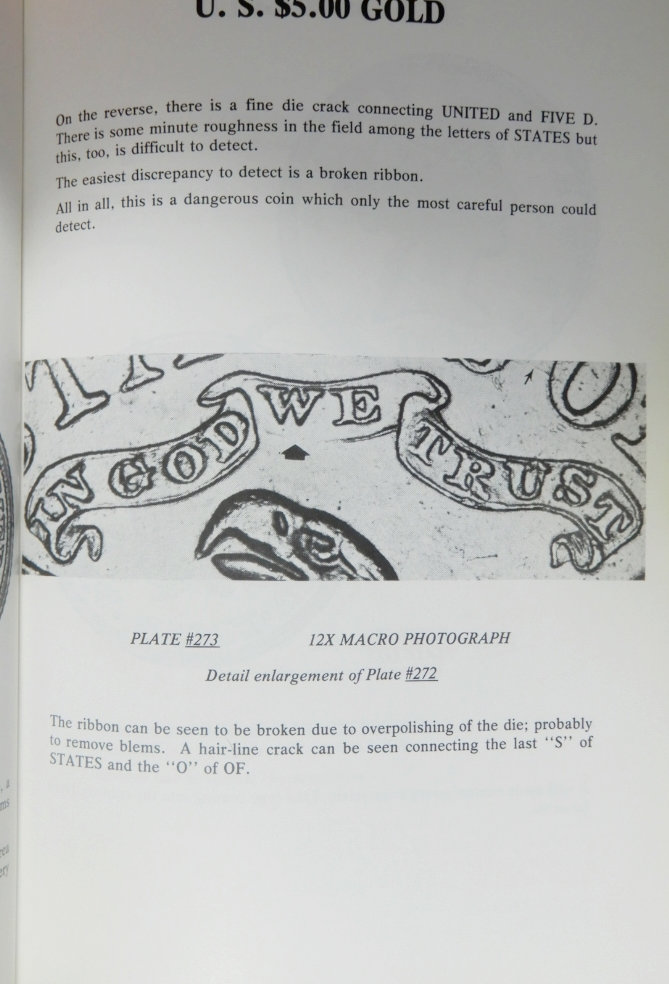
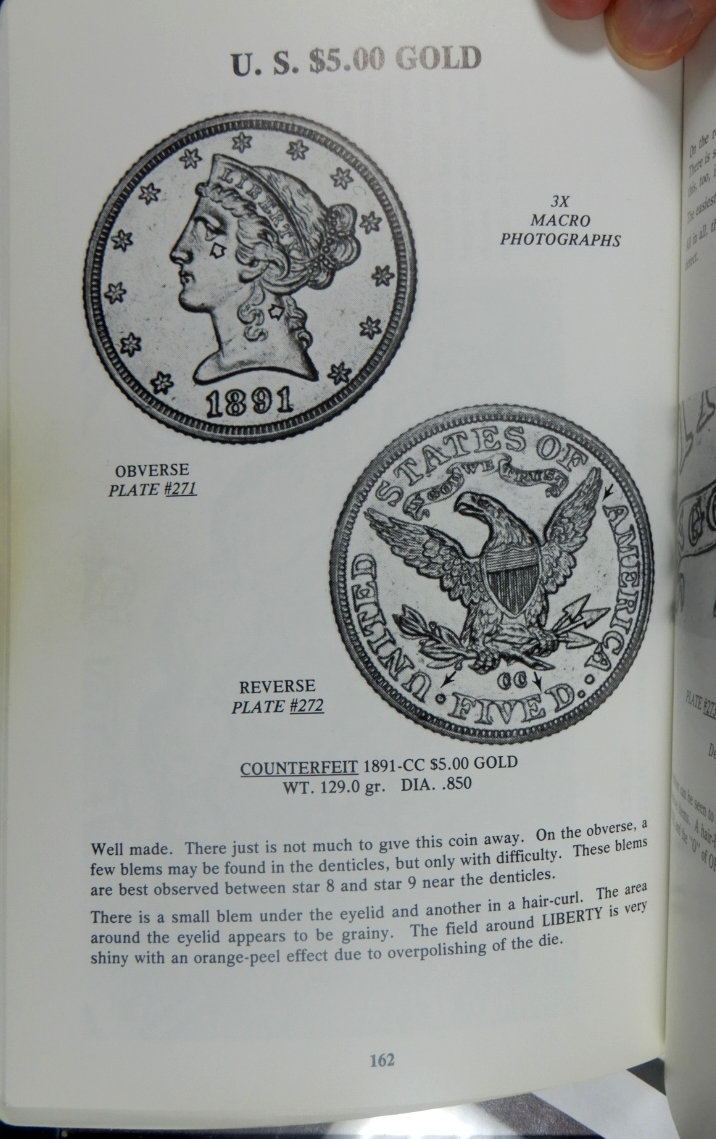
Here's what I found in John Divine's book on counterfeit gold (Lonesome John).
bob
Broken ribbon and die crack
I understand John Divine's use of "blems" to denote non-US mint features. But several of those other points could be features from the original mint product (ie over- polishing, die crack, etc.). In other words the counterfeit is born from this one particular 91-cc die. The OPs second coin shows the same reverse die crack from S to O. Avoiding ALL coins from this die pair is one way to avoid the counterfeit.
Agree.
Overlooked it earlier but both appear to be entombed.