Options
Morgan dollar planchet adjustments.....
 AUandAG
Posts: 25,054 ✭✭✭✭✭
Wanted to show that what at first seems to be damage or circulation marks, is not. Dollar planchets were weighed and adjusted by hand with metal rasps/files to bring them into proper weight for striking. Usually the striking process removes any evidence of adjustments but in extreme cases, like this dollar, they show up quite nicely on the struck coin.
Not my coin, MS67, currently up on ebay here: https://www.ebay.com/itm/1884-CC-Morgan-1-PCGS-CAC-Certified-MS67-Premium-Toned-Carson-City-Silver-Coin/233135896023?hash=item3647fb75d7:g:4QwAAOSwJD1caG2o:sc:ShippingMethodStandard!89134!US!-1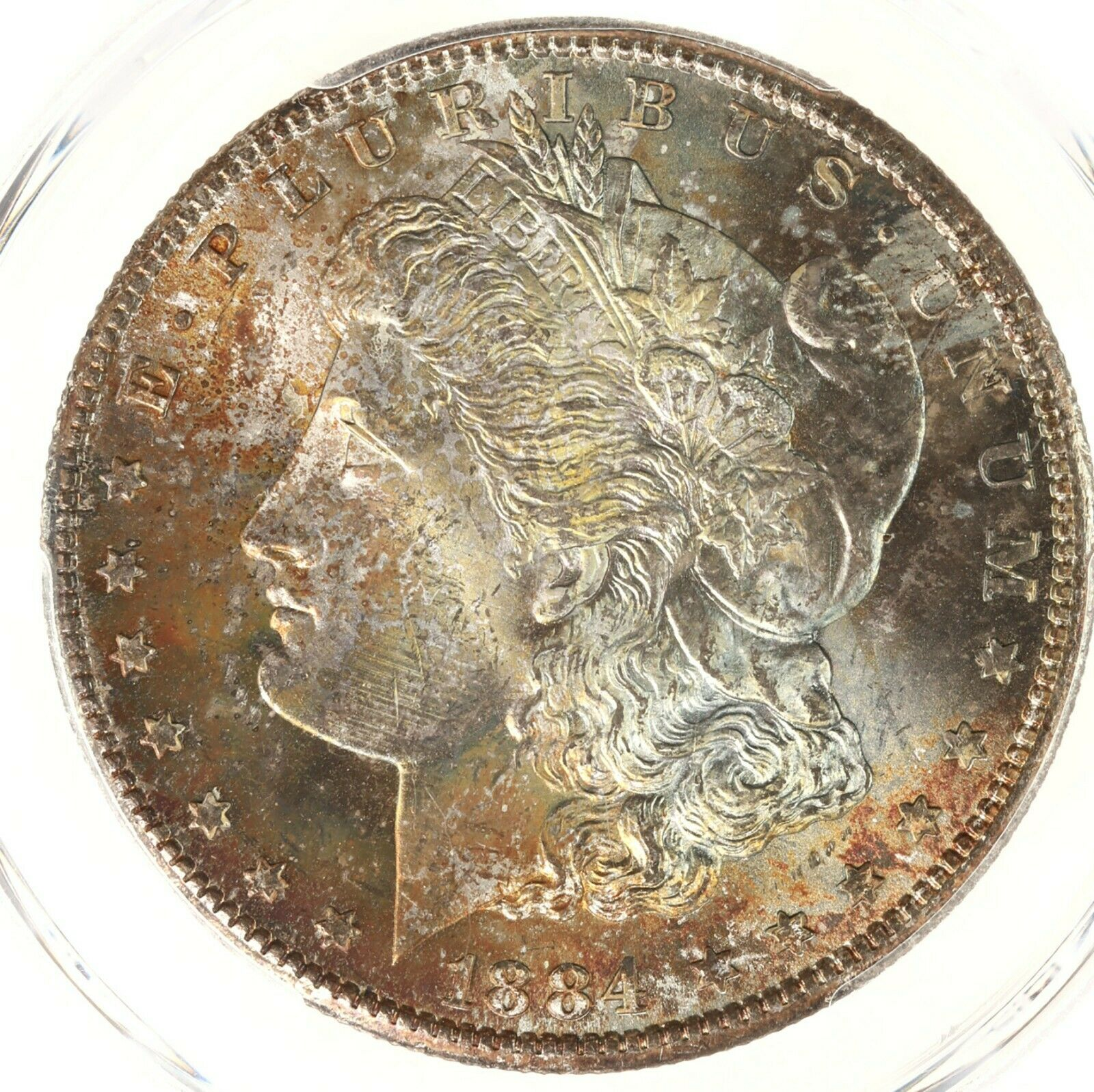
Registry: CC lowballs (boblindstrom), bobinvegas1989@yahoo.com
2
Comments
I would love to see it without the toning...there is a lot going on with that coin. Thanks for the info, I have not seen anything like this. Or if I have...thought it was damage or circulation marks as you said!
Those aren't adjustment marks. They are surface scratches from when the bullion strip was pulled through the slit when the strip's thickness was being set. Planchet adjustments ended in the 1820s.
These marks are seen all the way up to 1904. They are always light, parallel, and on Liberty's cheek.
I agree with the posters saying that adjustment marks were discontinued in the early 20th century. I would describe the marks on the cheek as roller marks. Regardless of whether considered PMD or not, the marks do affect eye appeal. I wouldn't have any interest in the coin at the MS67 level with or without the CAC sticker.
This coin is a great example of why you should buy the coin and not the label or sticker. You may agree with the technical grade, but many collectors will thumb their nose at a coin like this (myself included).
Interesting discussion... I cannot tell if the marks are raised or indented... I do agree that adjustments were discontinued early in the 1800's....Cheers, RickO
Blanks and/or planchets for gold and large silver coins were adjusted on the edge. This began in the teens and slowly spread to all denominations as rolling equipment improved and blanks punched from strips required less adjustment. All face adjustment ended by the introduction of toggle presses in 1836.
For a description of how blanks were adjusted see the book From Mine to Mint.
@rogerB @ricko @thefinn Perhaps these are roller marks, makes sense. Okay, I'll go with that. However, I will disagree with the statements that adjusting planchets was ended in 1836. My information on the Carson mint shows that there were "ladies" hired for the purpose of blank adjustments. I don't know if the other mints did things differently but in Carson they were still being weighed, light ones discarded and re-melted and heavy ones "adjusted". Once adjusted they became a planchet that was then fed through the upsetting mill to form a rim......dadada
I've seen a photo of the ladies sitting at a long bench with scales and blanks being adjusted prior to upsetting. I will look in my reference material for that but I may have seen it at the Mint in Carson (Museum)....
bob
No one said adjusting blanks/planchets ended in 1836.
It was a constant activity of the lady Adjusters until mid-1933. A small amount of manual adjusting was done into 1935 for dollars, but the silver had gradually been turned over to automatic weighing and sorting equipment. The Mint quickly determined that it was cheaper to make a quick adjustment only of overweight pieces (rather than go through all manually) and allow the "automatics" as they were called, to sort out the rest. The drawbench was obsolete before 1900 because the rolling systems were very accurate.
I see, face adjustment as opposed to edge?
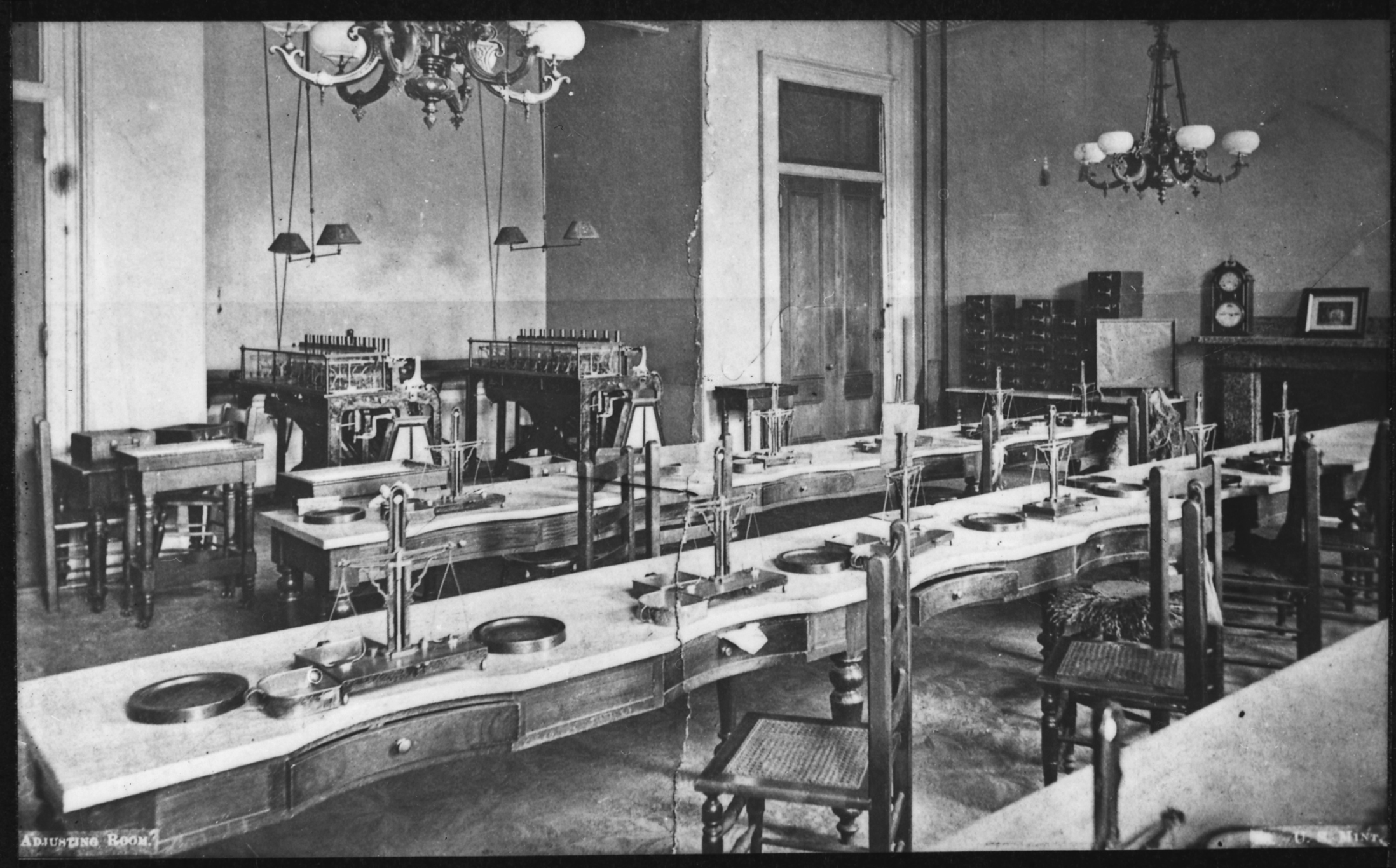
This is not the photo I was looking for but this is the San Francisco Mint in 1934. The table you see has a spot for adjusters to sit and adjust blanks before upsetting. This is the same setup that I recall seeing in CC.
bob
GACK!!!!!!
The San Francisco Mint adjusting room photo (above) was taken in 1885, not 1934. The two spindly looking contraptions in the back left are Seyss Automatic Assorting machines used to separate light, standard, and heavy planchets for half eagles and later quarter eagles.
Here's another view of the same room.
In this arrangement, the women weighed blanks on a balance, rolled the heavies on a flat file, checked and then put them in the pan at right. (The pan at left was for lights, which were returned for melting and recasting.) File chips were brushed into the drawer. Each Adjuster, wearing a full length leather apron, was issued a weight of blanks and her work was kept separate from others until the end of the day. Before leaving, an adjuster's completed work plus filings were compared to the initial weight. The Supervisor of Adjusters and a small group of very experienced assistants checked everything to be sure any loss was minimized. Periodically, drawers were dismantled and swept for gold with brass brushes. Carpeting was removed, cleaned and burned to recover gold dust. This amounted to several hundred ounces per year recovered. Even the hand washing water was kept and treated to remove gold and silver.
Interesting topic.