Options
$422,000 in unpaid gold deposits at the San Francisco Mint
 RogerB
Posts: 8,852 ✭✭✭✭✭
RogerB
Posts: 8,852 ✭✭✭✭✭
Here is page one and the summary of unpaid deposits at the San Francisco Mint from inception to mid-1860. Now, everyone run to Grandma's attic and see if some distant relative left a nondescript looking deposit receipt in an old book. (Funds were eventually transferred to the Treasury and finally added to the general fund as a debt reduction item. But, if you can prove ownership, the cash (no interest) is available. 
Page 1 of the table: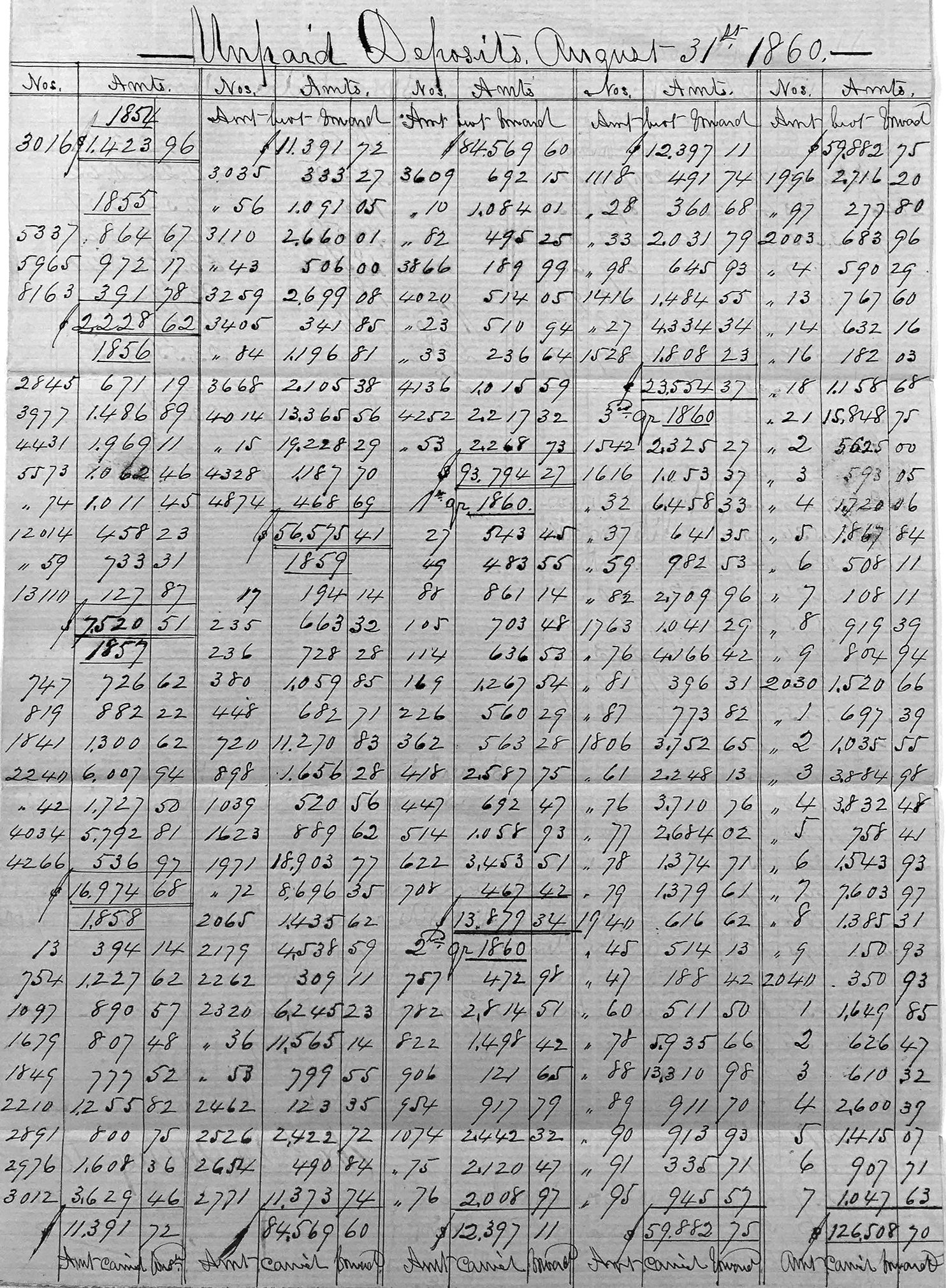
Summary from page 2: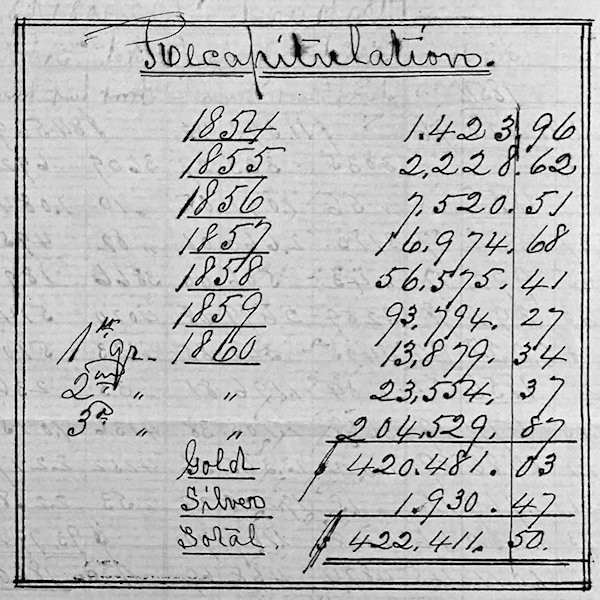
1
Comments
That is utterly amazing that that much value went unclaimed!
Wow, that is a lot of money left on the table.
I am certain that none of my ancestors were involved...but I can see why there would be no 'interest' paid.... WOW... That would be a sizeable sum with interest over these many years. Cheers, RickO
High mortality rate and no wife and kids? History lesson for the day, thanks.
I'll get there are plenty of caches of coins (other than Saddle Ridge) in the ground around Northern California that were similarly left behind by people who didn't live long enough to dig them up.
What is now proved was once only imagined. - William Blake
Most of the 1860 number just represents normal business yet to be settled. Much of the 1859 number is the same. The 1854, 1855, 1856 and 1857 numbers are more likely to remain unresolved.
I must agree. I’m more than sure there are more of those saddle ridge boards to be found. Many, many good folks hid all of their treasures just to be forgotten somewhere. But where?
I've been wracking my brain to figure out where.
I'd love to actually dig up a treasure like that - while I was conserving the SRH stuff, I told the family that if they found more, I'd prefer conserving the pieces as they came out of the ground, while documenting everything piece by piece...
What is now proved was once only imagined. - William Blake
This was of August 1860. Anything older than a year (one mining season cycle) would seem suspicious. (I wonder if this is how Humbert, Kellogg and others really made their money?)
The lists of consecutive deposit warrants is likely a result of a single company making multiple deposits on behalf of individual small miners. They would aggregate placer findings, get it coined into double eagles and return the coin to the miner, minus a hefty fee.
The early coiners acted like bullion dealers, buying dust and nuggets at the prevailing rate with their own coins - I'm not sure precisely how the Assay Office worked in that regard, but since it was a government operation, I'll bet Uncle Sam got the leftovers (unless Humbert, et al. were sneaky)...
What is now proved was once only imagined. - William Blake
OMG, that's a lot of unclaimed cash !!! :'(