Home› U.S. Coin Forum
Options

Cashing a check in 1853

JBKJBK Posts: 17,925 ✭✭✭✭✭
edited August 4, 2018 2:13PM in U.S. Coin Forum

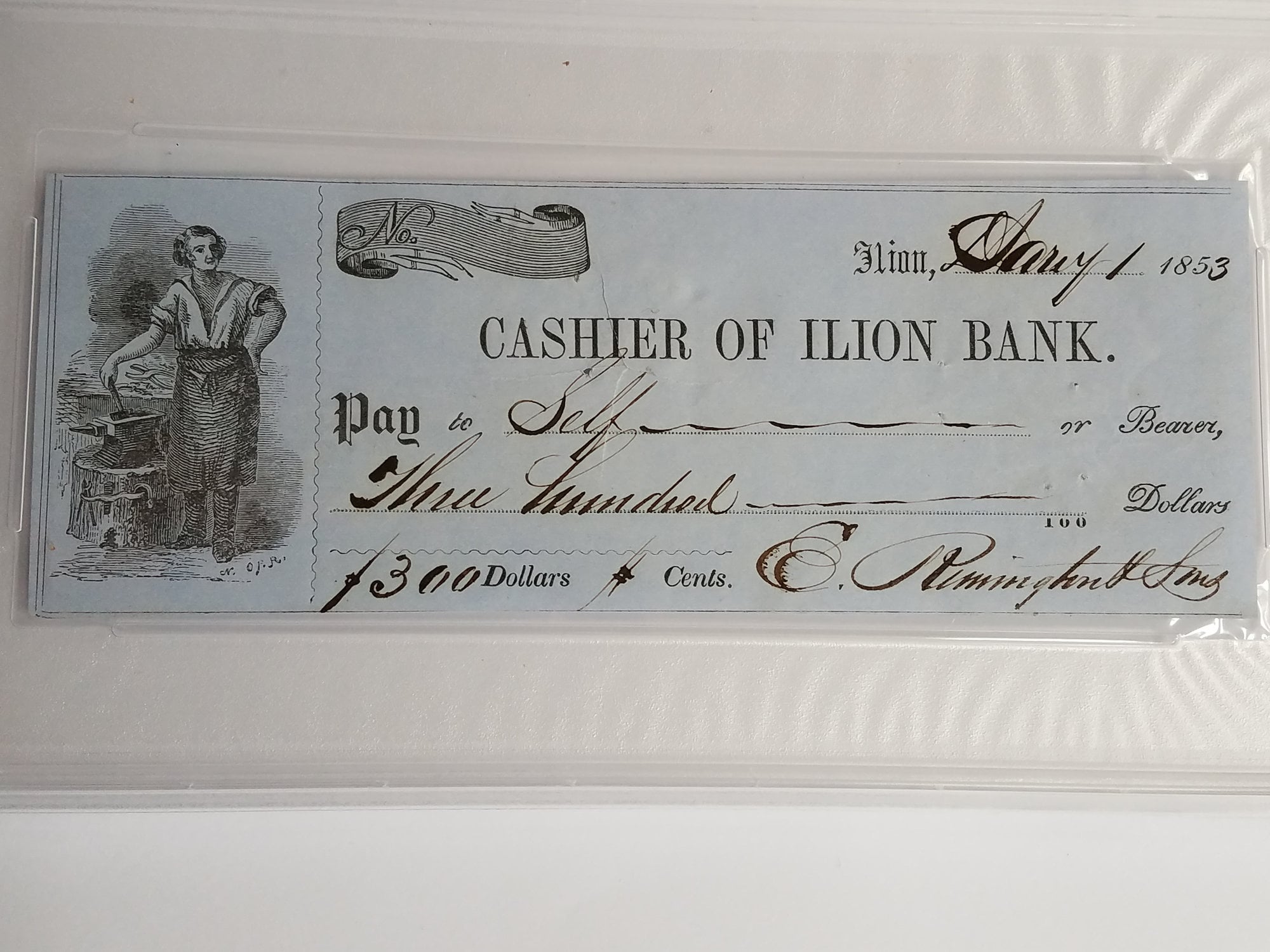
Here is a check from 1853 written out to "Self" by Eliphalet Remington, the founder of what would become the Remington Arms Company. On January 1, 1853 he apparently gave himself a little $300 New Year's Day present.

My question is, in what form would someone receive their money when cashing a $300 check in 1853? Gold coins? Silver coins? Banknotes issued by a local bank?

In 1853 this amount of money was more than a lot of people earned in a year. I am trying to picture the logistics of withdrawing that much money in cash (or coin). Did he stuff into one of those old time small canvas bags with a huge dollar sign printed on it? ;)

Bonus question: what sort of security would he have had? This was in a small NY town but presumably he would have been armed. Being the owner of a gun company he probably had some nice equipment at his disposal, such as cap and ball blackpowder revolvers. Or did banks offer security for important customers?

Thanks for any insight or speculation.
Comments

  • Options
    SmudgeSmudge Posts: 10,011 ✭✭✭✭✭

    I'll take it in gold coins. The older the better.

  • Options
    RogerBRogerB Posts: 8,893 ✭✭✭✭✭

    Assuming his account was of good standing, he might have requested notes or gold. Certainly not silver - too bulky. The kind of money would also depend on his anticipated uses - purchases, paying a debt, making a loan, etc.

    As for a weapon, nearly all men carried a pocket knife for carving, cutting pen quills and cigar ends. Few carried guns unless they were hunting or on a rural farm when the preferred item was a rifle or other long gun.

  • Options
    rickoricko Posts: 98,724 ✭✭✭✭✭

    Probably notes and gold... as Roger said... He may have carried a Derringer type firearm, but unlikely in that area at that time. If it were NYC, then probably a different story. Cheers, RickO

  • Options
    CaptHenwayCaptHenway Posts: 34,275 ✭✭✭✭✭

    Gold dollars for his payroll?

    Professional Numismatist, Retired. 55 year member ANA. Former ANA Senior Authenticator. Winner of four ANA Heath Literary Awards; three Wayte and Olga Raymond Literary Awards; Numismatist of the Year Award 2009, and ANA Lifetime Achievement Award 2020. Winner of the PNG's 2026 Robert Friedberg Award for "The Enigmatic Lincoln Cents of 1922," Available now from Whitman or Amazon.
  • Options
    291fifth291fifth Posts: 25,242 ✭✭✭✭✭

    In 1853 it is likely that only the wealthy would have had accounts with a bank. He could have probably requested payment in gold, silver or paper money if it were a well established, major city bank. Many banks own paper money issues were "good as gold" if the bank were local and had an excellent reputation. (The paper money issues of less reliable or far away banks would have been discounted if accepted at all. This is why Bank Note Reporters were so important in those days. He would probably have been well known to the banker and the transaction would likely have been quick and easy.

    All glory is fleeting.
  • Options
    logger7logger7 Posts: 9,983 ✭✭✭✭✭

    Was there much in the way of bank notes in 1853? Before the national banking act of 1863 there wouldn't be much in the way of notes except as were issued by local banks:

    "1836-1865: The Free Banking Era

    "During what is known as the Free Banking Era, state-chartered banks and unchartered “free banks” took hold. Banks began issuing their own money notes that could be redeemed in gold or coins, and offered demand deposits to enhance commerce.

    "This caused a big jump in the volume of check transactions. In response, the New York Clearing House Association was established in 1853, which provided a way for the city’s banks to formally exchange checks and settle accounts."
    https://dailyreckoning.com/a-timeline-of-united-states-currency/

  • Options
    BroadstruckBroadstruck Posts: 30,497 ✭✭✭✭✭

    Did he sign that as E. Remington & Sons?

    To Err Is Human.... To Collect Err's Is Just Too Much Darn Tootin Fun!
  • Options
    ParadisefoundParadisefound Posts: 8,623 ✭✭✭✭✭
    edited August 5, 2018 9:04AM

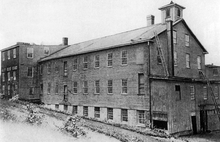
    Manufacturer of riffle barrel?

    Eliphale Remington

    Factory in Ilion, NY circa 1840
  • Options
    ParadisefoundParadisefound Posts: 8,623 ✭✭✭✭✭

    You may have a very rare and valuable article on your hand @JBK :)

  • Options
    ParadisefoundParadisefound Posts: 8,623 ✭✭✭✭✭

    Good eye @Broadstruck ! He may have an antique in his possession <3

  • Options
    rte592rte592 Posts: 2,243 ✭✭✭✭✭
    edited August 5, 2018 9:12AM

    Interest rewrite on the month.
    Looks like it started out with a D in December and got corrected to Januy.

    Was Self short for selfish back then, like it is today?
    OR
    Like a good boss, cashed for gold coins and given as Christmas Bonuses OFF the books. :)

  • Options
    CaptHenwayCaptHenway Posts: 34,275 ✭✭✭✭✭

    Was New Years Day a holiday back then?

    Professional Numismatist, Retired. 55 year member ANA. Former ANA Senior Authenticator. Winner of four ANA Heath Literary Awards; three Wayte and Olga Raymond Literary Awards; Numismatist of the Year Award 2009, and ANA Lifetime Achievement Award 2020. Winner of the PNG's 2026 Robert Friedberg Award for "The Enigmatic Lincoln Cents of 1922," Available now from Whitman or Amazon.
  • Options
    JBKJBK Posts: 17,925 ✭✭✭✭✭

    @Broadstruck said:
    Did he sign that as E. Remington & Sons?

    Yes. he did. That was the name of the company at that point.

  • Options
    sellitstoresellitstore Posts: 3,093 ✭✭✭✭✭

    Gold would have been unlikely. Banks didn't have much of it, especially outside the cities, and used their limited holdings for specific requirements, like reserves.

    Banks note circulations were typically perhaps 10-20 times the specie holdings (sometimes more) for note issuing banks. Bank notes, drafts and checks were how the vast majority of the money (especially larger sums) moved during the early to mid 1800s at least in upstate NY, as well as most of the U.S.

    As for weapons, most people were unarmed as there was no need. Notes aren't nearly as attractive a target as gold, harder to pass, especially once the word is out as to what has been stolen. There were occasional bank robberies but these were often break ins at night. Notes would occasionally be stolen while in transit from the printer or state controller, falsely signed and circulated, but this had to be done far from where the notes were intended to be issued, and the risk of getting caught were high.

    Again, bank notes aren't a great target for thieves, especially if the currency is far more identifiable than the US currency of today.

    Collector and dealer in obsolete currency. Always buying all obsolete bank notes and scrip.
  • Options
    jmlanzafjmlanzaf Posts: 43,267 ✭✭✭✭✭

    @logger7 said:
    Was there much in the way of bank notes in 1853? Before the national banking act of 1863 there wouldn't be much in the way of notes except as were issued by local banks:

    "1836-1865: The Free Banking Era

    "During what is known as the Free Banking Era, state-chartered banks and unchartered “free banks” took hold. Banks began issuing their own money notes that could be redeemed in gold or coins, and offered demand deposits to enhance commerce.

    "This caused a big jump in the volume of check transactions. In response, the New York Clearing House Association was established in 1853, which provided a way for the city’s banks to formally exchange checks and settle accounts."
    https://dailyreckoning.com/a-timeline-of-united-states-currency/

    There were a LOT of (now broken) bank notes

    All comments reflect the opinion of the author, even when irrefutably accurate.

  • Options
    JBKJBK Posts: 17,925 ✭✭✭✭✭

    @rte592 said:
    Interest rewrite on the month.
    Looks like it started out with a D in December and got corrected to Januy.

    Was Self short for selfish back then, like it is today?
    OR
    Like a good boss, cashed for gold coins and given as Christmas Bonuses OFF the books. :)

    Good eye. i saw that mess in the date but just assumed it was a fancy "J". It does look like a D underneath.

    As @CaptHenway suggested. Perhaps December 31 and January 1 were just workdays back then.

  • Options
    JBKJBK Posts: 17,925 ✭✭✭✭✭

    @Paradisefound said:
    You may have a very rare and valuable article on your hand @JBK :)

    Believe it or not, at this particular moment in time these are not especially rare. At some point a large quantity must have come to market and they are still being absorbed.

    Some sellers ask ridiculous prices but one seller lists one a week on ebay with a starting bid of 99 cents, and by being patient I got this one for just over $50. I was very happy with that as it combines financial and firearms history. The check is slabbed by a sister company of PCGS that authenticates autographs.

  • Options
    291fifth291fifth Posts: 25,242 ✭✭✭✭✭

    @jmlanzaf said:

    @logger7 said:
    Was there much in the way of bank notes in 1853? Before the national banking act of 1863 there wouldn't be much in the way of notes except as were issued by local banks:

    "1836-1865: The Free Banking Era

    "During what is known as the Free Banking Era, state-chartered banks and unchartered “free banks” took hold. Banks began issuing their own money notes that could be redeemed in gold or coins, and offered demand deposits to enhance commerce.

    "This caused a big jump in the volume of check transactions. In response, the New York Clearing House Association was established in 1853, which provided a way for the city’s banks to formally exchange checks and settle accounts."
    https://dailyreckoning.com/a-timeline-of-united-states-currency/

    There were a LOT of (now broken) bank notes

    Some of the banks never went broke during the era of the "obsolete" bank notes. They redeemed nearly all of their issues when government regulations made them uneconomical during the later part of the Civil War. A few can still be redeemed today ... but won't be because they are worth far more than face value to collectors.

    All glory is fleeting.
  • Options
    COCollectorCOCollector Posts: 1,432 ✭✭✭✭✭
    edited August 5, 2018 12:45PM

    @JBK said:

    @rte592 said:
    Interest rewrite on the month.
    Looks like it started out with a D in December and got corrected to Januy.

    Was Self short for selfish back then, like it is today?
    OR
    Like a good boss, cashed for gold coins and given as Christmas Bonuses OFF the books. :)

    Good eye. i saw that mess in the date but just assumed it was a fancy "J". It does look like a D underneath.

    As @CaptHenway suggested. Perhaps December 31 and January 1 were just workdays back then.

    December 31, 1852 was a Friday. End-of-month payday for employees?

    Maybe he wrote January 1st for a bookkeeping reason?

    And does anyone know if banks were open on Saturdays in 1853?

    Successful BST transactions with forum members thebigeng, SPalladino, Zoidmeister, jacrispies, coin22lover, coinsarefun, jwitten, CommemKing.

  • Options
    CaptHenwayCaptHenway Posts: 34,275 ✭✭✭✭✭

    Charles Dickens' "A Christmas Carol" was published in 1843, and as you will recall Bob Cratchit had to ask for Christmas Day off.
    New Years Day was not as big a holiday before they invented college football bowl games, and many businesses were open a half day on Saturdays into the 20th century.

    Professional Numismatist, Retired. 55 year member ANA. Former ANA Senior Authenticator. Winner of four ANA Heath Literary Awards; three Wayte and Olga Raymond Literary Awards; Numismatist of the Year Award 2009, and ANA Lifetime Achievement Award 2020. Winner of the PNG's 2026 Robert Friedberg Award for "The Enigmatic Lincoln Cents of 1922," Available now from Whitman or Amazon.
  • Options
    JBKJBK Posts: 17,925 ✭✭✭✭✭

    @CaptHenway said:
    Charles Dickens' "A Christmas Carol" was published in 1843, and as you will recall Bob Cratchit had to ask for Christmas Day off.
    New Years Day was not as big a holiday before they invented college football bowl games, and many businesses were open a half day on Saturdays into the 20th century.

    Excellent point. When I was researching annual wages from that era it said that 60 hour weeks (6 days) were the norm for many trades.

  • This content has been removed.
  • Options
    CaptHenwayCaptHenway Posts: 34,275 ✭✭✭✭✭

    @afford said:
    I think what nobody has pointed out and makes a whole lot of sense is that Ilion Bank was founded by Eliphalet Remington and he was also President of the Bank until his death in 1861. The Bank ceased operations in 1866.

    Then I guess the bank WAS open to him that day!

    Professional Numismatist, Retired. 55 year member ANA. Former ANA Senior Authenticator. Winner of four ANA Heath Literary Awards; three Wayte and Olga Raymond Literary Awards; Numismatist of the Year Award 2009, and ANA Lifetime Achievement Award 2020. Winner of the PNG's 2026 Robert Friedberg Award for "The Enigmatic Lincoln Cents of 1922," Available now from Whitman or Amazon.
  • Options
    thefinnthefinn Posts: 2,657 ✭✭✭✭✭

    It may be he was giving out New Year's bonuses, so silver or small gold coins. It would be interesting. Business were usually only closed for Christmas, so January 1st wouldn't have been too odd then.

    thefinn
  • Options
    halfhunterhalfhunter Posts: 2,770 ✭✭✭

    @CaptHenway said:
    Charles Dickens' "A Christmas Carol" was published in 1843, and as you will recall Bob Cratchit had to ask for Christmas Day off.
    New Years Day was not as big a holiday before they invented college football bowl games, and many businesses were open a half day on Saturdays into the 20th century.

    Even into the 1970s banks where I grew up were open a half day on Saturday and closed on Wednesday . . .

    Need the following OBW rolls to complete my 46-64 Roosevelt roll set:
    1947-P & D; 1948-D; 1949-P & S; 1950-D & S; and 1952-S.
    Any help locating any of these OBW rolls would be gratefully appreciated!
  • Options
    JedPlanchetJedPlanchet Posts: 910 ✭✭✭

    I'd have loved to see him get it all in 60,000 half cents

    Whatever you are, be a good one. ---- Abraham Lincoln
  • Options
    logger7logger7 Posts: 9,983 ✭✭✭✭✭

    @ricko said:
    Probably notes and gold... as Roger said... He may have carried a Derringer type firearm, but unlikely in that area at that time. If it were NYC, then probably a different story. Cheers, RickO

    Good points. Ricko. It was an effective ploy back then when trying to make an extra strong rhetorical point to stick the derringer or other peace-making pistol in the ribs of someone who was rude or abusive, The point was well made.

  • Options
    JimnightJimnight Posts: 10,846 ✭✭✭✭✭

    Unbelievably Beautiful penmanship.

  • Options
    REALGATORREALGATOR Posts: 2,705 ✭✭✭✭✭

    @Jimnight said:
    Unbelievably Beautiful penmanship.

    Imagine getting a check written like that today. I think I'd fall off my chair.

Leave a Comment

BoldItalicStrikethroughOrdered listUnordered list
Emoji
Image
Align leftAlign centerAlign rightToggle HTML viewToggle full pageToggle lights
Drop image/file