Options
How can you tell the difference between a strike through and a scratch...
 gtstang
Posts: 1,824 ✭✭✭✭✭
When it is in the field?
0
Comments
Scratches will generally have raised edges where the metal was displaced, as seen in staple scratches, for example.
:P
Agreed.
Think of a scratch as something like a furrow when a farmer plows a field. The soil or metal is displaced as has to go somewhere, which usually on either side of the scratch. I’ve seen deep scratches that almost looked like die breaks because the furrow was so high.
A struck though is like a feature on the die, which in a way it is. It was there when the coin was struck and is into the surface just like the other die design devices are.
I'm asking because of this one. It looks like a big scratch but it's in a 64 holder.
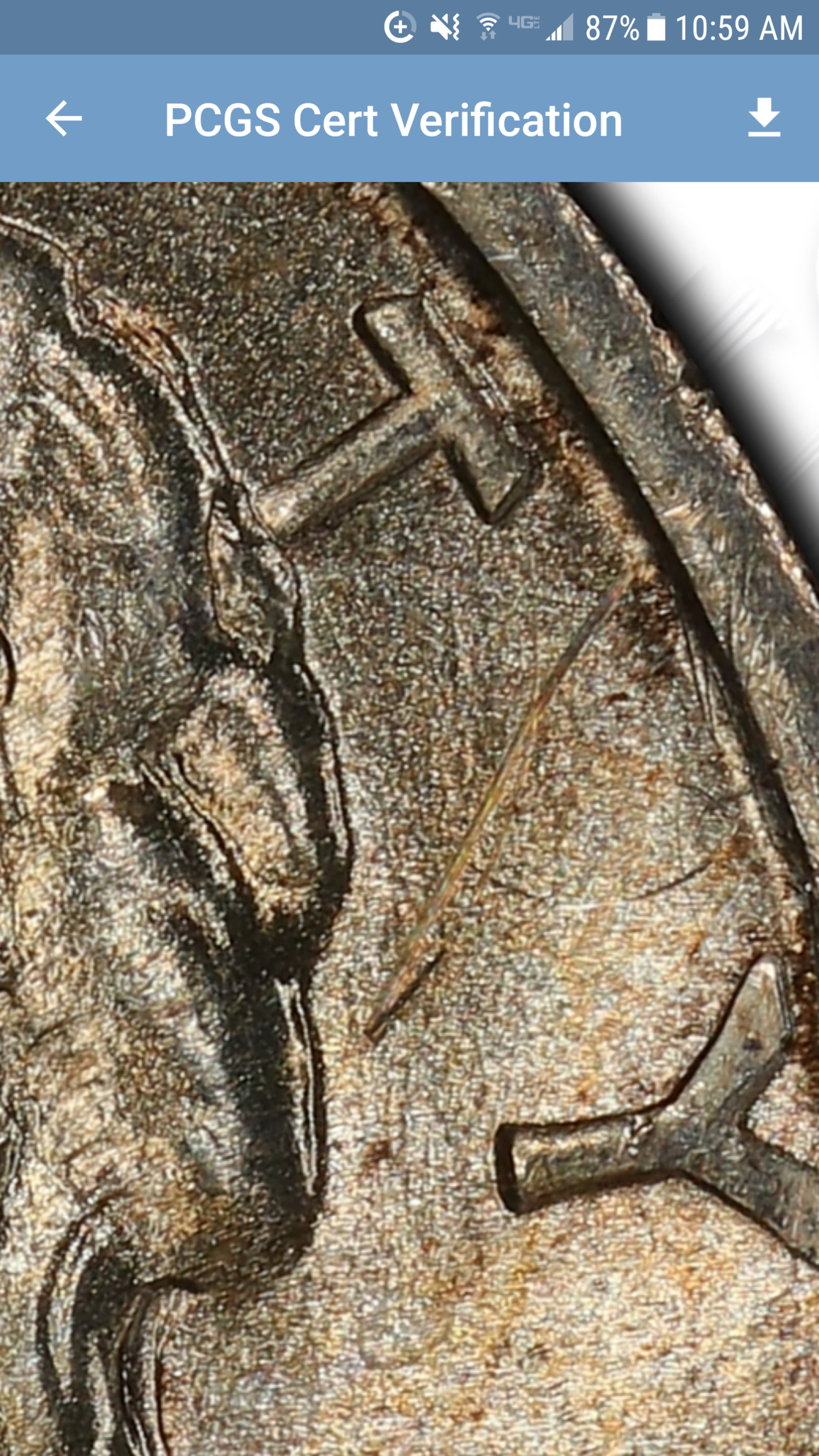
With magnification and fluorescent light it is very easy. One thing not mentioned so far is that the surface inside any struck thru defect will be "original" and a different color and texture than the surrounding field area. Scratches are usually shiny until they tone down.