1884-O VAM-28 With Crazy Action On Mint Mark
 PocketArt
Posts: 1,335 ✭✭✭✭✭
PocketArt
Posts: 1,335 ✭✭✭✭✭
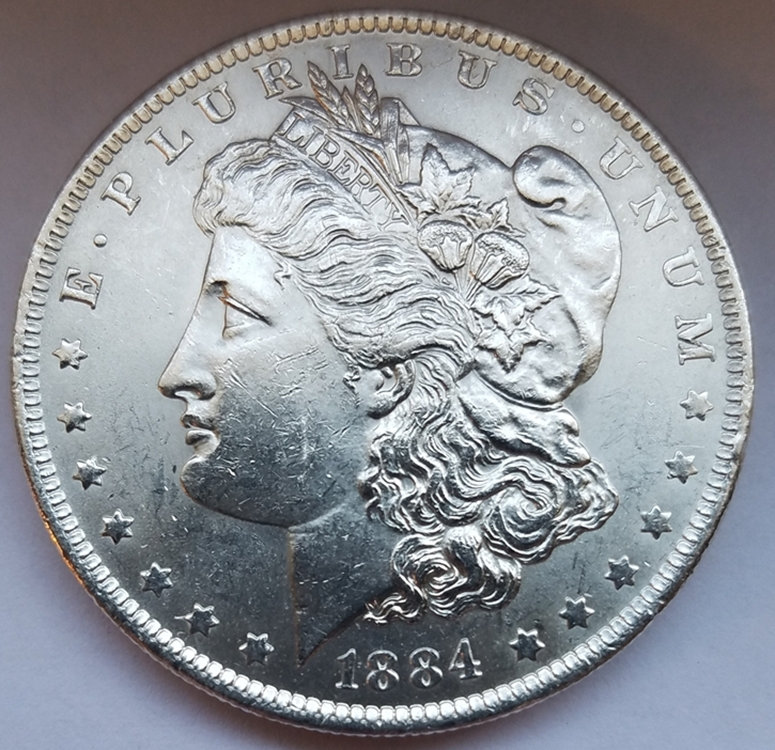
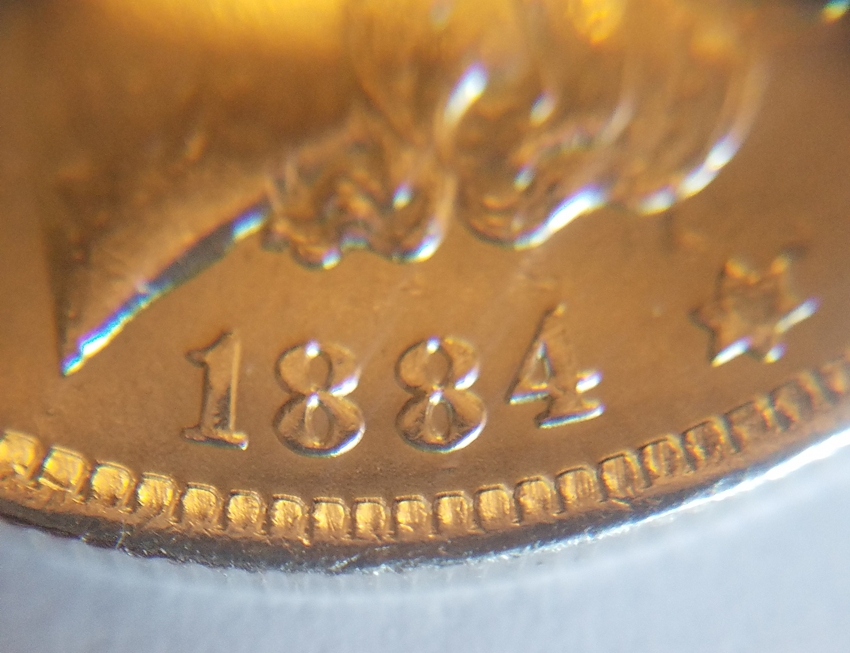
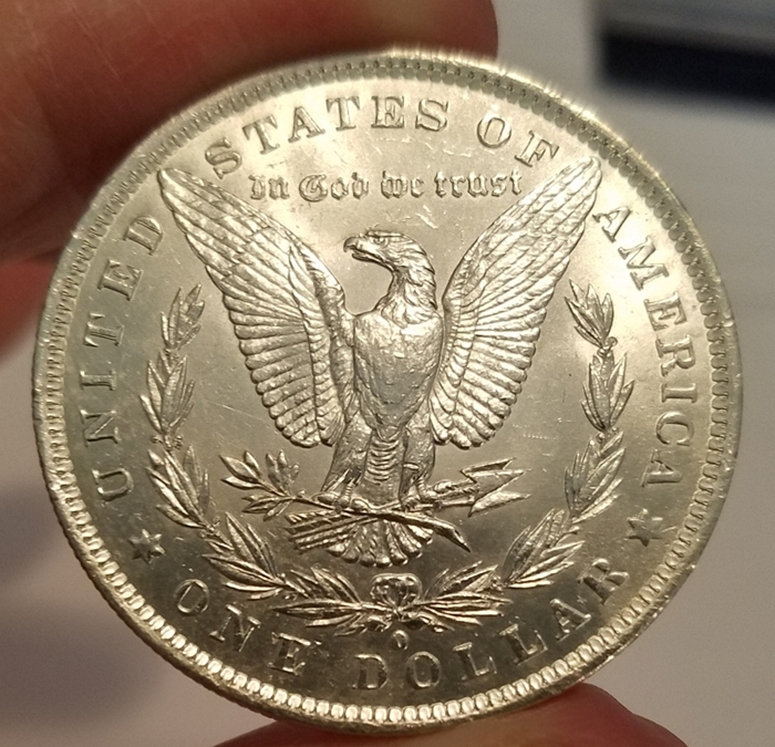
Here is a 1884-O VAM-28 Far Date, Dash Under 8.
http://www.vamworld.com/1884-O VAM-28
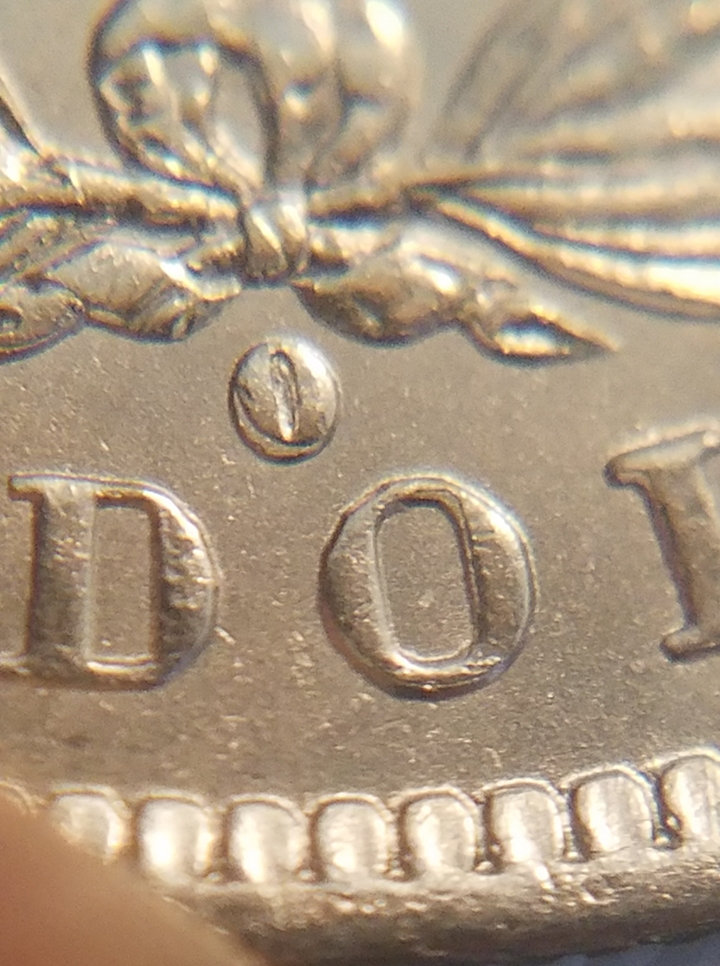
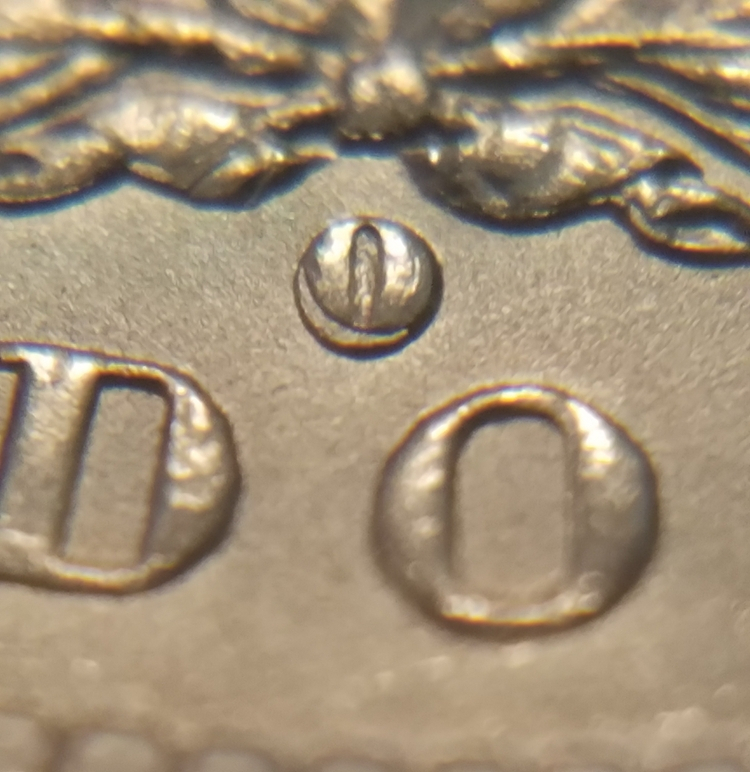
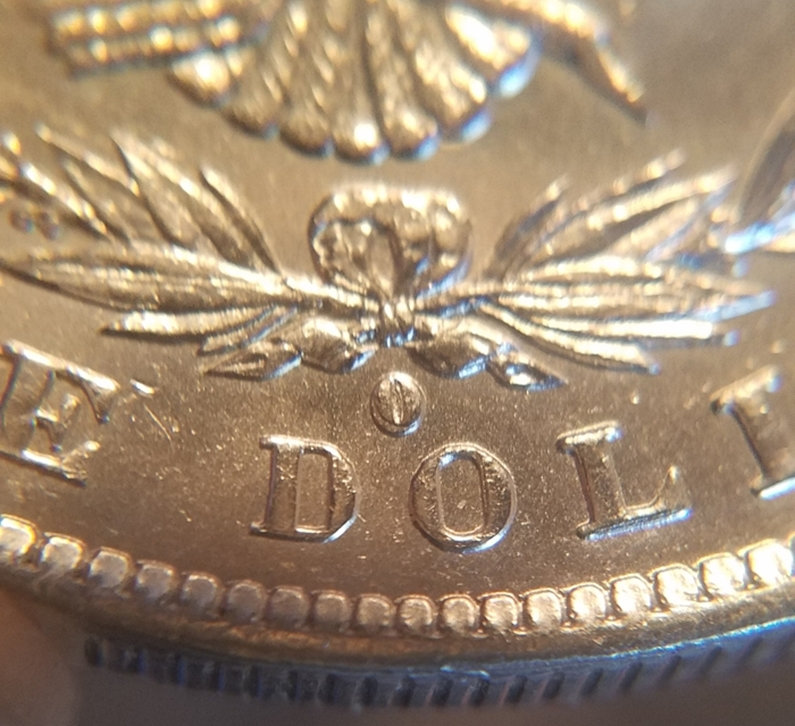
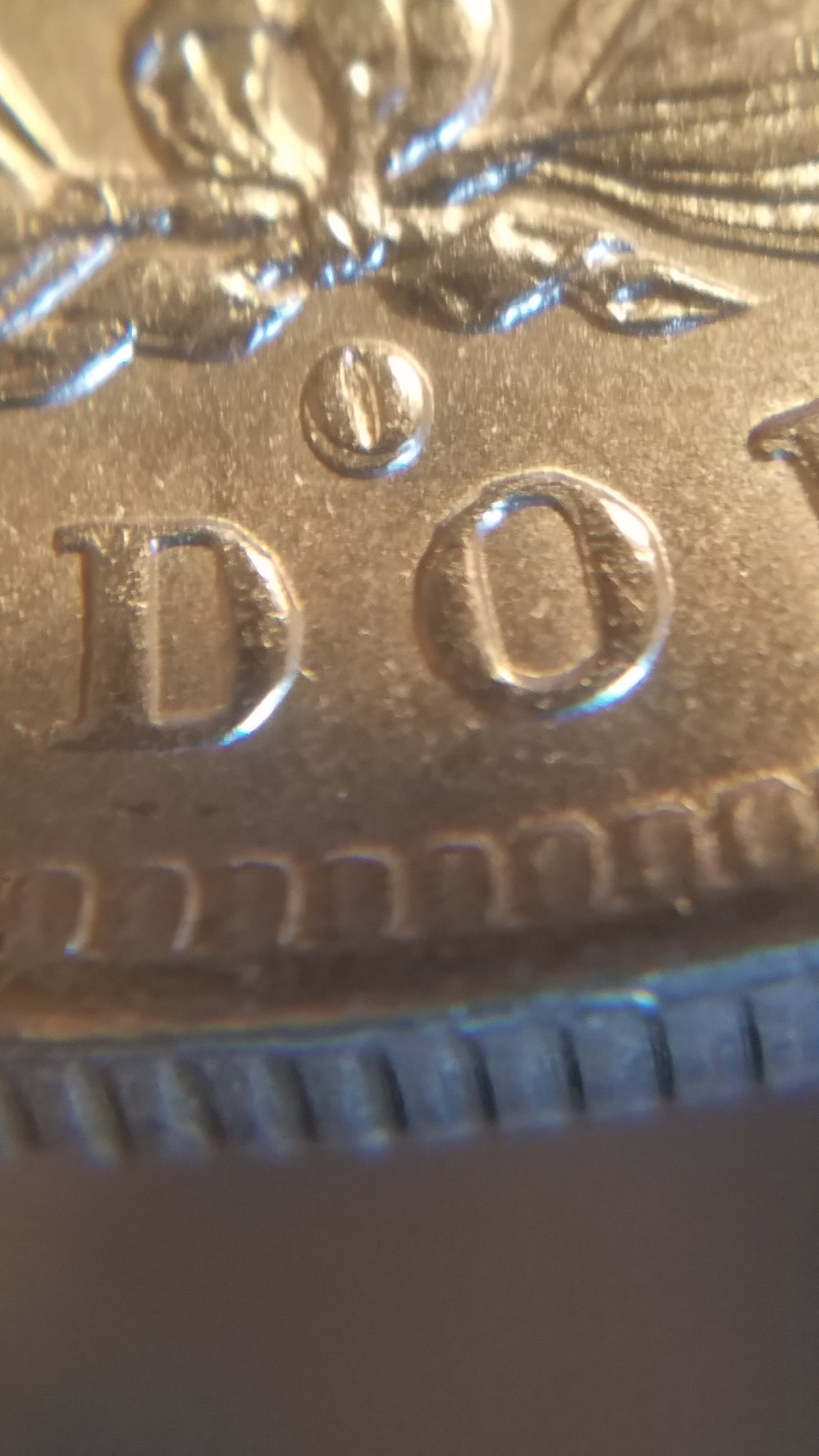
Have you ever seen mechanical doubling like this on a mint mark? The devices on the reverse around do not show as extreme as on the New Orleans mint mark. Interesting how this phenomenon is at this particular position on the reverse, and not in the surrounding area. Enough to leave a collector questioning between mechanical doubling, and true doubling, OMM, RPM in hopes of discovering something unique...
I've never seen this before, so, more experienced numismatics can weigh in with their observations. Just tell me it's a oval medium MM over a large O and I can drink another bottle of Michigan Catawba from the motherland in celebration. If not, I'll still drink a bottle for good measure for a moment on another day just in case I forget. 
Comments
I came across an 1885-O Morgan that had a very similar mechanically doubled O. I thought I had discovered a new RPM, until I sat down and examined it further.
Check the upper inside of the O and upper part of the first L in DOLLAR, they show nearly the same dramatic shift. I saw the same thing in the '85-O that I had found. You will probably find more evidence among some of the other letters on the reverse.
It may be jtlee321, I'll get back to work and get more pictures up. Thank's for insight, and observations.
Okay, the "I," "T," and a little on "E" in united. Some action here- outside to left. These VAM fiends see more than I understand, so, maybe they can weigh in too? Get some VAM action...!!!!
Look at the inside of the "O," this is what has me wondering. Shifted down/left....appears to be features of another "O." I think there may be something that may be worth further scrutiny. IDK. @jtlee321 put some pics up of your 1885-O please. You take some of the best pics known in the field. I want to see the resemblance if you have them- thank you, much appreciated!
Thank you for the compliment!! I went and checked my image library and I never had a chance to photograph it. I think I recall trading it back to the dealer I bought it from for a different Morgan.
However, I did find an example of an 1885-O that I did shoot that had some pretty decent mechanical doubling. It's very easy to see in the mint mark as well as on most the peripheral devices on the right side through to the top and bottom. The doubling weakens and disappears on the very far left edge. I'm including a full resolution image so you can zoom in and explore it. You will see how the ghosting of the first impression seems to fade out from right to left.
As far as your 1884-O, I will look at you images again to check the inside of the mint mark. There are couple RPM's from '84 that this could actually be.
Awesome @jtlee321, your photography is phenomenal! I believe the "O" per example is wide MM. I could be mistaken; yet, I think the VAM fiends could tell. Thank you, top notch pic!
I took another look at your coin. The O mm has a filled center, which allowed some of the first strike to still be present. If you look at the shape of the O, the bottom outside of it has been sheered and is not showing the full shape. It looks distorted. The inside shows what looks like a RPM but it's actually remnants of the first strike.
Interesting, this may be true. I did notice that there was a sheered lower left of MM- this bothered me. It may be perhaps some fill in the center of "O" when struck, caused a reverberation within the "O" creating another "mechanical struck" shelving inside, if that is what you suggest?
IDK- so do you think with this particular strike doubling, it could in-effect create this sort of anomaly? In such a confined space in MM? The definition of ridges within MM leaves me skeptical- if anything. Yet, in such a small space, shelving with strike doubling could appear to have form.
I consider your opinion top notch so I'm at 95% reversing my own thoughts with MM. Thanks @jtlee321 for insight, and pic!
Shoot, wheres the VAM action...man.
Interesting coin... I see both sides of the discussion... Need @FredWeinberg to give us some input on this issue.... Cheers, RickO
The OP coin shows Machine Doubling.
On any given coin, the amount of machine doubling can vary from letter to letter to digit to mint mark to design element depending upon how high the character or element rises up above the field, AND how steeply it curves away from the field.
Dates and mint marks tend to have very steep side; they meet the field at very near a right angle. As the corner in the die where the hole that forms the character meets the field rises up after the strike, a very minimal sideways displacement of the die will cause that corner to bump into that steep-sided character. A more rounded top letter in a legend will be bumped differently. A low relief leaf or ribbon or stem end, as on the OP coin, may avoid damage entirely.