Options
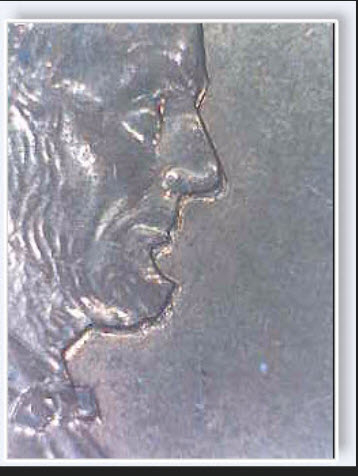
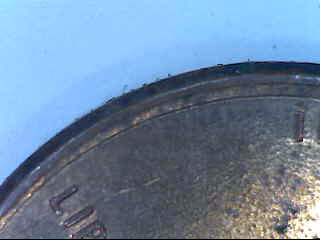
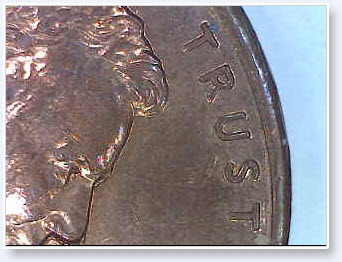
What occurred during this machine doubling of a 1999 Lincoln Cent?
 jesbroken
Posts: 11,238 ✭✭✭✭✭
jesbroken
Posts: 11,238 ✭✭✭✭✭
I have this 1999 Lincoln Cent I purchased out of curiosity. I know their is no great value in
machine doubling, but this one caught my attention. How did the extensive doubling occur and
how did it occur in an odd direction to both the bust and the rim? Just curious and know that there
are members who can tell me exactly how this happened.
Jim
When a man who is honestly mistaken hears the truth, he will either quit being mistaken or cease to be honest....Abraham Lincoln
Patriotism is supporting your country all the time, and your government when it deserves it.....Mark Twain
0
Comments
Mechanical doubling. This type of doubling, which is also known as strike, ejection, shelf or shift doubling, is not the result of the design on the die being doubled. Rather, this type of doubling occurs when the die strikes a planchet. If the die is not properly seated, it can move slightly or bounce during the moment of striking, creating a flat, shelf-like doubling. This effect will be different on all coins struck, so it is technically not a variety, but rather more of a striking error. Hope this helps... Cheers, RickO
The use of the term machine doubling is unfortunate as it confuses new collectors into thinking there is some value to the coin in question. Striking error would be more accurate but would also probably confuse new collectors into thinking the error was some value. Maybe just calling it machine damage.