Options
What's going on with this $20 Liberty Legend?
 Insider2
Posts: 14,452 ✭✭✭✭✭
Insider2
Posts: 14,452 ✭✭✭✭✭
Will someone please explain how this happened? I have seen repunched letters on coin s before but cannot recall anything like this after say,..1850's
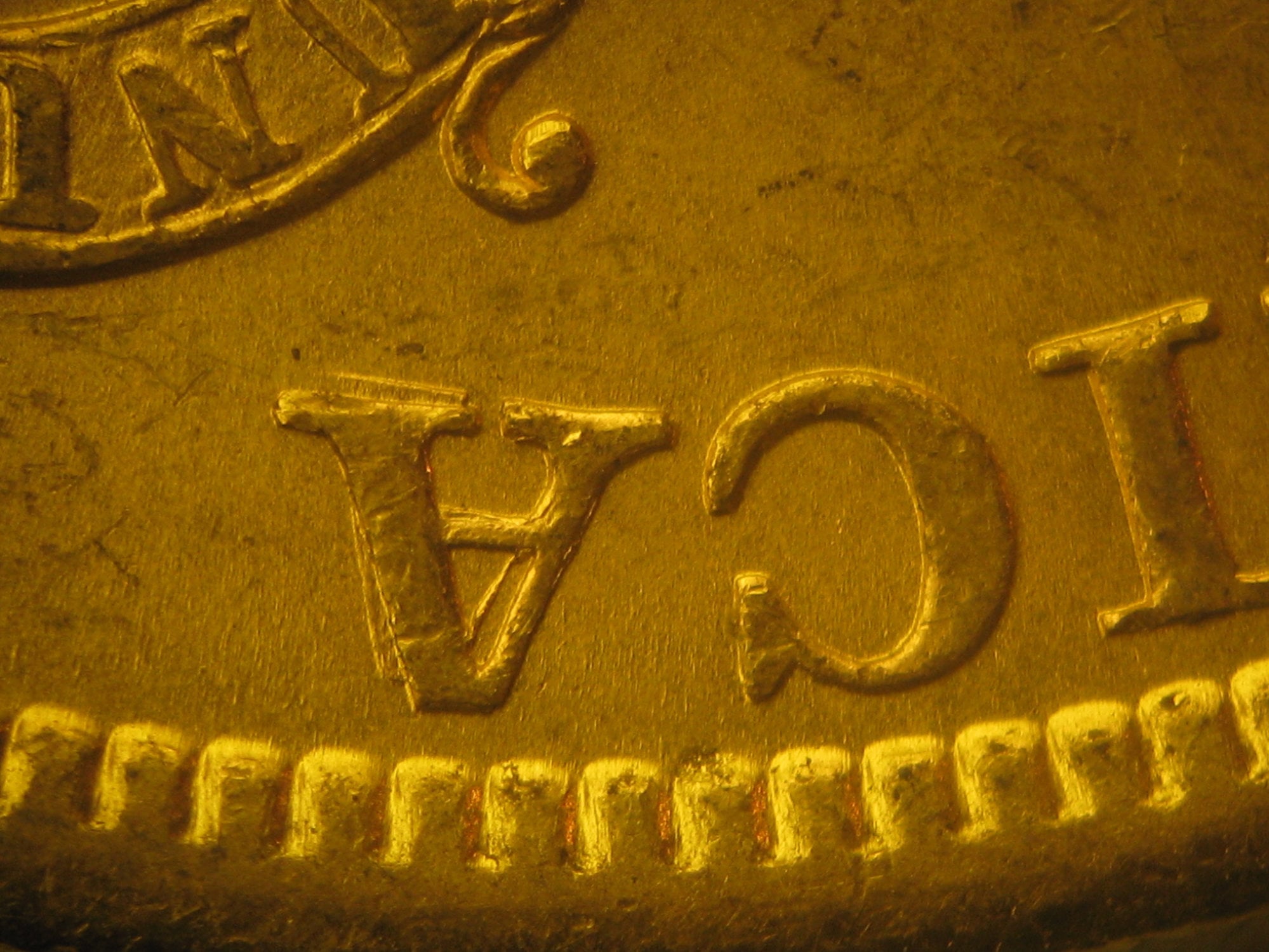
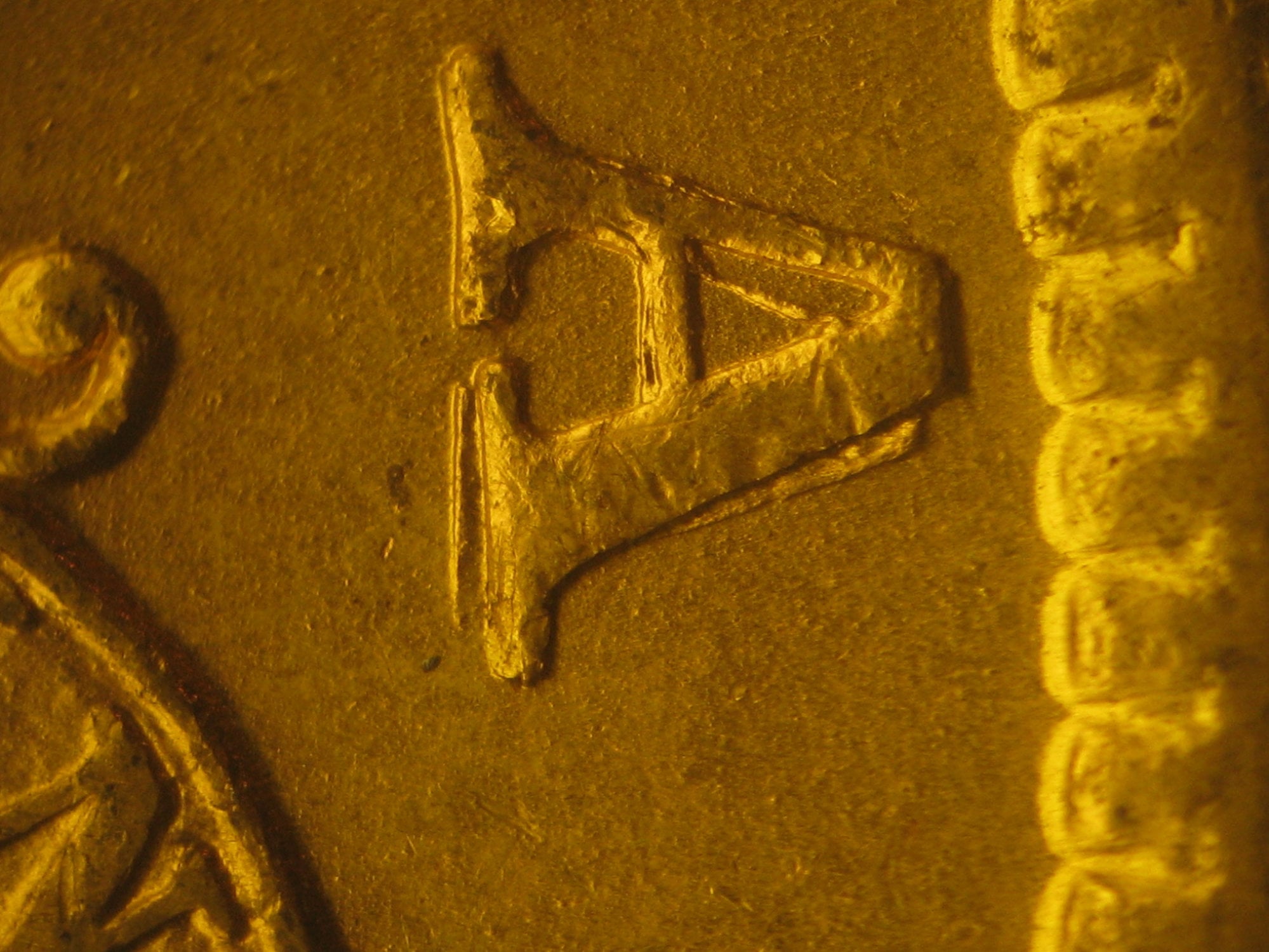
- No photo of the entire coin available at this time. It is an 1877-S and does not belong to me.
- The final "A" in America is double punched into the die in spite of the fact that these dies are hubbed.
- THERE IS NO TRACE OF ANY OTHER DOUBLING ON THE REVERSE (not even at 40X) & no evidence that anything was polished off this die.
1
Comments
Looks like they did not like the angle of the first A and changed it. They did a poor job of removing the first strike. That's what it looks like to me.
Now lets see what the experts say...
@Batman23 said: "Looks like they did not like the angle of the first A and changed it. They did a poor job of removing the first strike. That's what it looks like to me."
That makes sense as it looks like that; however, the letters were not punched into the die one-by-one in the 1870's. Besides, if that were the case there should be tons of them like this.
Punch. Poor repolish/polish. Strike.
siliconvalleycoins.com
Some rather clumsy attempt to strengthen the "A" after the die was initially made?
I guess an overlay would ID the position of the "A" on the hub. Note that the weak "A" is under the "Normal" letter. Cannot fine a similar coin on the net as of yet. Surely, it should be mentioned if one ever was in an auction.
In that era individual letter punches were used to strengthen a feature. Usually confined to post-repair work.
The fainter A seems smaller than the original so it was more likely a SF Mint project.
Then in this case, I should think that the "weak A" should be the one that matches an overlay. Additionally, it would be extremely hard to get the "Bold A" to match so precisely to the depth and thickness of the adjacent letters.
I see a couple more on Coinfacts:
I wonder if the Mint was doing some maintenance to that area due to a small developing die crack and the overstrike was sloppy:
Interesting, regardless.
Lance.
THANKS! Now, we are getting somewhere. The top two match, the bottom one (IMO) with the die break has nothing to do with the other images.
After 15 or 20 years of doing the same thing every work day - 6 days a week - they probably got very good at all sorts of things.
Interesting anomaly.... I have not seen it mentioned here before... obviously known by some since the coinfacts images appear the same... Cheers, RickO
Super cool in my opinion.
My YouTube Channel
neat piece.
what date & MM is it?
BHNC #203
What date and mm was it? Would it be more or less likely with branch mints?
There is a GREAT BIG CLUE in this thread.
Remember that a new Master Die was created for the $20 reverse in 1877. This could conceivably represent a prototype die that was modified by hand and then sent off to the boonies where nobody would ever notice it.
Perhaps there were two reverse hubs made with a slight difference in the position of the A, and this die was hubbed from both hubs. Years ago I discovered that two different With Motto reverse hubs had been created for the $20 in 1866, that varied only in the position of the word "IN." At least one die was hubbed with both hubs, creating a very localized doubled die. That die was used for regular production in San Francisco.
If you want to see an example of the rejected "Low IN" hub, look at an 1867 $20 Proof. This Proof reverse die was also used to make the 1865 With Motto "pattern," though whether that usage was in 1865 or 1869 or somewhere in between I do not know.
TD
@CaptHenway Neat, did you ever publish?
Possibly not known. Many gold varieties are sitting in plain sight.
Yes.