Options
1906 - A nice pile of Alaskan gold.
 RogerB
Posts: 8,852 ✭✭✭✭✭
RogerB
Posts: 8,852 ✭✭✭✭✭
This afternoon I was browsing through materials collected for a book, American Gold, that I wrote several years ago but never published. It covered the relationship between the United States, the multiple gold standards and the dollar from 1900 through the end of World War II. Here's an interesting photo from those files.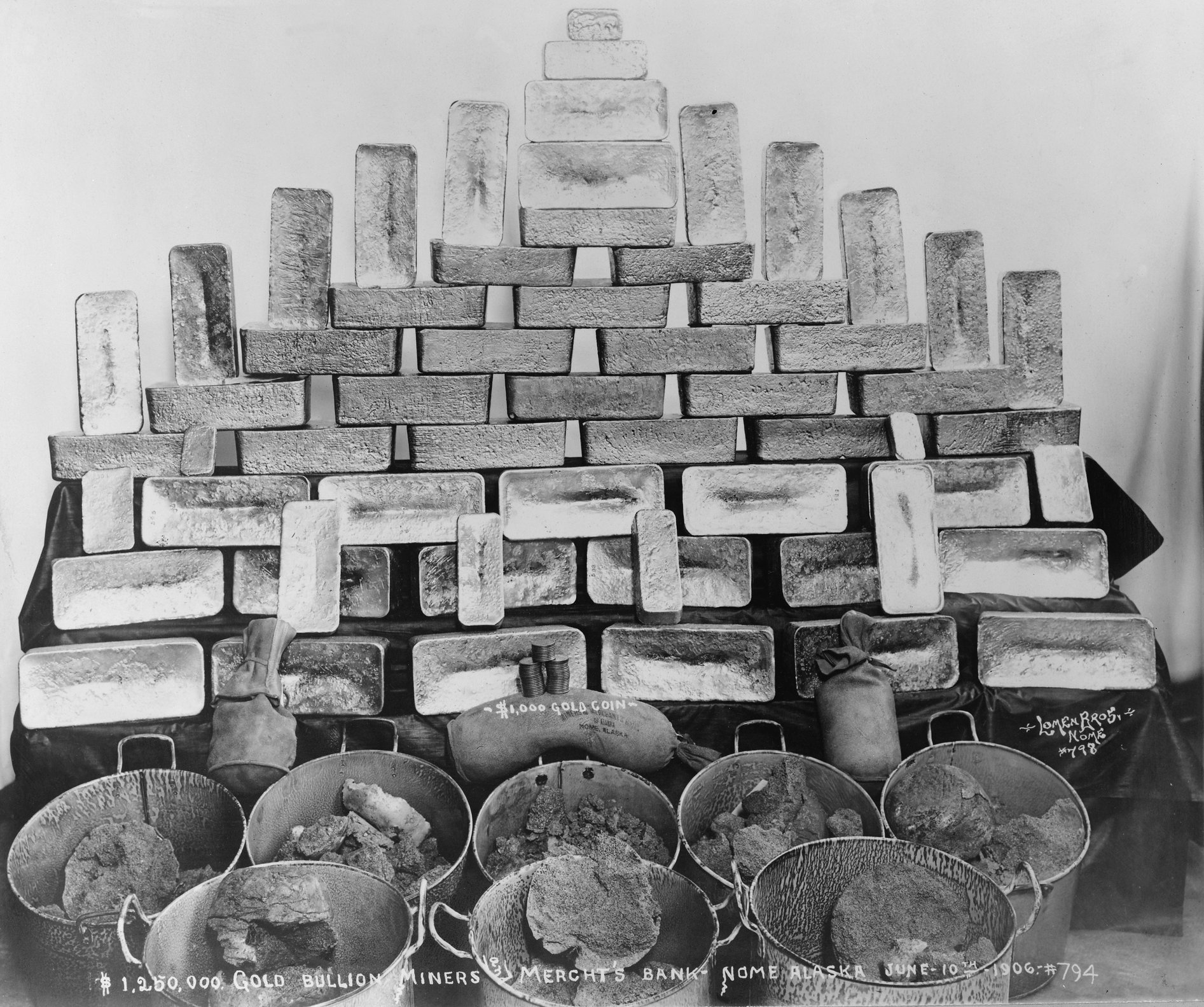
14
Comments
Very cool!!! I assume the buckets are full of the gold rich beach sand.
The buckets appear to contain unrefined "kings" formed when native gold is melted in a crucible. The gold sinks to the bottom. Once the metal has cooled, the slag and impurities are cracked off the "king" and that leaves a cone-shaped mass of gold.
I was wondering very much about those buckets too, because I had always heard/read that most Nome beach gold recovered was very small and fine in nature. Great picture, much appreciated (and ripped for my photo library).
Thanks for the picture Roger. Here are a couple articles on the Alaska gold rush: https://en.wikipedia.org/wiki/Klondike_Gold_Rush http://alaskaweb.org/mining/klonimpact.html
That's an awesome pic! Thanks for sharing it!
"There's no place like Nome!
There's no place like Nome!
There's no place like Nome!"
Sweet !!!
What would that be today, roughly 132 million?
"A dog breaks your heart only one time and that is when they pass on". Unknown
Amazing picture... and represents a lot of work by miners of the time. Riches for some, broken dreams for others. Cheers, RickO
The photo is likely of a publicity display in the Miner's and Merchant's Bank of Nome. But the quantity of gold is not large compared to the amounts mined each season. Much of this went to the Seattle Assay office with payment in checks drawn on San Francisco or New York. By 1906 most mining was run by corporations using dredges (like the ones on TV - only run by experienced people) although some placer mining continued.
Gold from Klondike and other Canadian regions also flowed to the US where the government paid 100% of metal value.
If you look at the "reality" TV shows, the quantities of gold they get excited about are tiny when measured against yields a century ago.
Roger, what you say about dredgers is true but experience dredgers are hard to come by since dredges were last used in the 1950's. I think the boys on TV have done a remarkable job learning from scratch how to use a dredge. Got to cut them some slack Roger!
And I bet if you were 50 years younger and had a chance to run a dredge you would jump at the chance!!
bob
The thing that bothered me about the recent spate of "reality" gold shows was that in the name of "product placement" corporations like Ford and GM were giving the miners trucks and other top-notch equipment that they could never have afforded with their recovered gold alone. If you tried to balance in your mind what those modern guys were taking from the ground versus likely expenses, well, you knew that they wouldn't be out their in the wilderness without the television program. The dollars and cents and sense side of it took the edge off the excitement of the gold recoveries for me.
Same thing with the GPAA gold mining camp north of Nome. Great ten day adventure, but spend $4,000 to $5,000 for the trip and come home with 7 or 8 grams of small fine gold.
I keep coming back to 60,000 Troy ounces of gold.
Photo states $1,250,000 in gold. $1,250,000 divided by $20 would be 62,500 twenty dollar gold pieces at the time.
Each $20 gold piece had 0.96 Troy ounce pure gold. 62,500 times 0.96 equals 60,000 Troy ounces of gold.
At Friday 1/12/2018 gold close of $1,338.40, that's $80.3 million dollars.
If my methodology is wrong, I would appreciate somebody pointing out my error.
AUandAG - Yep. Learning the way they have is expensive training. The fellow who bought the two dredges seems to be a high-risk person, but also practical and probably the best of the TV bunch. I hope it succeeds since dredging is a practical way to recover as much as possible. Check out the satellite images of old tailing rows from the discharge chutes.
And those guys on Bering Sea Gold in Nome are just collecting scraps from these old timers. Imagine living through the Alaskan gold rush!
The Nome Gold Rush was an amazing time in history with people living in tent cities due to the rush and lack of buildings.
Here's my official centennial So-Called Dollar in gold. I also have the silver and silver with gold overlay for this.
DeFrancisci or Manship would have done a much better job of this medal.
Perhaps, but I really like the design and that it was designed and minted in Alaska
The frontier isn't the same as the metropolitan areas.
Agree that the design is interesting - a better sculptor could have made much more out of it, though.
The small guys (and woman) on 'Bering Sea Gold' are the ones that get my respect. They are brave and crazy and frequently their boat and entire diving rig-out weren't worth $60,000 when new. They are brave and pretty crazy. The underwater area they are working was virgin not too many years ago.
Yeah, it would have been something!! I've alway's wanted to make the GPAA Nome trip, if anything just for the experience. I don't think I'd come home with a lot of gold, but I know I'd be out mining every hour that I possibly could. Thankfully, Here in Oregon we have a beach not too far of a drive from me that has beach gold that you can recover. It's a lot of fun driving down to the beach and shovel that sand into my sluice and come home with a little bit of that yellow stuff.
I'd love to take a trip out towards @ricko someday. I think he's right up there in the California Gold Country.
Who would you recommend for a modern sculptor? Neither DeFrancisci or Manship where around for the centennial.
My favorite part of the photo is circled below. It really puts things in perspective.
I've seen many, many dredging piles in California and Colorado.
One thing to remember about dredging is that the dredges are set up to catch all gold that is 3/4" or less in size. So, anything bigger would just not get caught and go off into the tailings. Metal detector users have found large gold nuggets by searching these old dredge tailings. I knew of a fella that did just that, quite successfully, in the piles at Breckenridge, Colorado.
be well,
bob
@jtlee321.... I once did live in CA.... and AZ, TX, WA......However, now I am in the Catskill Mountains of NYS. Cheers, RickO
Better not to offer names for something in the past. As for future projects, there are several professionals that could be recommended for high quality, creative work.
My bad, for some reason I thought you were still in Northern Cali. Maybe I was thinking of someone else.
Impressive picture. I love your posts!
I went to Nome for two weeks 2014. Was pretty neat. Riding the quad 7 miles north on the low tide beach and 7 miles inland to Arctic Creek and the bush to Teller Highway was worth the money right there.
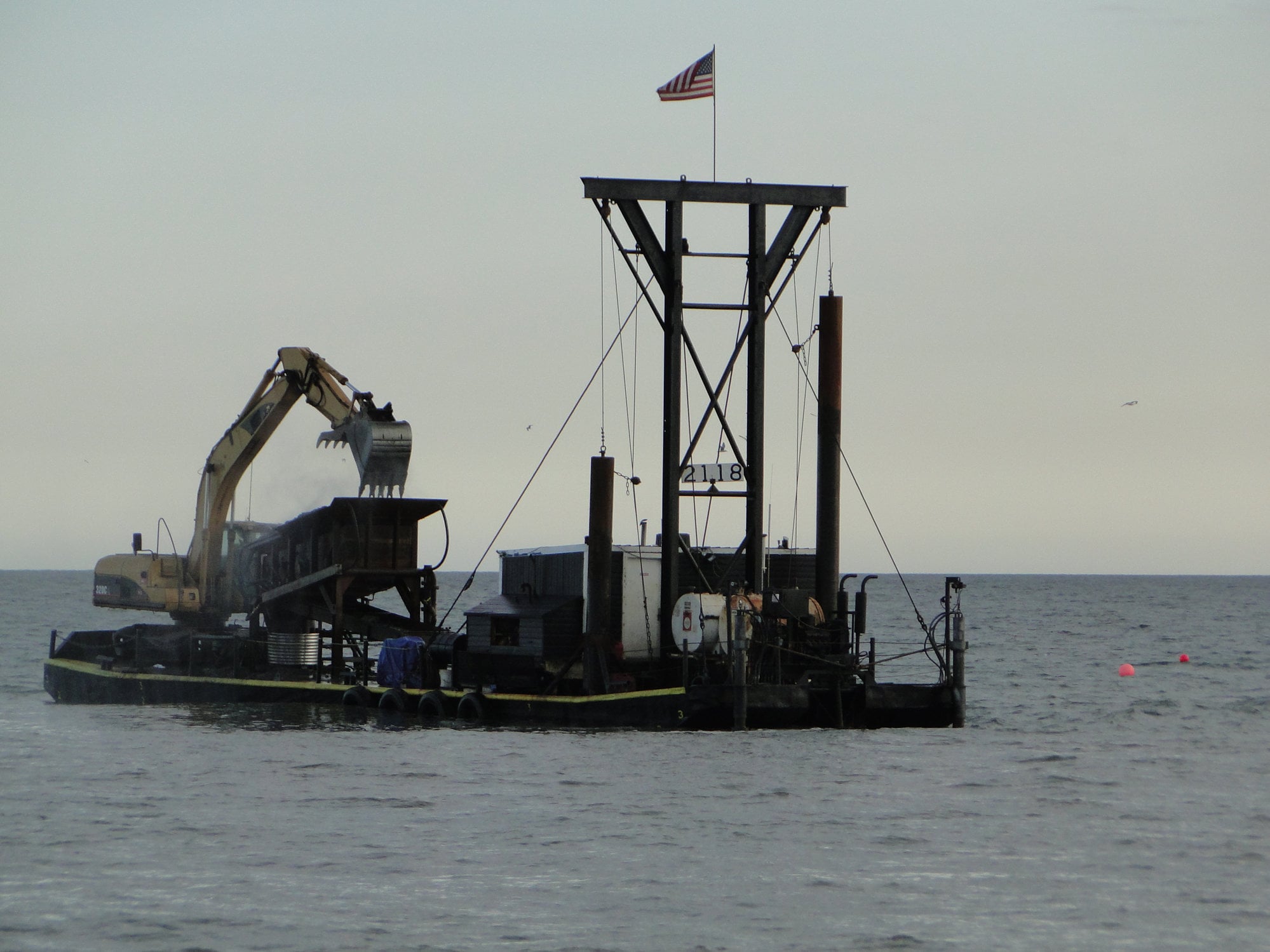
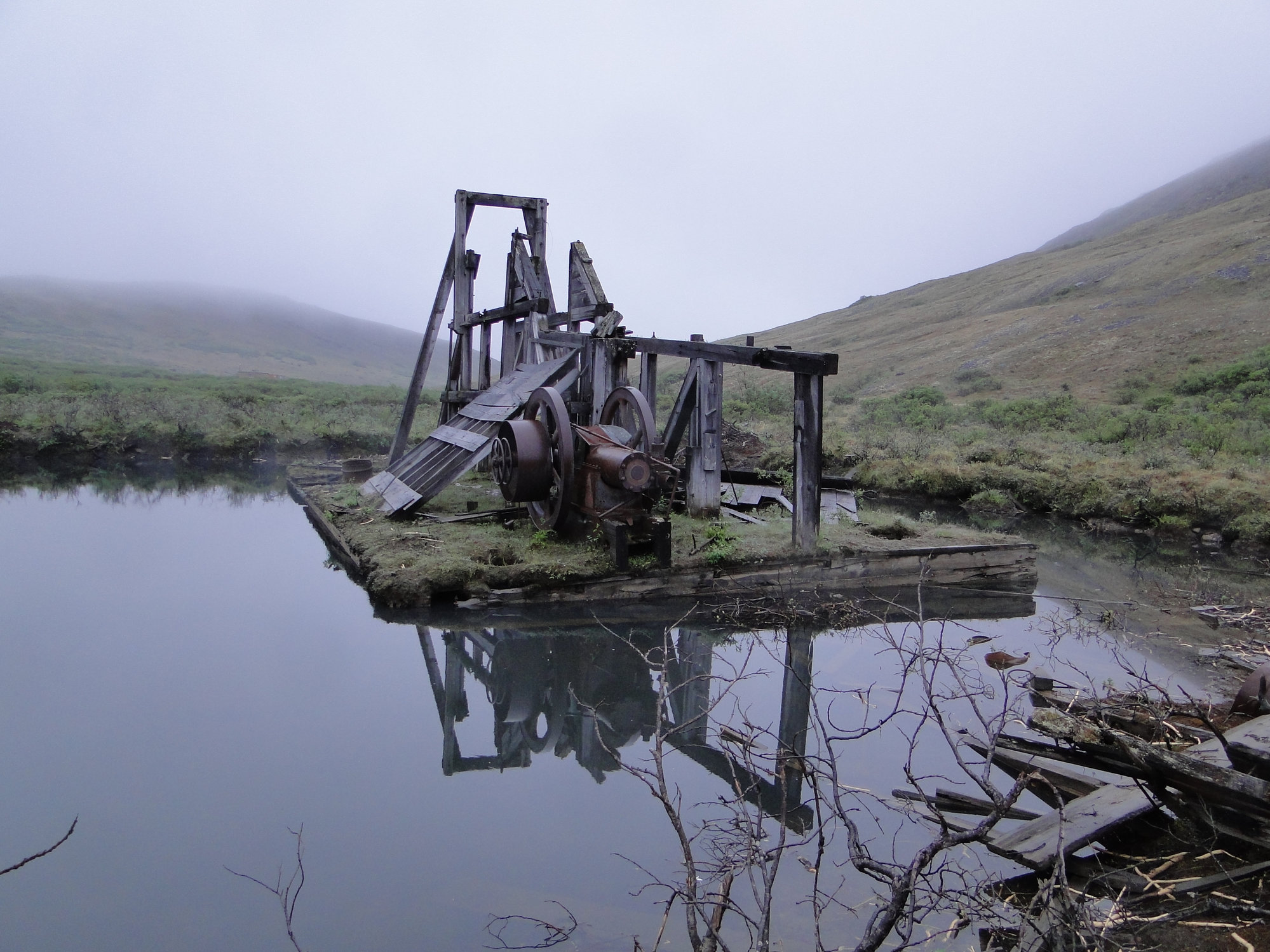
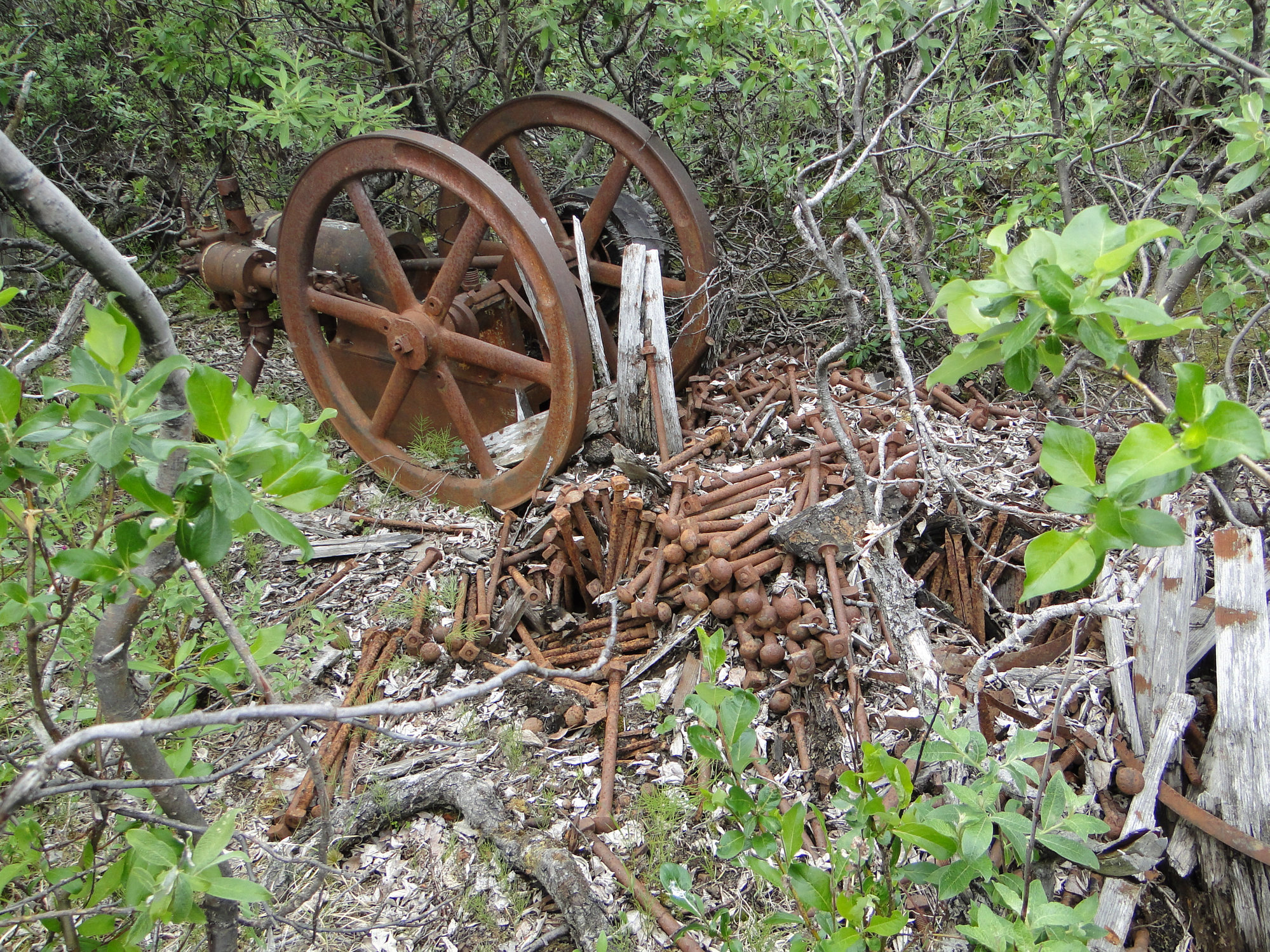
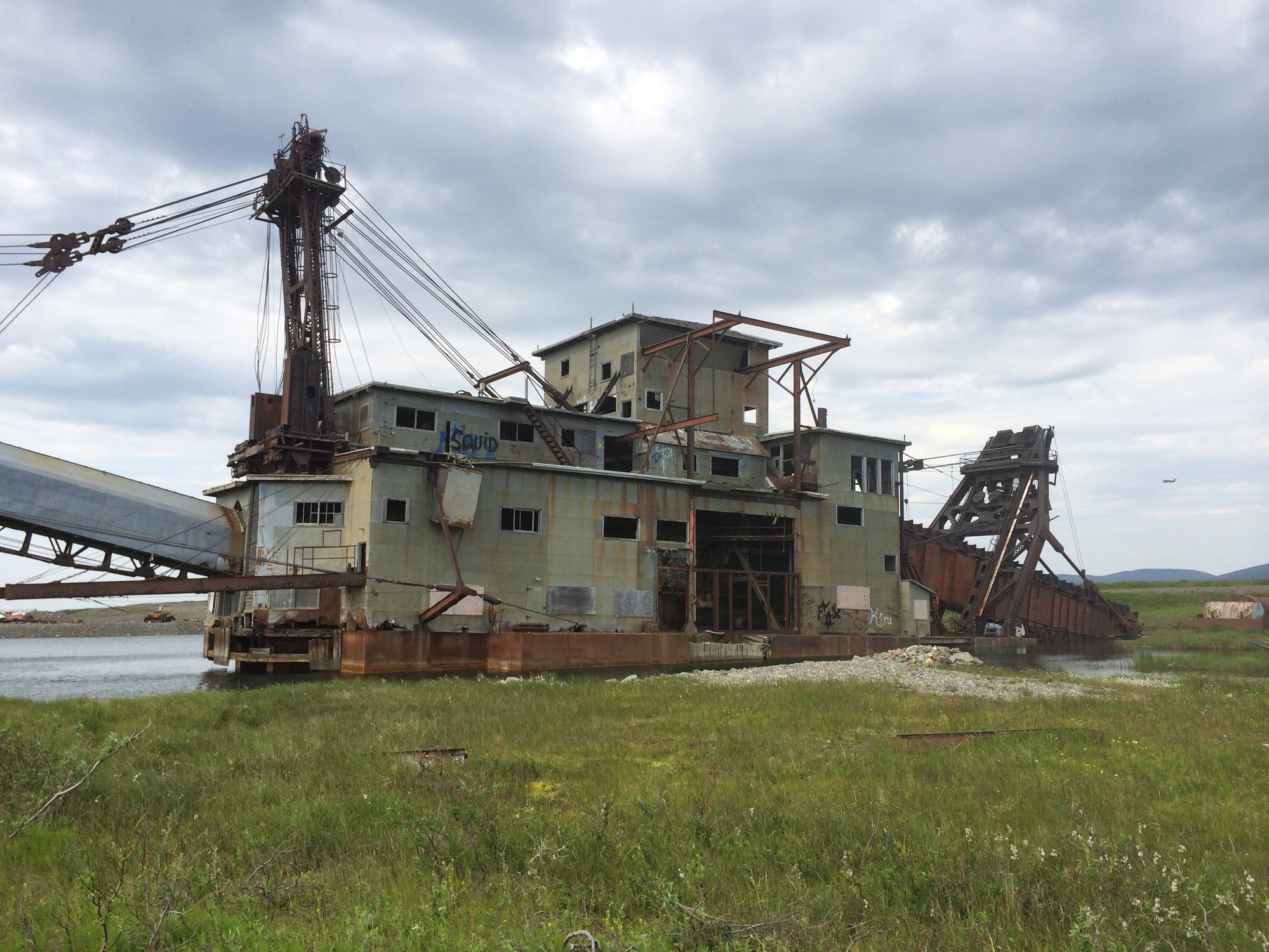
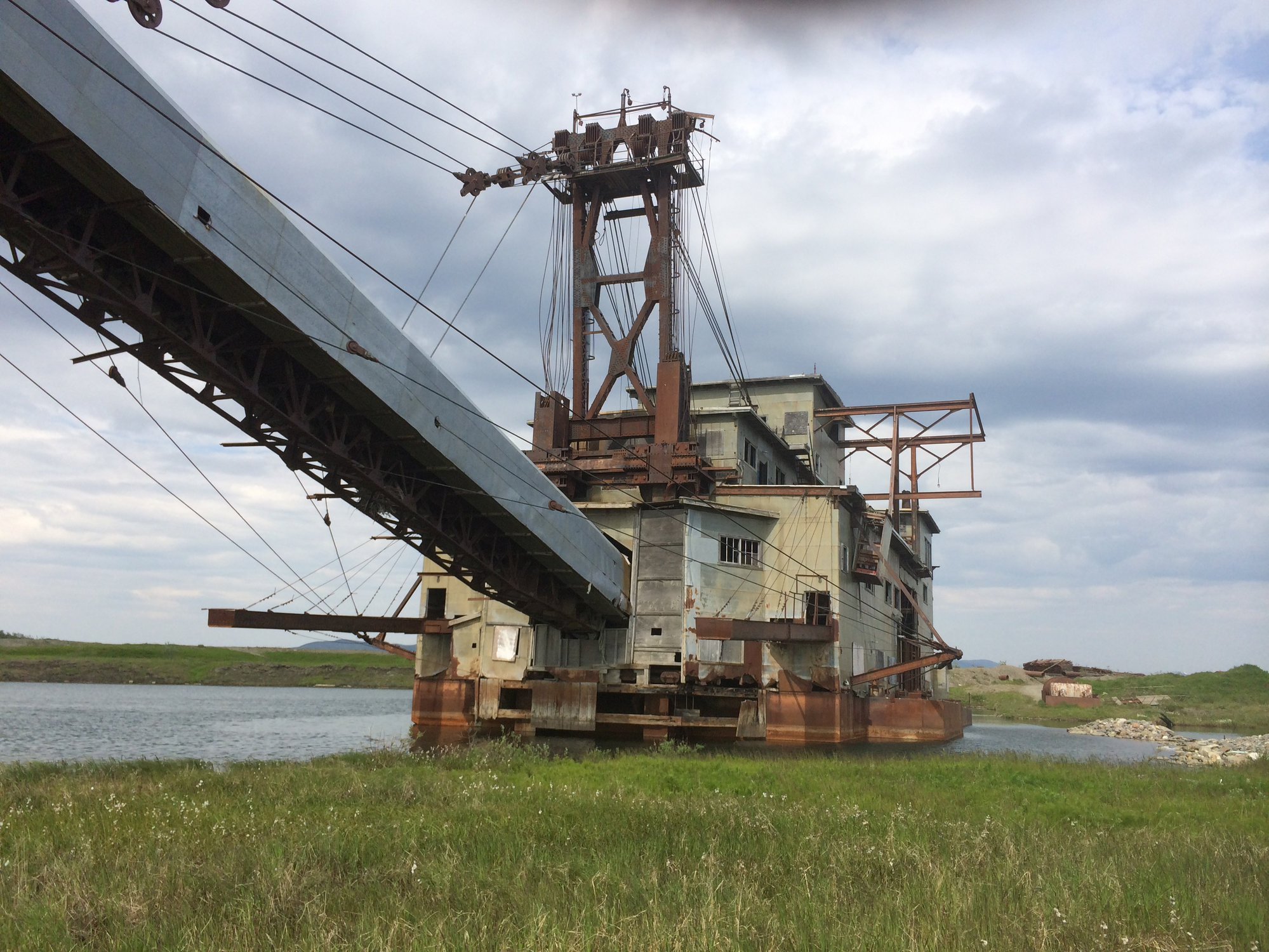
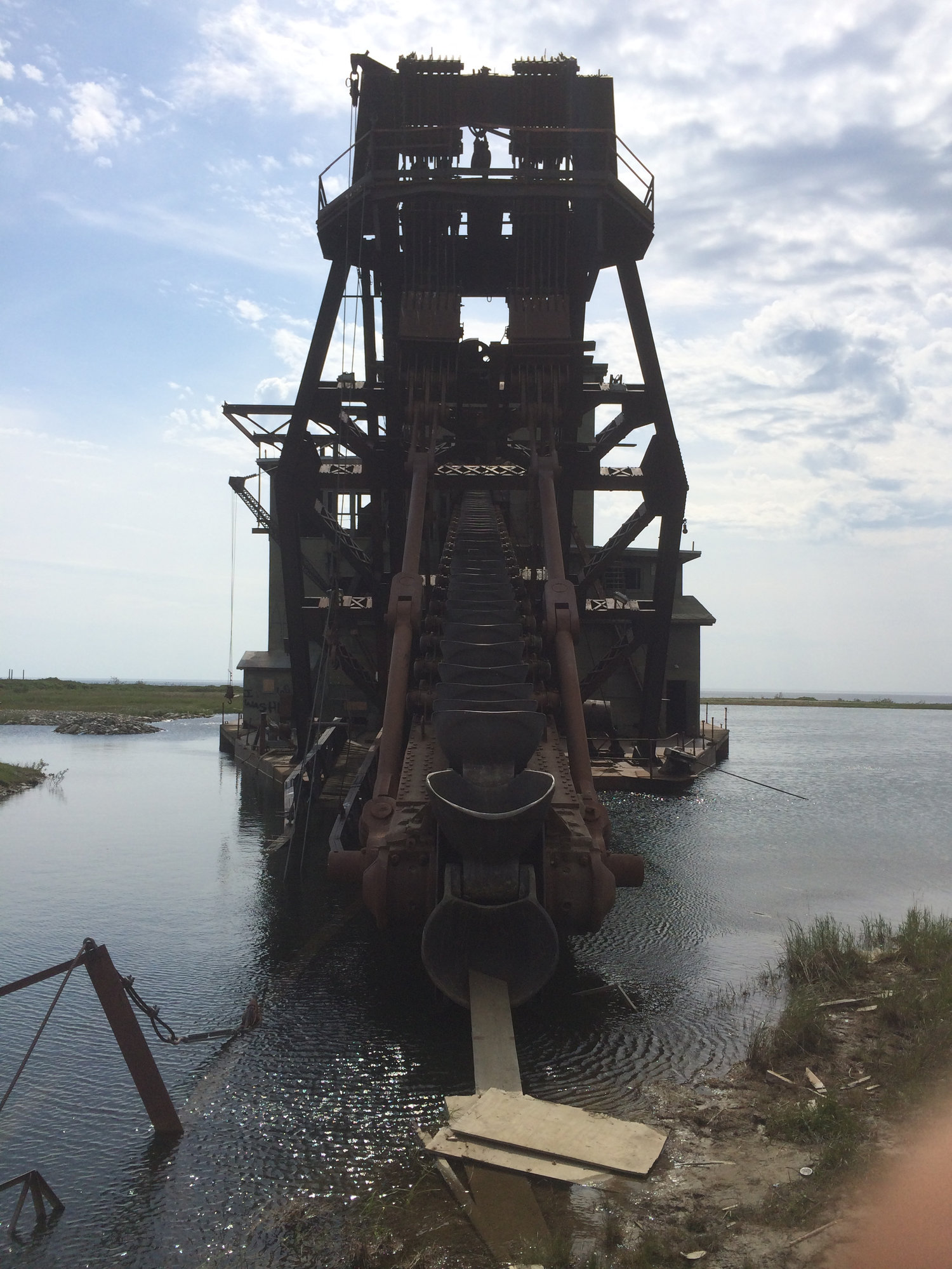
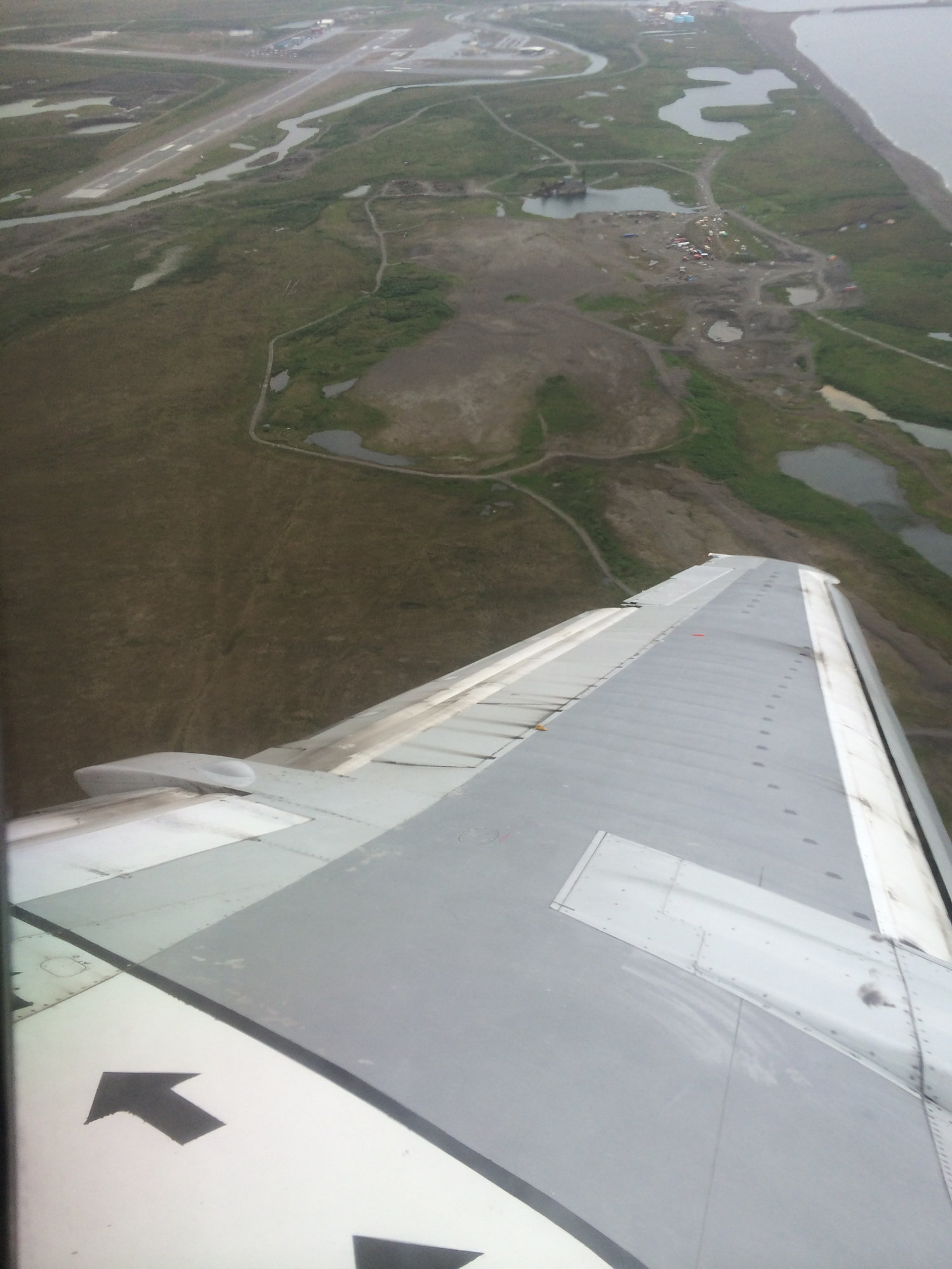
Christine Rose is legit.
This carcass was inhabited by beavers and mosquitos, likely had a bucket line.
This area had many rotted barrels of dredge parts. The story was the dredge was brought inland in sleds in the winter by mule and when WW1 broke out the men left never to return....
Derelict Dredge on Nome beach. The tailings piles are basically the man camps and I figured someone was living inside the dredge, so I thought it wise not to explore as much as I would have liked to.
I imagine the metal was forged in Pittsburge or some old mill area and shipped in the hard way.
The inland area likely hammered, but the wave action of the sea keeps the gold a moving target and mining will likely be alive for some time.
You can see the dredge in the distance and relation to the area it tore up in the day.
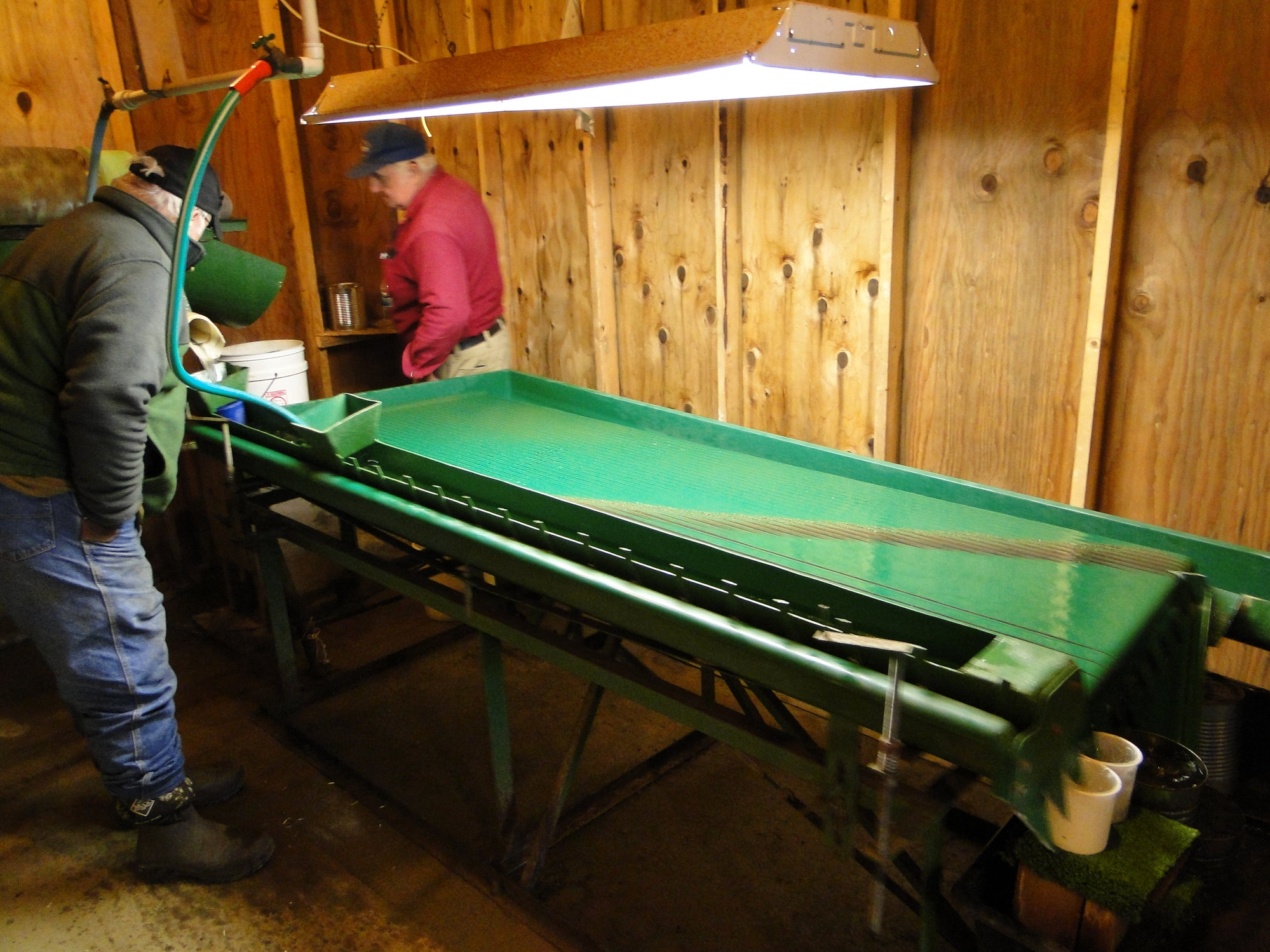
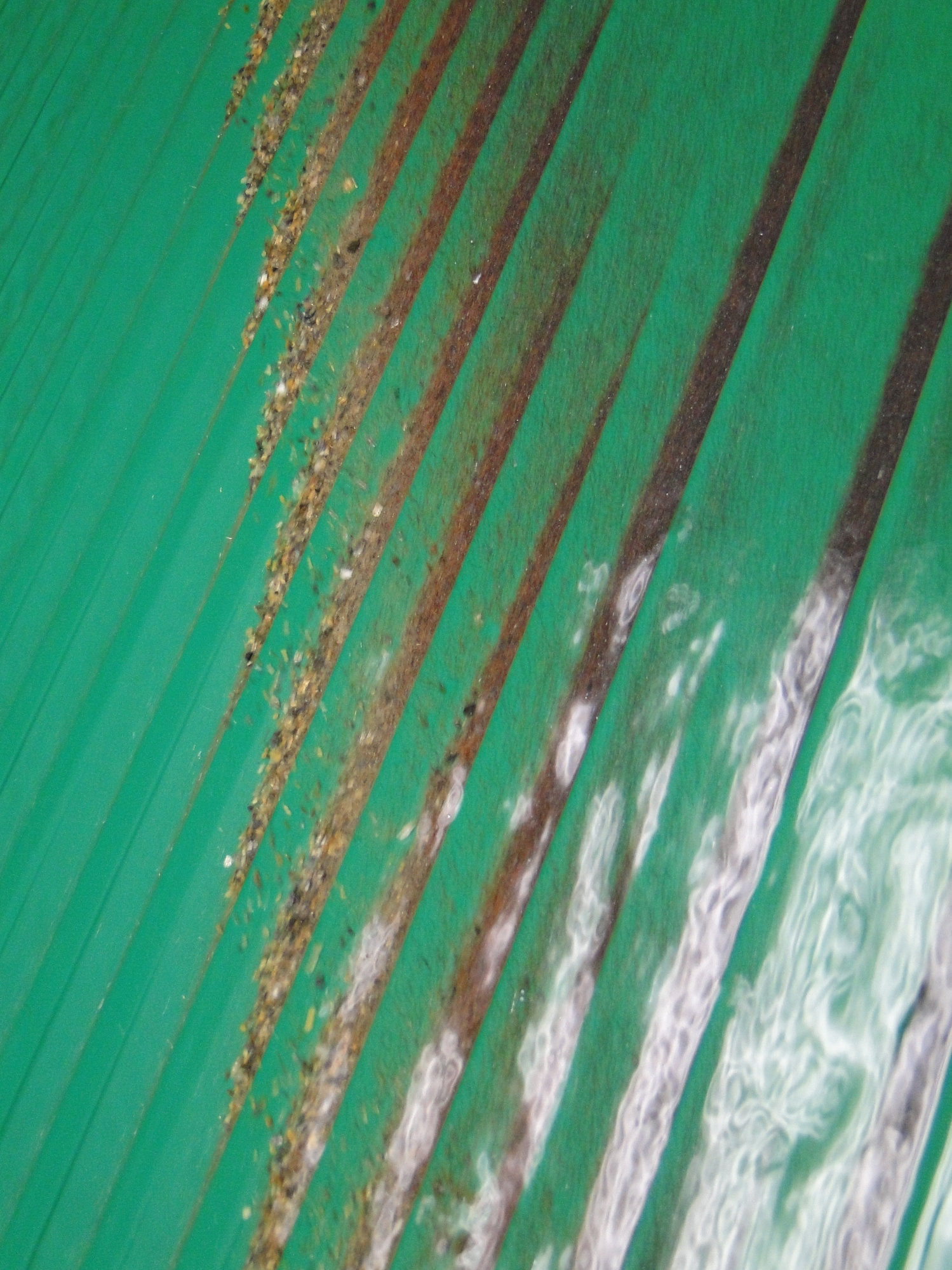
A shot of the gold cleaning room at camp.
My take away was that mining is very much alive in Nome. Survival takes all your concentration. Yeah, the first strike would have been a wonder, but the were different then. $1000.00 + gold makes tiny flakes relevant and profitable. I don't know if I would go back or recommend the trip, maybe. There are commercial opportunities if one would have the moxie.
When I first lived in Colorado from 1978 to 1984 I used to go up into the Mountains on weekends, and in South Park (yes, THE South Park!) near Fairplay there was a derelict gold dredge not far off the road. After I left the state I read that it had been disassembled and shipped to South America.
If you google maps just east of Fairplay you can see the remains of the trail of destruction it left behind.
@WildIdea....Fantastic pictures... really amazing to see the extent of some operations. I imagine the mining areas are similar. Cheers, RickO
Just curious what percentage of the gold prospectors came out better than when they started out? TV programs can do excellent work requiring top notch research as PBS does; that would be more "reality" based than these long drawn out "star" dramas. I found this article on prospectors: https://pubs.usgs.gov/gip/prospect2/prospectgip.html