Options
Poor Deadwood Assay Office – ignored and forgotten.
 RogerB
Posts: 8,869 ✭✭✭✭✭
RogerB
Posts: 8,869 ✭✭✭✭✭
The place closed in 1927 as costs of mining exceeded the value of gold extracted.
Here’s a photo of gold being poured in 1913. The mitts were made of asbestos; note the lack of safety gear. The fellow wearing a suit and tie might be the superintendent.
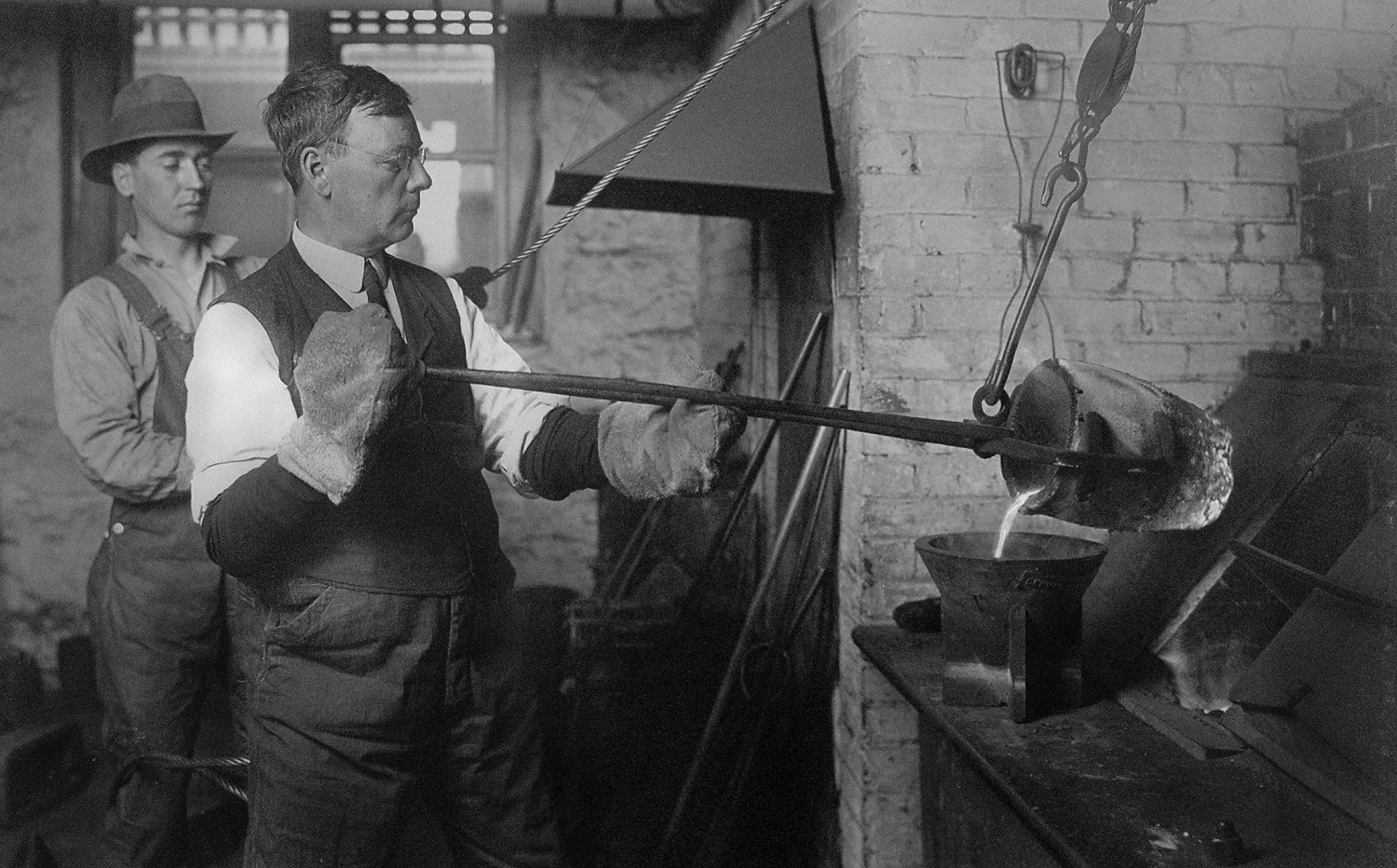
[Photo data on the above says that the workers are pouring slag, But slag from gold melting should float on the surface. A companion photo of the same men says they are pouring gold.]
14
Comments
Nice photo.
That's really cool! Thanks for posting!
My YouTube Channel
Who needed safety gear? If a worker got hurt you just went down to the docks and hired a new one fresh off the boat. (In Deadwood they probably had plenty of unsuccessful miners to chose from since they didn't have docks.)
At the mints, personnel handling liquid metals were required to wear thick leather aprons to catch molten metal in case of a spill. In this photo, which was obviously posed, neither man has an apron.
Great stuff!!
It is possible that in removing slag from atop molten gold some small amount of gold was included, so if you were to pour your molten slag in a conical mold the gold would settle into a "button" at the bottom.
That said, I have no idea what these particular men are doing in this particular picture.
Yes, that's also right.
Can someone run back to Deadwood ND in 1913 and ask the men if that's gold or slag or something else ?
Here's one from someone's photo album (from Yale University Library):
Keeper of the VAM Catalog • Professional Coin Imaging • Prime Number Set • World Coins in Early America • British Trade Dollars • Variety Attribution
$15,000 was a lot of money. Present value is about $871,000.
Nice historical photo's.... unfortunately, most photographic notes only included short descriptions because people knew 'the rest of the story'....They did not consider that generations later, 'the rest of the story' would be lost....Cheers, RickO
ND or SD??
I don't want to go to the wrong place.
Deadwood is in West Dakota Territory!
Some of my reading state that gold was smelted into 50-100lb blocks out of safety when transporting to the Denver mint. If the gold were to be stolen it wouldn't get very far.
i love to see them old pics like that. theres some good history there
Also to prevent small pilfering. You have to steal it all, or nothing.
One or possibly more of the Assay offices had been casting 2,000 oz gold bars for the convenience of mining companies. But a letter from Mint HQ told them to stick with 1,000 oz because the larger bars were difficult to melt at the mints. (I'll look for the exact reference.)
A normal mint bar was approximately 400 oz 0.999 fine. (See From Mint to Mint for a table and explanation of bar sizes and metal purity.)
For all you math fans, 1,000 troy ounces equals approximately 68.5 avoirdupois pounds.
I wonder how much Helen of Troy was worth -- in gold, that is
I've google imaged "Helen of Troy" in the past and don't ever recall being disappointed.
@RogerB I love the topic. Mining history reads are some of my favorites. Being the mentioned Assay office is in my backyard, I have some recommended reading resources. No since in me quoting articles that have been well written adnauseum.
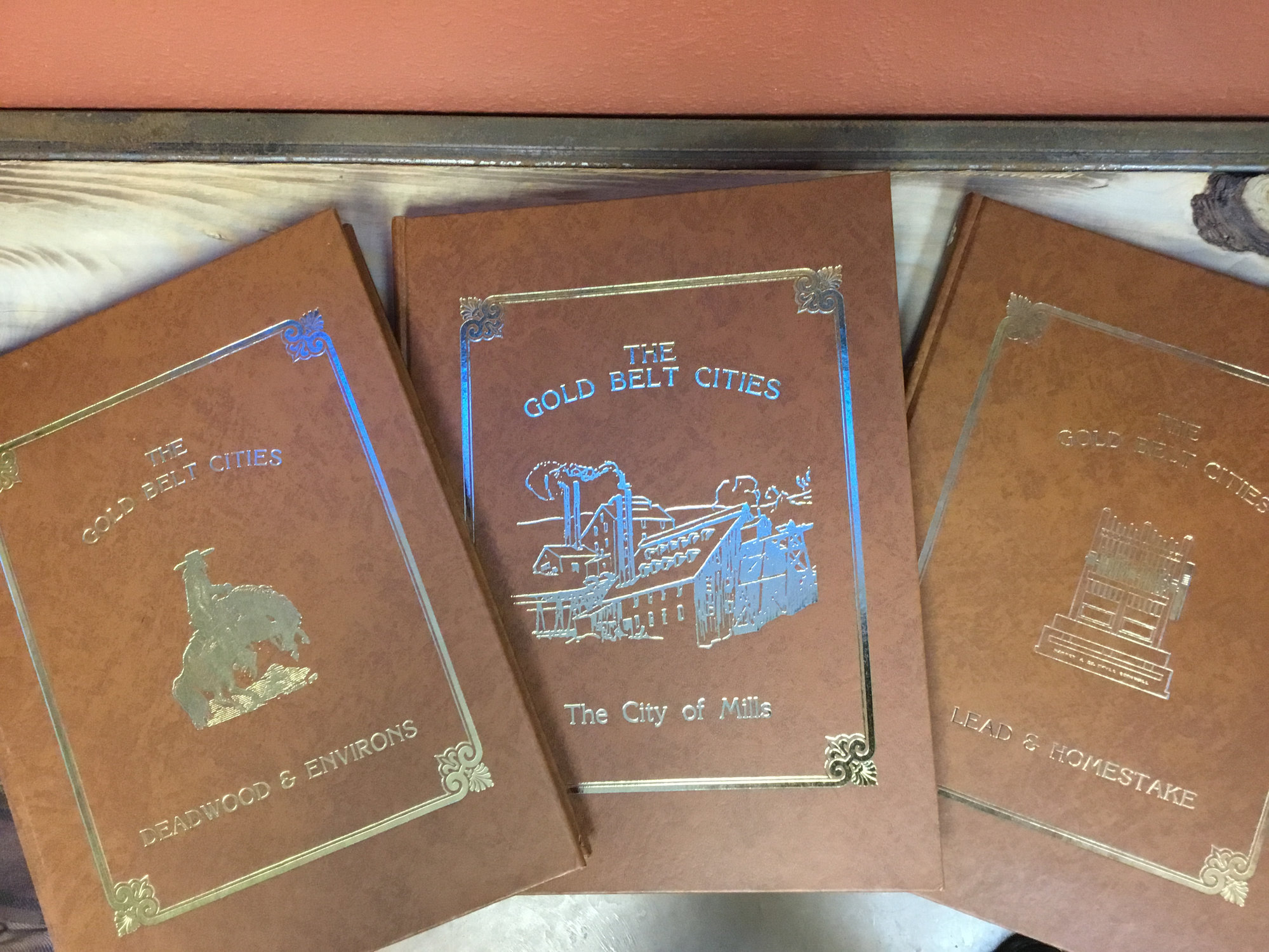
This three volume set is a definitive resource for photographs of the development of the area. Each book is rather valuable with an average price of 100 each from what Ive seen and sometimes come up on eBay. Local small printing, but very accurate accounts built up from local sources.
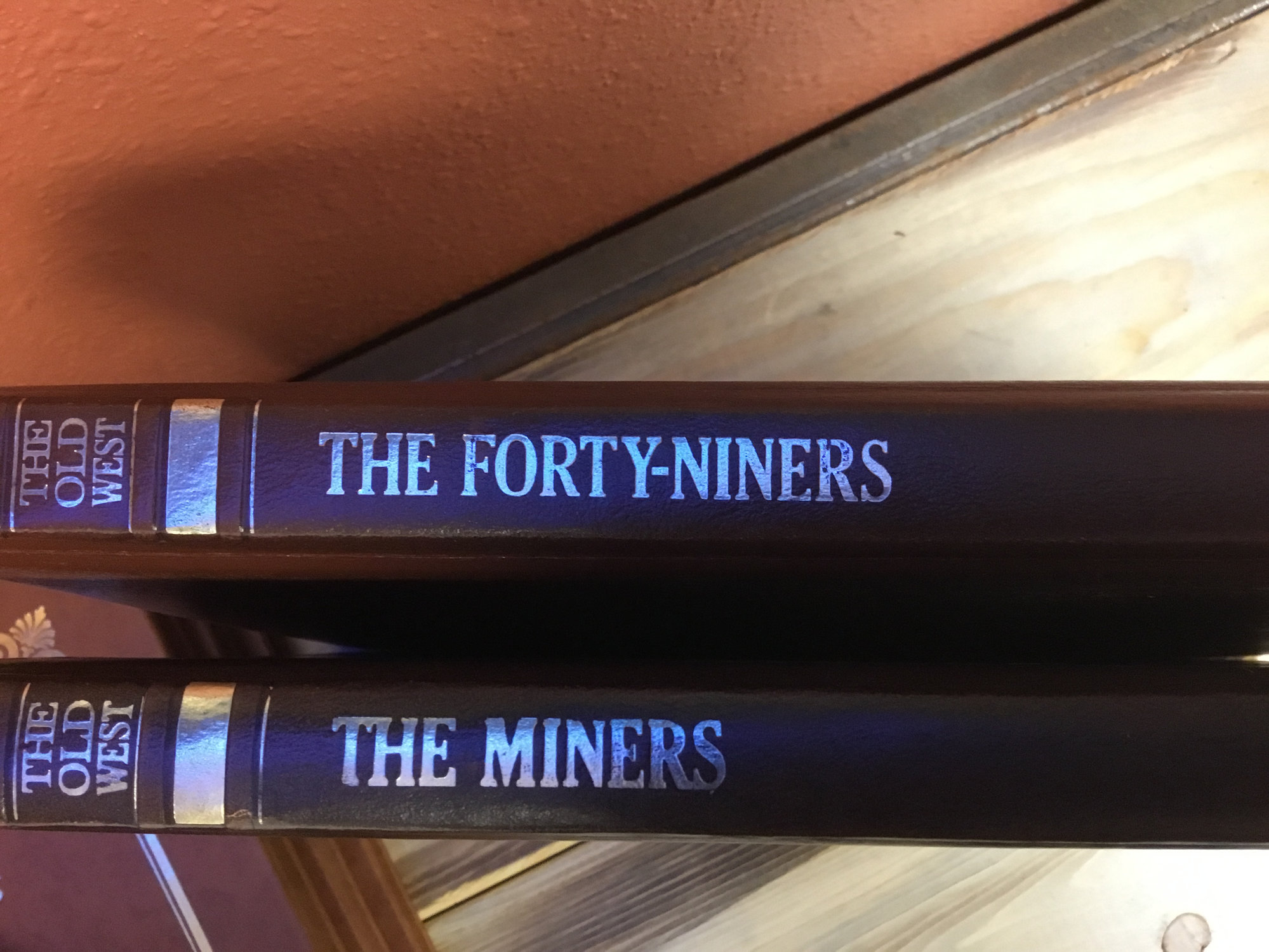
These Time Life books you see in almost every antique store in the land is actuall quite decent. Outlines the progression of mining history in the US. The first obviously on the 1849ers but the MINERS outlines the glorious story on the Comstock Load and how it influenced the proliferation of out country at the time.
The Treasure of Homestake Gold is the real page turner and accurate read of the mighty Homestake. Outlining the history of the mine in its inception and its fascinating magnitude as a gold producer. Outlines the discovery of the load and its claim conglomeration my George Hearst who with capitol and lessons earned in the Comstock revolutionizes the mining world as we know it. Takes you up the 1960 or so and was copywriten in 1970 at a time when this history was available to gather and as the mine was very much alive and producing. Reprints are available currently online.
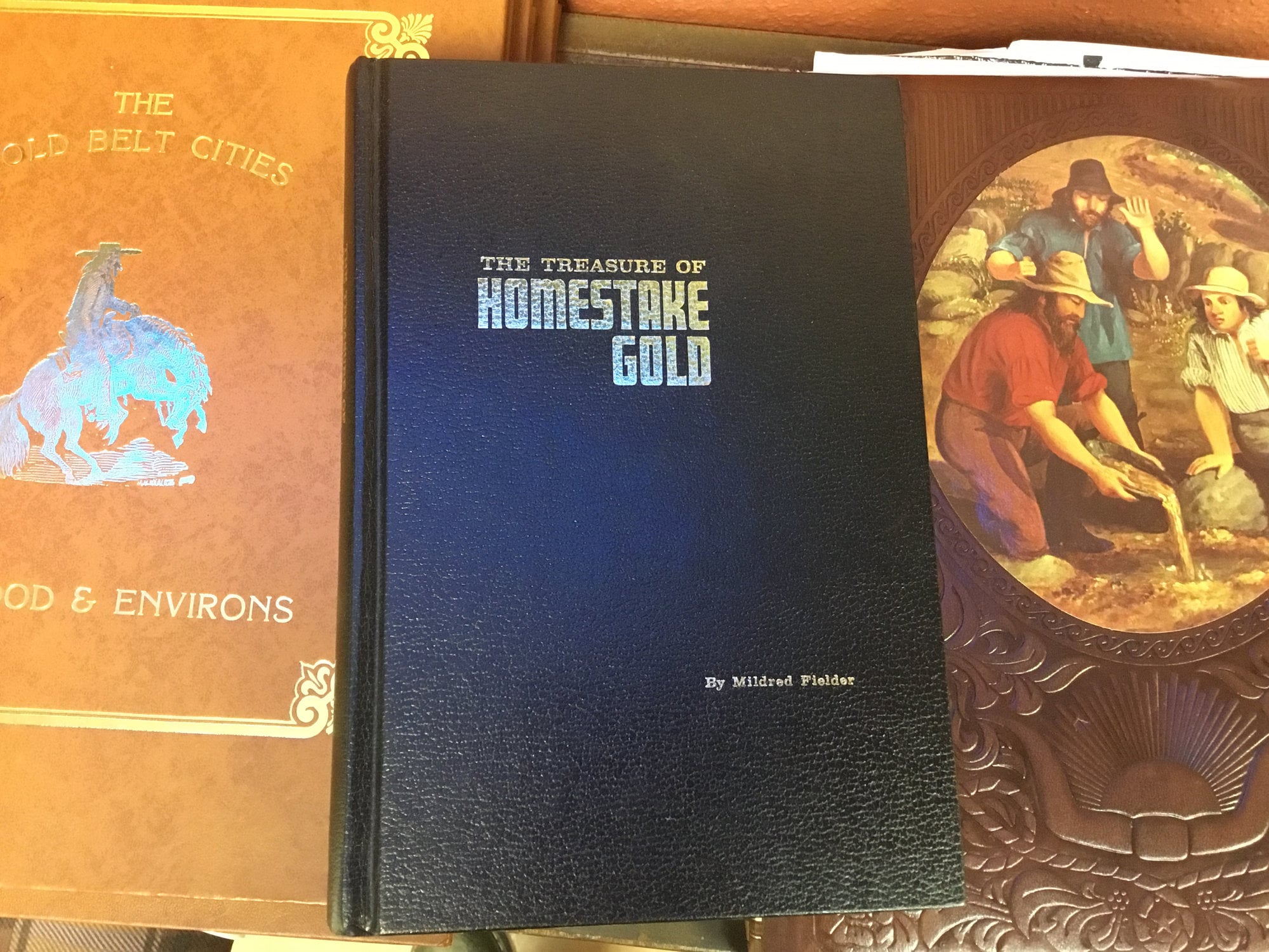
Corporate reports can be found with a little looking and are interesting and inexpensive.
Along the lines of the guy pouring gold in the OP, I always like the guys in these photos
Ore would be pulverized by these piston mills and spread over mercury covered copper sheets. Mercury would hang up evenly to the copper and the passing gold would also be gathered by mercurys attraction gold And the amalgamation of gold and mercury would be scraped off. The excess mercury was then squeezed out, apparently with bare hands as shown here.
These balls of mercury and gold would there be placed in crucibles and when heated the mercury is gassed off as vapor and the melted gold poured into molds.
These men unwittingly poisoned themselves obviously. Modern techniques of putting gold in and out of solution were invented at Homestake as outlined in the books.
These are some of my local ore specimens and show quite well what was being crushed by the mills at the time.
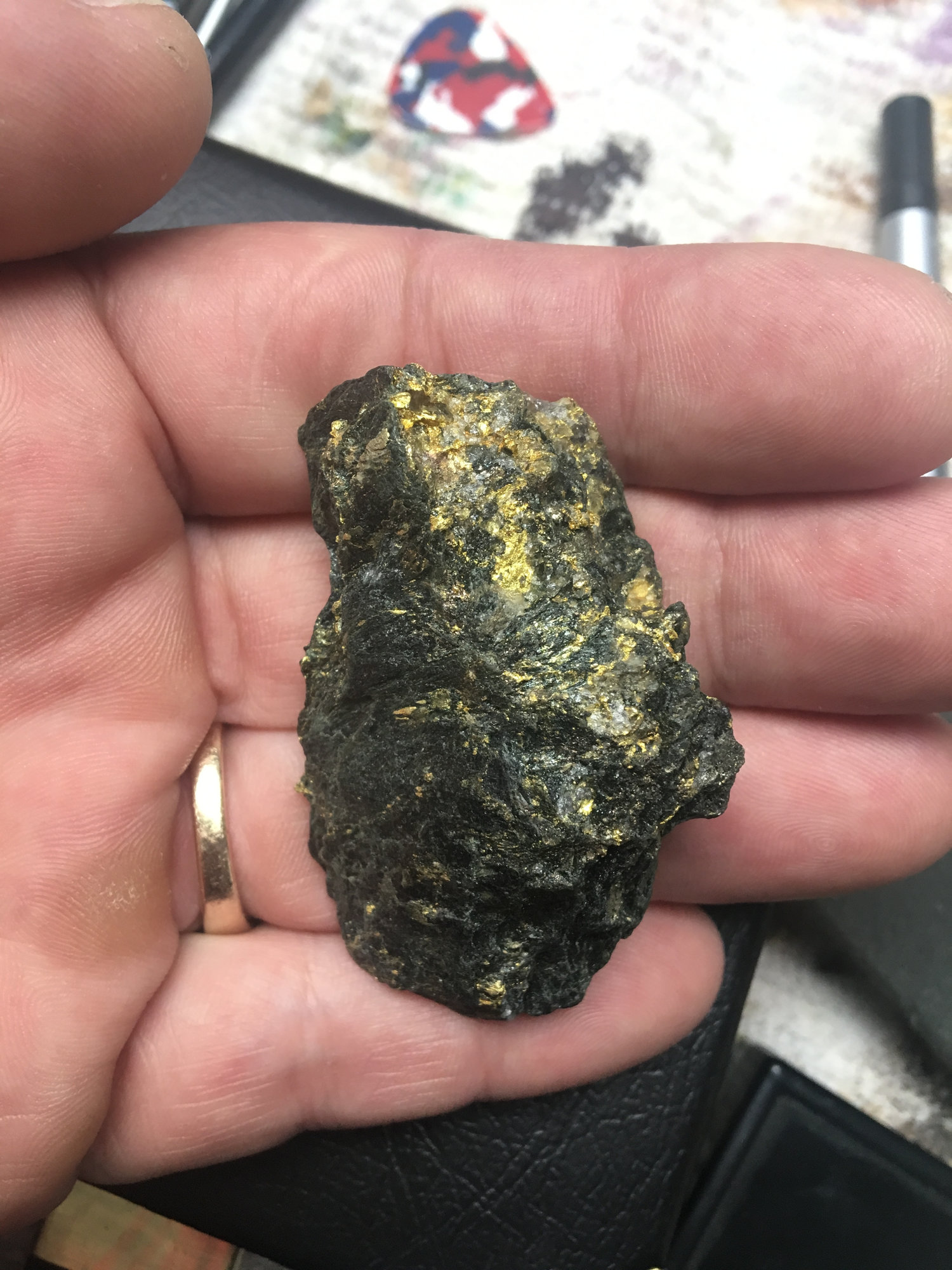
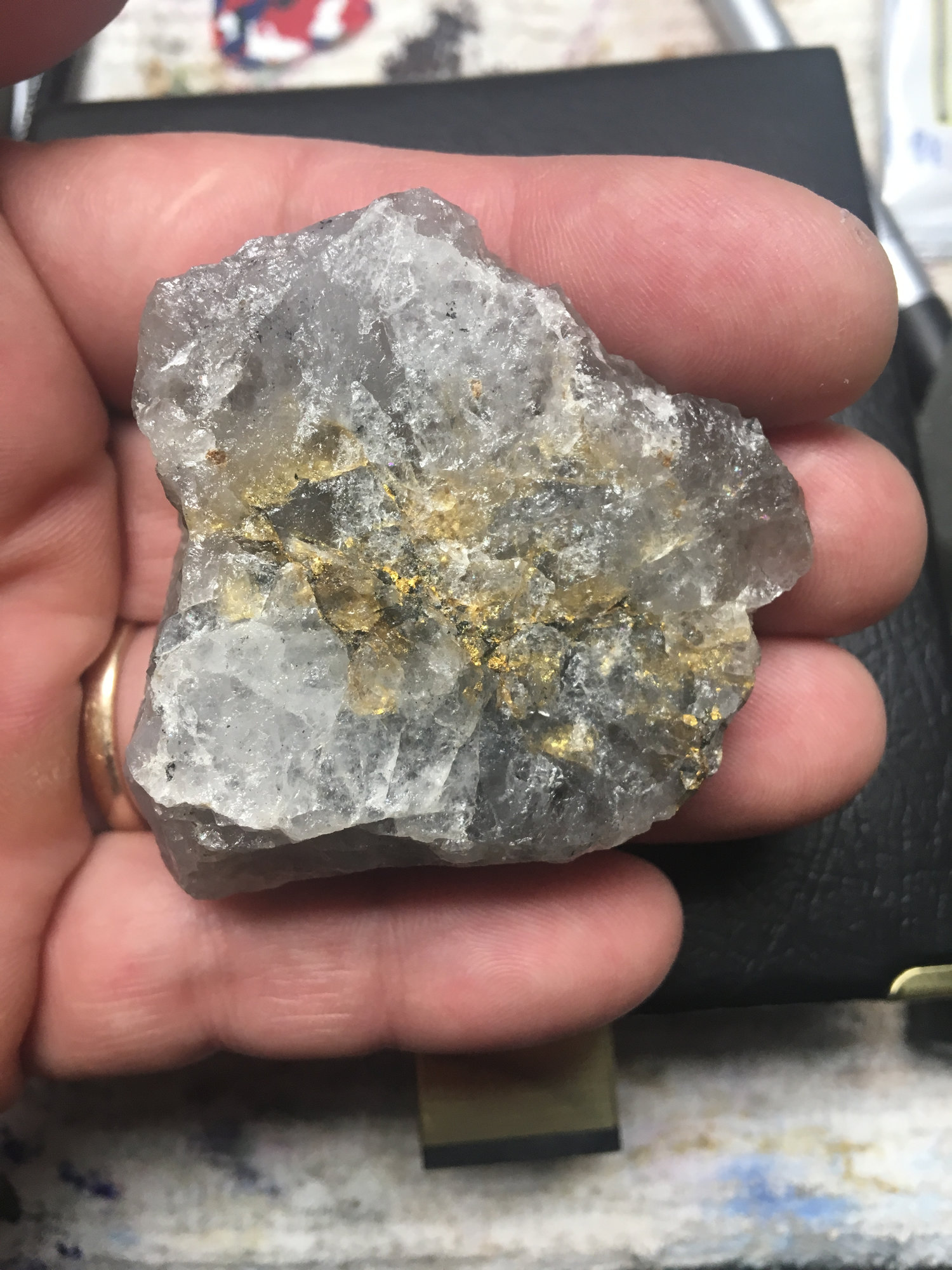
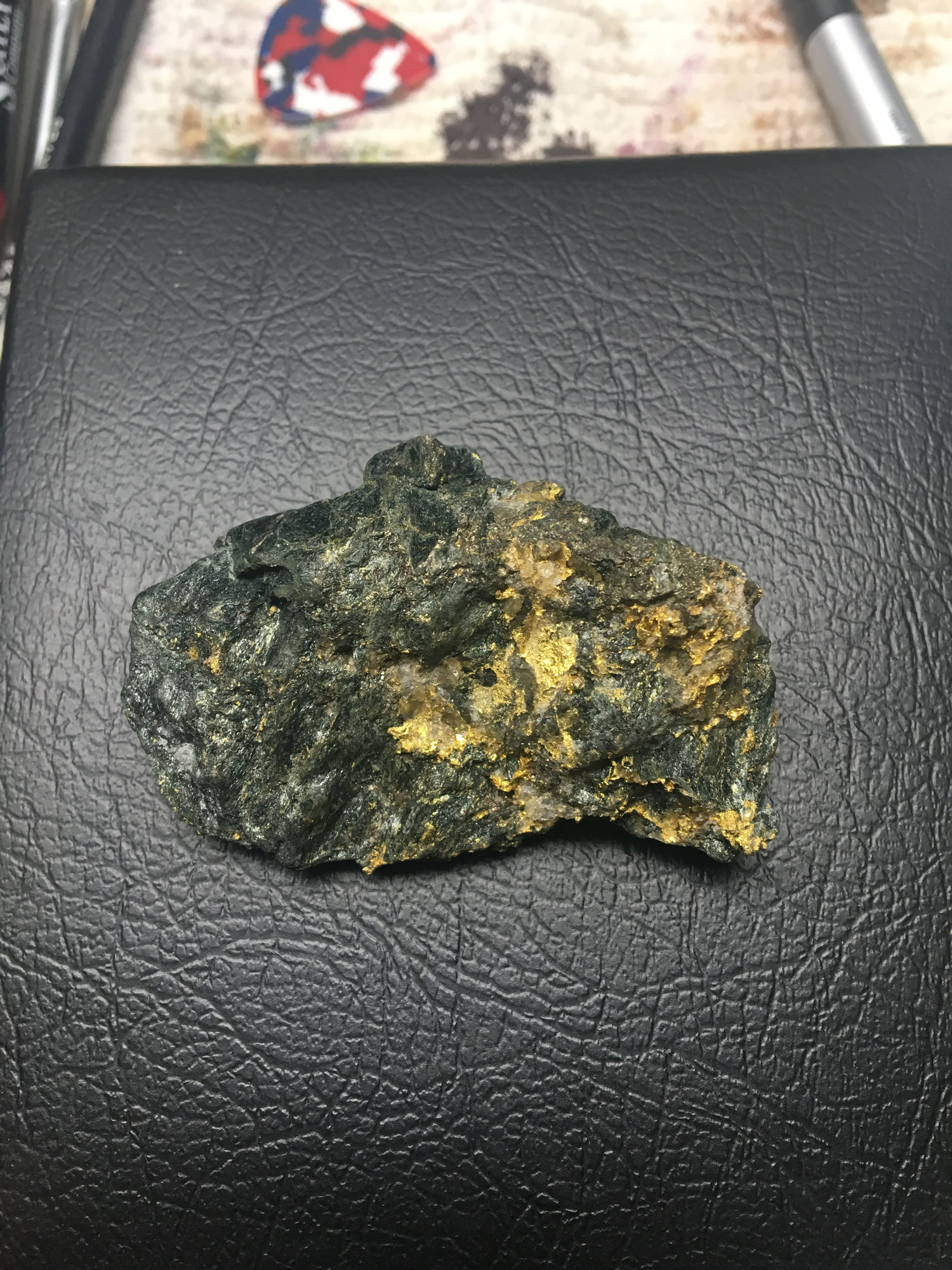
Neat stuff! Thanks for posting.
The Homestake Mining Co. was partially the cause of the closure of the Deadwood Assay Office. The price paid for gold was the same at all Assay Offices and Mints, but Deadwood could only issue drafts against San Francisco and could not refine metal. Homestake wanted New York drafts and shipped its lower grade bullion and amalgam to Philadelphia where it could be refined and paid in NY money. (In effect, the government was refining Homestake's output for free.) With the major supplier of bullion "gone missing," Deadwood operated at a loss.
The Carson Assay Office was in a similar predicament regarding base silver bars. They accumulated a large stock but none of the Mint's wanted it because it was expensive to refine. Eventually San Francisco was forced to accept the Carson silver bars, and Carson was told to accept only gold.
I was under the impression that Homestake could perform all stages of their own refinement right on the mine grounds (When this happened, I'm learning now, thanks) as well as much of its own operations tooling and updating. I suppose they would have absorbed the entire market eventually and close or buy any private operations related to the process, including mineral rights, surface boundaries, forestry resources, water and power, railroad, human capitol, and financing, that come to mind for that period.
I think of it interns of these chapters for a 120 year old mine:
Discovery and initial Rush
Conglomeration on claims into one basic commercial mining operation
Infancy of proliferation and starting of open pit
Moving of the town to expand open pit and tunneling below 1000 ft level
Richest square mile on earth, institution of ore tax preventing state bankruptcy during depression
Gov closing of mine for WWII and it's reopening
Modernization and leaching
Neutrino lab
8000 ft level and it's ending if mining operations
Also subcategories of Mining process, refinements, power sources, lifestyles, economic reactions, environment, historic impacts. All these change by the decades.
It's been outlined to me by the current superintendent, who is rather accessible, that Homestake owns several mines all over the world, mostly open pits, the cost of underground mining expensive and dangerous and outdated. Their primary objective locally today is site protection and erosion control and the Neutrino Lab. His job is to make sure the water pumped out is clean enough to let run into whitewood creek. I can only imagine this process is playing out to this day wherever gold exists. That the discoverer if the load is seldom the developer of the mine and there are economic casualties along the line in the process and hopefully minimized.
It's interesting to me that the Deadwood assay office would be a (early) casualty. This is exactly why this topic captivates me. That there is still more to read about and other chapters to study. It would be my guess that the folks and equipment of the Deadwood Assay Office would have moved to big mine but I don't know. Lots of metaphors to relate to other business structures to watch today. History repeating itself?
I do know from first hand accounts and receipts I've seen that not only did Homestake start processing silver from its own ore and selling Hallmarked bars, but you could have brought your own silver scrap to the refinery and had it traded for bars etc. so not all silver bars are of actual Homestake silver. They very much had their own refinery at least in the 1980s that I know of.
As far as when did refining and assaying become one and the same, you tell me. I would guess that when processing became straightforward and accepted technology became commonplace.
Any resources or leads on these topic would be of great interest of you have any, thanks.
@WildIdea
I do appreciate your posting the book information. I have already located and ordered two of the four that really interest me (the two Time-Life volumes don't especially tick my type, I can probably find them locally).
I have done this coin and bullion bit a long time now, and I don't recall ever seeing 'Homestake' silver bars. Memory is a funny thing, but I don't remember them.
They're hot right now, 50 or more an oz, but there are many many, I've seen them around localy. 10s, kilos and 1000s.
I had a kilo once and sold it to buy a 1884 DMPL Morgan in 5. Huge mistake.
The hallmark with HMC in the center were intended for gold bars and when on silver bars they're quite valuable. Those are the ones to find. The 10s are going for several hundred but careful, there are more than people think.
“Roughing It” by Mark Twain is a great account of his adventures out west during the mining days. One particular funny story is about how he spent a day shoveling the production of the stamping mill for which he was paid something like $20. Twain, who was not fond of hard labor, told his boss after the first day that he’d need to be paid a lot more than that to continue. When asked how much he needed, he replied to the foreman, “About $100,000!” Cracks me up every time.
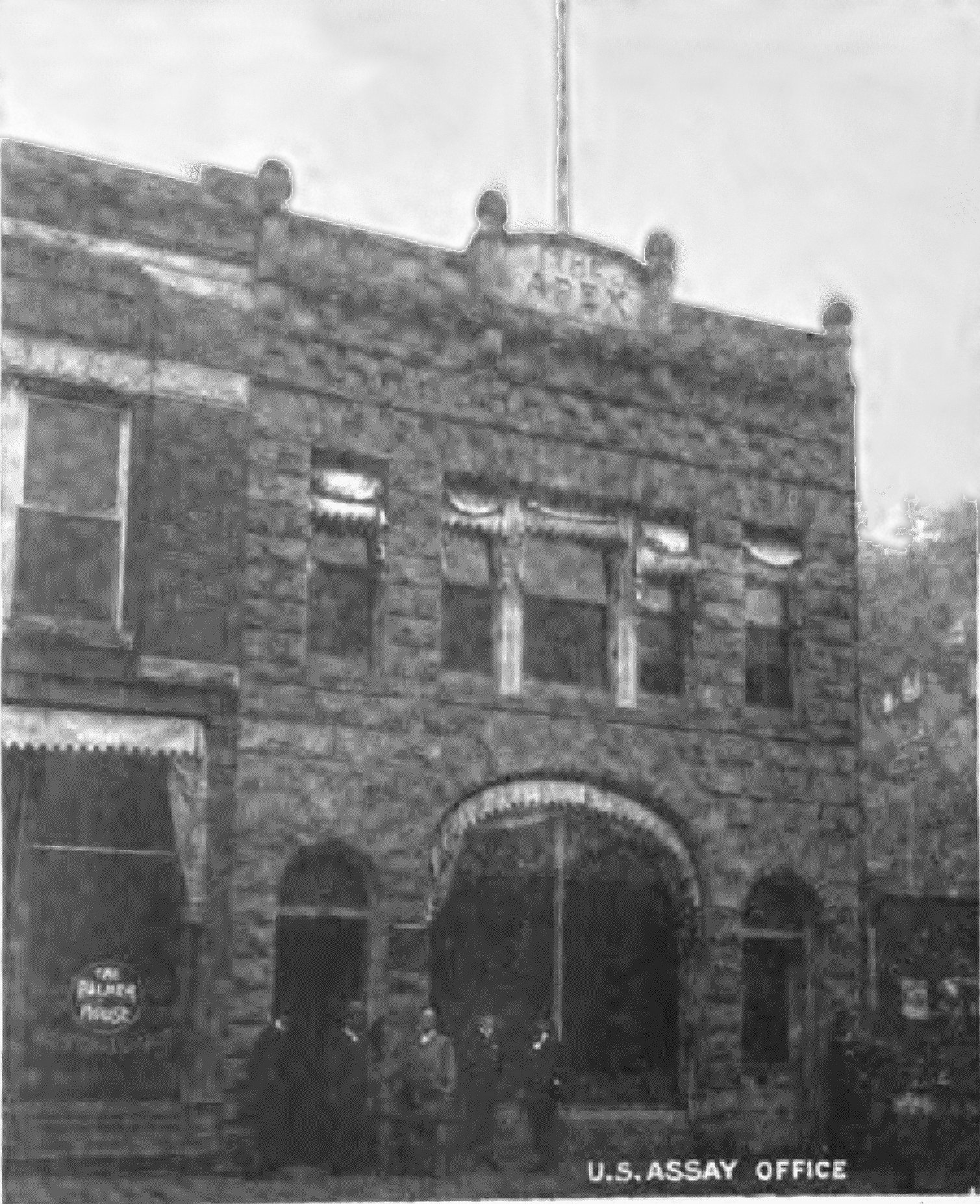
Just for kicks I googled The Apex building. It still stands. In fact my long time friends Rick and Margie who own and run Dakota Plains Western antique auctions and also run the antique store next door. A few years ago the building was for sale and Rick took my wife and I upstairs to look around. About 3-4 buildings are all connected up there. Anyway, it’s upstairs has been vacant since the 80s where it’s last purpose was apparently prostitution. The waiting and bar parlor and numbered rooms were still as left. Quite creeps and disturbing. Mannequin still linger in the windows as Deadwood sells the old western allure. I think now it’s been sold, updated and repurposed to more modern uses.
@WildIdea
Very interesting photos of the Homestake bars (and I might like to obtain one or two), but I suppose that even the poured silver bars that I am used to seeing were mostly even Troy weights.
I must have come along too late for small silver bars of varying individual sizes, or my focus in the 1970s was more numismatic coins and not so much bullion.
And thanks for confirming that the Assay Office Building still exists today. Seems to be in pretty good shape.
RE: Homestake. What the mining company was doing was using the Assay Office/Mint system to processes its low-grade metal at little expense to the company. This had the effects of making Deadwood assay operations more expensive, and requiring increased capacity at Philadelphia. The posted bars are modern -- i.e. long after the Assay Office closed.
RE: Apex building. The modern building is a reconstruction. The original was destroyed by fire. The photo in the first post is of the original building. (See From Mine to Mint for details.)
The 10s are odd weights. Actually all the bars are odd poured weights but the kilos and 100s seem to be closer to the mark. I have a standing offer in in my local shops and hopefully get a call, there are a few heavy buyers right now and the local shops know it and most get shipped out, so I wait. They come up on eBay but they really get run up. There are some 100g and 3 oz bars with the gold hallmark floating around but I believe ALL Engehard deemed then fakes recently, but that needs more research. Frankly, with the value of these bars and the ease at which they could be reproduced I’m on the sidelines for really stepping up and shelling out.
There are 2 different 1 oz gold bars and a few rounds, and fractionals that are neat. You might like those. Also a highly collectible silver round set where they put out one a year for several years with keys.
I think we understood that the small silver bars dated from the 1970s and 1980s were not produced by an government office that closed in 1927.
The facade of the original building must have survived practically intact.
Yep. Just being cautious.
None of the original building, or the one next to it, survived. It was recreated based on photos and other materials. At least it did better than Dahlonega's Mint after the fire.
They must have had a huge amount of Federal money, or something, somehow, to recreate those two stone/block facades. I did the 'flippy test' between the two photos for about five minutes, and thumbed to the appropriate page in "From Mine to Mint". Stone and block look perfectly the same, even where the two buildings meet each other. Granted the older photo isn't as distinct as the later photos, but the recreation of the stone/block work is WOW.
All this is going to mean a trip to the Black Hills, soon.
I think that most of the money came from locals who felt the building was important enough to recreate. The recreation is dated 1996. The entire central area of the town in an historic district.
Here's a better photo. The building at left was a brothel. Mannequins in the 2nd floor windows represent the old-tyme buffet.
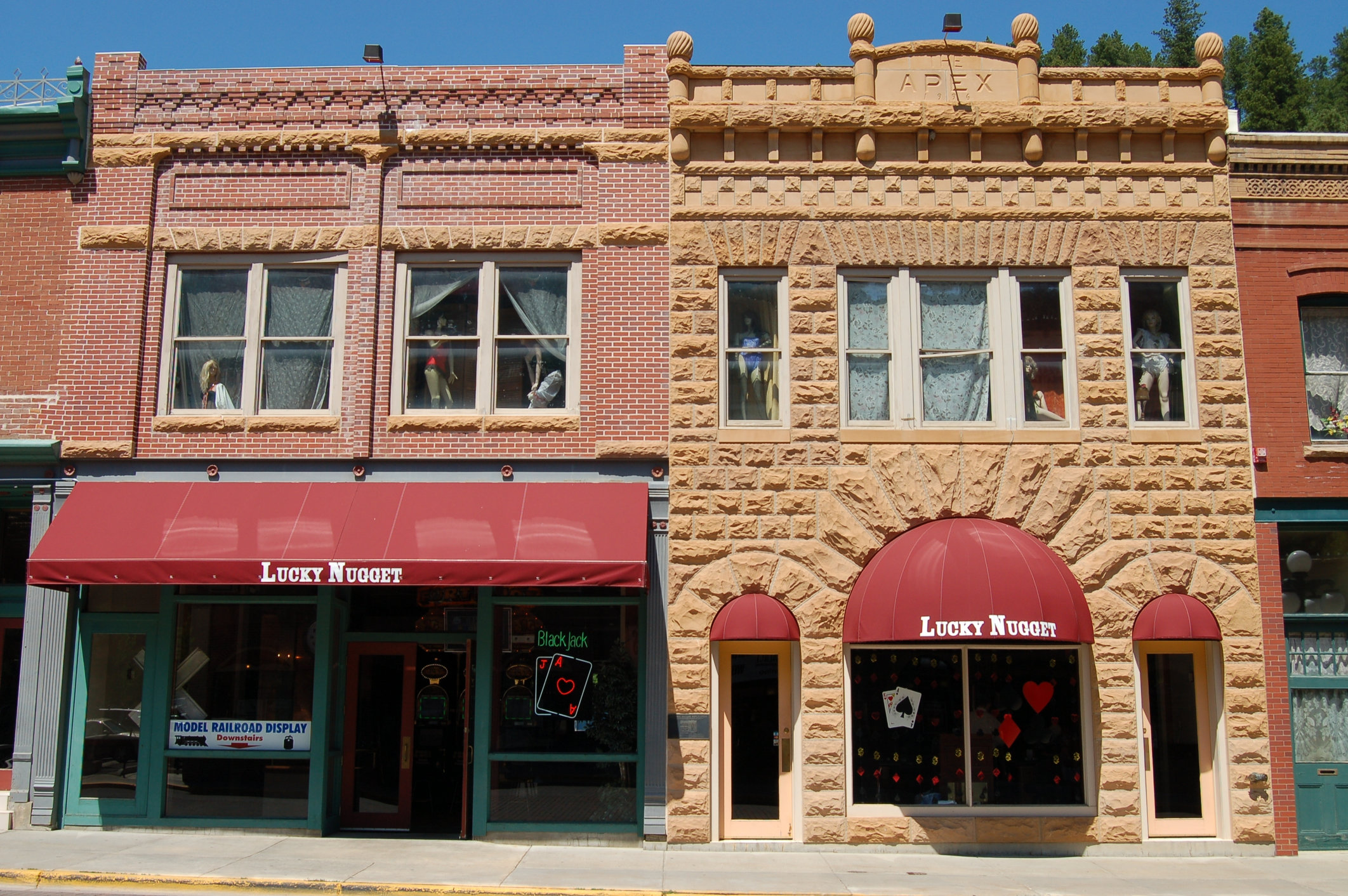
If one is striving for historical accuracy, one supposes the old-time buffet wasn't as willowy as the modern mannequins.
From Mine to Mint, Ill be getting a copy, Thanks. What I’m finding hard to piece together is what as the purpose of the Deadwood assay office in the early days. To be a buyer of random miners bringing gold from around the area? Then apparently Homestake build up a huge apparatus and went underground when the placer played out and subsequently started handling all their own refining. When did this happen and it apparently caused the closing of the Deadwood.
Yes the bars I posted are from from the 80s and not from the time period the Deadwood existed but from a period the mine was know to produce them with public access to them. Still heavy interest as to the history of the mine.
The Assay Offices were opened to provide a convenient, secure place were miners could convert their bullion into cash or good checks. The government paid full value is most instances, and this was much better than private assayers and gold buyers. It also gave the government metal for coinage and international trade. Although gold coinage and standard bars were net-loss products, they were important parts of the overall economy, and their presence affirmed the government value of gold at $20.676767.
In the late-1830s-1840s the US quickly learned that the European practice of opening mints near metal mines was inefficient and expensive. Only New Orleans was a passably successful mint. Later Denver was never used as a mint, and Carson Mint was an economic failure.
The assay office also attracted non-US gold, especially from Canada and Australia, which then became part of an expanding US economy.
I think that San Francisco would qualify as successful.
Yes, it was. I was referring to the 1830s-40s in general and then to the latter CC and Denver facilities. The Seattle AO was intended to take some of the burden off SF, although SF businesses felt it was an intrusion on their works. One must remember that the western coast of North America was largely a single gold economy, and nationalities were not important to the miners.
I made it down to Dakota Coin today and I was able to get this crucible off the display shelf. I figure you guys would like to see they still exist. We wonder how much metal is still in the borax or slag. Notice the wear on the sided walls. Definitely been used.
Arthur Miller would love it!
That's a pour joke!
I just this book in hand today! Looks pretty in-depth I can’t wait to ‘pour’ through it, lol
Looks familiar! I've seen that someplace! [It's interesting for me to see a book I've written on a store shelf, in a post, at a dealer's table, or in collector hands at a show. There's something of an out-of-body experience --- so much time and work go into creating the book, and then to see it all new and in use. All my experience with the book is in details or maybe crates of printed copies - but rarely as a single finished product that is fixed in place. Thanks for the photo and bringing back fascinating experiences.]
Suggestion: Use the CD as an index to browse around for specific content. Some have told me that they like to pop open the book at random places, too. Lots of interesting coin club programs in there, also.
The three year TV series Deadwood was nothing short of spectacular. The old set is stored not too far from me. Hearst was a bad bad man
m
Fellas, leave the tight pants to the ladies. If I can count the coins in your pockets you better use them to call a tailor. Stay thirsty my friends......
My copy of "The Gold Belt Cities: The City of Mills" arrived today. Looks very interesting and not something that will tax my eyesight (almost all old photographs). Got this one for a bargain price. One down, two to go.
This has got to be one of the most interesting threads in a long time. . Of course there was gold down there with all of the run off over virgin land. They were risking their lives getting the dirt. Stupid in my book.
I have visited most all of big gold mines in Northern California as I live in an old gold rush town. We still find gold all around this area, especially after the heavy rains we had last year. The Oroville dam almost blew out last year and they couldn’t keep the people from filling up 5 gallon bucket with dirt and running like hell
Thanks for sharing my coin brother, Joe
That would make a very interesting hobby pub. story -- or even a general readership story!