Options
2005 nickel with ALOT of cracks.
 CNCMACHINIST
Posts: 131 ✭✭✭
Just thought I'd upload some odd cracking on this 2005 nickel. I know these are not die cracks, but I guess natural planchet cracking. Bad lot of planchets maybe. Both sides are completely covered.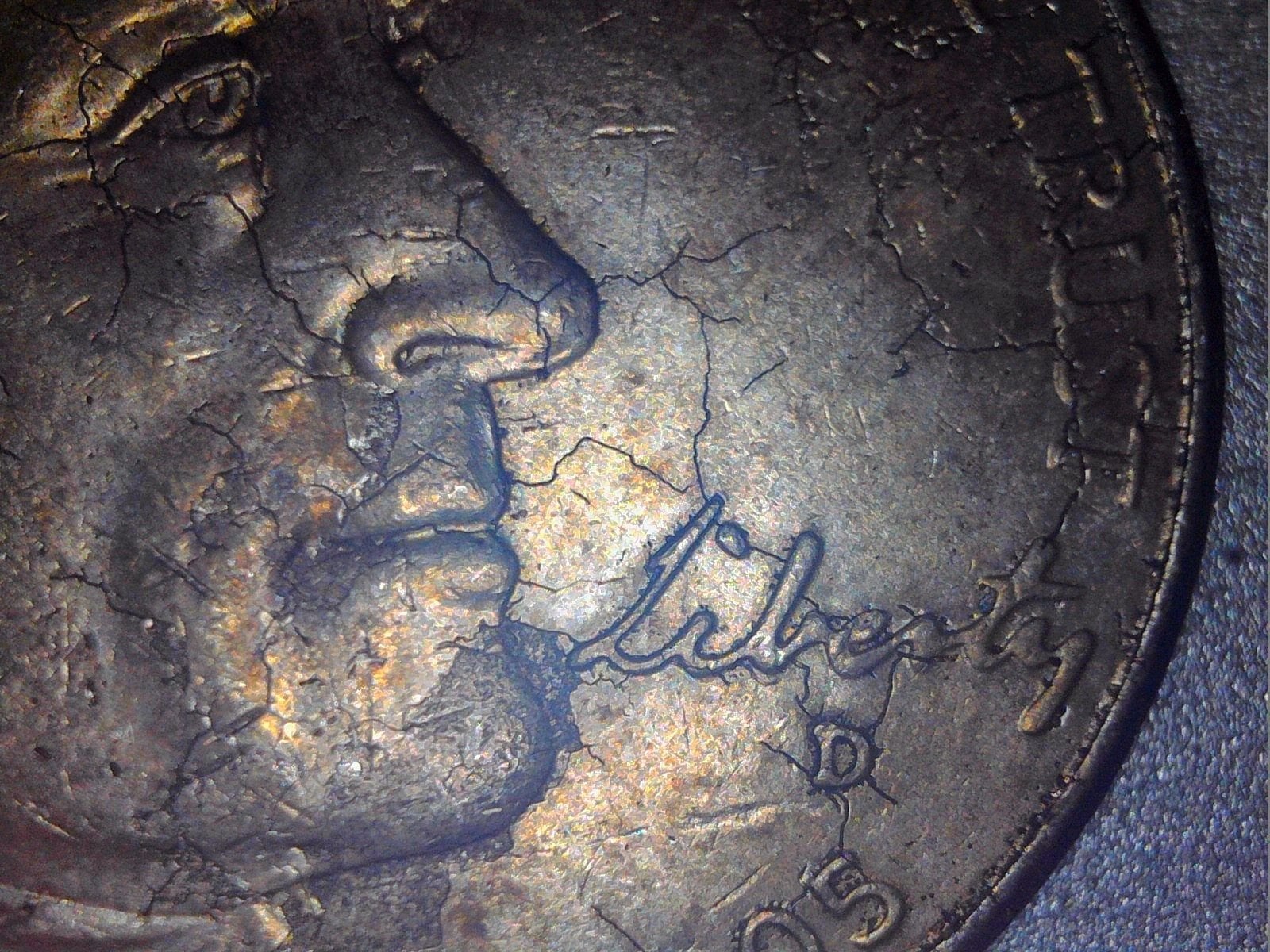
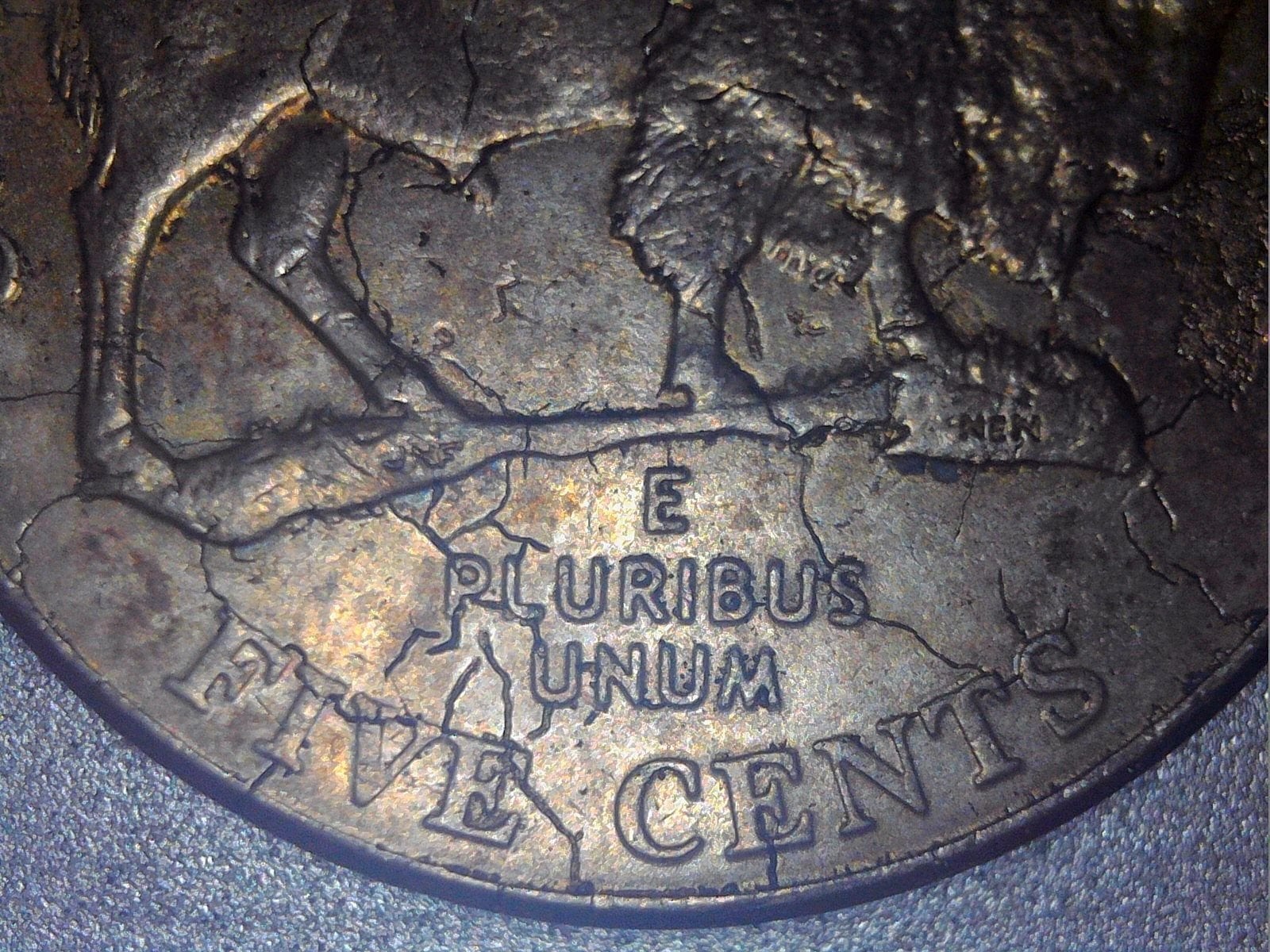
I know these are not die cracks, but I guess natural planchet cracking. Bad lot of planchets maybe.
0
Comments
It even has cracks on the all the way around the sides.
I'll opine the surface metal composition is suspect.
Looks bogus. But never know.
SHOCKING!
"Keep your malarkey filter in good operating order" -Walter Breen
Didn't someone post a FE cent recently that had a similar effect? I have never seen one like that but now I have seen two in a month.
what is FE?
Selective corrosion of the surface through cracks in some sort of coating applied to the coin after it left the Mint. Think of lacquer or varnish that dried and cracked, The coin was then immersed in a corrosive solution that ate the surface where it was not covered with the lacquer or whatever.
"Flying Eagle" cents were made in 1856-58.
Just what I was thinking.
My wild guess is that it heated to extreme and then put in ice water.
Successful BST deals with mustangt and jesbroken. Now EVERYTHING is for sale.
Probably some form of heat damage. Almost certainly it did not take place at the mint.
Now that is different.... @CaptHenway ...Interesting explanation... would not have thought of that one.. but certainly defer to your experience....Would love to find one like this for in-depth study. Cheers, RickO
I think CH is onto something, Especially on the reverse they do not appear to be cracks but etched lines. I was going to speculate originally that liquid nitrogen was involved somehow, but I think the acid explanation is quite believable.
Next questions: who did this, and why?
PMD
Those are not cracks, they are etchings.
Kind of cool look. But definitely looks intentionally made.
im not sure its all what its cracked up to be
Victim of parched earth syndrome.
Global Warming hits home.
PMD
Liquid nitrogen dip?