Options
IHC error?
 Manorcourtman
Posts: 8,440 ✭✭✭✭✭
Manorcourtman
Posts: 8,440 ✭✭✭✭✭
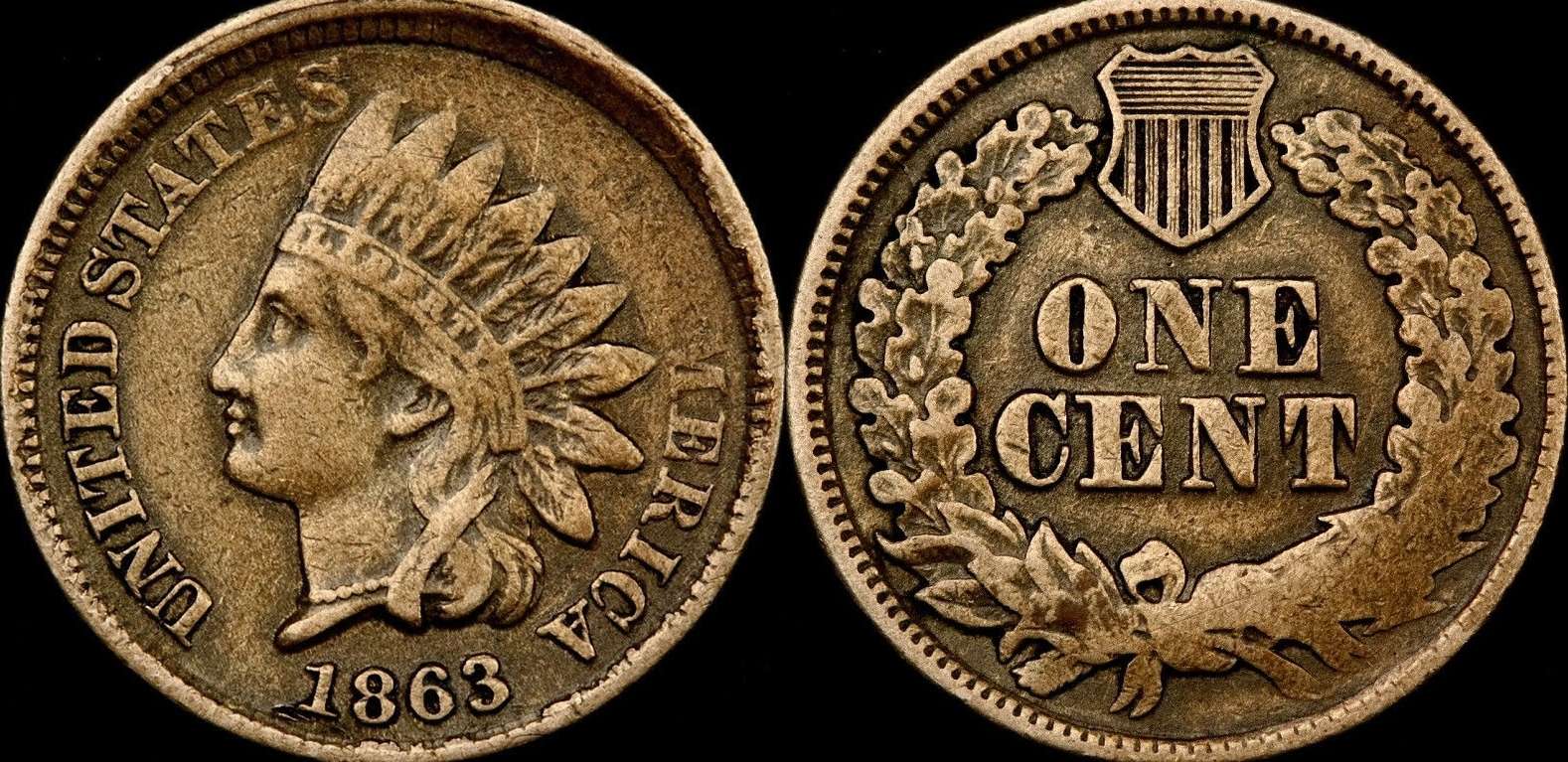
Error Guys......what's going on here? Just a strike thru on the obverse or something else?
0
Comments
Neat looking coin. Even without the error, I like the look of it. There's just something about those nicer circ CN Indians. The color, I guess. I like 'em the same way I like a nice crusty VF Morgan or CircCam silver.
(Oh, sorry. Was I babbling again?)
Collector since 1976. On the CU forums here since 2001.
not sure about the rim
BHNC #203
It's not a filled die - it's a taped thin planchet.
It will weigh less than it should, when you put it on
a scan, in either grams or grains.
Cheers, RickO
I suspect it is a tapered thin planchet. Can we get an edge shot adjacent to the thin area?
Thanks Capt. I thought it was more than a filled die. I won't have it in hand for a couple days. I will post pic and weight when I get it.
(don't mean to be picky)
It's about 4 grains light,which makes sense,
based on what the tapered end portion looks like.
Sean Reynolds
"Keep in mind that most of what passes as numismatic information is no more than tested opinion at best, and marketing blather at worst. However, I try to choose my words carefully, since I know that you guys are always watching." - Joe O'Connor
I'm still not clear on how it's being theorized that the metal flows all the way to the rim, yet does *not* fill the letters in "OF AMERICA".
Is the weakness in the denticles the visual 'key' to tapered planchet, not filled die?
I see where you answered your own question below, but something else to remember is that these planchets went through an upsetting process prior to striking to help move metal into the rim and ensure it is struck up. That is why the rim is partially formed but the denticles are nonexistent.
Sean Reynolds
"Keep in mind that most of what passes as numismatic information is no more than tested opinion at best, and marketing blather at worst. However, I try to choose my words carefully, since I know that you guys are always watching." - Joe O'Connor
Thanks Capt, I'm glad now I set that one aside.
Sean, I think what threw me off on the first example was the appearance of the partial denticles. I knew there should be a partial rim, but I was bothered by the appearance of the partial denticles. Clearly then, there must have been enough metal in the adjoining areas to flow over to the edge, on Manorcourtman's coin. While metal is in a fluid state, it can do strange things, ("strange" at least, when viewed from the usual perspective of it's solid state.)
So I'm guessing the tapered planchets would most likely have come from the beginning, or the end, of the strip, after it had been rolled out to its working thickness, prior to blanking(?)
That is the presumption.
So I'm guessing the tapered planchets would most likely have come from the beginning, or the end, of the strip, after it had been rolled out to its working thickness, prior to blanking(?)
That is the presumption.
I would throw in the sides of the strip as well, but otherwise yes, you are spot on.
Sean Reynolds
"Keep in mind that most of what passes as numismatic information is no more than tested opinion at best, and marketing blather at worst. However, I try to choose my words carefully, since I know that you guys are always watching." - Joe O'Connor