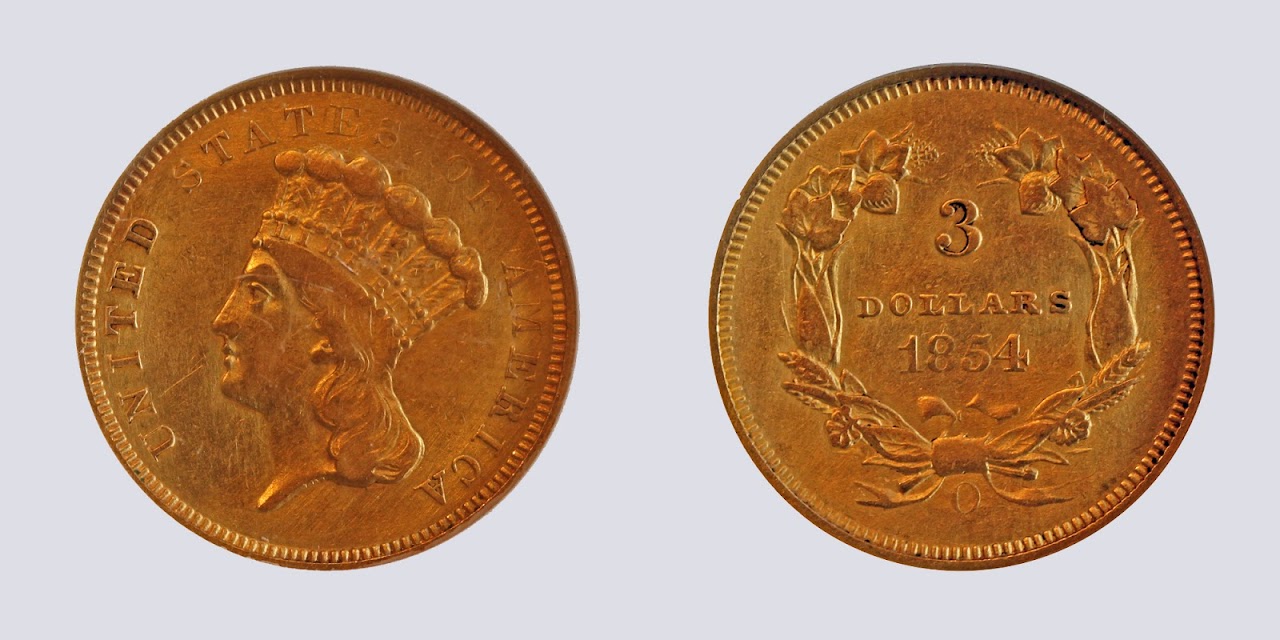
The sharpness grade is EF. It is hard to tell about eye appeal without seeing it in person. You say it has been cleaned so it must have more hairlines than the ones showing in the pucture. That can affect the eye appeal. One positive thing is that it does not have the "white gold" color that some dipped pieces have.
Retired dealer and avid collector of U.S. type coins, 19th century presidential campaign medalets and selected medals. In recent years I have been working on a set of British coins - at least one coin from each king or queen who issued pieces that are collectible. I am also collecting at least one coin for each Roman emperor from Julius Caesar to ... ?
i think it's XF. i agree with the cleaning assessment. it's pretty likely cleaned judging by what i am seeing on the obverse. otherwise, it's not a bad looking piece going strictly by the photos.
Looks like a decent (wear & strike-wise) AU coin that would be DG'd to XF or even VF due to the cleaning. Hard to tell how harsh the cleaning is at the given angle/lighting. It would be alot easier if the photographer captured a little more lighting on the coin to better discern any hairlines or brightness. The '54-O $3 tends to come with a weak strike, with the "ES" and "OF" sometimes so weak, you can hardly discern them. Same goes for the "8" in the date and the "O" mintmark on many examples. That said, this one looks like it has a rather good strike.
I wouldnt buy a raw one. To many fakes around. I would guess 40-45 if its real. The E in the headband looks odd to me but it might be a marker for a genuine. Nice year and mint thou
I guess I'll never be a coin grader in my future and stick to 3rd party opinions cuz I can't tell from these pics if it's been cleaned. I see some hairlines on the obverse going diagonally but I also see bits of "dirt" nestled in amongst the 3 and the s on the reverse. As far as eye appeal it appears to have that orangey gold color that I like so FWIW I opine that it's a great looking coin.
Beer is Proof that God loves us and wants us to be happy -Benjamin Franklin-
I wouldn't even venture a price without better pics, or being able to examine the coin in hand. Realize you're trying to budget your purchases, but you'd really be better off in the long run by avoiding cleaned/problem coins. It may not apply to all, but sooner or later, you're going to want to sell them and you'll have a much easier time selling if they have problem-free surfaces, nice color and strike, even in the lower grade ranges.
Reading the descriptions in Doug Winter's book about the two die varieties, I'm not sure that there really are two varieties. It reads more like there are two die states. When the differences stem from a lapped (re-polished die) that is a die state.
At any rate you coin looks like a hybrid of the two. The "JBL" is fully visible on the bust which is variety 1, but the "OF" on the obverse looks weak which is variety 2. On the reverse the "O" mint mark is thinner than it is on the piece in Winter's book. In short, I'm confused.
The small size of the word "DOLLAR" on the reverse is characteristic of all 1854 dated Three Dollar Gold Pieces. Starting in 1855 the letters were made larger and continued that way for the life of the series. As such the 1854 coins are a minor type, but few collectors recognize them as such.
Retired dealer and avid collector of U.S. type coins, 19th century presidential campaign medalets and selected medals. In recent years I have been working on a set of British coins - at least one coin from each king or queen who issued pieces that are collectible. I am also collecting at least one coin for each Roman emperor from Julius Caesar to ... ?
I have to admit the word "hybrid" came to mind, too, when looking at my coin.
How easy is Doug Winter to contact? >>
He has a website from which he sells coins. You could try to contact him there.
Retired dealer and avid collector of U.S. type coins, 19th century presidential campaign medalets and selected medals. In recent years I have been working on a set of British coins - at least one coin from each king or queen who issued pieces that are collectible. I am also collecting at least one coin for each Roman emperor from Julius Caesar to ... ?
It is a little confusing. After a few early strikings the dies clashed. They were ground down and part of the ribbon on the reverse as well as those two curly stems that are found inside the wreath were ground away as well. Variety 1 usually refers to the state prior to the lapping. Variety 2 which is much more common is where you will see much weaker details. I was very fortunate enough to cherry pick the earliest die state of this coin last year from a dealer. Is was before the dies clashed. Based on my correspondence with Doug Winter, he suggested that fewer than 2 dozens pieces exist. The $3 series is very exciting. I suggest the Bowers/ Winter book if you're interested. By far my favorite coin book. Hope this helps a little.
<< <i>It is a little confusing. After a few early strikings the dies clashed. They were ground down and part of the ribbon on the reverse as well as those two curly stems that are found inside the wreath were ground away as well. Variety 1 usually refers to the state prior to the lapping. Variety 2 which is much more common is where you will see much weaker details. I was very fortunate enough to cherry pick the earliest die state of this coin last year from a dealer. Is was before the dies clashed. Based on my correspondence with Doug Winter, he suggested that fewer than 2 dozens pieces exist. The $3 series is very exciting. I suggest the Bowers/ Winter book if you're interested. By far my favorite coin book. Hope this helps a little. >>
Thanks for the information, this helps some.
Based on your observations of my example is Variety 2 indicated? To me, it's rather subjective, and not clear-cut?
Based on the weak OF on the obverse, the weak O mint mark, part of the ribbon missing, the die crack on the lower right reverse ribbon, and the two curly stems missing inside the wreath I would say a later die state. Or variety 2 if you like that terminology better. Bill jones was correct when he stated earlier that its more of a die progression than an actual variety.
<< <i>Based on the weak OF on the obverse, the weak O mint mark, part of the ribbon missing, the die crack on the lower right reverse ribbon, and the two curly stems missing inside the wreath I would say a later die state. Or variety 2 if you like that terminology better. Bill jones was correct when he stated earlier that its more of a die progression than an actual variety. >>
Perfect. That gives me the information that I was seeking. Thanks!
Comments
'dude
I would guess 40-45 if its real.
The E in the headband looks odd to me but it might be a marker for a genuine.
Nice year and mint thou
Assuming that it is genuine, what would a cleaned EF/XF details example like this be worth?
'dude
Example: EF40 becomes VF20 (or worse)?
What is the general rule of thumb?
In general (without seeing the coin in hand) what is a cleaned EF40 example worth?
<< <i>Is it true that a cleaned coin is automatically knocked down a grade at a minimum?
Example: EF40 becomes VF20 (or worse)?
What is the general rule of thumb? >>
Worse case is melt and yes there have been a few gold coins shown on here in the past that did good if they got that.
There seems to be a grey area in between the two?
<< <i>Variety 2 >>
How can you tell?
At any rate you coin looks like a hybrid of the two. The "JBL" is fully visible on the bust which is variety 1, but the "OF" on the obverse looks weak which is variety 2. On the reverse the "O" mint mark is thinner than it is on the piece in Winter's book. In short, I'm confused.
The small size of the word "DOLLAR" on the reverse is characteristic of all 1854 dated Three Dollar Gold Pieces. Starting in 1855 the letters were made larger and continued that way for the life of the series. As such the 1854 coins are a minor type, but few collectors recognize them as such.
I have to admit the word "hybrid" came to mind, too, when looking at my coin.
How easy is Doug Winter to contact?
<< <i>Great summary, Bill... thanks!
I have to admit the word "hybrid" came to mind, too, when looking at my coin.
How easy is Doug Winter to contact?
He has a website from which he sells coins. You could try to contact him there.
<< <i>It is a little confusing. After a few early strikings the dies clashed. They were ground down and part of the ribbon on the reverse as well as those two curly stems that are found inside the wreath were ground away as well. Variety 1 usually refers to the state prior to the lapping. Variety 2 which is much more common is where you will see much weaker details. I was very fortunate enough to cherry pick the earliest die state of this coin last year from a dealer. Is was before the dies clashed. Based on my correspondence with Doug Winter, he suggested that fewer than 2 dozens pieces exist. The $3 series is very exciting. I suggest the Bowers/ Winter book if you're interested. By far my favorite coin book. Hope this helps a little. >>
Thanks for the information, this helps some.
Based on your observations of my example is Variety 2 indicated? To me, it's rather subjective, and not clear-cut?
<< <i>Based on the weak OF on the obverse, the weak O mint mark, part of the ribbon missing, the die crack on the lower right reverse ribbon, and the two curly stems missing inside the wreath I would say a later die state. Or variety 2 if you like that terminology better. Bill jones was correct when he stated earlier that its more of a die progression than an actual variety. >>
Perfect. That gives me the information that I was seeking. Thanks!