Options
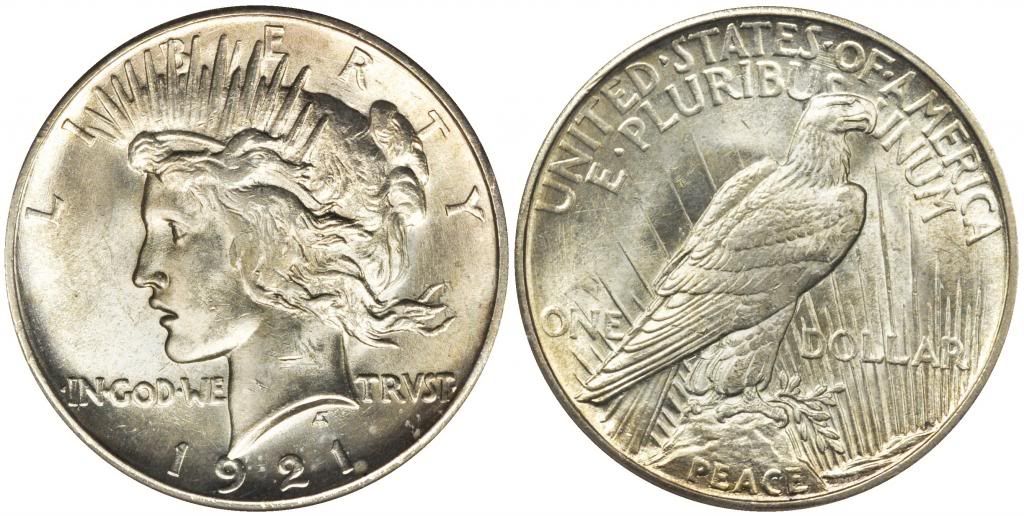
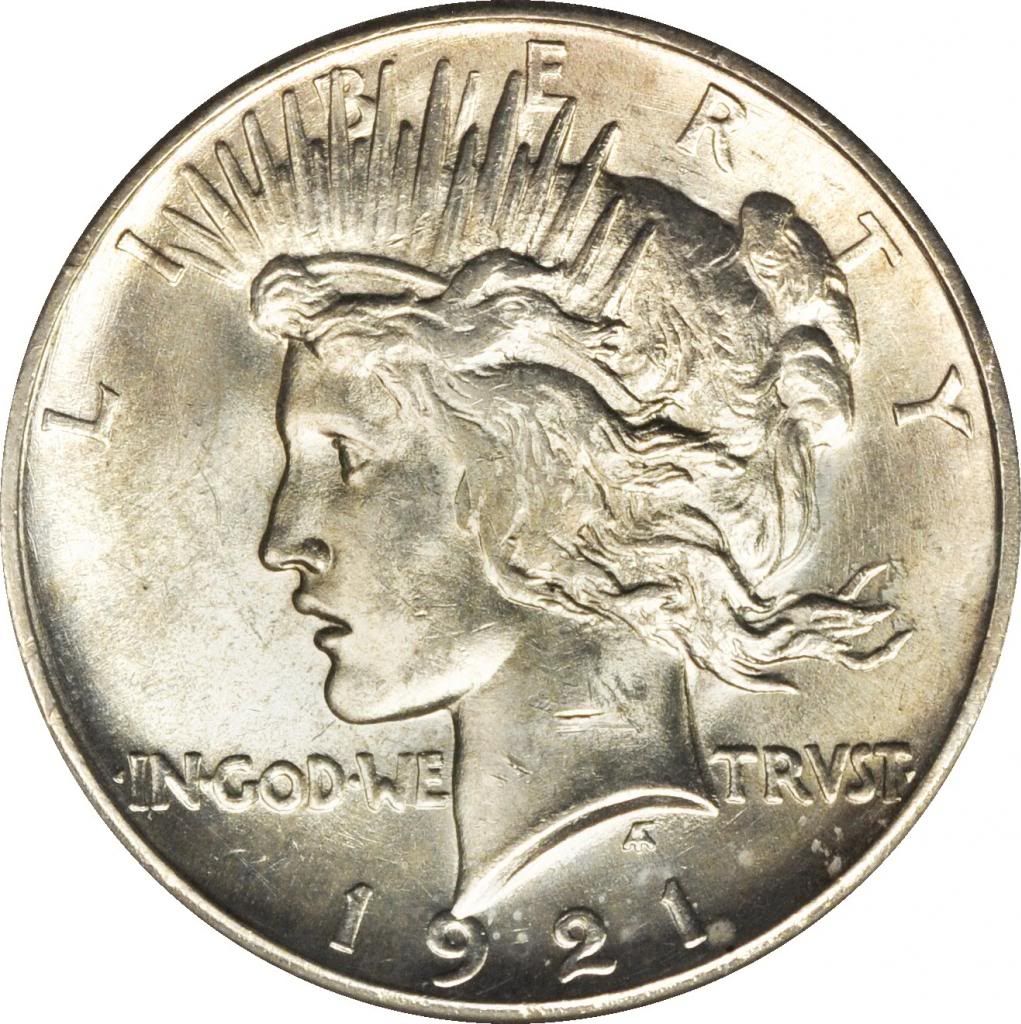
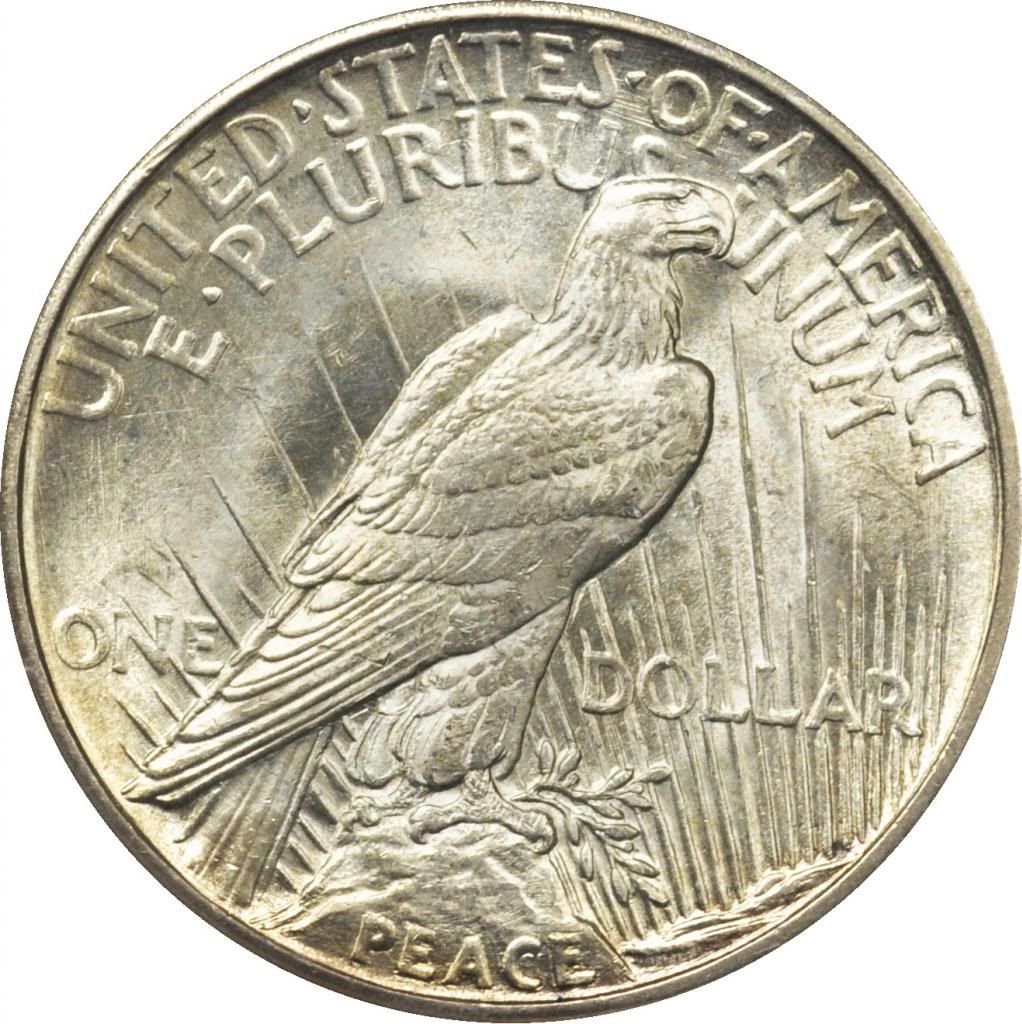
1921 Peace Dollar (VAM-1H) - Struck from Satin Proof Dies
 Stuart
Posts: 9,831 ✭✭✭✭✭
Stuart
Posts: 9,831 ✭✭✭✭✭
Here's a new purchase that I made tonight. -- Coin appears to have above average strike and excellent mint luster with high eye appeal.
I'm looking forward to receiving it and examining it in hand.
1921 Peace Dollar (VAM-1H) - Struck from Satin Proof Dies
I'm looking forward to receiving it and examining it in hand.
1921 Peace Dollar (VAM-1H) - Struck from Satin Proof Dies
Stuart
Collect 18th & 19th Century US Type Coins, Silver Dollars, $20 Gold Double Eagles and World Crowns & Talers with High Eye Appeal
"Luck is what happens when Preparation meets Opportunity"
0
Comments
B62V: I believe that they are Milk Spots, which are fairly common on both 1921 Peace & Morgan Dollars.
Stuart
Collect 18th & 19th Century US Type Coins, Silver Dollars, $20 Gold Double Eagles and World Crowns & Talers with High Eye Appeal
"Luck is what happens when Preparation meets Opportunity"
.
CoinsAreFun Toned Silver Eagle Proof Album
.
Gallery Mint Museum, Ron Landis& Joe Rust, The beginnings of the Golden Dollar
.
More CoinsAreFun Pictorials NGC FOR SALE
Looks beautiful! I've been looking for a nice '21 Peace Dollar for my Type set for quite some time, and it's been tough.
Member, Society of Silver Dollar Collectors.
Looking for PCGS AU58+ 1901-P, 1896-O, & 1894-O
<< <i><< What are those spots around the date? >>
B62V: I believe that they are Milk Spots, which are fairly common on both 1921 Peace & Morgan Dollars. >>
I think you are applying a modern ASE problem to a series that it doesn't really effect. While a milk spot in its purest definition is a while residue spot from a chemical wash and those could be considered that. Most Older coins I have seen with "them" are from a non mint provided contamination such as dip residue, PVC with residual toning or the like. I would be shocked it those spots were not one of those explanations. Where as the most likely explanation for the ASE problem is a planchet wash or the like that leaves a residue that changes when exposed to certain environmental conditions.
NickCap: In reply to your above quoted post, I am not planning to cross this coin, and like it fine in its existing older ANACS-63 Holder.
Crypto79: With reference to your previous post: According to Dave Bowers & Wayne Miller (from Bowers Silver Dollar Encyclopedia)
"Some Peace dollars of this era have white spots on them, resembling dried milk. I am not aware of any way to satisfactorily remove these.
Wayne Miller says this: The most plausible explanation for these blotches is that the planchets were improperly washed and dried after they had emerged from the annealing ovens and subsequent acid bath. Also, an increase in the concentration of sulphuric acid and water solution used during this cleaning and polishing operation could have lightly etched the surface of the planchet in some places."
Stuart
Collect 18th & 19th Century US Type Coins, Silver Dollars, $20 Gold Double Eagles and World Crowns & Talers with High Eye Appeal
"Luck is what happens when Preparation meets Opportunity"
"Jesus died for you and for me, Thank you,Jesus"!!!
--- If it should happen I die and leave this world and you want to remember me. Please only remember my opening Sig Line.<< <i><< I see that this is in an ANACS MS63 holder. Do you think it will cross PCGS? >>
NickCap: In reply to your above quoted post, I am not planning to cross this coin, and like it fine in its existing older ANACS-63 Holder.
Crypto79: With reference to your previous post: According to Dave Bowers & Wayne Miller (from Bowers Silver Dollar Encyclopedia)
"Some Peace dollars of this era have white spots on them, resembling dried milk. I am not aware of any way to satisfactorily remove these.
Wayne Miller says this: The most plausible explanation for these blotches is that the planchets were improperly washed and dried after they had emerged from the annealing ovens and subsequent acid bath. Also, an increase in the concentration of sulphuric acid and water solution used during this cleaning and polishing operation could have lightly etched the surface of the planchet in some places." >>
While your reference is correct and I have read that before in the example of the book I owe in my library and I will admit I have noticed it before on a few of the thousands of peace dollars that I have handled. My point was that while I have seen it on a few (22p and 24P mainly) coins, I disagree with your assessment on what the spots on your coin are. I suspect Bowers, Miller and the dealers who handled the bulk bags of the 70s saw more quantity and considered it a problem when they sold rolls, but it isn't a major problem for the series and those spot don't look like what he is referring to in my eyes. But who knows I haven't seen the coin in hand and could be wrong.
In my experience the milk spots resemble haphazard water spots with solid white outlines and milky/translucent less dense centers in non-perfect circles in non-clustered patches. Those are clustered perfect circles that appear to be different. Just an observation and I would recommend taking the coin to a dealer. If you talk yourself into thinking they are ok with a flippant explanation and it turns out not to be true you won't find out until it either gets worse or you go to sell and at that point you will be left recourse less.
JoeyKoins: In reply to your question, yes all Peace Dollars (not just 1921) have the 9 in 1921, slightly overlapped by the lower tip of Miss liberty's neck.
Stuart
Collect 18th & 19th Century US Type Coins, Silver Dollars, $20 Gold Double Eagles and World Crowns & Talers with High Eye Appeal
"Luck is what happens when Preparation meets Opportunity"
Lewy: In reply to your above quoted question, the following VAMWorld web link explains diagnostics for the 1921 (VAM-1H) Peace Dollar that was struck using Satin Proof dies.
Also for reference please see this Previous 1921 (VAM-1H) Peace Dollar Forum Thread
Stuart
Collect 18th & 19th Century US Type Coins, Silver Dollars, $20 Gold Double Eagles and World Crowns & Talers with High Eye Appeal
"Luck is what happens when Preparation meets Opportunity"
<< <i>What are those spots around the date? >>
Definitely milk spots to my estimation.
Simultaneous with production of the 1921 circulation coins, engraver Morgan had Sandblast and Satin Proofs made. The Proof dies were from the same hubs as production dies but were made with greater care in impressing the design, and the coins were struck on a medal press.
Stuart
Collect 18th & 19th Century US Type Coins, Silver Dollars, $20 Gold Double Eagles and World Crowns & Talers with High Eye Appeal
"Luck is what happens when Preparation meets Opportunity"